Marita Lagergren Lindberg serves as an Affiliated Researcher at Karolinska Institutet's Department of Medicine, Solna, specializing in hematology and radiation biology within Xu Dawei's Hematological and solid tumors research group. Her work bridges laboratory research and clinical applications in oncology. PhD in Oncology-Pathology, Karolinska Institutet (2013) Lagergren Lindberg's research focuses on apoptotic mechanisms in acute myeloid leukemia (AML), biomarker discovery for treatment response prediction, and medical management of radiation syndromes. She employs proteomics, gene expression analysis, and molecular biology to investigate drug resistance pathways and develop diagnostic tools, with particular emphasis on gemtuzumab ozogamicin responses and radiation emergency protocols. Her publication record reveals dual expertise: 80% of recent work centers on AML pathophysiology (apoptosis regulation, biomarker identification), while 20% addresses radiation biology (syndrome management, psychosocial impacts of nuclear accidents). This interdisciplinary approach integrates molecular oncology with emergency medicine, yielding clinically actionable insights for cancer therapy and disaster response. No scientific awards are documented in the provided materials. Lagergren Lindberg collaborates within Karolinska Institutet's BioClinicum J6:20 facility on projects involving AML cell line studies, radiation exposure modeling, and clinical guideline development. Her team maintains active partnerships with radiation protection agencies and international emergency response organizations.
Niamh O'Meara is an Associate Professor in the School of Education at the University of Limerick, where she also holds a position at the Epi-STEM National Centre for STEM Education. With a PhD in Mathematics Education and an MSc in Mathematical Modelling, she teaches a range of mathematical modules to undergraduate students across various programs including Physical Education and Mathematics, Mathematical Sciences, and Financial Mathematics and Law Plus. Her research focuses on mathematics education, numeracy, and teacher development, with particular interests in: Mathematics education across primary and secondary school transitions Numeracy development for adults and vulnerable groups Professional development for mathematics teachers, including out-of-field teachers Curriculum reform and implementation in mathematics education Private supplementary tutoring in mathematics (known as "grinds" in Ireland) O'Meara's extensive publication record (73 publications according to ResearchGate) demonstrates a consistent focus on improving mathematics teaching and learning. Her recent work explores innovative professional development models like "Numeracy-Meets," frameworks for numeracy across the curriculum, and the impact of policy initiatives such as Ireland's Bonus Points Initiative for advanced mathematics. She frequently collaborates with researchers across Ireland and Europe on projects related to mathematics education and numeracy. As an active member of the academic community, O'Meara serves as a PhD supervisor and contributes to national and international discussions on mathematics education policy and practice. Her work aligns with several UN Sustainable Development Goals, particularly those related to quality education and reducing inequalities.
Prof. Dr. Dominik Leiss is Professor of Empirical Educational Research in Mathematics Didactics at Leuphana University of Lüneburg . His work focuses on evidence-based improvement of mathematics teaching and teacher education, with particular emphasis on adaptive support, linguistic accessibility of tasks, and inclusive classrooms. Research Focus: Adaptive learning support in competency-oriented mathematics lessons Linguistic complexity of realistic mathematical tasks Classroom assessment and feedback practices Teacher professional development and university-based teacher education Inclusive mathematics education Across 17 major projects funded by the German Research Foundation (DFG), the Federal Ministry of Education and Research (BMBF), and the Lower-Saxony Ministry of Science and Culture, Leiss investigates how teachers can be prepared to handle heterogeneous classrooms and how assessment and task design influence student learning. Scientific Awards: Research Award “Best Fundraiser” – Leuphana University Lüneburg (2016) Teaching Award – Leuphana University Lüneburg (2015) Knowledge Transfer Prize – Leuphana University Lüneburg (2023) Projects & Funding: He has served as scientific project manager on large-scale initiatives such as Co²CA (Conditions and Consequences of Classroom Assessment), FaSaF (academic language development in grade 7), EvaFa (language-support evaluation within the national BiSS programme), FMOLL (promoting modelling skills via worked examples), LERN-IF (learning-process diagnostics in inclusive settings), and the Leuphana Teacher Training 2020 concept. Labs & Teams: He leads the Empirical Educational Research in Mathematics Didactics group, coordinating interdisciplinary teams that bridge psychology, educational measurement, and subject-matter didactics.
Marcel Thouin is a Full Professor in the Department of Didactics at the Faculty of Education Sciences, University of Montreal. He is recognized as one of Quebec's leading experts in science education for preschool and primary school children, with a career dedicated to making theoretical concepts practical for classroom educators. His work bridges educational theory and classroom application, focusing on how children learn science concepts and how to best prepare future teachers for science education. Education & Background: Former elementary school teacher Physicist by training Research Focus: Professor Thouin's research centers on developing teaching and learning activities in science and technology for primary and early secondary levels. He has pioneered approaches to conceptual change in children's scientific understanding, emphasizing the importance of addressing children's pre-existing conceptions rather than simply teaching correct answers. His work demonstrates that when children encounter surprising situations that challenge their existing conceptions, they're more likely to develop genuine scientific understanding. Publication Trends: His extensive publication record shows consistent focus on practical science education resources, with recent works emphasizing problem-solving approaches, historical contexts in science teaching, and developmental appropriateness. His publications span from practical activity guides for teachers to theoretical works on conceptual change and science didactics. Scientific Recognition: Raymond Gervais Prize for excellence in science and technology teaching (2017) Mentorship & Impact: Professor Thouin has supervised numerous doctoral and master's students whose research extends his work into various aspects of science education, including conceptual modeling, science communication for children, and interdisciplinary approaches connecting science with other domains like cooking. His students' work reflects his emphasis on practical classroom applications and theoretical grounding. Educational Philosophy: He advocates for active, problem-based science learning where children work collaboratively to solve scientific challenges. He believes science should be introduced from the earliest school years, taught through engaging, hands-on activities that make concepts tangible rather than abstract. His famous "sweet water and sugar water" demonstration exemplifies his approach to creating cognitive conflict that prompts conceptual change.
Karina Wilkie is an Associate Professor at Monash University's School of Curriculum Teaching & Inclusive Education. With over 20 years of teaching experience across primary and secondary levels in Australia and England, she specializes in mathematics education. She obtained her PhD from the University of Melbourne in 2011, focusing on academic continuity for mathematics students with chronic illness. At Monash, she teaches pre-service teachers and mathematics leaders while maintaining an active research program. Her research concentrates on: Algebra pedagogy across primary and secondary levels Teacher professional development processes Formative assessment using rich mathematical tasks Student motivation and engagement strategies Argumentation in mathematics classrooms Affective dimensions of mathematics learning Recent publications (2022-2025) demonstrate strong focus on algebraic reasoning, functional thinking, and teacher professional learning. Her work frequently examines how visual representations support mathematical understanding, relational thinking in arithmetic operations, and innovative pedagogical approaches. Emerging themes include problem-solving methodologies, emotional aspects of learning, and developmental teaching strategies. She currently leads the research project "ISET: Inspiring student engagement in school mathematics" (2024-2025) and supervises PhD candidates. Karina also provides professional learning consultations to schools through Independent Schools Victoria and Catholic Education Melbourne.
Mohsen Askari is an award-winning English Language Instructor and AI Consultant with over 15 years of experience in language teaching, teacher training, and educational technology. Currently serving as a Lecturer in the English Preparatory Division at Bogazici University, Istanbul, he specializes in integrating artificial intelligence into language education methodologies. Education Master of English Language Translation, Alborz University, Qazvin, Iran (2008-2011) Master of Political Communication in Europe, Marmara University (2020-2023) Bachelor of English Language Translation, Azad University, Hamadan, Iran (2004-2008) TESOL Professional Certificate, Arizona State University (2020) Cambridge CELTA (2012), Train the Trainer Certification (2022) Python 3 Programming Specialization (2020) Research Focus His pioneering work examines AI's transformative impact on English Language Teaching , specifically how artificial intelligence reshapes pedagogical frameworks, automates feedback systems, and enhances student engagement. Current projects analyze AI-driven lesson creation tools and the reconfiguration of Bloom's Taxonomy in digital learning environments, positioning him at the forefront of educational technology innovation. Publication Trends Early career publications (2014-2017) centered on translation quality assessment and discourse analysis, while recent work demonstrates a decisive pivot toward AI/ELT integration. His 2023-2024 conference presentations reveal emerging research on AI-enabled engagement strategies and cognitive restructuring in language acquisition, signaling a significant disciplinary shift toward technological pedagogy. Recognition Eaquals Teacher Award 2024 for excellence in language teaching Professional Development & Grants As EdTech Coordinator at Fatih Sultan Mehmet Foundation University, he directed teacher training programs and curriculum development. Currently, he serves as AI Consultant for KatoAI.com - a Dublin City University-funded initiative developing automated lesson creation and feedback systems for English instructors globally. Collaborative Initiatives He actively contributes to the KatoAI.com development team, creating practical AI tools that bridge educational theory and classroom application while presenting findings at international conferences including Eaquals Lisbon 2024.
Kate O'Shaughnessy is a Lecturer at University College London's IOE - Education, Practice & Society, where she teaches across the BA Education Studies programme and supervises dissertations for undergraduate and postgraduate students. She is also a Senior Associate at UCL's Centre for Educational Leadership and Director of OSC Education Consultancy Ltd. Education: Masters in Philosophy of Education (Distinction, 2013), currently completing a PhD on Initial Teacher Education and Phronesis Her research focuses on teacher education in England, the philosophical concept of Phronesis, and the role of technology in extending the "space of reasons" during assessment. She has contributed to national research projects with Ofsted on curriculum and lesson observations. Recent publications include work on curriculum development and educational assessment. She actively presents at conferences such as the Philosophy of Education Society and BERA National Conference, while serving as convenor for BERA's Philosophy of Education SIG and maintaining memberships in the Philosophy of Education Society of Great Britain and Hegel Society. As an Ofsted Inspector for Teacher Education and former secondary school leader with over 20 years of experience, she specializes in developing teaching practices and curricula for institutions like Leicester Secondary SCITT, Hackney Learning Trust, and Kingsford Community School. Her consultancy work spans teacher education, leadership programs, and educational policy implementation.
Torunn G. Hønsi is a senior researcher and group leader at the Western Norway Research Institute (Vestlandsforsking) , where she leads the Technology and Society Group. Since 2015, she has focused on sustainable circular economy policies, green business transformation, and the impacts of climate change on environmental toxins and pollution. Education: Dr. scient. in Ecotoxicology, University of Oslo (2001) Main degree in Molecular Cell Biology, Norwegian University of Science and Technology (NTNU) (1995) Research Focus: Hønsi’s research bridges natural science and policy, addressing how climate change can alter the emission and toxicity of environmental contaminants. Her work spans from molecular ecotoxicology to large-scale policy implementation in circular economy and climate adaptation. Key Projects: Teknojenter (2024–) : Encouraging girls in technology and innovation. FØNIKS – From Ash to Biochar (2020–) : Circular value chains for bio-waste. NORADAPT (2018–) : National center for sustainable climate adaptation. Vannklimrisk (2020–) : Water management under changing climate. ENABLING (2017–) : Bio-based innovation networks for growth. Publications & Dissemination: Hønsi has authored or co-authored numerous reports, kronikks, and presentations. Her recent work includes critiques of Norway’s plastic agreement, cultural heritage as a driver for rural competitiveness, and the toxicological risks posed by climate change to aquatic environments. Media Engagement: She is a frequent contributor to NRK and other Norwegian media, discussing projects like Teknojenter and the intersection of climate change and environmental pollution. Previous Roles: Associate Professor in Cell Biology, Physiology and Genetics, Western Norway University of Applied Sciences Lecturer in Natural Sciences, Luster Upper Secondary School Operations Manager, SIMAS (Sogn Intermunicipal Waste Company) Risk Assessor, Norwegian Institute of Public Health Inspector, County Governor’s Environmental Division, Sogn og Fjordane
Professor Marcus Nührenbörger is a Professor of Mathematics Education with a focus on Inclusion at the University of Münster, Faculty of Mathematics and Computer Science, Institute for Basic and Inclusive Mathematical Education. Previously, he was a Professor of Mathematics Education at the Institute for Development and Research in Mathematics Education (IEEM) at TU Dortmund from 2009-2022, where he served as Institute Director from 2018-2022. His educational background includes: Doctorate in mathematics education at the University of Münster (2002) with dissertation "Children's thought and learning processes when measuring lengths" 2. Staatsexamen für das Lehramt an Grund- und Hauptschulen (1995-1996) 1. Staatsexamen für das Lehramt Primarstufe (1990-1995) Professor Nührenbörger's research focuses on didactic development and transfer research on mathematical teaching and learning processes with a special emphasis on inclusion and potential development, as well as interaction and collaboration. His work explores how to create inclusive mathematical learning environments that support diverse learners while maintaining high-quality mathematical content. He investigates teacher professional development, particularly how to enhance teachers' abilities to implement inclusive mathematics instruction effectively. His research also examines diagnostic approaches to identify and address students' mathematical difficulties, with a special focus on early mathematical development and the transition from counting strategies to more advanced mathematical reasoning. His recent publications demonstrate a strong focus on inclusive mathematics education, teacher professional development through digital platforms (particularly the "degree" platform), and diagnostic approaches to support mathematical learning. There's a clear emphasis on practical applications of research in classroom settings, with many publications addressing specific teaching strategies, assessment tools, and professional development models. His work bridges theoretical research with classroom practice, particularly in the areas of early mathematics education and inclusive teaching approaches. His scientific recognition includes: 2017 Schulbuch des Jahres in der Kategorie Mathematik (1. Preis) – Leibniz-Institut für Bildungsmedien | Georg-Eckert-Institut (GEI) Professor Nührenbörger is actively involved in multiple research projects focused on inclusive mathematics education, teacher professional development, and diagnostic approaches. His team includes numerous research assistants and collaborators working on projects such as DoMathG, QuaMath, LemaS-Transfer, Födima, Mathe inklusiv mit PIKAS, and ComeMINT. He serves in various editorial and committee positions, including with the Grundschulverband, Deutsches Zentrum für Lehrkräftebildung Mathematik, and Gesellschaft für Didaktik der Mathematik. He leads the Institute for Basic and Inclusive Mathematical Education at the University of Münster, which focuses on research and development in inclusive mathematics education. The institute works closely with schools, teacher education programs, and other research institutions to develop and evaluate approaches for inclusive mathematics teaching and learning.
David Noble is an Adjunct Associate Professor in the Faculty of Business, Law and Arts at Southern Cross University with over 30 years of senior management experience across for-profit, not-for-profit, and tertiary sectors. His work focuses on public policy frameworks for university-industry collaboration and innovation systems. His academic credentials include: Bachelor of Theology (BTheo) from University of Divinity Master of Applied Linguistics (MAppLing) from University of New England Master of Management (MMan) from Southern Cross University PhD from Southern Cross University Noble's research centers on university-industry collaboration , national innovation systems , and concierge services for startups/SMEs , examining how public administration can foster entrepreneurial ecosystems. His work investigates resilience in innovation hubs during disruption, boundary-spanning organizations for policy implementation, and cultural dimensions of Australian innovation adoption. Key themes include valuing intangible research outcomes, governance of complexity in turbulent times, and strategic cooperation in cooperative research programs. His 15 most recent publications (2017-2024) reveal consistent focus on innovation policy implementation, with increasing emphasis on resilience during crises and practical support mechanisms for entrepreneurs. Dominant trends include public value creation in university initiatives, SME integration into national innovation frameworks, and cultural explanations for technology adoption patterns. As a member of the International Research Society for Public Management, Noble contributes to Southern Cross University's Graduate School. His applied research includes government-commissioned reports like the NSW Department of Industry study on concierge services, demonstrating direct policy relevance. Current affiliations include Adjunct Associate Professor in the Faculty of Business, Law and Arts, while past roles encompass Deputy Dean & Academic Lead and Director of the Centre for Teaching and Learning in the School of Business and Tourism.
Prof. Dr. Miriam Leuchter is Professor of Primary-School Education with a focus on general science education at the University of Koblenz-Landau , Landau campus, where she also serves as head of the department. She enjoys the diversity of her role, which encompasses research, teaching and administration. Education: 2009 – Doctorate in Educational Psychology, University of Zurich (Faculty of Philosophy) 2002 – Licentiate in Educational Psychology Earlier training – Kindergarten teacher in Switzerland and Sweden Research Interests: Her research agenda centres on primary science education and educational psychology . She investigates how young children learn scientific concepts, the cognitive processes of teachers when planning and reflecting on instruction, and how theory-driven didactics can be linked to authentic classroom practice. A signature feature of her work is bringing children into university seminars so that pre-service teachers can test theory-based micro-lessons in a controlled yet realistic setting. Current projects & funding: She currently leads six concurrent third-party funded research projects and is actively preparing new grant proposals. These projects typically involve collaborations with kindergartens and primary schools across the region. Teaching load: She teaches approximately nine semester hours per week, integrating empirical findings directly into her courses—often with 45 students per seminar. Career trajectory: 2002–2009 – Lecturer, PH Central Switzerland (PHZ Schwyz & Lucerne) 2011–? – Professor of Early Science Education, University of Münster Present – Professor & Head of Department, University of Koblenz-Landau Collaborations: Long-standing collaborations include colleagues such as Henrik Saalbach (University of Leipzig) and Ilonca Hardy (University of Frankfurt), with whom she began empirical studies on kindergarten children’s understanding of floating and sinking while still based in Switzerland. Advice culture: She emphasizes the importance of supportive professional networks, genuine enjoyment of research and teaching, and periodically stretching one’s perceived boundaries.
Tatsuhiko Inoue is a Professor at Waseda University's School of Commerce, where he holds multiple teaching positions including Business Model and Competitive Strategy, Business Model Design, and Entrepreneurship courses for both undergraduate and graduate programs. He also maintains an affiliation with Waseda's Global Education Center and School of Political Science and Economics. His academic journey began at Yokohama National University's Faculty of Management (Accounting) and culminated with a Ph.D. in Business Administration from Kobe University in 1997. Before joining Waseda, Professor Inoue served as Associate Professor at Hiroshima University's Graduate School of Social Sciences (Management), and held faculty positions at Osaka University of Economics and Surugadai University. His research interests span business models, entrepreneurship, and competitive strategy, with particular expertise in how businesses create value through innovative structures and strategic positioning. His work bridges sociological perspectives with business administration, examining how organizations function within complex ecosystems. Professor Inoue's recent publications reveal a clear evolution in business model research, moving from foundational theoretical work to increasingly empirical and comparative studies. His scholarship has progressed from examining basic business model concepts to analyzing complex business ecosystems, with recent work focusing on Chinese startups, digital platforms, and investor perspectives. A distinctive thread throughout his research is the examination of imitation as a strategic tool, challenging conventional views on innovation while exploring how businesses create value through both novel and adapted approaches. Japan Society for Management Information Award (2003) Professor Inoue has secured multiple significant research grants from the Japan Society for the Promotion of Science, including a current project (2021-2026) on business models that increase corporate value, and previous projects on business ecosystems in creative industries and collective innovation systems. His research methodology has evolved to incorporate advanced text mining and machine learning techniques, working with programming-savvy collaborators to analyze business model literature and case studies. He has established productive relationships with venture capitalists and institutional investors for interview and experimental studies on how business models influence investment decisions. Professor Inoue maintains active involvement with research institutions including the Research Institute of Business Administration (as Concurrent Researcher since 2019) and has conducted international research collaborations, notably a comparative study of Japanese and US content industry business ecosystems at the University of Pennsylvania (2012-2014). His work on Japanese business practices, particularly regarding imitation and collective learning systems, has contributed significantly to understanding alternative innovation pathways beyond Western models.
Nenad R. Vulović is a Full Professor at the Department of Didactic and Methodological Sciences, Faculty of Pedagogical Sciences, University of Kragujevac, Jagodina. He holds leadership roles including Vice-Dean for Finance since 2014 and Member of the University Council since 2013. His academic career spans a Doctorate (2024), Master's (2011), and Diploma (2009) in Mathematics Teaching Methodology. He specializes in mathematics education methodology, with a focus on digital tools, pandemic-era pedagogy, and teacher training. Education: Doctorate: Mathematics Teaching Methodology, 2024 Master's: Mathematics Teaching Methodology, 2011 Diploma: Mathematics and Computer Science, 2004 Research interests center on mathematics education innovation, including GeoGebra applications, online practicum during the pandemic, and teacher competence assessment. He has participated in over 8 international educational projects, such as the TEMPUS-funded MASTS program and bilateral collaborations with Montenegro and Slovenia. His professional activities include: President of the Serbian State Commission for Primary School Mathematics Competitions (2022–present) Leader of the Serbian Team at Junior Balkan Mathematical Olympiads (2012–2022) Editorial roles in Matematički list and Serbian Mathematicians' Society Publications emphasize pandemic-era challenges, teacher preparedness, and cross-cultural pedagogy. He has authored 30 textbooks accredited by the Serbian Ministry, many translated internationally.
Moritz Sahlender serves as a Researcher at the German Institute for Adult Education (DIE) within the Teaching and Learning unit, where he has held a research associate position since 2015. He earned his Doctorate in Social Sciences from the University of Tübingen in 2024, following a Master's in Adult Education/Continuing Education (2012-2015) and Bachelor's in Educational Science with adult education focus (2009-2012) at the same institution. His educational background includes: Doctorate in Social Sciences, University of Tübingen (2024) MA in Adult Education/Continuing Education, University of Tübingen (2012-2015) BA in Educational Science (adult education focus), University of Tübingen (2009-2012) Sahlender's research centers on adult language education within immigration contexts, specializing in German as a Second Language (GSL) instruction for linguistically diverse classrooms. He investigates teacher competencies, learning processes in heterogeneous groups, adult literacy development, and digital tools for language-sensitive teaching. His work bridges theoretical frameworks with practical applications in educator professionalization, emphasizing how instructors adapt methodologies—including nonverbal communication—to students' language proficiencies through interdisciplinary approaches combining corpus linguistics, video analysis, and cognitive assessment. Analysis of his 2019-2025 publications reveals consistent focus on GSL teacher competencies and classroom dynamics, with recent expansion into AI-human interaction studies. His methodological innovation stands out in video-based analysis of spoken classroom interactions and interdisciplinary data processing, while maintaining core contributions to understanding low literacy predictors and digital tool efficacy in teacher training. The 2025 LSE Impact Blog article signals growing interest in social dimensions of AI communication. At DIE, Sahlender actively contributes to the Meta-project on Language Education in Immigration Society and previously co-developed the COLD project (2019-2022) assessing GSL teacher competencies. He served as JURE coordinator for EARLI's Special Interest Group 6 'Instructional Design' during his PhD studies, demonstrating leadership in academic collaboration networks.
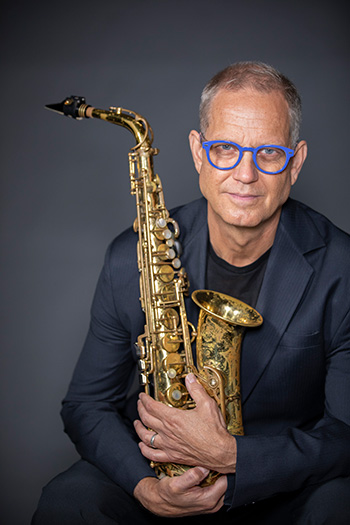
Benjamin Boone is a Full Professor of Music in the Department of Music at California State University, Fresno, within the College of Arts and Humanities. Teaching since 2000, he serves as Faculty Service-Learning Scholar for Fresno State's Richter Center for Community Engagement and Service-Learning. A U.S. Fulbright Scholar with international teaching experience in Ireland, Ghana, and Moldova, Boone is a composer, saxophonist, and theorist renowned for blending jazz, poetry, and contemporary classical forms to address societal issues. Education: Doctor of Musical Arts: Music Composition, University of South Carolina, 1997 Masters of Music: Music Composition, Boston University, 1991 Bachelor of Music: Studio Music and Jazz (Saxophone), University of Tennessee, 1987 Bachelor of Music: Music Theory, University of Tennessee, 1987 Boone's research centers on jazz composition, contemporary classical music, and socially conscious works addressing cultural genocide, environmental crises, and political injustice. His ethno-historical opera Ascencion examines Native American cultural erasure, while Waterless Music: A Drought Symphony confronts ecological emergencies. He pioneers the fusion of spoken-word poetry with jazz improvisation, collaborating with U.S. Poet Laureates to create historically significant interdisciplinary art that has been featured on NPR and in The Paris Review . Recent creative output demonstrates a consistent thematic focus on urgent global issues through innovative musical frameworks. Albums like The Poets are Gathering (2020) and The Poetry of Jazz (2018) merge jazz instrumentation with politically charged poetry, while Waterless Music (2015) uses orchestral forms to visualize environmental collapse. This body of work has established Boone as a critical voice in socially engaged music, earning international acclaim for its artistic rigor and activist urgency. Scientific Awards: U.S. Fulbright Scholar (Ireland 2022-23, Ghana 2017-18, Moldova 2005) Fresno State President’s Award of Excellence Fresno State Provost’s Award for Excellence in Teaching Fresno State Provost’s Award for Research Excellence Spirit of Service Award (Fresno State) DownBeat Magazine #3 Best Album of 2018 ( The Poetry of Jazz ) JazzStation Awards #3 Alto Saxophonist of 2020 JazzStation Awards #5 Best Album of 2020 ( Joy ) Eighteen honors for contemporary classical compositions from ISCM, Olympia Prize, Billboard, and ASCAP Boone mentors students through composition lessons and advanced theory courses while leading community-engaged scholarship via the Richter Center. His Fulbright grants represent major international research funding, and his creative projects receive support from record labels like Origin Records and performance venues including Walt Disney Concert Hall. Current work continues his tradition of socially conscious artistry through cross-cultural collaborations. Boone leads collaborative teams including The Ghana Jazz Collective and works with renowned artists like saxophonist Ben Monder and Poet Laureates Juan Felipe Herrera and Philip Levine. These partnerships create dynamic spaces for cultural dialogue, with projects like Joy emerging from transnational artistic exchanges that prioritize collective improvisation and social commentary.