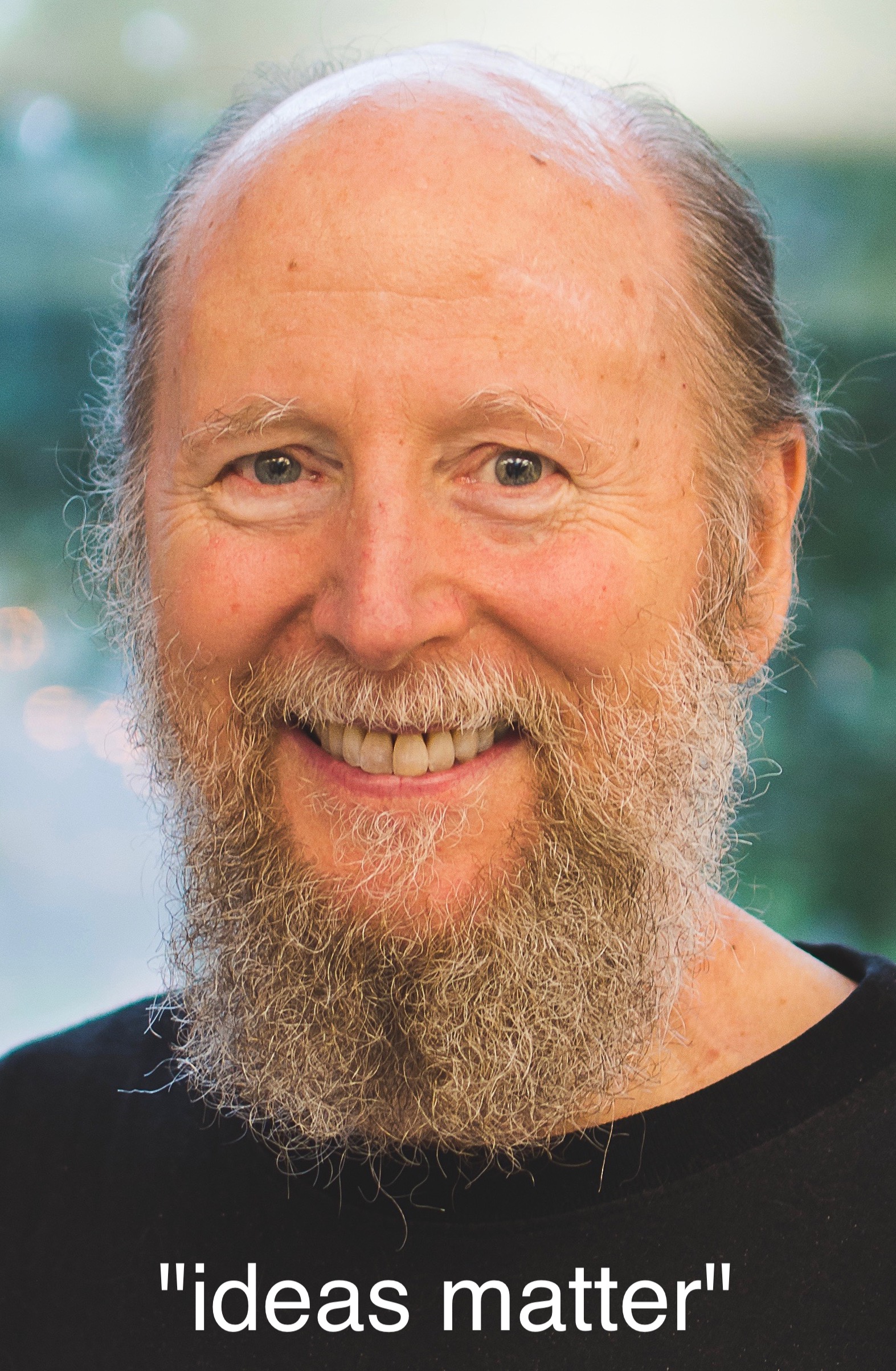
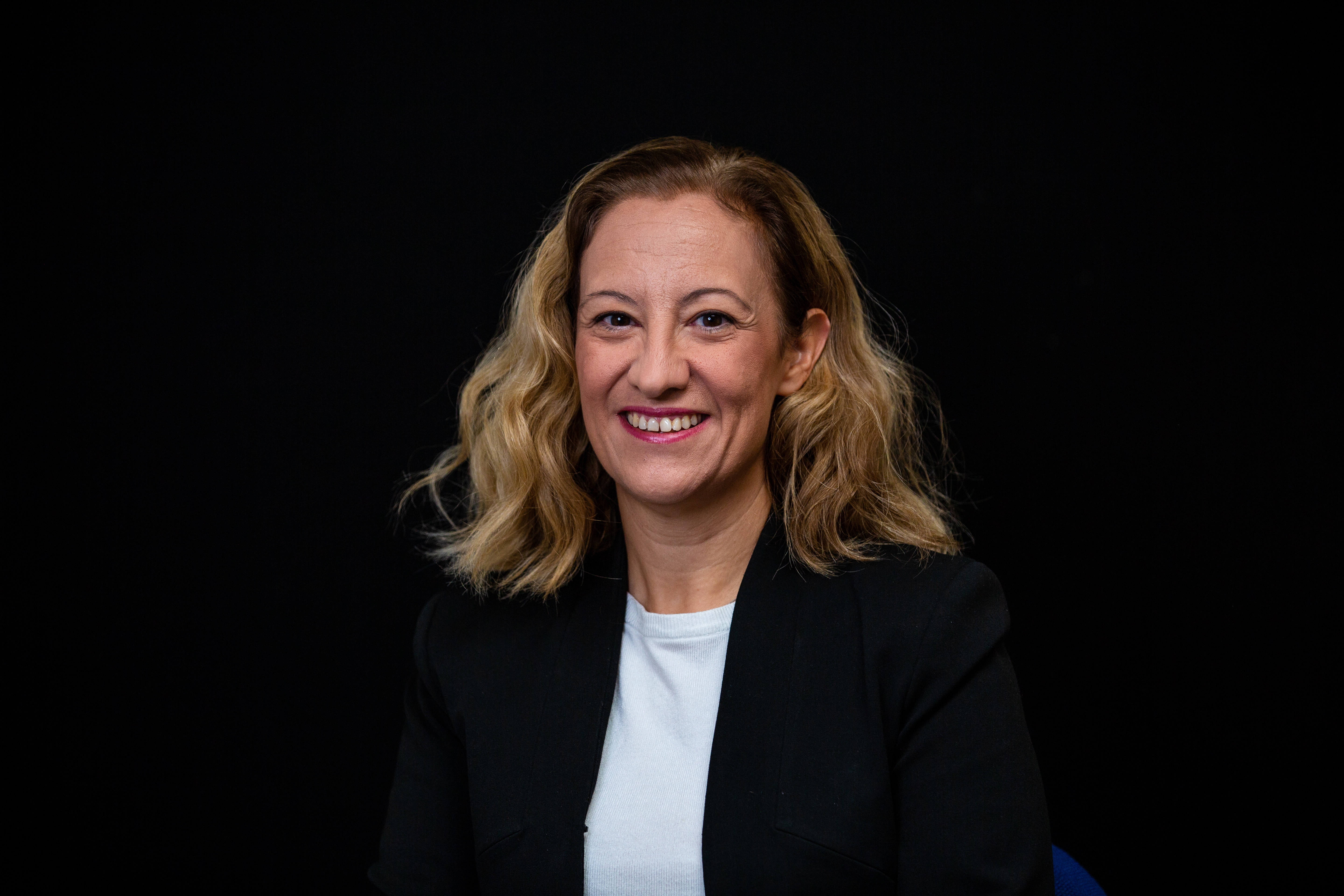
Daniel M.G. Raff is an Associate Professor of Management at the Wharton School of the University of Pennsylvania, where he has been affiliated since 1994. His research bridges business history and strategy, focusing on urban history, public policy, and historical demography. PhD, Massachusetts Institute of Technology, 1987 BPhil, Oxford University, 1978 MPA, Princeton University, 1976 BA, New College, 1973 Raff’s work explores the historical evolution of business institutions, with recent publications analyzing topics such as pre-modern Chinese real estate markets , industrial routines , and strategic risk management . His research often employs archival data and interdisciplinary methodologies. His publications span business history, economic performance, and transactional engineering, reflecting trends in historical demography , corporate strategy , and market evolution . Raff has also contributed to academic leadership as a Trustee of the Business History Conference and Chair of committees at the Economic History Association. Daniel Raff actively engages in teaching courses like Value Creation & Val Cap and Deals: Econ Struc Trans , emphasizing critical historical thinking in strategic business analysis. He is affiliated with institutions such as the National Bureau of Economic Research and the Wharton Financial Institutions Center.
Jonathan P. Wong is a Senior Policy Researcher at the RAND Corporation and Professor of Policy Analysis at the RAND School of Public Policy. His work bridges academic research and defense policy, focusing on military strategy, acquisition, force planning, and the integration of emerging technologies into military operations. Education: Ph.D. and M.Phil. in Policy Analysis (Pardee RAND Graduate School), M.A. in Security Studies (Georgetown University), B.A. in Political Science (UC San Diego) Professional Experience: U.S. Marine Corps infantry officer (2001–2011), Consultant at Boston Consulting Group, current RAND researcher and professor Wong’s research interests center on defense innovation, military logistics, artificial intelligence in warfare, space capabilities, and the human dimension of military operations. He has led studies on human-machine teaming, non-lethal weapons, defense acquisition reform, and U.S. military posture in the Indo-Pacific. His work emphasizes practical, policy-relevant insights grounded in operational experience. The trends in his recent publications reveal a deep engagement with modern defense challenges: integrating commercial technologies into military systems, improving acquisition agility, enhancing battlefield awareness, and ensuring that defense innovation serves warfighter needs. His research spans strategic, operational, and tactical levels, often focusing on the U.S. Army and Marine Corps. Wong has not received public recognition in the form of listed awards in the provided texts, but his leadership in congressionally mandated studies and high-impact policy research suggests significant influence in defense circles. Advising & Grants: Co-led major projects such as the Long Range Precision Fires study and research on integrating women into Marine Corps infantry. His work is frequently funded by the Department of Defense and other federal entities, though specific grant details are not listed. Wong is affiliated with RAND’s defense and national security research teams, contributing to strategic analysis and policy development. He is not associated with a formal lab but works within RAND’s collaborative research environment, often partnering with other veterans and defense experts to produce actionable insights for military leaders and policymakers.
Richard S. Sutton is a Professor in the Department of Computing Science at the University of Alberta , a Research Scientist at Keen Technologies, and the Principal Investigator at the Reinforcement Learning and Artificial Intelligence Lab . He also serves as the Canada CIFAR AI Chair at the Alberta Machine Intelligence Institute (Amii) and as Chief Scientific Advisor there. Additionally, he founded the Openmind Research Institute and is Chief Scientific Officer at ExperienceFlow. His research focuses on identifying general computational principles underlying intelligence and goal-directed behavior. He emphasizes the interaction between intelligent agents and their environment , exploring how goals, choices, and information sources emerge from this interaction. His work spans reinforcement learning (RL) , agent-environment dynamics, and ethical considerations in AI, such as robot rights and moral philosophy. His articles include technical works on RL, ethical frameworks, and philosophical essays like The Bitter Lesson (2019) and The Definition of Intelligence (2016). Canada CIFAR AI Chair Co-author of foundational RL textbook Developed Tile Coding Software for RL
Luisa Domingues is an Assistant Professor in the Department of Information Science and Technology at ISCTE - University Institute of Lisbon. She serves as an Integrated Researcher at ISTAR-Iscte - Research Center in Information Sciences, Technologies and Architecture, specializing in Information Systems research. Her academic qualifications include a PhD in Information Science and Technology from ISCTE-IUL (2013). Her primary research interests focus on: Project Management : Methodologies, risk assessment, and knowledge sharing Database Systems : Management, interoperability, and standardization e-Government Solutions : Public sector information systems and shared services Ontological Frameworks : Particularly for architectural heritage documentation Educational Technologies : Blended learning approaches in higher education Her recent publications (2016-2024) demonstrate a strong focus on project management methodologies, knowledge transfer, and information systems in public sector contexts. Key thematic trends include PMBOK framework applications, agile methodology adoption challenges, data science project risks, and technological solutions for cultural heritage preservation. Most works employ case study research and empirical validation methods. Dr. Domingues maintains an active advising portfolio with 1 doctoral candidate and 36 master's students, primarily focusing on topics in project management, information systems, and data science applications. She has held significant academic leadership positions including: 4th Year Coordinator for Bachelor's in Computer Science and Business Management (2020-2027) Program Director for the same degree (2017-2019) At ISTAR-Iscte research center, she contributes to projects involving information systems architecture, data standardization, and knowledge management frameworks.
Carlo Rovelli is a Professeur de classe exceptionnelle in the Department of Physics at Aix-Marseille University, holding adjunct roles at Western University's Department of Philosophy and a Distinguished Visiting Research Chair at the Perimeter Institute. He founded the quantum gravity group at the Centre de Physique Théorique (CPT) and is an associate member of the Rotman Institute of Philosophy. His research focuses on loop quantum gravity, relational quantum mechanics, and the history/philosophy of science. He authored influential popular science books including Seven Brief Lessons on Physics (41 languages, 1M+ copies sold) and Helgoland: Making Sense of the Quantum Revolution . Rovelli's work bridges theoretical physics with philosophical inquiry, exploring foundational questions in quantum mechanics, spacetime structure, and the interpretation of physical theories. His recent publications address topics like quantum information theory, gauge symmetries, black hole evaporation, and cosmological implications of quantum gravity.
Prof. Dr. Birgit Eickelmann is a Professor of School Pedagogy at the Institute of Educational Science within the Faculty of Arts and Humanities at Paderborn University. She has held this position since October 2012, initially as a W2 professor until January 2014, and then as a W3 professor (full professor) from February 2014 onward. Her research focuses on school and lesson development in the digital age, school pedagogy under digital transformation conditions, empirical school research, teacher education, and school leadership with emphasis on digital learning leadership. Her educational background includes a habilitation in Educational Science in May 2012, a PhD in Educational Science with summa cum laude in July 2009, and state examinations for teaching Mathematics and Physics in December 1996 and January 1999. Prof. Eickelmann's research centers on the digital transformation of educational systems, particularly examining how schools develop digital competencies among students and teachers. Her work emphasizes equitable access to digital learning opportunities, the role of school leadership in digital transformation, and the development of computational thinking skills. She investigates how schools can become resilient in the face of digital challenges, with special attention to organizational factors that support successful digital integration. Her publication record reveals a strong focus on international comparative studies, particularly the IEA's ICILS (International Computer and Information Literacy Study) across multiple cycles (2013, 2018, 2023). Her research spans digital literacy assessment, school-level factors influencing digital competence development, and policy implications for educational systems undergoing digital transformation. Prof. Eickelmann leads several major research initiatives including the National Research Center for the IEA Study ICILS 2023 (2021-2026), the German coordination of the Horizon-2020 project 'DigiGen' (2019-2022), and previous leadership of ICILS 2018 (2015-2021) and ICILS 2013 (2012-2015). She is actively involved in policy advising regarding digital education in Germany. She is a member of numerous scholarly organizations including the World Educational Research Association (since 2021), the Society for Empirical Educational Research (since 2016), and the German Society for Educational Science (since 2014), among others. Her work bridges academic research with practical implementation in schools through projects like 'Navigator Bildung Digitalisierung' and 'schultransformNEXT'.
Kevin A. Shinpaugh is Collegiate Professor in the Department of Aerospace and Ocean Engineering at Virginia Tech’s College of Engineering. Since 2019 he has led instruction and research in spacecraft design and propulsion, leveraging decades of experience in high-performance computing and space-systems engineering. Education Ph.D., Aerospace Engineering, Virginia Tech (1994) M.S., Aerospace Engineering, Virginia Tech (1989) B.S., Aerospace Engineering, Virginia Tech (1986) Research Focus Dr. Shinpaugh’s scholarship centers on the intersection of high-performance computing (HPC) and space systems engineering . He develops and applies advanced computational techniques to spacecraft design, propulsion analysis, and mission planning. His work spans numerical simulation of complex aerospace systems, optimization of propulsion architectures, and creation of scalable HPC frameworks that enable rapid design iteration for spacecraft and launch vehicles. Publication Trends Across more than thirty refereed papers and design-competition reports, a clear trajectory emerges: early contributions in experimental fluid-mechanics instrumentation (laser-Doppler velocimetry, fiber-optic sensors) evolved into large-scale computational studies of space systems, and most recently into student-led mission-concept designs for CubeSats, lunar exploration, and interplanetary missions. Keywords consistently include spacecraft design, propulsion, deployable structures, and mission architecture. Service & Committees Chair, Virginia Tech HPC User Committee (2004–2011) Member, VT HPC Advisory Board (2007–present) NSF TeraGrid/XSEDE Campus Champion for Virginia Tech (2006–2013) IBM HPC/AI Customer Advisory Council DC (2019–present) Member, VT AOE Seminar Committee (2019–present) Laboratory & Computing Resources Dr. Shinpaugh has long stewarded Virginia Tech’s high-performance computing ecosystem. He directs students and collaborators in leveraging the university’s Advanced Research Computing (ARC) clusters, as well as national facilities through XSEDE and DoD HPCMP, to execute spacecraft-design simulations and propulsion analyses at scale.
Sebastian Pfotenhauer is a Carl von Linde Professor for Innovation Research at Technical University of Munich (TUM) and Deputy Head of the STS Department. He specializes in the societal dimensions of innovation, including governance of emerging technologies, regional innovation cultures, and responsible innovation practices. His work bridges academic research and policy, with leadership roles in major initiatives like the €50M Munich Cluster for the Future of Mobility (MCube) and the EU-funded SCALINGS project on co-creation in innovation. He holds a PhD in Physics from the University of Jena and postdoctoral training at MIT and Harvard. Research interests include innovation policy, science governance, and the interplay between technology and societal change. Notable projects include comparative studies of innovation cultures, governance frameworks for AI and neurotechnology, and global partnerships in science and innovation. He advises governments and international bodies like the OECD and the German Engineers’ Association (VDI). Publications span journals like Research Policy , Social Studies of Science , and Nature Biotechnology , addressing topics from regulatory sandboxes to neurotechnology ethics. Awards include the Leading Technology Policy Fellowship (MIT) and NSF grants for studying complex international partnerships.
Matthew Palm is an Assistant Professor in the Department of City and Regional Planning at the University of North Carolina at Chapel Hill, holding the Cities Pardue Fellowship. His research focuses on transportation equity, shift work commuting challenges, and mobility barriers affecting essential workers in 24-hour economies. He examines how transportation systems impact social participation, healthcare access, and economic opportunities while advocating for equitable planning solutions. Recent work explores post-pandemic transit trends, ride-sharing equity, and the intersection of transportation policy with marginalized communities. Palm collaborates with community organizations to co-create evidence-based solutions for mobility challenges. He currently holds a $1.09 billion grant reflecting North Carolina’s renewed interest in rail infrastructure. His research agenda includes three core areas: 1) analyzing how shift workers’ nighttime commuting affects social exclusion and family care logistics, 2) studying transportation affordability’s role in economic participation, and 3) evaluating transportation infrastructure’s dual potential to improve lives while mitigating negative externalities like pollution. He emphasizes participatory approaches to planning and has published extensively on pandemic-era transit usage shifts, accessibility metrics, and housing-transit linkages.
Dr. Zara Ersozlu is a Senior Lecturer in Mathematics Education within the School of Education at the University of Newcastle, Australia. With a distinguished international career spanning multiple continents, she has held academic positions at prestigious institutions including North Carolina State University (USA), Gazi and Gaziosmanpasa Universities (Turkey), National Taiwan Normal University (Taiwan), The University of Western Australia, Murdoch University, and Deakin University. Her academic journey includes tenured positions as an Associate Professor and leadership roles as Department Head and Chair in teacher education disciplines. Currently, she teaches undergraduate and postgraduate courses in mathematics education, including Effective Pedagogies in Primary Mathematics, K-6 Mathematics, K-6 Numeracy, and Digitally Supported Learning. Dr. Ersozlu earned her Doctor of Philosophy from Firat University in Turkey and her Master of Art from Sakarya University. Her extensive academic preparation is complemented by five years of practical teaching experience in public schools prior to entering academia. This blend of theoretical knowledge and practical classroom experience informs her approach to teacher education and educational research. At the broadest level, Dr. Ersozlu's research investigates solutions to real-life problems impacting people's well-being, success, and capacity to achieve. Her scholarly work spans primary and secondary mathematics education, the psychology of mathematics (including metacognition, self-regulation, and anxiety), cross-cultural educational studies, teacher education, virtual simulated learning environments, and educational assessment. She has increasingly focused on the transformative potential of AI and machine learning in education, exploring how these technologies alter teaching, learning, and research processes. Her methodological expertise encompasses both quantitative and qualitative approaches, allowing her to effectively analyze both small and large educational datasets. Analysis of Dr. Ersozlu's recent publications reveals a strong emphasis on mathematics anxiety, teacher education, and the integration of technology in learning environments. Her work demonstrates a consistent focus on practical applications of educational research to address real-world challenges in mathematics education. The interdisciplinary nature of her research connects educational psychology, technology integration, and cross-cultural perspectives, with particular attention to how these elements intersect in teacher preparation and student learning outcomes. 2023 ATEA Research Recognition Award from the Australian Teacher Education Association 2021 Fellow of the Higher Education Academy (Advance HE, UK) 2010 Fellowship Program for Postdoctoral Researchers from the Council of Higher Education of Turkey Dr. Ersozlu is deeply committed to mentoring the next generation of scholars, currently supervising four PhD students and having successfully guided ten students to completion. Her grant portfolio includes significant funding for projects such as Best Practice Guidelines for RPL in Initial Teacher Education Programs ($60,000), Exploring the Reciprocal Relationship Between Mathematics Anxiety and Mathematical Resilience ($2,599), and multiple conference travel awards. She serves as an Associate Editor for several prominent journals including the International Electronic Journal of Mathematics Education and as Editor for Interdisciplinary STEM Education. Her editorial work reflects her standing as a respected voice in mathematics education research. Dr. Ersozlu's academic leadership extends to her role in developing innovative teaching approaches that integrate virtual simulation technology and learning analytics. Her work with TeachLivE™, a mixed-reality classroom simulation platform, demonstrates her commitment to creating authentic learning experiences for teacher education students. Through these initiatives, she bridges the gap between educational theory and classroom practice, preparing future educators to effectively implement evidence-based teaching strategies in diverse learning environments.
Don John Omale serves as a Senior Lecturer in Criminology within the College of Business, Law and Social Sciences, focusing on critical issues in Nigerian and African criminal justice systems. His work bridges theoretical frameworks with practical field applications across diverse security and justice contexts. Dr. Omale's research centers on restorative justice mechanisms, police ethics, and conflict resolution in Africa. He extensively examines traditional African dispute resolution models alongside modern criminal justice challenges, with particular emphasis on Nigeria. His studies address farmer-herder conflicts, prison conditions, terrorism countermeasures, and domestic violence in semi-urban settings, consistently advocating for culturally grounded solutions that enhance community trust and institutional accountability. Analysis of his 15 most recent publications (2010-2025) reveals a dominant focus on restorative justice implementation and police accountability in Nigeria. His work demonstrates a methodological shift from theoretical discourse (2005-2011) toward empirical field studies examining practitioner perspectives and community-level impacts, particularly in conflict-affected regions like the Niger Delta and North Central Nigeria. The research consistently connects indigenous African conflict resolution traditions with contemporary security challenges. No scientific awards were documented in available sources Professional activities show no recorded student advising or grant funding in the provided materials, though his extensive publication record suggests active research supervision. His work frequently engages criminal justice professionals and community stakeholders, indicating collaborative field-based approaches to justice reform.
Alison Jones is a Professor of Law at King’s College London, affiliated with the Dickson Poon School of Law’s Centre of European Law. She is also a solicitor at Freshfields Bruckhaus Deringer LLP. Her research focuses on competition law and policy, particularly in the EU, US, and UK, with an emphasis on public procurement, anti-corruption, and regulatory frameworks. She has held visiting positions at leading universities and contributed to major legal texts like Jones and Sufrin's EU Competition Law . Education: PhD in Law, University of Cambridge BCL, Christ Church, Oxford Law Degree, Girton College, Cambridge Her research addresses issues such as combatting corruption and collusion in public procurement, vertical agreements, and post-Brexit regulatory challenges. She has received accolades including the Concurrences Antitrust Writing Awards and recognition by Who’s Who Legal and Global Competition Review . Her recent work includes grants such as the Leverhulme Trust-funded project on public procurement corruption and prior British Academy funding. She advises on PhD supervision and leads the Herbert Smith Freehills Competition Law Moot. She sits on editorial boards of journals like the Yearbook of European Law and holds roles in the American Bar Association’s Antitrust Law Section. Her publications span books, peer-reviewed articles, and expert reports for institutions like the European Commission and UK Government. She actively engages in policy debates, contributing to antitrust reforms and cross-jurisdictional legal harmonization.
Professor Irem Dikmen is a leading academic in Construction Engineering and Management at the University of Reading, where she serves as School Director of Internationalisation in the Chancellor's Building. Her research integrates engineering, management, and information sciences to advance construction project risk management, particularly focusing on climate resilience, digital technologies, and social value in infrastructure systems. PhD, MSc, and BSc in Civil Engineering from Middle East Technical University Her work leverages systems thinking, artificial intelligence, and digital tools to develop decision-support frameworks for megaprojects and climate adaptation. Recent publications highlight innovations in NLP contract analysis, energy performance ontologies, and risk visualization techniques. She supervises students on topics spanning IoT lifecycle management, ESG risks, and NLP defect detection. Key collaborations include the Climate and Finance Research Cluster and Walker Institute , with contributions to digital construction technologies and sustainability risk assessment. Teaching modules include Construction Risk Management, Economics, and Business Organisation.
Professor Mary Augusta Brazelton is a Professor at the University of Cambridge's Department of History and Philosophy of Science and a Fellow of Jesus College. She serves as Director of Studies in Natural Sciences (History and Philosophy of Science) at Jesus College (on leave 2024-2025). Her academic work focuses on the history of science and medicine in modern China, with particular attention to global health, transportation technologies, and the intersection of science and state power. Education: BA (Harvard), MPhil and PhD (Yale). Awards include the 2020 Student-led Teaching Award and the 2019 Zhu Kezhen Senior Award. She is also a Trustee and Research Fellow of the Needham Research Institute and a Council member of the American Association for the History of Medicine. Her research explores topics such as mass vaccination policies in 20th-century China, Sino-French scientific collaborations, and the history of penicillin development. Current projects include studies on the Sino-French Institute in Lyon and transnational histories of civil aviation. Publications include Mass Vaccination: Citizens' Bodies and State Power in Modern China (2019) and China in Global Health: Past and Present (2023). She actively contributes to academic discussions through media engagements and international conferences.
Dr. Vincent Homburg is an Associate Professor in Public Administration at Erasmus University Rotterdam and holds the ERA Chair in 'e-Governance and Digital Public Services' at the University of Tartu, Estonia. He holds a Master’s degree from Twente University and a PhD from Groningen University. His research focuses on e-government, public management theory, and information systems. He has co-authored/co-edited influential books such as Understanding E-Government and The Information Ecology of E-Government . He has supervised multiple PhD students and received the 2010 Best PhD Supervisor Award from NIG. His research interests include e-government in the Netherlands and globally, digital public services, and the role of social media in citizen-government interactions. He has published over 112 peer-reviewed articles and actively contributes to academic journals as an editor and reviewer. His recent work explores institutional trust in digital governance, cross-border digital services in the EU, and social media adoption in China and Canada. Education: PhD in Organisation Studies/Information Systems (Groningen University) Master’s in Public Administration (Twente University) Awards: Best PhD Supervisor Award (2010) His research bridges theoretical and practical aspects of governance, emphasizing institutional dynamics and technology’s role in public administration. He collaborates internationally, contributing to policy discussions on digital transformation and citizen engagement.