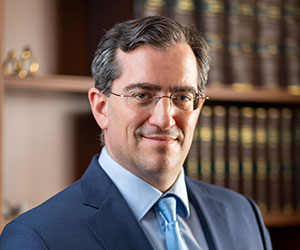
Bartosz Brusiłowicz is a researcher at the Department of Electrical Power Engineering , Faculty of Electrical Engineering , Wrocław University of Science and Technology. His expertise focuses on power system stability and digital signal processing applications in electrical networks. Research Focus: Voltage stability analysis in power systems Technical Expertise: Digital Signal Processing (DSP) for electrical networks Key Projects: Integration of renewable energy sources, fault current limiter coordination, non-linear load modeling Recent publications highlight his work on photovoltaic farm impacts on power quality , superconducting fault current limiter coordination , and non-linear load stability models . His research bridges theoretical analysis with practical applications in modern power systems.
Matthew Scarfone is Professor of Philosophy at Trent University, where his teaching and public engagement centre on how moral values are lived out in everyday life. Drawing on philosophy as well as psychology, sociology and anthropology, he explores ethics as a collaborative process shaped by action, choice and relationships. He has also taught previously at the University of Toronto, Carleton University, Texas A&M University, UNC Chapel Hill and McGill University. Research Interests: Professor Scarfone’s work spans normative and meta-ethical questions. His investigations include: Evolutionary debunking arguments in meta-ethics Moral epistemology and the use of Moorean reasoning Bioethical issues, especially the ethics of abortion and reproductive rights Environmental ethics and the moral evaluation of consumer choices such as electric-vehicle adoption The intersection of philosophical theory with empirical findings from psychology and the social sciences Across his recent publications he examines whether evolutionary considerations undermine moral realism, critiques the coherence of selective exceptions in abortion legislation, and challenges popular assumptions about the moral praiseworthiness of environmentally friendly behaviours. Public Philosophy and Media Engagement: Beyond peer-reviewed journals, Scarfone contributes to public discourse through essays in The Conversation and radio interviews on the moral dimensions of everyday choices. Advising, Grants & Awards: No specific information regarding PhD or Master’s students, research grants or scientific awards is present in the provided text. Laboratories and Teams: No laboratory or research group affiliation is mentioned.
Andrea Zampini serves as a Research Fellow at the Department of Law (DiGiur) at the University of Urbino Carlo Bo. His academic profile centers on criminal law and procedure with specialized expertise in wiretapping regulations, electronic surveillance, and constitutional aspects of criminal investigations within the Italian legal framework. Dr. Zampini's primary research interests encompass Criminal Law, Criminal Procedure, Constitutional Law, European Human Rights Law, Evidence Law, and Road Traffic Law. His scholarly work consistently examines the tension between effective law enforcement techniques and fundamental constitutional protections, particularly regarding investigative methods and evidence collection. He demonstrates particular expertise in analyzing how Italian criminal procedure aligns with European human rights standards, especially concerning privacy rights and judicial oversight mechanisms. Analysis of Dr. Zampini's publication record reveals a strong focus on procedural aspects of criminal investigations, with increasing attention to digital communications and cybercrime methodologies. His work frequently addresses the constitutional implications of wiretapping regulations, home search procedures, and blood alcohol testing protocols. Much of his scholarship engages directly with judicial practice, offering practical interpretations of complex legal provisions while maintaining rigorous academic analysis. Dr. Zampini has published extensively in prominent Italian legal journals including Criminal Cassation (6 publications), Italian Journal of Law and Process (4 publications), and others such as Legal Culture and Living Law and Journal of Procedural Law. His publications, predominantly in Italian (23 out of 31), demonstrate consistent scholarly output with 24 publications appearing between 2020-2026, indicating active and current academic engagement in the field.
Juan Carlos Farah serves as both a Scientific Collaborator and Lecturer at the Fribourg School of Engineering and Architecture, part of the University of Applied Sciences and Arts of Western Switzerland (HES-SO). His academic appointments indicate an active role in both research and teaching within the institution's engineering and technology programs. Dr. Farah holds a PhD in Robotics, Control, and Intelligent Systems from the École Polytechnique Fédérale de Lausanne (EPFL), a Master of Science in Computing from Imperial College London, and a Bachelor of Arts in Economics from Harvard University. This interdisciplinary background spans computer science, engineering, and economics, providing a strong foundation for his current research endeavors. His research focuses on the intersection of human-computer interaction, social neuroscience, and information theory, with particular emphasis on how artificial intelligence with anthropomorphic traits affects human behavior and learning. Farah has made significant contributions to educational technology, especially in the development and evaluation of conversational agents for learning environments. His work examines how chatbots and large language models can be effectively integrated into educational contexts to support students while maintaining pedagogical integrity. An analysis of his recent publications reveals a strong trajectory in human-AI interaction within educational settings, with increasing focus on large language models since their emergence. His research spans multiple dimensions of educational technology including code review systems, computational thinking development, and the psychological impacts of technology on learners. The interdisciplinary nature of his work connects computer science, cognitive science, and educational theory. While no specific scientific awards are mentioned in the provided documentation, Dr. Farah's research has been published in reputable journals and presented at significant international conferences in educational technology and human-computer interaction. His research methodology combines both qualitative and quantitative approaches, often conducting controlled experiments with student populations to evaluate the effectiveness of educational technologies. Farah frequently collaborates with colleagues from multiple institutions, suggesting strong interdisciplinary research networks. His work appears to focus on practical applications of technology in real educational settings rather than purely theoretical investigations. Dr. Farah's research program appears centered around developing frameworks and tools for educational technology, with particular attention to how conversational agents can be designed to support specific learning objectives. His TRACE model for educational chatbot design and work on code review notebooks represent structured approaches to integrating AI technologies into pedagogical practices while addressing the unique challenges of educational contexts.
Peter J. Smith is the Arthur Selwyn Miller Research Professor at the George Washington University Law School, where he teaches Constitutional Law, Civil Procedure, and Legislation and Regulation. He has established himself as a leading expert in constitutional law with numerous publications in top-tier law journals and recognition for outstanding teaching through the Distinguished Faculty Service Award received in 2022, 2016, and 2010. Professor Smith's educational background includes: BA from Yale University JD from Harvard Law School, where he received the Sears Prize for highest academic performance As a constitutional law scholar, Professor Smith's research examines the intersection of constitutional interpretation, originalism, federalism, and religious freedom. His work critically analyzes how constitutional principles apply to contemporary legal challenges, with particular focus on the Establishment Clause, Free Exercise Clause, and ministerial exception doctrine. He frequently explores the historical foundations of constitutional doctrines and their modern applications, offering nuanced comparisons between originalist and non-originalist approaches to constitutional interpretation. Professor Smith's scholarly output demonstrates consistent excellence and relevance, with his articles regularly appearing in prestigious journals including the Yale Law Journal, Columbia Law Review, Virginia Law Review, Georgetown Law Journal, and Duke Law Journal. His recent work shows particular emphasis on religious freedom jurisprudence and constitutional interpretation theory, while maintaining connections to practical legal applications in federal courts and Supreme Court cases. Professor Smith has received significant recognition for his contributions to legal education and scholarship: Distinguished Faculty Service Award (2022) Distinguished Faculty Service Award (2016) Distinguished Faculty Service Award (2010) Before joining GW Law, Professor Smith served as an Attorney in the Civil Appellate Staff at the U.S. Department of Justice, where he represented the government in appellate courts and defended federal statutes including the Family and Medical Leave Act and Food and Drug Modernization Act in Supreme Court cases. He clerked for Judge Phyllis A. Kravitch of the U.S. Court of Appeals for the Eleventh Circuit. Professor Smith frequently provides expert commentary for major media outlets, as evidenced by his quotes in Slate, FactCheck.org, WUSA9, Vice News, and PolitiFact on constitutional matters ranging from Supreme Court appointments to impeachment procedures. Professor Smith has co-authored influential casebooks on constitutional law with Professor Gregory Maggs and a casebook on Legislation and Regulation, shaping legal education for generations of law students. His scholarly profile is maintained across multiple platforms including Heinonline, SSRN, and Scholarly Commons, reflecting his ongoing commitment to legal scholarship and academic discourse.
Jessica Tillipman serves as the Associate Dean for Government Procurement Law Studies and Government Contracts Advisory Council Distinguished Professorial Lecturer at George Washington University Law School. She is an internationally recognized expert specializing in integrity, compliance, and emerging technology issues in government procurement law. Her academic leadership extends to directing GW Law's Government Procurement Law Program, one of the most comprehensive programs of its kind in the United States. Dean Tillipman earned her BA cum laude from Miami University (Oxford, OH) in 2000 and obtained her JD with honors from the George Washington University Law School in 2003. Her educational background provided the foundation for her specialized expertise in government contracts and anti-corruption law. Her research interests focus on the intersection of government procurement, ethics, and emerging technologies. She has pioneered work examining how artificial intelligence impacts government contracting processes, advocating for ethical AI implementation in public procurement. Her scholarship addresses critical issues including organizational conflicts of interest, suspension and debarment systems, anti-corruption compliance, and the evolving regulatory landscape of federal acquisition. She has been instrumental in developing frameworks for ethical AI procurement that respect civil rights while maintaining competitive integrity. Her 15 most recent publications demonstrate a clear trajectory toward increasingly sophisticated analysis of procurement integrity systems, with growing emphasis on technology's role in government contracting. Her work spans foundational topics like Federal Acquisition Regulation compliance to cutting-edge issues like AI risk management in public procurement, reflecting her dual expertise in traditional government contracts law and emerging technological challenges. Government Contracts Advisory Council Distinguished Professorial Lecturer Senior Advisor to the American Bar Association, International Anti-Corruption Committee Faculty Advisor to the Public Contract Law Journal Member of the National Contract Management Association Board of Advisors Advisory Board member of The Government Contractor Dean Tillipman actively mentors the next generation of government contracts attorneys through her teaching and advisory roles. She serves as Senior Editor of The FCPA Blog, a leading Foreign Corrupt Practices Act resource, and frequently organizes and presents at domestic and international government procurement conferences. Her practical experience includes service as a law clerk to the Honorable Lawrence S. Margolis of the U.S. Court of Federal Claims and as an associate at Jenner & Block specializing in Government Contracts and White Collar Criminal Defense. She maintains active involvement with professional organizations including the bars of the United States Court of Federal Claims, the state of Virginia, and the District of Columbia. Her commentary regularly appears in major media outlets, and she has testified before congressional committees on critical procurement integrity issues.
Markus Gmünder is Co-Head of the Competence Center for Regional Economics and Lecturer at the Institute for Business and Regional Economics (IBR) within Lucerne University of Applied Sciences and Arts – Business. He holds a PhD in Economics from the University of Basel and coordinates the MAS Community, Urban and Regional Development program. Education 2021: Certificate in Higher Education Didactics, HSLU 2009: Dr. rer. pol., University of Basel 2003: Doctoral studies in Regional and Urban Economics, ROREP 2002: Summer School in Economic Geography 1999: Master's in Geography, Economics and Meteorology, University of Basel Research Focus His interdisciplinary research integrates regional economics, spatial planning, and housing policy. Key areas include market-based planning instruments, urban densification strategies, transportation economics, and participatory development frameworks. Recent work examines housing affordability mechanisms and economic impacts of spatial regulations. Publications His scholarly output demonstrates consistent focus on Swiss spatial economics, with recent articles addressing housing shortages, urban densification models, and transportation policy impacts. Publications frequently employ policy analysis, case studies, and economic modeling methodologies. Projects Leads multiple applied research initiatives including: Alternative housing financing models Urban climate adaptation frameworks Regional economic impact assessments Participatory development processes Policy evaluations for spatial regulations Teaching Teaches undergraduate and graduate courses in economics, spatial development, and regional policy. Directs continuing education programs in urban development and municipal cooperation.
Dr. Gracelin Baskaran serves as Director of the Critical Minerals Security Program at the Center for Strategic and International Studies (CSIS) and holds an appointment as Adjunct Associate Professor at Georgetown University's Center for Security Studies. She earned her PhD from the University of Cambridge and has held academic positions at the University of London and University of Cape Town. Her research focuses on: Global critical minerals supply chains and security Mining economics and resource governance Energy transition geopolitics Economic development in resource-rich regions U.S. mineral policy and international partnerships Her extensive publication portfolio (200+ policy reports, white papers, and journal articles) demonstrates consistent focus on mineral security frameworks, with recent works analyzing supply chain diversification, international trade dynamics, and geopolitical competition in critical minerals markets across six continents. Publications frequently address U.S. strategic interests in Africa, South America, and the Pacific region. Honors and recognition: Fulbright Scholar Congressional testimony on mineral security Regular expert commentator in global media including The Economist, Financial Times, and Wall Street Journal She leads research initiatives at CSIS examining mineral supply chain vulnerabilities and advises policymakers on strategic approaches to critical minerals security. Her work bridges academic research and practical policy implementation through the Critical Minerals Security Program.
Dr. James B. Kelly is a Professor of Political Science at Concordia University, specializing in Canadian and comparative judicial politics, the Canadian Charter of Rights and Freedoms, and the politics of Northern Ireland. He holds a PhD from McGill University (1999) and a BA (Honours) from the University of Toronto (1992). His research explores the judicialization of politics in parliamentary systems and has been funded by SSHRC and FQRSC. Notably, his books Governing with the Charter (2005) and Constraining the Court (2024) were finalists for the Donner Prize. Dr. Kelly has held visiting appointments at institutions such as McGill University, the University of Melbourne, and Bar-IIan University. He has contributed to academic leadership roles, including Co-editor of the Canadian Journal of Political Science , and served as Graduate Program Director and Associate Chair at Concordia. His current research examines human rights protection in Northern Ireland under a SSHRC-funded project. His teaching spans courses on Canadian politics, Northern Ireland politics, and constitutional law. Dr. Kelly has advised governments and parliamentary committees in Canada, Australia, New Zealand, and Northern Ireland, reflecting his expertise in legislative scrutiny and human rights policy. Key awards include Donner Prize nominations (2006, 2024) and recognition for his scholarly contributions to constitutional dialogue and federalism. His work bridges academic research with practical policy analysis, influencing debates on judicial power and legislative processes in parliamentary democracies.
Denise Fisher is a Visiting Fellow at the ANU Centre for European Studies within the Research School of Social Sciences at the Australian National University. A former Australian diplomat with thirty years of service, she served as political and economic policy analyst in Rangoon, Nairobi, New Delhi, Kuala Lumpur, and Washington DC, and was appointed Australian High Commissioner in Harare (1998-2001) and Australian Consul-General in Noumea, New Caledonia (2001-2004), covering French Pacific territories. She is currently writing on France in the South Pacific and authored France in the South Pacific: power and politics (2013). Her educational qualifications include: Masters of Philosophy, Australian National University (2012), focusing on France in the South Pacific Masters in International Public Policy, School of Advanced International Studies, Johns Hopkins University (1992) Fisher's research centers on Pacific geopolitics, examining decolonization processes, French sovereignty, and independence movements in New Caledonia. Her work analyzes the interplay between local autonomy demands and French geopolitical strategy within the Indo-Pacific context, emphasizing postcolonial tensions and self-determination struggles. She integrates diplomatic history with contemporary policy challenges, particularly regarding referendum outcomes and legislative interventions. Analysis of her 2019-2024 publications reveals consistent focus on New Caledonia's political trajectory, with increasing attention to regional implications. Her scholarship bridges academic rigor and policy relevance, frequently addressing sovereignty disputes, electoral dynamics, and the impact of French legislative actions on Pacific stability. Recent work highlights escalating divisions following Paris's imposition of electoral reforms and connects local crises to broader Indo-Pacific strategic competition. As an active contributor to policy discourse, Fisher publishes regularly in outlets like The Interpreter (Lowy Institute) and The Strategist (Australian Strategic Policy Institute), translating complex geopolitical analyses for diplomatic and strategic audiences. Her commentary often appears alongside French-language publications in Le Monde , reflecting transnational scholarly engagement.
Jan Mikołajczyk is a Professor at the Department of Commerce and Marketing, University of Economics in Poznan. His roles include Rektor's Delegate for Open Classes, Director of the 'Marketing in Practice' Postgraduate Studies Program, and Member of the UEP Electors' College. He is actively involved in professional organizations, serving as a member of the Polish Economic Society and the Foundation Council. His research focuses on marketing management, retail trade dynamics, and sales strategies. Key areas of inquiry include neuromarketing applications in e-commerce, promotional effectiveness in niche markets, and the role of non-commercial services in enhancing shopping center appeal. His work also explores culinary tourism development and strategic distribution channel optimization. Recent publications analyze Zalando SE's consumer behavior patterns, martial arts school promotional strategies, and Lech Poznan's social media marketing. Earlier studies examined retail innovation in petrol stations and critical factors influencing shopping center attractiveness among student populations. While no scientific awards are listed, his contributions to marketing education are notable through his leadership in postgraduate programs and his involvement in shaping academic standards for management-related theses.
IAKOVOS VENIERIS is an Associate Professor of Private Commercial Law at the University of Athens. He holds an LLM from the University of Köln (2001) and a PhD from the University of Athens (2005). His research focuses on commercial law, banking law, consumer protection, and intellectual property law. He is a member of the Board of the Company for Research in Commercial and Finance Law (EMEOD) and has authored seven monographs and numerous articles on topics such as public-private partnerships, asset securitization, and corporate governance. Education: Bachelor of Laws, University of Athens (1999) LLM in Law, University of Köln (2001) Doctor of Laws (PhD), University of Athens (2005) Research Interests: His work spans commercial law frameworks, including banking regulations, consumer rights under Greek and EU law, and intellectual property disputes. Recent studies emphasize corporate governance in Societe Anonymes (SA) and legal challenges in public-private partnerships (PPPs). He has contributed to legislative analyses of asset securitization (Law 3156/2003) and consumer protection mechanisms under Law 2251/1994. Publications: Venieris has authored seminal works such as Public-Private Partnerships – The PPP Contractual Framework (2007) and Asset Securitisation Pursuant to Law 3156/2003 (2005). His articles address contemporary legal issues like shareholder liability in corporate liquidation, trademark infringement defenses, and the judicial audit of banking contracts. Affiliations: He serves on the Board of EMEOD, a key institution for commercial and finance law research in Greece. His academic contributions also include editorial roles for legal journals and participation in honorary volumes dedicated to prominent legal scholars.
Prof Daniel Colaco Osorio is a Professor of Neuroscience (Ecology and Evolution) at the University of Sussex, affiliated with the School of Life Sciences. He serves as Deputy Head of the School and Director of Taught Programmes. Osorio holds a BA and MA in Natural Sciences from the University of Cambridge (specializing in Zoology) and a PhD in Neurobiology from the Australian National University (ANU), focusing on insect visual physiology. His postdoctoral work spanned Cambridge and ANU before joining Sussex in 1992. His research explores animal vision, particularly color perception and object recognition in species like butterflies, primates, birds, and cephalopods. He also holds a patent for color measurement in images, derived from his theoretical work on animal vision, with potential medical applications. Osorio sits on the Biotechnology and Biological Sciences Research Council’s research committee and contributes to ethical guidelines for cephalopod welfare under EU legislation. He chairs the Ethics Committee for Merlin Entertainments’ aquaria/zoo operations and co-authored guidelines for cephalopod research ethics. Research interests span visual ecology, evolutionary signaling, and the neural mechanisms underlying camouflage and color discrimination. Notable grants include studies on cephalopod visual behavior, avian spectral processing, and the evolution of trichromacy in primates. He organizes courses like 'Receptors and Senses' and 'Seminars in Neuroscience.' Osorio’s recent work bridges biology and technology, applying vision science to medical imaging and legal frameworks. His lab collaborations emphasize interdisciplinary approaches to understanding sensory systems across species.
Dr. hab. Michał Ptak is a Professor at Wrocław University of Economics. He specializes in environmental economics, climate policy, energy taxation, and sustainable development. His research focuses on the intersection of taxation systems, environmental protection, and renewable energy strategies in the European Union and globally. Ptak has extensively studied the effectiveness of environmental taxes, carbon pricing mechanisms, and policy instruments for reducing CO2 emissions in transportation and energy sectors. Key research areas include: environmental fiscal reform, low-carbon economy transition, renewable energy financing, urban-rural migration trends, and circular bioeconomy concepts. His work frequently addresses EU policy frameworks, comparing approaches across member states like Poland, Norway, and Scandinavian countries. Ptak advises on energy taxation strategies and has contributed to policy analysis for operational programs supporting climate targets. He maintains an active academic profile through conferences and interdisciplinary collaborations, with particular emphasis on applying economic models to environmental challenges. Consultations are available via MS Teams during scheduled hours.
Professor Patrick Emerton is a leading academic in legal theory and constitutional law, currently serving as Professor and Deputy Dean at Deakin Law School, Faculty of Business and Law, Deakin University. He joined Deakin in 2021 after holding the position of Associate Professor at Monash University Faculty of Law, and has also taught in the Departments of Philosophy at Monash University and the University of Melbourne, showcasing his interdisciplinary approach. His current role includes leadership in teaching and academic governance, having served as Director of Teaching since 2022 and Deputy Dean since 2023. PhD, Monash University MA, University of Melbourne LLB (Hons), University of Melbourne BA (Hons), University of Melbourne Patrick Emerton's research centers on constitutional and legal theory, with a focus on the interplay between public law, private law, and economic justice. His work spans political philosophy, statutory interpretation, national security, emergency powers, and human rights. He is particularly known for his critical analysis of the Australian Constitution’s capacity to support economic justice, the role of public reason in democratic legitimacy, and the ethical dimensions of anti-discrimination and tax policy. His recent publications reflect a broad and evolving scholarly agenda, integrating traditional legal analysis with contemporary challenges such as AI in legal reasoning, cybersecurity governance, and the regulation of political charities. The articles demonstrate a consistent engagement with constitutional integrity, judicial reasoning, and the balance between state power and individual rights, particularly in emergency contexts. Leslie Zines Prize for Excellence in Legal Research (2010) Honourable Mention, Article/Chapter (General), Australian Legal Research Awards (2020) Mollie Holman Doctoral Medal for best PhD thesis of 2006 in the Monash University Faculty of Law Monash Student Association Teaching Excellence Award (2020) Patrick Emerton has supervised over 30 honours and 20 doctoral students, with five currently under his supervision, reflecting his strong commitment to academic mentorship. He has secured significant research grants, including the 'Socrates' project on software security and critical technologies, demonstrating his engagement with interdisciplinary and applied research. His work bridges theoretical legal scholarship with practical policy impact, particularly in national security and public health regulation. He is affiliated with leading academic organizations such as the Australasian Society for Legal Philosophy, Icon-S (International Society of Public Law), the Centre for Comparative Constitutional Studies, and Eleos Justice. His frequent media commentary on national security and emergency powers underscores his role as a public intellectual in Australian legal discourse.