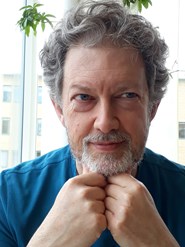
Gauthier Lanot is a Professor at the Umeå School of Business, Economics and Statistics (USBE), Department of Economics, Umeå University. His research focuses on empirical micro-economics, econometrics, labour economics, public economics, and public finance. He holds a PhD from Université Louis Pasteur (1993) and has held positions at Keele University (UK), Laval University (Canada), and Queen's University Belfast (UK). He served as an associate editor for the Journal of the Royal Statistical Society Series A (2010-2013) and on the Danish National Centre for Social Research Advisory Board (2013-2016). His research explores topics such as tax incidence, minimum wage effects, pension policies, and labour market dynamics. Current projects include studies on electricity demand flexibility, military deployment impacts, and taxation responses. Lanot has taught courses like Industrial Economics and Microeconomics Analysis at both undergraduate and graduate levels. He secured grants from Forte and Handelsbanken in 2021, and is affiliated with the Economic Policy Network. Key contributions include analyses of retirement decisions in Denmark, lottery demand modeling, and evaluation of UK economic research performance. His work bridges theoretical econometric methods with applied policy analysis, emphasizing empirical rigor in public finance and labour market studies.
Professor Julie Leask is a social scientist and faculty member at the School of Public Health, Faculty of Medicine and Health, University of Sydney . She co-leads the Social and Behavioural Insights research group and serves as a Visiting Professorial Fellow at the National Centre for Immunisation Research and Surveillance. Her work focuses on vaccination programs, policy, and risk communication , with a particular emphasis on addressing vaccine hesitancy, strengthening community dialogue, and improving health equity. Education: Master of Public Health (USYD, 1998), PhD in Public Health (USYD, 2002) Key Affiliations: Member of the University of Sydney Institute for Infectious Diseases, Affiliate of the Susan Wakil School of Nursing and Midwifery, Co-founder of COSSI (Collaboration on Social Science in Immunisation) Her research integrates psychology, sociology, public health ethics, and implementation science to address critical issues such as low vaccination rates, risk communication during health emergencies, and cultural competence in immunization . She has led initiatives like the Sharing Knowledge About Immunisation (SKAI) package and contributed to global frameworks for vaccine safety communication. Recent articles highlight her work on vaccine hesitancy trends, policy effectiveness, and community-engaged approaches , including studies on Aboriginal health communication and conflict-related vaccination barriers . Her scientific awards include the Australian Financial Review 100 Women of Influence (2019) , Supervisor of the Year (2021) , and Officer of the Order of Australia (2024) . She supervises PhD candidates such as Maria Christou-Ergos and Belinda Bruce , with interests in infectious disease prevention, health disparities, and vaccine communication . Her current projects include international collaborations via the WHO and research on social determinants of vaccine hesitancy .
Prof. Dr. Wouter van der Brug is a full-time Professor at the University of Amsterdam 's Faculty of Social and Behavioural Sciences , specializing in democratic representation and electoral behavior. His research focuses on populist parties, voter dynamics, and European integration. Current affiliation: University of Amsterdam Academic rank: Professor Email: W.vanderBrug@uva.nl Research interests include: Generational political alignment and dealignment Populist party support and parliamentary behavior Regional disparities in voting patterns European integration and institutional trust Urban-rural political divides Authoritarian attitudes and far-right voting Recent publications analyze 2024 European Parliament elections, fiscal austerity effects on EU trust, and youth political cognition. His work combines comparative politics, political psychology, and electoral geography across 15 recent articles. Contact: W.vanderBrug@uva.nl | +31 (0)20 000 00000
Dr. Danny John Norrey serves as a Tutor for Biology at Manchester Metropolitan University, specializing in ecological and conservation research. He provides academic support for student skills development in data analysis and research design for both undergraduate and postgraduate programs. His research focuses on: Ecology and evolutionary biology Biodiversity conservation Wildlife ecology and behavioral studies Field-based ecological research methodologies Norrey's publications demonstrate strong interdisciplinary engagement across conservation biology, wildlife ecology, and ecological monitoring. Recent work frequently examines human-wildlife interactions, trade impacts on biodiversity, and conservation strategies across diverse ecosystems from African savannahs to Amazonian markets. His international collaborations span multiple continents with research outputs contributing to wildlife policy and conservation practice.
Pedro Martins is a Full Professor at Nova School of Business and Economics (Nova SBE) and Scientific Director of the Economics for Policy Knowledge Center. He previously served as Secretary of State for Employment in Portugal (2011–2013), leading reforms in employment protection legislation and labor market policies. His research focuses on labour economics, public policy, and industrial relations, with emphasis on employment services, vocational training, and collective bargaining. He holds a PhD in Economics from the University of Warwick (2005) and has held positions at Queen Mary University of London (2004–2021). Education: PhD in Economics, University of Warwick (2005) MSc in Economics, University of York (1998) Postgraduate Degree in European Studies, ISEG (1997) Bachelor in Economics, Nova SBE (1997) Research Interests: His work examines the impact of labor market policies, training programs, and collective bargaining on employment, wages, and productivity. Recent studies include analyses of vocational education in China, employer power dynamics, and the effects of wage cyclicality on labor markets. Awards: EALE Prize for best article in Labour Economics (2021) Conselho para a Produtividade/Banco BPI Award (2021) UTL/Santander Totta Award (2010) Advising & Grants: Supervised PhD students including Yong Yang and Li Dai. Principal investigator for grants totaling over €1.5M, including projects on vocational education, intergenerational equity, and labour market reforms. Collaborates with institutions like the European Commission, World Bank, and OECD. Labs/Teams: Directs the Economics for Policy Knowledge Center and co-leads the Public Administration Leadership Programme. Active in executive education programs on policy evaluation and leadership in public administration.
Antonio Cuñat Cuñat is an Associate Professor in the Department of Fundamentals of Economic Analysis at the Faculty of Economics, University of Valencia. He is affiliated with the ERI CES (Economic and Social Behaviour) research institute and the CES research group, focusing on behavioral and labor economics. Education: PhD in Economics, University of Valencia (2001), with thesis: Negociación estratégica y compromisos unilaterales , supervised by Dr. Gonzalo Olcina Vauteren and Dr. Vicente Calabuig. His research centers on labor economics, organizational design, and strategic negotiation , with a strong emphasis on theoretical modeling and experimental validation. He investigates topics such as temporary employment, worker motivation, team leadership, and bargaining under commitment and uncertainty. His work often integrates game-theoretic frameworks with real-world labor market data, particularly from Spain. The recent publications reflect a consistent focus on microeconomic theory applied to labor and organizational issues , including worker types, contract design, incentive systems, and market deregulation. The articles demonstrate a blend of theoretical modeling, empirical analysis, and experimental economics, primarily within the domains of industrial organization and behavioral microeconomics. No scientific awards are explicitly mentioned in the provided text. He has supervised doctoral research, including the thesis of Gonzalo Olcina Vauteren and Vicente Calabuig. There is no mention of external grants or funding in the text, but his sustained publication record suggests active research engagement. He collaborates within the CES research group and contributes to the ERI CES institute’s mission of studying economic and social behavior. He is involved with the CES research group and ERI CES institute, contributing to collective research on economic behavior, labor markets, and organizational efficiency.
Marlene Ågerstrand is a Senior Lecturer at the Department of Environmental Science , Stockholm University . Her research focuses on the science-policy interface in chemical risk assessment and management, emphasizing how scientific data inform decision-making, the effectiveness of regulatory strategies, and the role of experts in policy development. She actively collaborates with ecologists, toxicologists, chemists, political scientists, and environmental lawyers. Key affiliations: International Panel on Chemical Pollution (IPCP) Board member Co-developer of the SciRAP web tool for structured chemical evaluations Member of the Baltic Sea Fellows interdisciplinary network Research Interests include improving environmental risk assessments of chemicals, science-policy interactions in chemical management, and pathways to a non-toxic circular economy. She specializes in qualitative methods like document analysis and stakeholder interviews. Recent Publications span environmental quality standards under the Water Framework Directive, essential-use concepts in REACH authorization, regulatory disparities in antimicrobial substance controls, and systematic review frameworks for endocrine disruptors.
Amelia Fletcher CBE is a Professor of Competition Policy at Norwich Business School (University of East Anglia) and Deputy Director at the Centre for Competition Policy. She holds memberships in the Centre on Regulation in Europe (CERRE) and the Responsible Business Regulation Group. She has served as a Non-Executive Director for key UK regulatory bodies, including the Competition and Markets Authority (2016–2023) and Financial Conduct Authority (2013–2020). Her research focuses on competition policy, consumer policy, and sector regulation, with an emphasis on behavioral economics and digital markets. Education : Doctor of Philosophy (DPhil) in Economics, Nuffield College, University of Oxford (1991–1994) Master of Philosophy (MPhil) in Economics, University of Oxford (1989–1991) Bachelor of Arts in Philosophy, Politics, and Economics, University of Oxford (1985–1988) Research Interests : Behavioral economics, digital markets regulation, competition policy design, sector-specific regulation (e.g., energy markets), and the application of economic principles to consumer protection. Her work bridges academic research and practical regulatory frameworks, particularly in the EU context. Key Projects : "Beyond the Horizon: A Human-Friendly Deployment of AI" (Horizon Europe, 2025–2027) "CCP Horizon: Trusted Data-Driven Products" (EPSRC, 2020–2025) Awards : OBE (2014), CBE (2020). Grants & Editorial Roles : Editor of the Journal of Competition Law and Economics ; led projects funded by the Engineering and Physical Sciences Research Council (EPSRC) and Economic and Social Research Council (ESRC). Advised HM Treasury’s Digital Competition Expert Panel (2019), influencing the UK’s Digital Markets Act (2024). Labs/Teams : Active in the Centre for Competition Policy and the Responsible Business Regulation Group, collaborating on EU merger studies and consumer behavior research.
Professor Jennifer Smith-Merry is an ARC Laureate Fellow and Professor of Health and Social Policy at the University of Sydney, within the Sydney School of Health Sciences. She has held roles such as Director of the Centre for Disability Research and Policy (CDRP) and leads the Disability Inclusive Policy Development stream. Her work integrates research, policy, and practice to address systemic challenges in mental health and disability care, with a focus on equity and lived experience insights. Education: PhD in Social Policy (University of Queensland) BA (Honours) Graduate Certificate in Applied Law Graduate Certificate in Educational Studies (Higher Education) Research Interests: Jen’s research emphasizes disability-inclusive policy development, mental health service design, and the ethical inclusion of people with disability in research. She explores the intersection of policy implementation, lived experience expertise, and systemic reforms, particularly in the context of the NDIS and global health initiatives. Her work critiques ableism in academia and healthcare while advocating for participatory, equity-driven frameworks. Grants and Collaboration: Jen has secured over 50 grants, including ARC and NHMRC funding, and leads projects evaluating policy and service delivery for disability and mental health. She collaborates with governments and NGOs, such as the National Disability Insurance Agency, and engages with service users to inform policy. Recent projects include a global workforce training framework for integrated care and exploring mechanisms of religious trauma in queer communities. Awards: Australian Research Council (ARC) Industry Laureate Fellow (2023-2028) Labs and Affiliations: She is affiliated with multiple interdisciplinary centers at the University of Sydney, including the Sydney Centre for Healthy Societies, Sydney Policy Lab, Sydney Southeast Asia Centre, Brain and Mind Centre, and Charles Perkins Centre. Her international collaborations span Malaysia, Singapore, and the UK, focusing on disability research capacity and mental health policy.
Professor Robert Elliott is a Professor of Economics and Director of Research in the Department of Economics at the University of Birmingham's Birmingham Business School. His work spans international economics, development economics, environmental and energy economics, and international business, with particular expertise in the Chinese economy, firm behavior, natural disasters, and globalization's environmental impacts. Professor Elliott holds a BA in Economics from the University of Leicester, an MA in Economics from the University of Essex, and completed his PhD at the University of Nottingham under the supervision of Professor David Greenaway, Dr Peter Wright, and Robert Hine. His research focuses on empirical environmental, international trade, development, energy, and labor economics. Key areas include the economics of China and East Asia, empirical environmental economics, economic geography, globalization and environment, natural disasters (floods, typhoons, earthquakes), biodiversity and deforestation, trade and environment, FDI and industrial restructuring, and energy economics. His interdisciplinary approach often combines large dataset manipulation with advanced econometric techniques. Analysis of his recent publications reveals a strong focus on environmental economics, particularly examining the intersection of climate change, natural disasters, and economic outcomes. His work spans historical environmental events in China, contemporary energy and transportation economics, air quality policy evaluation, and the economic impacts of natural disasters across different regions and time periods. A significant portion of his research applies advanced statistical and machine learning methods to environmental policy questions. Professor Elliott serves as an editor for the Sustainable Future Policy Lab and Director of the Trade, Environment, Development and Energy (TEDE) research group. He is also a Co-Investigator on ReLIB as part of the Faraday Institute, a member of Water Challenges in a Changing World IGI, and an Affiliate of the Lloyds Bank Centre for Responsible Business. He actively supervises PhD students across international and development economics and environmental and energy economics. His current projects include the "Brexit Uncertainty Index" and Leverhulme Trust research projects in "Globalisation and the Environment" with Matthew Cole. He has received significant funding including an ESRC grant for "China-UK energy issues" worth approximately £1 million. Professor Elliott is a key member of the Birmingham Plastics Network, an interdisciplinary team of over 40 academics addressing the global plastics problem. This network brings together experts from diverse fields including chemistry, environmental science, engineering, philosophy, linguistics, economics, and law to develop holistic solutions for plastics sustainability.
Christoph Hönnige is Professor and Chair for Comparative and German Politics at the Institute of Political Science, Faculty of Philosophy, Leibniz University Hannover. He also holds leadership roles including Chair of the Joint Examination Committee for Political Science degree programmes, Deputy Director and Deputy Managing Director of the Institute, and represents professors on several faculty bodies. He is additionally affiliated with the Leibniz Center for Science and Society (LCSS) and the Center for Inclusive Citizenship (CINC). Education PhD, University of Potsdam (supervisors: Herbert Döring & André Kaiser) Graduate studies, University of Konstanz Research Focus Hönnige’s scholarship centres on three interconnected areas: Judicial Politics (comparative analysis and the German Federal Constitutional Court), Legislative Politics (expert consultation and decision-making under institutional constraints), and Higher Education (ethics, administration, and student behaviour). Across these fields he investigates how formal and informal institutional rules shape individual and collective behaviour, and how citizens’ trust in institutions and decision-making procedures is formed and maintained. Recent Publication Trends Since 2020 his peer-reviewed output has addressed four principal themes: (1) governance and organisational diversity in German universities, (2) temporal strategies in bicameral legislatures, (3) legitimacy and public perceptions of constitutional courts, and (4) integrity and assessment practices in digital higher-education settings. Methodologically, the work blends large-N quantitative analysis, survey experiments, and text mining, often with cross-national comparative designs. Scientific Awards & Recognitions While no standalone prizes or medals are explicitly listed, Hönnige’s continuous funding by the German Research Foundation (DFG)—including co-leadership of the project "The Federal Constitutional Court as a Veto Player" —testifies to peer recognition of his research excellence. Advising & Grants As principal investigator on the DFG-funded project on the Federal Constitutional Court he supervises doctoral and post-doctoral researchers. He also mentors BA and MA thesis students through weekly colloquia and is responsible for curricular design within the Politics programmes at Hannover. Labs & Research Groups He leads the Comparative and German Politics research group housed in the Institute of Political Science, coordinates the Constitutional Court Database (CCDB) project, and collaborates closely with interdisciplinary teams at LCSS and CINC that focus on science-society relations and inclusive citizenship respectively.
Christopher (CJ) Giacomo Yoshi Calabrese serves as an Assistant Professor in the Department of Communication within Clemson University's College of Behavioral, Social and Health Sciences and holds a Faculty Scholar position at the Clemson University School of Health Research. His research program examines how persuasive messaging and digital technologies influence health behaviors, policy attitudes, and scientific understanding, with emphasis on interventions for minoritized communities and public health challenges. Calabrese's educational foundation includes a Ph.D. in Communication (2021), M.P.H. in General Public Health (2016), and B.S. in Biochemistry and Molecular Biology (2015), all from the University of California, Davis. This interdisciplinary training informs his methodological approach. His research focuses on designing health promotion messages, analyzing social media discourse around vaccination and transgender issues, and developing misinformation counter-strategies. Key projects investigate communication effects on policy support, social environment impacts on health outcomes, and digital health promotion for underserved populations. Calabrese employs computational text analysis, surveys, and experiments to uncover behavioral mechanisms. Analysis of his recent publications (2022-2025) reveals a strong trend in applying AI and big data methods to public health communication. His work spans high-impact journals including Nature Human Behaviour and Scientific Reports , with recurring themes in vaccination behavior, misinformation dynamics, and health disparities. Notable contributions include leveraging large language models for vaccination behavior prediction and meta-analyses of vaccination promotion strategies. Professional engagement includes active membership in the American Public Health Association, Association for Education in Journalism and Mass Communication, International Communication Association, and National Communication Association. He currently serves as Media Team Co-Chair for the Communicating Science, Health, Environment and Risk Division (AEJMC) and recently completed a term as Secretary for the Public Health Education and Health Promotion section (APHA). Calabrese teaches courses including COMM 1500 (Introduction to Human Communication), COMM 2020 (Communication Theory), COMM 2030 (Communication Inquiry), COMM 3050 (Persuasion), and graduate courses COMM 8240 (Persuasive Communication for Health and Persuasive Technologies and Health). His role as Faculty Scholar indicates collaboration with Clemson's health research initiatives focused on community engagement and health equity.
Dr Ezgi Kaya is a Senior Lecturer (Associate Professor) in Economics at Cardiff Business School, Cardiff University. She is also a fellow at the Global Labor Organization (GLO) and a member of the ESRC Peer Review College. Between 2023 and 2025, she was a Research Fellow funded by ADR UK (Administrative Data Research UK), an Economic and Social Research Council (ESRC) investment. Dr Kaya received her PhD in Economics from the IDEA Graduate Programme at Universitat Autònoma de Barcelona in 2014. Her research focuses on labour market inequalities, particularly in relation to gender and immigration. She explores the effectiveness of transparency legislation and family-friendly policies in shaping labour market outcomes, the relationship between labour market institutions and fertility, and the role of assortative mating and household interactions in shaping the labour supply behaviour of married women and men. Additionally, she has conducted significant research on peer effects in academic and economic performance, as well as the co-residence decisions of young adults with their parents. Dr Kaya's recent publications reveal a strong focus on gender pay gap analysis across multiple contexts including medicine, the public sector, and different firm sizes. Her work increasingly utilizes linked administrative data to examine immigrant labor market outcomes and the impact of family policies like shared parental leave. A notable theme across her recent work is the examination of how policy interventions, particularly transparency legislation, affect labor market inequalities. Etta Chiuri Best Paper Prize (2014) Turkish Economic Association Postgraduate Research Award (2008) Dr Kaya is actively involved in supervising PhD students, with current supervisees including Suzanna Nesom, Imran Khan, Julia Diniz, and Xinning Ma. She has previously supervised successful PhD candidates such as Aohan Gao, Jiarui Nan, John Poole, Widdi Mugijayani, and Jiayi Huang. She is also a co-investigator of the GW4 Maternity Leave Network, demonstrating her commitment to research on family-friendly policies and their labor market impacts. As a member of the ESRC Peer Review College and a Research Fellow with ADR UK, Dr Kaya is deeply embedded in the UK research infrastructure, contributing to the advancement of social science research through data linkage and innovative methodologies.
Asya Zhelyazkova is an Associate Professor at the Erasmus School of Social and Behavioural Sciences, Erasmus University Rotterdam, affiliated with the Department of Policy, Politics and Society. Her research centers on EU governance, public policy implementation, migration policy, and administrative compliance within the European Union. Institution: Erasmus University Rotterdam School: Erasmus School of Social and Behavioural Sciences Department: Policy, Politics and Society Academic Rank: Associate Professor Her primary research interests include EU policies, migration policy, government autonomy, public administration, and compliance enforcement. She employs comparative methods, often analyzing cases such as Italy and Germany in the context of EU integration and policy implementation. Recent publications indicate a strong focus on differentiated implementation, soft law legislation, pandemic-era governance, and the transparency of EU compliance mechanisms. Her work frequently appears in leading journals such as Journal of European Public Policy and West European Politics , highlighting trends in political autonomy, supranational enforcement, and civil society impacts. Scientific Contributions and Recognition: Active contributor to EU policy literature Regular publications in high-impact journals Data sharing through public repositories (Figshare) Engagement via academic events and digital dissemination She has participated in professional academic events and disseminated research through Mendeley and X (formerly Twitter), indicating active scholarly engagement. While no formal awards are listed, her research output and visibility suggest significant recognition in the field of European public policy. Dr. Zhelyazkova supervises academic work and collaborates widely across European institutions. Though specific details on students or grants are not provided, her involvement in multi-authored research and dataset creation reflects collaborative research leadership.
Daniel Polihronov is Assistant Professor at Sofia University "St. Kliment Ohridski", Faculty of Education, Department of Theory of Education. He lectures across bachelor’s and master’s programmes in preventive pedagogy, resocialisation, and social work with children and deviant youth. Education: PhD (field inferred: Pedagogy/Social Education) Research Interests: Dr Polihronov focuses on prevention and correction of deviant behaviour , intercultural education , and the use of literature as a tool for social-pedagogical intervention . His work spans psychoactive-substance prevention programmes, literacy development in multicultural settings, and penitentiary pedagogy. Across 2020-2024 he has led or participated in multiple projects funded by the Bulgarian state budget, the EU Operational Programme “Science and Education for Smart Growth”, and the European Economic Area Financial Mechanism. These projects address substance-use prevention, educational inclusion of vulnerable groups, and professional training for social-work practitioners. Publications & Trends: His recent scholarship (2019-2024) reveals a strong trajectory exploring how children’s and adolescent literature can foster moral judgement, intercultural dialogue, and prevention of delinquency. Parallel strands investigate the impact of pandemic conditions on substance use and the design of evidence-based school programmes. Research Leadership & Grants: Project manager: “Social and Pedagogical Aspects of the Problem of the Use of Psychoactive Substances” (2021-2022, state budget) Principal investigator: “Formation of socio-pedagogical and legal concepts among students…” (2022, NP “Young Scientists”) Key expert: BG05M2ОP001-2.011-0001 “Support for Success” – early-warning toolkit for at-risk students Partner: BGLD-2.002-0001-C01 “Capacity building for educational and social inclusion…” (EEA Grants 2021-2022) Languages: English, Russian Contact: d.polihronov@fp.uni-sofia.bg | Phone: (+359 2) 9308 568