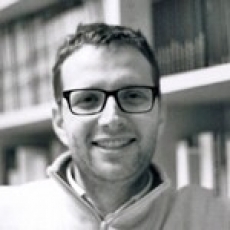
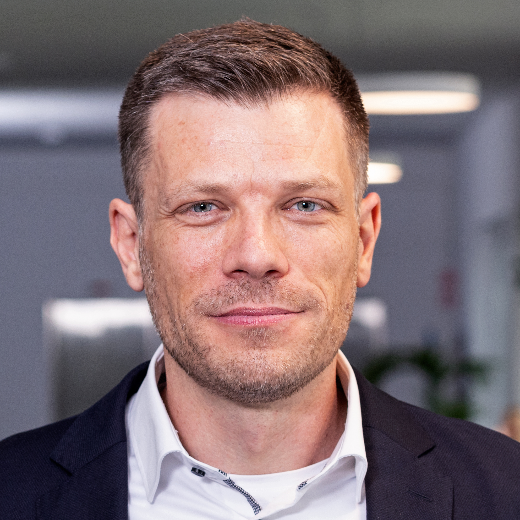
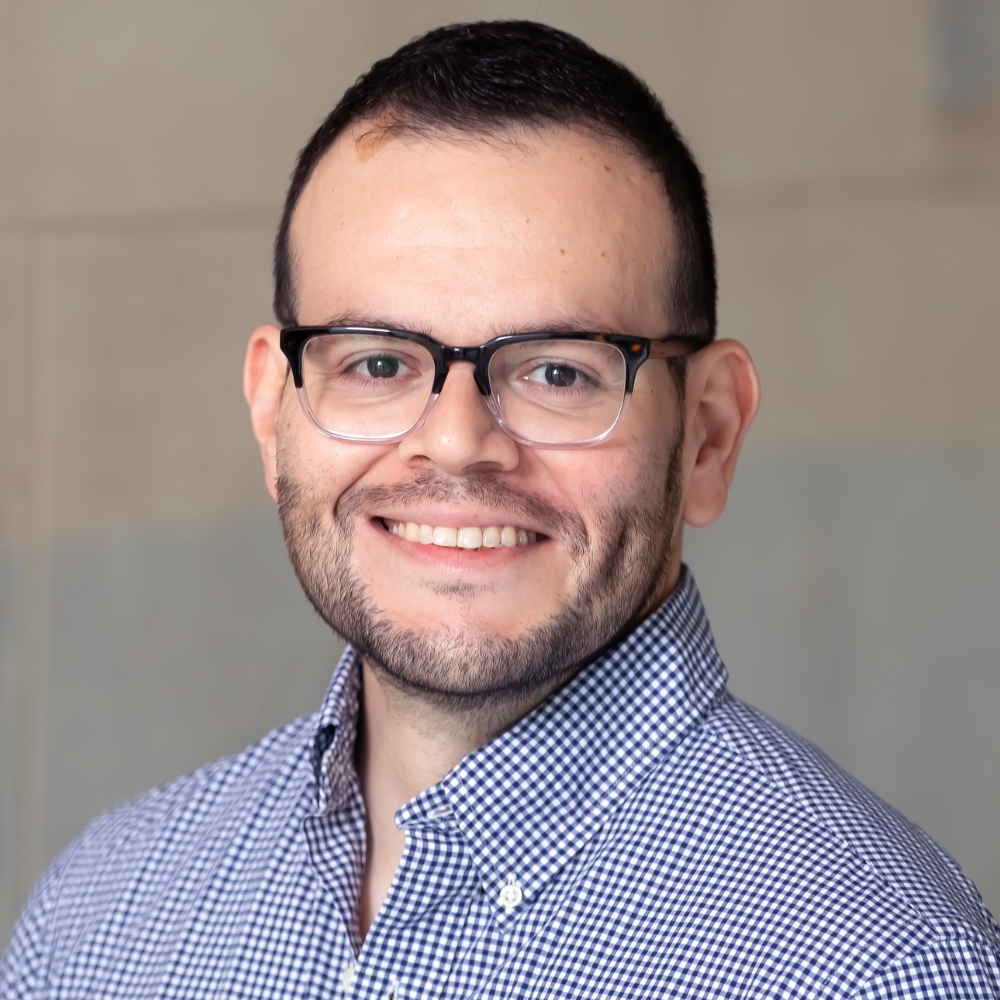
Hannu Saarijärvi is a Professor in the Faculty of Management and Business at Tampere University, specializing in Marketing. His research bridges consumer behavior, retail innovation, and data-driven health studies. Based in Tampere University's City Centre Campus, he explores transformative retailing and societal impacts of consumer data. University: Tampere University School: Faculty of Management and Business Department: Business Studies Email: hannu.saarijarvi@tuni.fi His research focuses on consumer behavior in omnichannel and second-hand retailing, data analytics using loyalty card datasets, and health research linking maternal experiences to dietary patterns. Recent studies examine sustainable diets , alcohol consumption dynamics , and food waste reduction . Key article trends highlight loyalty card data applications in health informatics , retail transformation , and sustainability . Collaborative studies with Finnish institutions analyze population-level consumption behaviors, legislative impacts, and digital service innovations. Professor Saarijärvi's work emphasizes value co-creation , customer experience , and strategic digitalization in retail contexts, with practical implications for public health and business models.
Dr. Will Grant is an Associate Professor in Science Communication at the Australian National University’s Australian National Centre for the Public Awareness of Science. His work focuses on science communication, public policy, and the intersection of science with politics and technology. He holds a PhD from The University of Queensland and has been at ANU since 2008. His research explores science communication strategies, misinformation dynamics, and the societal impacts of emerging technologies. He has authored over 100 publications in outlets like Public Understanding of Science and Environmental Communication , and his work has reached 1.8 million readers on The Conversation . He co-founded PostAc, a platform analyzing PhD job markets, and has advised organizations including the Office of the Chief Scientist and CSIRO. Grant’s research interests include science communication pedagogy, the role of social media in shaping public discourse, and the ethical dimensions of geoengineering. He has organized high-impact outreach initiatives like the Long Conversations dialogue series and hosts the podcast The Wholesome Show . His awards include the Vice Chancellor’s Award for Public Policy and Outreach (2015) and the Sidney Sax Medal (2020). He supervises numerous graduate students and teaches courses on science communication ethics, digital media, and science-policy interaction.
Bruce A. Markell is a Professor of Bankruptcy Law and Practice and Edward Avery Harriman Lecturer in Law at Northwestern University Pritzker School of Law. Formerly a U.S. Bankruptcy Judge and academic at Florida State, Indiana, and Harvard, he specializes in bankruptcy, commercial law, and cross-border insolvency. He consults for the IMF on insolvency issues and drafted Kosovo’s bankruptcy law. Education: BA, Pitzer College JD, University of California, Davis Markell’s research focuses on bankruptcy equity, fraudulent transfers, and comparative bankruptcy systems. His work bridges judicial practice, legislative reform, and international cooperation, emphasizing practical applications in corporate reorganization and small business insolvency. Recent publications analyze fraudulent transfer laws, cross-border Chapter 15 recognition, and equitable mootness. He contributes to Collier on Bankruptcy and co-authors casebooks on contracts and secured transactions. Scientific Awards: 2022 Lawrence P. King Award (Commercial Law League of America) Markell co-founded the NITA-trained faculty for the Advanced Consumer Bankruptcy Practice Institute and serves on the editorial advisory board of Collier on Bankruptcy . His IMF consultancy spans missions to Ireland, Kosovo, and Greece, influencing global insolvency frameworks.
Gianluca Passarelli is a Full Professor at the Department of Political Science, Sapienza University of Rome. His academic work focuses on Political Science and Comparative Politics , particularly Electoral Systems , Political Parties , and Presidentialization . University: Sapienza University of Rome Department: Department of Political Science Email: gianluca.passarelli@uniroma1.it His research explores preferential voting systems , electoral reform , party transformation , and executive institutional dynamics across Italy, Europe, and the Western Balkans. Recent works analyze the 2020 Italian constitutional referendum , Salvini's League evolution , and democratization processes in the Western Balkans . Key projects include Institutional Settings and Voting Behavior (INSET&VOTE) , Populism and Euroscepticism , and DeDec (Democracy in Decline) . His publications span books like Preferential Voting Systems (Palgrave, 2019) and chapters in major handbooks.
Dr. J. David Frost is the Elizabeth and Bill Higginbotham Professor of Civil Engineering at Georgia Institute of Technology and a Regents' Entrepreneur. He has held academic positions at Purdue University and Georgia Tech, with a focus on geotechnical engineering and disaster response. As founding director of Georgia Tech's Savannah campus and head of the Geosystems Engineering Group, Frost has shaped academic programs and research initiatives. Education: B.A.I and B.A. in Civil Engineering and Mathematics, Trinity College, Dublin (1980) M.S. and Ph.D. in Civil Engineering, Purdue University (1986, 1989) Research Interests span geotechnical engineering, bio-inspired design, and disaster resilience. His work emphasizes digital data collection systems for subsurface hazard assessment, soil-polymeric material interactions, and geotechnical responses to earthquakes, hurricanes, and anthropogenic disasters. Recent projects integrate ant nest geometry, plant root mechanics, and geosynthetic innovations into infrastructure solutions. Scientific Contributions include two U.S. patents for subsurface data systems, leadership in NSF-funded post-disaster reconnaissance missions (e.g., 9/11, Türkiye earthquakes), and co-founding the Geotechnical Extreme Events Reconnaissance (GEER) Association. His articles reflect expertise in bio-inspired geotechnics, machine learning for disaster modeling, and advanced computational simulations. Awards & Recognition: ASCE Huber Civil Engineering Research Prize NSF National Young Investigator Award Georgia Society of Professional Engineers Engineer of the Year in Education Coastal Business & Education Technology Alliance Leadership Innovation Award Professional Engagement includes chairing the Savannah Area GIS board, advising on ASCE Geo-Legislative Committees, and founding a software company serving 350+ global clients. His work bridges academia, policy, and industry innovation.
Tyler Simko is an Assistant Professor of Political Science at the University of Michigan, specializing in US state and local politics, political geography, and computational social science. His research focuses on understanding and addressing inequality in American public policy through innovative methodological approaches. Education: Ph.D. in Government, Harvard University (2024) A.B. in Politics, Princeton University Simko's research examines state and local politics in the United States with particular focus on political geography and subnational policymaking. His active research agendas include legislative redistricting ("gerrymandering"), local public meetings, school segregation, affordable housing, and data privacy. Methodologically, he develops new techniques in computational social science and machine learning to evaluate subnational inequality and how it can be reduced. His work regularly involves partnerships with federal, state, and local officials to improve the design of public policy. His recent publications demonstrate a strong focus on applying computational methods to address real-world policy challenges, particularly in school desegregation, redistricting, and local government transparency. His research often leverages large-scale data collection efforts, such as LocalView (the largest database of local government meetings in the US), to analyze patterns of political behavior and policy outcomes across different jurisdictions. Awards and Recognition: APSA 2024-25 Best Paper in Education Politics and Policy Award APSA 2024-25 Best Paper in Urban and Local Politics, Honorable Mention MPSA 2024 Robert H. Durr Award for "the best paper applying quantitative methods to a substantive problem" Derek C. Bok Award for Excellence in Graduate Student Teaching of Undergraduates (2023) Simko teaches graduate and undergraduate courses in American Politics and Political Methodology at the University of Michigan. His teaching experience spans multiple institutions, including Harvard University and Princeton University. He has designed innovative courses on US Local Policymaking, data science, and computational social science. As a Data Scientist at the Office of Evaluation Sciences, he partners with federal, state, and local officials to improve program design and reduce administrative burdens. He is a co-PI of the Algorithm-Assisted Redistricting Methodology (ALARM) Project and co-creator of LocalView, the largest audio, video, and text database of local government meetings in the United States. These projects represent significant contributions to the field of computational social science and provide valuable resources for researchers studying local governance and policy-making.
Professor Heather Wardle is a distinguished social scientist at the University of Glasgow's School of Social and Political Sciences, holding dual appointments in Urban Studies & Social Policy and the School of Health & Wellbeing. With nearly twenty years of experience, she specializes in gambling research, policy, and practice, serving as co-director of Gambling Research Glasgow and leading the prestigious Lancet Public Health Commission on Gambling. Her work is supported by major funding bodies including the ESRC, Wellcome Trust, and NIHR. Professor Wardle's research explores the evolving relationship between gambling and gaming behaviors, particularly how technological changes create new risks and opportunities. She investigates how policy evidence is framed and developed, with a strong emphasis on incorporating lived experience into decision-making processes. Her work bridges academic research, public health policy, and practical interventions, focusing on understanding gambling's impact on individuals' lives and developing effective solutions. Her extensive publication record demonstrates significant contributions to understanding gambling consumption patterns, gambling harms, sports betting culture, and the intersection between gaming and gambling. Recent work shows increasing attention to mental health impacts, policy development, and evidence-based interventions, particularly regarding vulnerable populations and specific contexts like football fan culture. Professor Wardle has played leadership roles in major research initiatives including the Health Survey for England and the British Gambling Prevalence Survey. She has developed innovative approaches to measuring gambling harms and has contributed significantly to shaping gambling policy through her evidence-based recommendations. Her work extends to developing practical tools like the 'Words Matter' language guide for respectful reporting on gambling. She leads Gambling Research Glasgow and has established significant collaborations across academic, policy, and practice domains. Her research team has conducted important studies on gambling harms in social care settings, esports betting, and the relationship between gambling marketing and unplanned gambling spend. Current projects include longitudinal studies of gambling careers during the pandemic and interventions targeting at-risk male sports bettors.
Andreas Stephan is a Professor of Competition Law and Head of the School of Law at the University of East Anglia. His expertise spans Competition Law, Subsidy Control, and White Collar Crime . He advises the UK’s Competition and Markets Authority (CMA) and contributed to global legislative reforms through research on public attitudes to cartels and criminalization frameworks. He has held visiting roles at Hong Kong University and Melbourne University, and serves on UNCTAD’s Research Partnership Platform. His research focuses on cartel enforcement dynamics, private enforcement mechanisms, and post-Brexit regulatory shifts . Recent work includes analyzing the UK’s subsidy control regime and leading a landmark opt-out collective action against Amazon, successfully securing carriage rights in January 2025. Key activities include panel memberships at ICN, participation in high-profile conferences, and media commentary in major outlets like Financial Times and BBC . His projects include a Korean Government Fellowship (2016–2018) and co-leadership of the Centre for Competition Policy’s Phase 2 (2009–2014). Research trends emphasize legal-economic intersections in competition policy, with recent work addressing corporate compliance failures, post-pandemic market coordination risks, and the evolving role of private enforcement in deterring anti-competitive practices. Grants & Projects: Lead researcher on Korean Government Long-Term Fellowship (2016–2018) Principal investigator for CCP Phase 2 (2009–2014) funded by the ESRC Consultant for national competition authorities and UK Department of Business Labs/Teams: Member of UEA’s Centre for Competition Policy and Competition, Markets and Regulation research group.
Dr. Imen NOUIRA is a Full Professor in the Supply Chain Management & Information Systems Academic Area at Rennes School of Business (since 2023). She holds a Ph.D. from Grenoble INP (2013) and has extensive academic experience, progressing from Assistant Professor (2012-2019) to Associate Professor (2019-2023). Her research focuses on supply chain optimization under environmental considerations, carbon emissions modeling, and pandemic logistics. She has published in top journals like European Journal of Operational Research and International Journal of Production Economics. Key research interests include: Environmental Sustainability : Green supply chain design, carbon taxation strategies, and eco-friendly product development Healthcare Supply Chains : Pandemic medical product distribution and crisis management Operations Research : Inventory optimization, lead time coordination, and stochastic modeling Her work has been recognized with awards such as the 2017 2nd Best Student Paper Award at IESM. She actively contributes to international conferences and collaborates with industry partners on projects like olive oil supply chain design and carbon tax policy analysis. Rennes School of Business affiliations include roles in the: Green, Digital & Demand-Driven Supply Chain Management (G3D) research center Agribusiness, Sustainable Development, and CSR initiatives
Richard Lang is an Extraordinary Professor at the University of Bolzano within the Faculty of Economics , specializing in cooperative management, social entrepreneurship, and housing policy. He leads the Competence Center for Cooperative Management , focusing on innovative models for community-led housing and nonprofit sector development. His research emphasizes the role of social capital, institutional contexts, and collaborative governance in fostering sustainable urban and rural development. Recent work highlights his engagement with cooperative housing initiatives , including studies on social innovation in Vienna, grassroots movements in England, and rural entrepreneurship across Europe. Lang’s interdisciplinary approach bridges economics, sociology, and urban planning to address systemic challenges in housing equity, community integration, and policy implementation. Education Background: Not explicitly stated in provided texts. Labs/Teams: Competence Center for Cooperative Management (University of Bolzano). Grants/Awards: None listed in the provided texts. His articles consistently analyze the intersection of institutional frameworks and grassroots action, emphasizing how cooperative models can drive social and economic sustainability. Key themes include contextual adaptation of policies, multilevel social capital utilization, and the governance challenges in collaborative housing systems.
Pascal Sciarini is a Full Professor in the Department of Political Science and International Relations at the Faculty of Social Sciences, University of Geneva, where he has been a faculty member since 2005. He currently serves as Dean of the Faculty of Social Sciences since July 15, 2022, and previously directed the Department of Political Science and International Relations from 2005 to 2010 and again from 2015 to 2017. He has also held academic positions at the University of Basel and IDHEAP in Lausanne. Doctorate in Political Science Professor at University of Basel, IDHEAP Lausanne, and University of Geneva Dean of Faculty of Social Sciences (2022–present) Director, Department of Political Science and International Relations (2005–2010, 2015–2017) His research focuses on Swiss politics, political behavior, comparative politics, direct democracy, Europeanization, and decision-making processes. He has published extensively on Swiss political institutions, electoral behavior, and the impact of European integration on non-EU countries. His work often combines quantitative analysis with comparative perspectives. The most recent articles reflect a strong focus on electoral behavior in direct democracies, media and parliamentary agenda-setting, Europeanization, and the methodological challenges of survey research in political science. His publications frequently appear in top journals such as European Journal of Political Research , West European Politics , and Electoral Studies , and he contributes to major reference works like The Oxford Handbook of Swiss Politics . Scientific Awards and Honors: President, Swiss Political Science Association (2018–2021) Member, SNSF Scholarship Commission (2011–2018) Member, Swiss Academy of Humanities and Social Sciences (ASSH) Committee (2011–2018) Founder and President, Doctoral Program in Political Science of Western Switzerland (2005–2018) Sciarini has supervised several doctoral and master’s students and has been involved in numerous research projects analyzing opinion stability, campaign effects, and e-voting. He has led or contributed to major research reports on political participation, electoral reform, and parliamentary behavior in Switzerland. His work underscores the evolving nature of Swiss consensus democracy amid increasing partisanship, mediatization, and European influence. Laboratories and Research Teams: He has been central to the Swiss Political Science research community and has collaborated extensively with scholars at the University of Geneva and beyond, particularly through the Department of Political Science and International Relations and the Doctoral Program in Political Science of Western Switzerland.
Professor Nick Vivyan is a Professor in Political Science at Durham University's School of Government and International Affairs, where he joined as Lecturer in Quantitative Social Research in 2010 and was promoted to Professor of Politics in 2018. He serves as Fellow of the Durham Research Methods Centre and Professor at the Centre for Institutions and Political Behaviour. Education: PhD in Political Science, London School of Economics (2010) Visiting Researcher, Stanford University (2008) Vivyan specializes in quantitative and experimental analysis of political behaviour, accountability, and representation with UK focus. His research bridges British politics, legislative studies, political economy, public opinion, and electoral systems through rigorous methodological innovation. He particularly examines voter-MP relationships, electoral dynamics, and methodological challenges in survey research. His recent publications reveal consistent focus on electoral behaviour measurement (turnout misreporting, constituency opinion estimation), legislative accountability mechanisms, and cross-national polarization trends. Methodologically, he pioneers experimental designs and survey innovations while maintaining historical and comparative perspectives. Supervision & Grants: PhD supervision in British/comparative politics, electoral behaviour, and legislative politics (e.g., Elisabeth de Vega Alavedra) Principal investigator on ESRC, British Academy, and Leverhulme Trust grants including £504k ESRC/AHRC project on electoral violence (1832-1914) Co-investigator on international projects funded by Austrian National Bank and European research councils As founding member of Durham's Centre for Institutions and Political Behaviour, Vivyan contributes to interdisciplinary research on political institutions and citizen behaviour while serving on the Editorial Board of Electoral Studies .
Dr Leon Davis is a Senior Lecturer in Marketing and Events Management at Teesside University International Business School. He holds a PhD in Sports Event Sociology from Teesside University (2020), an MA in Sport, Culture and Community from Sheffield Hallam University (2012), and a Bachelor’s in Sports Sociology (2007). His research focuses on fandom, sports marketing, live event management, and prosumption. Notable projects include critical analysis of fan roles at PDC darts events and the impact of digital technologies on live spectacles. He has also explored EDI provisions at events and accessibility in sports venues. Recent publications (2023-2025) examine topics like fan engagement policy reforms, sportswashing in elite sports, and accessibility innovations at live events. His work has been published in journals like Managing Sport and Leisure and Cultural Trends . Leon is a Senior Fellow of the Higher Education Academy (SFHEA) and has extensive teaching experience across modules including Strategic Marketing and Research Methods. He supervises PhD, DBA, and postgraduate research projects.
Peter K. Smith is a Professor in Psychology at Goldsmiths, University of London. His research focuses on bullying and cyberbullying prevention, peer relationships, and child development. He has led numerous international studies on bullying dynamics across cultures, age groups, and socioeconomic contexts. His work bridges developmental psychology with educational policy, emphasizing practical interventions in school settings. Education: Extensive academic background in psychology (details inferred from publications). Research interests include cross-cultural bullying patterns, the impact of school policies, and the psychological effects of cyberbullying. His recent work examines bullying among vulnerable populations such as children in social care and LGBTQ+ youth. Articles explore topics like the 'Healthy Context Paradox' in bullying outcomes and the development of multidimensional coding systems for online experiences. Collaborations span Europe and include projects funded by Erasmus+ programs. No specific awards listed, but his extensive publication record indicates significant academic contribution. Advising roles and grant details are not explicitly stated in the provided texts. Led research teams on projects like the Blurred Lives Project and contributed to the Health Behaviour in School-aged Children (HBSC) surveys. Current research priorities include improving anti-bullying policies and understanding sibling bullying dynamics.
Dr. Sergio Ascencio is a Lecturer in the Department of Government at the University of Essex. He holds a PhD from the University of Rochester (2018). His academic career includes roles as Assistant Professor at the University of New Mexico (2019–2021) and Postdoctoral Associate at NYU Abu Dhabi (2018–2019). His research focuses on comparative politics, electoral systems, and political behavior, with a regional emphasis on Mexico and South Asia. Key themes include primary elections, vote buying, political dynasties, and party strategies. His work employs experimental methods and institutional analysis to explore questions of governance and democratic accountability. Recent publications (2021–2024) examine nomination rules, primary adoption, and voter dynamics across multiple countries. His 2019 study on partisan poll watchers and electoral manipulation highlights expertise in electoral integrity. Earlier work (2015, 2009) addresses issue salience modeling and delegation mechanisms in Mexican state legislatures. Contact: Email at sergio.ascencio@essex.ac.uk or via Zoom during academic support hours (Tuesdays 2–4 PM).