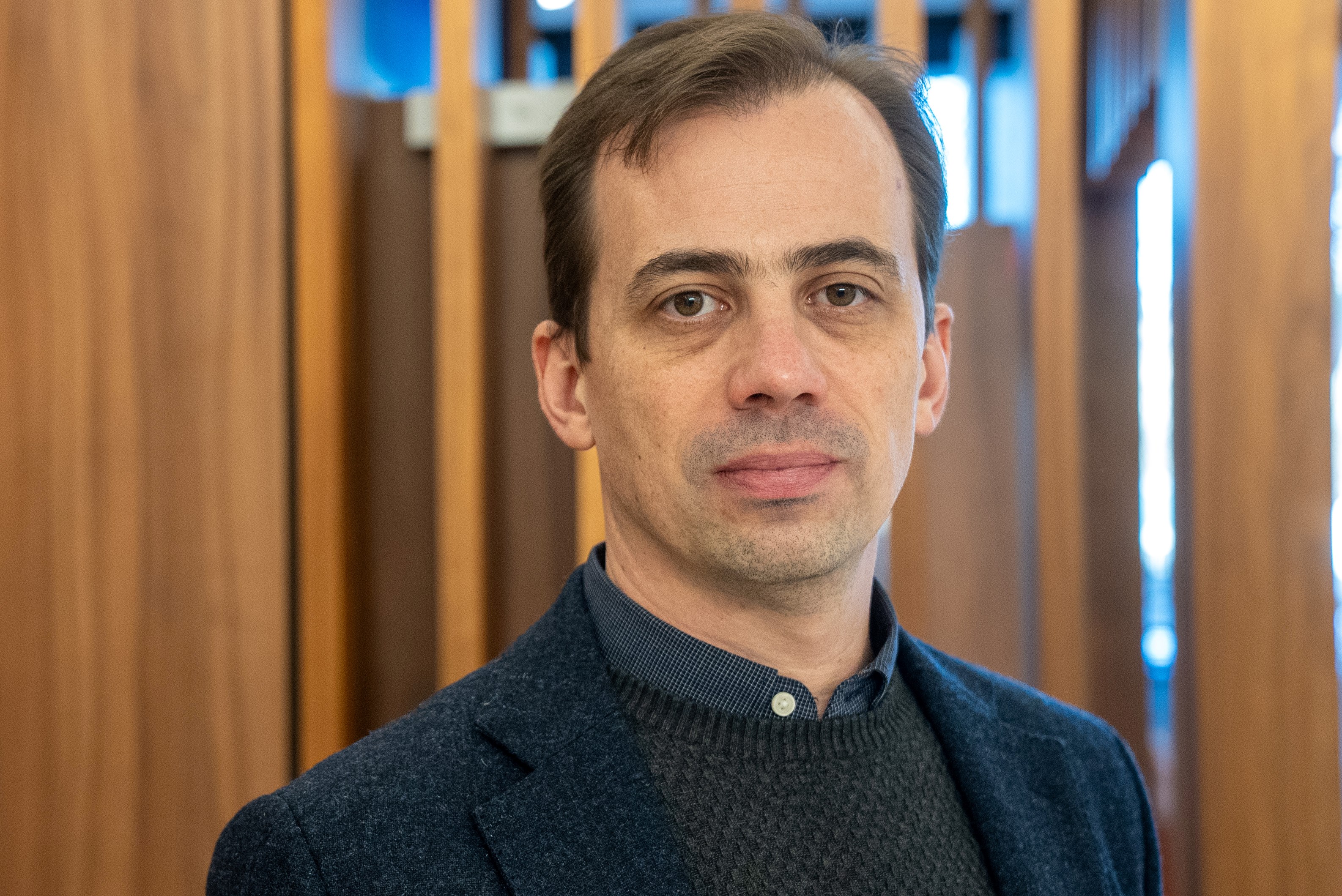
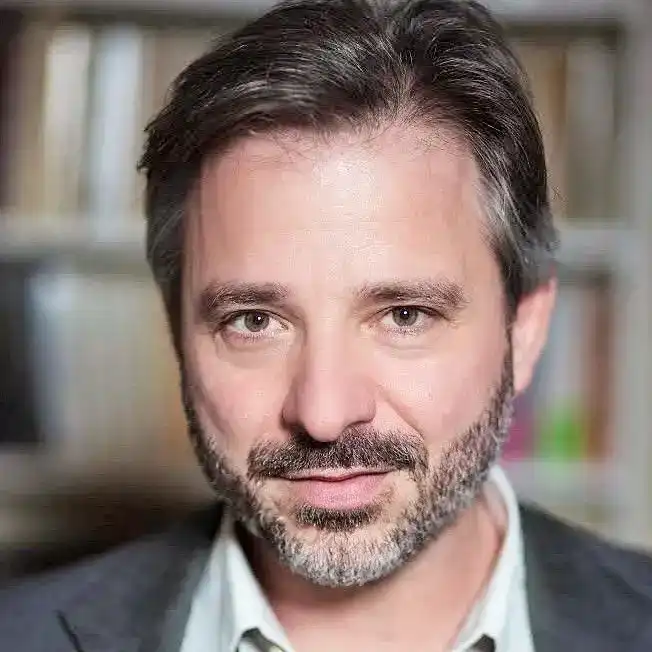
Caroline Andre is an Associate Professor of Law at NEOMA Business School, specializing in private law with a focus on labor law, marketing law, and cooperative law. She teaches undergraduate and graduate students in both initial and continuing education programs, and has practiced law professionally. Her research bridges legal and management disciplines, addressing topics like social and solidarity economy (SSE), circular economy intersections, CSR policies, and entrepreneurial values. Her academic contributions span legal journals and management science publications, including monographs like Creating the Circular Economy (2024). She actively participates in national/international communities like EURAM and ACfas. Recent work examines SSE's role in ecological transition, pandemic crisis adaptation, and labor law compliance in SMEs. Key research outputs include analyses of social audits in SME acquisitions (2022), employer pooling models (2019-2020), and legal frameworks for SSE organizations. Her work frequently explores regulatory pressures and ethical governance in business environments. Caroline has no listed scientific awards but has contributed to numerous regionally funded research projects. Her teaching extends to professionals via continuing education, emphasizing practical legal applications in business contexts.
Hélène Charlery is a Lecturer in Anglophone Studies at the Université Toulouse - Jean Jaurès, affiliated with the Center for Anglophone Studies (CAS). She has held this academic position since 2008 and is actively engaged in research and scholarly activities. Her primary research interests center on intersectionality in American cinema and series , with a specific focus on Black American female directors and the representation of African American women in film and media. Her work critically examines the intersections of race, gender, and sexuality in visual narratives. Her recent publications, including the 2024 journal issue Mainstreaming Intersectionality in Contemporary Cinema and Television which she co-edited, and articles on films by Dee Rees, Ava DuVernay, and Jordan Peele, demonstrate a consistent and evolving scholarly trajectory. Her research analyzes how contemporary films and television series negotiate complex social identities and political themes, particularly through the lens of Black feminism. Scientific Responsibilities Co-Secretary of the Society for the History of Women in the Americas (SHAW) Thesis Supervision Co-supervised the doctoral thesis of Mikael Toulza on Voodoo in North American audiovisual fiction. She has presented her research at numerous international conferences, contributing to academic discourse on gender, race, and representation in the English-speaking world.
School for Advanced Studies in the Social SciencesFrance
Claire Zalc is a CNRS Research Director and Director of Studies at École des hautes études en sciences sociales (EHESS), with affiliations to the Institute of Modern and Contemporary History (IHMC), the Centre de Recherches Historiques (CRH), and the GLOBAL department at the Institut Convergence des Migrations. Her work bridges migration history, Holocaust studies, and quantitative methodologies. Her research focuses on the intersection of migration and persecution in the 20th century, particularly through prosopographical studies like Face à la persecution (2010) and Dénaturalisés (2016), which examine administrative interactions under the Vichy regime. She also explores the use of quantitative methods in historical research, co-authoring Quantitative Methods. An Introduction (2019). Recent projects, such as the ERC Consolidator LUBARTWORLD (2019–2025), analyze transnational mobilities and persecution through case studies in Lubartów and other locations. Key themes in her publications include Vichy-era denaturalization , Polish Jewish migrations , and microhistories of the Holocaust . Her work often integrates spatial analysis and relational data frameworks, as seen in contributions to sequence analysis and social network studies. Scientific Distinctions : Bronze Medal of the CNRS (2013) Prix Malesherbes d’histoire de la Justice (2017) Finalist, Eugen Weber Book Prize (2022) Prix André Conquet for Melting Shops (2010) She co-edits the journal Revue d’histoire de la Shoah and previously co-directed the Histoire-Repères collection at La Découverte (2008–2021). Her methodological expertise has shaped training programs at EHESS and collaborative research initiatives like PERSI (Internet Social Networks Study Program) and relational data analysis.
Emmanuelle Tourme-Jouannet is a Professor at Sciences Po Law School, where she leads research in critical international law theory and ecological justice. Affiliated with the Law School's Research Center, she directs the international research program "Justice and International law in a global world" and serves as co-editor-in-chief of the Journal of History of International Law. Her academic foundation includes: Master in International Law, Université Paris II (Panthéon-Assas) Master in Philosophy of Law, Université Paris II (Panthéon-Assas) Master in Political Philosophy, Université Paris IV (Sorbonne) PhD in Law, Université Paris II (1993) Professor Tourme-Jouannet's work fundamentally interrogates international law through decolonial lenses , examining colonial legacies, recognition theory, and ecological transformation. Her scholarship bridges legal history , philosophy , and human rights , with increasing focus on environmental justice since 2021. She pioneers frameworks for ecological international law while maintaining critical analysis of capitalism's relationship with global legal structures. Analysis of her 15 most recent publications reveals three dominant trajectories: (1) Decolonization through recognition theory (2019-2023), (2) Ecological reimagining of international law (2021-2024), and (3) Historical critiques of colonial international law (2011-2021). These strands converge in her argument for a reconstructed international society based on justice rather than power. Her scientific recognition includes: Université Paris II’s doctoral award Chancellerie des Universités de Paris’ Maurice Picard Prize Académie des sciences morales et politiques’ Dupin-Ainé Prize Professor Tourme-Jouannet has directed major academic programs including the Master in International Law at Paris I and the French-American double degree with Columbia/Cornell. She supervises doctoral candidates through Sciences Po's PhD program and leads the IREDIES-CERDIN research initiative. Her editorial leadership spans the European Journal of International Law and Harvard's Global Law and Policy Institute. Current research focuses on implementing ecological rights frameworks through the "Un droit sans conditions pour le vivant" project, positioning her at the forefront of international law's response to the planetary crisis.
Yoann Demoli is a Lecturer in Sociology at the University of Versailles Saint-Quentin-en-Yvelines (UVSQ), part of the Université Paris-Saclay. He is affiliated with the PRINTEMPS Laboratory (CNRS-UVSQ) and the Quantitative Sociology Laboratory at CREST. His academic career spans over a decade with teaching and research positions at various prestigious French institutions including Sciences Po Paris and Paris 8 University. His educational background includes: Doctoral thesis in sociology under Philippe Coulangeon at Sciences Po Paris (2010-2015) Master 2 in Sociology and Statistics from School for Advanced Studies in Social Sciences and ENS Paris (2009-2010) Master 1 in Sociology from University of Paris IV (2007-2008) Bachelor's degrees in Sociology and Economics from Universities of Paris IV and I (2006-2007) Preparatory classes at Lycée Carnot and Lycée Henri IV (2003-2006) Demoli's research focuses on the sociology of consumption, social stratification, environmental sociology, and particularly the sociology of the automobile. His work employs quantitative methods to analyze how automobile use and ownership patterns reflect and reinforce social inequalities. He examines how factors like class, gender, and geography influence mobility practices, with particular attention to working-class households in peri-urban and rural areas. His research reveals complex relationships between environmental attitudes and actual car use behaviors, challenging simplistic narratives about ecological conversion. His publications demonstrate a consistent focus on the intersection of social structure and mobility practices, with particular attention to historical trends and class analysis. The collection shows a progression from analyzing specific aspects of automobile culture to broader questions of ecological conversion and social stratification in transportation systems. His scientific work has been recognized with the Young Author Prize at the 22nd GERPISA International Conference in 2014. He regularly contributes to academic discourse through peer review for journals such as Acts of Research in Social Sciences and Transport Security Review. As an advisor, Demoli has supervised numerous undergraduate research projects and master's theses on topics ranging from police uniforms to online dating sociology. His current research projects include CONDUIRE (financed by ADEME), a study on magistrates' mobility funded by the Ministry of Justice, and research on the social drivers of ecological conversion coordinated by Philippe Coulangeon. Within the academic community, Demoli co-organizes the workshop 'Quantitative Sociology and Sociology of Quantification' and co-leads the Mobility theme of the Federation for Research in Computer, Human and Social Sciences at UVSQ. He also serves as Director of the Department of Sociology and Geography at UVSQ and is an active participant in research dissemination through media appearances.
Ana Paulina Lee is an Assistant Professor of Writing and Digital Humanities in the Comparative Literature, English, and Creative Writing Department at the American University of Paris. She joined AUP in 2025 after teaching Latin American literature and culture at Columbia University for eight years and serving as a Mellon Postdoctoral Fellow at Tulane University. Her interdisciplinary scholarship bridges literature, history, law, and urban studies with particular focus on marginalized narratives in the Americas. Ph.D. from University of Southern California M.A. from New York University B.A. from Binghamton University Professor Lee's research examines how stories—archival, fictional, oral—shape legal imagination, social life, and urban experience in the Americas. She specializes in the intersections of magic, law, and literature in Latin America, with particular focus on Asian and African diasporas in Brazil. Her work traces how narrative functions as both historical record and catalyst for social transformation, exploring themes of slavery, emancipation, colonial legacies, and urban memory. She approaches these topics through interdisciplinary lenses combining literary analysis with histories of labor, migration, and performance. Lee's recent publications reveal a consistent focus on marginalized narratives and their impact on social structures. Her scholarship connects legal history with cultural production, showing how magical thinking and narrative practices shape urban spaces and social relations. Works like 'Urban Sorcery, Segregation, and Spectacle in Twentieth-Century Rio de Janeiro' and 'Black Magic City' demonstrate her innovative approach to understanding the relationship between occult logics and legal frameworks in Brazilian contexts. Her research on diasporic communities, particularly Chinese and Japanese experiences in Latin America, contributes significantly to transnational and comparative race studies. David B. Larson Fellowship in Health and Spirituality, Kluge Center, United States Library of Congress (2025-2026) National Endowment for the Humanities Fellowship (2025) Social Sciences Research Council, Inaugural Recipient of Interdisciplinary Projects in the Social Sciences (2020-2023) Institute for Ideas and Imagination Fellowship, Columbia University in Paris, France (2021-2022) Provost's Tsunoda Senior Fellowship, Visiting Scholar, Waseda University, Tokyo, Japan (2019) Heyman Center Fellow, The Heyman Center for the Humanities, Columbia University (2017-2018) Fulbright, Lisbon, Portugal (2013-2014) Professor Lee's scholarly activities have been generously supported by major research grants from the National Endowment for the Humanities, the Social Sciences Research Council, and the Library of Congress. Her work demonstrates a commitment to interdisciplinary approaches that bridge humanities and social sciences, particularly through projects examining intersections of race, migration, and cultural production in the Americas. Her publication 'Socially Engaged Oral History Pedagogy Amid the COVID-19 Pandemic' indicates a strong commitment to innovative teaching methods and community-based research. While specific details about current advisees aren't provided, her research program suggests engagement with graduate students interested in diaspora studies, urban history, and literary-cultural analysis. Though not explicitly mentioned in the available information, Professor Lee's research on urban spaces, magic, and law in Brazil likely involves collaborative work with scholars across disciplines. Her participation in centers like the Institute for Ideas and Imagination at Columbia University suggests engagement with interdisciplinary research communities focused on global cultural production and social transformation. Her work contributes to ongoing conversations about how narrative practices shape legal frameworks and social structures in the Americas, particularly regarding racial formation and diasporic experiences.
Mariana Dias Paes is an Assistant Professor of Law and Society in the Department of History and Politics at The American University of Paris. Her research focuses on race, citizenship, colonialism, and the law in former Portuguese colonies in Africa and the Americas (particularly Angola, Brazil, Cape Verde, and Guinea-Bissau) between 1750-1930. Her work examines colonial courts as sites where Africans contested colonialism and asserted rights to freedom, property, and improved working conditions. Education includes: Ph.D. in Law from University of São Paulo and Max Planck Institute for European Legal History (2018) M.A. in Law from University of São Paulo (2014) B.A. in Law from Federal University of Minas Gerais (2010) Her research has wide implications for understanding emancipation, citizenship, decolonization, and race, while unearthing African participation in multiple legal systems. She leads digital humanities projects preserving endangered colonial judicial archives in Cape Verde and Guinea-Bissau. She has led digitization efforts for approximately 10,000 colonial court records and organized endangered judicial collections at national archives.
Sylvain Kahn is a Tenured Lecturer at the Centre for History (CHSP) at Sciences Po , specializing in the history and geography of European integration. He holds a PhD in Geography, the agrégation (highest state teaching qualification) in History, and a degree in Geopolitics. Education : PhD in Geography, agrégation in History, Ecole Normale Supérieure (Fontenay-Saint-Cloud/Lyon), Geopolitics degree. Teaching : European integration and geopolitics at Sciences Po since 2001; leads 'History of European integration' class in the Master of European Affairs program. Research interests center on the role of nation-states in European integration, the territoriality of the European Union, and the Europeanization of higher education. His work bridges historical analysis with geopolitical frameworks, examining paradoxes in EU territorial governance. Recent publications include analyses of EU crises (e.g., Brexit, pandemic responses), geopolitical dynamics (e.g., Franco-German leadership), and cultural studies (e.g., 'La Reine Margot' as feminist critique). He has also explored the interplay between EU territorial policies and national sovereignty. Professional contributions extend to media production: he created the MOOC 'Geopolitics of Europe' (available in French and English) and hosted the radio program 'Planète Terre' on France Culture (2006-2016). He has served on examination juries (ENA) and as an expert for the European University Association.
Carlos Eduardo Suprinyak is an Associate Professor of Economics and Management at the American University of Paris (AUP), where he has been since 2021. His academic journey includes roles at Brazil's Federal University of Minas Gerais (UFMG) and visiting fellowships at the University of Chicago, Duke University, and Université Lumière Lyon 2. He currently serves as Vice President of the Latin American Society for the History of Economic Thought (ALAHPE) and Secretary of the History of Economics Society (HES). His research focuses on the history of political economy, with expertise in economic methodology, international trade, and development economics, particularly in Latin America and early modern Europe. Suprinyak holds a Habilitation from Bourgogne-Franche-Comté University (2021), a Ph.D. from UFMG (2010), and degrees from Brazilian institutions. His work has been recognized with prestigious awards, including the Craufurd Goodwin Prize (2017 and 2023) and the ESHET Young Researcher Award (2019). His research explores historical intersections of economics and politics, such as trade policy debates in 17th-century England, interwar international order, and the Cold War-era shaping of Latin American economics. He has co-edited volumes like *Political Economy and International Order in Interwar Europe* (2020) and *The Political Economy of Latin American Independence* (2017), and authored studies on figures like Nicholas Georgescu-Roegen and Lionel Robbins. Suprinyak teaches courses in macroeconomics, international economics, and the history of political economy. His grants and fellowships include a Fulbright award and a visiting research fellowship at Duke University’s Center for the History of Political Economy.
University of Versailles Saint-Quentin-en-YvelinesFrance
François Robinet serves as a Lecturer in Contemporary History at the University of Versailles Saint-Quentin-en-Yvelines (UVSQ), where he is an elected member of the Council of the Institute of International Cultural Studies. He concurrently directs the Graduate School of Humanities and Heritage Sciences at the University of Paris-Saclay and holds appointments with the Laboratory Center for the Cultural History of Contemporary Societies (CHCSC) and the 22nd section of the CNU. Education: Doctor of History (2012) Robinet's research centers on 20th-21st century cultural and political history, with concentrated expertise in the Rwandan Tutsi Genocide, post-colonial Franco-African memory politics, and media history since 1990. His work critically examines French journalistic coverage of African conflicts, international information manufacturing during wartime, and the cultural history of colonial and post-colonial societies. He employs interdisciplinary approaches bridging media studies, genocide research, and digital humanities to analyze historical narratives and memory construction. His 15 most recent publications (2016-2023) reveal consistent thematic focus on Rwandan genocide documentation, Franco-Rwandan historical accountability, and media's role in shaping political memory. Key trends include digital methodologies for genocide archives, analysis of French state-media interactions during crises, and evolving commemorative practices through digital platforms. The work demonstrates increasing engagement with digital humanities tools while maintaining rigorous historical analysis of colonial legacies. No scientific awards were documented in the source material. Robinet coordinates the international RwandaMAP2020 research network mapping genocide documentation sites and serves as Vice-president of the Association for the Development of Cultural History. He is an active member of the Society for the History of Media (SPHM) and editorial board of Le Temps des Médias , demonstrating significant scholarly leadership beyond traditional academic advising. His institutional presence spans laboratory governance (CHCSC), university administration (UVSQ Board of Directors), and major conference organization including the 2014 Rwanda international conference and 2022 International Communication Association pre-conference on empires in media history.
Mikhaïl Xifaras serves as Professor of Public Law at Sciences Po's Law School since September 2008, holding a secondment position at New York University Abu Dhabi since 2021. His academic appointments include Visiting Professorships at Harvard Law School (since 2011) and Keio Law School in Japan (since 2012). His educational background spans multiple disciplines: Agrégation de l'enseignement supérieur in Public Law (2004), Agrégation in Philosophy (1993), and Doctorate in Philosophy from Besançon (2001). He graduated from the École Normale Supérieure of Fontenay-Saint Cloud in 1990. Xifaras specializes in the intersection of legal philosophy and political theory, with particular focus on property theory, critical legal studies, and the historical evolution of legal thought. His research examines how philosophical frameworks from Kant to contemporary critical theorists shape legal institutions, with recurring themes in global governance, democratic theory, and the critique of presidential systems. He explores property not merely as an economic institution but as a site of political struggle and emancipatory potential. His scholarly output demonstrates consistent engagement with structuralist and post-structuralist methodologies, particularly through Barthesian semiotics applied to legal doctrine. The articles reveal a trajectory moving from national legal theory toward global constitutionalism, with increasing focus on transnational commons and post-capitalist property models. Prix Ouverture Internationale of the Université Libre de Bruxelles (2003) Marie-Curie Grant from the European Commission (2003) Fulbright Scholarship at Harvard Law School (2000) Fondation Thiers Grant (1999) Junior Member of the Institut Universitaire de France (2006-2011) Xifaras has secured significant competitive research funding including European Commission grants and Fulbright support. His academic leadership includes directing doctoral programs and co-editing the journal Jurisprudence. His international collaborations span institutions in the United States, Japan, and across Europe, reflecting his transnational research focus. While specific lab affiliations aren't documented, his work with the Law School's Research Centre and participation in cooperative projects like Digilaw and Environmental Justice initiatives indicate active engagement with interdisciplinary research teams.
Perry Anderson is a Research Professor of History at the University of California, Los Angeles (UCLA). His work focuses on state structures, political ideas, and European integration, with publications spanning classical, feudal, and modern systems of power. He has taught across continents, held residencies at European institutes of advanced study, and lectured at prestigious institutions including the Collège de France. His research interests include: Comparative historical analysis of state structures Political philosophy (justice, equality, hegemony) European Union history and legal evolution Modernity and postmodernity discourses Anderson's recent lectures at the Collège de France (2022) examined the interplay of law, sovereignty, and European integration, culminating in critical reflections on the Ukraine war's impact on European construction.
National Institute of Oriental Languages and CivilizationsFrance
Soraya Laribi is a Lecturer at the National Institute of Oriental Languages and Civilizations (INALCO) specializing in Berber history and societies. She holds a doctorate in contemporary history with qualifications for a master's degree in section 22 of the CNU (National University Council). Her academic career spans multiple French institutions including Paris 8-Sorbonne and Paris IV-Sorbonne, where she has taught courses on colonial history, decolonization, and North African societies. Dr. Laribi's research focuses on the history of disappearances during the Algerian War (1954-1962) and its aftermath, with particular attention to the mystery surrounding missing persons after the Evian Accords. Her work examines forced disappearances, colonial violence, memory politics, and the psychological impacts of historical trauma. She has organized significant conferences on wartime disappearances and death in colonial contexts. Her publications reveal a strong emphasis on colonial and post-colonial history, particularly the complex legacy of French-Algerian relations. Through meticulous archival research and analysis of historical documents, she has contributed substantially to understanding the mechanisms of colonial violence and its long-term societal impacts. Her work appears in prestigious journals such as Outre-Mers. Revue d'histoire coloniale et impériale where she serves as co-editor-in-chief. 2015: Winner of the 'Young Researcher' prize from the Fondation des Treilles 2012: 'Cultural Areas' grant from Doctoral School No. 2 of Paris IV-Sorbonne 2010: 'Region without Borders' grant from the Regional Council of Upper Normandy 2007-2008: Scholarship based on university criteria (CROUS de Paris) Dr. Laribi actively contributes to academic discourse through her editorial work on Outre-Mers and membership on the reading committee of the Tsingy journal. She serves on examination juries including the École normale supérieure and has been an examiner for the baccalaureate's optional oral Berber language test. Her research bridges historical scholarship with contemporary issues of memory, justice, and reconciliation in post-colonial societies.
School for Advanced Studies in the Social SciencesFrance
Emanuele Coccia is an Associate Professor at the École des Hautes Études en Sciences Sociales (EHESS) in Paris, affiliated with the Center for the History and Theory of the Arts (CEHTA) and the Centre de Recherches sur les Arts et le Langage (CRAL). He concurrently serves as Professor of History of Arts at the School for Fashion and Applied Arts Duperré. Previously, he was Assistant Professor at the University of Freiburg (2008–2011) and held visiting positions at the University of Tokyo, Buenos Aires, Düsseldorf, and Columbia University. His research traverses medieval philosophy, theology, aesthetics, and metaphysics, with emphasis on normativity , sensibility , and visual culture . Key works explore the metaphysics of images, moral philosophy in urban spaces, and theological anthropology. His scholarship reinterprets historical concepts like angelology and monastic law through contemporary philosophical frameworks. Coccia's publications demonstrate consistent focus on medieval epistemology , political theology , and cultural semiotics , with recent expansions into fashion theory and labor sociology. His 2017 book The Life of Plants: A Metaphysics of Mixing earned the Monaco Philosophical Meetings Prize, highlighting his interdisciplinary approach to ontology. Awards: Monaco Philosophical Meetings Prize (2017) He collaborates with research teams at CEHTA and CRAL, focusing on art theory and historical anthropology, and participates in cross-disciplinary projects like EARTHSCAPE with filmmaker Frédérique Aït-Touati.
Stephen W. Sawyer is the Ballantine-Leavitt Professor of History at the American University of Paris (AUP) and Director of the Center for Critical Democracy Studies. He holds a PhD from the University of Chicago and has held fellowships at institutions including the University of Chicago, Stanford’s Center for Advanced Study, and the Collège de France. His research focuses on democracy, modern state formation, urban policy, and European political theory, particularly in France. Sawyer is the author of Demos Assembled (2018) and La contingence et le pouvoir (2018), with a forthcoming 2025 book, Demos Rising . He serves as Associate Editor of Annales and founded the Tocqueville21 platform. His work bridges intellectual history, political theory, and comparative state studies, emphasizing democratic governance and socio-political change. Research & Publications : Sawyer’s projects explore democracy’s role in shaping modern states, with a focus on 19th-century France and transatlantic comparisons. He has published widely in journals like American Historical Review and edited volumes on Foucault, Rosanvallon, and neoliberalism. His current work examines democratic social contracts and radicalization prevention in France. Awards & Roles : A Neubauer Fellow (2014–15), Kratter Visiting Professor at Stanford (2020), and 2024–25 Harvard Center for European Studies fellow. He directs AUP’s Center for Critical Democracy Studies, hosting projects like the Tocqueville Challenge and De-Radicalisation workshops. His interdisciplinary approach integrates history, political science, and urban studies to address contemporary democratic challenges.