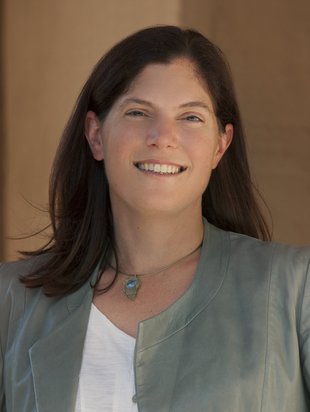
Victoria J. Orphan is the James Irvine Professor of Environmental Science and Geobiology at Caltech, where she directs the Center for Environmental Microbial Interactions. Her research investigates microbial processes in anaerobic ecosystems including deep-sea methane seeps, hydrothermal vents, and coastal sediments using interdisciplinary approaches combining molecular biology, stable isotope techniques, and geochemistry. Her laboratory focuses on: Microbial partnerships in methane cycling Ecophysiology of uncultured archaea and bacteria Viral ecology in marine environments Biogeochemical impacts of microbial communities Blue carbon sequestration in seagrass ecosystems Professor Orphan has developed innovative methods including BONCAT-FISH and nanoSIMS for studying microbial activity in environmental samples. Her research group maintains active field programs in Monterey Canyon and hydrothermal vent systems, and develops high-pressure incubation systems for studying deep-sea microbes. She teaches courses on microbial ecology and evolution, and mentors graduate students through the Geobiology and Environmental Science programs.
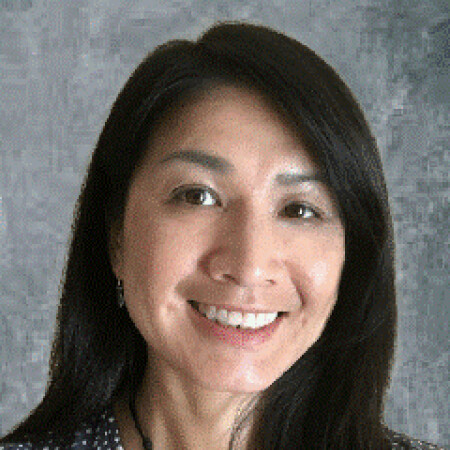
May Yuan is the Ashbel Smith Professor of Geospatial Information Sciences at the University of Texas at Dallas (UT-Dallas), affiliated with the School of Economic, Political and Policy Sciences. She directs the Geospatial Analytics and Innovative Applications (GAIA) Lab. Her research focuses on space-time representation, GIS analytics, and environmental/social problem-solving (e.g., disaster risk, pollution, crime mapping). She holds a Ph.D. in Geography from SUNY Buffalo (1994) and B.S. from National Taiwan University (1987). Previously, she was Brandt Professor and Director of the Center for Spatial Analysis at the University of Oklahoma (1994–2014). Education: Ph.D. in Geography, State University of New York at Buffalo, 1994 M.A. in Geography, State University of New York at Buffalo, 1992 B.S. in Geography, National Taiwan University, 1987 Research Interests: Her work integrates space-time GIS databases with cognitive science, environmental modeling, and social dynamics. Key areas include: - Spatiotemporal query and analytics for geographic processes - GIS-based disaster risk assessment (wildfires, tornadoes) - Urban air quality modeling - Neurogeography and Alzheimer’s disease prediction using environmental complexity metrics - Deep mapping and spatial narratives. Grants & Partnerships: Supported by NSF, NASA, DoD, DHS, NOAA, EPA, and state agencies. Her GAIA Lab explores 'place' concepts in space-time analytics. Awards & Roles: Fellow, AAAS and AAG Editor-in-Chief, International Journal of Geographical Information Science (2017–present) Former President, Cartography and Geographic Information Society (2020–2021) and UCGIS (2011–2012) Member, NOAA Environmental Information Services Working Group (2016–2022) Labs/Teams: Leads the GAIA Lab, collaborating on geospatial AI, environmental health, and urban analytics.
Özer Özkahraman is a postdoctoral researcher at the Division of Robotics, Perception and Learning (RPL) at KTH Royal Institute of Technology. He works under Ivan Stenius and John Folkesson, focusing on underwater mission planning, simulation, and integration of autonomous systems. His email is ozero@kth.se . He completed his PhD at KTH under Petter Ögren, researching large-scale multi-agent coverage planning for autonomous underwater vehicles (AUVs). Current projects include the SMaRCSim multi-domain simulation platform and development of underwater vehicles like LoLo, SAM, and Evolo. Research interests span autonomous underwater systems, multi-agent coordination, control systems, and simulation infrastructure. He emphasizes modular, accessible frameworks for vehicle testing and real-world deployment. His work bridges theoretical methods (e.g., control barrier functions) with practical applications in marine robotics. Publications focus on AUV navigation, environmental sensing, and adaptive control. Projects like Real2Sim aim to align simulation with real-world vehicle dynamics using motion capture data. He collaborates internationally on topics like data-driven damage detection and model compression for resource-constrained robots. No academic awards are explicitly mentioned. He actively seeks collaborators for projects in sonar simulation, flow field modeling, and cyber-physical system integration.
Richard Jardine is a Professor of Geomechanics in the Department of Civil and Environmental Engineering at Imperial College London's Faculty of Engineering. He also serves as a College Proconsul and co-chairs the College Artworks Group. His work spans advanced geotechnical research, offshore renewable energy foundations, and international collaboration. Research Interests: His expertise includes soil properties, advanced laboratory and field measurement techniques, soil characterization, offshore geotechnics, foundation analysis, slope stability, driven pile behavior, soft ground engineering, full-scale monitoring, geotechnical instrumentation, and cold region geotechnics. His research is central to climate change adaptation and renewable power systems. Publication Trends: Recent articles focus on the mechanical behavior of chalk, sand, and glacial tills under monotonic and cyclic loading, particularly in offshore contexts. Emphasis is placed on numerical modeling (FE, MPM), pile-soil interaction, aging effects, and design method validation for offshore wind foundations. Fellow of the Royal Society (2024) Fellow of the Royal Academy of Engineering (2002) RAEng Medal (1997) British Geotechnical Association Medal (1990, 2015, 2021, 2023) Canadian Geotechnical Society Quigley Award (2019) ISSMGE McClelland Honour Lecture (2023) BGA Rankine Lecture (2016) Advising and Grants: Richard has led major international Joint Industry Projects including ALPACA, PISA, PAGE, and Unified Pile Design Method JIP, involving partners such as Orsted, NGI, Fugro, Oxford, and Zhejiang University. He has advised UK government, contractors, and energy firms on offshore projects in the Baltic Sea, Taiwan Strait, and North Sea. He holds a Royal Society Newton Advanced Fellowship with ZJU. Labs and Teams: He leads research within Imperial’s Geotechnics group and the Imperial Centre for Geohazards. His team conducts advanced laboratory and field testing, collaborates with Deltares (Netherlands), and maintains strong ties with Zhejiang University, where he is a Visiting Professor and Distinguished International Scholar.
Rayadurgam Srikant is the Fredric G. and Elizabeth H. Nearing Endowed Professor of Electrical and Computer Engineering at the University of Illinois Urbana-Champaign, affiliated with the Coordinated Science Lab. He co-directs the C3.ai Digital Transformation Institute, focusing on AI-driven solutions for global challenges. His research spans machine learning, communication networks, stochastic systems, and game theory. Srikant has authored influential textbooks including Communication Networks: An Optimization, Control and Stochastic Networks Perspective . He holds IEEE Fellow status and has received prestigious awards like the ACM SIGMETRICS Achievement Award (2021) and IEEE Koji Kobayashi Award (2019). Over 20 of his advisees hold faculty positions globally. Education: PhD (1991), MS (1988) in Electrical Engineering from UIUC; B.Tech (1985) from IIT Madras. He has taught advanced courses on optimization, stochastic systems, and game theory. His work bridges theory and practice, with contributions to congestion control, cloud computing, and reinforcement learning. Current projects include AI applications for pandemic response and digital transformation initiatives. Research highlights include foundational work on Lyapunov drift methods for network stability and distributed algorithms. He serves as Area Editor for Mathematics of Operations Research and has led editorial roles for IEEE/ACM Transactions on Networking. His lab collaborates with industry leaders like Microsoft and C3.ai, leveraging supercomputing resources for societal impact.
Svetlana Lazebnik is a Full Professor and Willett Faculty Scholar in the Department of Computer Science at the University of Illinois at Urbana-Champaign (UIUC), part of the Grainger College of Engineering. She holds a Ph.D. from UIUC (2006) and previously served as an Assistant Professor at the University of North Carolina at Chapel Hill (2007–2011). Her research focuses on computer vision, including generative models for virtual try-on, image stylization, scene understanding, and joint modeling of images and language. She has advised numerous Ph.D. students and postdocs, many of whom now hold prominent academic and industry roles. Education: Ph.D. in Computer Science, UIUC (2006); supervised by Jean Ponce. Research Interests: Her work spans generative adversarial networks (GANs), diffusion models, virtual try-on systems (e.g., Dressing-in-Order, Street Try-On), exemplar-based stylization, and large-scale photo analysis. She has pioneered spatial pyramid matching and contributed to binary code learning for image retrieval. Key Awards: NSF CAREER Award (2008), Microsoft Research Faculty Fellow (2009), Sloan Research Fellow (2013), IEEE Fellow (2021), and the Longuet-Higgins Prize (2016) for her CVPR 2006 paper. Teaching: Recent courses include CS 444 (Deep Learning for Computer Vision), CS 543 (Computer Vision), and a Ph.D. Job Search Seminar. She has also taught at UNC Chapel Hill. Grants & Funding: Supported by NSF, Amazon, AWS, Microsoft, Sloan Foundation, Google, ARO, and Adobe. Notable grants include CCF 2348624 and IIS 1718221. Labs/Groups: Leader in the Illinois CS Vision Group, contributing to collaborative projects on embodied AI, multi-agent systems, and visual-semantic reasoning.
Natacha Crooks Dr. Natacha Crooks is an Assistant Professor in the Department of Electrical Engineering and Computer Science (EECS) at UC Berkeley. Her research focuses on distributed systems, databases, and security, with a particular emphasis on consistency models, BFT protocols, and cloud computing. She is a founding member of the SkyLab and a core contributor to the Data Systems and Foundations Group at Berkeley. She holds a Ph.D. in Distributed Systems from the University of Texas at Austin (2019) and a BA in Computer Science and Law from the University of Cambridge (2012). Affiliations & Roles: Assistant Professor, UC Berkeley EECS Visiting Researcher at Azure Research, Security & Privacy Founding Member of SkyLab Member of Berkeley Center for Decentralized Intelligence Former Scientific Advisor at Improbable and Astronomer Research Interests: Her work bridges distributed systems and database research, addressing challenges in transactional consistency, fault-tolerant protocols, and cloud resource optimization. Key themes include: Designing scalable BFT consensus algorithms Secure multi-cloud storage solutions Optimizing distributed transaction processing Privacy-preserving distributed systems Awards & Recognition: Sloan Research Fellow (2025) NSF CAREER Award ACM SIGOPS Dennis M. Ritchie Doctoral Dissertation Award (2020) IEEE CS TCDE Early Career Award (2024) Teaching: Fall 2025: CS 294-282 (Research Culture and Community Norms), Wheeler 130. Industrial Collaboration: Prior roles include visiting researcher at Cornell University, Microsoft Research (DMX group), and Imperial College London. Industrial partnerships include work with Materialize, Astronomer, and Improbable.
Sewon Min is an Assistant Professor at UC Berkeley's Electrical Engineering and Computer Sciences (EECS) department and a research scientist at the Allen Institute for AI. Her research focuses on Natural Language Processing (NLP) and Machine Learning, particularly Large Language Models (LLMs), emphasizing data-centric approaches and ethical AI practices. She holds a Ph.D. from the University of Washington (2024) and a B.S. from Seoul National University (2018). Her work includes advancements in retrieval-based models, mixture-of-experts architectures, and data privacy in LLMs. Notable projects include FlexOlmo (flexible data use in LLMs) and OLMoE (open mixture-of-experts models). She has been recognized with the ACM Doctoral Dissertation Award Honorable Mention (2025) and WAGS/ProQuest Innovation in Technology Award. Recent articles highlight her contributions to reasoning models, data tracing (OLMoTrace), and scalable retrieval systems (MassiveDS). She leads the Berkeley NLP Group and collaborates with BAIR, exploring topics like model transparency and ethical data usage.
Dr. Changyou Chen is an Associate Professor in the Department of Computer Science and Engineering at the University at Buffalo, State University of New York. His research focuses on Multi-Modal Learning Foundation Models Deep Generative Models Large-scale Bayesian Sampling with applications in document understanding, music-AI integration, and molecular representation learning. Research Trends revealed through his recent publications include Optimizing Multimodal Large Language Models Developing Novel Retrieval-Augmented Generation Frameworks Creating Benchmark Datasets for Visual Text Understanding Advancing Diffusion Models with Domain-Specific Constraints across domains from music sheets to biomedical documents. Scientific Contributions : UB Young Investigator Award (2020) Architect of LoCAL Framework for Long Document Understanding Co-developer of MusiXQA Benchmark Pioneering Work in Probability Contrastive Learning Academic Leadership includes mentoring 10+ graduate students and serving as Area Chair for major AI conferences (ICML, NeurIPS, AAAI, IJCAI). His Labs develop scalable solutions for multimodal reasoning, with recent work demonstrating practical GPU memory optimization through LoRA adapter sharing.
Veysel Murat İstemihan Genç is a Professor in the Department of Electrical Engineering at Istanbul Technical University (ITU), College of Engineering. His research is centered on modern power systems, with a focus on transient stability, cybersecurity, and integration of renewable energy sources. He actively leads multiple research projects and supervises graduate students in advanced power system technologies. Research Interests: His work spans key areas including transient stability assessment, machine learning applications in power systems, cyber-attack detection in AGC systems, and dynamic security evaluation under high renewable penetration. He employs cutting-edge techniques such as ensemble learning, deep neural networks, and hybrid optimization algorithms. Publication Trends: Recent publications (2023–2025) highlight a strong trend toward integrating AI and machine learning for real-time transient stability prediction, cybersecurity in distributed energy systems, and performance optimization of solar and wind-integrated grids. His work frequently addresses challenges in low-inertia systems and false data injection attacks. Scientific Projects: Strengthened Machine Learning-Based Dynamic Security Evaluation for Transient Stability under False Data Injection Attacks (BAP, 2025) Analysis and Control Methods for Stability of Large-Scale Low-Inertia Power Systems (BAP, 2023–2024) Dynamics Security Evaluation of Renewable-Rich and Cyber-Attacked Power Systems (BAP, 2022–2024) Risk-Based Stability Assessment and Corrective Control Methods in Power Systems (BAP, 2019–2022) Wide-Area Monitoring Protection and Control System Design Using Advanced Signal Processing and Machine Learning (TÜBİTAK, 2018–2020) Advising and Grants: He is the principal investigator (PI) on multiple funded research projects from BAP and TÜBİTAK, indicating strong grant acquisition and leadership. His supervision of 27 ongoing theses reflects an active role in mentoring graduate students in electrical engineering and power systems. Labs and Teams: While specific lab names are not mentioned, his projects suggest leadership in a research group focused on smart grid technologies, AI-enabled power system security, and renewable integration at Istanbul Technical University.
Amol Deshpande is a Professor in the Department of Electrical Engineering and Computer Sciences at the University of California, Berkeley, College of Engineering. With over 160 publications spanning from 2000 to 2025, his research has significantly impacted the database systems community. His work bridges theoretical foundations with practical systems, evidenced by numerous publications in top-tier venues including SIGMOD, VLDB, and ICDE. Professor Deshpande's research focuses on database systems, with particular expertise in graph databases, data management, probabilistic databases, query optimization, and data provenance. His work addresses fundamental challenges in managing complex data, including efficient graph analytics, dataset versioning, streaming data processing, and privacy-preserving data management. Recent research directions include entity-relationship abstractions beyond traditional relations, standalone catalog engines for large data systems, and graph theoretical approaches to dataset versioning. His publication trends show a consistent focus on evolving database technologies, with early work on probabilistic databases and query optimization, transitioning to graph analytics and data provenance, and more recently addressing modern challenges in data cataloging, privacy-first data management, and serverless stream processing. His research spans both theoretical contributions (e.g., approximation algorithms for stochastic optimization) and practical systems building (e.g., RStore, TreeCat). Professor Deshpande has mentored numerous PhD students who have become active researchers in the database community, including Hui Miao, Souvik Bhattacherjee, and Konstantinos Xirogiannopoulos. His collaborative work spans across institutions, with frequent collaborations with researchers from MIT, University of Maryland, and other leading institutions. His research has been supported by major funding agencies and has influenced both academic research and industry practices in data management. The evolution of his work reflects the changing landscape of data management, from traditional relational systems to modern graph and streaming data challenges.
Edward Andò is a Principal Scientist and Lecturer at École Polytechnique Fédérale de Lausanne (EPFL) , with affiliations to the IMAGING group and the College of Engineering (ENAC) . His work bridges software development, experimental geomechanics, and educational initiatives in image analysis. Principal Scientist, IMAGING-GE (EPFL) Lecturer, Sciences et Génie Civil (SGC-ENS) Lecturer, Enseignement à la Défense (EDEE-ENS) Research Interests Andò specializes in 3D image analysis , with a focus on X-ray tomography , digital volume correlation (DVC) , and micromechanical modeling of granular materials. His work addresses geomechanical failure mechanisms, soil dynamics, and open-source software tools like SPAM for practical material analysis. Publication Trends His recent articles (2025–2023) emphasize X-ray tomography for studying granular deformation , rock failure , medical imaging , and soft particle compaction . Topics span geomechanics, computational modeling, and software development for experimental validation. Labs and Teams Andò contributes to the IMAGING group at EPFL, where he co-develops the SPAM (Software for Practical Analysis of Materials) . His teaching includes courses like Fundamentals of Image Analysis and Quantitative Imaging for Engineers , which integrate hands-on training with theoretical frameworks.
Prof. Dr.-Ing. Christoph Stiller is a full professor at the Karlsruher Institut für Technologie (KIT) and serves as the director of the Institute of Measurement and Control Technology (Institut für Mess- und Regelungstechnik, MRT). His work focuses on autonomous driving, sensor fusion, probabilistic estimation, HD mapping, motion planning, and intelligent transportation systems. Education: Details on his academic degrees are not provided in the text, but he holds the title of Dr.-Ing. indicating a doctoral degree in engineering. Research Interests: Prof. Stiller's research spans a wide array of topics critical to the development of autonomous vehicles. His work includes: Sensor Fusion: Integrating data from LiDAR, cameras, and radar to create robust perception systems. HD Mapping & Localization: Developing high-definition maps and precise localization techniques for urban and highway environments. Motion Planning & Decision Making: Creating algorithms for safe and efficient trajectory planning under uncertainty. Machine Learning & AI: Applying deep learning and reinforcement learning to perception, prediction, and control tasks. Publication Trends: His recent publications (2023–2025) emphasize robust traffic light detection, image stitching for panoramic views, motion prediction using redundancy reduction, and safety-enhanced model predictive control. The work increasingly integrates learning-based methods with classical control and estimation theory. Scientific Awards: No specific awards are listed in the provided text. Teaching & Supervision: Prof. Stiller teaches foundational and advanced courses in measurement and control systems, probabilistic estimation, and autonomous driving. He holds regular office hours during both summer and winter semesters and is actively involved in advising students and researchers. Labs & Teams: He leads the Institute of Measurement and Control Technology (MRT) at KIT, which is engaged in cutting-edge research in autonomous systems. The institute collaborates with industry and academia on large-scale projects such as UNICARagil and various European initiatives.
Nelly V. Litvak is a Full Professor in Algorithms for Complex Networks at Eindhoven University of Technology (Mathematics and Computer Science). She works on mathematical methods and algorithms for complex networks (social networks, WWW) using random graph models. She joined TU/e as a part-time professor in 2017 after being an Associate Professor at the University of Twente since 2012. Affiliations: 4TU Applied Mathematics Institute, Data Science Center Eindhoven, CTIT Industry Partners: ABN-AMRO Bank, Philips Lighting, Thales Editorial Role: Managing Editor of Internet Mathematics Her research focuses on extracting value from network data across three areas: (1) Information extraction and prediction, (2) Mathematical analysis of network characteristics, and (3) Efficient algorithms for incomplete network data. Key topics include PageRank, HITS algorithm, random graphs, homophilic networks, and network epidemiology. Recent work (2022-2025) spans network growth mechanisms, fairness in ranking algorithms, educational pedagogy, and pandemic forecasting dashboards. She contributes to SDGs through data-driven approaches to societal challenges. Teaching activities include course development at TU/e and earlier institutions, with innovative methods for computer engineering students' statistical understanding.
James A. Evans is the Max Palevsky Professor of Sociology and Data Science at the University of Chicago, where he is a faculty member in the Department of Sociology within the Division of the Social Sciences. He is the director of Knowledge Lab and the Faculty Director of the Masters Program in Computational Social Science . He holds additional affiliations as an External Professor at the Santa Fe Institute , External Faculty at the Complexity Science Hub, Vienna , and Visiting Faculty Researcher at Google . Education: B.A. in Anthropology, Brigham Young University (1994) M.A. in Sociology, Stanford University (1999) Ph.D. in Sociology, Stanford University (2004) His research centers on the collective system of thinking and knowing , exploring how ideas emerge, spread, and evolve through social and technical systems. He investigates innovation, collective intelligence, and the science of science , using large-scale data modeling, machine learning, generative AI, and network analysis to study knowledge creation. His work spans domains including science, technology, law, and religion, with a focus on how AI is reshaping discovery processes. The most recent publications highlight trends in AI and scientific discovery , with a strong emphasis on innovation, knowledge systems, and human-machine intelligence . His research increasingly explores AI as a transformative agent in science , including the concept of 'alien intelligence' and the development of complementary AI to augment human capacity. Projects like the $20M NSF-funded APTO initiative aim to build language models that predict technological outcomes by analyzing historical data. Scientific Recognition and Funding: Research supported by the National Science Foundation (NSF) , National Institutes of Health (NIH) , Air Force Office of Scientific Research (AFOSR) , and philanthropic sources Work published in Nature, Science, PNAS , and leading social science journals Featured in The New York Times, The Economist, The Atlantic, Wired, NPR, BBC, Le Monde , and others James Evans advises on science policy and funding strategies, emphasizing the importance of diversity, interdisciplinary collaboration, and demographic balance in fostering innovation. He critiques current academic incentives and proposes alternative discovery regimes. He leads Knowledge Lab , a collaborative research environment that conducts seminars, grants, and employment opportunities in computational social science and AI.