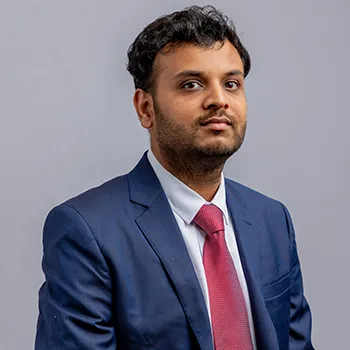
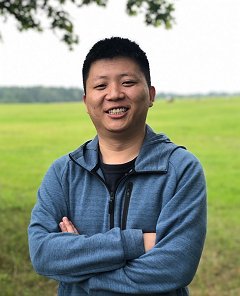
Judith Josupeit (Dr. rer. nat.) is a Lecturer at the Faculty of Psychology, Technische Universität Dresden, Germany. She specializes in human factors research within virtual reality environments, focusing on interindividual differences in cybersickness susceptibility and physiological indicators of VR-induced discomfort.
Akshay Narayan is an Assistant Professor of Computer Science at Brown University. His research focuses on computer systems and networking, particularly on improving specialization for dynamic network environments through novel abstractions. Education: PhD (2022), MS (2019), BSc (2015) from MIT and UC Berkeley His research addresses challenges in network congestion control, dynamic network environments, and systems optimization. He has developed abstractions for managing bandwidth variability and network complexity, with applications in datacenter transport and internet protocols. Recent publications explore topics like eBPF verification, automated reasoning for network architectures, and congestion control algorithm behavior. His work spans SIGCOMM, HotNets, IMC, EuroSys, and NeurIPS conferences. Scientific awards include NSF Graduate Research Fellowship, Irwin Mark Jacobs and Joan Klein Jacobs Presidential Fellowship, Best Artifact at EuroSys 2021, and Best Student Paper at SIGCOMM 2018. Narayan advises PhD students at Brown and serves on program committees for NSDI, SIGCOMM, and HotNets. He teaches courses like CSCI 2680 (Computer Networks) and CSCI 1675 (Designing High-Performance Network Systems).
Professor Marko Bacic is a Professor of Engineering Science at the University of Oxford and Engineering Fellow in Control Systems and Gas Turbine Functionality at Rolls-Royce, PLC. He leads research at the Oxford Thermofluids Institute with dual focus on academic innovation and industrial gas turbine applications, holding continuous university affiliation since 2003. His educational credentials include: MEng in Engineering and Computing Science (2001), University of Oxford DPhil in Model Predictive Control (2004), University of Oxford Research spans Control Engineering , Gas Turbine Systems , and Active Flow Control , emphasizing hardware-in-the-loop simulation, thermo-mechanical systems, and fluid-structure interactions. Current projects address aerospace control, active tip clearance, and hybrid-electric propulsion through the Active Flow Control for Gas Turbines research group. Recent publications (2023-2025) reveal three dominant trends: hybrid-electric propulsion optimization for urban air mobility, acoustic excitation techniques for flow control in compressors, and thermal management innovations in turbine cooling systems, demonstrating strong industry-academia translation. Major awards include: Sir Henry Royce Award for Technical Innovation (2012) Sir Henry Royce Patent Award (2017) RAEng Silver Medal (2020) Research funding exceeds £3M through collaborations with Rolls-Royce and EPSRC: 'Active Control of Fluid Flows in Gas Turbines' (£1.1M, EPSRC/Rolls-Royce, 2014–2017) 'Advanced Transient Heat Transfer Facility' (£1.3M, Rolls-Royce/ATI, 2011-2015) 'Real-time transient disc modelling' (£72k, Rolls-Royce, 2011-2014) 'Hardware-in-the-loop simulation for UAVs' (£114k, EPSRC) 'Non-return valve failure investigation' (£126k, Rolls-Royce/EPSRC) 'Engineering applications of bird flight' ($300k, AFOSR) He directs experimental facilities including a subscale test rig for compact heat exchangers and hardware-in-the-loop simulators for gas turbine systems, with active Rolls-Royce partnerships driving patent development and market deployment.
Pinar Okumus serves as Associate Professor in the Department of Civil, Structural and Environmental Engineering at the University at Buffalo's School of Engineering and Applied Sciences. Her research focuses on advancing infrastructure resiliency through low-damage seismic systems, prefabricated concrete structures, and high-performance materials for rapid construction and repair of bridges and buildings. Her academic credentials include: PhD in Civil Engineering, University of Wisconsin, Madison (2012) MS in Civil Engineering, University of Wisconsin, Madison (2008) BS in Civil Engineering, Middle East Technical University (2006) Dr. Okumus' research integrates nonlinear structural analysis, material-scale testing, and in-situ monitoring to develop rapidly deployable infrastructure solutions. Her work emphasizes practical applications of pre-tensioned, post-tensioned, and reinforced concrete components for extreme event resilience, with particular focus on coastal infrastructure vulnerability and seismic retrofitting. The Dr. Okumus Research Group employs advanced methodologies including machine learning for structural assessment and optical fiber technologies for long-term monitoring. Recent publications (2023-2025) reveal strong thematic trends in corrosion effects on coastal infrastructure, 3D-printable cementitious composites for rapid repair, and tessellated structural-architectural systems. Her work increasingly incorporates machine learning for shear strength prediction and crack pattern analysis while maintaining core expertise in post-tensioned systems and seismic retrofit solutions. Research funding is secured through competitive grants from the National Science Foundation and Federal Highway Administration, supporting experimental validation of novel concepts like self-centering shear walls and ultrahigh-performance concrete retrofits. The group actively collaborates with transportation agencies to translate laboratory findings into field applications for bridge and building systems. The Dr. Okumus Research Group operates as an interdisciplinary team investigating structures that enable rapid reoccupation after extreme events. Current projects focus on modular systems with interlocking components, optical sensing integration for tendon force monitoring, and material innovations for climate-resilient infrastructure, maintaining strong connections with industry partners for practical implementation.
Chrystal Johnson is an Associate Professor in Social Studies Education at Purdue University, affiliated with the African American Studies program and the SIS Office. Her work bridges civics, critical pedagogy, and cultural competence. Education Focus: African American history integration into curricula Research Areas: Civic outcomes of charter schools, Black youth political efficacy, culturally responsive teaching Methodological Interests: Collaborative teacher development, spatial information literacy Recent publications examine neoliberal education policies, engineering design in civics, and trauma-informed teaching practices. Her work utilizes NAEP data and cultural-historical activity theory to analyze educational equity and democratic engagement.
Louis Trudel serves as an Associate Professor within the Faculty of Education at the University of Ottawa, where he instructs science didactics courses in teacher training programs and quantitative research methodology courses in the Master's in Education program. His scholarly work focuses on advancing science education through innovative pedagogical approaches, particularly in minority language contexts and technology-integrated learning environments. Education Background: Doctorate in Education, Université du Québec à Montréal Research Focus: Dr. Trudel's research program centers on identifying and addressing student misconceptions in physics concepts (electricity, heat, motion), developing diagnostic assessment tools like two-tier tests, and designing technology-enhanced learning sequences. His work emphasizes science education in French-speaking minority communities, exploring how formal and informal educational settings interact to strengthen science pedagogy. He actively investigates the application of ICT in science teaching, distance learning models for science educators, and conditions for effective implementation of science curricula. Publication Analysis: Examination of his 15 most recent publications reveals a consistent focus on physics education research, with 80% addressing student misconceptions in core concepts. His methodology prominently features diagnostic testing (particularly two-tier instruments) and technology-mediated learning environments. A distinctive thread throughout his work is the adaptation of science pedagogy for minority-language contexts, especially Francophone communities in Canada, demonstrating his commitment to equitable science education across diverse settings. Scientific Recognition: No specific awards or fellowships were documented in the provided materials. Academic Mentorship: As an active instructor in both teacher certification and graduate programs, Dr. Trudel undoubtedly supervises student research, though particular advisees and grant-funded projects remain unspecified in the available documentation. His leadership in organizing international conferences and editing scholarly volumes indicates significant contribution to academic community building. Research Infrastructure: While no dedicated laboratory facilities are mentioned, his publications referencing computer-assisted investigations and hybrid learning environments suggest utilization of technology-enhanced research spaces, potentially within the Faculty of Education's instructional technology resources.
João Luís Marques Pereira Monteiro is a Full Professor at the Department of Industrial Electronics, School of Engineering, University of Minho, Portugal. He has been with the university since 1980, progressing from Assistant Trainee to his current position. He has held significant leadership roles including Pro-rector (2005-2009), Director of the Algoritmi Center (1998-2006, 2010-2013), and Dean of the School of Engineering (2013-2019). He currently coordinates the Embedded Systems Research Group (ESRG) and is a Senior Researcher at the Algoritmi Research Center. His educational background includes: Bachelor's degree in Electrical Engineering and Computers from the University of Porto (1980) PhD in Informatics and Systems Engineering - specialization in Computer Engineering - from the University of Minho (1991) Habilitation (Dr habil) from the University of Minho (2003) Professor Monteiro's research spans multiple domains in engineering and computer science, with a strong focus on practical applications. His work in embedded systems has led to innovations in real-time processing, sensor networks, and hardware-software co-design. In medical applications, he has developed textile-based sensors for vital sign monitoring. His recent work focuses on computer vision for autonomous vehicles, particularly 3D object detection from point clouds. He also contributes to educational initiatives in data science and AI, particularly in developing countries. His recent publications show a clear progression toward applications requiring real-time processing on resource-constrained devices. There's a strong emphasis on autonomous systems, particularly self-driving vehicles, with multiple papers on 3D object detection from point clouds. His work bridges embedded systems, computer vision, and wireless communications, often focusing on practical implementations for real-world applications like emergency responder localization and medical monitoring. Professor Monteiro has supervised more than a dozen doctoral students, many of whom have gone on to become faculty members at national and international universities. His research has been supported by various funding agencies including FCT (Portuguese), ADI (Portuguese), and FP7 (European funding), as well as industry partners. He leads the Embedded Systems Research Group (ESRG), which is part of the Algoritmi Research Center. The ESRG focuses on developing embedded solutions for various applications including autonomous vehicles, medical devices, and industrial monitoring systems. The group works on both hardware and software aspects of embedded systems, with particular expertise in real-time processing and resource-constrained environments.
Jonas Fredriksson is a Professor in the Mechatronics research group at the Department of Systems and Control Engineering, Chalmers University of Technology. His work focuses on electric/hybrid vehicles, vehicle dynamics, active safety systems, and optimization-based coordination of automated vehicles. Academic Rank: Professor Affiliation: Chalmers University of Technology Department: Systems and Control Engineering Email: jonas.fredriksson@chalmers.se Research Themes: Powertrain control and energy management for electric/hybrid vehicles Advanced control strategies for heavy articulated vehicles Autonomous driving in confined environments Battery thermal management and charging optimization Vehicle stability and safety systems using Newtonian mechanics Article Trends: Recent publications emphasize 1) optimization algorithms for electric vehicle coordination, 2) aerodynamic modeling under crosswind conditions, 3) stochastic approaches to longitudinal vehicle dynamics, and 4) robust control systems for articulated heavy vehicles. The work combines classical mechanics with modern machine learning techniques. Teaching & Leadership: Supervises doctoral students and leads research projects in mechatronics. Manages the master's program in Systems, Control and Mechatronics. Teaches courses in mechatronics and vehicle control systems.
Yoichi Nakao is a Professor at the School of Advanced Science and Engineering, Faculty of Science and Engineering, Waseda University, specializing in natural products chemistry, chemical biology, and functional food chemistry. His research focuses on marine natural products, stem cell differentiation, and epigenetics, with significant contributions to understanding how natural compounds affect cellular processes. Dr. Nakao earned his Doctor of Agriculture from the University of Tokyo. His educational background includes undergraduate, master's, and doctoral studies all completed at the University of Tokyo between 1985 and 1994, followed by postdoctoral research at the University of Hawai'i Department of Chemistry from 1994-1996. His research spans multiple interdisciplinary fields with a particular emphasis on identifying bioactive compounds from natural sources. Nakao's work explores how marine organisms and traditional food sources produce compounds that influence stem cell differentiation, particularly neural stem cells into astrocytes, and how these processes relate to neurodegenerative diseases and depression. His laboratory investigates epigenetic modifications induced by environmental chemicals and natural products, with implications for developmental toxicology and disease prevention. A significant portion of his recent work focuses on sustainable applications, including serum-free cell culture systems using algal extracts for cultured meat production and regenerative medicine. Analysis of Nakao's recent publications reveals a strong focus on marine natural products chemistry, with numerous discoveries of novel compounds from sponges, cyanobacteria, and other marine organisms. His research increasingly integrates chemical biology approaches with stem cell technology, particularly using induced pluripotent stem cells to study epigenetic changes. There's also a growing emphasis on sustainable biotechnology applications, especially in developing alternatives to animal serum for cell culture, which has significant implications for cultured meat production and regenerative medicine. Dr. Nakao serves in various professional capacities, including as a committee member for the Natural Products Discussion Group (2011-present), the Japanese Society of Chemical Biology (2010-present), and the Chemical Ecology Research Group (2007-present). He is an active member of numerous professional societies including the American Chemical Society, Japanese Bioinformatics Society, and Japanese Society of Chemistry. His laboratory maintains active collaborations across multiple disciplines, working with researchers in microbiology, parasitology, and biomedical engineering. Current research directions include developing chemical probes for target identification, studying microbial interactions in marine environments, and exploring the therapeutic potential of natural compounds for neurological disorders and infectious diseases.
Professor Tomoji Kishi is a distinguished faculty member at Waseda University's School of Creative Science and Engineering, where he has been serving since 2009. Previously, he held academic positions at Japan Advanced Institute of Science and Technology (2003-2009) following a 21-year career at NEC Corporation (1982-2003). He earned his Ph.D. in Information Science from Japan Advanced Institute of Science and Technology in 2002, building upon his earlier engineering graduate studies at Kyoto University. Professor Kishi's research focuses on software engineering, particularly in software product line development, model checking, formal verification, and aspect-oriented modeling. His work bridges theoretical formal methods with practical applications in embedded systems, automotive software, and IoT technologies. He has made significant contributions to scalability challenges in model checking for configurable systems and has pioneered approaches to variability management and approximate modeling techniques. His publication record demonstrates remarkable consistency and evolution, with 42 papers and 153 citations according to Scopus data (h-index: 7), spanning from foundational work in software architecture in the 1990s to cutting-edge research on AI-enhanced verification methods in 2025. His recent work shows increasing application of machine learning techniques to traditional formal methods problems, particularly in the context of highly configurable systems and IoT applications. ITS Standardization Activity Merit Prize (2022) from Society of Automotive Engineers of Japan IPSJ/ITSCJ Standardization Contribution Award (2017) IPSJ/ITSCJ Project Editor Award (2016 and 2013) Information Processing Society of Japan Society Activity Contribution Award (2010) IPA/SEC Journal Best Paper Award (2007) Information Processing Society of Japan Yamashita Memorial Research Award (1998) Professor Kishi has led multiple JSPS-funded research projects, including recent work on 'variability management methods prioritizing usability through variability mining' (2020-2023) and 'utility-first modeling method' (2017-2020). His industry collaborations, particularly with automotive systems developers, demonstrate the practical impact of his research. He maintains active membership in major professional societies including IEEE Computer Society, ACM, and the Information Processing Society of Japan.
Dr. Nitin Tiwari is an Assistant Professor of Geotechnical Engineering at the School of Civil, Environmental, and Infrastructural Engineering , Southern Illinois University Carbondale (SIU), USA, since August 2024. He leads the Geo-CARE (Geotechnical Engineering for Climate Adaptation and Resilient Environments) Lab , focusing on sustainable and resilient infrastructure development. Previously, he served as a Postdoctoral Researcher at Purdue University (2022-2024) and held academic positions at IIT Bombay and IIT Indore in India. Education: Ph.D. in Geotechnical Engineering, Indian Institute of Technology Indore (2021) M.Engg. in Structural Engineering, Rajiv Gandhi Technical University, Bhopal (2017) B.Engg. in Civil Engineering, Rajiv Gandhi Technical University, Bhopal (2014) Research Interests: Dr. Tiwari's research focuses on interdisciplinary approaches to sustainable infrastructure, leveraging natural substances and engineered composites to enhance soil conditions. He pioneers AI-driven, IoT-enabled frameworks for real-time geotechnical infrastructure monitoring, predictive performance assessment, and risk mitigation. His work spans bio-inspired soil stabilization using microbial-induced calcite precipitation (MICP), recycled and waste materials in construction, and machine learning applications in geotechnics. Scientific Awards & Recognition: Young Scientist Award in Civil Engineering, Madhya Pradesh Council of Science and Technology (2021) Best Research Award, IIT Indore (2021) Postdoctoral Mentor Award Nominee, Purdue University (2024) Standing Committee Member, Transportation Research Board (AKG80, 2021-present) Four granted patents in India and Australia for innovative geotechnical methods and apparatuses Labs & Teams: Dr. Tiwari directs the Geo-CARE Lab at SIU, fostering research on climate-resilient geotechnics . The lab welcomes students, scholars, and postdocs to collaborate on sustainable geotechnical solutions. He has delivered 15+ keynote lectures globally and serves as a peer reviewer for 20+ journals. Publications & Impact: With 18 journal papers, 2 book chapters, and 6 conference papers, his work integrates experimental methods with machine learning . Key themes include expansive soil treatment, asphalt mixture optimization, seismic response of underground structures, and bio-cementation .
Professor Chengqing Wu is a distinguished academic in the School of Civil and Environmental Engineering at the University of Technology, Sydney (UTS). He serves as Professor of Structural Engineering with a research focus on blast-induced phenomena and advanced concrete technologies. His expertise spans structural response to blast loading, mitigation of blast effects, and the development of ultra-high performance concrete systems. Professor at University of Technology, Sydney Former Chair of Australian Chapter of International Association of Protective Structures (2013-2017) Associate Editor of ASCE Journal of Performance of Constructed Facilities Editorial Board Member of International Journal of Protective Structures Professor Wu's research interests center on structural engineering with emphasis on blast resistance, ultra-high performance concrete, geopolymer concrete, and structural response to extreme loading conditions. His work bridges theoretical analysis with practical applications, particularly in protective structures and extreme environment construction. His research group has made significant contributions to understanding material behavior under blast, impact, and extreme thermal conditions, with applications ranging from terrestrial infrastructure to potential lunar construction. Analysis of Professor Wu's recent publications reveals a strong focus on advanced concrete technologies for extreme environments. His research spans 3D-printed concrete, lunar and Martian construction materials, cryogenic performance of concrete, and blast-resistant structural systems. A notable trend is the increasing application of computational methods and machine learning techniques to predict structural response to explosions, alongside traditional experimental approaches. His work demonstrates a progression from fundamental material characterization to complex structural system analysis, with growing emphasis on sustainable construction and extraterrestrial applications. Author/co-author of over 200 international journal papers Editor of four conference proceedings Editor of two ASCE special issues Editor of two International Journal of Protective Structures special issues Professor Wu has successfully attracted over 4 million dollars in research funding from diverse sources including the Australian Research Council (ARC), Defence Science and Technology Organization (DSTO), and industry partners. His current projects include Eco-friendly Ultra-High Performance Rubberised Concrete, Decarbonised Infrastructure, Structural protective design on large capacity flywheel energy storage system, and Gas Explosion Resistance of Non-Cement Based High Performance Concrete. He actively supervises undergraduate honors students, coursework master's students, and research higher degree candidates, with several scholarships available for prospective postgraduates and research associates. Professor Wu leads research in protective infrastructure technology through the Joint Research Centre for Protective Infrastructure Technology and Environmental Green Bioprocess with Tianjin Chenjian University. His team operates the National Drop Weight Impact Testing Facility and contributes to the National Facility for Physical Blast Simulation. Current research directions include sustainable concrete technologies for extreme environments, blast-resistant structural systems, and innovative applications of concrete in space exploration contexts.
Astrid Haase is a Research Fellow in the Department of Educational Psychology at Georg-August-University Göttingen, where she has been employed since 2020. Her research focuses on the psychological foundations of literacy development, with particular emphasis on morphological awareness and its connections to reading and writing skills in both monolingual and multilingual contexts. She actively contributes to the German Psychological Society and the Society for Scientific Studies of Reading. Dr. Haase's educational background includes: M.Sc. in Psychology from Friedrich Schiller University Jena (2014) B.Sc. in Psychology from Friedrich Schiller University Jena (2011) Diploma in Psychology from University of Kent in Canterbury, UK (2010) Her research examines how morphological awareness—the ability to recognize and manipulate word parts—contributes to literacy development across different language contexts. She investigates these processes in both monolingual German speakers and bilingual/multilingual learners, with particular focus on Arabic-German bilingual children. Her work explores the cognitive foundations of literacy acquisition and develops interventions to improve written language skills across diverse learner populations through projects like Morph.B. and ViaS (Reading aloud in all languages), which examines how reading aloud in multiple languages can support literacy development in multilingual settings. Analysis of Dr. Haase's recent publications reveals a strong focus on the intersection of morphological awareness, bilingualism, and literacy development. Her work consistently examines how linguistic knowledge transfers across languages and affects reading and writing skills, with an increasing emphasis on practical applications through interventions like the ViaS project. Her research spans cognitive, developmental, and educational psychology perspectives, creating a comprehensive understanding of literacy acquisition processes across different age groups and language backgrounds. At Georg-August-University Göttingen, Dr. Haase teaches courses including Scientific In-Depth Study: Learning Psychology, Diagnostic Basics and Performance Assessment, and Educational Psychology I. Her teaching integrates her research expertise with practical educational applications, particularly in the areas of learning disorders and educational diagnostics. She is also involved with ZEWIL (Central Scientific Institution for Teacher Education), contributing to teacher training programs.
Dr. Marc A. Adams serves as the Assistant Dean of Education and Interim Program Director of the MPH in the School of Technology for Public Health at Arizona State University, while also holding a Professor position in the College of Health Solutions. He maintains additional affiliations with the Institute for Social Science Research as both a faculty member and Affiliated Faculty, and serves as a Senior Global Futures Scientist within the Global Futures Scientists and Scholars program. His academic leadership spans multiple institutional units focused on public health innovation and research. Dr. Adams' educational background includes a PhD in Public Health from the University of California, San Diego and San Diego State University (2009), an MPH in Public Health from San Diego State University (2003), a BA in Psychology from San Diego State University (2001), and postdoctoral training in Cardiovascular Epidemiology and Prevention at the University of California, San Diego (2011). As a behavioral scientist and epidemiologist, Dr. Adams' research spans the intersection of digital health interventions, physical activity promotion, and behavioral nutrition within diverse neighborhood contexts. His work integrates advanced AI and deep learning techniques to map pedestrian environment features across thousands of US neighborhoods, revealing critical inequities in built environments. He develops and tests interventions that consider how urban planning features interact with behavior change strategies to increase physical activity and healthy eating, particularly among underserved populations. His methodological expertise includes epidemiologic methodology, clinical trial design, and the development of ecological models for understanding behavior-environment interactions. Dr. Adams is an active member of the International Physical Activity and Environment Network (IPEN), contributing to international comparative research on how city design influences physical activity levels across 14 global cities. Dr. Adams' recent publications reveal a strong focus on neighborhood walkability, digital health interventions, and the use of AI to analyze built environments for public health purposes. His research consistently examines how environmental features moderate the effectiveness of physical activity interventions, with particular attention to socioeconomic disparities. The methodological approaches in his work span from traditional epidemiological studies to cutting-edge computer vision applications for analyzing street-level imagery at scale. Dr. Adams has secured substantial research funding from multiple sources including NIH, American Heart Association, and Robert Wood Johnson Foundation. His current projects include "Developing AI-measures of Pedestrian Environment Features for Physical Activity and Cancer Prevention in Rural Communities" (NIH/NCI, $413,673), "PED-PHAM: An Automated and Scalable Spatial Tool" (NIH/NHLBI SBIR, $275,000), and "WalkIT Arizona: Neighborhood walkability and moderation of adaptive interventions for physical activity" (NIH/NCI, $2,620,000). He serves as Principal Investigator on multiple projects while also collaborating as Co-Investigator on large-scale international studies through IPEN. His grant portfolio demonstrates expertise in both intervention development and environmental measurement, with a consistent focus on translating research findings into practical applications for public health practice. Dr. Adams leads research teams focused on developing and validating AI tools for assessing pedestrian environments and testing how these environmental features interact with digital health interventions. His work with the International Physical Activity and Environment Network connects him to a global consortium of researchers examining built environment influences on physical activity across diverse cultural contexts. His laboratory work bridges computer science, public health, and urban planning disciplines to create innovative approaches for measuring and improving neighborhood environments that support healthy behaviors.
Xiaofei Xie is an Assistant Professor in the School of Computing and Information Systems at Singapore Management University (SMU), where he has been employed since 2022. Prior to this position, he was a postdoctoral researcher at Nanyang Technological University in Singapore from 2018 to 2021. His research primarily focuses on program analysis, software testing, vulnerability detection, and quality assurance of AI systems. SMU is ranked No. 9 (No. 5 in Asia) in the Software Engineering category according to CSRankings. Dr. Xie's research interests span multiple critical areas in software engineering and AI systems. His work on program analysis includes detecting non-termination bugs and developing practical methods like EndWatch for real-world software. In software testing, he has made significant contributions to deep learning systems testing, autonomous driving systems testing, and smart contract security. His research on vulnerability detection encompasses various aspects of AI security, including backdoor attacks, adversarial examples, and security testing for web-based deep learning frameworks. His quality assurance work for AI systems includes developing metrics for robustness evaluation and creating testing methodologies for diverse AI applications. Dr. Xie's publication record shows a strong trend toward integrating large language models with traditional software engineering techniques. His recent work demonstrates increasing focus on testing autonomous systems, securing AI models, and applying advanced machine learning techniques to traditional software engineering problems. The research spans multiple domains including deep learning frameworks, smart contracts, autonomous driving systems, and federated learning environments. Among his notable achievements are multiple ACM SIGSOFT Distinguished Paper Awards (ASE 2019, ASE 2023, ISSTA 2022), the ACM Tianjin Doctoral Dissertation Award 2019, and the Best Paper Award at APSEC 2020. His work has been accepted to top-tier conferences including ICSE, FSE, ASE, ISSTA, and security venues like USENIX Security. Dr. Xie actively serves the academic community as a PC co-chair for ICECCS 2025 and as a program committee member for numerous prestigious conferences including ICSE, FSE, ASE, ISSTA, and AAAI. He has also organized workshops such as the Workshop on AI and Software Testing/Analysis (AISTA) and served as Guest Editor for special issues on AI security. His service demonstrates leadership in bridging software engineering with AI and security research communities.