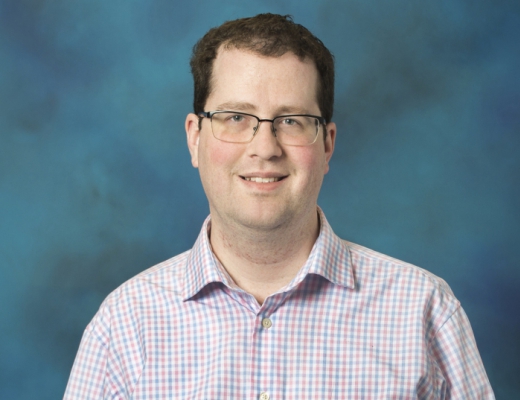
Sebastian U. Stich is a tenured Professor at CISPA Helmholtz Center for Information Security and a member of the European Lab for Learning and Intelligent Systems (ELLIS). His research focuses on optimization for machine learning, collaborative learning (distributed, federated, and decentralized methods), efficient optimization techniques, adaptive stochastic methods, and privacy/security in machine learning. Recent appointments include ERC Consolidator Grant 2024 for the CollectiveMinds project. Key contributions in federated/decentralized learning, uncertainty estimation, and communication-efficient optimization. Active in workshop organization, including the Optimization for Machine Learning workshop at NeurIPS 2024. Teaching modern optimization methods at Saarland University (2023-2025). His work has been recognized with awards such as the Google Research Scholar Award (2023) and Meta Privacy-Enhancing Technologies Award (2022) . His research group includes postdocs Dr. Anton Rodomanov and Dr. Rotem Mulayoff, and PhD students Xiaowen Jiang and Yuan Gao.
Xiaodong Yan is an Assistant Professor in the Department of Materials Science and Engineering and an affiliated faculty member in the Department of Electrical and Computer Engineering at the University of Arizona . His research bridges materials science, nanoelectronics, and quantum computing, with a focus on developing novel quantum materials and devices for next-generation computing systems. Education : BS in Physics (Peking University, China), MS in Electrical Engineering (University of Notre Dame), PhD in Electrical and Computer Engineering (University of Southern California). Postdoctoral Training : Materials Science and Engineering, Northwestern University (2021-2023). Dr. Yan’s research explores the synthesis and physics of emerging quantum materials, particularly 2D materials and van der Waals heterostructures , to create advanced devices for neuromorphic computing , quantum sensing , and low-power electronics . His work spans nanofabrication, device characterization, and algorithm integration. His recent publications in Nature and Nature Electronics highlight breakthroughs in Moiré synaptic transistors with room-temperature neuromorphic functionality and reconfigurable heterojunction transistors for machine learning hardware. These studies emphasize 2D material integration , reconfigurable electronics , and bio-mimicking systems . Scientific Awards : MHI Ph.D. Scholar, Ming Hsieh Department of ECE at USC. Dr. Yan leads the Yan Research Group , which focuses on material and device solutions for neuromorphic computing and quantum sensing . The group actively recruits graduate and undergraduate researchers.
Elad Hazan is a Professor of Computer Science at Princeton University and co-founder/director of Google AI Princeton. His research focuses on algorithmic foundations of machine learning and optimization, with significant contributions to online learning, nonstochastic control, and adaptive gradient methods. Princeton University (Faculty) Google AI Princeton (Co-founder & Director) His work bridges mathematical optimization, control theory, and computational complexity. Key contributions include the AdaGrad algorithm, sublinear-time optimization methods, and spectral filtering techniques for sequence modeling. Recent research emphasizes efficient neural architectures and provable guarantees in online control. Scientific awards include the Bell Labs Prize, IBM Goldberg Best Paper Award (twice), Google Research Award (twice), European Research Council grant, Marie Curie fellowship, and ACM Fellowship. He has served as program chair for COLT 2015 and on the Association for Computational Learning steering committee. His publications highlight trends in online convex optimization, spectral methods for dynamical systems, and adaptive gradient algorithms. Collaborations span Princeton, Google Brain Research, and interdisciplinary projects in robotics and AI safety.
Daniel J. Sorin is a Professor of Electrical and Computer Engineering at Duke University's Pratt School of Engineering, where he also serves as Associate Chair of Education. He holds joint appointments in both the Electrical and Computer Engineering department and Computer Science department, and is recognized as a Bass Fellow for his contributions to education and research. His research focuses on computer architecture with specific expertise in memory systems, cache coherence protocols, fault tolerance, and verification-aware design. Dr. Sorin's work bridges theoretical computer architecture with practical implementations, often incorporating coding theory to solve architectural challenges. His research group has made significant contributions to automated protocol generation, hardware acceleration, and robot motion planning systems. Dr. Sorin's publications reveal a consistent focus on memory consistency models, cache coherence protocols, and verification techniques. His recent work has expanded into robot motion planning acceleration, FPGA resource management, and novel error correction techniques for emerging memory technologies. The trend shows increasing interdisciplinary work connecting computer architecture with robotics and machine learning applications. Program Chair of HiPEAC 2017 Co-chair of IEEE Micro's Top Picks selection committee (2016) Lois and John L. Imhoff Distinguished Teaching Award (2011) NSF CAREER Award recipient IEEE Micro Top Pick awards (2011, 2015) ACM Senior Member As an advisor, Dr. Sorin has mentored numerous PhD students who have gone on to successful careers at leading technology companies including Google, Microsoft, Oracle, and Nvidia. His research group maintains strong industry connections and has produced influential work in cache coherence protocols, memory systems, and fault-tolerant architectures. He has also authored the widely-used textbook 'A Primer on Memory Consistency and Cache Coherence' (2nd edition). Dr. Sorin leads an active research laboratory focused on next-generation computer architecture challenges, with ongoing projects in hardware acceleration, memory systems, and robot motion planning. His group collaborates with researchers across multiple disciplines including robotics, coding theory, and semiconductor design.
Dr. Andrea Bastoni is a Postdoctoral Researcher and Research Fellow at the Chair of Cyber-Physical Systems in Production Engineering at Technical University of Munich (TUM), Faculty of Mechanical Engineering. He is also the CTO and co-founder of Minerva Systems , developing operating system solutions for AI-ready embedded applications. His expertise spans real-time operating systems, cyber-physical systems, and predictable system design for heterogeneous platforms. His research focuses on enhancing predictability of memory hierarchies in complex SoCs through techniques like memory bandwidth regulation and cache partitioning. This work has industrial applications in safety-critical domains such as avionics and railways, where he contributes to certifiable hypervisors and operating systems. As former Software Architect of the PikeOS hypervisor at SYSGO GmbH (2012-2020), he specialized in DO-178C, IEC 61508, and EN 50128 standards. His academic background includes a Ph.D. in Computer Engineering from the University of Rome Tor Vergata (2007-2011), where he developed LITMUS^RT as part of UNC's Real-Time Systems Group during a visiting researcher period (2009-2010). His publications reflect ongoing work on Multicore Real-Time Scheduling , Mixed-Criticality Task Isolation, and Arm DynamIQ shared unit analysis. He actively participates in program committees for conferences like RTSS, DSN, and DATE.
Professor Tineke Brunfaut is a leading academic in Applied Linguistics at Lancaster University 's School of Social Sciences. Her work focuses on language testing , second language reading , listening , and integrated/multimodal skills . She coordinates the Language Testing Research Group and has received prestigious awards including the ILTA Best Article Award , e-Assessment Award , and TOEFL Outstanding Young Scholar Award . Key research areas: Cognitive and affective factors in testing, methodological innovations (eye-tracking, discourse analysis), and language test development. Recipient of multiple grants from the British Council, Trinity College London, and British Academy. PhD supervision interests: Language testing, integrated skills, assessment literacy, and validation. Recent publications explore technology-enhanced assessment , multimodal viewing-to-write tasks , and the impact of delivery modes on test performance . She has consulted for global institutions on test design and evaluation. Scientific Awards : ILTA Best Article Award e-Assessment Award for Best Research TOEFL Outstanding Young Scholar Award Her teaching includes MA programs in Language Testing, TESOL, and Applied Linguistics, covering Test Construction , Research Methods , and Statistical Analyses .
Nicole Novielli, Ph.D., is Associate Professor at the University of Bari “A. Moro” , Italy, where she conducts research on affective computing applied to software engineering and human-computer interaction. She leads the Collaborative Development Group and coordinates national projects investigating emotions in software teams, AI quality and IoT ecosystems. Education: Ph.D. in Computer Science, University of Bari, 2010 – thesis on “Lexical Semantics of Dialogue Acts” M.Sc. in Computer Science (Knowledge & Software Engineering), University of Bari, 2006 – summa cum laude B.Sc. in Computer Science, University of Bari, 2004 – summa cum laude Visiting researcher at USC-ICT, University of Aberdeen, FBK-irst (Trento) Research interests revolve around recognizing and exploiting affective and cognitive states in computer-mediated cooperative work. She studies sentiment and emotion mining in developers’ textual communication, multimodal emotion recognition via low-cost biometric sensors, and natural-language dialogue simulation for intelligent interfaces. Her work couples software engineering with natural language processing , social media analytics and human-computer interaction . Recent articles (2021-2025) reveal a clear trend: integrating deep learning and large language models into software engineering tasks—automated issue labelling, sentiment classification, technical-debt detection—while validating these techniques through rigorous empirical studies and biometric experiments . A parallel stream explores developer experience , measuring how emotions and cognitive load influence productivity, code quality and collaboration. Scientific awards include the 2020 Apex Award for Publication Excellence , multiple Distinguished Reviewer Awards at flagship venues (ESEC/FSE, ICSME, MSR), the Best Paper Award SANER 2019 and the Best Student Paper Award ACII 2009 . She currently teaches “Sentiment Analysis” in the Data-Science MSc and “Computer Networks” in the ITPS programme. She has advised numerous B.Sc., M.Sc. and PhD projects and is PI or Co-PI of four ongoing grants: EmoQuest (SIR), EMPATHY (PRIN), FAIR-Spoke 6 (PnRR), and QualAI (PRIN 2022). Dr. Novielli serves on the editorial boards of Empirical Software Engineering and Journal of Systems and Software , has guest-edited special issues on affect awareness in SE, and has chaired tracks at ICSE, SANER, MSR, ICSME and SSBSE. She co-leads the Collaborative Development Group and actively releases datasets and open-source tools for the community.
Micheline B. Soley is an Assistant Professor in the Department of Chemistry at the University of Wisconsin-Madison with an affiliate appointment in Physics. She leads the Soley Research Group, which focuses on developing quantum computing algorithms, tensor-network methods, and quantum control strategies to address fundamental challenges in quantum dynamics and ultracold chemistry. Her research bridges theoretical chemistry, quantum information science, and computational physics. Education: Ph.D. in Chemical Physics, Harvard University (2020) A.M. in Chemistry, Harvard University (2016) Yale Quantum Institute Postdoctoral Fellow (2020-2022) Fulbright Fellow, Max Born Institute (2013-2014) B.S. in Chemistry and Music, Yale University, Magna Cum Laude (2013) Research Interests: Her work centers on three interconnected pillars: (1) Quantum computing algorithms and tensor-network methods for exact quantum dynamics, overcoming dimensionality limitations in chemical simulations; (2) Ultracold chemistry and quantum control, developing schemes to manipulate chemical reactions and analyze ultracold collisions; and (3) Theoretical spectroscopy, creating tools to simulate UV/X-ray pump-probe experiments for mechanistic studies of processes like isomerization and proton transfer. Publication Trends: Recent articles (2023-2025) demonstrate a strong focus on quantum algorithm development (error mitigation, amplitude estimation), tensor-network applications in quantum dynamics and biomolecular simulations, quantum hardware compilation, and fundamental studies of PT symmetry and ultracold collisions. Her work consistently integrates theoretical chemistry with quantum information science. Awards and Fellowships: American Chemical Society Kavli Emerging Leader in Chemistry Award (2023) Institute for Pure and Applied Mathematics Fellow (2021) Yale Quantum Institute Postdoctoral Fellowship (2020) National Science Foundation Graduate Research Fellowship (2014) Fulbright Fellowship (2013-2014) DAAD Graduate Scholarship (2013-2014) Beckman Scholars Fellowship (2012-2013) Phi Beta Kappa (2012) Advising and Group: She mentors graduate students from Chemistry and Physics programs, including Jingcheng Dai (Chemistry), Atharva Vidwans (Chemistry/Physics), and Henry Lin (Physics-Quantum Computing). Former advisees include Preetham Tikkireddi (Quantum Circuits Inc.) and Jaden Coles (Yale PhD). Her group explores quantum computing, tensor networks, ultracold collisions, and PT symmetry.
Scott Fraundorf is an Associate Professor in the Department of Psychology at the University of Pittsburgh , where he leads the MAPLE (Memory And Psycholinguistics in Learning & Education) Lab . He combines cognitive science and data science to study human behavior prediction, educational program evaluation, and psycholinguistics . His research focuses on student learning and metacognition language processing and educational technology interventions statistical modeling using regression , machine learning , and mixed-effects models as well as open-source tool development for cognitive science. Key technical skills include Python , R , and SQL programming, with 3 patents for intelligent tutoring systems in English grammar. He has mentored over 70 graduate students and faculty in quantitative methods.
Eadric Bressel is a Professor and Head of the Department of Kinesiology and Health Science at Utah State University (USU). He holds a PhD in biomechanics from the University of Northern Colorado and earned his B.S. and M.S. in kinesiology from California State University, Fresno. Prior to joining USU in 2000, he was a postdoctoral fellow at the Auckland University of Technology's health and rehabilitation center. Education: PhD in Kinesiology (Biomechanics), University of Northern Colorado, 1999 MA in Kinesiology (Exercise Science), California State University, Fresno, 1995 BS in Kinesiology (Exercise Science), California State University, Fresno, 1994 Research Interests: Dr. Bressel focuses on biomechanical adaptations to therapeutic exercise in healthy and clinical populations. His work emphasizes spine stabilization exercises, determinants of balance, and aquatic rehabilitation strategies for conditions like osteoarthritis. Recent studies explore the efficacy of aquatic environments for improving motor learning, cognitive performance, and functional outcomes in older adults. Key Research Trends: His publications highlight the biomechanical benefits of aquatic training, including its impact on muscle function, postural control, and injury prevention. Cross-disciplinary studies integrate biomechanics with gerontology and sports medicine, addressing aging populations and athletic performance optimization. Awards: Excellence in Aquatic Physical Therapy Research Award (APTA Aquatic Section, 2016) Researcher of the Year (HPER Department, 2012) Employee of the Year (Kinesiology & Health Science Department, 2017) Top Professor Award (Mortar Board Senior Honor Society, 2004) Advising & Grants: Dr. Bressel has mentored over 40 graduate students, many of whom have contributed to studies on aquatic exercise, balance rehabilitation, and sports biomechanics. He has secured grants to investigate aquatic treadmill training for osteoarthritis, cognitive-aquatic interaction effects, and eccentric resistance protocols. Labs/Teams: His lab focuses on translational research integrating biomechanical analysis with clinical applications. Collaborations with institutions like the Auckland University of Technology and the American Physical Therapy Association highlight his commitment to bridging research and practice in aquatic therapy and sports science.
Dr Lin Yue is a Lecturer at the University of Adelaide , affiliated with the Faculty of Sciences, Engineering and Technology and the School of Computer and Mathematical Sciences . She earned her PhD from Jilin University, with part of her doctoral studies completed as a joint PhD candidate at the University of Queensland. Past affiliations: Northeast Normal University, University of Queensland, University of Newcastle Her research focuses on Sequential Data Analysis and its applications in Medical Data Analytics, EEG Data Analysis, Brain-Computer Interfaces, Social Media Data Analytics, and Sentiment Analysis . She collaborates with academia, government, and professional organizations, supported by internal and external research grants. Dr Yue is eligible to supervise Masters and PhD students as a Co-Supervisor and contributes to advancing data mining and machine learning techniques in healthcare and time series analysis.
Bin Nan serves as Chancellor's Professor in the Department of Statistics at the University of California, Irvine, where he develops statistical and machine learning methodologies to advance biomedical research and improve human health outcomes through rigorous data analysis. His educational credentials demonstrate a strong quantitative foundation: Ph.D. in Biostatistics, University of Washington (2001) M.S. in Biostatistics, University of Washington (1999) M.S. in Statistics, Virginia Commonwealth University (1997) M.S. in Aerospace Engineering, Beijing University of Aeronautics & Astronautics (1987) B.S. in Aerospace Engineering, Beijing University of Aeronautics & Astronautics (1984) Nan's research program focuses on developing cutting-edge statistical methods for survival analysis, longitudinal data, high-dimensional inference, and machine learning, with direct applications to epidemiology, bioinformatics, and brain imaging. His work addresses critical challenges in biomedical data such as temporal dependence in neuroimaging sequences, estimation of large correlation matrices, and analysis of disease onset with terminal events, all aimed at identifying biomarkers for earlier disease diagnosis. Analysis of his recent publications (2015-2023) reveals a consistent trajectory toward methodological innovation in handling complex biomedical data structures, particularly through de-biased lasso techniques for survival models, neural network applications to censored data, and specialized approaches for longitudinal data with terminal events. These advances predominantly support Alzheimer's disease research and transplant outcome studies. No specific scientific awards were documented in the source material. His research program maintains continuous funding through National Science Foundation and National Institutes of Health grants, including a recent $1.8 million award for Alzheimer's disease methodology development. Nan actively collaborates with the UCI Alzheimer's Disease Research Center and UCI Center for the Neurobiology of Learning and Memory, though student advising details were not provided. His teaching portfolio includes advanced graduate courses in probability theory, survival analysis, and high-dimensional inference. Nan operates within interdisciplinary biomedical research teams focused on translating statistical innovation into clinical applications, particularly through brain imaging analysis and biomarker identification for neurodegenerative diseases.
Prof. Dr. Gaia Tavosanis is a faculty member at RWTH Aachen University , affiliated with the Department of Developmental Biology . Her research focuses on the cellular and molecular mechanisms underlying neuronal resilience and dynamics in Drosophila , particularly during development and adult life. Research Interests Her work investigates dendritic structural remodeling, lipid metabolism in neuronal health, and the role of the Drosophila mushroom body in sensory processing and memory formation. These studies integrate genetic models, advanced imaging techniques, and functional analyses to uncover conserved biological principles. Publications Trends Recent publications highlight her expertise in neurodevelopmental mechanisms, lipid metabolism in neurons, and computational ethology using Drosophila . Key themes include dendritic plasticity, disease modeling, and neural circuitry optimization. Contact Email: gaia@devbiol.rwth-aachen.de Phone: +49 241 80 20870 Address: Worringerweg 3, 52074 Aachen, Germany
Moinuddin Qureshi is a Professor of Computer Science at Georgia Institute of Technology, affiliated with the School of Computer Science and involved in the Online Master of Science in Computer Science (OMSCS) program. He holds a Ph.D. and M.S. from the University of Texas at Austin. His research focuses on computer architecture, memory systems, hardware security, and quantum computing, with notable contributions to mitigating rowhammer vulnerabilities and advancing quantum error correction. Previously, he was a Research Staff Member at IBM T.J. Watson Research Center (2007–2011), where he contributed to caching algorithms for Power-7 processors. He has held leadership roles, including Program Chair of MICRO 2015 and Selection Committee Co-Chair of Top Picks 2017. His work has been recognized with prestigious awards, including the 2019 Persistent Impact Prize and multiple best paper awards. Key research areas include secure memory design (e.g., rowhammer mitigation techniques like MINT and Moat), quantum computing (e.g., Flag-Proxy Networks and Élivágar), and hardware vulnerability analysis (e.g., Roguerfm attacks and COAXIAL memory systems). His publications span 2009–2025, addressing topics like error correction, secure tracking, and quantum annealing optimization. Awards include membership in ISCA, MICRO, and HPCA Hall of Fame, alongside contributions to conferences like HiPC and IEEE MICRO. His work bridges theoretical advancements with practical implementations in both classical and quantum domains.
Mark Harris is a Professor at Monash University's School of Philosophical, Historical and International Studies (SOPHIS). His research focuses on historical anthropology, ethnohistory, and Latin American societies, particularly in the Amazon region. He has held academic positions in the UK, US, Brazil, and Australia, and his work emphasizes interdisciplinary approaches to Indigenous studies, colonialism, and decolonization. Education: PhD in Anthropology (London School of Economics and Political Science, 1998), BSc in Anthropology/Psychology (University of London). Research interests include the intersection of environment and society in Amazonian contexts, Indigenous knowledge systems, and transatlantic histories. Recent projects include studies on Brazilian Amazonian cultures and Jesuit documentary sources. He has contributed to over 30 research outputs since 1998, emphasizing riverine societies, seasonal rhythms, and Indigenous histories. Notable awards include the British Academy Postdoctoral Fellowship (1996), Phillip Leverhulme Prize (2004), and Warren Dean Memorial Prize (2011). His funded projects explore Indigenous experiences in Brazil and Australia, aiming to create socially responsible knowledge communities. Advising and grants focus on fostering global interdisciplinary collaboration. His work aligns with UN SDGs related to education and sustainable development, emphasizing socially responsible research practices.