Amir Ali Ahmadi is a Professor at Princeton University's Department of Operations Research and Financial Engineering (ORFE), with affiliations across multiple disciplines including PACM, Computer Science, Mechanical & Aerospace Engineering, Electrical Engineering, and the Center for Statistics and Machine Learning. He serves as Director of Princeton's Optimization and Quantitative Decision Science Certificate Program and has taken temporary roles at Citadel GQS (2021-2022) and Google Brain (2020-2021). His research bridges optimization theory , dynamical systems , and control theory , focusing on scalable algorithms for complex problems in robotics, autonomous systems, and machine learning. He has pioneered DSOS/SDSOS relaxations as alternatives to traditional sum-of-squares methods, enabling faster solutions through linear/second-order cone programming. Recent publications explore: Higher-order Newton methods for socially responsible investment Data-efficient learning of dynamical systems Computational complexity of local minima Robust-to-dynamics optimization frameworks Award highlights include: 2024 Egon Balas Prize in Optimization 2024 Princeton Engineering Council Teaching Award 2023 Distinguished Teaching Award (Princeton SEAS) 2019 NSF CAREER Award 2017 DARPA Young Faculty Award 2017 Sloan Fellowship in Computer Science He advises prominent researchers like Georgina Hall (Tucker Prize finalist) and Bachir El Khadir (Goldstine Fellow), and leads the Princeton Optimization Seminar and MURI project on Control-Oriented Learning on the Fly.
Mohamed Noureldin is an Assistant Professor at the Department of Civil Engineering, Aalto University , Finland, with prior academic roles at Sungkyunkwan University, South Korea (2015–2022). His expertise lies in integrating Artificial Intelligence (AI) with Structural Health Monitoring (SHM) , Structural Digital Twin , Predictive Maintenance , and Seismic Retrofitting . Research Focus : AI-powered sustainable structural design, smart retrofitting, predictive maintenance, structural material innovation, and next-generation performance-based seismic/wind design. Industrial Experience : 20+ years in offshore/onshore structural engineering (Hyundai Heavy Industries, Samsung Engineering, Arab-Swiss Engineering Company, Zuhair Fayez Partnership). Teaching : Courses in structural analysis, seismic design, dynamics, and reinforced concrete at Aalto and Sungkyunkwan Universities. Laboratory : Leads the Structural Design AI Lab (SDAI), focusing on AI-driven resilient infrastructure. Contact : mohamed.noureldin@aalto.fi , +358504544861. His publications explore cutting-edge applications of AI, ML, and DL in seismic retrofitting, structural durability, soil stabilization, and hybrid damping systems. Collaborative work emphasizes life-cycle cost assessment and augmented reality for predictive maintenance.
Claire Battershill is an Assistant Professor jointly appointed in the Faculty of Information and the Department of English at the University of Toronto. She holds a PhD from the University of Toronto and a BA (Hons) from the University of Oxford. Her research focuses on the history and future of the book, with a particular emphasis on feminist experimental publishing, literary aesthetics, and 20th/21st-century publishing practices. She is Co-Director of the Modernist Archives Publishing Project (MAPP), a critical digital archive of early 20th-century publishers’ records, and Co-Creator of the SSHRC-funded 'Make Believe' research-creation project. Her publications include Women and Letterpress Printing: Gendered Impressions (2022) and Using Digital Humanities in the Classroom (2022). Dr. Battershill has held prestigious roles such as Wendy M. Cecil Professor in VicOne at Victoria College and Fellow of the Royal Historical Society. She has secured grants including the SSHRC Impact Award (2017) and funding from the Canada Council for the Arts. Her teaching spans courses like INF2228H (The Future of Things: Digitization and Remediation) and BKS1002H (Book History in Practice), blending theory with hands-on engagement in digital humanities and book studies. Her research interests span digital humanities pedagogy, collaborative publishing projects, and the intersection of feminist theory with material book culture. She actively contributes to interdisciplinary initiatives like the Critical Digital Humanities Initiative (CDHI) at the University of Toronto.
Lorena Sosa is an Associate Professor at the Faculty of Law, Economics and Governance, Utrecht University, specializing in International and European Law. She is affiliated with the Netherlands Institute of Human Rights (SIM) and the research program Family & Law (UCERF). Her roles include membership of the management board of the Center for Global Challenges, Director of Education at UGlobe since 2022, and a community-engaged learning ambassador for her faculty since 2023. Education: PhD (cum laude) in Law from Tilburg University (2015), LL.M. in International Public Law (cum laude, National University of Córdoba), and a law degree from the same institution. Prior to Utrecht, she held positions at the University of Buenos Aires, University of Turku, and others. Research focuses on intersectional discrimination, gender-based violence, and human rights law. Key areas include the Istanbul Convention, feminist legal frameworks, and trans rights in criminal procedures. She employs socio-legal methods and collaborates with international organizations like the EU, Council of Europe, and UN. Publications span topics like femicide, domestic violence, and transgender experiences. Recent works include contributions to the Routledge International Handbook on Femicide and Feminicide (2023) and Preventing and Combating Violence Against Women (2023). Awards include the Marie Skłodowska-Curie Fellowship (2018), VENI Grant (2020), and the Max van der Stoel Award (2015) for her PhD on intersectionality in violence against women frameworks. Teaching includes courses on human rights law at Utrecht’s Legal Research Master, PIL Master, and University College Utrecht. She advises on projects related to victim rights, gender diversity, and empirical legal studies.
Ranjan Singh is a Professor at the Division of Physics, Nanyang Technological University (NTU) Singapore, specializing in terahertz photonics and metamaterials. He holds an elected fellowship from OPTICA (OSA) for pioneering work in ultrafast terahertz photonics, active metamaterials, and sensors. His research focuses on hybrid THz-electronic-photonic technologies for 6G communications, topological photonics, spintronics, quantum materials, and high-Tc superconductors. Education: B.Eng. in Telecommunications (Bangalore University, 2001); M.Tech in Photonics (Cochin University, 2004); Ph.D. in Photonics (Oklahoma State University, 2009). Postdoctoral research at Los Alamos National Laboratory (2009–2013). Research emphasizes on-chip THz topological photonics for next-gen communication systems, with notable achievements including a $7M grant for TERACOMM (on-chip THz topological photonics). His work integrates AI-driven beamforming, reconfigurable metasurfaces, and phase-change materials for adaptive THz systems. Key awards include the 2020 Web of Science 'Top 1% Highly Cited Researcher' distinction. His lab, TeraX Labs (founded 2013), develops cutting-edge technologies like THz brain-computer interfaces, quantum emitters, and spintronic sensors. Over $12M in competitive grants has fueled innovations in THz integrated circuits, tunable optical coatings, and ultra-sensitive biosensors. Advancing 6G/XG wireless, Singh's team designs topological beamformers, intelligent reflecting surfaces (IRS), and terahertz metamaterials for multi-link systems. His work bridges theoretical physics and applied engineering, with a focus on energy-efficient, reconfigurable photonic systems.
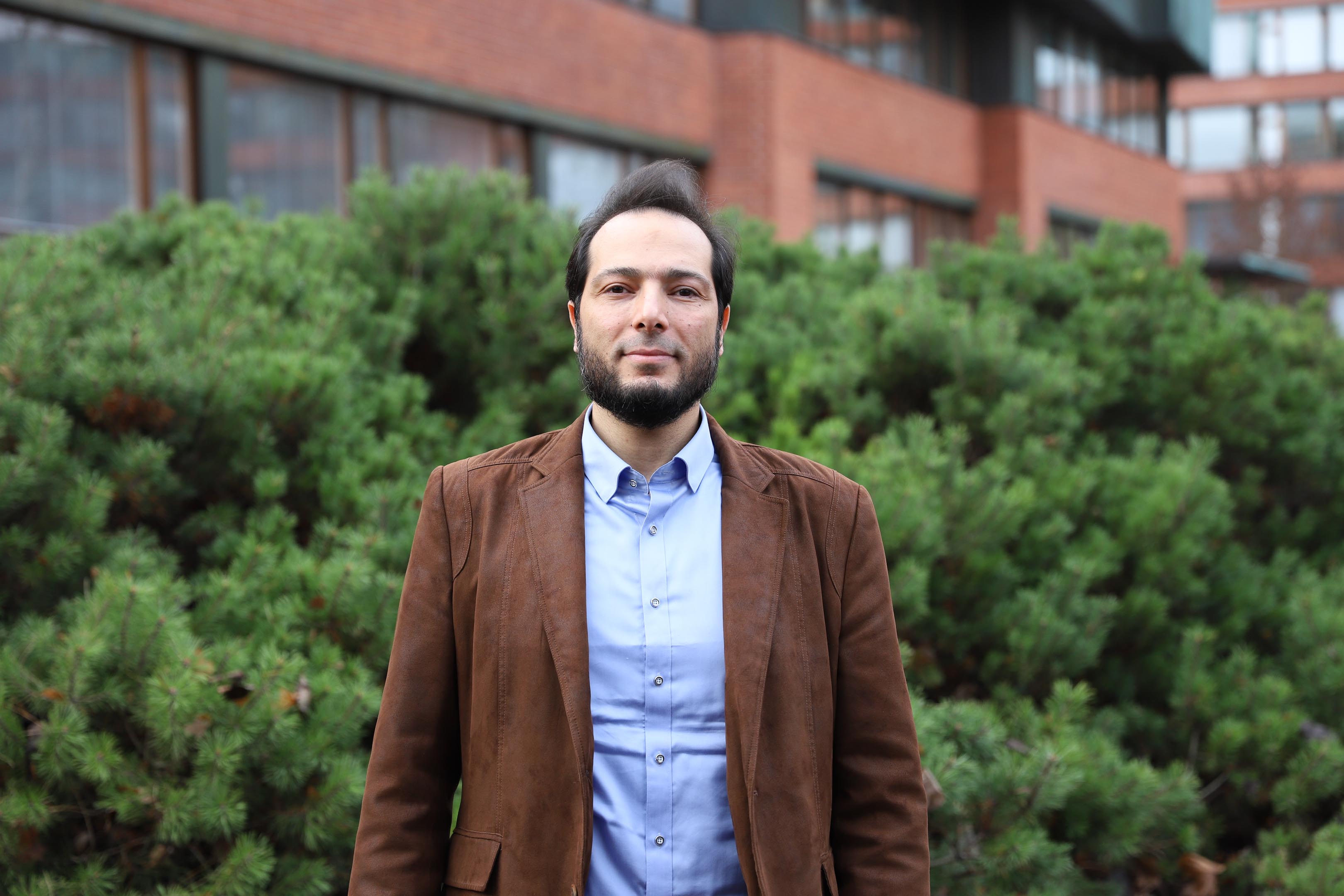
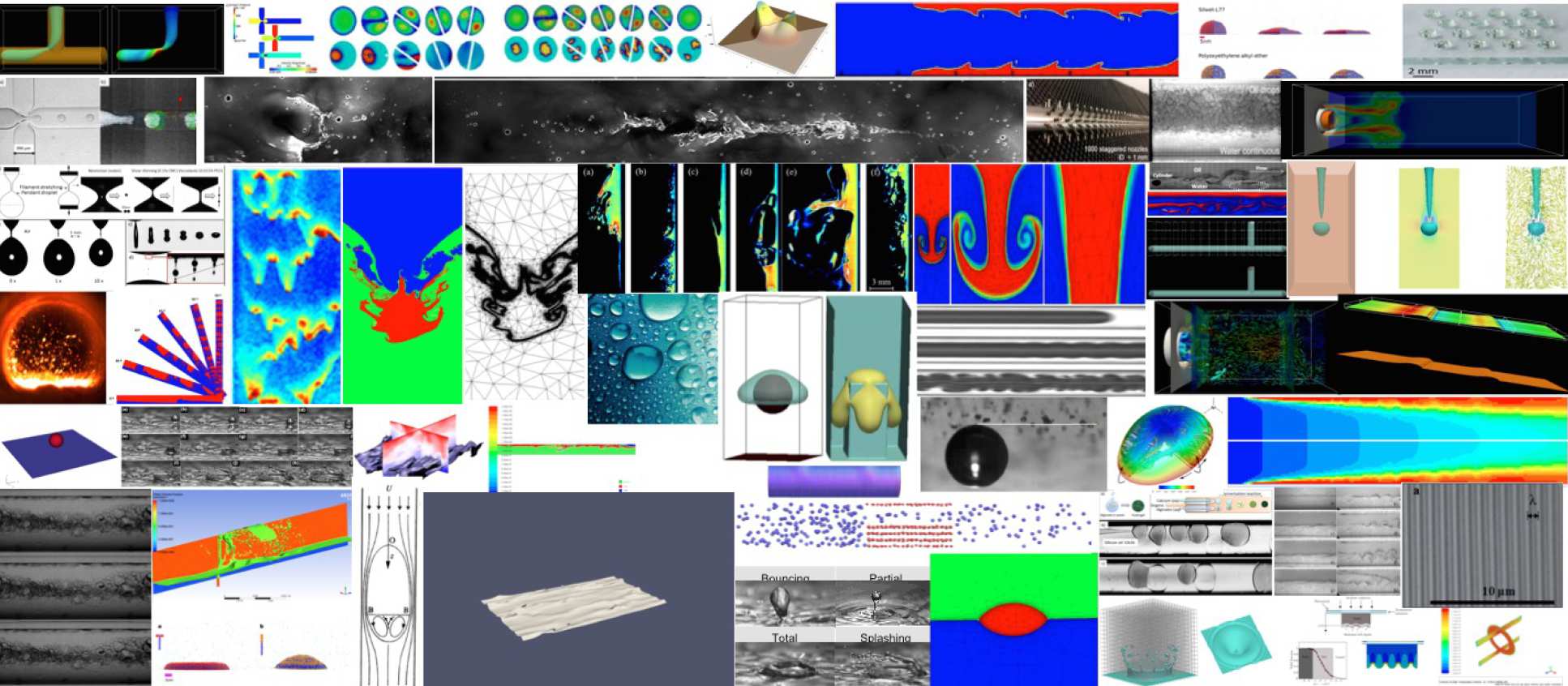
Professor Omar Matar is a Professor of Fluid Mechanics and RAEng/PETRONAS Research Chair in Multiphase Fluid Dynamics at the Department of Chemical Engineering, Imperial College London. He leads the Matar Fluids Group, focusing on interfacial fluid mechanics, multiphase flows, computational fluid dynamics (CFD), and applications in energy, manufacturing, and nanotechnology. His roles include Head of Department of Chemical Engineering, Director of the PETRONAS Centre for Engineering of Multiphase Systems (PETCEMS), and Editor-in-Chief of the Journal of Engineering Mathematics. Education: PhD in Chemical Engineering, Princeton University (1993) MEng Chemical Engineering, Imperial College London (1989) Research Interests: Interfacial fluid mechanics, multiphase flows, CFD, and machine learning 2D materials exfoliation and scale-up, immersive technologies (AR/VR) Applications in energy systems, nanotechnology, and personalized education Awards: Fellow of the Royal Academy of Engineering (2020) Recipient of the Imperial College President’s Medal (2020) EPSRC Programme Grant Principal Investigator (MEMPHIS, PREMIERE) Grants & Projects: MEMPHIS: £5M EPSRC-funded Programme Grant (2012–2017) PREMIERE: EPSRC Programme Grant (2019–present) PETCEMS: PETRONAS-funded Centre for Multiphase Systems Engineering Labs & Collaborations: Leads the Matar Fluids Group, collaborating with institutions like UCL, University of Edinburgh, and industry partners such as BP and First Light Fusion. Active in developing high-performance CFD codes (e.g., BLUE) and machine learning-driven models for multiphase systems.
Zakia Hammal is an Assistant Research Professor with dual appointments at Carnegie Mellon University, holding positions in the Robotics Institute within the School of Computer Science and the Department of Biomedical Engineering in the College of Engineering. Her work bridges computer science, machine learning, artificial intelligence, and social/behavioral psychology to advance computational models for human behavior analysis. Dr. Hammal's educational background includes a PhD in Computer Science, a Master of Artificial Intelligence and Algorithmic with specialization in Image Processing, and an Engineer's degree in Computer Science with specialization in Computer Systems. Her academic journey has positioned her at the intersection of technical expertise and healthcare applications. Her research focuses on multimodal human behavior modeling in social interaction, with particular emphasis on health informatics and affective computing (Emotion AI). Dr. Hammal's work has pioneered computational models for multimodal assessment of psychiatric disorders, including depression severity evaluation, automatic pain intensity measurement, assessment of expressiveness in children with facial abnormalities, analysis of non-verbal communication in mother-infant interaction, and identification of behavioral markers in autism spectrum disorder. Her approach integrates computer vision, machine learning, and behavioral psychology to create systems that can objectively measure human behaviors that are often subjective in clinical settings. Analysis of her recent publications reveals a consistent trajectory toward more sophisticated multimodal approaches to healthcare challenges, particularly in pain assessment and mental health diagnostics. Her work increasingly emphasizes interpretable AI models that can translate complex behavioral patterns into clinically meaningful insights, with growing attention to applications for vulnerable populations including infants, elderly patients, and those with craniofacial abnormalities or autism spectrum disorder. Women in AI Awards North America 2023 – AI Researcher of the Year Award Outstanding Reviewer Award at FG 2015 Best Paper award at ACII 2015 Outstanding Paper award at ICMI 2012 Dr. Hammal has secured significant research funding, primarily from the U.S. National Institutes of Health, including an R01 grant for developing a Multimodal Behavioral AI platform for pain assessment and management, and additional grants for automatic pain assessment in older adults with dementia. Her leadership extends to mentoring through her involvement in organizing workshops and conferences that train the next generation of researchers in affective computing and health informatics. As an active leader in her field, Dr. Hammal serves as ACM ICMI Steering Board Committee Member, Associate Editor for IEEE Transactions on Affective Computing and IEEE Transactions on Multimedia, and has organized numerous influential workshops including the International Workshop on Automated Assessment of Pain and Face and Gesture Analysis for Health Informatics. She is set to serve as Program Chair for FG 2025, ACII 2025, and ICMI 2026, demonstrating her growing influence in shaping the future direction of research in multimodal interaction and affective computing.
Elizabeth A. Simpson is an Associate Professor in the Department of Psychology at the University of Miami's College of Arts and Sciences. She serves as Associate Director of the Child Division and directs the Social Cognition Laboratory, focusing on infant social and cognitive development through interdisciplinary methodologies. Education: Ph.D. in Psychology (unspecified institution) Key Research Areas: Developmental Psychology, Autism, Social Cognition, Primate Studies, Visual Attention, Infant Behavior Her research investigates individual differences in infant visual attention, social motivation, and physiological markers like salivary oxytocin. Recent studies demonstrate: Stability of attentional patterns from newborn to 14 months Sex differences in early face detection Links between oxytocin levels and social affect in infants Neurophysiological markers in newborns later diagnosed with ASD Scientific awards include the NSF CAREER grant for neonatal imitation research. She contributes to open science initiatives through the ManyBabies consortium and develops remote eye-tracking methods for broader accessibility. Current lab work explores: Parent-infant affective interactions during still-face episodes Predictive power of early attentional biases Development of pathogen avoidance behaviors Cross-species comparisons of social cognition
Arno De Caigny is an Associate Professor at IÉSEG School of Management in France, specializing in Marketing Analytics. He holds a Ph.D. in Sales and Marketing from the University of Lille and Masters in Economics/Mathematics and Finance from Ghent University. His professional experience includes work as a Business Analyst at Deloitte. His primary research interests include customer churn prediction, AI applications in marketing, explainable AI for business, and life event-based marketing. He develops advanced machine learning models for customer behavior prediction and retention strategies. De Caigny's recent publications demonstrate strong focus on developing interpretable machine learning models for business applications, particularly in customer churn prediction and financial decision support. His work increasingly incorporates deep learning and natural language processing techniques.
Vassilis Zikas is an Associate Professor at the School of Cybersecurity and Privacy and holds a courtesy appointment in the School of Computer Science at Georgia Tech. He previously held positions at Purdue University, the University of Edinburgh, and Rensselaer Polytechnic Institute (RPI). His research focuses on cryptography, blockchain technologies, cryptocurrencies, game theory, and distributed computing. He leads the Blockchain Lab at Georgia Tech and serves as Chief Scientist at Sunday Group, where he contributes to the Mobby blockchain architecture. His work is supported by the NSF, DoD, Swiss NSF, and industry partners like Sunday Group and Algorand Foundation. He has organized major conferences including PKC 2020 and has served on program committees for EUROCRYPT, CRYPTO, and TCC. He advises PhD students in cryptography and related fields and has mentored postdocs and master’s students. Zikas’ publications span topics like secure multi-party computation (MPC), blockchain security, and cryptographic protocol design. His recent work includes advancements in privacy-preserving protocols, adaptive security frameworks, and composability in blockchain systems. Notable awards include the 2023 Leadership Award from Purdue College of Science and an AnlytiXIN Fellowship. He actively contributes to both theoretical and applied aspects of cybersecurity and privacy through academic and industrial collaborations.
Professor Ana Mijic is a leading academic in water systems integration at Imperial College London's Department of Civil and Environmental Engineering (Faculty of Engineering). Her work focuses on developing systems tools to balance economic growth with sustainable water use, flood management, and water quality under future uncertainties. She leads high-profile projects like the EPSRC VENTURA initiative and the NERC CAMELLIA impact programme, emphasizing adaptive planning and grey/green infrastructure integration in urban systems. Education: BEng (First Class) in Civil Engineering from the University of Belgrade (Serbia), MSc (Distinction) in Hydrology for Environmental Management, and PhD in Earth Science & Engineering from Imperial College London (2013). Previously served as a teaching assistant in Fluid Mechanics and Hydrometry at Belgrade University. Research interests include whole-water system modelling, socio-hydrological interactions, and nature-based solutions for resilient urban water systems. Her work bridges academia and practice through partnerships with regulators like the UK Environment Agency and global initiatives like the IAHS HELPING programme. Awards include the Satish Dhawan Visiting Chair Professorship (2022) and the 2019 Imperial President’s Award for Excellence in Research (as part of her Hydrology team). She co-leads Imperial’s Transition to Zero Pollution (TZP) Urban Ecosystems theme and serves on editorial boards for journals like Water Security . Her contributions span over 50 peer-reviewed articles (2020–2025), focusing on integrated water management frameworks, AI-driven monitoring, and systemic approaches to urban resilience. She advocates for participatory decision-making and policy coherence in water governance.
Yin Tat Lee is an Associate Professor at the Paul G. Allen School of Computer Science & Engineering , University of Washington, and a Senior Principal Researcher in Microsoft AI. His research spans convex optimization , convex geometry , graph algorithms , online algorithms , and differential privacy , with applications in machine learning and theoretical computer science.
Yimin D. Zhang is an Associate Professor in the Department of Electrical and Computer Engineering at Temple University's College of Engineering, where he leads the Advanced Signal Processing (ASP) Lab. His research spans statistical signal processing, array processing, radar, wireless communications, and convex optimization. Research Interests: Dr. Zhang's work focuses on cutting-edge signal processing techniques including compressive sensing, sparse arrays, time-frequency analysis, and robust beamforming. These are applied to radar systems, satellite navigation, assisted living, and wireless networks. His research addresses core challenges in target localization, direction-of-arrival estimation, and spectrum-efficient joint radar-communication systems. The recent publications highlight a strong trend in exploiting sparsity, virtual arrays, and deep learning to enhance resolution and robustness in radar and communication systems. Themes include multi-frequency processing, low-rank matrix recovery, and optimized OFDM waveforms for dual-function systems. Scientific Awards: 2016 IET Radar, Sonar and Navigation Premium Award 2017 IEEE Aerospace and Electronic Systems Society Harry Rowe Mimno Award 2018 IEEE Signal Processing Society Young Author Best Paper Award (coauthor) Advising and Grants: Dr. Zhang has served as Principal or Co-Principal Investigator on over $6 million in research funding from the NSF, AFRL, ONR, and DARPA. While student advisees are not listed, his leadership of the ASP Lab suggests active mentorship of graduate researchers. He contributes extensively to the academic community as an associate editor for IEEE Transactions on Signal Processing and editor for Signal Processing journal, and serves on key IEEE technical committees. Labs and Teams: He directs the Advanced Signal Processing (ASP) Lab at Temple University, which focuses on developing novel algorithms for real-world applications in radar, communications, and navigation. Previously, he led the Wireless Communications and Positioning Lab and the RFID Lab at Villanova University.
Prof. Dr. Mirko Kremer is a Professor of Supply Chain Management at the Frankfurt School of Finance & Management since July 2014. Prior to this, he was an Assistant Professor at Pennsylvania State University (2008-2014) and held visiting roles at London Business School, Kellogg School of Management, and INSEAD. He earned a Ph.D. in Business Administration from the University of Mannheim (2008), with prior studies in Business Administration at Mannheim (1999-2003) and Economics at Ruhr-Universität Bochum (1997-1999). Research Focus: Micro-behavioral foundations of supply chains, inventory management, sales forecasting, and service systems. Editorial Roles: Department Editor for Production and Operations Management , Associate Editor for Operations Research . Teaching: Courses in Operations Management, Supply Chain Strategy, and quantitative decision modeling at Frankfurt School, INSEAD, London Business School, and Kellogg School of Management. Research Trends: His work bridges behavioral economics with supply chain operations, emphasizing how human decision-making (e.g., managerial biases, consumer behavior) impacts inventory systems, pricing strategies, and forecasting accuracy. Recent articles focus on diagnostic errors under congestion, strategic sourcing biases, and dynamic pricing experiments.
Kåre Synnes is a Professor in Pervasive and Mobile Computing at Luleå University of Technology, where he is affiliated with the Department of Computer Science, Electrical and Space Engineering. He is an active researcher and educator, recognized as an "Excellent lärare" (Excellent Teacher) and maintains his office in Luleå at location A3305a. Professor Synnes conducts research in pervasive computing and multimedia communication, with significant applications in eHealth. His work bridges theoretical computer science with practical implementations in distributed systems. He is also an affiliated researcher at the Centre for Distance-spanning Technology (CDT), focusing on technologies that enable communication across geographical boundaries. His recent publications demonstrate a clear trajectory toward sustainable computing solutions, with emphasis on circular economy applications, supply chain management, and environmental impact assessment. His research integrates computer science with economic and sustainability principles, showing how digital technologies can address contemporary environmental challenges through innovative auction systems, behavior analytics, and resource management frameworks. IST Prize winner as co-founder of Marratech AB Synnes has been deeply involved in European research projects since 1995, including multiple Framework Programme projects (FP4 through FP7). His work as an expert/reviewer for European projects since 2009 demonstrates his standing in the research community. His entrepreneurial success with Marratech AB, which was acquired by Google to form the basis for Google+ Hangouts, shows his ability to translate research into impactful commercial applications. Professor Synnes maintains strong connections with industry through his European project work and his entrepreneurial experience. His research group likely focuses on pervasive computing applications with real-world implementations, particularly in eHealth contexts, though specific lab details aren't provided in the available information.