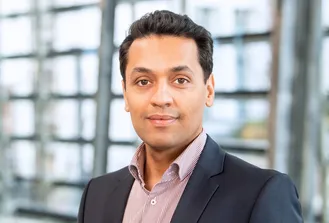
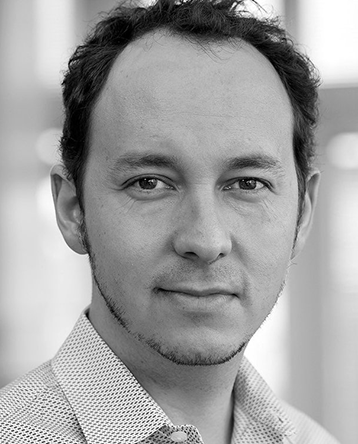
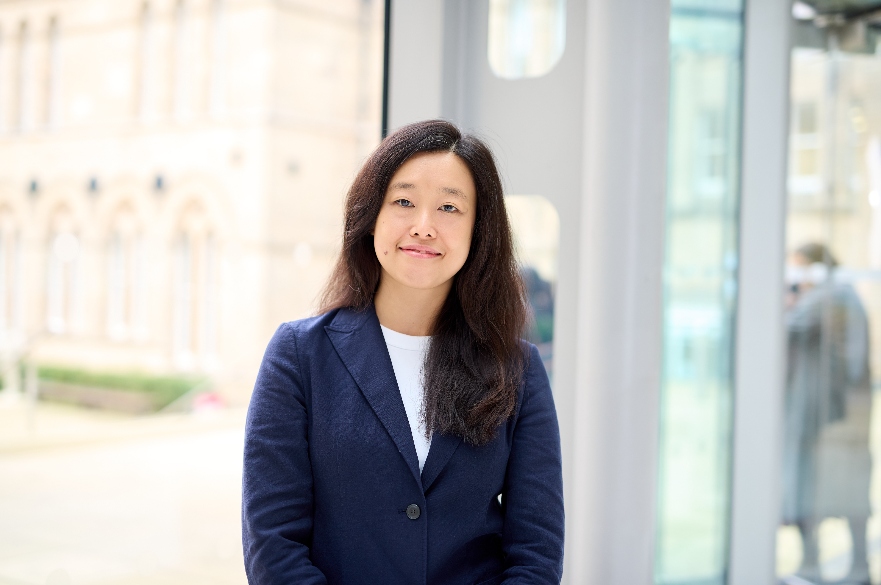
Prof. Jalal Etesami is an Assistant Professor in the Department of Computer Science at Technical University of Munich (TUM), leading the Decision Sciences & Systems group. He holds a Ph.D. in Industrial and Systems Engineering from the University of Illinois at Urbana-Champaign and was a Postdoctoral Fellow at EPFL in Switzerland. His research focuses on machine learning, causal inference, multi-agent systems, and game theory, with applications to systemic risk modeling and market design. He teaches advanced courses such as Causal Inference in Time Series , Algorithmic Game Theory , and Optimization, Learning, and Market Design . Notable contributions include work on causal structure learning, stochastic optimization, and non-Gaussian causal models. Recent research explores causal effect identification under confounding, neural networks for market analysis, and optimal experiment design. Prof. Etesami’s work appears in top venues like NeurIPS, AAAI, and IEEE journals. He actively contributes to the academic community, organizing seminars and workshops on topics ranging from causal reasoning to computational social choice.
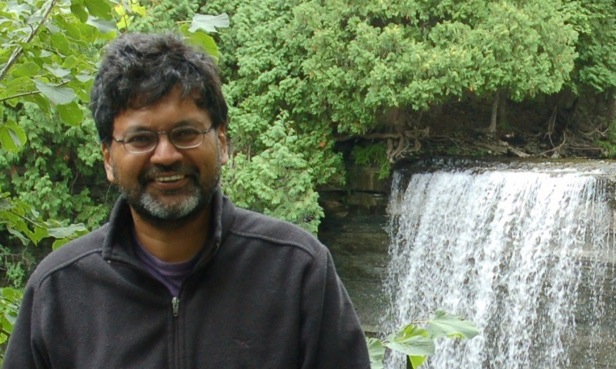
Fahiem Bacchus is a Professor in the Department of Computer Science at the University of Toronto, within the Faculty of Arts and Science. His research is centered on foundational problems in Artificial Intelligence, particularly in reasoning, representation, and algorithm design. Institution: University of Toronto School: Faculty of Arts and Science Department: Department of Computer Science Email: fbacchus@cs.toronto.edu His work spans key areas including constraint satisfaction, satisfiability (SAT), automated planning, Bayesian inference, and constraint optimization. He focuses on developing algorithms that exploit domain-specific knowledge and structural properties to improve performance. His research has led to significant contributions such as the TLPlan planning system, which won the AIPS2002 international planning competition, and the 2clseq SAT solver, which demonstrated that extensive binary clause reasoning can dramatically improve solver efficiency. His work on preprocessors like Hypre further advanced formula simplification techniques. The recent articles reflect a strong focus on improving search algorithms through richer reasoning mechanisms, particularly in SAT solving and non-clausal logic. His publications show a consistent trend toward enhancing DPLL-based solvers with advanced inference techniques, reducing search space through preprocessing, and leveraging structural knowledge in logical theories. No scientific awards are explicitly mentioned in the provided text. Bacchus has supervised research and developed educational materials, with involvement in teaching and academic conference organization. While specific grants are not listed, his software releases (2clseq, Hypre, NoClause) suggest externally supported research activity. He has contributed tutorials, talks, and online teaching resources, indicating an active role in academic dissemination and mentoring. His research group has produced several software systems available for non-commercial research use, including 2clseq, Hypre, and NoClause, reflecting a strong applied and experimental component to his work. These tools are used in SAT solving, preprocessing, and non-clausal reasoning, and are documented with detailed technical information and usage instructions.
Martin Nordal Petersen is an Associate Professor at the Department of Electrical and Photonics Engineering , Technical University of Denmark (DTU) . His work spans Internet of Things (IoT) , optical networking , and wireless communication systems, with notable contributions to LoRa , NB-IoT , and LPWAN technologies. He actively supervises PhD projects on topics such as machine learning in IoT edge devices , secure 5G communication , and smart community architectures . Active projects (2024–2027): Machine Learning in IoT Edge Devices , Deterministic and Secure 5G Communication Finished projects (2021–2024; 2018–2021; 2015–2018): Reliable M2M/IoT Communication , Smart Communities , IoT 100% , Network Slicing His research explores: IoT Reliability : Multi-RAT communication, backup systems, and signal propagation Optical Networks : Alien wavelength integration, SDN control, and network emulation platforms Wireless Innovation : GPS-free geolocation, maritime NB-IoT use cases, and multimode fiber distribution Current collaborations emphasize cross-disciplinary applications of IoT in healthcare , industrial ergonomics , and smart environments .
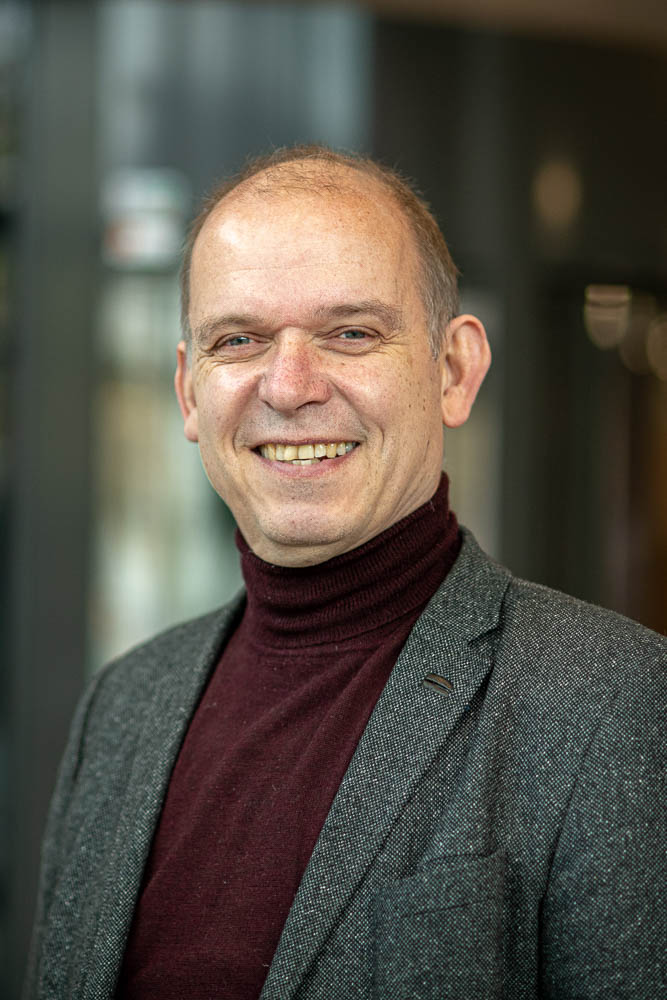
Prof. Dr. Bernd Klauer serves as Deputy Head of the Department of Economics at the Helmholtz Centre for Environmental Research (UFZ) since 2017 and holds an Honorary Professorship for Sustainability and Water Resources Management at the University of Leipzig since 2015. He leads the Working Group on Social Science Water Research and contributes to interdisciplinary projects spanning Germany, EU, Jordan, and India. Doctorate in Economics (1997), University of Heidelberg Diplom-Mathematiker (1992), University of Heidelberg His research integrates water economics with ecological economics and governance frameworks, focusing on hydro-economic modeling, water resource governance, decision support systems, and multi-criteria evaluation. Key application areas include Food-Water-Energy Nexus, Integrated Water Resource Management, and EU Water Framework Directive implementation. The 15 most recent publications reveal a strong emphasis on coupled human-natural systems modeling, climate change adaptation in agriculture, water scarcity governance, and socioeconomic analysis of informal water markets. His work consistently bridges technical hydrological models with economic decision-making frameworks across diverse geographic contexts. Current projects include FUSE (Food-Water-Energy Nexus) and NexusFootprints, while completed initiatives like the Jordan Water Project demonstrate his commitment to transboundary water challenges. He collaborates extensively with hydrologists, ecologists, and policy experts.
Dr Graeme Bragg is a Senior Teaching Fellow at the University of Southampton within the Department of Electronics and Computer Science . His work spans teaching, research, and technical development with a focus on event-driven computing, bioinformatics, and computational modeling. He actively supervises PhD students and collaborates on interdisciplinary projects. Research Interests: Parallel computing, event-driven systems, genotype imputation, Petri net simulations, subglacial hydrology modeling Teaching: Specializes in hardware description languages and computational methods for engineering students Technical Expertise: RISC-V architecture, FPGA acceleration, bespoke compute fabric development His recent publications demonstrate expertise in applying event-driven computing to diverse problems including: 2025: Automated marking systems for SystemVerilog labs 2025: Seasonal dynamics in subglacial hydrology 2023: Genotype imputation using custom hardware 2022: Optimization algorithms and graph analysis Current research explores: Custom RISC-V FPGA clusters for bioinformatics Event-triggered systems for scientific simulations Parallel computing solutions for molecular modeling Contact: gmb@ecs.soton.ac.uk | +44 23 8059 2784
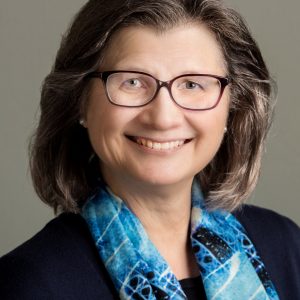
Maryellen L. Giger, Ph.D. is the A.N. Pritzker Distinguished Service Professor of Radiology, Committee on Medical Physics, and the College at the University of Chicago. She serves as Vice-Chair of Radiology (Basic Science Research) and was the immediate past Director of the CAMPEP-accredited Graduate Programs in Medical Physics/Chair of the Committee on Medical Physics. Her career spans over 30 years of pioneering research in computer-aided diagnosis, machine learning, and deep learning applications in medical imaging. Dr. Giger's research focuses on computational image-based analyses for cancer risk assessment, diagnosis, prognosis, and response to therapy, particularly in breast cancer, lung cancer, prostate cancer, lupus, bone diseases, and more recently, COVID-19. Her work has evolved from developing computer-aided diagnosis systems to utilizing 'virtual biopsies' in imaging genomics association studies for discovery. She has made significant contributions to quantitative imaging, radiomics, and AI applications in medical imaging, with emphasis on translating research into clinical practice. Her publication record shows a clear trajectory from foundational work in computer vision for medical imaging to cutting-edge AI and deep learning applications. The recent publications demonstrate her leadership in large-scale collaborative efforts like the Medical Imaging and Data Resource Center (MIDRC), focus on health equity through AI analysis, and expansion into diverse applications including gynecological imaging, lung cancer screening, and trauma assessment. Her work consistently bridges technical innovation with clinical relevance. Dr. Giger has received numerous prestigious honors including membership in the National Academy of Engineering, the William D. Coolidge Gold Medal (the highest award from AAPM), and being named one of the 50 most impactful medical physicists in the last 50 years. She is a Fellow of multiple professional societies including AAPM, AIMBE, SPIE, SBMR, and IEEE. Her 2019 TIME magazine recognition for QuantX, the first FDA-cleared machine-learning-driven system for cancer diagnosis, highlights her translational impact. As an educator and mentor, Dr. Giger has guided over 100 graduate students, residents, and medical students throughout her career. She has secured substantial research funding including NIH R01 grants and serves as contact PI for the NIH NIBIB-funded & ARPA-H-funded Medical Imaging and Data Resource Center (MIDRC). Her leadership extends to former presidencies of the American Association of Physicists in Medicine and SPIE, and she was the inaugural Editor-in-Chief of the SPIE Journal of Medical Imaging. Dr. Giger co-founded Quantitative Insights, Inc. through the University of Chicago's New Venture Challenge, which developed QuantX - the first FDA-cleared AI system for cancer diagnosis. She leads the Medical Imaging and Data Resource Center (MIDRC), a critical resource for AI development in medical imaging that received the 2023 DataWorks Prize. Her research laboratory bridges engineering, physics, and clinical medicine to develop and validate quantitative imaging biomarkers and AI tools for precision medicine.
Aurélien Tabard is an Associate Professor at LIRIS (Laboratoire d'InfoRmatique en Image et Systèmes d'information), a joint research unit between Université Claude Bernard Lyon 1 and CNRS. His academic career spans over a decade with positions at prestigious institutions including the IT University of Copenhagen, University of Munich, and INRIA. He completed his PhD at Université Paris-Sud in 2009, focusing on supporting lightweight reflection on familiar information. Tabard's research centers on convivial informatics, exploring alternatives to computational platforms that consider digital limits and foster sufficiency, maintenance, autonomy, and durability. His work emphasizes participatory approaches to designing resilient infrastructures and tools for rapid prototyping by non-designers. He investigates software obsolescence, digital sufficiency, and the materiality of data physicalization through projects like Limites Numériques and PC4-Congrats within PEPR eNSEMBLE. His recent publications reveal strong trends toward sustainability in computing, examining how digital systems can be designed with longevity and environmental impact in mind. There's a clear progression from technical HCI research toward broader societal implications of digital technology, particularly focusing on how users experience aging devices and negotiate digital limits collectively. Honorable mention award for 'Obsolescence Paths: living with aging devices' at ICT4S 2023 Student Lea Mosesso received the prize for best MSc thesis from Conseil National du Numérique Tabard actively mentors PhD students including Maëva Calmettes (working on skill and expertise sharing), Edlira Nano (studying software obsolescence), and Lea Mosesso (researching digital sufficiency). He collaborates extensively with researchers across France and internationally, particularly with Inria Lille where he spent a sabbatical in 2023. His current projects involve understanding software obsolescence, digital sufficiency, and the interplay between micro design decisions and systemic forces shaping ICT. He leads the Limites Numériques team, which investigates how to design computational platforms that take digital limits into consideration. The team recently developed an exhibit on water in the digital sector that will travel to Rhône-Alpes in spring 2025. Tabard also contributes to participatory design tools and critical approaches to participatory design, working with colleagues like Nolwenn Maudet, Thomas Thibault, and Romain Rouvoy.
Daniel Cardoso Llach is an Associate Professor at Carnegie Mellon University's School of Architecture , where he chairs the Master of Science in Computational Design program and co-directs the CoDe Lab . His scholarship merges history, science and technology studies (STS), and computational design , focusing on the cultural and socio-technical dimensions of design automation. Education: PhD and MS in Architecture: Design and Computation from MIT , BArch from Universidad de los Andes Research Grants: Supported by the Graham Foundation for historical CAD exhibitions and by the Alexander Von Humboldt Foundation for postwar computational design research in Germany His work interrogates the politics of software, the materiality of computational systems , and the ethical implications of AI/robotics in architectural practice. Recent projects include reconstructing early CAD systems and analyzing data-driven urban technologies. Scientific awards include: Alexander Von Humboldt Fellowship (2024–2025) ACM CSCW Methods Mention for emulation-based software research (2021)
Dr. Elaine Chen serves as Senior Lecturer in Business Analytics and Course Leader for the MSc Business Analytics and Artificial Intelligence at Nottingham Business School, Nottingham Trent University. Her teaching emphasizes practical applications of data and AI technologies for business decision-making, with dedicated focus on accessibility for diverse student backgrounds across technical and strategic domains. Her academic credentials include: PhD in Computing Science MSc in Business Information Technology Postgraduate Certificate in Academic Practice BTech (Hons) in Business Information Systems Chen's research bridges educational and business contexts through data-AI integration: Generative AI adoption in higher education, particularly for neurodivergent/disabled students Human-AI collaboration frameworks in organizational settings SME applications for AI-driven efficiency and competitiveness Workforce analytics and talent management systems Her work consistently connects technical AI capabilities with real-world implementation challenges. Publication analysis (2023-2025) reveals accelerating focus on generative AI's educational impact and business strategy integration, evolving from her foundational work in social recommender systems (2014-2020) which established methodologies now applied to contemporary AI challenges in business contexts. Her professional recognition includes: Senior Fellow of the Higher Education Academy (HEA) Chen actively supervises PhD candidates in AI education, human-AI collaboration, and workforce analytics domains. Her pedagogy leadership includes designing accredited business analytics curricula and securing teaching innovation projects with documented outcomes in student engagement metrics. Prior industry experience as an automation engineer at Intel informs her practical approach to AI implementation. Current initiatives focus on generative AI ethics frameworks and longitudinal SME adoption studies, extending her established research trajectory into emerging business technology challenges.
Matthew J. Marinella serves as an Associate Professor in the School of Electrical, Computer and Energy Engineering at Arizona State University, where his research bridges semiconductor device physics and next-generation computing architectures. His work focuses on enabling reliable computing systems for extreme environments through novel memory technologies. His academic foundation includes: Ph.D. in Electrical Engineering, Arizona State University (2008) Marinella's research centers on nonvolatile memory devices (particularly ECRAM and SONOS technologies), neuromorphic computing systems, and radiation effects characterization. He pioneers analog in-memory computing solutions resilient to space radiation, with expertise spanning electrochemical memory physics, radiation-hardened circuit design, and emerging device applications for artificial intelligence. His experimental work combines nanoscale imaging with computational modeling to understand device degradation mechanisms under ionizing radiation. Analysis of his 2023-2025 publications reveals a dominant focus on radiation-tolerant neuromorphic systems, with 70% of recent work addressing radiation effects on emerging memories. Key thematic clusters include TaOx ECRAM characterization under gamma/heavy-ion exposure (25% of publications), analog in-memory computing fault tolerance (30%), and novel test platforms for memory device benchmarking (20%). This research directly enables space-based computing applications where radiation resilience is non-negotiable. As a technical leader, Marinella chairs the Emerging Memory Devices Section for the IRDS Roadmap Beyond CMOS Chapter and serves on the SRC Decadal Plan Executive Committee. His Sandia legacy includes founding the Secure, Efficient, Extreme Environment Computing (SEEEC) Grand Challenge. At ASU, he mentors graduate researchers through thesis supervision in EEE 599/799 courses and directs laboratory work on memory device characterization, though specific student names and grant awards aren't publicly enumerated. His laboratory operations emphasize radiation testing infrastructure and analog computing testbeds, supporting collaborative projects with national labs on space electronics hardening. Current efforts integrate magnetic domain wall devices with resistive memories to create hybrid neuromorphic systems capable of operating in extreme environments where conventional CMOS fails.
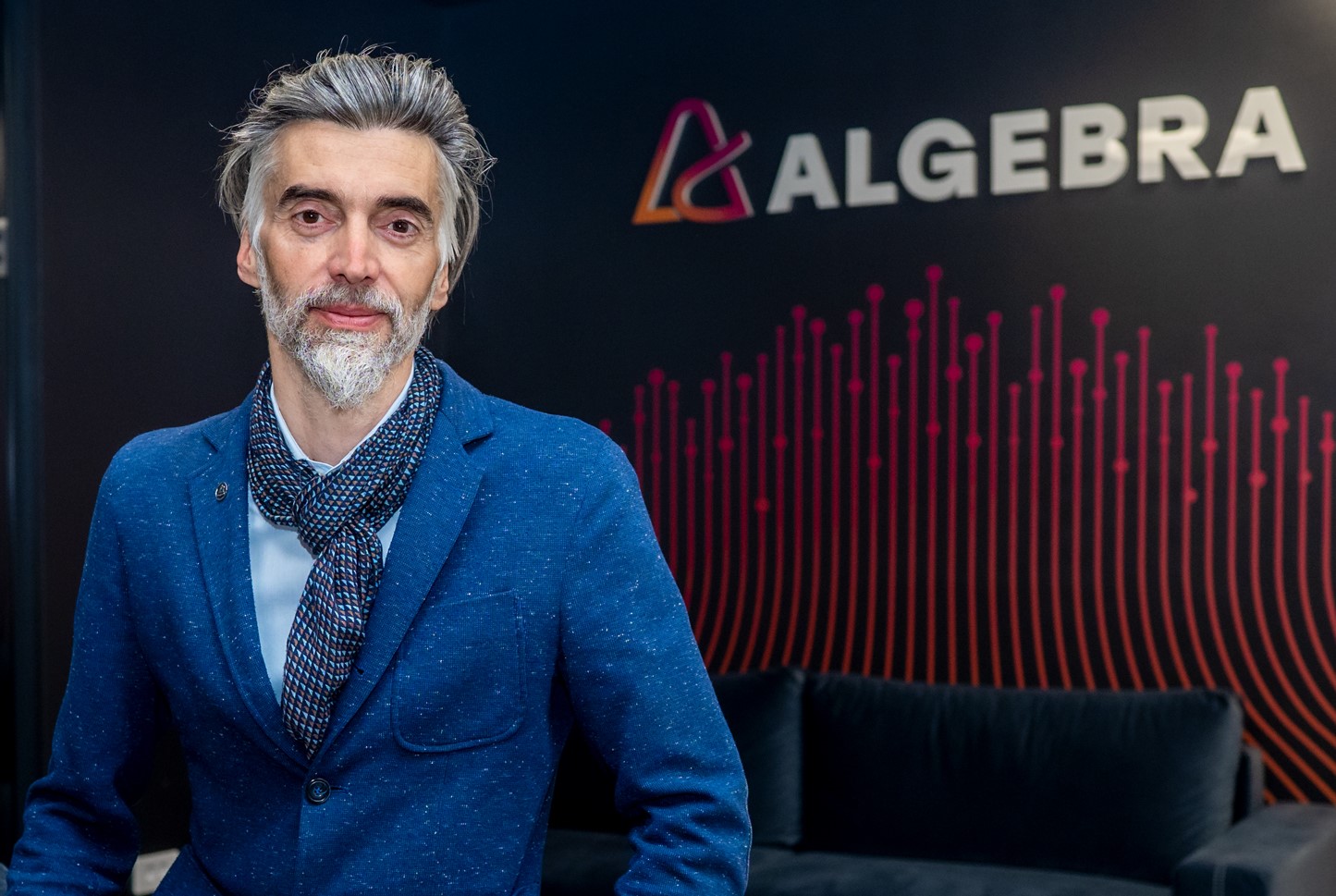
Mislav Balković is an Associate Professor at Algebra University of Applied Sciences, where he has served as Director and Dean since 2000 and 2009, respectively. He drives strategic development for the Algebra Group and contributes to national education policy through roles in expert bodies like the National Council for Science, Higher Education and Technology, and the Accreditation Council of the Agency for Science and Higher Education. Education: PhD (2016) from Faculty of Electrical Engineering and Computing, University of Zagreb Bachelor’s and Master’s degrees from Faculty of Electrical Engineering and Computing, University of Zagreb Research Interests: Mislav’s work bridges Data Science with applications in labor market dynamics , education policy , qualification frameworks , and energy systems . His projects focus on smart grid optimization, digital identity protection, and AI-driven educational reforms. Publications Trends: His recent articles emphasize cross-disciplinary applications , including brain-computer interfaces for image generation, EU labor market analysis , and smart grid resilience . Earlier works explore blockchain-based academic credentials and data analytics in auditing . Grants and Projects: He has led ~50 EU and domestic projects , spanning smart tourist management , lean methodologies for screen creators , and ICT services for alternative communication . His policy work includes drafting laws on adult education and higher education reform. Leadership: Vice President of the Croatian Employers' Association in Education (HUP-UPO) and past President of the Sectoral Council for Electrical Engineering and Computing.
Nikos Aletras is a Professor of Natural Language Processing at the University of Sheffield's School of Computer Science, where he serves as Head of the Natural Language Processing research group and is co-affiliated with the Machine Learning group. His academic journey began with a Bachelor's degree in Computer Science from the University of Crete, followed by a PhD in Natural Language Processing at the University of Sheffield. Prior to his current position, he worked as a research scientist at Amazon (Core ML and Alexa) and as a research associate at UCL's Department of Computer Science. Aletras' research spans multiple domains within AI, with particular emphasis on Natural Language Processing applications across social science, legal contexts, and data science. His work demonstrates a consistent focus on practical implementations of NLP techniques to solve real-world problems, especially in computational social science and legal technology. He has developed innovative text analysis methods that bridge traditional disciplinary boundaries, creating tools applicable across multiple scientific domains. His recent publications reveal a strong trend toward efficient and responsible AI, with significant work on model compression, hallucination mitigation in language models, and ethical considerations in computational social science research. The publications also show deep engagement with multilingual NLP challenges, explainable AI, and applications of NLP to social media analysis and legal contexts. Area Chair Award: Society and NLP (2023) Aletras has secured substantial research funding as both Principal Investigator and Co-Principal Investigator, including grants from EPSRC, ESRC, Leverhulme, EC Horizon 2020, and industrial partners like Amazon. His current projects focus on efficient deployment of large language models, addressing socio-technical limitations of LLMs for medical and social computing, and developing speech and language technologies. He actively supervises PhD students and collaborates with researchers across multiple disciplines. He leads the Natural Language Processing research group at Sheffield, which focuses on advancing NLP methodologies while applying them to diverse domains including computational social science, legal informatics, and healthcare technologies. The group maintains strong industry connections, particularly with technology companies working on language technologies, and collaborates with legal scholars and social scientists on interdisciplinary projects.
Sneha Das is an Assistant Professor at the Department of Applied Mathematics and Computer Science, Technical University of Denmark (DTU), specializing in Speech and Language Technology, Machine Learning, and Privacy-Preserving AI. Her research bridges technical innovation with applications in mental health and physiological signal analysis. Her work focuses on Speech Emotion Recognition , Distributed Speech Processing , and Explainable AI , with recent publications exploring model interpretability, speaker anonymization, and physiological data analysis for emotion detection. She actively supervises PhD students in projects involving AI for mental health and hydroacoustic modeling of fish behavior. Key Research Areas: Speech Emotion Recognition (SER) Privacy and Fairness in Speech Processing Transfer Learning with Physiological Time Series AI Applications in Health and Aquaculture Notable achievements include earning a DSc (Tech) degree for her thesis on robust distributed speech processing. She also contributes to educational activities, including teaching applied statistics and R programming to PhD students.
Katy Ilonka Gero is a Lecturer at the University of Sydney's School of Computer Science, with a PhD in Computer Science from Columbia University (2022). She holds a BSc in Mechanical Engineering from MIT, where she received the Carl G. Sontheimer Prize for Excellence in Innovation and Creativity. Education : BSc (MIT), PhD (Columbia) Her research focuses on Human-Computer Interaction , Creative Writing , and AI Ethics , particularly examining how language models impact writing processes, ownership, and agency. She advocates for community-driven language models trained on consensual data and explores technical innovations for personalized AI tools. Recent publications span language model ethics (Nature Machine Intelligence 2023), generative AI (CHI 2025 Best Paper), and creative collaboration (CHI 2023). Key trends include user-centered AI design , creative ownership , and data ethics . Scientific Awards : NSF Graduate Research Fellowship, Brown Institute for Media Innovation, Amazon Research Award, CHI Best Paper (2025), CHI Honorable Mention (2024) As co-founder of Ensemble Park and former taper editor, she bridges computational poetry and traditional literary practices. Her work at startups Rest Devices and Soofa demonstrates technical innovation in consumer and urban tech.
Christina Elmer is Professor for Digital Journalism and Data Journalism at the Institute of Journalism, Technical University of Dortmund. Prior to her academic career, she held significant positions at DER SPIEGEL as Deputy Head of Development, Member of the Editorial Board of SPIEGEL ONLINE, Head of the Data Journalism Department, and Science Editor (2013-2021). She is recognized as a leading expert in data journalism, AI in media, and digital transformation of journalism. Elmer's research focuses on data journalism, algorithmic accountability, and the integration of artificial intelligence in journalistic workflows. Her work explores how digital transformation affects media production, distribution, and reception, with particular attention to user-centered journalism, ethical dimensions of digital media, and the development of editorial products. She has pioneered approaches to structured journalism and modular content creation that adapt to changing audience needs. Her recent publications examine AI's impact on journalism, methods for combating disinformation, and strategies for maintaining journalistic integrity in algorithmically mediated information ecosystems. Her work shows a clear trend toward investigating how journalism can maintain societal relevance while adapting to technological changes, with increasing focus on AI systems as both tools and challenges for quality journalism. scoop award of the nextMedia.Hamburg initiative, 2023 Helmut Schmidt Journalist Prize (second prize) for 'Blackbox Schufa', 2019 Philip Meyer Award (third place) for 'Hanna and Ismail', 2018 dpa-infografik Award for 'Die Pendlerrepublik', 2018 Journalistin des Jahres, Fachkategorie Wissenschaft, 2016 Deutscher Journalistenpreis Forst & Holz (Print), 2007 Elmer actively contributes to the journalism community as a board member of Netzwerk Recherche (serving as second chair 2021-2023), shareholder of AlgorithmWatch, and member of various advisory boards including Science Media Center Germany and MIP.labor. She frequently collaborates with students through the KURT student editorial team, guiding them in applying design thinking to develop new journalistic formats. Her approach emphasizes the importance of user-centered thinking while maintaining journalistic integrity in the digital age.