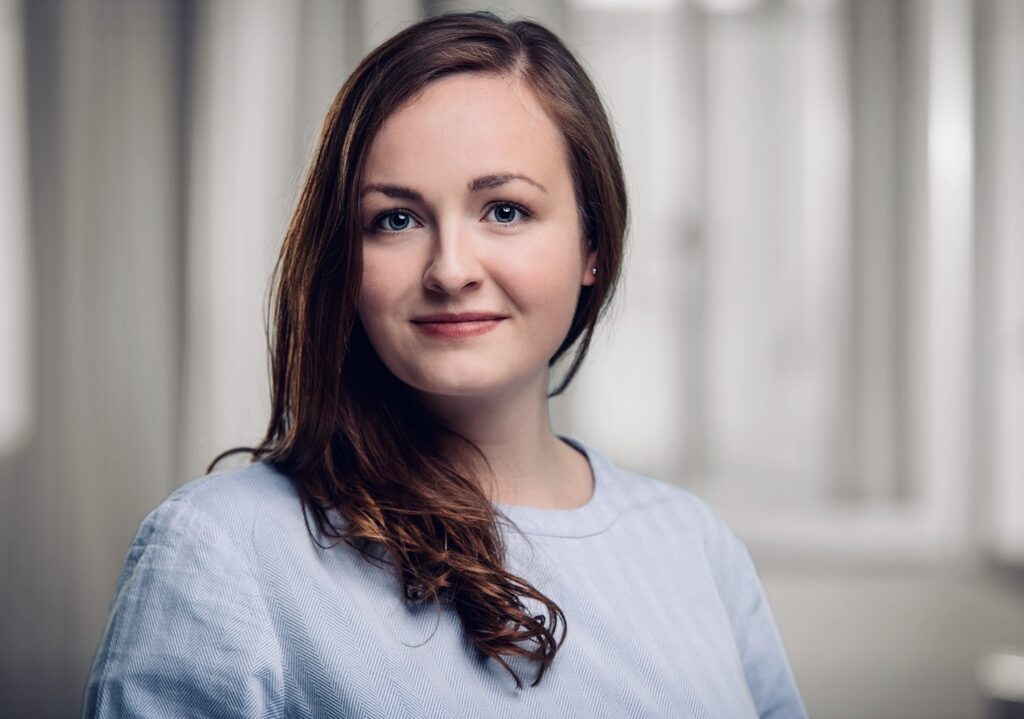
Professor Camille Huser serves as Deputy Head of Undergraduate Medical School Bioscience at the University of Glasgow's School of Medicine, Dentistry & Nursing. Her academic leadership focuses on medical education innovation and sustainable healthcare integration. Her research spans Medical Education and Sustainable Healthcare , with significant contributions to curriculum development, digital learning methodologies, and assessment strategies. Recent work addresses AI integration in medical education and climate change pedagogy. Huser's publication trends reveal a strategic shift from foundational cancer biology research (2004-2014) toward educational scholarship. Current work emphasizes sustainable healthcare curriculum development, virtual learning environments, and student-staff partnership models, reflecting evolving priorities in medical education. Co-developed Virtual Wards system for pandemic-era clinical training Key contributor to Education for Sustainable Healthcare frameworks Pioneered flipped classroom models in medical education As Deputy Head, she leads assessment innovation through student-staff partnerships and has developed frameworks for integrating protected characteristics representation in medical curricula. Her work on video interviews enhances online student belonging, while her sustainability initiatives connect medical education with global health challenges.
Dr Alison Cairns is a Clinical Professor of Paediatric Dentistry and Dental Education at the University of Glasgow Dental School, where she currently serves as the Director of Dental Education for the Undergraduate Programme. She provides NHS clinical services at the Royal Hospital for Children and Glasgow Dental Hospital, where she also delivers clinical training for undergraduate students and junior NHS staff. Dr Cairns is the academic lead for Paediatric Dentistry teaching, including Paediatric Outreach Clinics based in the Public Dental Service, and previously served as Quality Assurance and Learning Enhancement Officer for the dental school. BDS with Commendation (1997) MFDS (RCSEd) MSc by Research M Paed Dent (RCPSG) FDS Paed Dent (RCPSG) Education-based PhD (2018) Dr Cairns' research focuses on dental education, cleft care, child protection, and dental trauma. Her work in dental education has particularly centered on peer observation of teaching schemes to develop clinical dentistry tutors' teaching practices, which formed the basis of her PhD. She has made significant contributions to understanding dental practitioners' roles in child protection and has published extensively on cleft lip and palate management within multidisciplinary teams. Analysis of Dr Cairns' recent publications reveals a strong emphasis on dental education innovation, particularly in assessment methods, clinical reasoning development, and adapting to technological changes like AI. Her work also demonstrates sustained commitment to cleft care services, with multiple publications evaluating the Glasgow Children's Cleft Clinic and examining the pandemic's impact on specialized dental services. The integration of health and wellbeing into dental education represents a newer focus area in her scholarly work. Dr Cairns has been actively involved in mentoring students and junior staff, providing clinical training at multiple levels. Her leadership roles within the dental school have positioned her to influence curriculum development and quality assurance processes across the undergraduate program. She maintains active clinical practice at the Royal Hospital for Children and Glasgow Dental Hospital, ensuring her educational approaches remain grounded in current clinical realities. Her work bridges the gap between academic dentistry and practical patient care, particularly in specialized areas like cleft management and child protection.
Dr. Christine Park serves as Senior Clinical University Lecturer and Honorary Consultant in Paediatric Dentistry at the University of Glasgow's School of Medicine, Dentistry & Nursing, based at Glasgow Dental Hospital & School. She holds dual leadership roles as Paediatric Dentistry Lead for BDS 2 and pre-clinical skills instruction, bridging academic scholarship with clinical practice in child-focused oral healthcare. Her educational trajectory includes: BDS (Hons) from Glasgow University (2006) MSc by Research: Oral disease in Vulnerable Children and the Dentist’s Role in Child Protection (2013) PhD: An investigation of the barriers to referral in child protection for dental team professionals through serious game design Park pioneers the integration of serious game design into child protection training for dental professionals, addressing systemic barriers in abuse reporting through her innovative board game development. Her research spans safeguarding protocols, oral assessment methodologies for vulnerable children, and specialized care for pediatric systemic conditions including asthma and cystic fibrosis, establishing her as a leading voice in dentistry's role in child welfare. Publication analysis reveals a sustained 8-year research arc (2013-2021) centered on operationalizing child protection within dental practice. Her work progresses from foundational Scottish practice guidelines (2013) through clinical assessment frameworks (2015) to future-oriented safeguarding strategies (2016) and contemporary clinical guidance (2021), demonstrating consistent focus on translating policy into actionable clinical tools while addressing comorbid pediatric health conditions. Professional contributions include serving as Deputy Safeguarding Representative for the British Society of Paediatric Dentistry (2018-2020) and developing curricular frameworks for undergraduate dental education. Her scholarship directly informs clinical practice through case-based learning resources and specialized management protocols for medically complex pediatric patients. Park's current initiatives center on scaling her evidence-based board game intervention across dental training programs, aiming to transform professional confidence in child protection scenarios through experiential learning methodologies developed from her doctoral research.
Sybille Caffiau serves as a Lecturer in Data Engineering at ISAE-ENSMA's School of Engineering, affiliated with the LIAS laboratory across both ENSIP (Poitiers) and ISAE-ENSMA (Chasseneuil) campuses. Her research focuses on Human-Computer Interaction with specialization in task modeling and user interface validation. Her research interests span Human-Computer Interaction , Task Modeling , and User-Centered Design . She develops and evaluates tools like K-MADe for modeling user activities, with emphasis on empirical validation of task modeling approaches. Her work bridges cognitive science principles with practical software engineering applications, particularly in educational technology and interactive system design. Analysis of her publication trends reveals consistent contributions to HCI conferences and journals since 2006, with increasing focus on tool development (notably K-MADe) and empirical validation methodologies. Her recent work demonstrates strong interdisciplinary connections between cognitive modeling, software engineering, and educational technology. No scientific awards or fellowships are documented in the available materials. While her collaborative network includes prominent researchers like Laurent Guittet and Patrick Girard, specific details about student advising or research grants are not provided in the source materials. Her thesis work (2009) established foundations for model-driven interactive application design. She operates within the LIAS laboratory's Data Engineering team, contributing to research on interactive systems and task modeling frameworks. The KMADe environment represents her primary software contribution for activity description and task modeling.
Dora Demszky is an Assistant Professor in Education Data Science at Stanford University's Graduate School of Education, with a courtesy appointment in Computer Science. She leads the EduNLP Lab, where she develops natural language processing tools to support equitable, student-centered instruction through analyzing educational discourse including student-teacher interactions, student group work, and textbooks. PhD in Linguistics from Stanford University (advised by Dan Jurafsky) BA summa cum laude in Linguistics with a minor in Computer Science from Princeton University Co-founder of Tarisznya Alapítvány (Knapsack Foundation), a nonprofit supporting underprivileged children in Hungary Dr. Demszky's research combines natural language processing, linguistics, and practitioner input to develop interpretable and scalable education measures. Her work focuses on creating tools that analyze classroom discourse to identify features of high-quality instruction and provide actionable feedback to educators. She has particular expertise in developing AI-powered systems that help teachers improve questioning quality, analyze textbook representation, measure dialect features, and scaffold curricula to meet diverse student needs. Her approach emphasizes the importance of human connections in teaching and learning, using technology to enhance rather than replace these critical interactions. Analysis of Dr. Demszky's recent publications reveals a strong trend toward practical applications of NLP in real educational settings, with increasing emphasis on randomized controlled trials to validate effectiveness. Her work spans multiple educational contexts from K-12 classrooms to higher education, with growing attention to equity considerations in AI-powered educational tools. Recent publications show expansion into mathematical education, speaker diarization for noisy classrooms, and open-source tools for the broader research community. MathemaTikZ dataset received the inaugural best dataset prize at Learning at Scale NCTE classroom transcript dataset received the best IEDMS Publicly Available Educational Dataset Prize Selected as a Leading Woman in AI at the ASU GSV AIR Show Dr. Demszky has secured significant research funding including grants from the Gates Foundation, NSF RAPID program, and Stanford HAI. Her work with teachers extends beyond research through initiatives like the Practitioner Voices Summit, which brought together 60 teachers from 22 states to inform AI research related to classrooms. She actively collaborates with educators to ensure her tools address real classroom needs while maintaining a focus on socially responsible edtech development. At Stanford, Dr. Demszky leads the EduNLP Lab, which operates at the intersection of education, computer science, and linguistics. The lab follows a three-pronged approach: gathering evidence through data science using NLP models, developing algorithms through co-design with domain experts, and piloting solutions that practitioners can use in real educational settings. Current projects include M-Powering Teachers, which provides automated feedback to educators, and tools for adapting mathematics curricula to support students with diverse learning needs.
Diana van Dijk serves as Senior Lecturer in Research at Rotterdam University of Applied Sciences' Institute of Social Studies since 2022, while concurrently leading research projects at the Knowledge Centre for Talent Development (KCTO). She supervises Master's students in Pedagogy conducting participatory design-based research and collaborates with social work students on refugee integration studies. As a member of the university-wide Research Ethics Committee, she maintains active engagement across institutional frameworks. Her research focuses on refugee integration through multiple lenses: Vocational education pathways for status holders Labor market participation barriers and enablers Higher education access for refugee-background students Participatory action research methodologies Youth resilience development in vulnerable contexts Current projects include Safe & Brave (diversity-sensitive professional practice), SPRONG (national collaboration framework), and Promising Entrance (transition support systems). Distinguished with the 2019 Teacher-Researcher of the Year award for her work supporting refugee-background students, her publication portfolio demonstrates consistent thematic focus on migration, education, and social inclusion. Teacher-Researcher of the Year award (2019) National SIA grant for SPRONG collaboration project Her supervision spans Master's students in Pedagogy and social work trainees engaged in refugee integration research. Major funded projects include Career and Talent Development of Status Holders (KCTO), Studying with Refugee Background (Rotterdam University initiative), and SPRONG collaboration framework. She leads the KCTO research team focusing on practical implementation of evidence-based approaches. As project leader at the Knowledge Centre for Talent Development, she directs multiple research streams connecting academic inquiry with municipal policy implementation. The KCTO serves as critical bridge between Rotterdam University's research capacity and practical social sector challenges, particularly regarding refugee integration and youth activation.
Alejandro Prieto Ayuso is a Lecturer in the Department of Physical Education, Arts Education and Music at the University of Castilla-La Mancha, Spain. His academic work focuses on talent identification and development within Physical Education contexts, with particular emphasis on motor competence, social skills in sports, health habits, and the relative age effect (RAE). He is actively involved in research and teaching within the Faculty of Education, contributing to both undergraduate and graduate programs. Alejandro completed his PhD in Physical Education, specializing in Sport Talent, at the University of Castilla-La Mancha (2014-2017). Prior to this, he earned additional qualifications in Physical Education from the Autonomous University of Madrid (2013-2014) and completed his undergraduate studies in Physical Education at the University of Castilla-La Mancha (2009-2013). Prieto Ayuso's research primarily centers on talent identification and development in Physical Education settings. His work explores how schools can effectively identify and nurture athletic talent among students, while also examining the impact of relative age on sports performance and development. He investigates motor competence assessment methods, social skills development through sports participation, and health habit formation in educational contexts. His research bridges theoretical frameworks with practical applications for Physical Education teachers, providing evidence-based approaches to talent development that can be implemented in regular classroom settings. His extensive publication record demonstrates a consistent focus on talent identification tools, assessment methodologies, and the application of educational models to sports pedagogy. Recent work shows increasing attention to sustainable development goals within Physical Education, gifted students in physical contexts, and innovative teaching methodologies like flipped classroom approaches. His research spans both theoretical frameworks and practical interventions, with strong emphasis on validation studies and assessment tools that can be directly applied in educational settings. Alejandro Prieto Ayuso has received recognition for his scholarly contributions: Premio al mejor póster en la rama de artes y humanidades (VI Jornadas Doctorales UCLM, 2016) Contratos predoctorales para la formación de personal investigador en el marco del Plan Propio de I+D+i cofinanciados por el Fondo Social Europeo (2014) As a researcher and educator, Prieto Ayuso has secured predoctoral research contracts and actively contributes to academic discourse through his extensive publication record. His work often involves collaborative research with colleagues across various institutions, demonstrating strong networking within the academic community. He has contributed to innovative teaching proposals that integrate technology and new pedagogical approaches into Physical Education curriculum. Prieto Ayuso is involved in research groups focused on Physical Education and Sports Pedagogy, contributing to projects that develop and validate assessment tools for talent identification and sustainable development in educational contexts. His work with the PEToolFinder project demonstrates his commitment to providing practical resources for Physical Education teachers to enhance their assessment practices.
Prof. Dr. Eva Rietze serves as Professor of Ornamental Plant Cultivation and Experimental Technology at Dresden University of Applied Sciences' Faculty of Agriculture, Environment and Chemistry since 1994. She currently holds the position of Dean of Studies for Bachelor's and Master's programs in Horticulture and previously served as Pro-Dean for Pillnitz (2002-2004, 2018-2021). Her academic foundation includes: Graduate Engineer in Horticulture, University of Hanover (1985) DAAD Scholarship at IVT Wageningen, Netherlands (1985) Dr. rer. hort., University of Hanover (1988) Degree in Business Administration, Distance Learning University of Hagen (1996) Prof. Rietze's research centers on ornamental horticulture with emphasis on plant breeding, experimental cultivation techniques, and specialty crop physiology. Her work integrates botanical science with practical production systems, particularly investigating fertility mechanisms in Pelargonium hybrids, flower pigmentation biochemistry in Lobelia, and growth regulation in Angelonia and Viola species. She maintains strong industry connections through collaborations with ornamental plant breeding companies, the State Association of Gardeners of Saxony, and state horticultural institutions. Analysis of her 13 publications (1998-2017) reveals consistent focus on genetic improvement of ornamental crops, with recurring themes in tetraploid breeding systems, anthocyanin-based pigmentation, and growth regulator applications. Her research bridges fundamental plant science with commercial production needs, particularly in cut flower longevity and container gardening systems. Prof. Rietze actively collaborates with: Production and breeding companies in ornamental horticulture State Palaces, Castles and Gardens of Saxony Saxon State Office for Environment, Agriculture and Geology Private soil testing laboratories Garden trade associations As Dean of Horticulture Studies, she oversees academic programs while maintaining teaching responsibilities in ornamental crop cultivation, field botany, and testing technology. Her industry partnerships facilitate practical student training and applied research in Saxony's horticultural sector.
Zuzana Nevěřílová serves as an Assistant Professor at Masaryk University's Department of Czech Language within the Faculty of Arts. She also maintains external cooperation with the Department of Machine Learning and Data Processing at the Faculty of Informatics, demonstrating interdisciplinary engagement between linguistic theory and computational approaches. Her research interests span computational linguistics with particular emphasis on Czech language processing, natural language processing methodologies, and development of language resources. Her work bridges theoretical linguistics with practical computational applications, focusing on areas such as named entity recognition, text analysis, word embeddings, and language resource development. Dr. Nevěřílová's recent publication trends (2021-2025) reveal strong focus on Czech language technologies, including named entity processing in parallel corpora, efficient language models, and educational applications of NLP. Her work demonstrates consistent contributions to Slavonic language processing communities through workshops like RASLAN and conferences like TSD. Her scientific contributions include extensive publications in proceedings of international conferences and workshops, software development for language resources, and educational materials for digital humanities. She has supervised various projects related to language technology and has contributed to significant resources like the New Encyclopedic Dictionary of Czech and VerbaLex lexical database. Her research has practical applications in language services, educational technology, and digital humanities. Dr. Nevěřílová works within the Institute of the Czech Language at Masaryk University, contributing to research teams focused on Czech language processing, corpus development, and computational lexicography.
Marie Rathmann is a Researcher and doctoral candidate at Helmut Schmidt University's Chair of Continuing Education and Lifelong Learning in Hamburg, Germany. She actively contributes to two major dtec.bw-funded research initiatives: DigiTaKS* (Digital Key Competencies for Study and Career) and hpc.bw (Competence Platform for Software Efficiency and Supercomputing) at the Chair of High Performance Computing. Her work bridges digital transformation with adult education theory, focusing on practical implementations in academic and professional contexts. Rathmann's research investigates how digitality reshapes time, space, and media appropriation in everyday educational practices. She develops theoretical frameworks around agency constitution in digital environments while examining transformative digital competencies, critical thinking development, and ethical implications of artificial intelligence in education. Her methodology combines practice theory with multi-perspective analyses to address equity challenges in digitally mediated learning spaces, particularly emphasizing student experiences in higher education settings. Her publication portfolio (2021-2025) reveals consistent exploration of digital competencies across educational contexts, with recurring themes including temporal dimensions of academic work, media appropriation patterns, and AI ethics in student practices. The research demonstrates strong interdisciplinary connections between educational theory, digital sociology, and learning technology design, often employing comparative and multi-level analytical approaches. Scientific Awards: First place for doctoral project at DGfE Summer School for Qualification Projects awarded by German Society for Educational Science (DGfE) Rathmann's research is supported by competitive dtec.bw grants funding the DigiTaKS* and hpc.bw projects. While currently completing her doctoral studies, she collaborates extensively with senior researchers but has not yet assumed formal student advising responsibilities. Her grant work focuses on developing practical frameworks for digital competency acquisition in academic and professional transitions. She operates within Prof. Dr. Sabine Schmidt-Lauff's research team at the Chair of Continuing Education and Lifelong Learning, maintaining close collaboration with Dr. Therese Rosemann and Dr. Jan Schiller. This interdisciplinary unit specializes in analyzing digital transformation impacts on educational structures, with particular expertise in document analysis, competency modeling, and policy development for adult learning ecosystems.
Henriette Ytting Lambert serves as a Clinical Associate Professor in the Department of Clinical Medicine at the University of Copenhagen's Faculty of Health and Medical Sciences, specializing in Gastroenterology and Hepatology. Her clinical work is based at Copenhagen University Hospital (Region Hovedstaden) with locations in Hvidovre and Copenhagen N. Her research focuses on autoimmune liver diseases, particularly autoimmune hepatitis and primary biliary cholangitis, with emphasis on clinical proteomics for diagnostics , quality of life impacts , and metabolic complications . Lambert leads investigations into non-invasive biomarker discovery while examining how liver diseases interact with diabetes and affect patient-reported outcomes. Her work frequently employs multicenter European collaborations through the ERN RARE-LIVER network. Recent publication trends reveal dominance in Autoimmune hepatitis pathophysiology (40% of output) Quality-of-life assessment methodologies (25%) Metabolomic/proteomic biomarker discovery (20%) European registry-based clinical research (15%) with strong emphasis on translational applications. Lambert consistently appears as senior/corresponding author on studies involving Danish patient cohorts and European collaborations. Lambert actively contributes to clinical guideline development, with her work referenced in clinical guideline sources. Her research receives significant attention across academic platforms with 17 Mendeley readers and mentions on professional networks including X (formerly Twitter) and Bluesky. Her collaborative network spans 15+ European institutions through the ERN RARE-LIVER consortium, focusing on standardized care protocols for rare liver diseases. Current projects include the R-LIVER registry analyzing unmet needs in autoimmune hepatitis management across 20 European centers.
Daniel R. Stalder is a Professor in the Department of Psychology within the College of Letters and Sciences at the University of Wisconsin-Whitewater, where he has been teaching since 2004. He holds a Ph.D. in Personality and Social Psychology from the University of Iowa (1998) and an M.S. in Mathematics from the University of Wisconsin-Milwaukee. Dr. Stalder's primary research interests focus on social-cognitive biases, particularly the fundamental attribution error, individual differences such as the need for closure, and cognitive dissonance theory. His work extends into political psychology, close relationship contexts, and the application of social psychology to reduce bias and conflict. He has published a book titled "The Power of Context: How to Manage Our Bias and Improve Our Understanding of Others" (Prometheus Books, 2018) and maintains a popular Psychology Today blog called "Bias Fundamentals" with over 48 articles and 395,000 views as of October 2025. His recent research demonstrates a consistent trajectory toward understanding how uncertainty mindset cultivation can reduce cognitive biases and improve social judgment. This work builds upon his longstanding interest in attribution theory and individual differences, with applications spanning political psychology, technology interactions, and educational contexts. His publications reveal a researcher deeply engaged with both theoretical foundations and practical applications of social psychology. 2019 UW-Whitewater Outstanding Research Award 2020 Action Teaching Award (Honorable Mention) from the Society for the Psychological Study of Social Issues 2021 UW-Whitewater College of Letters & Sciences Excellence in Teaching Award 2016 UW-Whitewater Letters & Sciences Excellence in Research Award Dr. Stalder has been actively engaged with media, conducting over 13 interviews with major outlets including CBC, NPR, The Atlantic, and The Verge. His expertise in political psychology has led to 7 interviews/consults for news outlets or podcasts, 8 academic or community presentations, and 14 articles at Psychology Today. He teaches courses including Social Psychology, Basic Statistical Methods, and Introduction to Psychology, with a focus on innovative teaching methods incorporating humor, mnemonics, and popular culture.