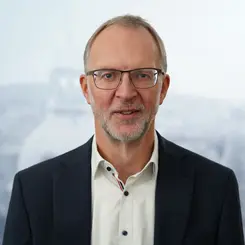
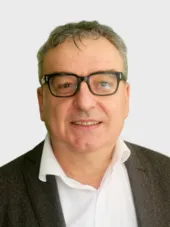
Akram Y. Sarhan is a prolific researcher with a focus on cybersecurity , data security , and algorithm design for communication and logistics systems. He has published extensively in PeerJ Comput. Sci. and IEEE Access , addressing challenges in privacy-preserving protocols , blockchain applications , and secure data dissemination under constraints. Key research areas include reinforcement learning , network security , and decentralized systems . His work spans crisis response data management , drone logistics optimization , and blockchain-based identity solutions . Notable trends in his publications involve secure communication protocols for RIS-enabled systems, agent-based health passport frameworks , and heuristic scheduling algorithms for warehouses and networks.
Elissaios Sarmas is a researcher in the field of AI and machine learning applications for energy systems and smart cities. He has collaborated extensively with researchers like Vangelis Marinakis, Haris Ch. Doukas, and Ioannis Papias across institutions. Research Interests: AI in Energy Sector Smart Grid Analytics Data-Driven Decision Making Demand Response Programs Energy Poverty Mitigation Climate Change Adaptation Publication Trends: His recent work focuses on ensemble AI models for energy measurement, clustering methodologies for electricity loads, and large language models in energy digital twins, covering 2023-2025. Articles span journals like IEEE Access , Applied Soft Computing , and Information Sciences .
Hani Hagras is a Professor in the School of Computer Science and Electronic Engineering at the University of Essex, UK , where he leads pioneering research in type-2 fuzzy logic systems and explainable artificial intelligence (XAI) . His work bridges theoretical advances with real-world applications in smart infrastructure, healthcare, telecommunications, and ambient intelligence. His research interests include explainable AI, type-2 fuzzy logic, computational intelligence, machine learning, human-computer interaction, and intelligent systems. He investigates how fuzzy systems can enhance the transparency, robustness, and adaptability of AI models, particularly in uncertain and dynamic environments. His recent work explores applications in genomics, predictive maintenance, and smart grid optimization. The publication trends show a strong focus on integrating fuzzy logic with deep learning and optimization techniques to create interpretable models. His work frequently appears in top-tier journals such as IEEE Transactions on Fuzzy Systems , IEEE Transactions on Artificial Intelligence , and Neurocomputing . He emphasizes real-world applicability, often collaborating with industry partners like BT. ORCID: 0000-0002-2818-5292 He has advised numerous PhD and Master’s students, including Mehrin Kiani, Ashish Bhatia, and Hugo Leon-Garza, many of whose research projects focus on workforce optimization, healthcare AI, and intelligent systems. His research has been supported by major grants, particularly in smart environments and telecommunications. Hani Hagras is actively involved in leading research labs and teams at the University of Essex, including work on augmented reality for field service support, georeferenced data visualization , and ambient-assisted living systems. His team develops fuzzy logic frameworks for real-time decision-making in complex environments.
Zhenjie Zhang is a Professor in the Department of Computer Science at East China Normal University's School of Computer Science and Software Engineering, with a distinguished research career spanning nearly two decades. His work bridges theoretical computer science with practical industrial applications, maintaining strong international collaborations with researchers from TU Wien, National University of Singapore, and industry partners including ByteDance. Dr. Zhang's research focuses on the intersection of database systems, machine learning, and industrial applications. His early work centered on database privacy and query processing, evolving toward causal inference, fault diagnosis systems, and industrial AI applications. His recent publications demonstrate a strategic shift toward solving real-world engineering problems using advanced machine learning techniques, particularly in manufacturing, transportation, and cloud systems. The consistent publication trajectory across top venues like IEEE TKDE, VLDB, and ACM Transactions shows sustained research excellence and adaptability to emerging technical challenges. His publication record reveals significant contributions to causal inference methods, evidenced by multiple papers on causal discovery and transfer learning. The research demonstrates practical impact through industrial collaborations, particularly in fault diagnosis systems for mechanical equipment and adaptive control for unmanned vehicles. The recent work shows increasing focus on deploying AI models efficiently in resource-constrained environments, reflecting awareness of practical implementation challenges. Dr. Zhang has mentored numerous junior researchers who have become active contributors in the field, including Ruichu Cai and Zining Zhang. His collaborative network spans multiple continents, indicating strong research leadership and international recognition. The consistent flow of publications in top venues suggests successful grant funding and research group management, though specific grant details aren't provided in the source material.
Professor Jörg Hähner holds the Chair of Organic Computing at the University of Augsburg's Faculty of Applied Computer Science within the Institute of Computer Science. He leads a research team focused on evolutionary computation, self-organizing systems, and intelligent computing approaches. His educational background includes computer science studies at TU Darmstadt. His academic career progression shows steady advancement in the field of organic and self-organizing computing systems. Prof. Hähner's research spans multiple interconnected domains in computational intelligence. His primary focus is on Organic Computing, which involves developing systems that can adapt and self-organize in complex environments. Within this framework, he has made significant contributions to Evolutionary Algorithms, particularly Cartesian Genetic Programming and Learning Classifier Systems. His work explores how these techniques can be applied to real-world problems such as predictive maintenance, energy systems optimization, and industrial automation. The research demonstrates a strong emphasis on both theoretical foundations and practical applications of self-adaptive systems. An analysis of his recent publications reveals a strong concentration on evolutionary computation techniques, particularly Cartesian Genetic Programming variants and Learning Classifier Systems. His research group has been actively developing frameworks like CRust_GP and GRAHF to advance modular construction of evolutionary algorithms. There's a clear trend toward applying these techniques to industrial problems including predictive maintenance, resource allocation in networks, and energy management systems. The publications show consistent exploration of fundamental questions about algorithm behavior while maintaining strong connections to practical applications. Prof. Hähner leads an active research group with numerous PhD students and collaborators, including Karen Poloczek, Henning Cui, Victor Gerling, Dr. Michael Heider, Marco Hüller, Neele Kemper, Helena Stegherr, Jonathan Wurth, and Roman Sraj. His team regularly publishes in top-tier conferences and journals in evolutionary computation, intelligent systems, and industrial applications. The Organic Computing research group maintains a strong presence in both theoretical and applied research, with projects spanning from foundational algorithm development to industrial applications in manufacturing, energy systems, and network optimization. The group's work demonstrates a cohesive research vision centered on creating adaptive, self-organizing computational systems that can operate effectively in complex real-world environments.
Prof. Dr. Claus H. Carstensen is a full professor at the Faculty of Human Sciences , Otto-Friedrich University of Bamberg , holding the Professorship for Psychological Methods of Empirical Educational Research . His work focuses on educational assessment methodologies, particularly in longitudinal studies and large-scale educational surveys. Professional Background : Professor at University of Bamberg (2008–present) Junior Professor at Kiel University (2002–2008) Research roles at IPN Kiel and Australian Council for Educational Research Academic Leadership : Scientific Director of Scaling and Test Design at LIfBi (2014–present) Interim Head of Department at LIfBi (2016–2017) Member of National Educational Panel Study (NEPS) Network Committee Research Interests center on psychological methodology and empirical educational research , with specific expertise in: Item Response Theory (IRT) applications Longitudinal modeling of educational trajectories Competence diagnostics across the lifespan Large-scale assessment design and analysis International comparative research in education Publication Trends demonstrate sustained focus on educational measurement through: Developing cross-classified multilevel IRT models Advancing plausible value estimation with missing data Addressing response style analysis in cross-cultural assessments Refining test scaling and linking methods Improving assessment for special educational needs Contributing to PISA and NEPS technical frameworks Academic Contributions include: Co-editing Multivariate and Mixture Distribution Rasch Models (Springer, 2007) Co-developing MULTIRA software for multidimensional Rasch models Technical leadership in NEPS (National Educational Panel Study) Editorial roles in Psychological Methods and Studies in Educational Evaluation Membership in DGPs (German Psychological Society) and Psychometric Society Current organizational roles encompass: Dean of Faculty of Human Sciences (2023–2025) Chair of Examination Committees for M.Sc. programs Conflict Commission Chair at University of Bamberg IT Security Team member
Alexander Hartelt is a researcher at the Institute of Computer Science, Faculty of Mathematics and Computer Science, University of Würzburg. He works at the Chair of Artificial Intelligence and Knowledge Systems (Computer Science VI) focusing on computer vision applications for historical document digitization. His research interests include: Computer Vision for historical document analysis Layout recognition and segmentation algorithms Optical character recognition (specializing in handwritten documents) Deep learning-based information extraction Digital preservation of cultural heritage materials Hartelt's recent publications demonstrate strong focus on medieval music manuscripts and historical print digitization. His work combines contour-based segmentation, deep learning networks, and open-source tool development to address challenges in historical document processing. Key application areas include music notation transcription and OCR for aged printed materials. Hartelt has been actively teaching since Winter Semester 2020/21, supervising: Artificial Intelligence I exercises Current Trends in Artificial Intelligence seminars Software internship topics His primary research projects include: Corpus Monodicum : Researching, transcribing and editing historically significant monodic music collections using the Ommr4all transcription tool Segmentation of Old Prints : Developing algorithms for segmentation and transcription of historical printed materials using pixel classifiers, contour-based approaches, and baseline detection methods
Enzo Ferrante is a Research Scientist at Argentina's National Research Council (CONICET), where he holds a permanent researcher position and leads the Machine Learning for Biomedical Image Computing research line within the Research Institute for Signals, Systems and Computational Intelligence (sinc(i)). Dr. Ferrante earned his Systems Engineering degree from UNICEN University in Argentina, completed his PhD in Computer Sciences at Université Paris-Saclay and INRIA in Paris, France, and conducted postdoctoral research at Imperial College London before returning to Argentina in 2017. His research focuses on the intersection of artificial intelligence and biomedical image analysis, with particular expertise in deep learning methodologies for medical applications. Dr. Ferrante has contributed to significant discussions in healthcare AI through presentations including 'Responsible AI and MLOps for healthcare – bias reduction and fair modeling' and 'Fairness of machine learning classifiers in medical image analysis,' demonstrating his commitment to ethical AI implementation in medical contexts. Young Researcher Award from the National Academy of Sciences of Argentina (2020) Mercosur Science & Technology Award for contributions to AI in medical image computing (2020) As a leading researcher in Argentina's scientific community, Dr. Ferrante bridges theoretical AI advancements with practical healthcare applications, particularly in developing more accurate and equitable machine learning systems for medical imaging analysis.
Prof. Dr. Martin E. Müller is a Professor in the Department of Computer Science at Bonn-Rhein-Sieg University of Applied Sciences, specializing in the mathematical and theoretical foundations of informatics. His research bridges abstract algebraic structures with practical computational applications, particularly in knowledge representation and reasoning systems. Dr. Müller's primary research interests include Algebraic Logic , Modal Logic , Relational Algebra , Universal Algebra , and Logic Knowledge Discovery (also known as explainable machine learning). His work demonstrates how theoretical mathematical frameworks can provide robust foundations for practical computational problems, particularly in the areas of rough set theory, formal concept analysis, and inductive logic programming. He approaches machine learning through logical structures, emphasizing transparency and explainability in AI systems. Analysis of his publication record shows a consistent scholarly trajectory from 1994 through 2023, with increasing emphasis on applying formal logical methods to contemporary machine learning challenges. His work spans theoretical foundations of computing, relational methods in program semantics, and practical applications in user modeling and knowledge discovery. Recent publications demonstrate growing interest in making machine learning more interpretable through logical frameworks. Among his professional recognitions is the Seahorse award from 1975 . Dr. Müller serves as a reviewer for numerous academic journals and conferences and is an active member of several professional associations in computer science and logic. Dr. Müller has led significant research projects including PARIA (2004-2008), which developed the PACME architecture for concurrent processes; Rela-X (2010-2019), which implemented libraries for efficient relation calculus with the R-Lang programming language; and the ongoing COMPARE project (2024-) focusing on pairwise multidimensional comparisons for survey analysis. His current work with the 'Sets, Structures, Semantics' project (2018-) aims to create a comprehensive resource on discrete mathematics and logics. His research group maintains strong international collaborations, particularly with researchers in the relational and algebraic methods community, including notable figures like Tony Hoare, Peter Höfner, Peter Jipsen, and Bernhard Möller. The Rela-X project established a productive student working group environment that produced both theoretical insights and practical software tools for relational calculus visualization.
Roberto Giuntini is a full professor of Logic and Philosophy of Science at the University of Cagliari, Italy. His research focuses on logico-algebraic structures of quantum mechanics , quantum computation , and quantum machine learning . He has held visiting fellowships at institutions including the Alexander von Humboldt Foundation, Netherlands Organization for Scientific Research, and the University of Amsterdam. Giuntini is a former President of the International Quantum Structures Association and recipient of prestigious awards like the Birkhoff-von Neumann Prize (1998) and Jur Hronec Medal (2020). His work bridges foundational quantum theory with applications in artificial intelligence and cognitive sciences. Research Interests: Quantum Logic and Foundations Quantum Computation/Information Quantum Machine Learning Fuzzy and Multi-valued Logics Epistemic Logics Awards: 2024: Elected to European Academy of Sciences and Arts 2020: Jur Hronec Medal (Slovak Academy) 1998: Birkhoff-von Neumann Prize Professional Roles: President, Italian Society for Logic and Philosophy of Science (2017–2020) Panel Member, Italian Quality Research Assessment (2015–2017) Giuntini’s recent publications explore quantum-inspired algorithms for classification tasks and interdisciplinary applications of quantum formalisms.
Zoltán Kacsuk is a Research Fellow specializing in Digital Humanities, Otaku Culture, and Manga/Anime Studies. His work focuses on integrating fan-generated data into academic research, legal frameworks for open databases, and the cultural significance of Japanese visual media. He contributes to projects like the Japanese Visual Media Graph, a domain-specific knowledge graph for anime, manga, and otaku culture research. Kacsuk employs text mining and machine learning techniques to analyze cultural and political datasets, blending social science methodologies with computational approaches. His research interests include re-evaluating foundational concepts in manga studies, the global dissemination of Japanese media, and the application of digital humanities tools to cultural analysis. He has published extensively on topics ranging from the landmark status of anime like Neon Genesis Evangelion to the theoretical evolution of Azuma's 'database animals' concept. Kacsuk also explores interdisciplinary methods for classifying political texts using machine learning, demonstrating a dual focus on humanities and computational methods. His work bridges legal, cultural, and technical challenges in open knowledge systems, particularly through collaborative projects that synthesize academic and enthusiast community data. Despite no listed awards, his contributions highlight innovative approaches to preserving and analyzing cultural heritage through technology.
Dr. Başak Aydemir is an Assistant Professor at the Department of Information and Computing Sciences , Faculty of Science, Utrecht University. She works in the Software Production Group , focusing on applying Natural Language Processing , Machine Learning , and Artificial Intelligence to Requirements Engineering problems. She obtained her Ph.D. from the University of Trento in 2016 and previously worked at Bogaziçi University (2018-2024) before rejoining Utrecht University. Software Development Requirements Engineering Conceptual Modeling Natural Language Processing Life Sciences Her research explores Requirements Engineering through NLP and AI, with recent work on Large Language Models for domain model generation, Robotic Tutors for interview training, and Creativity Techniques in requirements workshops. She investigates ethics-aware systems and multi-agent planning , emphasizing software quality and empirical validation. Recent publications span IEEE RE , REFSQ , and Empirical Software Engineering journals. Key trends include NLP-driven requirement analysis , interactive training systems , and gamified platforms for change management. She co-organized the AIRE 2024 and NLP4RE 2021 workshops. She teaches courses in Method and Model-Driven Engineering , contributes to Business Informatics programs, and is available at Room 5.82, Buys Ballot Building, Utrecht.
Prof. Dr. Olga Moskatova is Professor of Media Theory at HfG Offenbach (Offenbach University of Art and Design), where she teaches and researches in the Department of Art. She previously held a junior professorship in media studies (visuality and image cultures) at Friedrich-Alexander University Erlangen-Nuremberg from 2018 to 2023. Her academic journey includes research at the Bauhaus University Weimar and a doctorate from the Berlin University of the Arts. PhD in Media Theory, Berlin University of the Arts, 2017 Studies in Social and Business Communication, Berlin University of the Arts & Université Stendhal 3 Grenoble Her research centers on the theory and aesthetics of visual media, with a focus on media materiality, new materialism, networked image cultures, avant-garde and media art, and the emerging concept of protective media and immunization dispositifs. She critically examines how AI technologies shape visual culture, particularly in surveillance capitalism and algorithmic image production. The most recent publications and projects reflect a strong engagement with AI and visual media, exploring how machine learning algorithms classify, generate, and moderate images across platforms. Her editorial work includes significant volumes on video conferencing, televisual seriality, and messy image networks, indicating a sustained interest in digital transformation and media infrastructures. Monograph: Painting on Celluloid: On Relational Materialism in Cameraless Film (2019) Monograph: Human-machine eye: The motif of artificial vision in film (2009) Editor: Video Conferencing: Practices, Politics, Aesthetics (2023) Guest Editor: # messy images , Networked Images in Surveillance Capitalism She founded the international research network 'AI and Visual Media', bringing together scholars from media studies, data studies, and contemporary art to investigate the societal and cultural impacts of visual AI. Her work emphasizes interdisciplinary methodologies, including data set archaeology and media ecology analysis. She has presented lectures at institutions such as Yale University, highlighting the global reach of her research. Olga Moskatova leads research initiatives rather than traditional lab structures, fostering collaborative inquiry into the politics inscribed in AI infrastructures. Her recent workshop 'On Protective Media' explores boundary-forming mechanisms in digital culture, indicating a forward-looking trajectory in theoretical media studies.
Decky Aspandi is a Researcher at Universitat Stuttgart in the Analytic Computing department. He holds a Ph.D. in Information and Communication Technologies from Universitat Pompeu Fabra, Barcelona, an M.Sc. in Computer Engineering from King Mongkuts University of Technology Thonburi, and a Bachelor in Computer Science from University of Mulawarman. Research Focus: Machine Learning, Deep Learning, Computer Vision, Affective Computing, Temporal Modeling, and Human-Computer Interaction. Teaching Experience: Teaching Fellow at Universitat Stuttgart (2022-2023, 2021-2022), Universitat Pompeu Fabra (2017-2020), and University of Mulawarman (2009-2013). Key Publications: 14 recent works on topics including eye-gaze prediction, facial alignment, lie detection, and affective computing applications.
Thomas Zeume is a Professor for Logic and Formal Verification at Ruhr University Bochum since 2020. Previously, he served as a Scientific Assistant at TU Dortmund's Faculty of Computer Science from 2009 to 2020. His work bridges computational logic with database theory, complexity theory, and formal verification, while also innovating in educational technologies for formal foundations of computer science. Research Focus: Dynamic Complexity Theory: Classifying logical query languages for evolving databases. Formal Verification: Designing logics for software/hardware verification and XML/graph databases. Educational Technologies: Developing the Iltis system for interactive learning in formal logic and computational reductions. Publications and Contributions: His research spans dynamic complexity, two-variable logic, and CS education tools, with key works in Journal of the ACM , LICS , and SIGCSE TS .