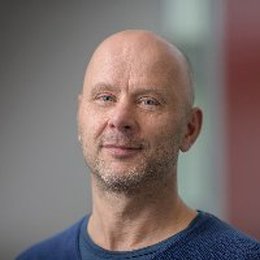
Sebastian Thiede is a Full Professor specializing in Manufacturing Systems , with extensive research contributions to Smart Industry , Sustainable Manufacturing , and Human-Centered Production . His work bridges advanced technologies like Machine Learning , Simulation , and Artificial Intelligence with industrial applications, addressing critical challenges in Circular Economy , Energy Efficiency , and Factory Decarbonization . Research focuses on Battery Manufacturing , Edge Computing , and Real-Time Locating Systems (RTLS) . Key methodologies include Digital Twinning , Surrogate Modeling , and Data-Driven Process Optimization . Recent publications highlight trends in Autonomous Sensor Data Analysis (2025), Cyber-Physical Architectures for reconfigurable systems, and Circular Transition Methodologies for manufacturing. His work often integrates Human Factors with Smart Automation , emphasizing environmental and economic impacts.
Bojana Rosic is a Full Professor specializing in Applied Mechanics & Data Analysis. Her research spans Artificial Intelligence, Machine Learning, Robotics, and Uncertainty Quantification, with a focus on integrating computational methods into mechanical systems and materials science. Key Research Areas: Machine Learning, Uncertainty Quantification, Robotics, Soft and Compliant Mechanisms, Materials Simulation. Recent Work: Contributions to neural network-based constitutive modeling for anisotropic materials, real-time control systems for robotic manipulators, and uncertainty quantification techniques using Polynomial Chaos Expansion. Collaborations: Active in interdisciplinary research with applications in energy, sustainability, and biomedical engineering. Her work emphasizes practical implementations of AI in mechanical engineering, including autonomous systems and collaborative robots (cobots). While no specific awards or educational background are detailed here, her extensive research output (68 publications) highlights her leadership in computational methods and machine learning integration.
A.Q.L. Keemink serves as an Assistant Professor in Biomechatronics and Biorobotics at the University of Twente, within the Faculty of Engineering Technology's Department of Biomechanical Engineering. He is a member of the Biomechatronics and Rehabilitation Technology (ET-BE-BRT) research group and the TechMed Centre. His academic credentials include an MSc (cum laude) in Mechatronics and a PhD in human power augmentation systems and interaction control. Research interests encompass optimization-based control for human-robot interaction, specifically exoskeletons for upper and lower limb support. His work integrates machine learning, optimal motion planning, model-predictive control, and neuromechanics imitation to address rehabilitation challenges for individuals with movement deficits. Key domains include biomechatronics, biorobotics, and rehabilitation engineering. Keemink collaborates within the Biomechatronics and Rehabilitation Technology group, contributing to the University of Twente's TechMed Centre for medical technology innovation.
Gerwin Hoogsteen is an Assistant Professor at the University of Twente, affiliated with the Computer Architecture for Embedded Systems chair. He focuses on smart grids, cyber-physical systems, and applying theoretical research in field-tests. PhD in Decentralized Energy Management (2017, University of Twente) His research integrates machine learning , distributed coordination , and cybersecurity into smart grid optimization. Recent work emphasizes multi-objective optimization for EV charging hubs, energy community resilience, and congestion management. Key article trends include EV charging algorithms , decentralized control , and hybrid storage systems . He contributes to UN SDGs like Climate Action and Affordable Energy . Founder of DEMKit and ALPG open-source software Collaborator in EU projects (SUSTENANCE, SERENE, LocalRES)
Prof. Dr. Ir. Herman van der Kooij is a leading academic in Biomechatronics and Rehabilitation Technology , affiliated with the University of Twente (0.8 FTE) and Delft University of Technology (0.2 FTE). He chairs the Biomechatronics group at UT and has made groundbreaking contributions to wearable robotics for medical and industrial applications. His research focuses on human balance control , neuromechanical modeling , and exoskeleton-assisted mobility . He develops technologies like the LOPES gait rehabilitation robot and the Mindwalker exoskeleton , combining experimental and computational approaches to advance wearable robotics. His work spans soft robotics , real-time EMG-driven control , and low-cost sensor integration . Van der Kooij has published over 170 peer-reviewed works and received prestigious Dutch VIDI and VICI grants . He leads national programs in Wearable Robotics and 4TU Soft Robotics , and serves as associate editor for IEEE journals. He founded two specialized labs: the Rehabilitation Robotics Laboratory (with Roessingh Research and Development) and the Virtual Reality Human Performance Lab , which integrates robotics, motion capture, and VR for testing. He emphasizes active learning in courses like Biorobotics and Biomechatronics , encouraging students to learn through hands-on projects and mistakes. His work also explores non-medical applications of exoskeletons, including industrial ergonomics and entertainment technology .
Pengcheng Liu is an Associate Professor in the Department of Computer Science at the University of York, holding this position since January 2020. He maintains active memberships in IEEE, IEEE Robotics and Automation Society (RAS), IEEE Control Systems Society (CSS), and the International Federation of Automatic Control (IFAC), while serving on the IEEE Technical Committee for Bio Robotics, Soft Robotics, Robot Learning, and Safety, Security and Rescue Robotics. His research spans robotics, machine learning, automatic control, and optimization, with specialization in humanoid robotics, rehabilitation systems, agricultural applications, and human-computer interaction. Key focus areas include developing lightweight neural networks for embedded agricultural systems, bionic-companionship frameworks for service robots, EMG-controlled rehabilitation devices, and precise control of robotic manipulators using ROS/Gazebo. His work consistently bridges theoretical control systems with practical implementations in healthcare and precision agriculture. Analysis of his publication trends reveals strong emphasis on applying machine learning to real-world robotics challenges, particularly in resource-constrained environments (e.g., agricultural robotics with efficient neural networks) and human-centered applications (e.g., rehabilitation gloves and brain-computer interfaces). Recent work demonstrates increasing integration of computer vision with control systems for autonomous operation. His notable scientific awards include: Global Peer Review Awards from Web of Science (2019) Outstanding Contribution Awards from Elsevier (2017) Dr. Liu has secured and managed research funding through major programs including EPSRC, Newton Fund, Innovate UK, Horizon 2020, Erasmus Mundus, FP7-PEOPLE, and NSFC. He serves as a regular reviewer for EPSRC, NIHR, and NSFC grant panels while reviewing for over 30 flagship journals and conferences in robotics, AI, and control systems. His editorial roles include Associate Editor for IEEE Access and PeerJ Computer Science, where he has edited 17 publications. Though specific lab affiliations aren't detailed, his research in agricultural robotics, rehabilitation systems, and humanoid platforms suggests active collaboration with York's robotics and AI research groups, particularly in developing practical implementations of control algorithms and machine learning models for real-world deployment.
Thomas Wilschut, MSc is an active researcher specializing in cognitive psychology with a focus on memory retrieval, speech recognition, and adaptive learning systems. His work bridges theoretical cognitive science with practical educational applications, particularly for learners with dyslexia. His research interests center around Retrieval Practice , Adaptive Learning , and Speech-Based Educational Technology . Wilschut investigates how cognitive principles can be applied to develop more effective learning systems, with particular attention to how speech recognition technology can support vocabulary acquisition and memory consolidation. His publications demonstrate a strong trend toward developing model-based adaptive learning systems that personalize educational experiences based on individual cognitive profiles. Much of his recent work focuses on the intersection of speech motor control and memory processes, exploring how speech production affects learning outcomes. Wilschut frequently collaborates with researchers including van Rijn, Sense, and others on projects related to cognitive modeling of learning processes. His work contributes to Sustainable Development Goals related to quality education through innovative learning technologies.
Jeffrey Dellosa serves as a Professor at Caraga State University in the College of Engineering and Geosciences, Butuan, Philippines. His academic career focuses on renewable energy research with particular emphasis on solar photovoltaic systems for rural development applications in the Philippines. He holds a Doctor of Engineering degree specializing in Renewable Energy from Ateneo de Davao University (2019-2023). Education: Doctor of Engineering in Renewable Energy, Ateneo de Davao University (2019-2023) Professor Dellosa's research spans multiple domains within renewable energy engineering, with particular expertise in solar photovoltaics, energy conversion systems, and power generation technologies. His work bridges theoretical research with practical applications for rural electrification and sustainable development. Current research directions include floating solar photovoltaic systems, IoT-based energy monitoring, and renewable energy integration for healthcare facilities. Analysis of his publication record reveals a strong emphasis on practical implementation of renewable energy solutions in the Philippine context, with increasing focus on interdisciplinary approaches combining AI, IoT, and traditional energy engineering. Recent publications demonstrate a shift toward comprehensive system design that addresses both technical and socioeconomic aspects of renewable energy deployment in rural communities. Professor Dellosa leads research in Nelson Jr Enano's Lab and collaborates extensively with regional institutions on renewable energy projects. His work has resulted in 67 publications with significant readership (60,773 reads) and citations (286 citations), demonstrating impactful contributions to the field of renewable energy engineering in Southeast Asia.