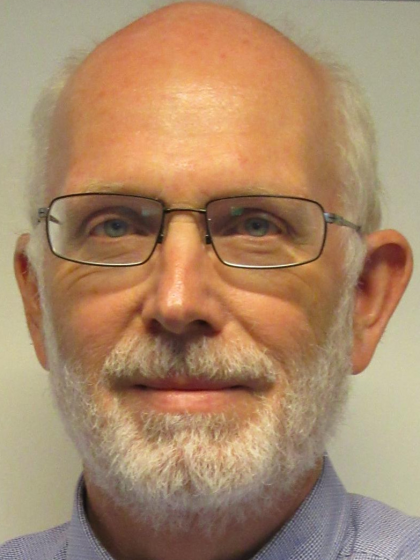
Professor Remco Veltkamp holds a faculty position at Utrecht University's Faculty of Science with a focus on Game and Media Technology . As Scientific Director of AI Labs and coordinator of the Utrecht Center for Game Research , his work bridges serious games, virtual reality, and human-centered AI applications. He leads the Dynamics of Youth Hub 'Healthy Play, Better Coping' exploring gaming's role in pediatric chronic illness management. Academic leadership in gaming technology Director of Utrecht's AI Labs Founder of Serious Game Society Editor of International Journal of Serious Games Research spans game design, AR/VR interaction, 3D object recognition, and multimedia systems with applications in: Healthcare gamification Energy conservation Bioinformatics Social behavior analysis Computer vision Recent work includes: 2025: Developing fatigue management therapy games 2024: Analyzing protest dynamics through social media 2023: Creating equine pain assessment systems 2022: Gamification in food sustainability As educator, he teaches Game Programming and Small Project Game and Media Technology , while pioneering applications of gaming in healthcare and education sectors.
Prof. dr. Lambert Schomaker is a Full Professor of Artificial Intelligence at the University of Groningen, leading the Artificial Intelligence and Cognitive Engineering (ALICE) institute within the Faculty of Science and Engineering. His work spans perceptual intelligence, machine learning, and neuromorphic computing, with significant contributions to handwriting recognition, robotics, and historical document analysis. Affiliations: Bernoulli Institute, CogniGron (Cognitive Systems & Materials), and Data Science & Systems Complexity (DSSC) centers. Education: M.Sc. (1983) and Ph.D. (1991) in Psychophysiology/Psychology from Nijmegen University. Research Interests: AI, pattern recognition, neural networks, autonomous systems, and applications in cultural heritage (e.g., the MONK system for handwritten archive indexing). He has pioneered handwriting recognition methods used in modern devices like tablets and led the 30MEuro Target project for large-scale data mining. Grants & Projects: Includes NWO-funded initiatives (e.g., Catch, TriGraph) and EU projects (MANTIS, MANIC). Current focus areas include neuromorphic computing with electronic materials and AI-driven analysis of the Dead Sea Scrolls. Awards: IBM Faculty Awards (2011, 2012), IAPR Best Paper Award (2012), Ching Yee Suen Special Award (2012). Advising: Supervised over 20 PhD students in AI, robotics, and document analysis. Active in industry collaborations (e.g., HP, Microsoft). Labs/Teams: Director of ALICE, contributor to CogniGron, and leader of the MONK system team. Current research includes neuromorphic hardware development and AI applications in maintenance systems.
Antal van den Bosch is a Professor of Language, Communication, and Computation at Utrecht University’s Faculty of Humanities. He also serves as Board Member and Domain Chair for Social Sciences and Humanities at the Dutch Research Council (NWO). His career includes roles as Director of the Meertens Institute (KNAW) and professorships at Radboud University and Tilburg University. His research focuses on machine learning and computational linguistics, particularly Generative AI and Large Language Models. He emphasizes interdisciplinary collaboration, exploring intersections between AI and societal challenges like governance and cultural heritage. Education: Ph.D. in Advanced Computing Sciences at Maastricht University. Key affiliations include guest professorships at the University of Antwerp’s CLiPS and fellowships with EurAI and the Royal Netherlands Academy of Arts and Sciences. Research Interests: Generative AI and LLMs Language Technology Cultural AI Social Implications of AI Historical Language Analysis Articles Trends: Recent work addresses AI governance, societal impacts of generative models, and computational methods in humanities research. Projects like Better-Mods and Cultural AI Lab highlight applied AI for societal benefit. Awards: Vici Grant (NWO), KULAK Francqui Chair, and membership in prestigious academic societies. Advising & Grants: Supervises over 20 Ph.D. students. Leads projects on AI moderation tools, cultural heritage digitization, and digital humanities infrastructure. Notable grants include NWO-funded Better-Mods and Horizon 2020 initiatives like HiTiME and TwiNL. Labs/Teams: Active in CLARIAH, Nederlab, and the Digital Humanities Lab (KNAW). Software contributions include Frog (Dutch NLP suite), T-Scan, and Colibri Core.
Dr. A.A.A. Qahtan is an Assistant Professor in the Data Intensive Systems research group within the Department of Information and Computing Sciences at Utrecht University's Faculty of Science. His academic appointment focuses on advancing research and education in data-intensive computing with particular expertise in data stream mining, data cleaning, and explainability of machine learning techniques. Dr. Qahtan completed his PhD studies at KAUST (King Abdullah University of Science and Technology) under the supervision of Xiangliang Zhang and Soujin Wang. Prior to joining Utrecht University, he worked as a postdoc at QCRI (Qatar Computing Research Institute) where he developed pattern functional dependencies (PFDs) for data cleaning. His research spans several critical areas in data science: Data Stream Mining and Real-time Processing Data Cleaning and Quality Assessment Pattern Recognition and Functional Dependencies Outlier and Anomaly Detection Concept Drift Detection in Streaming Data Fairness in Machine Learning Systems Missing Data Imputation Techniques Dr. Qahtan's publication record demonstrates consistent contributions to top-tier venues including PVLDB, KDD, ICDE, and SIGMOD. His recent work shows a progression from foundational data cleaning techniques to advanced applications in categorical data analysis, fairness in AI, and cryptocurrency market analysis. His research bridges theoretical foundations with practical applications across multiple domains. Dr. Qahtan actively contributes to academic education at Utrecht University, teaching courses including Data Analytics, Data Science and Society, Data Wrangling and Data Analysis, and Databases across multiple academic years from 2019 to 2024.
Mitko Veta is an Associate Professor in the Department of Biomedical Engineering at Eindhoven University of Technology (TU/e), specializing in medical image analysis. His research focuses on developing deep learning methods for histopathology image analysis to enhance diagnostic accuracy and reduce pathologist workload. He leads the Medical Image Analysis group, contributing to automated quantitative tools for pathology reporting and treatment planning. Academic Background: Veta earned his M.Sc. in Electrical Engineering from Ss. Cyril and Methodius University (Macedonia, 2009), followed by a Ph.D. in histopathology image analysis at University Medical Center Utrecht (2014). He joined TU/e as a postdoc in 2014 and became an assistant professor in 2016, advancing to his current role in 2021. Research Interests: His work spans histopathology image analysis, deep learning, domain adaptation, and applications in oncology (e.g., breast cancer, melanoma). He develops algorithms for mitosis detection, tumor-infiltrating lymphocyte assessment, and AI-driven clinical decision support. Key contributions include the MIDOG++ dataset and the LYSTO benchmark. Projects: He co-leads the Spectralligence AI project (2021–2024), focusing on AI-driven medical imaging solutions. His research addresses clinical challenges like myocardial scar quantification and checkpoint inhibitor treatment outcomes. Teaching: Veta teaches courses such as Machine Learning in Medical Imaging and Biology and AI for Medical Image Analysis , emphasizing practical applications of AI in healthcare.
Fons van der Sommen is an Associate Professor in Electrical Engineering at Eindhoven University of Technology, specializing in Video Coding & Architectures. He leads research on computer-aided detection systems for early cancer diagnosis, particularly focusing on esophageal and colorectal neoplasia through advanced AI and computer vision techniques. His research interests span medical image analysis, AI-assisted diagnostics, and developing robust systems for clinical deployment. Recent publications focus on overcoming real-world implementation challenges of AI in endoscopy and enhancing the trustworthiness of diagnostic systems. Recent research trends show strong emphasis on surgical AI applications (robot-assisted procedures), generative models for medical data augmentation, and quality assurance frameworks for clinical AI deployment. His work integrates deep learning with clinical validation across gastrointestinal and pulmonary oncology. TU/e Best PhD Thesis Award (2018) Best Poster Presentation (2017, 2013) He coordinates multiple research projects including TASTI-XECS221002 (Advanced AR for AI-based Servitization) and XL-ARGOS (extended reality solutions). Manages collaborations with medical centers on AI implementation for cancer screening.
Marleen Huysman is a Full Professor at Vrije Universiteit Amsterdam (VU), serving as Director of the KIN Center for Digital Innovation and Head of the Department of Knowledge, Information and Innovation within the School of Business and Economics. She holds additional roles at the Network Institute and is an Erling Persson Visiting Professor at Stockholm School of Economics (2024–2025). Her research focuses on digital innovation, new work practices, and organizational knowledge dynamics, with over 192 publications and 22 supervised PhD theses. Education: Bachelor's in Sociology (Erasmus University Rotterdam) PhD in Business Economics (VU University Amsterdam), focusing on Organizational Learning and IT Research Interests: Her work bridges organizational studies and digital innovation, emphasizing technology in practice, knowledge sharing, and creativity. Key themes include AI ethics, workplace augmentation, data-driven decision-making, and the societal impact of digital tools. She actively contributes to journals like Journal of Management Inquiry and Journal of the Association for Information Systems . Grants & Awards: Notable recognitions include the 2022 Journal of Strategic Information Systems Best Paper Award and significant NWO grants (€599,768 in 2014). Her projects address challenges like hybrid work policies at VU and data-driven value creation in sales organizations. Teaching & Leadership: She teaches digital innovation at both undergraduate and doctoral levels, including VU’s Honours Programme and the KIN Summer School. She chairs editorial boards for Journal of Strategic Information Systems and contributes to policy advisory roles at the Netherlands Ministry of Social Affairs. Labs & Initiatives: The KIN Center drives digital innovation research, collaborating globally on smart city projects, predictive policing, and AI ethics. Her work often intersects with UN Sustainable Development Goals, emphasizing societal and environmental impact.
Dr. Luuk Spreeuwers is an Associate Professor specializing in Datamanagement & Biometrics , with a focus on Artificial Intelligence , Computer Vision , and Machine Learning . His research spans biometric security, face recognition, morphing attacks, and finger vein verification, resulting in over 255 publications and 10 years of active research contributions. He has collaboratively developed datasets like Orchid Flowers Dataset and FLUXSynID , advancing AI applications in biology and forensic science. Research Interests: Face recognition, biometric security, deep learning, morphing attack detection, finger vein biometrics, explainable AI, and historical image analysis. Scientific Awards: Best Paper Award (BIOSIG 2017), Best Poster Award (BIOSIG 2014), Educational Award of Electrical Engineering (2018). Activities: Organized SITB 2025 and IWBF 2024 conferences; delivered invited talks on face recognition and forensic applications; serves as Editor-in-Chief of IET Image Processing . Article Trends highlight his work on: deep learning for biometric security, forensic face recognition, morphing attack detection frameworks, finger vein pattern analysis, and robustness testing in AI systems.
Eric Postma is a Full Professor of Artificial Intelligence at the Tilburg School of Humanities and Digital Sciences , specifically within the Department of Cognitive Science and Artificial Intelligence . He also holds a position at the Jheronimus Academy of Data Science in 's-Hertogenbosch, a collaboration between Tilburg University and Eindhoven University of Technology. Research Focus: Pattern recognition in humans and machines, with applications spanning art authentication, exoplanet detection, and medical AI (particularly glioma patient outcomes). Projects: Principal investigator in healthcare AI initiatives like predictive modeling for post-surgical cognitive function and co-investigator in multi-institutional projects like STEADFAST (swarm robotics for first responders) and MEGaNorm (brain dynamics modeling). Leadership: Member of SIGAI, IPN, Lorenz Center Computational Science Board, and advisory bodies like Kennisnet and CLAIRE. Research Trends: His recent publications emphasize interdisciplinary applications of AI, including dataset creation for pediatric body measurement analysis, vision transformers for art authentication, and fMRI data augmentation techniques. Key themes include ethical AI deployment, human bias vs. machine objectivity, and sustainability-focused AI through initiatives like the ILUSTRE project in Curaçao. Collaborations: Works with institutions across neuroscience (Rutten, Gehring), data science (Güven, Šafář), and engineering (Cuijpers). His research bridges theoretical AI with practical implementations in healthcare, cultural heritage, and environmental sustainability.
Prof. Sandjai Bhulai is a Full Professor at Vrije Universiteit Amsterdam's Faculty of Science (Department of Mathematics) and holds affiliations with the Network Institute. He specializes in machine learning, operations research, and their applications in telecommunications, healthcare, and optimization. His research addresses real-world challenges such as suicide prevention through AI-driven systems, signal processing in underwater acoustics, and dynamic dispatch algorithms for logistics. Key research interests include machine learning algorithms for classification and prediction, reinforcement learning for optimization problems, and data-driven decision-making in healthcare and transportation. He has pioneered methods like the 'Dutch Draw' baseline for binary classification and contributed to ambulance dispatch systems and power grid topology optimization. Prof. Bhulai has published over 137 research outputs, including high-impact articles in International Journal of Medical Informatics , Ocean Engineering , and Transportation Science . He received the Best Paper Award (2018) and led projects such as the AI-BIPTO initiative for integrated production optimization. He advises on technical and ethical committees, including roles at NWO and the Mondriaanfonds. His teaching spans advanced courses in machine learning, algebraic geometry, and linear programming.
Dr. Will Hurst is an Associate Professor in Data Science and Extended Realities at Wageningen University & Research's Information Technology Group. He holds a PhD in Computer Science (focused on Critical Infrastructures) and has over 100 international publications across data science, creative technologies, and critical infrastructure security. His research emphasizes XR applications in education, healthcare, and sustainability, alongside smart meter analytics and cybersecurity. Education: PGCert (Distinction) in Higher Education, MSc Web Computing, BSc Product Design Grants: EPSRC-funded 'Data Analytics for Health-Care Profiling using Smart Meters' and InnovateUK's Productivity Accelerator Research interests include digital twins, immersive learning technologies, and interdisciplinary hackathon methodologies. Recent work explores AR/VR in medical training, NFTs in art, and sustainable consumer behavior. Awards include recognition as an award-winning Reader in Creative Technologies at Liverpool John Moores University (2016-2022). Teaching includes courses on data visualization, digital game development, and advanced multimedia systems. Engages in active aging initiatives through co-design hackathons and community-based projects.
Victoria Degeler is an Assistant Professor at the University of Groningen’s Faculty of Science and Engineering, affiliated with the Bernoulli Institute. Her research focuses on AI-driven solutions for complex systems, combining expertise in artificial intelligence, software engineering, and service-oriented computing. She actively contributes to EU Horizon initiatives through her role in evaluating projects for the EC REA and EASME. Her work emphasizes real-world applications such as digital twins for infrastructure optimization, machine learning for IoT systems, and adaptive service architectures. Her research interests span digital twins in water distribution networks, quality-aware IoT processing, and machine learning methodologies. Notable projects include developing self-adaptive service selection frameworks and analyzing human activity recognition biases. She collaborates widely, evidenced by co-authored publications in top-tier conferences and journals.
L. Peternel is a Robotics researcher at Delft University of Technology's Faculty of Mechanical, Maritime and Materials Engineering, specializing in Human-Robot Interaction and Rehabilitation Robotics. With 56 research outputs including conference contributions, journal articles, and patents, Peternel leads cutting-edge work in impedance control, teleoperation, and collaborative robotics applications spanning medical rehabilitation, off-Earth habitat construction, and service robotics. Research focuses on developing advanced control frameworks enabling natural human-robot collaboration. Key areas include impedance-based teleoperation systems, human motor control-inspired co-manipulation strategies, and biomechanics-aware robotic physiotherapy. Recent work explores quadruped navigation, supermarket service robots with LLM interfaces, and off-Earth habitat construction systems that integrate computer vision with human-robot teamwork. Publications demonstrate strong emphasis on practical implementations with real-world impact across medical, industrial, and extraterrestrial environments. Article trends reveal consistent focus on physical human-robot interaction mechanisms, particularly impedance control methodologies and safety-critical applications. The research portfolio spans rehabilitation robotics (shoulder therapy systems), collaborative construction (off-Earth habitats), and service robotics (supermarket assistants), with increasing integration of AI and computer vision components in recent years. Best Paper Award at FICTA 2024 for Computer Vision- and Human-Robot Interaction-Supported Assembly Finalist Best Interactive Paper Award at Humanoids 2023 for robotic shoulder rehabilitation work Peternel leads the Rhizome project developing autonomous systems for off-Earth habitat construction and collaborates extensively across disciplines including biomechanics, computer science, and aerospace engineering. Media coverage including the Dutch press feature "Een robot als collega" highlights real-world impact of this research. Supervised work includes PhD candidates in robotics, with ongoing projects focusing on patient-centered rehabilitation systems and autonomous construction robotics for space applications.
Davide Grossi is an Associate Professor at the University of Groningen's Faculty of Science and Engineering, affiliated with the Bernoulli Institute for Mathematics, Computer Science, and Artificial Intelligence. He also holds an associate professorship at the University of Amsterdam's Institute for Logic, Language, and Computation. His research focuses on multi-agent systems, decision-making, game theory, social choice theory, and argumentation, with applications to digital democracy and hybrid intelligence. Grossi leads the Multi-Agent Decisions Lab (MAD-lab) and co-leads the Democratic Innovations Lab (DIL) at the University of Groningen. He has published extensively in top venues such as Artificial Intelligence , Journal of Artificial Intelligence Research , and conferences like AAMAS and IJCAI. His work bridges theoretical computer science, social choice, and legal informatics, addressing challenges in collective decision-making and democratic innovation. Research Interests: Grossi's expertise spans formal models of multi-agent systems, social choice theory, argumentation frameworks, and their applications to real-world democratic processes. He explores topics like liquid democracy, deliberative coalition formation, and the ethical implications of AI in governance. His recent work emphasizes hybrid intelligence systems that augment human decision-making with AI, ensuring transparency and fairness in automated systems. Publications: His recent articles analyze cooperation in public goods games, case-based reasoning for legal datasets, and Condorcet markets for epistemic social choice. These contributions highlight trends in AI-driven decision systems, algorithmic fairness, and computational social choice. Grossi's work on digital democracy proposes frameworks for participatory governance, while his technical papers advance methods in multi-agent learning and argumentation evaluation. Grants & Advising: Grossi leads research projects funded by the Netherlands Institute for Advanced Study (NIAS) and collaborates with institutions like the Hybrid Intelligence Center. While no specific student advisees are listed, his labs mentor graduate students in AI and social choice theory. He actively participates in interdisciplinary collaborations, integrating computer science with legal and political science perspectives. Labs & Teams: Beyond MAD-lab and DIL, he contributes to the Groningen Cognitive Systems and Materials Center (CogniGron) and the Deliberation and Argumentation Special Interest Group of Hybrid Intelligence. These groups focus on cognitive robotics, AI ethics, and deliberative mechanisms for societal challenges.
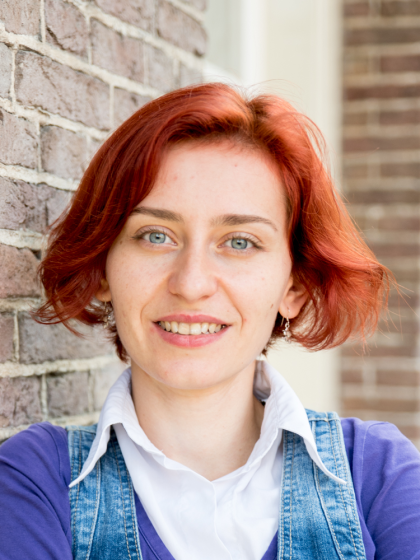
Anna Schenfisch is a Research Fellow in the Faculty of Mathematics and Computer Science at Eindhoven University of Technology (TU/e), working within the Applied Geometric Algorithms research group. Her primary affiliation is with the university's mathematics department, and she can be contacted at a.k.schenfisch@tue.nl. Her research focuses on the intersection of algebraic topology and computational geometry, with significant contributions to topological data analysis. Her core research interests center on K-theory applications to persistence modules, simplicial complex reconstruction, and topological descriptors. She investigates how algebraic structures like monoids and parameter spaces interact with geometric representations, particularly through zig-zag persistence frameworks. Her work on faithful sets of verbose persistence diagrams addresses fundamental questions about minimality and optimality in topological data representations. Current projects involve developing theoretical frameworks for multiparameter persistence modules and their computational implementations. Analysis of her 15 most recent publications (2022-2025) reveals a strong trajectory in applying algebraic topology to computational problems. Her research demonstrates increasing sophistication in bridging abstract K-theory with practical geometric algorithms, particularly in simplicial complex reconstruction and descriptor optimization. The work consistently targets foundational questions in topological data analysis while developing novel computational approaches. Scientific Awards: No specific awards, fellowships, or medals are mentioned in the provided sources. Advising and Grants: Anna has supervised at least one academic work as indicated by "Supervised Work (1)" in her institutional profile. The nature of this supervision (e.g., thesis advising) isn't specified. No grant funding sources are explicitly referenced in the available materials. Labs and Teams: She is an active member of the Applied Geometric Algorithms research group at TU/e, which focuses on computational topology and geometric data analysis. This group serves as her primary research environment for developing algorithms related to persistence modules and topological descriptors.