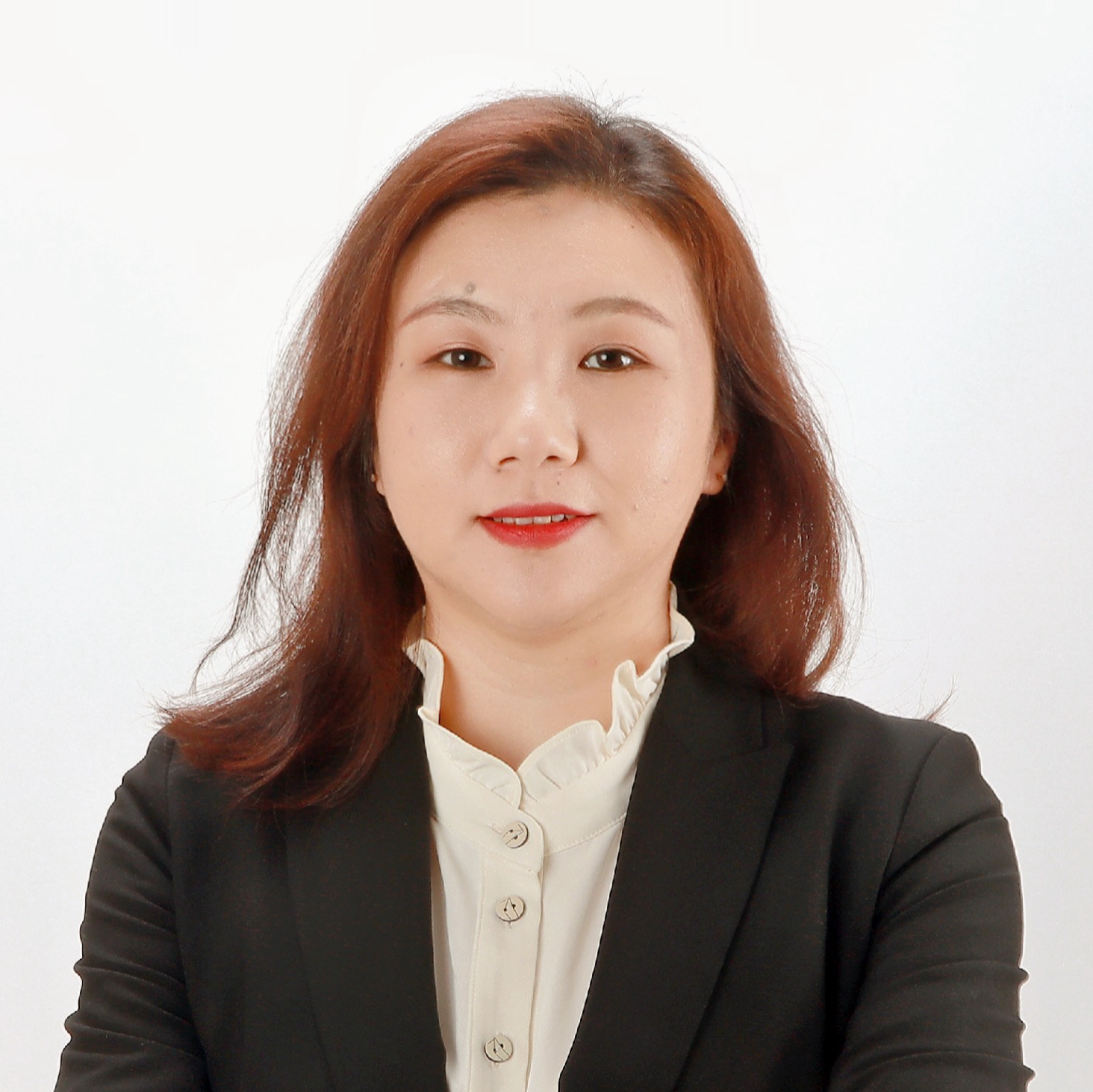
Jieqiong Zhao is an Assistant Professor in the School of Computer and Cyber Sciences at Augusta University, specializing in visual analytics and human-computer interaction. She holds a Ph.D. in Electrical and Computer Engineering from Purdue University and has postdoctoral experience at Arizona State University's VADER lab. Education: Ph.D. Electrical & Computer Engineering, Purdue University (2020) M.S. Computer Science, Tufts University (2013) B.E. Computer Software Engineering, Zhejiang University (2010) Research: Focuses on visual analytics for decision-making in domains like healthcare, cybersecurity, and environmental science. Key projects include ATVis (adversarial training visualization), FeatureExplorer (hyperspectral data analysis), and MetricsVis (law enforcement performance evaluation). Current interests span trustworthy AI, human-AI collaboration, and uncertainty visualization. Service: Organized the IEEE VIS 2024 panel on the future of visual analytics, serves on IEEE Transactions review boards, and mentors the WiCyS student chapter. Active in conference organizing and review roles. Awards: Received the 2020 VAST Mini-Challenge award for ConstellationBuilder's innovative cybersecurity interface design.
Mihaela van der Schaar is the John Humphrey Plummer Professor of Machine Learning, Artificial Intelligence, and Medicine at the University of Cambridge, leading the van der Schaar Lab. She holds dual affiliations with the Department of Applied Mathematics and Theoretical Physics (DAMTP) and the Centre for Mathematical Imaging in Healthcare. Her research focuses on healthcare AI, machine learning, and operations research. She has authored over 250 journal articles and 275 conference papers, with notable contributions to synthetic data for privacy, causal inference, and clinical decision-making. Her work has led to 35 U.S. patents, including foundational innovations in streaming video compression (MPEG-4 standards). Awards include the Oon Prize (2018), IEEE Fellow (2009), and recognition as the UK's most-cited female AI researcher (2019). Leadership roles include Director of the Cambridge Centre for AI in Medicine and Co-Director of the European Laboratory for Learning and Intelligent Systems. She has mentored global academic leaders and pioneered initiatives like the Inspiration Exchange for early-career researchers. Key projects include predictive models for hospital resource allocation during pandemics and AI tools for personalized medicine. Publications span machine learning theory, healthcare applications, and interdisciplinary fields like network science. Her lab's impact includes tools like AutoPrognosis (automated ML for clinical prediction) and SynthCity (synthetic healthcare data generation).
Eric Fortune is an Associate Professor in the Department of Biological Sciences at New Jersey Institute of Technology. His research spans neuroethology, electrosensory systems, and computational biology, with a focus on weakly electric fish and sensorimotor integration. Recent Publications highlight work on Neurophysiological adaptations in weakly electric fish Machine learning applications in flu forecasting Behavioral and neural mechanisms of exploration-exploitation trade-offs Grants include multiple NSF-funded projects on collaborative research in active sensing, neuromechanical systems, and social interaction effects on sensory function. Media Coverage features his role in a $5M Amazon rainforest biodiversity contest, where his team counted over 250,000 critters in a square kilometer.
Ke Xu is a Professor in the Department of Computer Science at Tsinghua University's School of Information Science and Technology. With extensive research contributions in network security, privacy-preserving technologies, and machine learning applications for networking, Professor Xu has established himself as a leading researcher in computer science. Professor Xu's research interests span network security, privacy-preserving technologies, machine learning for networking, federated learning, internet protocols, encrypted traffic analysis, blockchain applications, and AI in networking. His work bridges theoretical foundations with practical implementations, focusing on real-world security challenges and network optimization problems. He has developed novel frameworks for secure network operations, privacy-preserving data sharing, and efficient AI deployment in distributed environments. Professor Xu's publication record shows a clear trend toward integrating artificial intelligence with traditional networking challenges. His recent work explores federated learning security, encrypted traffic analysis using deep learning, and novel approaches to network security that leverage machine learning techniques. The interdisciplinary nature of his research spans computer networking, security, privacy, and artificial intelligence. Professor Xu has received recognition for his contributions to network security and privacy-preserving technologies through publications in top-tier venues including IEEE journals, ACM conferences, and security symposia. His work has appeared in IEEE Transactions on Dependable and Secure Computing, IEEE/ACM Transactions on Networking, and security conferences like CCS and NDSS. Professor Xu actively collaborates with researchers across institutions, supervising students and junior researchers in exploring cutting-edge problems in network security and AI. His research has been supported by significant grants focusing on network security, privacy, and intelligent networking infrastructure. He leads projects that address fundamental challenges in secure communication, privacy-preserving data analysis, and intelligent network management. Professor Xu is involved with research laboratories focusing on network security and intelligent systems at Tsinghua University. His team works on developing practical security solutions, privacy frameworks, and AI-enhanced networking protocols that address real-world challenges in today's increasingly connected world.
Fabio Sigrist is a Professor of Applied Statistics and Data Science at the Institute of Financial Services Zug (IFZ) , part of the Lucerne University of Applied Sciences and Arts . He also holds a Senior Scientist and Lecturer position at the Seminar for Statistics, ETH Zurich . His career spans academic research, industry consulting, and project leadership in finance and data science. PhD in Statistics (2013), ETH Zurich MSc in Mathematics with distinction (2008), ETH Zurich MEd in Mathematics Education (2008), ETH Zurich Sigrist’s research focuses on integrating Machine Learning with Spatial Statistics for applications in Financial Econometrics and Credit Risk . His work includes developing novel algorithms like GPBoost and KTBoost , advancing spatio-temporal modeling , and applying tree-based boosting to financial problems. Projects such as CreHos (credit risk in hospitality) and NISMO (interpretable real estate modeling) highlight his interdisciplinary approach. His publications address challenges in large-scale spatial data , loss given default modeling , and stock volatility prediction . He contributes to software development with tools like spate (R package) and varycoef (spatially varying coefficients).
Petteri Nurmi is a Professor of Computer Science at the University of Helsinki, affiliated with the Department of Computer Science and the Helsinki Institute of Sustainability Science (HELSUS). His research focuses on IoT systems, environmental monitoring, AI-driven solutions, and sustainable computing. He leads projects such as the NordForsk-funded initiative (2024-2028) and the Team Finland Knowledge programme (2024-2026), emphasizing large-scale IoT deployments and quantum computing integration. Key research interests include drone-based air quality monitoring, low-cost sensor networks, and AI applications in environmental science. Nurmi has published extensively in top venues like IEEE IoT Journal and ACM workshops. His work bridges technical innovation with societal challenges, such as urban pollution reduction and sustainable resource management. He supervises doctoral students in the Computer Science program and collaborates internationally on projects like underwater plastic detection (SEAGULL) and smart city infrastructure. Nurmi’s contributions to edge computing and pervasive sensing have been recognized through grants totaling over €2M. His lab develops tools for data-intensive systems, including thermal imaging for energy efficiency analysis and AI-driven sensor fusion frameworks.
Dr. Ahmad Afsahi is a Professor in the Department of Electrical and Computer Engineering at Queen's University, Canada. He leads the Parallel Processing Research Laboratory (PPRL) and chairs the Graduate Studies committee in ECE. His research focuses on parallel processing, high-performance computing (HPC), and network-based systems, with emphasis on communication runtime systems, accelerated computing, and deep learning infrastructure. Education: Ph.D. (Electrical Engineering, 2000) from University of Victoria; M.Sc. (Computer Engineering, Sharif University of Technology); B.Sc. (Computer Engineering, Shiraz University). Research interests include parallel programming models, MPI optimization, GPU-aware communication, network-aware algorithms, and power-efficient HPC systems. He is a Senior Member of IEEE, ACM member, and licensed Professional Engineer in Ontario. Key Awards: Canada Foundation for Innovation Award, Ontario Innovation Trust Award. Over 50 publications in top venues like SC, EuroMPI, IPDPS, and IEEE journals. Current teaching includes cluster computing and digital systems. Labs/Groups: PPRL, Queen's Collaborative Graduate Specialization in Computational Science and Engineering, Data, Analytics, and Computing (DAC) Research Group.
Dr. Samuel Cheng is an Associate Professor at the Gallogly College of Engineering , University of Oklahoma , specializing in Electrical and Computer Engineering . He holds a Ph.D. in Electrical Engineering from Texas A&M University (2004), preceded by M.S. and M.Phil. degrees from the University of Hawaii and Hong Kong University of Science and Technology. Education: B.S. (University of Hong Kong, 1995), M.Phil. (HKUST, 1997), M.S. (University of Hawaii, 2000), Ph.D. (Texas A&M, 2004) Professional Experience: Senior Research Engineer at Advanced Digital Imaging Research (2004-2005), prior internships at Microsoft Asia and Panasonic Technologies His research focuses on Information Theory , Signal and Image Processing , and Pattern Recognition , with applications in remote sensing, urbanization analysis, and disaster monitoring. His publications span topics including urban impervious surface mapping , nighttime light analysis , and machine learning for environmental data . His work often integrates multi-source datasets (e.g., Landsat, LiDAR, social media) for spatiotemporal modeling. Technical Expertise: Spectral unmixing, machine learning, thermal remote sensing, GIS integration Key Applications: Power outage detection, vegetation-crime correlation, PM2.5 estimation, smart meter data fusion Dr. Cheng holds three US patents in digital watermarking and is affiliated with IEEE, Sigma Xi, and AAAS. His recent articles demonstrate a trend toward leveraging AI for remote sensing challenges and analyzing urbanization impacts on ecosystems.
Dr. Silvia Baiocco serves as Assistant Professor at University of Rome Tor Vergata, teaching entrepreneurship, tourism management, and marketing courses across Bachelor and Master programs including 'Creation of Enterprises and Entrepreneurship' (Master), 'Fundamentals of Service Management' (Bachelor), and 'Tourism and Cultural Management for Sustainability' (Bachelor). Her institutional affiliation centers on Business Economics (sector ECON-07/A) with research rooted in co-evolutionary theory. Her research critically examines sustainable business model innovation through three interconnected lenses: (1) tourism-destination co-evolution in historic villages and Alberghi Diffusi, (2) university-industry knowledge exchange for sustainable spin-offs via PNICube Observatory frameworks, and (3) technology integration in smart tourism through AI-driven destination management. She emphasizes context-specific adaptation in both high-income (Italy) and low/middle-income settings (Ghana), with strong focus on social impact and heritage preservation. Analysis of her 2023-2025 publications reveals accelerating focus on digital tourism transformation (AI applications, smart city integration) and resilience-building in accommodation firms. Her work consistently applies co-evolutionary frameworks to decode organizational adaptation, particularly in sustainable entrepreneurship contexts. The PNICube Observatory reports highlight her policy-relevant contributions to university research valorization. As educator, Dr. Baiocco actively shapes future business leaders through courses spanning startup creation to sustainable destination management. Her research trajectory indicates deepening engagement with technology-mediated sustainability solutions and cross-sectoral innovation ecosystems, particularly through ongoing PNICube Observatory initiatives.
Jiannong Cao is a Chair Professor and Director of the University Research Facility in Big Data Analytics at the Department of Computing, Hong Kong Polytechnic University. He has held various academic roles since 1990, including Assistant Professor at City University of Hong Kong and Lecturer at Australian universities. PhD in Computer Science, Washington State University (1990) MSc in Computer Science, Washington State University (1986) BSc in Computer Science, Nanjing University (1982) His research focuses on cloud and edge computing , parallel and distributed computing , and mobile computing , with significant contributions to wireless sensor networks (WSN) for structural health monitoring (SHM) and software-defined networking (SDN) for vehicular communications. Recent work includes WiFi-based non-invasive health monitoring systems and multi-user computation partitioning in mobile cloud environments. Dr. Cao’s publications demonstrate trends in WSN optimization , SDN architectures , and cognitive modeling for network embedding , with applications in smart healthcare , transportation systems , and industrial IoT . Ministry of Education Natural Science Award (2018) ACM Distinguished Member (2017) IEEE Fellow (2014) Best Paper Awards at IEEE DSAA, SMARTCOMP, WCNC He has mentored numerous researchers, including Linchuan Xu , Xuefeng Liu , and Weigang Wu , who have authored key publications in top venues like ACM WSDM and IEEE INFOCOM . His professional roles include chairing IEEE committees and serving on grant panels for the Hong Kong Research Grant Council.
Prof. Dr. Fabian Gieseke is a Professor and Chair of Machine Learning and Data Engineering at the University of Münster. He holds a PhD in Computer Science from Carl von Ossietzky University of Oldenburg and a dual degree in Mathematics and Computer Science from the University of Münster. His research focuses on Machine Learning, High-Performance Computing, and their applications in Geosciences, Smart Cities, and Astrophysics. Education: PhD in Computer Science (2012), Carl von Ossietzky University of Oldenburg University studies in Mathematics and Computer Science (2006–2011), University of Münster Research Interests: Data Mining and Machine Learning High-Performance Computing & Distributed Systems Deep Learning Applications in Environmental Science and Astrophysics Geospatial Data Analysis using Satellite Imagery Publications Trends: His recent work emphasizes large-scale environmental monitoring via deep learning, including canopy height estimation, forest biomass prediction, and national-scale tree counting. He also explores interactive systems for geospatial data retrieval and optimization of machine learning models for resource-constrained environments. Advising & Grants: Supervised over 30 theses on topics like satellite image analysis, deep learning on microcontrollers, and data marketplaces for smart grids. Active in securing grants for interdisciplinary projects combining AI with Earth observation. Labs/Teams: Leads the Machine Learning and Data Engineering group at the University of Münster, focusing on scalable AI solutions for real-world challenges in science and industry.
Dr. Tan Kim Lim is a Senior Lecturer at the James Cook University (Singapore Campus), specializing in organizational psychology and consumer behavior. He holds a PhD from Curtin University (2016–2019), an MBA from the University of Melbourne (2004–2006), and a Bachelor of Business from Monash University (1999–2002). His research focuses on the future of work, employee attitudes, technology adoption in hospitality/tourism, and consumer behavior analysis. He employs advanced methodologies like PLS-SEM and has published over 47 articles in top journals like the European Business Review and Asia Pacific Journal of Marketing and Logistics . Dr. Lim has held roles including Assistant Professor at BNU-HKBU United International College (2020–2022) and Post-doctoral researcher at the Human Capital Leadership Institute (2019–2021). He currently serves on editorial boards of the Journal of Responsible Tourism Management and Journal of Global Responsibilities , and is a member of the Singapore Human Resource Institute and Society of Industrial-Organizational Psychology. His applied research spans commissioned projects for governments and private entities, including studies on waste classification behavior, country music festivals, and AI adoption in social services. Awards include the JCUS Early Career Researcher Award (2023) and Emerald Literati Reviewer Award (2022). Dr. Lim also actively speaks at regional conferences on topics like AI in networking and post-pandemic workplace trends. His current research interests include STARA (Smart Technologies, AI, Robotics, Algorithms) impacts on work, meaningful work dynamics, and tourism behavior analysis. He supervises PhD students exploring AI in social services, indigenous tourism, and workplace technology adoption.
James M. Piret is a Professor at the University of British Columbia (UBC), affiliated with the School of Biomedical Engineering and the Michael Smith Laboratories. He holds a Sc.D. from MIT (1989), an S.M. from MIT (1986), and an A.B. from Harvard College (1981). His research focuses on bioprocessing, biomedical engineering, and cell therapy biotechnology, with emphasis on optimizing therapeutic cell production and biomanufacturing processes. Education : Sc.D. in Chemical Engineering, Massachusetts Institute of Technology (1989) S.M. in Chemical Engineering, Massachusetts Institute of Technology (1986) A.B. in Chemistry, Harvard College (1981) Professor Piret’s research integrates bioreactor engineering, Raman spectroscopy, and data analytics to advance cell-based therapies for diseases like cancer and diabetes. Collaborations with stem cell biologists (e.g., Drs. Kieffer and Levings) and engineers (Drs. Turner and Gopaluni) drive innovations in bioprocess optimization and device development. His lab emphasizes multidisciplinary approaches to accelerate biotechnology production processes and cell therapy manufacturing. Awards : William F. Meggers Award (2022) R.S. Jane Memorial Award (2015) Cell Culture Engineering Award (2012) Fellow, Chemical Institute of Canada (2004) His work includes developing novel methodologies for CHO cell glycosylation engineering, optimizing fed-batch bioreactor systems, and advancing Raman spectroscopy techniques for real-time cell analysis. The lab actively recruits motivated graduate and postdoctoral researchers to tackle high-impact challenges in biomedical and chemical engineering.
J. Eric Bickel is a Professor at The University of Texas at Austin, serving as Director of the Operations Research & Industrial Engineering (ORIE) and Engineering Management programs. He holds a courtesy appointment in the Department of Petroleum and Geosystems Engineering and directs the Center for Engineering & Decision Analytics (CEDA). His academic background includes a PhD and MS in Engineering-Economic Systems from Stanford University and a BS in Mechanical Engineering from New Mexico State University. His research focuses on decision analysis under uncertainty, addressing topics like probabilistic modeling, climate engineering, risk management, and applications in sports and energy sectors. His work has been featured in major media including The New York Times and Wall Street Journal , and his climate engineering research was endorsed by Nobel Laureates as a top climate change response strategy. Professor Bickel has extensive industry experience, having previously served as Senior Engagement Manager and Co-Director of Client Education at Strategic Decisions Group (SDG), where he remains on the Board of Directors. His consulting spans oil/gas, energy trading, and financial services sectors. He has received recognition as a Fellow of the Society of Decision Professionals and contributed to the Copenhagen Consensus on Climate Project. His teaching extends to executive education through Texas Executive Education and McCombs School of Business. Research highlights include novel methods for probabilistic dependence modeling, value-of-information analysis in shale reservoirs, and critiques of risk assessment tools like heat maps. His climate engineering work emphasizes economically viable solar radiation management strategies.
Panruo Wu is an Associate Professor in the Department of Computer Science at the University of Houston (UH). He joined UH in 2018 as an Assistant Professor, transitioning to his current rank. His research focuses on high-performance computing, numerical algorithms, parallel and distributed systems, and fault tolerance. He holds a Ph.D. in Computer Science from the University of California, Riverside (2016), advised by Zizhong Chen, and a B.S. in Mathematics from the University of Science and Technology of China (USTC). Research Interests: His work spans high-performance computing, numerical linear algebra, GPU acceleration, fault-tolerant systems, and scalable machine learning. Key projects include LATER (Linear Algebra on Tensor Cores), LibKernel (a scalable kernel machine framework), and Wukong (a serverless parallel computing framework). He emphasizes energy-efficient and hardware-aware algorithms. Publications: Dr. Wu's recent work includes advancements in QR factorization using tensor cores, symmetric eigenvalue decomposition optimizations, and fault-tolerant algorithms for heterogeneous systems. His research often addresses computational challenges in big data and exascale computing. Awards & Grants: Received NSF Grant No. 2146509. His work on high-accuracy matrix computations was a Best Paper Nominee at HPDC'20. He has authored over 30 peer-reviewed publications in top venues like SC, ICS, and IEEE TPDS. Students & Advising: Advises PhD students including Shaoshuai Zhang, Ruchi Shah, Benjamin Carver, and Ao Wang. His students have contributed to projects like LibKernel and fault-tolerant linear algebra libraries. Labs & Collaborations: Leads research in UH's high-performance computing group, collaborating with institutions like Jack Dongarra's Innovative Computing Lab (University of Tennessee) and industry partners on exascale computing initiatives.