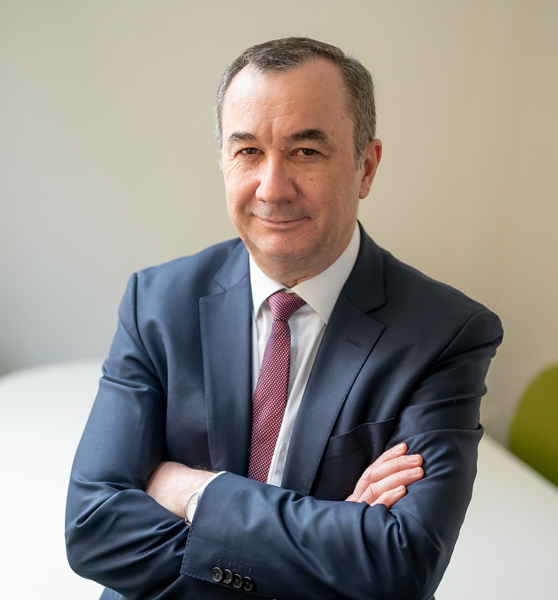
Robert Woore is an Associate Professor in Applied Linguistics and Course Director of the MSc in Applied Linguistics and Second Language Acquisition (ALSLA) at the University of Oxford's Department of Education. He holds multiple advanced degrees from Oxford, including a DPhil in Applied Linguistics, and previously taught secondary school languages and outdoor education before joining academia in 2007. His research focuses on instructed foreign language learning, particularly in school settings, with emphases on reading strategies, phonological decoding, phonics teaching, and teacher professional development. He actively investigates the teaching of Languages Other Than English (LOTE), including Chinese and Arabic, alongside European languages like French and German. Woore teaches on the PGCE, MSc ALSLA, and doctoral programs. He leads funded projects such as the Qatar Foundation-supported studies on Arabic as an additional language and the Nuffield Foundation’s FLEUR project on L2 reading. His work bridges research and classroom practice, emphasizing evidence-based pedagogy and curriculum reform. Key grants include leadership roles in the Nuffield Foundation’s FLEUR initiative (2016–2018) and Qatar Foundation’s Arabic as Additional Language review (2022–2025). He collaborates widely, co-authoring influential books like Debates in Second Language Education and contributing to policy-relevant studies on language education outcomes.
Liviu Matei is a Professor of Higher Education and Public Policy and Head of the School of Education, Communication and Society at King’s College London. His career spans leadership roles at Central European University (CEU), including Provost and Director of the Yehuda Elkana Center for Higher Education, and founding the Global Observatory on Academic Freedom. He contributes to global policy debates as a key figure in the Open Society University Network (OSUN) and CIVICA European University. Education: Studied philosophy, history, and psychology at Babeș-Bolyai University, sociology of higher education at Bucharest University, and earned a PhD in Romania. His research focuses on academic freedom, university governance, funding mechanisms, and the internationalisation of higher education. Recent work explores the interplay between education and democratic resilience, especially in authoritarian contexts. He has led initiatives on quality assurance and science diplomacy in conflict zones. His publications from 2023-2025 emphasize academic freedom codification, transnational policy tools, and the European Higher Education Area’s evolving challenges. Articles from 2015-2022 analyze the Bologna Process’s impact in Central/Eastern Europe and pandemic-related educational crises. Scientific Awards: Chair of University of Yangon Revitalisation Committee (2018-2019) Chair of European Award for Excellence in Teaching Selection Committee (2021-present) Fellowships at The New School, Maison des Sciences de l’Homme Paris, and Salzburg Seminar Elected to Academia Europaea (2022) Liviu Matei supervises PhD students on topics like higher education geopolitics, adult learners’ equity, and science diplomacy. His affiliations include editorial boards for Internationalisation of Higher Education Journal and European Journal of Higher Education . He leads projects protecting higher education values across Europe and collaborates with Council of Europe initiatives.
Cengiz Hakan Aydin , PhD, is a full professor at Anadolu University in Turkey, where he has been a faculty member since the early 1990s. He currently serves as the Head of the Distance Education Department in the Faculty of Open Education and is the Director of the OpenAnadolu Project , which includes the AKADEMA MOOCs platform. Additionally, he holds the role of Director of the Office of Learning and Teaching Enhancement at Özyeğin University . Dr. Aydin’s research is centered on the design and development of open and distance learning (ODL) environments. His work explores the integration of emerging technologies such as AI, VR, AR, and MR into educational systems. He is deeply engaged in the study and promotion of Open Educational Resources (OER) , Open Educational Practices (OEP) , and Massive Open Online Courses (MOOCs) . His scholarly contributions also address current trends and challenges in higher education. Dr. Aydin has held leadership roles in several international organizations. He served as President and Board Member of the International Division at the Association for Educational Communications and Technology (AECT) , and as a Board Member of the International Council for Educational Media (ICEM) . He is currently a Steering Committee Member of the OpenupEd initiative under the European Association of Distance Teaching Universities (EADTU) , and a member of the AECT Board and the Centre for Distance Education Research (COER) . He is actively involved in editorial work, serving on the boards of International Review of Research in Open and Distance Learning (IRRODL) , Educational Media International (EMI) , and Journal of Open, Distance, and Digital Education (JODDE) . Research Projects and Grants: Volkswagen Foundation – AI in Education (AIEd) : Local researcher. Erasmus+ CRED4TEACH (MOOC-based micro-credentials for teacher professional development): Leading researcher at Anadolu University. Erasmus+ ADMIT (Generative AI and Large Language Models in Higher Education): Researcher. Anadolu University Internal Funds – Multiple projects including AI-based tools for writing skills, intelligent personal education coach, and automated grading systems for open-ended questions. Dr. Aydin serves as both Project Coordinator and Researcher . Labs and Teams: Dr. Aydin leads the OpenAnadolu Project , which encompasses platforms like AKADEMA and serves as a hub for innovation in distance education and MOOC development at Anadolu University.
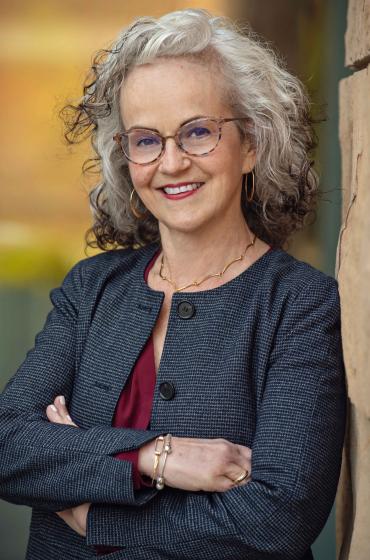
Univ.-Prof. Dr. Katja Heim is a prominent academic in the field of English Didactics, currently serving at the Institute of English Philology (WE6) at Freie Universitaet Berlin . With extensive experience in primary and secondary English education, her work focuses on social inclusion , learner autonomy , and hybrid/digital learning environments . She has held various academic positions including Freie Universitaet Berlin since 2024, after roles at Duisburg-Essen and other institutions. PhD in English Didactics Specializes in project-based teacher education Expert in bilingual learning in primary schools Her research emphasizes democratic classroom practices , multimodal texts , and technology integration in language teaching. Notable contributions include coordinated projects on digital media in teacher training and publications on inclusive education strategies. While her recent articles highlight hybrid learning and learner autonomy frameworks, her career spans over two decades of academic development in English education. Key research trends include: Blended learning implementation Bilingual education models Action research methodology
Naomi Yanagida is a Professor at the Graduate School of Japanese Applied Linguistics , Waseda University (since 2023). She holds a PhD in Linguistics and a Master's degree in Area Studies from the University of Tsukuba. Her career spans institutions like Hitotsubashi University, Kwansei Gakuin University, and Yokohama National University. Current affiliation: Waseda University (2023–Now) Previous roles: Hitotsubashi University (2015–2023), Kwansei Gakuin University (2010–2012) Research Interests : Symbiotic Language, Easy Japanese (Yasashii Nihongo), Discourse Analysis, Japanese Language Education Methodology, and Multicultural Communication. She focuses on how native Japanese speakers adapt their communication strategies when interacting with non-native speakers, particularly in discussion and explanatory contexts. Her scientific awards include the 2020 Japanese Language Education Association Encouragement Award and the 2020 'Japanese Language Education' Paper Award, both recognizing her work on native speaker explanatory strategies. She also received the 6th Hayashi Dai Memorial Paper Award in 2011 for early career research on contact situations. Research Trends : Yanagida's publications emphasize practical applications of Japanese language education, including syllabus design, intercultural discussion frameworks, and tools for improving communication between native and non-native speakers. Her work often intersects with policy development for multicultural societies and empirical studies on discourse behavior.
Deborah Loewenberg Ball is the Jessie Jean Storey-Fry Distinguished University Professor of Education at the Marsal Family School of Education, an Arthur F. Thurnau Professor, and a Research Professor at the Survey Research Center within the Institute for Social Research at the University of Michigan. She also directs TeachingWorks , a program focused on defining and supporting effective teaching practices for educators. Ball began her career as an elementary school teacher, teaching for over 15 years, and continues to engage in summer teaching at the Elementary Mathematics Laboratory (EML), a space for observing and analyzing teaching dynamics. Her educational background includes a doctoral degree in mathematics education from Michigan State University (1988), where her work emphasized the interplay between teacher knowledge and classroom practice. She has held significant leadership roles, including serving as dean of the University of Michigan School of Education (2005–2016), president of the American Educational Research Association (2017–2018), and currently as a member of the National Science Board and the Mathematical Sciences Research Institute Board of Trustees. Ball’s research interests center on the practice of teaching , particularly in elementary mathematics, and its role in fostering student agency, equity, and collective learning. She explores how teachers’ decisions in 'discretionary spaces'—moments where they choose instructional approaches—impact educational justice and student outcomes. Key themes include leveraging curricula to support marginalized students, measuring teacher knowledge (e.g., Mathematical Knowledge for Teaching), and redesigning teacher education to prioritize practice-based learning. Her recent articles and projects highlight the importance of formative assessments for teacher candidates, equitable discussion practices, and the influence of discretionary spaces in instruction. Ball has also contributed to state-level initiatives, such as the New York State Education Department’s numeracy briefs, which synthesize research for educators. Her scientific awards include prestigious recognitions like her election to the American Academy of Arts and Sciences (2014) and National Academy of Education (2007), along with fellowships from the American Mathematical Society and the American Educational Research Association. Ball’s advising and grant work emphasize practical, scalable solutions for teacher education. Major grants include projects to support multilingual early mathematics learners, pandemic-era teacher professional development, and strategies for implementing practice-based education. She emphasizes collaboration across disciplines and institutions to address systemic inequities in education. The Elementary Mathematics Laboratory (EML) serves as a central hub for her work, blending research and practice to model effective teaching and engage stakeholders in dialogue about educational justice.
Dr. Sibel Tatar is an Associate Professor at the Department of Foreign Language Education, Faculty of Education, Boğaziçi University. She has been teaching there since 2003, following her PhD in Language Education from Indiana University (2003) and B.A. in Translation and Interpretation from Hacettepe University (1997). Her research focuses on foreign language teacher cognition, TESOL methodologies, and non-native speaking professionals in education. Her educational background includes a PhD specialization in Language Education from Indiana University, emphasizing teacher development and intercultural communication. Her work spans over two decades, with a strong emphasis on qualitative research in language education contexts. Research interests include teacher identity, pre-service training, and the impact of native speakerism on educational policies. Her recent studies explore transformative learning through virtual exchange programs (COIL projects) and critical reflection techniques for teacher candidates. Dr. Tatar has received multiple awards from Boğaziçi University and grants for projects on teacher feedback mechanisms, technology integration, and EFL hiring practices. She has supervised numerous PhD theses and co-authored over 20 journal articles and book chapters. Her professional service includes roles on the Awards Committee and Financial Aid Interviews Committee at Boğaziçi University, reflecting her commitment to educational equity. She has also contributed to international conferences and editorial work, including the EUROSLA Yearbook.
Jane Hanley is a Professor specializing in transnational cultural production, multilingual environments, and Spanish language education. She holds leadership roles such as former Chair of Languages and Cultures and Interim Head of the Department of International Studies. Her research explores travel writing, gender in popular culture, and transnational education pedagogy. Hanley serves on the Editorial Committee of the Journal of Iberian and Latin American Research . Education: PhD in International Studies, Macquarie University (2012) Bachelor of Arts (Honours) in Spanish and Latin American Studies, University of New South Wales Bachelor of Arts in Communications/International Studies, University of Technology Sydney Research Interests: Transnational education and curriculum design Mexico-Spain cultural dynamics in travel narratives Gender activism in Latin American culture Multimodal storytelling across film and comics Her 17 publications span transnational cinema analysis, language pedagogy, and colonial histories. Key themes include border narratives, postcolonial identity, and directorial transnationalism. Recent work focuses on Guillermo del Toro's genre hybridity and Mexico's representation in Spanish travel writing. Awards: Senior Fellow of the Higher Education Academy Teaching encompasses 14 units ranging from Spanish language studies to international collaborative learning design, including courses on citizenship, transnationalism, and visual cultures. Current projects include the World Literatures and Cultures initiative and Multilingualism Research Centre collaborations. Past projects investigated Australian women travelers in Spain (1898-1939) and transnational mobile frontiers.
Stewart Riddle is a Professor in the School of Education at the University of Southern Queensland . His research focuses on the democratisation of schooling systems , increasing access and equity in education , and schooling’s response to critical social issues in complex contemporary times. Research Interests include: Sociology of Education Democratic Education Social Justice and Equity Alternative Schooling Research Methodology English Curriculum and Pedagogy Publications from 2025–2024 examine education policy aporia , relational pedagogy , democratic curriculum design , and critical literacy , with a focus on Australia and Thailand. Key keywords span Education Policy , Relational Teaching , Youth Identity , and Curricular Justice . Teaching : Courses include EDX3270 English Curriculum and Pedagogy in Upper Primary , EDS2210 Junior Secondary English Curriculum and Pedagogy , and EDS4110 Senior Secondary English Curriculum and Pedagogy . He supervises doctoral research on topics like teacher autonomy , student engagement , and alternative education frameworks . Affiliations : Member of the Australian Association for Research in Education and English Teachers' Association of Queensland ; affiliated with the Centre for Heritage and Culture at UniSQ.
Dr. Victoria Odeniyi is a Research Fellow at the University of the Arts London's Decolonising Arts Institute, where she leads institutional decolonization initiatives. Her academic journey includes a PhD in Applied Linguistics from Canterbury Christ Church University (2020) and a Master of Education from the University of Sheffield (2015). She has held senior academic roles including Senior Teaching Fellow at University College London (2016-2020) and Research Assistant on the Mellon-funded Reading Peer Review project (2018-2019). Her research focuses on multilingualism, decolonial pedagogy, and educational equity. Key projects include the Reimagining Conversations initiative (2020-2022) promoting multilingualism in arts education and editorial leadership for the In Other Words Dictionary Project . She supervises doctoral research in language studies and education, specializing in areas like colonial language structures and intercultural communication. Professional activities include committee memberships with the Professional, Work-based and Academic Literacies (PAWBL) SIG and peer review roles for journals like Language Assessment Quarterly . She is affiliated with UCL's International Centre for Intercultural Studies and actively contributes to international conferences on decolonial methodologies and linguistic equity.
Jillianne Code is an Associate Professor in the Department of Curriculum and Pedagogy at the University of British Columbia's Faculty of Education. As Director of the ALIVE Research Lab (Assessment for Learning in Immersive and Virtual Environments), she focuses on postdigital learner agency, exploring how digital technologies shape educational experiences and power dynamics. Her work integrates immersive environments like VR, game-based learning, and social media to empower student autonomy. Dr. Code holds a Ph.D. in Educational Psychology from Simon Fraser University, with postdoctoral training at Harvard University and visiting scholar roles at the University of Edinburgh. She co-founded the HeartLife Foundation, Canada’s first national patient-led heart failure advocacy network, leveraging her personal journey as a heart transplant recipient to advance patient-centered healthcare. Her research bridges education and health equity, addressing algorithmic literacy, digital access, and agency in both academic and medical contexts. Education: Ph.D. in Educational Psychology, Simon Fraser University M.Ed. and B.Ed. in Science Education, University of Alberta Postdoctoral Research Fellow, Harvard Graduate School of Education Visiting Scholar, University of Edinburgh’s Centre for Research in Digital Education Research emphasizes critical pedagogy in postdigital spaces, examining how technologies mediate learning and health outcomes. Key themes include equity in edtech adoption, agency in virtual environments, and healthcare advocacy for chronic conditions like heart failure. Her interdisciplinary approach merges educational theory with clinical practice, resulting in interventions such as digital counseling systems for heart patients and frameworks for assessing inquiry-based learning in VR settings. Labs/Initiatives: ALIVE Research Lab (UBC) HeartLife Foundation (national patient advocacy network) Key contributions include the development of immersive assessment tools for science education and patient-centered frameworks for chronic disease management. Her work is funded through interdisciplinary grants focusing on technology’s role in education and healthcare innovation.
Ting Sun, Ph.D., is an Assistant Professor in Surgical Education within the Department of Surgery and an Educational Researcher in the Office of Surgical Education at the University of Utah School of Medicine . Her expertise lies in quantitative methodology applied to medical and surgical education, with a focus on psychometrics, assessment validity, and learning outcomes. Education: Ph.D. in Educational Research, Measurement, and Evaluation – University of North Carolina at Charlotte Postdoctoral Training – Northwestern University M.A. – Xi'an International Studies University B.A. – Xi'an International Studies University Research Interests: Dr. Sun's work centers on the intersection of educational measurement and surgical training . She explores how psychometric tools can be used to validate assessments in medical education, particularly in evaluating surgical competence and trainee autonomy. Her research also delves into online learning environments , self-efficacy in medical learners , and the application of machine learning in educational assessment. Scientific Contributions: Her recent publications reflect a consistent focus on competency-based medical education , particularly through the lens of ACGME Milestones , Entrustable Professional Activities (EPAs) , and assessment reliability and validity . She has conducted extensive meta-analyses and systematic reviews to synthesize evidence on educational interventions in surgery and online learning. Her work also addresses gender disparities in surgical training feedback and the impact of multimedia-based education on learning outcomes. Grants and Advising: While no specific grant details are provided, her extensive publication record suggests active involvement in funded research. Her role in surgical education implies potential mentorship of medical students, residents, and fellows, although specific student names are not listed in the provided content. Labs and Teams: Dr. Sun collaborates closely with the Office of Surgical Education at the University of Utah, likely contributing to curriculum development, assessment design, and educational research initiatives within the Department of Surgery .
Dr. Andrew Allen is a Professor at the Faculty of Education , University of Windsor, where he serves as Director of the Joint PhD Program and holds the Anti-Racism Pedagogies Teaching Leadership Chair . His work focuses on critical pedagogy and equity in education. Ph.D., OISE/University of Toronto M.Ed. & B.Ed., York University B.Tech., Ryerson University Research Interests span multiple dimensions of educational equity, including: Race, Class, and Gender intersections in schooling Critical Race Theory and anti-racism frameworks Urban education reform Decolonizing teacher education curricula Teacher identity development International service learning pedagogy Recent publications demonstrate sustained focus on racial equity, curriculum decolonization, and critical pedagogy. His work bridges theoretical frameworks with practical applications in teacher training and social justice education. Graduate Supervision highlights cross-cultural educational challenges across Canada, Tanzania, and the U.S., with specific attention to international graduate students, teacher autonomy, and culturally diverse learners. He has contributed to curriculum development through initiatives like: African Heritage Resource Document: K-8 (Toronto District School Board, 2002) Anti-Racist Education Curriculum (North York Board of Education, 1996) African Heritage Curriculum Infusion (North York Board of Education, 1992)
Dr. Meredith Carroll is a Professor of Aviation Human Factors and Director of the ATLAS Lab at Florida Institute of Technology's College of Aeronautics. She holds a B.S. in Aerospace Engineering from the University of Virginia, an M.S. in Aviation Science from Florida Tech, and a Ph.D. in Applied Experimental Psychology and Human Factors from the University of Central Florida. Her research focuses on human performance in aviation systems, including decision-making under stress, human-autonomy teaming, advanced air mobility (AAM), and cybersecurity education. Key research initiatives include: Investigating trust dynamics in human-agent teams funded by AFOSR User-centered design of multi-UAV ground control stations for NASA eVTOL battery display design and pilot interface studies Cybersecurity curriculum development for underrepresented high school students Adaptive flight training strategies funded by the Naval Air Warfare Center Her lab facilities include Florida Tech's Center for Aeronautics and Innovation with advanced flight simulators and UAS testing environments. Current projects explore VR training immersion effects, multi-agent team repair strategies, and AAM operational challenges. She advises 12+ graduate and undergraduate researchers and collaborates with industry partners like P17 Solutions and Rockwell Collins. Recent publications emphasize trust calibration in autonomous systems, IoT-based cybersecurity education, and adaptive training efficacy. She has secured grants from NASA, FAA, AFRL, ONR, and NAWC totaling over $5M in external funding.
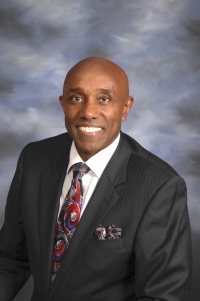
Roles and Affiliations Michael Reiss holds the position of Chair of Science Education at the IOE - Curriculum, Pedagogy & Assessment, part of University College London (UCL). He is also a Visiting Professor at the Royal Veterinary College and a member of the Nuffield Council on Bioethics. His roles include teaching on UCL's Education MA and Education (Science) MA programs, alongside extensive research and publication activities. Educational Background BA, MA (University of Cambridge, 1975-1978) PhD (University of Cambridge, 1978-1982) PGCE (University of Cambridge, 1982-1983) MBA (Open University, 1999-2002) Research Interests Reiss focuses on science education, bioethics, and sex education, with particular attention to curriculum design, ethical dilemmas in classrooms, and the intersection of faith and science. His work explores how schools can better integrate out-of-school science learning and address controversies such as creationism in curricula. Publications and Awards He has authored over 20 books, including The New Biology: A Battle between Mechanism and Organicism (2023) and Human Flourishing: Scientific Insight and Spiritual Wisdom in Uncertain Times (2021). His awards include fellowships from the Royal Society of Biology, Royal Society of Arts, and Academy of Social Sciences. Additional Contributions Served as Director of Education at the Royal Society (2007-2009) Advises on policy for science education and bioethics globally Explores ethical implications of space colonization, AI, and climate change Labs and Collaborations Collaborates with institutions like the Nuffield Council on Bioethics and the Royal Veterinary College on interdisciplinary projects. His research network spans bioethics, science education policy, and global health initiatives.