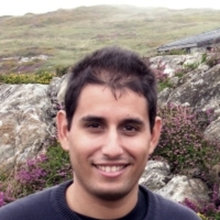
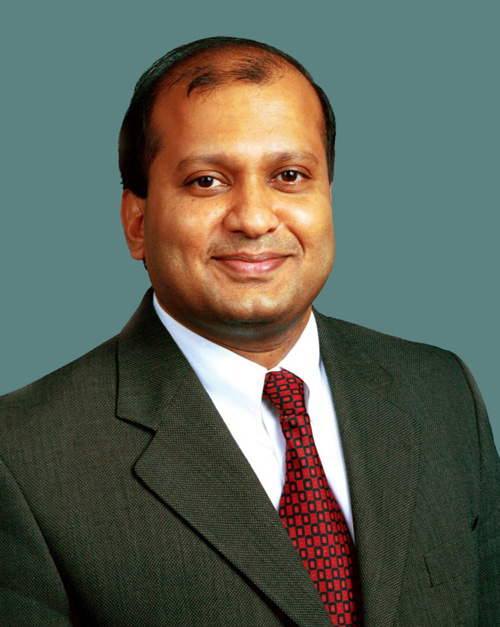
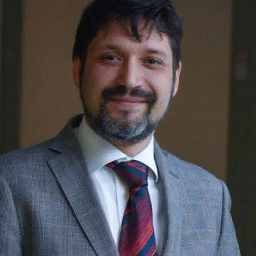
Lynn Wu is an Associate Professor at the Wharton School of the University of Pennsylvania, focusing on the intersection of artificial intelligence, analytics, and innovation. She teaches MBA, undergraduate, and doctoral courses on emerging technologies' transformative impact on business and society. Education: B.S. in Finance and Computer Science, MIT M.S. in Computer Science, MIT Ph.D. in Management Science, MIT Sloan Her research explores how AI and digital platforms reshape productivity, workforce dynamics, and innovation strategies, with applications in antitrust policy and startup ecosystems. Key trends in her publications include AI's role in post-IPO innovation, robotics' impact on managerial roles, and social media's ability to mitigate funding disparities. Scientific Awards: Kauffman Best Paper Award (2019) Sandy Slaughter Early Career Award (2019) AIS Early Career Award (2018) ISR Best Published Paper (2014) Best Paper Awards at ICIS (2009), HICSS (2013), etc. She has collaborated with IBM, Google, Meta, and advised the U.S. Department of Justice and World Bank, with her work cited by The New York Times , The Economist , and Harvard Business Review .
Matt Vidal is Reader in Sociology and Political Economy at Loughborough University London's Institute for International Management and Entrepreneurship. He holds a PhD in Sociology from the University of Wisconsin-Madison and has previously been a postdoctoral fellow at the UCLA Institute for Research on Labor and Employment, a research fellow at the Weizenbaum Institute for the Networked Society, and a visiting researcher at Paris Dauphine University and the Max Planck Institute for the Study of Societies. His research focuses on work, organizations, employment relations, labor markets, capitalist growth regimes, and capitalist crises. Vidal has developed an original theoretical framework called 'organizational political economy,' which integrates concepts from organization theory into a classical Marxist framework. His work emphasizes how contradictory developments in labor management lead to divided management approaches, where some managers adopt best practices while others settle for 'good enough' solutions, making capitalist management increasingly a source of organizational inefficiency. Vidal's research methodology combines rich empirical fieldwork (including interviews with 109 individuals across 31 firms and 169 hours of direct observation) with rigorous theoretical synthesis. His work examines not only manufacturing but also extends to education, healthcare, software development, and other sectors where managers face contradictory pressures between standardization versus discretion and deskilling versus upskilling. His 2022 book Management Divided: Contradictions of Labor Management published by Oxford University Press has received significant acclaim from prominent scholars across multiple institutions, establishing him as an important voice in critical management studies and labor sociology. The book presents a synthetic theory explaining why capitalist management often adopts relatively inefficient practices despite the existence of better alternatives. Vidal has also edited The Oxford Handbook of Karl Marx and Comparative Political Economy of Work , and has published over twenty articles or book chapters on work, human resource management, employment relations, labor markets, comparative political economy, and social theory. His contributions have been praised for their theoretical depth, empirical richness, and interdisciplinary approach that bridges sociology of work, organization theory, institutional theory, and Marxist analysis. His work has been recognized through extensive scholarly reviews and endorsements from leading academics including Paul Adler (University of Southern California), Ruth Milkman (CUNY Graduate Center), and Nathan Wilmers (MIT), who commend his ability to develop complex theoretical frameworks grounded in rich empirical evidence from American manufacturing.
Samuel Jean Bassetto is an Associate Professor in the Department of Mathematics and Industrial Engineering at Polytechnique Montréal. He serves as Director of the Continuous Improvement Laboratory (LABAC) and holds membership in multiple prestigious research groups including the Research Group on Globalisation and Management of Technology (GMT), Poly-Industries 4.0 Laboratory, Interuniversity Research Centre on Enterprise Networks, Logistics and Transportation (CIRRELT), and Institute for Data Valorization (IVADO). Dr. Bassetto's research spans multiple disciplines, focusing on continuous improvement through the integration of engineering, artificial intelligence, cognitive science, psychology, and design. His primary sphere of excellence is in New Frontiers in Information and Communication Technologies, with secondary expertise in Modeling and Artificial Intelligence and Human Health. He develops tools that place humans at the center of technology to enhance organizational performance while respecting human rhythms and cognitive limitations. His recent publication portfolio reveals a strong interdisciplinary approach, with research bridging industrial engineering, cognitive neuroscience, and AI ethics. His work addresses practical challenges in lean manufacturing assessment, racial bias in medical AI systems, cognitive data collection in natural environments, and condition monitoring for industrial machinery. The research consistently demonstrates a commitment to developing practical solutions that integrate human factors with technological innovation. NSERC Synergy Prize for Innovation recipient Principal investigator on multiple research grants from NSERC, FRQ, and MITACS Collaborations with over a dozen institutions across multiple countries Supervision of over 150 highly qualified personnel throughout his career Dr. Bassetto teaches specialized courses including CAP7011 (Creativity in Research), IND8444 (Continuous Improvement), IND8203 (Industrial Launch), and previously taught IND8178 (Production). His teaching philosophy emphasizes practical application, with courses featuring hands-on exercises, real-world scenarios, and gamification techniques to enhance learning. His supervision portfolio includes numerous Ph.D. and Master's students working on topics ranging from human-technology collaboration to reinforcement learning for production management. Through LABAC, Dr. Bassetto leads research initiatives focused on developing human-centered tools for continuous improvement in organizational settings. The laboratory conducts projects related to industrial IoT applications, cognitive aspects of process improvement, and the development of practical frameworks for organizations to enhance performance while maintaining respect for human rhythms and cognitive capabilities.
Jiju Antony is a Professor at Northumbria University , specializing in quality management, Lean Six Sigma, and operational excellence. His research bridges industrial engineering, sustainability, and service sector optimization through rigorous academic inquiry and cross-industry collaboration. University: Northumbria University Email: jiju.antony@northumbria.ac.uk His research interests include: Quality Management Systems Lean Six Sigma Implementation Continuous Improvement Methodologies Sustainable Operations Industry 4.0 Integration Digital Transformation in Business Processes Recent publications focus on leveraging Lean Six Sigma for UNSDG compliance , Quality 4.0 in digital industries, and ESG performance enhancement through Kaizen practices. His work spans manufacturing, logistics, and healthcare sectors, emphasizing pandemic operational resilience.
Shantanu Bhattacharya is a Lee Kong Chian Professor of Operations Management, Deputy Dean (Education), and Academic Director of the PhD in Business (General Management) at the Lee Kong Chian School of Business, Singapore Management University (SMU). He holds a PhD in Operations Management from The University of Texas at Austin (1998), an M.S. in Electrical and Computer Engineering from Louisiana State University (1993), and a B.Tech. in Electrical Engineering from IIT Bombay (1991). His research focuses on Operations Management , Supply Chain Strategy , Sustainable Operations , and New Product Development . He has pioneered studies on closed-loop supply chains, remanufacturing systems, and lifecycle pricing strategies. His work also explores digital business innovation, healthcare R&D partnerships, and energy sector operations. His recent work addresses strategic challenges in everything-as-a-service models (XaaS), battery-as-a-service strategies for automotive industries, and humanitarian logistics optimization. Earlier contributions include seminal studies on milestone-based R&D contracts, gain-share coordination mechanisms, and infrastructure investment in disaster relief. He has received awards including the 1996 Alden G. Clayton Dissertation Fellowship (top 5/57 entries) and multiple teaching nominations at INSEAD. Beyond academia, his research bridges operational efficiency with societal impact, particularly in sustainability and Asian market dynamics. He advises doctoral candidates such as SHEN Ya (CKGSB-SMU DBA). His career spans roles at INSEAD (2002-2014) and visiting positions at SMU-LKCSB (2014-2017), with leadership in curriculum design and PhD programs.
Daniele Loiacono is an Associate Professor at Politecnico di Milano's Department of Electronics, Information, and Bioengineering (DEIB), affiliated with the Artificial Intelligence and Robotics Lab (AIRLab). His research focuses on interdisciplinary applications of Artificial Intelligence, Machine Learning, and Deep Learning in medical imaging, radiation therapy, and procedural content generation for games. He leads projects in synthetic image generation for radiotherapy quality assurance, automated treatment planning, and bias analysis in medical AI systems. Key research areas include medical image synthesis using GANs, radiation therapy optimization, and algorithmic game design. His contributions span clinical applications such as total marrow irradiation (TMI) planning and lymph-node segmentation, alongside innovations in shader generation and interactive evolutionary tools for game development. Loiacono collaborates on multi-center studies to validate AI-driven workflows in healthcare and has pioneered methods combining lean Six Sigma with machine learning for treatment process improvement. His work bridges clinical medicine and computer science, addressing challenges in radiation oncology, anatomical imaging, and procedural content automation. The AIRLab serves as a hub for his research, integrating AI advancements into real-world medical and engineering solutions.
Henrique O'Neill is an Associate Professor (with Habilitation) in the Department of Marketing, Operations and General Management at ISCTE - University Institute of Lisbon, Portugal. He is an Integrated Researcher at ISTAR-Iscte - Research Center in Information Sciences, Technologies and Architecture. His research focuses on information systems adoption, organizational strategy, and process optimization in healthcare, finance, and public administration. Education: PhD in Business Organization and Management - University of Cranfield (1995) Master's in Electrical and Computer Engineering - Higher Technical Institute (1987) Bachelor's in Electrical Engineering - Higher Technical Institute (1983) Research Interests: His work spans business/IT strategy, systems modeling, process analysis, and technology implementation. Key domains include healthcare informatics, banking systems, and Industry 4.0 applications. He emphasizes practical solutions for organizational performance through technology integration. Publication Trends: Recent articles explore intelligent business systems, telemedicine, design science methodologies, and supply chain innovation. His work consistently bridges theoretical frameworks with sector-specific applications in healthcare, education, and logistics. Professional Engagement: Member: Portuguese Telemedicine Association, Order of Engineers Commissioner: INEM (National Institute of Medical Emergency) reform study Director: Center for IT Development (2010-2014) Advising & Projects: Supervises 7 graduate students (1 PhD, 6 Master's). Leads EU-funded projects including: Atlantic Crossing (2024-2025): US-Portugal academic collaboration in AI/cybersecurity AAL4ALL (2011-2015): Ambient Assisted Living ecosystem UNITE (2000-2002): Ubiquitous teamwork platforms
Ravi Aron is a Professor of Healthcare Strategy & Technology at the C. T. Bauer College of Business, University of Houston, and Research Director of the Healthcare Business Institute. He holds a joint appointment in the Department of Health Systems & Population Health Sciences at the Tilman J. Fertitta Family College of Medicine. He earned his Ph.D. in Management Information Systems from New York University's Stern School of Business. His research focuses on healthcare IT, emergent technologies in healthcare operations, valuation of healthcare startups, and AI applications in healthcare. He has published widely in top journals like Management Science and Information Systems Research, and his work bridges information systems, operations management, and technology strategy. Dr. Aron has extensive teaching experience at The Wharton School, Johns Hopkins Carey Business School, and NYU Stern, winning multiple teaching awards. He advises Fortune 500 firms, startups, and policymakers on technology strategy, digital transformation, and risk assessment. His executive education programs address AI, machine learning, and digital business models for global executives. Key awards include the Dean's Faculty Excellence Award (2016), multiple teaching accolades from Wharton and Johns Hopkins, and the Herman E. Kross Best Dissertation Award (1999). His current projects explore healthcare supply chains, predictive models using machine learning, and valuing technology-enabled startups. He regularly participates in global forums like the World Economic Forum, advising on healthcare innovation and technology policy.
Dr. Seyed Mohammad Sadegh Khaksar is a Senior Lecturer in Technology Management at La Trobe Business School, specializing in digital transformation, innovation, and healthcare technology. He holds a PhD in Management and teaches courses like Project Management. As Head of the Project Management major, he employs innovative pedagogies such as blended learning and peer review to enhance graduate employability. His research focuses on digital excellence strategies in firms, with notable projects including an AUD 96k IoMT platform for rural healthcare and AUD 40k studies on aged care supply chain resilience. He advises startups and organizations on digital strategies, particularly in healthcare, oil & gas, and professional services. Key research areas include social robots in education and care, IoT applications, and agile-lean methodologies. He has secured over $300k in grants and serves on editorial boards like Technological Forecasting and Social Change . Awards include the 2024 Student Experience Award and 2021 Early Career Researcher Award. Current PhD supervision spans digital responsibility in healthcare and banking sectors, and IoT-driven service innovations. He leads funded projects on smart cities and pandemic logistics, reflecting his interdisciplinary impact across technology, healthcare, and education.
Paul-Eric DOSSOU is a Researcher at ICAM’s Grand Paris Sud campus, specializing in Societal and Technological Transitions of Companies. His work focuses on Industry 5.0, decision-aided systems, logistics optimization, and digital twin applications. He leads projects like Plateforme Life, Urban Logistics, and Healthcare 4.0, aiming to enhance SME efficiency through sustainable digital transformation. Expertise includes AI-driven supply chain management, cybersecurity for legacy systems, and robotic solutions for archaeology. He collaborates with industry partners to bridge theoretical research and practical applications, emphasizing human-centric automation and environmental sustainability. Contact: paul-eric.dossou@icam.fr | Mobile: +33 6 17 81 33 43 Research contributions span over 30 peer-reviewed articles since 2003, addressing topics from energy audits in the nautical industry to multi-agent systems in supply chain optimization.
Pardis Pishdad is an Associate Professor and Graduate Program Director in the School of Building Construction at Georgia Institute of Technology’s College of Design. She directs the Smart Built Environment Eco-System (Smart Bees) Laboratory, focusing on integrating cyber-physical systems, digital twins, and innovative project delivery methods (e.g., IPD, Flash Tracking) for sustainable built environments. Her research bridges technology adoption, trust-building in construction contracts, and supply chain optimization. Education: PhD, Environmental Design and Planning (Virginia Tech) Master’s Degrees: Civil Engineering (Virginia Tech), Design Studies in Project Management (Harvard), Architecture (University of Tehran) Bachelor’s in Architectural Engineering (Azad University of Shiraz) Research Interests: Her work emphasizes sustainable construction practices using IoT, BIM, and blockchain. Key areas include lifecycle cost analysis, lean construction, and smart building technologies. She explores trust dynamics and collaboration in construction projects through game theory and process optimization. Recognition: 2018 ENR Top 20 Under 40 Professionals 2016 CII National Outstanding Researcher Award 2020-2022 Georgia Tech Provost Teaching Learning Fellow Advisory Roles: Academic Advisor for CII’s Supply Chain Management Community, Vice Chair of BuildingSMART’s BIM Forum 5D Taskforce. Formerly advised the Construction Management Association of America’s Board (2016–2018). Industry Collaboration: Partnerships with Turner Construction, GDOT, and VDOT. Research on Flash Tracking and blockchain has been integrated into industry practices. Labs & Teams: The Smart Bees Lab pioneers cyber-physical systems for smart buildings, exploring AI-driven solutions and sustainable construction frameworks.
Professor Suguru Torii is a distinguished faculty member at Waseda University's School of Sport Sciences, specializing in Sports Orthopedics and Sports Medicine. With a PhD in Sports Science, he serves as Director of the Waseda Institute of Human Growth and Development (2021-2026) and maintains affiliations with the Global Education Center. His research interests focus on the intricate relationship between growth, development, and sports injuries in children and adolescents. Torii has made significant contributions to understanding musculoskeletal development patterns , bone health in young athletes , and biomechanical factors contributing to sports injuries. His work bridges clinical practice with scientific research, emphasizing evidence-based approaches to injury prevention and treatment in pediatric populations. Analysis of his recent publications reveals a consistent focus on growth-related changes in musculoskeletal tissues , with particular attention to the timing of peak velocity in height, lean mass, and bone mass. His research employs advanced methodologies including DXA, ultrasound, and 3D motion analysis to investigate biomechanical and physiological adaptations during growth and sports participation. Japanese Orthopaedic Society of Sports Medicine Best Paper Award 2006 (awarded June 2007) 4th Japanese Society of Clinical Sports Medicine Award (awarded November 2005) Torii has led numerous significant research projects including The effectiveness of eating an appropriate breakfast in building the body of athletes (2019-2022) and Development of the appropriate evaluation of energy availability for Japanese female athletes (2016-2019). His work on energy availability, bone health in young athletes, and injury prevention has received funding from the Japan Society for the Promotion of Science. He serves on the professional boards of multiple societies including the Japanese Society of Sports Psychiatry, Running Society, Japan Growth Society, and Japanese Orthopaedic Society of Sports Medicine. Professor Torii directs the Waseda Institute of Human Growth and Development, where his team conducts cutting-edge research on growth patterns, musculoskeletal development, and sports-related injuries in children and adolescents. The institute collaborates with clinical and research partners to translate scientific findings into practical applications for coaches, athletic trainers, and healthcare providers working with young athletes.
Stephan Golla is a full-time Professor of Business & Management at the Fulda University of Applied Sciences. His academic focus spans Corporate Management and Entrepreneurship, with an emphasis on venture capital dynamics, entrepreneurial orientation, and lean startup methodologies. He contributes extensively to research in technology commercialization and social identity in entrepreneurship. Ph.D. in Business & Management (2009): Empirical thesis on Corporate Venture Capital M.Sc. in Business & Management (2000): Majors in Banking, Mechanical Engineering, and Innovation Management Golla's research explores intersections between social identity and entrepreneurial performance, startup finance, and innovation ecosystems. His recent publications analyze how founders' identities influence business outcomes and the evolution of entrepreneurial finance frameworks. His awards include the 2018 Sauer Foundation Best Paper Award in Social Entrepreneurship and the 2010 Vice Chancellor’s Award for Excellence at the University of Western Sydney. He has taught courses in Start-up Management, Innovation & Technology Management, and International Management. 2018: Best Paper Award (Social Entrepreneurship) 2010: Vice Chancellor’s Award for Excellence
Alnoor Ebrahim is the Thomas Schmidheiny Professor of International Business at The Fletcher School and Tisch College of Civic Life, Tufts University. He holds a PhD in Environmental Planning & Management from Stanford University and is a leading scholar in social impact measurement, nonprofit governance, and leadership for systemic change. PhD, Environmental Planning & Management, Stanford University (1999) MS, Civil/Environmental Engineering, Stanford University (1994) BSc, Civil/Environmental Engineering, Massachusetts Institute of Technology (1991) His research focuses on accountability mechanisms within nonprofits, strategic leadership for social change, and the governance of hybrid organizations . He explores how businesses, NGOs, and public agencies can balance competing stakeholder demands while addressing system-level challenges like global poverty. Professor Ebrahim’s publications highlight lean data methodologies , NGO governance , and social performance frameworks . His work spans books, journal articles, and policy reports with a consistent emphasis on performance metrics and organizational accountability across sectors. Scientific Awards & Recognitions Excellence in Sustainable Finance Education (2022) Terry McAdam Book Award (2020) James L. Paddock Teaching Award (2018) Pantheon Recognition (2017) Outstanding Book Award (2004) Carlo Masini Award for Innovative Scholarship (runner-up, 2010) He has served on advisory boards for the Stanford Social Innovation Review , the World Bank’s GPSA , and the G7 Social Impact Investment Taskforce . His teaching includes executive programs at Fletcher, Harvard, and Georgetown, with prior roles at Harvard Business School and Virginia Tech.
Guido Perboli is a Full Professor in the Department of Management and Production Engineering (DIGEP) at the Polytechnic University of Turin, where he also serves as Logistics Coordinator and Project Coordinator for activities supporting relationships with government bodies. He is a member of the Interdepartmental Center CARS@PoliTO (Center for Automotive Research and Sustainable Mobility) and serves as Director of the ICT for City Logistics and Enterprises (ICElab@Polito) research center, which he founded in 2016. His research interests span a broad range of topics including Operations Research, Logistics, Last-mile Delivery, Sustainable Logistics, Combinatorial Optimization, Stochastic Programming, Business Development, and Lean Business methodologies. His work particularly focuses on City Logistics, Green Logistics, and the application of emerging technologies like Blockchain and AI in supply chain management. He has developed GUEST, a Lean Business methodology for innovation processes from early idea definition to implementation. Professor Perboli's recent publications demonstrate a strong focus on urban logistics, last-mile delivery optimization, blockchain applications in supply chains, and the integration of AI techniques in transportation systems. His work shows an increasing trend toward interdisciplinary research that combines optimization methods with emerging technologies to address sustainable urban mobility challenges. Professional Recognition: CASE Best Paper award from IEEE Conference on Automation Science and Engineering (2011) Effective member of INFORMS (2019-present) Effective member of EURO (1995-present) Effective member of AIRO (1995-present) Associate Editor for Journal of Applied Research and Technology (2020-present) Associate Editor for Sustainability (2018-present) Professor Perboli actively advises PhD students and has supervised numerous research projects, including EU-funded initiatives like SINFONICA, HESTER, and 5G-LOGINNOV. He serves as Scientific Director for multiple commercial research projects focused on blockchain, IoT, and AI applications in logistics. Beyond academia, he is Chief Scientific Officer of Arisk S.p.A., a fintech company specializing in business crisis prediction using AI and machine learning. His research group, ICElab@Polito, focuses on two main areas supporting urban growth: logistics and enterprises. The center collaborates with numerous companies including Amazon, DHL, and FCA, addressing real-world challenges in urban logistics and supply chain management through innovative research approaches.