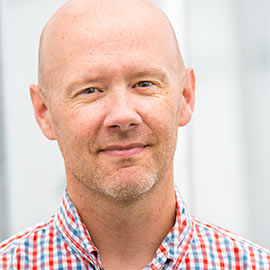
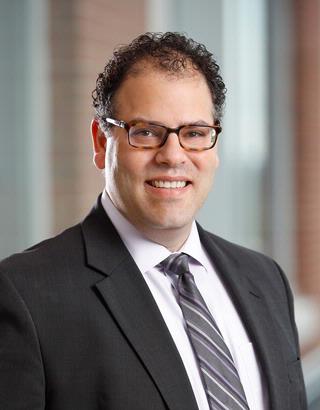
Matthew Smith is Professor and Chair of the Department of Biology at Wilfrid Laurier University, currently on sabbatical until December 2024. His research focuses on molecular mechanisms in plant cell biology with expertise in protein trafficking and membrane dynamics. Research interests include: Chloroplast biogenesis and protein import pathways Structural-functional relationships in membrane proteins Mechanisms of protein-protein interactions in cellular transport Mitochondrial uncoupling protein functions Recent publications demonstrate a strong focus on membrane protein dynamics, with consistent themes in proton transport mechanisms, chloroplast targeting systems, and computational modeling of protein structures. Article keywords predominantly fall within biochemistry, structural biology, and plant molecular biology domains.
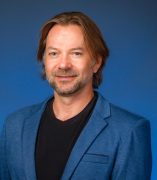
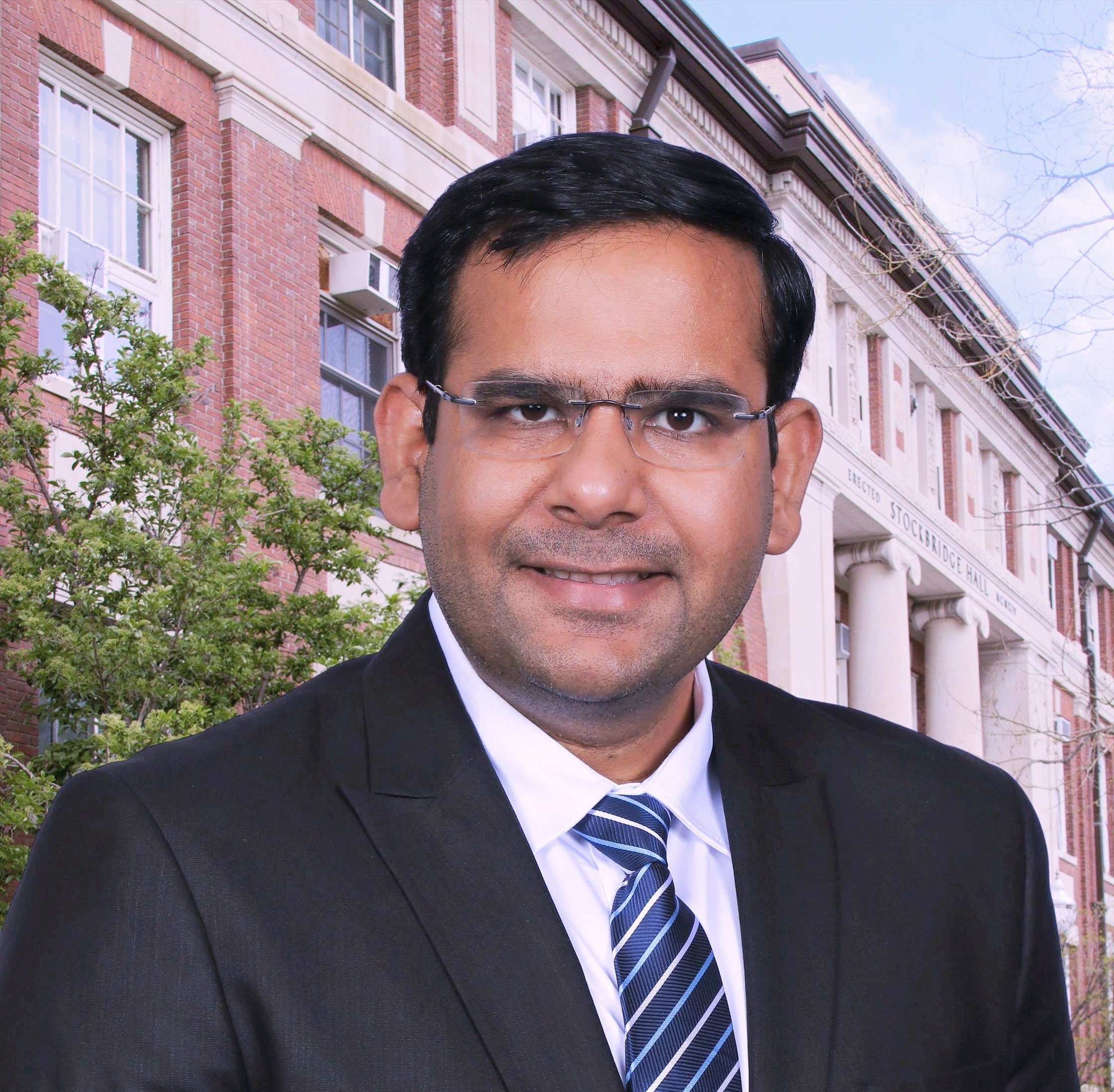
Igor Paprotny is an Associate Professor at the Department of Electrical and Computer Engineering, University of Illinois at Chicago. As Faculty Research Director of the Nanotechnology Core Facility, he leads research in MEMS/NEMS, microscale robotics, and environmental sensing. PhD in Engineering Sciences (MEMS) from Dartmouth College, 2008 His research focuses on applying micro/nano-systems to airborne pathogen detection, microscale flight dynamics, photonic sensing, and physical computing paradigms. He has pioneered MEMS-based sensors for methane leak detection, coal mine safety, and real-time particulate monitoring. Recent publications highlight advancements in air-microfluidic circuits , carbon nanotube functionalization , and microscale robotics , reflecting interdisciplinary work at the intersection of Environmental Engineering , Biomedical Monitoring , and Wearable Sensor Technology . He directs the Micromechatronic Systems Laboratory (MSL) and the Air Microfluidic and Bio-surveillance Group (AMFBG) , with over 15 years of experience in MEMS design, energy harvesting, and distributed sensor networks.
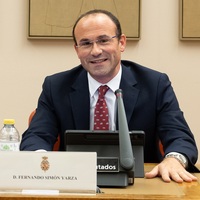
Fernando Simón Yarza es Catedrático de Derecho Constitucional en la Universidad de Navarra, vinculado a la Facultad de Derecho y al grupo de investigación ECCLESIA IUSTA . Doctorado en 2010 por la Universidad de Navarra con la tesis Medio ambiente y derechos fundamentales , galardonada con el Premio Francisco Tomás y Valiente 2011, su trabajo académico abarca jurisprudencia comparada, filosofía del derecho y problemas constitucionales contemporáneos. Licenciado en Derecho (2005) con Premio Extraordinario y Premio Aranzadi Director de investigaciones sobre derecho público y filosofía constitucional En jurisprudencia comparada , ha analizado el Tribunal Constitucional español junto a sistemas alemanes e italianos, explorando temas como la suspensión de leyes, igualdad constitucional y derechos reproductivos. Su obra La amnistía del procés ante la Comisión de Venecia (2025) examina críticamente el dictamen sobre la amnistía catalana. Las publicaciones de 2024 sobre polarización política en tribunales y el análisis de la voluntad general en Rousseau reflejan su interés por la relación entre derecho y filosofía política. 15 publicaciones recientes sobre derecho constitucional, derechos humanos y filosofía jurídica Traducciones y análisis de obras filosóficas de Robert Spaemann y Rousseau Sus premios académicos incluyen: Premio Francisco Tomás y Valiente (2011) Premio Extraordinario de Licenciatura Premio Aranzadi al mejor expediente
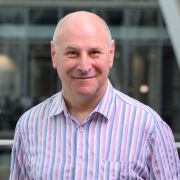
Maire O'Neill is a Professor at the School of Electronics, Electrical Engineering and Computer Science at Queen's University Belfast, affiliated with the Secure Digital Systems (SDS) group and the Institute of Electronics, Communications & Information Technology (ECIT). Her research focuses on hardware security, cryptography, and secure embedded systems. She has held significant leadership roles and pioneered work in FPGA security, approximate computing, and post-quantum cryptography. Dr. O'Neill's academic journey includes over 20 years of contributions to secure digital systems, with a particular emphasis on cryptographic hardware, side-channel analysis, and IoT security. She has led major research projects such as the EU-funded 'TruDetect' initiative for hardware Trojan detection and the 'Secure IoT Processor Platform' project. Her work bridges theoretical research with practical applications, emphasizing real-world security challenges in electronics and computing. Education: Background in electrical engineering and computer science (details not explicitly stated in the text) Research Interests: Her work spans hardware security primitives, FPGA-based cryptographic solutions, and energy-efficient computing. She explores vulnerabilities like Rowhammer attacks and side-channel leaks while developing defenses through approximate computing and machine learning techniques. Her research addresses emerging threats in IoT, 5G networks, and post-quantum cryptography. Publications Trends: Recent work emphasizes machine learning applications in security (e.g., ML-KEM accelerator designs), hardware Trojan detection, and energy-efficient approximate computing. She frequently publishes in top-tier venues like IEEE Transactions and ACM conferences, with a focus on practical implementations and FPGA demonstrators. Awards: 2007: BFIIN ITEC Platinum Award, British Female Inventor of the Year, European Union Women Innovators 2015: Fellow of the Irish Academy of Engineering 2015: INVENT Award for collaborative innovation Advising & Grants: Supervised 8 PhD students (explicitly stated). Active in securing research grants (18 projects listed), including EU and industry collaborations. Engages in academic service roles like IEEE Distinguished Lecturer and international conference organization. Labs/Teams: Leads the Secure Digital Systems (SDS) group, collaborating with global partners on hardware security and IoT initiatives. Maintains strong ties with industry through projects like NIO New Deal Cyber Bid and TruDetect.
Eric Duviella is a Professor at IMT Nord Europe, specifically within the Department of Automatic Control and Computer Sciences. He has been a permanent faculty member since 2007 and was promoted to full Professor in 2015. His academic affiliations include strong ties with the University of Lille, Universitat Politècnica de Catalunya, and the University of Seville through collaborative research and joint Ph.D. supervision. Education: Diplôme d'Ingénieur, Ecole Nationale d'Ingénieurs de Tarbes (ENIT), 2001 M.S., Institut National Polytechnique de Toulouse (INPT), 2001 Ph.D. in Industrial Systems, Institut National Polytechnique de Toulouse, 2005 HDR (Habilitation à Diriger des Recherches), University of Lille 1, 2014 His research interests center on Reactive Control Strategies , Supervision and Prognosis , and the Modeling of Large-Scale and Environmental Systems , particularly Hydrographical and Water Systems . His work aims at predictive maintenance, adaptive management under climate change, and improving navigation and water quality through advanced control techniques. The 15 most recent publications reflect a strong trend toward Model Predictive Control (MPC) , distributed and decentralized control architectures , leak detection in water networks , and resilience of inland waterways under climate stress . Keywords across these works include control engineering, water systems, fault diagnosis, and data-driven modeling, indicating a multidisciplinary approach combining automation, environmental science, and computational intelligence. Scientific Awards: Best paper award at CODIT 2017 Eric Duviella has actively supervised numerous Ph.D. and Master’s students from institutions including IMT Lille Douai, Universitat Politècnica de Catalunya, and the University of Seville. He has led significant research grants such as GEPET-Eau, CHEEF2, and CASTR-Eau, focusing on sustainable water management, hydropower optimization, and robotic monitoring. His work often involves partnerships with agencies like VNF, EDF, and local water authorities. He is involved in key research labs and teams including the Laboratoire d'Automatique, Génie Informatique et Signal (LAGIS), and collaborates internationally through mobility programs with UPC and the University of Seville. His leadership in organizing special sessions at major conferences (e.g., IFAC, HIC) underscores his role in shaping discourse in water system control and supervision.
Salvo Rossi is a Full Professor of Statistical Machine Learning for Signal Processing at the Department of Electronic Systems, Faculty of Information Technology and Electrical Engineering, Norwegian University of Science and Technology (NTNU). He holds leadership roles as Deputy Director for Research and Deputy Manager of the Centre for Green Shift in the Built Environment. Additionally, he serves as a part-time Senior Research Scientist at SINTEF Energy Research. His work bridges academia and industry, with significant contributions to signal processing, machine learning, and IoT systems. Research Interests: Statistical Machine Learning Data Fusion in Wireless Sensor Networks Digital Twins and Industrial IoT Anomaly Detection and Fault Diagnosis Federated and Distributed Learning Graph Signal Processing His recent publications reflect a strong trend toward intelligent, distributed systems for industrial monitoring, particularly in energy and safety-critical environments. The integration of machine learning with signal processing for decision fusion in sensor networks is a central theme. Scientific Awards and Recognition: Exemplary Senior Editor, IEEE Communications Letters (2018) Department Ambassador, NTNU (2016) IEEE Senior Member (since 2011) Editorial and Professional Service: Senior Area Editor, IEEE Transactions on Signal and Information Processing over Networks (since 2025) Topical Editor, IEEE Sensors Journal (since 2022) Area Editor, IEEE Open Journal of the Communications Society (2019–2023) Executive Editor, IEEE Communications Letters (2019–2021) General Chair, IEEE Sensor Array and Multichannel Signal Processing Workshop (SAM), Trondheim, 2022 He has advised numerous PhD and master’s students (not explicitly listed), led major research projects in IoT and green energy, and contributed to national and international research initiatives. His lab, SPIN (Signal Processing Group), focuses on intelligent signal processing for real-world applications in smart environments and Industry 4.0.
Professor Stephen Beck is a faculty member at the University of Sheffield, affiliated with the School of Mechanical, Aerospace and Civil Engineering. He holds a PhD in Mechanical Engineering from the University of Sheffield (1992) and has been a key figure in advancing engineering education and fluid mechanics research. Director of the Centre for Engineering Education (CEE) Instrumental in designing the Diamond building First Faculty Director of Learning and Teaching (2008-2014) His research spans experimental fluid mechanics, leak detection in pipelines, energy systems in buildings, and educational pedagogy. Recent work focuses on optimizing laboratory teaching methods and remote practicals during pandemics. Professor Beck’s publications analyze leak detection systems (e.g., cepstrum analysis, vibro-acoustic measurements) and energy efficiency strategies (e.g., heat pump modeling, building energy use). His 15 most recent articles reflect a blend of fluid dynamics, sustainability, and pedagogical innovation. CATE award for collaboration (2021) Published extensively on pressure wave analysis and educational frameworks He has supervised 28 PhD and MPhil students, including Butterfield (leak signal analysis), AlHarbi (pipeline leak detection), and Castleton (building energy systems). As Faculty Director of Learning and Teaching, he oversaw curriculum reforms like activity weeks and reduced winter exams. The Diamond building, under his leadership, centralizes multidisciplinary laboratory teaching with 50 staff, redefining practical engineering education. His work combines experimental, CFD, and analytical techniques to improve teaching scalability and energy efficiency.
Jacob Moalem, M.D. is a Professor in the Department of Surgery and Department of Medicine (Endocrine/Metabolism) at the University of Rochester School of Medicine and Dentistry. As an endocrine surgeon at UR Medicine, he performs approximately 350 thyroid, parathyroid, and adrenal operations annually, specializing in both benign and malignant conditions. His practice emphasizes multidisciplinary, team-based care involving endocrinologists, radiologists, pathologists, and primary care physicians. Dr. Moalem's research focuses on endocrine surgical outcomes, thyroid cancer management, and surgical education. His work includes risk prediction models for postoperative complications, novel imaging techniques for thyroid nodules, and mentorship frameworks for surgical trainees. He has pioneered approaches to hematoma prevention after thyroidectomy and explored diagnostic challenges in parathyroid disorders. His recent publications reveal strong trends in translational endocrine surgery research, with significant emphasis on quality-of-life outcomes for thyroid cancer survivors, surgical risk stratification, and innovative educational methodologies. The work consistently bridges clinical practice with molecular mechanisms and educational innovation. Award highlights include multiple University of Rochester iCare Bronze Star awards (2013, 2014, 2017), the AMA Foundation Leadership Award (2012), and the Pacific Coast Surgical Association Resident/Fellow Paper of the Year (2008). Additional recognition spans surgical education fellowships, patient-centered care awards, and the Elmer Louis Award for community hemorrhage response initiatives. Dr. Moalem has secured substantial research funding including Friends of Strong grants ($45,000), Faculty Development Grants ($4,000), and Association for Surgical Education fellowships. His leadership extends to surgical education curriculum development and national committees addressing work-hour restrictions. He maintains active clinical teaching roles and has authored numerous book chapters on endocrine surgical techniques.
Manish Motwani is an Assistant Professor at the School of Electrical Engineering and Computer Science (EECS) at Oregon State University. His research focuses on improving software quality through automation, including techniques for analyzing code repositories, automated testing, program repair, and natural-language-driven validation. He has active collaborations with Georgia Tech and has developed tools like Swami, RAFL, and SOSRepair to address software maintenance challenges. Education: Ph.D. in Computer Science from University of Massachusetts Amherst Prior research at Tata Research Development and Design Centre (TRDDC) in Pune, India Research Interests: Automated Program Repair to address patch overfitting issues Testing and Debugging of High-Performance Computing (HPC) applications Automated REST API specification generation via static analysis Integrating natural-language artifacts (bug reports, requirements) into repair workflows Ontological modeling for regulatory and product requirements Service and Contributions: PC member for IEEE/ACM ICPC (2025), ACM ISSTA (2025), and multiple tracks at ICSE, FSE, ESEM Reviewer for IEEE Transactions on Software Engineering (TSE) Developed publicly available benchmarks and frameworks (JaRFLy, Swami, SOSRepair) Patents: US Patent 10146762B2 (Dec 2018): Automated Business Rule Classification US Patent 9972016B2 (May 2018): Automated Regulatory Interpretation
Anton Allen Abbotsford Autzen is an Associate Professor and Group Leader in the Department of Health Technology at the Technical University of Denmark (DTU). His research focuses on drug delivery systems, polymer nanotechnology, and biopharmaceuticals, with applications in nanomedicine and cancer therapy. He leads projects involving polymer-drug conjugates, lipid nanodiscs, and advanced biomaterials for medical applications. Education: Not explicitly listed, inferred via professional roles. His work contributes to UN Sustainable Development Goals related to health and innovation. Key research themes include designing ultra-stable biopharmaceuticals, developing tissue-adhesive materials, and creating immunogenic polymer systems for targeted cancer treatment. Recent publications highlight advancements in amphiphilic excipients, copolymer-drug conjugates, and lipid nanodisc technologies. Media contributions address academic freedom and science policy in Denmark. Grants/Projects: Supervises 5 PhD projects including 'Tissue Adhesive Materials for Biosurgical Leak Management' and 'Immunogenic Polymer Lipid Nanodiscs.' Autzen holds patents on copolymer-drug conjugates and lipid nanodisc formulations. His lab (Nanosmithery) focuses on translational nanotechnology for healthcare solutions.
Charles Berde is a Professor in the Department of Anesthesiology, Critical Care and Pain Medicine at Harvard Medical School, affiliated with Boston Children's Hospital. He leads the Berde Lab, which focuses on pediatric pain and anesthesia research. His clinical and academic work bridges translational science and patient care, with a strong emphasis on neuropathic pain, neurodevelopmental outcomes after anesthesia, and novel analgesic therapies. Stanford University School of Medicine - MD, PhD (1980) Boston Children's Hospital - Pediatrics Internship (1981), Residency (1983) Massachusetts General Hospital - Anesthesia Residency (1985) Boston Children's Hospital - Pediatric Anesthesia Fellowship (1985) Dr. Berde’s research interests include pediatric anesthesiology, neuropathic pain mechanisms, clinical pharmacology of analgesics, quantitative sensory testing, and functional brain imaging in children with chronic pain. His lab investigates how general anesthesia affects infant brain development using EEG and NIRS, and conducts clinical trials on drugs like gabapentin and oxcarbazepine for chronic neuropathic pain. He also explores prolonged-duration local anesthetics, including neosaxitoxin-based formulations. His recent publications reflect a strong trend in pediatric neurodevelopment under anesthesia, pain syndromes like erythromelalgia and CRPS, and innovative trial designs for analgesics in infants and children. His work integrates epidemiology, biostatistics, and advanced signal processing to analyze complex clinical data. 2003 Scientific Achievement Award, Reflex Sympathetic Dystrophy Syndrome Association Time Magazine 'Hero in Medicine' (1997) Dr. Berde has led numerous clinical studies and has been instrumental in shaping pediatric pain management guidelines. His lab collaborates with institutions like MGH and MIT, leveraging expertise in optics, neuroscience, and biostatistics. He has mentored many researchers and contributed to the development of pediatric pain treatment services. The Berde Lab continues to advance understanding of pain mechanisms and improve clinical outcomes through rigorous translational research. The lab operates within Boston Children's Hospital and maintains active collaborations with the Optics Division at MGH and the Neuroscience Statistics Lab at MIT, supporting interdisciplinary research in brain monitoring and signal analysis.
Luis Romero Ben is a research-focused academic affiliated with the Institut de Robòtica i Informàtica Industrial (IRI), a joint research center of the Universitat Politècnica de Catalunya (UPC) and the Spanish National Research Council (CSIC). He is actively involved in advanced research in automatic control applied to water distribution and urban drainage systems, with a focus on real-time monitoring, fault detection, and data-driven modeling. His primary affiliation is with the Department of Automatic Control within the College of Engineering at UPC. His research interests lie at the intersection of control engineering and environmental systems, particularly in leak detection and localization , sensor placement optimization , data-driven state estimation , and smart water network management . He employs advanced methodologies such as Unscented Kalman Filters, dictionary learning, graph-based interpolation, and genetic algorithms to enhance the resilience and efficiency of urban water infrastructure. The trend in his recent publications shows a strong emphasis on hybrid approaches combining physical models with machine learning for fault diagnosis in water networks. His work contributes significantly to both theoretical advancements and practical implementations in the field of water system supervision. Scientific Awards: No awards mentioned in the provided text. Luis Romero Ben is actively involved in major European and CSIC-funded research projects such as RUBIES (Real-time pollution-based control of urban drainage systems) and FUSAGUA (Sensor fusion for real-time leak monitoring in water distribution networks). These projects highlight his role in cutting-edge research with environmental and societal impact. While no formal advisees are listed, he collaborates closely with leading researchers including V. Puig, G. Cembrano, and J. Blesa. Labs and Teams: He is a key contributor at the Institut de Robòtica i Informàtica Industrial (IRI) , where he works within a multidisciplinary team focused on control systems for critical infrastructure. The IRI-UPC/CSIC team is recognized for its expertise in fault detection, supervision, and safety of technical processes, particularly in water and energy systems.
Mohamed A Thaha is a Clinical Senior Lecturer in Colorectal Surgery at Queen Mary University of London's Faculty of Medicine and Dentistry, Blizard Institute. He also holds an Honorary Consultant appointment in Colorectal Surgery at Barts Health Trust. His clinical practice focuses predominantly on Colorectal Oncological surgery, with a special interest in surgical treatment for recurrent rectal/pelvic cancer incorporating total anorectal reconstruction. Dr. Thaha's educational background includes: Graduated from University of Kerala, India in 1994 Trained as a Colorectal and Laparoscopic surgeon at Ninewells Hospital & Medical School, University of Dundee, Scotland Awarded PhD by University of Dundee in 2010 following completion of a substantial body of clinical research Dr. Thaha's primary research interests focus on translational approaches to improve colorectal cancer outcomes. His work spans several key areas including the identification of novel biomarkers to stratify prognosis and predict treatment response for primary and recurrent rectal cancer, biomarker development for predicting progression of pre-malignant lesions to anal cancer, prevention of parastomal hernia through both clinical trials and molecular marker identification, and refinement of surgical techniques for ultra-low rectal resection. His recent publications demonstrate an expanding research portfolio that now includes sustainable surgical practices, advanced medical device development for capsule endoscopy, and large-scale international surgical outcome studies. Dr. Thaha has received research support including the prestigious NES/CSO Scotland research training fellowship. He has been actively involved in developing a portfolio of translational research in partnership with Professor Andrew Silver's Colorectal Cancer Genetics Group at the Blizard Institute, with a focus on potential biomarkers in primary and recurrent colorectal cancers. Dr. Thaha contributes significantly to surgical education through postgraduate surgical courses, serving as Module Leader for Surgical skills in the ESSQ program (RCS Edinburgh & University of Edinburgh), and teaching undergraduate medical students at Queen Mary University of London.
Maria Claudia Diaz Martinez is a part-time Associate Professor at KU Leuven's Department of Electrical Engineering (ESAT) , affiliated with the Computer Security and Industrial Cryptography (COSIC) research group and the DigiSoc – KU Leuven Institute for Digital Society . She also serves as Chief Scientist at Nym Technologies SA since 2019. Education: Master's in Telecommunications Engineering (University of Vigo, 2000), Ph.D. in Engineering (KU Leuven, 2005) Honors: FWO Postdoctoral Fellowship (2009-2012) Her research focuses on privacy technologies and anonymity systems , particularly metadata protection against surveillance, traffic analysis, tracking, and profiling. Current work includes Mixnet design , encrypted DNS analysis , and privacy-preserving federated learning . Recent publications address Mixnet latency optimization , traffic correlation attacks , and decentralized localization . Over 150 peer-reviewed papers span topics like browser fingerprinting, Tor onion services analysis, and k-anonymity frameworks. Key awards include the Andreas Pfitzmann Best Student Paper Award (2024) and the CNIL-INRIA Privacy Protection Award (2018) . She served as Program Chair for FC 2021 and PETS 2017 , and maintains editorial/advisory roles in major privacy conferences. She leads the DigiSoc research group and collaborates with Nym Technologies SA , while advising against new student supervision due to reduced academic duties.
Alcherio Martinoli is a Full Professor at the School of Architecture, Civil and Environmental Engineering (ENAC) at École Polytechnique Fédérale de Lausanne (EPFL), leading the Distributed Intelligent Systems and Algorithms Laboratory (DISAL). He holds additional roles as Director of the ENAC School’s SSIE-GE department and is involved in administrative committees such as the ENAC School Direction and CDS. His expertise spans autonomous robotics, distributed systems, and environmental monitoring. Education: He earned his Diploma in Electrical Engineering from ETH Zurich and a Ph.D. in Computer Science from EPFL. His research focuses on designing, controlling, and optimizing distributed systems, including multi-robot teams and sensor networks, with applications in environmental and civil engineering. Research Interests: His work integrates theoretical models with physical experiments, emphasizing mixed societies of natural and artificial systems. Key areas include swarm robotics, intelligent vehicles, and fluid-mediated self-assembly. He emphasizes closing the theory-experiment loop through computational methods. Publications: His recent work addresses multi-robot system architectures, gas sensing with nano aerial vehicles, and distributed control algorithms. These contributions advance environmental monitoring, autonomous navigation, and swarm coordination. Awards: Recognitions include the Best Teacher Award (2016), Best Poster Award (2016), and SNSF Professorships (2003, 2007). Grants & Advising: Supervises numerous PhD students and has advised over 20 graduates. His grants include projects on distributed robotics and environmental systems, though specific grant details are not explicitly listed in the provided texts. Labs & Teams: Directs the DISAL lab, fostering interdisciplinary research in intelligent systems and their applications. Collaborates on projects involving multi-robot coordination and autonomous systems.