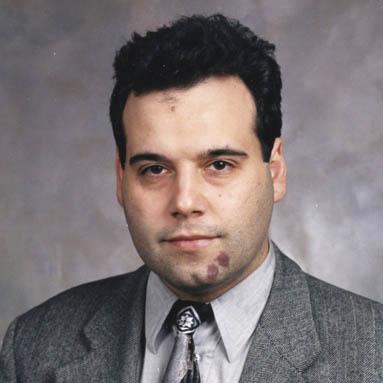
Bruno Nachtergaele is a Professor of Mathematical Physics at the University of California, Davis , affiliated with the Department of Mathematics. His research focuses on Mathematical Physics , with particular emphasis on equilibrium and non-equilibrium statistical mechanics, quantum spin systems, and quantum information theory. Applications include condensed matter physics and materials science. His work explores foundational aspects of quantum many-body systems, including Lieb-Robinson bounds, topological order, and fractional quantum Hall effects. He has contributed to understanding gapped phases, symmetry breaking, and dynamics in quantum spin chains. Notably, he received the LeRoy Apker Award for his research contributions. His publications highlight advancements in quasi-locality bounds for lattice systems, spectral gaps in fractional quantum Hall systems, and the study of anyonic excitations. He has also co-edited special issues in journals like Journal of Mathematical Physics , reflecting his leadership in the field. Dr. Nachtergaele’s research bridges abstract mathematical techniques with real-world condensed matter phenomena, contributing to both theoretical frameworks and applied insights in quantum technologies.
Shawn Xingshan Cui is Associate Professor in the Departments of Mathematics and Physics & Astronomy at Purdue University. His research bridges low-dimensional topology, quantum field theory, and quantum information science, with focus on topological quantum computation and tensor category applications. His work develops mathematical frameworks for topological quantum computing using knot theory, Hopf algebras, and modular tensor categories. Recent publications explore quantum error correction in topological codes (Kitaev model, toric code), non-semisimple invariants of 3-/4-manifolds, and quantum circuit implementations. He leads research on constructing fault-tolerant quantum gates using topological phases and anyonic braiding. Current projects investigate Floquet codes, fracton models, and the application of neural networks to quantum state representation. His SIAM News article 'Fighting Errors with Space' highlights spatial approaches to quantum error correction. He supervises graduate students working on quantum algorithms, topological phases of matter, and mathematical foundations of quantum computation. Teaching includes MA 261: Multivariate Calculus and specialized topics in topological quantum computation.
Mohammad Hajiabadi is an Assistant Professor at the University of Waterloo's Department of Computer Science. His research focuses on theoretical cryptography, including cryptographic protocols, functional encryption, and secure communication. He holds a PhD in Computer Science from the University of Victoria (2016), a Master of Science from the same institution (2011), and a Bachelor of Science from Sharif University of Technology (2009). His research explores foundational aspects of cryptography, such as cryptographic assumptions, algorithmic lower bounds, and privacy-preserving techniques. Notable areas include registration-based encryption, secret sharing schemes, and the black-box complexity of cryptographic primitives. His work often intersects with theoretical computer science, addressing challenges in secure computation and efficient protocol design. Dr. Hajiabadi's publications span topics like trapdoor functions, oblivious transfer, and private set intersection, demonstrating a commitment to advancing both the theory and practical applications of cryptography. He has secured collaborative research funding, including a National Science Foundation grant for expanding oblivious transfer tools. His contributions to academic grants and collaborative projects highlight his role in shaping modern cryptographic frameworks.
Prof. Dr. Jens Eisert is a Professor at the Free University of Berlin, where he leads the Quantum Many-Body Theory, Quantum Information Theory, and Quantum Optics research group (Eisert AG) within the Institute of Theoretical Physics at the Dahlem Center for Complex Quantum Systems. His office is located at Arnimallee 14, Room 1.3.06 in Berlin-Dahlem. His research focuses on the intersection of quantum information theory and condensed matter physics, specifically exploring what information processing tasks are possible using individual quantum systems as information carriers. His group develops mathematical-theoretical foundations of quantum information, particularly in entanglement theory and tomography, while also investigating quantum optical implementations using light modes or cold atoms in optical lattices. A major emphasis of their work is on quantum many-body systems, including static properties, efficient numerical simulation methods like tensor networks, and non-equilibrium quantum dynamics. Recent publications highlight significant contributions in thermalization of quantum systems (Communications Physics 2025), quantum thermodynamics (Nature Physics 2025), and quantum error correction (PRX Quantum 2025). The group's work is characterized by combining the rigor of mathematical physics with physically motivated applicability, frequently leading to direct collaborations with experimental groups. Quantum Information Theory Quantum Many-Body Theory Quantum Optics Entanglement Theory Tensor Networks Quantum Error Correction Prof. Eisert maintains active supervision of numerous PhD students and postdoctoral researchers, with research positions regularly available in areas including quantum error correction, quantum information theory, tensor networks, and quantum simulation. His group has published extensively in top journals including Nature Physics, PRX Quantum, and Physical Review series.
Benne de Weger is an Associate Professor in the Department of Coding Theory and Cryptology at Eindhoven University of Technology (TU/e). His research focuses on cryptology, information security, computational number theory, and lattice-based cryptography. He holds MSc and PhD degrees in Mathematics from Leiden University. Prior to his academic position at TU/e, he worked in industry roles as a cryptographic software engineer and information security consultant. Research interests include RSA cryptanalysis, hash collision applications, Diophantine equations, and the abc-conjecture. His work bridges theoretical mathematics with applied cryptography, particularly in lattice-based systems and security protocol analysis. He has contributed to over 98 research outputs, including peer-reviewed articles and conference proceedings. Notable recent work involves lattice vector analysis and hybrid algorithms for cryptographic problem-solving. Benne has supervised 45 academic works but no specific student names are listed in the provided text. No scientific awards are explicitly mentioned. His research collaborations span global institutions, focusing on cryptographic systems and number theory applications.
Prof. Dr. Georg Hein is a Professor in the Department of Mathematics at the University of Duisburg-Essen, Campus Essen. His office is located at WSC-O-3.58, Thea-Leymann-Str. 9, 45117 Essen, with office hours held every Tuesday from 2-3 PM and by appointment. He serves as Director of the Research Group Hein, focusing on Algebraic Geometry. His research centers on Algebraic Geometry with specific expertise in vector bundles, moduli spaces, elliptic surfaces, and sheaf theory. Hein's work demonstrates deep engagement with stability conditions, Fourier-Mukai transforms, and geometric invariant theory. His publications reveal a consistent focus on foundational structures in algebraic geometry, particularly through the lens of vector bundles on curves and surfaces. Analysis of his 15 most recent publications (2017-2007) shows a strong thematic continuity in moduli space theory and vector bundle classification. His work bridges abstract algebraic constructions with computational approaches, as evidenced by algorithmic developments for elliptic surfaces and lattice-theoretic investigations. The publications collectively emphasize stability criteria across diverse geometric contexts. Hein actively supervises PhD students including Asbjørn Michelsen, with former advisees Quyet Thang Truong and Dr. Dario Weißmann. He contributes to academic outreach through the Essen Math Circle for students, organizing weekly sessions for grades 5-13 covering advanced mathematical topics beyond standard curricula. His teaching portfolio includes courses such as Mathematische Miniaturen and Topologie .
Alicia Kollár is the Chesapeake Assistant Professor of Physics at the University of Maryland, affiliated with the Joint Quantum Institute (JQI) and Quantum Technology Center. She holds a B.A. from Princeton University (2010) and a Ph.D. from Stanford University (2016). Her research focuses on quantum simulation using superconducting circuits, particularly leveraging coplanar waveguide (CPW) lattices to explore hyperbolic geometries, gapped flat bands, and photon-mediated spin models. Her work bridges condensed matter physics, quantum optics, and topological systems, with applications in quantum error correction and novel quantum materials. Key projects include creating artificial photonic materials in circuit QED, studying driven-dissipative systems, and developing experimental platforms for Floquet engineering. She has pioneered hyperbolic lattice designs enabling non-Euclidean quantum simulations and contributed to protocols for verifying quantum advantage. Her lab actively seeks postdocs and graduate students, emphasizing interdisciplinary approaches to quantum science and technology. Notable awards: NSF CAREER Award (2021), Princeton Materials Science Postdoctoral Fellowship (2017) Research groups: AMPED, JQI, Quantum Information and Computer Science (QuICS) Key collaborations: Andrew Houck (Princeton), JQI theorists Recent breakthroughs include demonstrating autonomously stabilized Floquet states and proposing efficient quantum verification protocols. Her work has been featured in PRX Quantum, Physical Review A/X, and Nature Communications.
Professor Simon Devitt is Research Director of the Centre for Quantum Software and Information (QSI) at the University of Technology Sydney's Faculty of Engineering and Information Technology, School of Computer Science. He also holds several prestigious international appointments including InstituteQ Visiting Chair of Excellence in Quantum Technologies at Aalto University, Finland, and visiting positions at RIKEN in Japan. As a leading figure in quantum computing research, he directs the Australian Quantum Software Network and co-founded quantum education startup Eigensystems Pty Ltd. His educational background includes: PhD in Physics from University of Melbourne (2004-2007) BSc (Hons) in Physics from University of Melbourne (2000-2003) Professor Devitt's research spans quantum software, quantum architecture, and quantum error correction, with a focus on making quantum computing practical at scale. His work addresses fundamental challenges in quantum computing architecture when scaled to millions or billions of qubits. He has pioneered approaches to quantum error correction, resource estimation, and quantum network design, particularly through his leadership of the Quantum Technology at Scale (QTS) research group. His research bridges theoretical foundations with practical implementation challenges, aiming to shape the evolution of quantum technology over the coming decades. His recent publications demonstrate a strong focus on practical quantum computing challenges, with particular emphasis on error correction techniques, resource estimation, and quantum architecture. A significant portion of his work addresses the surface code and its variants, exploring ways to optimize qubit usage and error rates. He has also made important contributions to quantum networking, particularly through the concept of "quantum sneakernet," and to quantum education and standardization efforts that will be critical for the emerging quantum industry. His notable awards and recognitions include: Fellow of the Australian Institute of Physics Fellow of the Royal Society of New South Wales Warren Prize from the Royal Society of NSW InstituteQ Visiting Chair of Excellence in Quantum Technology Professor Devitt actively mentors numerous PhD students, postdocs, and researchers through his Quantum Technology at Scale group. His research is supported by significant funding from diverse sources including Google Academic Research Awards, Sydney Quantum Academy, DARPA, and the Japanese Society for the Promotion of Science. He has led projects on quantum sneakernet networks, quantum algorithm benchmarking frameworks, and quantum software tools that address critical challenges in the field. He leads the Quantum Technology at Scale (QTS) research group at UTS, which focuses on the design and architectural challenges of quantum computing and communications technology at scale. The group includes researchers working on quantum computing architectures, quantum networking (Rottnest Quantum Sneakernet project), and quantum software (Quokka project). The team collaborates extensively with international partners including Aalto University in Finland, University of New South Wales, Keio University in Japan, and industry leaders like Rigetti Computing.
Igor Di Marco is a Researcher at Uppsala University's Department of Physics and Astronomy, specializing in Materials Theory. He has maintained continuous research activity at Uppsala since 2009, initially as a postdoctoral fellow and subsequently as a researcher, with a temporary leave in 2017 to lead a group at the Asia-Pacific Center for Theoretical Physics in South Korea. Dr. Di Marco earned his PhD in condensed matter theory from Radboud University of Nijmegen in 2009. His academic trajectory has focused on computational approaches to understanding complex quantum materials, particularly those exhibiting strong electron correlations. His research centers on computational physics and condensed matter theory , with emphasis on developing methods to determine electronic and magnetic properties of strongly correlated materials . Dr. Di Marco is one of the principal developers of the all-electron DFT code RSPt (a Sweden-USA-France collaboration), which utilizes the full-potential linearized muffin-tin orbitals method. His expertise spans density-functional theory (DFT) , dynamical mean-field theory (DMFT) , and their integration (DFT+DMFT). Current research extends to X-ray absorption spectroscopy (XAS) and resonant inelastic X-ray scattering (RIXS) . Analysis of his recent publications reveals a consistent focus on electronic correlations in quantum materials, particularly in kagome metals, van der Waals magnets, and complex alloys. His work bridges theoretical method development with practical materials applications, frequently examining magnetic properties and electronic structure calculations across diverse material systems. Dr. Di Marco has made significant contributions to computational methodologies for strongly correlated electron systems, including the development of the DFT+DMFT framework within RSPt featuring full self-consistency over electron density and self-energy. His research projects have addressed magnetic properties of transition metals, excitation spectra of metal oxides, theoretical frameworks for lanthanides, and prediction of novel 2D materials.
Elena Grigorescu is an Adjunct Associate Professor in the Department of Computer Science at Purdue University, where she has been a faculty member since Fall 2012. Her research program spans theoretical computer science with a focus on foundational algorithmic challenges in large-scale data processing and computational limits, maintaining strong connections to cryptography, communications, and optimization applications. Her educational background includes a PhD from the Massachusetts Institute of Technology (MIT), establishing her expertise in rigorous theoretical frameworks. Professor Grigorescu's research emphasizes designing algorithms that operate in sublinear time or space for massive datasets, analyzing complexity of error-correcting codes and lattices, and exploring information-theoretical computation limits. Current investigations integrate differential privacy with learning-augmented techniques to solve online optimization problems, network design challenges, and data stream processing bottlenecks. Her work bridges abstract theory with practical implementations in cryptographic systems and quantum computing paradigms, demonstrating consistent innovation in algorithmic foundations. Analysis of her recent publications (2022-2025) reveals a dominant focus on sublinear-time algorithms, particularly at the intersection with differential privacy and machine learning augmentation. Key contributions include novel spanner constructions for network design, privacy-preserving clustering frameworks, and breakthroughs in trace reconstruction and coding theory. A pronounced trend shows increasing integration of learning-based predictions to enhance classical online algorithms for packing/covering problems while maintaining theoretical guarantees, alongside sustained contributions to error-correcting code analysis and graph-theoretic foundations. No specific scientific awards or major fellowships were documented in the provided materials, though her publication record in premier venues like STOC, FOCS, and APPROX/RANDOM indicates significant peer recognition. Professor Grigorescu actively mentors graduate students in theoretical computer science research, guiding investigations in sublinear algorithms, complexity theory, and coding theory. Her collaborative projects involve interdisciplinary teams across institutions, focusing on cryptographic applications and quantum information theory, though specific grant details were not included in the source texts. Ongoing work suggests expansion into quantum algorithm design and privacy-preserving machine learning frameworks. While dedicated laboratory facilities were not specified, her research operates within Purdue's theoretical computer science group, leveraging university-wide computational resources and fostering collaborations through conference participation and workshop organization.
Dr. Rachel Player is a Senior Lecturer in the Department of Information Security at Royal Holloway, University of London . Her research focuses on post-quantum cryptography, lattice-based cryptographic schemes, homomorphic encryption, and quantum algorithm applications in cryptanalysis. She holds a PhD in Information Security from Royal Holloway, supervised by Prof. Carlos Cid and Prof. Sean Murphy. Education: PhD in Information Security, Royal Holloway, University of London (supervisors: Prof. Cid & Prof. Murphy) Research Interests: Rachel explores cutting-edge areas in cryptography with a focus on privacy-preserving technologies. Her work bridges theoretical advancements and practical implementations, particularly in homomorphic encryption and post-quantum security protocols. Recent efforts emphasize applying quantum algorithms to cryptanalytic challenges. Professional Activities: Rachel actively contributes to standards development in cryptography, including organizing HomomorphicEncryption.org meetings and participating in ISO/IEC JTC 1/SC 27/WG 2 (cybersecurity standards). She also serves as an editor for the Designs, Codes and Cryptography journal. Labs/Teams: Collaborations include the PolSys team at Sorbonne Université (Paris) and the EU H2020 PROMETHEUS project. Current research is anchored in Royal Holloway's Information Security Department.
Tom Verhoeff is an Assistant Professor at the Faculty of Mathematics and Computing Science of Eindhoven University of Technology (TU/e) , working within the Software Engineering & Technology group. His research focuses on Model-Driven Engineering (MDE) , Domain-Specific Languages (DSLs) , and the intersection of mathematics, computing, and the arts . He teaches courses in data analytics, programming, algorithms, theoretical computer science , and logic . Verhoeff earned both his MSc and PhD in Technical Science (Mathematics and Computer Science) from TU/e. He is actively involved in promoting mathematics and informatics through initiatives like the annual Bridges conference , and serves as board member and treasurer of the Dutch Mathematics Olympiad , as well as chair of the Koos Verhoeff MathArt foundation . He has also held roles as guest lecturer in Lithuania and Finals Director for the ACM International Collegiate Programming Contest . Research Interests: Verhoeff’s work spans Model-Driven Engineering , domain-specific language development , and 3D geometric modeling . His scholarship often explores symmetry, recursion, and mathematical visualization , particularly through computational art and algorithmic puzzles . Recent publications highlight 3D rotation methods , knot theory , and mathematical art using lattice paths and geometric transformations . Scientific Awards: ACM ICPC European Founders Award (2004) IOI Distinguished Service Award (2007) Second Place in the 2022 Wolfram Computational Art Contest Notable Collaborations and Affiliations: He is affiliated with the Esprit Working Group on Asynchronous Circuit Design (ACiD-WG) , WIRE (TUE Mathematics Alumni) , ACM (Senior Member) , CSTA , IEEE Computer Society , and Royal Dutch Mathematical Society (KWG) .
Johnathan Bush is an Assistant Professor in Applied Mathematics at the Department of Mathematics & Statistics, James Madison University (JMU), joining in 2024. His research focuses on topological data analysis (TDA), applied and computational topology, metric geometry, and combinatorial topology. He integrates tools from topology, geometry, and machine learning to address interdisciplinary problems in neuroscience and chemistry. Education: Ph.D. in Mathematics, Colorado State University (2021) M.S. in Mathematics, Colorado State University (2018) B.A. in Mathematics, University of Montana (2016) Research Interests: Topological Data Analysis (TDA) Applied and Computational Topology Metric Geometry and Geometric Topology Combinatorial Topology Interdisciplinary Applications in Neuroscience and Chemistry Development of Theoretical Tools in TDA His work bridges pure and applied mathematics, advancing frameworks for analyzing complex data through topological and geometric lenses. Notable contributions include studies on Vietoris-Rips complexes, metric thickenings, and topological feature selection in time series analysis.
Berk Sunar is a Professor of Electrical & Computer Engineering and the founder of the Vernam Applied Cryptography and Cybersecurity Laboratory at Worcester Polytechnic Institute (WPI). He joined WPI in 2000 after holding postdoctoral and research roles at Oregon State University (OSU) and Trust Inc. His work focuses on applied cryptography, microarchitectural security, AI security, post-quantum cryptography, and homomorphic encryption. Sunar received his BSc from Middle East Technical University (1995) and PhD from Oregon State University (1998). Research interests include vulnerabilities in hardware (e.g., Rowhammer, TPM-FAIL), side-channel attacks, and cryptographic implementations. Notable contributions include discovering flaws in Intel CPUs and TPM chips affecting billions of devices, as well as developing defenses like cuHE (GPU-accelerated homomorphic encryption). Publications highlight breakthroughs in transient execution attacks (e.g., LVI, RIDL), post-quantum signature schemes (Dilithium), and cloud security (Firecracker VMM vulnerabilities). Awards include NSF CAREER (2002) and IBM Pat Goldberg Best Paper (2007). Advised over 30 graduate students, many of whom hold senior roles in academia and industry. Current research addresses AI security, quantum-resistant algorithms, and automated attack detection via machine learning. The Vernam Lab remains a hub for cybersecurity innovation.
Dr. Dominic Williamson is a theoretical quantum physicist and DECRA Research Fellow at the School of Physics, University of Sydney. He specializes in quantum phases of matter and their applications to quantum error correction and computing. His work bridges condensed matter theory and quantum information science, focusing on fracton topological phases and fault-tolerant quantum architectures. Education: PhD in Physics from the University of Vienna (2017); Postdoctoral research at Yale University, Stanford University, and IBM Quantum. Current roles include faculty membership at the University of Sydney’s Quantum Science Group and prior industry experience at IBM and PsiQuantum. Research interests: Topological phases of matter, quantum error correction codes (e.g., fracton codes, QLDPC systems), fault-tolerant quantum computing architectures, and non-Abelian anyon systems. Recent breakthroughs include low-overhead quantum architectures and novel approaches to parallelized logical measurements. Grants: 2022 ARC Discovery Early Career Researcher Award for topological phases in quantum computation. Collaborations include projects on gauging logical operators and quantum code surgery. Professional activities: Editor for Quantum , frequent speaker at international conferences, and mentor for students at all levels (undergraduate to postdoctoral). Active in open-source research and public engagement through platforms like arXiv and Google Scholar.