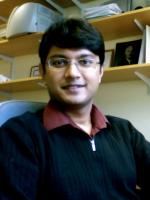
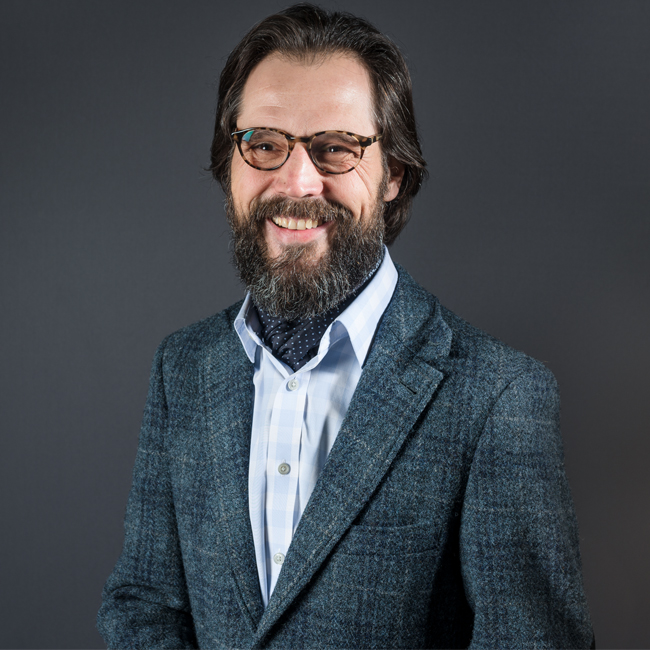
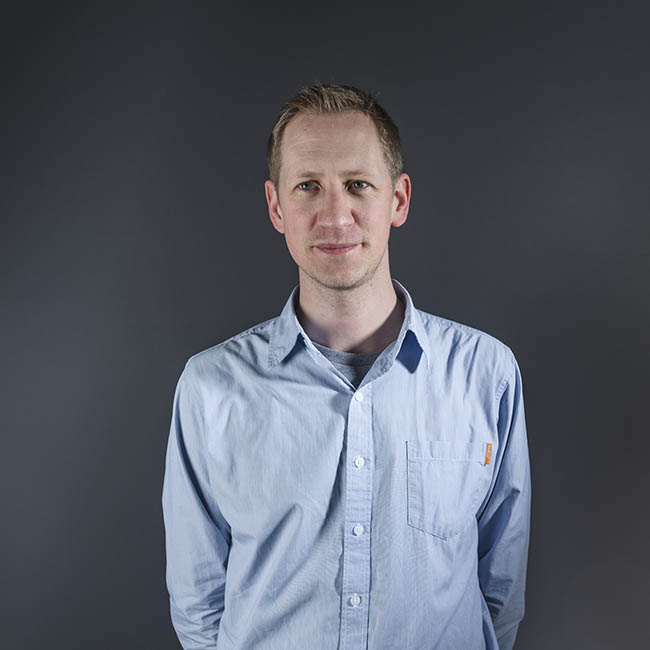
Balint Toth is a distinguished academic with dual affiliations: a Research Professor at the Alfréd Rényi Institute of Mathematics in Budapest and a Professor of Probability (Heilbronn Chair) at the University of Bristol 's School of Mathematics. His work bridges Probability Theory , Mathematical Physics , and Statistical Mechanics , focusing on stochastic dynamics, random walks in complex environments, and scaling limits. Key Roles: Co-Editor-in-Chief of Probability Theory and Related Fields , organizer of probability seminars in Budapest-Vienna and Bristol, and former leader of the BME Stochastics Seminar (1999–2020). Teaching: Delivers advanced courses like Probability 2 , Stochastic Differential Equations , and Percolation , emphasizing rigorous mathematical foundations. Research Themes include hydrodynamic limits, self-interacting random walks, diffusion in random media, and symmetry breaking in spin systems. His recent publications explore non-equilibrium stochastic models, anomalous diffusion, and connections between probability and physics. Teaching Materials span bilingual resources (Hungarian/English) for undergraduate and graduate courses in probability and stochastic analysis.
Dr Ronojoy Adhikari is a Lecturer in the Department of Applied Mathematics and Theoretical Physics (DAMTP) at the University of Cambridge, affiliated with the Faculty of Mathematics. His research focuses on statistical physics, soft matter, stochastic processes, Bayesian inference, and machine learning. He has taught Mathematical Biology (2018–2021) and Electrodynamics (2021–2023). His work bridges theoretical frameworks with experimental insights, addressing phenomena such as active matter dynamics, non-equilibrium thermodynamics, and stochastic modeling of biological systems. Key contributions include studies on autophoretic particles, path probabilities in stochastic systems, and Bayesian approaches to epidemiological modeling. His research group, part of the Soft Matter program at DAMTP, explores interdisciplinary topics like colloidal crystallization and enzymatic network kinetics. Notable publications highlight investigations into fluctuating hydrodynamics, entropy production measurements, and the mechanics of rigid inclusions on curved surfaces. His interdisciplinary approach integrates computational methods (e.g., lattice Boltzmann simulations) with mathematical rigor to understand complex systems. While no awards are explicitly listed, his extensive publication record underscores sustained academic impact. Ongoing research includes projects on path probabilities, active particle dynamics, and the interplay between geometry and material behavior in Cosserat solids. Advising and grants are not explicitly detailed in the provided texts, but his role as a faculty member suggests involvement in student supervision and collaborative projects. His work frequently appears in top journals like Physical Review Letters , Journal of Fluid Mechanics , and Science Advances , reflecting high-quality contributions to theoretical and applied physics.
Dr. Aniruddha Majumder is a Lecturer at the School of Engineering, University of Aberdeen, UK, since 2014. His academic journey includes a PhD in Chemical and Biomolecular Engineering from Nanyang Technological University (2011) and prior roles at Loughborough University, Purdue University, and Nanyang Technological University. Current Position: Lecturer, School of Engineering, University of Aberdeen (2014–Present) Past Roles: Research Associate (Loughborough), Visiting Scholar (Purdue), Research Assistant (NTU Singapore) Research focuses on: Crystallization (crystal shape control, enantiomer separation, polymorph control), Lattice Boltzmann Method (multiphase flow simulation), Biodegradation (anaerobic digestion), and Carbon Capture (adsorption process optimization). Recent work involves cellulose nanofiber applications and anti-fouling crystallizer design. Recent publications demonstrate expertise in: Pharmaceutical crystallization (2025: sulfathiazole nanocrystallization) Environmental remediation (2024: methylene blue removal via modified cellulose) Continuous manufacturing (2023: SM-PFC crystallizer simulation) Process modeling (2020: LBM for separation processes) Taught modules include Fluid Mechanics, Separation Processes, and Engineering Project. Collaborates with institutions in the UK, USA, and Belgium on topics like chiral resolution and sustainable chemical production. Scientific recognition includes: 2022/23 & 2017/18: Nominee for University of Aberdeen's Excellence in Teaching Award 2012: Best Poster Award (CMAC Open Day) Grants secured: Royal Society International Exchanges (2022, £12k), EPSRC CMAC Feasibility Study (2021, £59,893), and Binks Trust Fund (2018, £2.5k).
Alessandro De Rosis is a Senior Lecturer in Virtual Engineering at the University of Manchester’s Mechanical and Aerospace Engineering department. His research focuses on multiphysics modeling using the lattice Boltzmann method (LBM), with applications in fluid-structure interaction, magnetohydrodynamics, and biomedical engineering. He holds a PhD in Structural and Hydraulic Engineering from the University of Bologna and a Master’s in Civil Engineering from the University of Calabria. His postdoctoral work included a PRESTIGE grant-funded period at the Laboratoire de Mécanique des Fluides et Acoustique, developing LBM algorithms for high-Reynolds magnetohydrodynamic flows. Key research areas include computational fluid dynamics (CFD) modeling of cardiovascular devices, such as LVAD outflow graft positioning to reduce aortic regurgitation, and coupled finite-volume/LBM methods for internal flows. He has contributed to over 60 peer-reviewed publications, with recent work spanning biomedical engineering, plasma physics, and environmental fluid dynamics. Collaborations include the Fluids Research Group at the University of Manchester and institutions like the Technion-Israel Institute of Technology. Education: PhD in Structural and Hydraulic Engineering (2013), University of Bologna Master of Engineering in Civil Engineering (2009), University of Calabria His research bridges theoretical physics and engineering applications, emphasizing multiphase flows, CFD-driven surgical optimization, and high-performance numerical simulations. Current projects address challenges in mechanical circulatory support devices, fluid-structure interaction in biomedical systems, and magnetohydrodynamic turbulence modeling.
Torsten Schenkel is an Associate Professor of Continuum Mechanics at the Department of Engineering and Mathematics, Sheffield Hallam University. He holds a Dr.-Ing. habil. (Habilitation) from the Karlsruhe Institute of Technology (KIT) in Germany. His research focuses on physiological flows, fluid-structure interaction (FSI), and optical measurement methods in cardiovascular systems. Education: PhD and Habilitation in Fluid Mechanics from KIT Mechanical Engineering studies at the University of Karlsruhe Research interests include multi-scale hemodynamic modeling, turbulence interactions, boundary layer dynamics, and biomedical applications of computational fluid dynamics (CFD). Collaborations span institutions like the University of Sheffield, Brunel University, and NHS Trusts. Scientific awards include Chartered Engineer (CEng) and Fellow of the Institute of Mechanical Engineers (FIMechE). He has supervised numerous PhD students in biomechanics and numerical methods. Labs/teams involved include the Materials and Engineering Research Institute and the Insigneo Institute for in silico medicine. His research integrates experimental and numerical approaches to address cardiovascular challenges such as atherosclerosis and fluid-structure interactions in heart mechanics.
Dr. Wei Bai is a Reader in Mathematics at Manchester Metropolitan University's Department of Computing and Mathematics, specializing in computational marine hydrodynamics. He holds a Ph.D. in Port, Coastal and Offshore Engineering from Dalian University of Technology. Research focuses on: Numerical modeling of wave-structure interactions Offshore renewable energy systems Sloshing dynamics and hydrodynamic stability Computational fluid dynamics development His extensive publication record demonstrates consistent innovation in numerical methods for marine applications, with recent emphasis on moonpool hydrodynamics, floating wind turbines, and advanced CFD techniques. Research integrates theoretical modeling with practical offshore engineering challenges. Dr. Bai serves on editorial boards for Applied Ocean Research, Ocean Engineering, and Journal of Marine Science and Application. He has supervised multiple doctoral students in marine hydrodynamics and offshore engineering.
Tim Spencer is a Research Fellow at the Materials and Fluid Flow Modelling Group within Sheffield Hallam University . His work focuses on applying theoretical and computational methods to model complex fluid systems, with expertise in the lattice Boltzmann method , finite differencing , and high performance computing . His research spans diverse applications in liquid crystals , biological flows , and microfluidics . His educational background includes a PhD (2005) and MSci (2002) in Engineering Physics from Sheffield Hallam University, where he received the Jeremy Laskowski Award and Mössbauer Award . He has supervised K. Burgin in their doctoral thesis on lattice-Boltzmann models for food rheology and collaborated with institutions like CNR Rome and University of Manchester . Recent publications highlight his work on non-Newtonian particle transport (2019), multicomponent lattice Boltzmann models (2017), and anisotropic medium optical nonlinearities (2017). These studies intersect computational physics , biomedical engineering , and materials science , emphasizing multi-scale modeling , fluid dynamics , and numerical methods . Scientific awards include: Jeremy Laskowski Award Mössbauer Award His research projects have involved consultancy for Seiko Epson Corporation and ZBD Displays Ltd. , modeling liquid crystal devices , and developing microfluidic systems for monodisperse drop formation. Collaborations extend to CNR Rome (hemodynamic flows) and University of Manchester (cell seeding in bioreactors).
Meissam Bahlali is a Researcher at Imperial College London's Department of Earth Science & Engineering within the Faculty of Engineering, part of the Novel Reservoir and Simulation group (NORMS). He specializes in fluid mechanics and applied mathematics with applications to porous media flow, geothermal energy, and atmospheric dynamics. Educational Background: PhD in Fluid Mechanics (2015-2018) from CEREA, École des Ponts ParisTech/EDF R&D Postdoctoral Researcher at Aix-Marseille Université (2020) Research Associate at Imperial College London (2019) Research Focus: His work spans stochastic fluid mechanics models, unstructured adaptive mesh techniques for density-dependent flows in porous media, lattice Boltzmann methods for moving boundaries, and applications to saline intrusion, geothermal storage, and copper transport in sedimentary basins. He has contributed to over 15 peer-reviewed publications and presented at major conferences like AGU, EGU, and SEG. Teaching & Supervision: He has supervised 1 PhD and 2 MSc students (2024), taught MSc courses on geo-energy systems, and delivered training sessions on computational fluid dynamics. He also served as an examiner for a PhD defense on Lagrangian pollutant dispersion models. Affiliations: Active in NORMS group, with links to ResearchGate, LinkedIn, and a personal website. His work integrates numerical methods, geoscience, and environmental engineering to address challenges in resource modeling and climate systems.
Christos Halios is a researcher at the University of Reading, focusing on urban atmospheric processes, air quality, and climate resilience. His research interests include: Urban boundary layer dynamics Natural ventilation of buildings Green and blue infrastructure for heat mitigation Indoor and outdoor air pollution dispersion Recent publications (2025–2017) highlight his work in urban climate resilience , airflow modeling , and environmental monitoring , utilizing field campaigns, computational simulations, and sensor technologies. Halios collaborates extensively on interdisciplinary projects related to climate adaptation, atmospheric physics, and sustainable urban design, contributing to journals such as Frontiers in Sustainable Cities , Renewable and Sustainable Energy Reviews , and Atmospheric Environment .
Dr. Alex Skillen is a Lecturer in Engineering Simulation and Data Science at the Department of Mechanical and Aerospace Engineering, University of Manchester. His research focuses on the intersection of Computational Fluid Dynamics (CFD) and machine learning, with applications in magnetohydrodynamics, environmental flows, and subcooled boiling phenomena. He actively contributes to interdisciplinary projects such as the Fluids Research Group and Physics-informed Deep Learning for Fusion Thermal Hydraulics. Education: PhD in Mechanical Engineering from the University of Manchester (2012), investigating overset grid methods for Navier-Stokes equations. Research Interests: CFD algorithm development, turbulence modeling, machine learning integration in flow simulations, and numerical analysis of multiphase phenomena. His work aligns with UN Sustainable Development Goals related to affordable and clean energy, and industry innovation. Collaborations include international projects on thermal hydraulics in nuclear systems and turbulence super-resolution using generative models. He has contributed datasets for turbulence research and developed open-source tools for fluid-structure interaction simulations. Advising: Supervised one PhD thesis titled 'The overset grid method applied to the solution of the incompressible Navier-Stokes equations in two and three spatial dimensions.' Active in mentoring within the Fluids Research Group. Labs/Teams: Core member of the Fluids Research Group and collaborator on the Exascale Partitioned Fluid-Structure Interaction (ParaSiF_CF) framework development.
Dr. Mark Woodgate is a Research Associate in the Autonomous Systems & Connectivity research group at the School of Engineering, University of Glasgow. His research focuses on computational fluid dynamics applications for rotorcraft and helicopter aerodynamics, with extensive publications spanning over two decades. His research interests include: Computational Fluid Dynamics for rotorcraft applications Rotor blade design and optimization Helicopter aerodynamics and dynamics Wind turbine analysis High-fidelity CFD/CSD methods Dr. Woodgate's recent publications demonstrate a strong focus on advanced computational methods for rotorcraft analysis and design. His work frequently involves collaboration with George Barakos and other researchers at the University of Glasgow. Key research trends include the application of harmonic balance methods, adjoint optimization techniques, and the development of efficient CFD solvers for rotorcraft applications. His research has significant implications for helicopter design, tiltrotor aircraft, and wind turbine technology. Scientific contributions: Development of implicit hybrid methods for rotorcraft flow computation Analysis of rotor blade stall and flutter phenomena Simulation techniques for helicopter ditching scenarios Optimization frameworks for rotor blade planform design Dr. Woodgate has supervised research students, including Dada, Oyedoyin Samuel, who worked on 'Machine Learning for Flying Vehicles - Demonstration for autonomous fire-fighting aircraft.' His work bridges traditional aerospace engineering with emerging computational techniques and applications.
Dr. Jack Panter is a Lecturer in Fluid Dynamics at the University of East Anglia (UEA), affiliated with the School of Engineering, Mathematics and Physics. He is a member of the Fluids & Structures research group and co-manages the Thermofluids Research Laboratory with Dr. Stefano Landini. His research integrates computational and experimental approaches to study multiphase fluid systems, with applications in sustainability, thermal management, and energy storage. Education: PhD in Physics, Durham University (awarded 2020) MSci in Physics and Chemistry, Durham University (2015, First Class) Dr. Panter's research centers on fundamental interfacial and wetting phenomena, with a strong emphasis on computational modeling. He develops and applies phase-field models, the Binary Image Transition State Search (BITSS) algorithm, and the Lattice Boltzmann method to study fluid equilibria, transitions, and dynamics. His work extends into soft matter, including elastic buckling, bio-elasticity, and colloidal organization. Applications include optimizing super-liquid-repellent surfaces with Procter & Gamble and simulating capillary rise for carbon capture technologies with ExxonMobil. His recent publications focus on thermal management of lithium-ion batteries using phase-change materials, hybrid immersion cooling strategies for electric vehicles, and computational simulations of wetting and capillary phenomena. These works reflect a strong trend toward sustainable engineering solutions, energy efficiency, and advanced computational fluid dynamics. Scientific Awards: No awards explicitly mentioned. Dr. Panter is actively involved in research funding and advising. He leads a Royal Society-funded project on capillary coupling and collaborates on a knowledge exchange project on low-cost thermal energy storage. He advises on computational methods and contributes to interdisciplinary research in thermal systems and fluid dynamics. His lab, the Thermofluids Research Laboratory, is equipped with advanced experimental facilities for thermal characterization, battery testing, 3D printing, and capillary force measurement, enabling both fundamental and applied research. Research Group: Thermofluids Research Laboratory – focused on phase-change phenomena, thermal management of electronics and batteries, and thermal energy storage. The lab supports projects in solid-liquid phase change materials, hybrid composites, microstructure design, and capillary phenomena.
Dr Jie Li is an Associate Professor in the Department of Engineering at the University of Cambridge, specializing in computational fluid dynamics and numerical methods for multiphase flows. Expertise in interface tracking methods (e.g., Volume of Fluid) and adaptive mesh techniques Research applications include inkjet printing, cavitation, and droplet combustion His work focuses on modeling complex interfacial phenomena such as viscoelasticity, surface tension, surfactant dynamics, contact lines, triplet points, rarefied gas behavior, droplet collisions, and solid-wall impacts. Publications demonstrate extensive use of arbitrary Lagrangian-Eulerian (ALE) methods, finite element schemes, and smoothed surface stress approaches for simulating moving boundary problems in fluid mechanics.
Muttukrishnan Rajarajan is a Professor at City University of London specializing in cutting-edge cybersecurity research with applications across critical infrastructure sectors. His work bridges theoretical innovation and practical implementation in decentralized systems, with verified institutional affiliation through r.muttukrishnan@city.ac.uk . His research program focuses on: Hardware-based authentication mechanisms exploiting physical device characteristics Privacy-preserving frameworks for healthcare, finance, and IoT ecosystems Blockchain integration for transparent data marketplaces and identity management Security solutions for smart grids, connected vehicles, and agricultural technology Advanced persistent threat mitigation using explainable AI techniques Analysis of his 2023-2025 publications reveals a strategic shift toward real-world deployment challenges, particularly in agriculture 4.0/5.0 security, BritCoin privacy implications, and federated learning for connected vehicles. His work consistently integrates cryptographic primitives with system-level design to address the tension between usability and security in decentralized environments. Professional Recognition: IEEE Senior Member for significant contributions to cybersecurity Professor Rajarajan actively shapes his field through peer review for Computers & Security and development of standardized security frameworks like the Unified Signature API Library. His research demonstrates strong industry relevance with direct applications in open banking security, drone privacy regulations, and smart grid resilience. Current investigations into crystal oscillator impurities for authentication and blockchain-enabled ML model evaluation indicate forward-looking research directions addressing emerging hardware and AI security challenges.
Jiawei Hu is a Research Fellow at the University of Surrey's School of Chemistry and Chemical Engineering, specializing in computational modeling and thermal engineering. Their work focuses on advanced energy storage systems, granular flow dynamics, and electrostatic interactions in particulate systems. Research interests include thermal management of all-solid-state batteries, heat conduction in composite materials, and discrete element method (DEM) modeling for granular and pharmaceutical systems. Recent studies explore the impact of microstructural parameters on thermal conductivity, as well as electrostatic phenomena in silo and rotating drum environments. Publications highlight trends in interdisciplinary research at the intersection of energy storage, materials science, and computational physics. Key contributions include DEM-CFD coupled models for particle systems and investigations into friction-induced heating mechanisms. No academic awards or grants are explicitly listed in the provided materials. Advising records are unavailable, though affiliations with Surrey's Chemistry and Chemical Engineering School suggest involvement in collaborative research initiatives.