Lillie Padilla is an Assistant Professor of Spanish Linguistics at Sam Houston State University's Department of World Languages and Cultures. Holding a Ph.D. and M.A. in Spanish Linguistics from Arizona State University alongside a Bachelor of Arts from the University of Ghana, her research explores interdisciplinary connections between: Afro-Latinx representation in educational materials Discourse analysis and language ideologies Sociolinguistic studies in Equatorial Guinea Critical race theory applications in language teaching Her work focuses on Spanish subject pronoun expression patterns in multilingual contexts and curriculum development for inclusive pedagogy. Recent publications examine: Representation gaps in Spanish language textbooks Methodological challenges in Equatorial Guinea research Critical discourse analysis of Netflix's Elite series Intersectional representation of Afro-Latinx women Scientific achievements include: Finalist for American Association of Linguistics 2025 award for co-edited volume Representation, Inclusion and Social Justice in World Language Teaching Padilla's research continues to shape conversations about linguistic diversity and marginalized voices in language education through both empirical studies and theoretical frameworks.
University of California , Santa Barbara (UCSB)United States
Mary Bucholtz is a Professor in the Department of Linguistics at the University of California, Santa Barbara (UCSB). She holds affiliations with multiple departments including Anthropology, Feminist Studies, Spanish and Portuguese, the Gevirtz Graduate School of Education, Comparative Literature, and Latin American and Iberian Studies. Her research integrates sociocultural linguistics with anthropological, gender, and social justice frameworks. Education: PhD in Linguistics, University of California, Berkeley (1997) Bucholtz's work examines how language shapes and is shaped by social identities, particularly among youth, through dimensions like race, gender, and cultural practices. She emphasizes community-centered research , linguistic activism , and interdisciplinary methodologies to address systemic inequalities. Recent publications explore affective agency in Latinx youth, educational equity, and antiracist linguistics. Her collaborative projects often involve partnerships with educational institutions and youth communities in California, focusing on translanguaging , Black language justice , and raciolinguistic ideologies . Grants from the National Science Foundation, Spencer Foundation, and Wenner-Gren Foundation support her research. She co-edited the open-access volumes Decolonizing Linguistics and Inclusion in Linguistics (Oxford University Press, 2024), alongside authoring White Kids: Language, Race, and Styles of Youth Identity (Cambridge, 2011) and Talking College: Making Space for Black Language Practices in Higher Education (Teachers College Press, 2022).
University of Illinois Urbana-ChampaignUnited States
Salvatore Callesano is an Assistant Professor of Hispanic Linguistics at the University of Illinois Urbana-Champaign (UIUC), affiliated with the Department of Spanish and Portuguese and the College of Liberal Arts & Sciences. His research focuses on sociolinguistics, particularly bilingual communities in the U.S., language perception, and digital media representations of bilingualism. He employs both quantitative and qualitative methods to investigate how language variation interacts with identity, media, and social structures. Dr. Callesano collaborates on Project 16 of the Asociación de Lingüística y Filología de América Latina, addressing linguistic aspects of Latin American diaspora communities. His work bridges traditional sociolinguistic inquiry with modern digital practices, analyzing how social media shapes perceptions of language use among Latinx populations. Recent research highlights include studies on code-switching in Miami's linguistic landscape, dialect perception, and the role of media in mediating language attitudes. His publications span peer-reviewed articles and book reviews, emphasizing empirical rigor and interdisciplinary connections between language, culture, and society.
Kent A. Ono is a Distinguished Professor in the Department of Communication at the University of Utah, where he has held faculty appointments since 2012. Previously, he served as Department Chair (2012-2017) and has held leadership positions including Director of Asian American Studies at UIUC (2002-2007) and Director of Cultural Studies at UC Davis (1999-2002). He earned his PhD in Rhetorical Studies from the University of Iowa (1992), MA from Miami University (1988), and BA from DePauw University (1987). Professor Ono's research examines critical media analysis through frameworks of race, gender, sexuality, and nation. His work spans rhetorical theory, intercultural communication, and cultural studies, with emphasis on: Representations of Asian Americans in media Immigration discourse and border rhetoric Postcolonial media criticism Critical race methodologies Transnational cultural flows His recent publications demonstrate sustained focus on immigration rhetoric, racial representation in media, and critical intercultural communication. Thematic analysis reveals consistent engagement with power structures, identity negotiation, and resistance narratives across 30+ years of scholarship, with emerging work on K-pop globalization and digital culture. Awards & Honors: Presidential Citation, National Communication Association (2024) Fellow, International Communication Association (2021) Douglas W. Ehninger Distinguished Rhetorical Scholar (2018) Distinguished Scholar Awards from NCA (2015, 2022), WSCA (2020) Teachers on Teaching Award, NCA (2015) He has held editorial leadership positions including Editor of Communication and Critical/Cultural Studies and co-editor of NYU Press's Critical Cultural Communication series. As NCA President (2020), he advanced equity initiatives and disciplinary transformation. Ono founded the Asian American Cultural Politics Research Cluster at UC Davis and secured grants including 'Portraits of Courage: Photographs by Shane Sato' (2019). He teaches graduate seminars in Rhetorical Studies and International Communication.
Juan Eduardo Wolf is an Associate Professor of Ethnomusicology at the University of Oregon's School of Music and Dance. He holds a PhD in Folklore and Ethnomusicology from Indiana University (2013), alongside degrees in Chemical Engineering and Art Studio from prestigious institutions. His research focuses on music-dance traditions of Afro-descendant and Indigenous communities in Latin America and the Caribbean, exploring decolonial methodologies and cultural equity. He directs the Latin American Studies Program and coordinates the World Music Series, which hosts global music performances. His awards include grants from UO's Center for Latin American and Latinx Studies (2018) and Global Oregon (2018). Wolf teaches courses like Decolonizing Music, Music in World Cultures, and directs World Music Ensembles focusing on Andean and Puerto Rican traditions. His research examines how marginalized groups use music-dance to resist colonial legacies, with fieldwork in Chile, Puerto Rico, and Bolivia. He is a core faculty member in Folklore and Public Culture Programs and advises on Latinx Studies initiatives. Notable publications include Styling Blackness in Chile (2019), analyzing Afro-Chilean music-dance, and Un Tumbe Ch’ixi (2021), integrating Afro-descendant ideas into Andean methodologies. His work challenges colonial frameworks and advocates for socially just music science practices. He performs as a percussionist/guitarist in global ensembles and mentors students through experiential learning.
Natalia Molina is a Distinguished Professor and Dean’s Professor of American Studies and Ethnicity at the University of Southern California, where she is a leading scholar in U.S. history, Latinx studies, immigration, race, and public health. She is Vice President and President-Elect (2028) of the Organization of American Historians and a 2020 MacArthur Fellow, recognized for her transformative work on racial formation. Her education includes a B.A. in History and Women’s Studies from UCLA, and an M.A. and Ph.D. in U.S. History from the University of Michigan, Ann Arbor. Molina’s research centers on the interconnected histories of race, place, gender, and citizenship. She is best known for her theory of racial scripts , which explains how racial categories are constructed relationally across groups and time. Her work spans public health history, foodways, and immigrant placemaking, with a deep commitment to community-centered storytelling and public engagement. Her recent publications explore Latinx cultural identity through food, sports, and media, reflecting a shift toward personal and public narratives that connect historical scholarship with contemporary life. Her books have received numerous accolades, including a James Beard Award nomination and the PROSE Award finalist status. MacArthur Fellowship (2020) James Beard Award Media Nominee (2023) PROSE Awards Finalist (2023) Pacific Coast Branch of the AHA’s Norris & Carol Hundley Award Susanne M. Glasscock Humanities Book Prize LA Times Essential Book New York Times Best Books About California Molina is a dedicated mentor and public intellectual, having advised university diversity initiatives and served on the boards of the Huntington Library and the Library of Congress Scholars Council. She has held leadership roles at UC San Diego, including Associate Vice Chancellor for Faculty Diversity and Equity. Her current research focuses on the immigrant workers who built and sustained the Huntington Library, reclaiming their overlooked contributions. She is also a Distinguished Lecturer for the Organization of American Historians and has been a fellow at the Huntington Library and the National Endowment for the Humanities. Her public writing in outlets like the Los Angeles Times , Washington Post , and Inside Higher Ed demonstrates her commitment to bridging academic scholarship with broader societal conversations.
Bruna Damiana Heinsfeld serves as Assistant Professor of Learning Technologies within the Department of Curriculum & Instruction at the University of Minnesota's College of Education and Human Development. Her research critically examines the intersections of technology, society, and education through the lens of Critical Studies of Education and Technology (CSET), with emphasis on power dynamics and social justice implications. Her academic credentials include: Ph.D. in Interdisciplinary Learning and Teaching (Learning Design and Technologies concentration) from UTSA M.A. in Education (Digital Languages, Media and Education concentration) from PUC-Rio, Brazil Multiple Postgraduate Certificates from Brazilian institutions: Media Discourse Analysis, Ontology and Epistemology, Philosophy/Sociology/Social Sciences, and Distance Learning Management B.A. in English Language and Literature from UERJ, Brazil Dr. Heinsfeld's research program centers on critical discourse analysis of educational technology narratives across corporate, policy, and educational contexts. She investigates how technological discourses are constructed and operationalized, particularly regarding digital equity, participatory exclusion, and the sociopolitical dimensions of technology adoption. Her methodological approach combines Critical Discourse Analysis (CDA) with critical pedagogy to unpack ideological, cultural, and economic factors shaping educational technology implementations. She examines epistemological foundations of technological beliefs and challenges neoliberal narratives in EdTech through rigorous deconstruction of policy documents and marketing materials. Analysis of her recent publications (2019-2023) reveals consistent focus on corporate influence in educational technology, with particular attention to Google and Microsoft's marketing narratives, pandemic-era remote learning disparities, and Latinx student experiences. Her work demonstrates how technological solutions often reinforce existing inequalities through participatory exclusion mechanisms, while her policy analyses expose contradictions between equity rhetoric and actual implementation. Recurring methodological threads include discourse analysis of educational landscape reports and critical examination of public policy frameworks. No scientific awards were documented in the provided materials. As an advisor, Dr. Heinsfeld cultivates a supportive environment grounded in social justice principles, emphasizing critical consciousness development and student autonomy. Her advising philosophy centers on accessible feedback, interdisciplinary exploration, and preparation for meaningful societal engagement. She teaches foundational courses including CI 4311W Technology and Ethics in Society (examining algorithmic bias, privacy concerns, and AI ethics) and CI 8147 Critical Discourse Analysis in Educational Research (focusing on language-power dynamics in educational contexts). While specific research laboratories aren't detailed, her collaborative work spans international contexts with Brazilian institutions and U.S. colleagues, particularly evident in joint publications with researchers like V. Marone and M. Pischetola. Her research trajectory indicates ongoing critical engagement with emerging technologies like AI in education policy, as evidenced by upcoming 2025 conference presentations.
Natalia Villanueva-Nieves is an Assistant Professor in the Department of Chicana and Chicano Studies at Sonoma State University. Her interdisciplinary scholarship bridges literary studies, affect theory, and digital humanities, with a focus on Latinx, Chicanx, Central American, and Caribbean expressive cultures. Her academic background includes a doctoral degree in Chicana and Chicano Studies from the University of California, Santa Barbara, and a master’s in Comparative Literary Studies from Utrecht University. Dr. Villanueva-Nieves' research explores Latinx emotional geographies, transnational feminisms, hemispheric race studies, and digital storytelling. She investigates how affect, space, and racialization intersect in Latina narratives, particularly through relational and hemispheric frameworks. Her work emphasizes collective archives of care and hope in Latinx testimonial writing. Her recent publications reflect a strong trend toward interdisciplinary and public-facing scholarship, combining literary analysis with digital tools and social justice engagement. The articles span themes such as affective spaces, digital archives, transnational feminisms, and geocritical approaches to Latinx literature. Her scholarly work has appeared in Chiricú Journal , Ex-Centric Narratives Journal , Zócalo Public Square , American National Biography , Aztlán: A Journal of Chicano Studies , and edited volumes from UNAM and the University of Alcalá de Henares. Dr. Villanueva-Nieves is currently developing a digital monograph that uses interactive maps and digital storytelling to present Latinx testimonial writing as living archives. She is also completing her book The True Colors of Feeling Brown: Affect and Space in Latina Narratives , under contract with Palgrave in the Geocriticism and Spatial Literary Studies series.
Ellen T. Armour is the E. Rhodes and Leona B. Carpenter Professor of Feminist Theology at Vanderbilt Divinity School and the Graduate Department of Religion, where she directs the Carpenter Program in Religion, Gender, and Sexuality. She holds affiliated appointments in the Department of Philosophy and the Women’s and Gender Studies Program at Vanderbilt and served as a Faculty Fellow at the Robert Penn Warren Center for the Humanities (2017–2018). B.A., Stetson University (1980) M.A., Ph.D., Vanderbilt University (1989, 1993) Her research focuses on feminist theology, contemporary continental philosophy, and theories of sexuality, race, gender, disability, and embodiment. Her work engages interdisciplinary approaches to religion, particularly through poststructuralist and queer theoretical frameworks. Key themes in her publications include the intersection of religion and digital visual culture, decolonial ethics in theology, and the application of Judith Butler’s performativity theory to religious discourse. Her notable books include Seeing and Believing (2023), Signs and Wonders (2016), and Bodily Citations (co-editor, 2006). Scientific Awards: Clarence Day Dean’s Award for Outstanding Teaching (1999) Jameson Jones Award for Faculty Service (2005) Armour has held leadership roles such as Chair of the Religious Studies Department at Rhodes College (1991–2006) and Associate Dean of Academic Affairs at Vanderbilt (2019–present). Her affiliations include St. Augustine’s Chapel (formerly Baptist) and the Robert Penn Warren Center for the Humanities.
Katherine C. Rodela is an Associate Professor and Interim Chair in the Department of Educational Leadership and Sport Management at Washington State University Vancouver, part of the College of Education, Sport, and Human Sciences. She is a community-engaged scholar committed to advancing equity and justice in education through research, teaching, and outreach. Her educational background includes a Ph.D. from Stanford University’s Graduate School of Education and a BA in Philosophy and History from Seattle University. She is a former Fulbright Scholar with research experience in civic engagement in Peru. Dr. Rodela's research focuses on leadership for equity and social justice, particularly the leadership of Latinx communities, parents, and educators. Her work explores how leaders of color navigate equity initiatives, how marginalized families advocate for justice, and how educational leadership can be redefined to include youth, parents, and community members. She uses qualitative methods, especially LatCrit counterstorytelling, to center the voices of those often excluded from leadership narratives. Her recent publications reflect a strong trend in examining Latinx leadership pathways, community cultural wealth, gender and LGBTQ+ inclusion, and activism in conservative educational settings. These works are published in leading journals such as Educational Administration Quarterly , Peabody Journal of Education , and Teachers College Record . George Brain and Gay Selby Faculty Award in Educational Leadership Fulbright Scholar She actively mentors future educational leaders and collaborates with community partners such as the SW Washington Latino Parent Leadership Institute. Her research includes longitudinal studies on Latinx parent leadership and equity leadership during politically divisive times. She has also contributed to special issues and conceptual frameworks that challenge traditional notions of educational leadership and advocate for more inclusive, justice-centered models.
Ayendy Bonifacio is a Dominican American scholar, writer, and poet currently serving as Assistant Professor of English at the University of Toledo's College of Arts and Letters. Born in Santiago De Los Caballeros, Dominican Republic, and raised in East New York, Brooklyn, he earned his Ph.D. from Ohio State University and has established himself as a significant voice in American literature, Latine studies, and diaspora studies. His research focuses on the intersections of memory, migration, race, and colonial legacies in the Americas, with particular attention to nineteenth-century to contemporary print culture. Bonifacio's scholarly work bridges academic and public discourse, appearing in venues ranging from American Periodicals and ASAP/Journal to The New York Times and Slate . He explores how literary forms negotiate cultural identity across borders, with special emphasis on Dominican and Latinx experiences. Bonifacio's publications reveal a consistent trajectory examining transnational literary connections, particularly between Anglophone and Hispanophone traditions. His work frequently addresses anti-Blackness within Latinx communities, diasporic identity formation, and the material history of print culture. The 2024 monograph Paratextuality in Anglophone and Hispanophone Poems in the U.S. Press, 1855–1901 represents a significant contribution to understanding how multilingual poetry circulated in nineteenth-century American periodicals. Top ten best non-fiction books of 2017 (The Latino Author for Dique Dominican ) Bonifacio's writing has received support from prestigious organizations including the National Endowment for the Humanities (NEH), the Digital Media and Composition Institute (DMAC), the Ohio Arts Council, and the Society for Nineteenth-Century Americanists. His creative work spans multiple genres, including the memoir Dique Dominican (2017), poetry collection To the River, We Are Migrants (2020), and the forthcoming novel Bless Me, Papi (2025). He maintains an active presence in public intellectual discourse through contributions to major media outlets where he addresses contemporary issues of race, immigration, and academic labor.
Domino Renee Perez is a Professor in the Department of English and the Center for Mexican American Studies at the University of Texas at Austin. Her work bridges Young Adult Fiction, Mexican American and Latinx Literature, 20th and 21st Century American Literature, Film, Popular Culture, and Cultural Studies. She holds a Ph.D. from the University of Nebraska at Lincoln and has been recognized with the Regents’ Outstanding Teaching Award and induction into the Academy of Distinguished Teachers (2023). Ph.D., University of Nebraska at Lincoln Books: Fatherhood in the Borderlands (2022), There Was a Woman (2008), co-edited Race & Cultural Practice in Popular Culture (2018) Her research explores racialized representations in media, focusing on Mexican American fathers, La Llorona, and intersections of Indigeneity in Latinx studies. She integrates autoethnography, film analysis, and literary critique into a 'slow scholarship' approach, emphasizing personal investment and imaginative recreation. Recent publications analyze topics such as Latinx YA fiction, Weird Westerns, and Gloria Anzaldúa’s legacy. Her teaching includes courses like E 344C (Young Adult Fiction/Film) and LAH 350 (Latinx Young Adult Literatures). Scientific Awards Regents’ Outstanding Teaching Award Academy of Distinguished Teachers Inductee (2023)
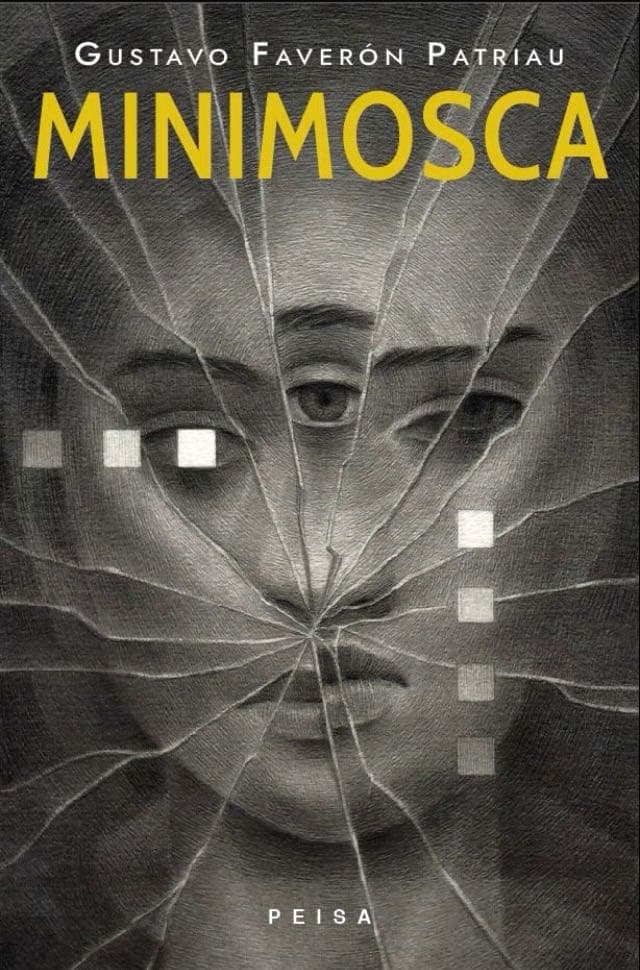
Gustavo Faverón Patriau is Professor and Chair of the Department of Romance Languages and Literatures at Bowdoin College, with affiliations in Latin American, Caribbean, and Latinx Studies and Hispanic Studies. He holds a PhD from Cornell University and has held visiting positions at Stanford University, Middlebury College, and Universidad Cayetano Heredia. His academic work centers on Latin American contemporary literature and political history, with a focus on the limits of visual and linguistic representation, the portrayal of mental illness in narrative, and the writings of Jorge Luis Borges. His research spans literary theory, cultural criticism, and journalistic inquiry, often bridging scholarly and public intellectual spheres. His recent publications reveal a consistent engagement with themes of abjection, memory, trauma, and the philosophical dimensions of narrative. He frequently analyzes canonical and marginal texts through interdisciplinary lenses, drawing on philosophy, visual culture, and historiography. His scholarship often intersects with his creative work, which includes novels and editorial projects that explore similar intellectual terrain. Among his scientific awards and recognitions are being a finalist for the III Vargas Llosa Biennial Novel Prize, receiving accolades from Letras Corsarias and Rockdelux, and being recognized by the Spanish newspaper ABC for his blog Puente Aéreo as one of the most influential in the Hispanic world. He has served on the board of Diacritics , directed literary journals such as Dissidences , La Vaca Multicolor , Somos , and Visto & Bueno , and co-edited major volumes like Bolaño salvaje and Toda la sangre . He regularly presents at international literary festivals and academic conferences, and has conducted numerous interviews and media appearances across Latin America and Europe. His creative and scholarly work has been translated into ten languages, underscoring his transnational impact. He continues to publish prolifically in both academic and literary venues, maintaining a dynamic presence in contemporary Hispanic intellectual life.
Elizabeth Garcia is a Clinical Associate Professor in the Department of Ethnic Studies at the University of Colorado Denver's College of Liberal Arts and Sciences. She teaches courses including Culture, Racism, and Alienation; Chicano/a and Latino/a History; Introduction to Ethnic Studies; and specialized topics in Latina Narratives and Feminisms. Her educational background includes: Ph.D. in Comparative Ethnic Studies from University of California, Berkeley M.A. in Comparative Ethnic Studies from University of California, Berkeley B.A. in American Civilization/Economics from Brown University Dr. Garcia is an interdisciplinary scholar whose work centers on representations of gender, race, and sexuality in Latina women's literature and Latinx Children & Young Adult literature. Her research examines how cultural memory, identity formation, and healing practices manifest in literary works by Puerto Rican and other Latinx women authors. She explores the intersections of feminist theory, diaspora studies, and cultural representation through close literary analysis. Her scholarly output demonstrates a consistent focus on Puerto Rican women's history and contemporary Latinx narratives. The publications reveal a progression from historical analysis of Puerto Rican women's literature to contemporary examinations of gender in Latinx children's and young adult literature. Her recent work shows increasing attention to feminist disobedience, healing narratives, and representations of spirituality in Latinx writing. Dr. Garcia has held previous faculty and administrative positions at Hunter College, Connecticut College, Wesleyan University, and the University of Florida before joining CU Denver. Her current book manuscript in progress, Malcriadas: Feminist Disobedience in Latinx Young Adult and Children's Literature , continues her exploration of gender representation in youth literature.
University of California , Santa Barbara (UCSB)United States
Juan Llamas-Rodriguez is an Assistant Professor of Communication and Associate Director at the Center for Advanced Research in Global Communication at the University of Pennsylvania's Annenberg School of Communication. His research focuses on transnational media, border studies, and Latin American cultural production. He holds a Ph.D. from the University of California, Santa Barbara (2017), an M.A. from Concordia University (2013), and a B.A. from the University of Toronto (2011). His book Border Tunnels (2023) examines media's role in shaping borderland perceptions. He co-edits [in]Transition , a peer-reviewed videographic journal, and engages in public humanities projects like The Migrant Steps Project. His work appears in journals such as Feminist Media Histories , Journal of Cinema and Media Studies , and Television & New Media . Key research interests include digital culture, global communication, and the intersection of technology with society. He teaches courses on media and migration, multimodal scholarship, and Latin American television history.