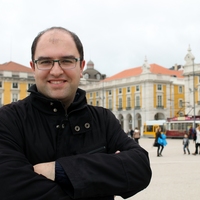
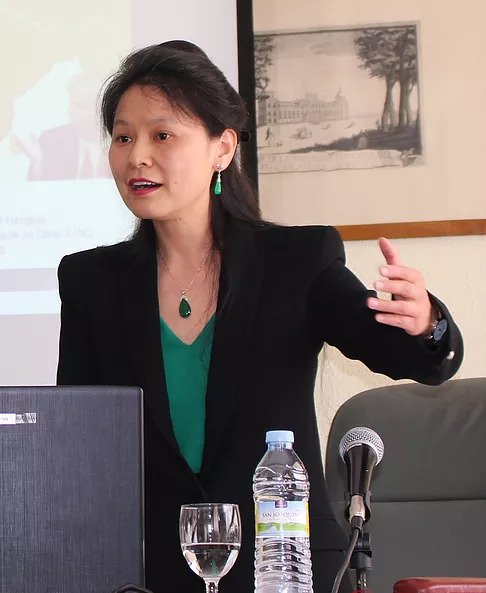
Professor Alicia Llarena González is a full-time faculty member at the University of Las Palmas de Gran Canaria, where she holds a professorship in the Department of Hispanic, Classical and Arabic and Oriental Studies. She is an active researcher in the group 'Thought, Creation and Representation in the field of Cultural Studies'. Her research spans: Hispanic and Latin American literary traditions Intercultural studies with focus on Hispanic-African/Moroccan narratives Hermeneutics of mythological and postcolonial texts Magical realism and literary theory She has supervised doctoral theses examining contemporary African literature, intercultural sociodynamics, and classical myth reinterpretations. As lead of her research group, she develops projects analyzing cultural representation across Mediterranean and African contexts, with current doctoral research focused on Hispanic-Moroccan literary dialogues and Equatorial Guinean narratives.
Rafael Ángel García Lozano is a Professor at Universidad Católica de Ávila and member of EUM Fray Luis. He holds a PhD in Art History from Universidad de Valladolid, along with degrees in Theology, Eclesiastical Studies, and Education. His academic profile is deeply rooted in the study of religious architecture, particularly focusing on Zamora, Spain during the 20th century. He is an active member of the Observatorio de Arquitectura Religiosa Contemporánea (OARC) and the Red Internacional de Investigación en Arquitectura y Arte Sacros (RIIAAS). His research interests span across Art History, Religious Architecture, Theology, Urban History, and Contemporary Religious Art, with special emphasis on Spanish architecture from the Franco period to contemporary times. He has conducted extensive research on religious buildings in Zamora, analyzing their historical context, architectural styles, and cultural significance. García Lozano's scholarly output shows a consistent focus on religious architecture in Spain, particularly examining how theological concepts manifest in physical structures. His recent publications (2021-2025) reveal a progression from specific case studies of Zamoran architecture to broader theoretical considerations about liturgical space, religious art, and the relationship between faith and architectural expression. His work demonstrates how religious architecture evolved through different stylistic periods while maintaining its spiritual purpose. As an active academic, he has participated in numerous conferences, delivered lectures on religious architecture, and contributed to architectural conservation efforts in Zamora. His work bridges academic research with practical applications in architectural preservation and cultural heritage management.
Julio Manuel Barroso Osuna is a Professor at the Department of Didactics and Educational Organization within the Faculty of Educational Sciences at the University of Seville. With decades of academic service, he has established himself as a leading expert in educational technology and digital teaching competence. His extensive research portfolio demonstrates significant contributions to the understanding of technology integration in educational contexts across multiple levels of instruction. Department of Didactics and Educational Organization Faculty of Educational Sciences Faculty of Nursing, Physiotherapy and Podiatry (cross-appointment) Professor Barroso Osuna's research interests center on educational technology, with particular emphasis on e-learning systems, digital teaching competence frameworks, and technology integration in teacher training. His work bridges theoretical educational frameworks with practical technological applications, focusing on how digital tools can transform teaching methodologies and enhance learning outcomes. He has pioneered research on personal learning environments, cognitive load in technology-mediated instruction, and the adaptation of educational taxonomies for the digital age. Analysis of his recent publications reveals a strong focus on the DigCompEdu framework for assessing digital teaching competence across international contexts, particularly in Latin American universities. His research demonstrates consistent evolution from foundational work in multimedia educational materials toward contemporary investigations of immersive technologies and personalized learning environments. The interdisciplinary nature of his work connects educational theory, cognitive science, and technological innovation. Principal Investigator on numerous national research projects including 'Realidad Aumentada para Aumentar la Formación' (2014-2017) Coordinated the 't-MOOC' project for digital competence development of university faculty Extensive publication record spanning over 25 years in educational technology Contributor to the development of the European DigCompEdu framework Professor Barroso Osuna has supervised numerous research projects focused on educational technology implementation, particularly in the context of the European Higher Education Area. His work has influenced teacher training programs across Spanish and Latin American universities, with particular emphasis on practical applications of technology in diverse educational settings. He has developed multiple innovative educational resources and assessment tools that have been adopted by institutions throughout Spain. His research group 'GRUPO DE INVESTIGACIÓN DIDÁCTICA: ANÁLISIS TECNOLÓGICO Y CUALITATIVO DE LOS PROC. DE ENSEÑANZA-APRENDIZAJE' has served as a hub for interdisciplinary research on technology-mediated teaching and learning processes, fostering collaboration between educational researchers, technologists, and practitioners.
Pedro Rueda Ramírez is a Professor at the University of Barcelona's Faculty of Information and Audiovisual Media, where he serves as Coordinator of the Master's Degree in Libraries and Heritage Collections. He holds a Doctorate in History from the University of Seville and is an active member of the Information, Communication and Culture Research Center at the university. His research focuses on the history of printed circulation and book distribution networks with special attention to cultural exchange between Europe and America, particularly across the Atlantic. He also studies bibliographic heritage, examining printed materials, ownership marks, and book usage throughout history. His work spans from early modern print culture to contemporary bibliographic preservation. Rueda Ramírez's recent publications demonstrate a strong focus on transatlantic book trade networks, religious libraries, inquisitorial practices, and regional printing centers across Spain and Latin America. His research reveals intricate connections between Seville as a major publishing center and book distribution networks extending to Mexico, Peru, and other parts of the Spanish Empire. He has made significant contributions to understanding how books traveled across the Atlantic, how libraries were formed in colonial contexts, and how local printing industries developed in different regions. Humanistic Research Award Cultura i Noblesa 2013 from the Real Maestranza de Caballería de Sevilla and the Real Academia Sevillana de Buenas Letras He is principal researcher, alongside Mònica Baró, of the funded R+D project 'History of book advertising in Spain: (15th-20th centuries)' (HAR2013-46336-P). His work has been supported by various research grants focusing on book history and bibliographic heritage. Rueda Ramírez actively collaborates with international research teams, particularly through the CODICIS Erasmus+ project focused on bibliographic heritage training in Latin America. His work bridges academic research with practical applications in library science and heritage preservation.
María Jesús Llarena Ascanio is an Associate Lecturer in the Department of English and German Philology at the University of La Laguna, Spain, having served as Lecturer from 2001-2017 before her promotion to Associate Lecturer in 2018. Her academic work operates within the broader Arts and Humanities domain at the university. Her educational background includes: Bachelor's degree in English Philology (1991) Postgraduate Courses (1991-1993) PhD in English Philology from University of La Laguna (2000) with thesis "Alterity and metafiction poetic design in the work of Michael Ondaatje" supervised by Dr. Bernhard Hans Ludwig Dietz Guerrero Dr. Llarena Ascanio's research centers on postcolonial literature and diaspora studies, with concentrated expertise in the Anglo-Indian diaspora within English Canadian contexts. She conducts comparative analyses between Canadian and Latin American literatures while exploring transnational narrative structures, refugee experiences in literary representation, and theoretical dimensions of metafiction and poetic design. Her scholarly contributions are channeled through the NARRA research group (Narrative Spaces: United States and Canada), which investigates narrative constructions across North American cultural landscapes. She maintains an active academic presence through her institutional profile and personal website, continuing to advance research in postcolonial and transnational literary studies while contributing to philological scholarship at the University of La Laguna.
Dr. Mauro Grassi-Roig serves as an Associate Professor in the Department of Pedagogy and Specific Didactics at the University of the Balearic Islands. His academic work centers on preparing future educators to implement inclusive practices in physical education settings, with a particular focus on students with disabilities. Dr. Grassi-Roig's research interests span inclusive physical education, disability awareness in sports, teacher training for inclusive education, and physical activity programs for people with disabilities. His work examines the barriers and facilitators to inclusion across multiple cultural contexts, including Spain, Chile, Colombia, and Peru. A significant portion of his research focuses on the 'Deporte Inclusivo en la Escuela' (Inclusive Sport at School) program, which provides practical tools and strategies for teachers to create more inclusive physical education environments. His recent publications demonstrate a consistent focus on teacher self-efficacy in inclusive settings, cross-cultural comparisons of inclusive education practices, and the development of specific interventions to improve disability awareness in physical education. The systematic literature review he co-authored covering disability awareness interventions from 1992-2023 represents a significant contribution to the field. Dr. Grassi-Roig has received recognition for his academic work, including the 'Recognition of Academic Excellence in BSc' award in February 2017. His research has been cited by scholars across multiple institutions in Spain, Chile, and internationally, indicating the growing impact of his work in the field of inclusive physical education. As an educator, Dr. Grassi-Roig teaches courses related to physical education, body expression, and musical education for teachers. For the 2025-26 academic year, he is teaching 'Physical Education, Leisure and Recreation' and 'The Teacher's Corporal and Musical Education' as part of the Double Degree in Early Childhood Education and Primary Education in Ibiza. His teaching reflects his research focus, preparing future educators to incorporate inclusive practices in their classrooms. Dr. Grassi-Roig is affiliated with the GICAFE (Ciències de l'activitat física i l'esport) research group and collaborates extensively with researchers at Universidad Politécnica de Madrid, particularly within Javier Pérez-Tejero's Lab. His international collaborations extend to Chile, Colombia, and Peru, reflecting the global relevance of his research on inclusive physical education.
Dr. Luo Huiling is an Assistant Professor in the East Asian Area at the Faculty of Philology, Universidad Complutense de Madrid (UCM), where she teaches Modern and Contemporary Chinese Culture, Advanced Chinese Language, and Translation Analysis. She holds dual PhDs: one in Contemporary History (2017) focusing on China-Spain relations 1970-1982, and another in Theoretical and Applied Linguistics (2025) analyzing discourse and translation of Xi Jinping's governance texts. Her academic background includes multiple master's degrees: in History of the Portuguese Empire (Universidade Nova de Lisboa), International Relations and Diplomacy (Spanish Diplomatic School), and Hispanic Philology with Latin American specialization (Beijing Foreign Studies University). She maintains strong institutional ties with Chinese academic institutions, particularly Beijing Foreign Studies University, and participates in numerous research projects examining China-Spain relations from historical, linguistic, and cultural perspectives. Dr. Luo's research focuses on China-Spain diplomatic relations, Chinese political discourse analysis, translation studies, and cultural exchanges. Her work bridges historical analysis with linguistic precision, examining both the evolution of bilateral relations and the linguistic representation of these relations. She has published extensively on Sino-Spanish historical connections, contemporary Chinese studies in Spain, and the translation of Chinese political concepts. Her recent publications show a clear trend toward analyzing contemporary Chinese political discourse and its translation, while maintaining historical depth through studies of early European sinology and China-Spain diplomatic history. The interdisciplinary nature of her work spans political science, linguistics, history, and cultural studies, reflecting her dual expertise in historical and linguistic methodologies. Dr. Luo actively supervises students at all levels, from undergraduate theses on Chinese literature to doctoral research in linguistics and history. She directs numerous Final Degree Projects, supervises Master's theses at Universidad de Alcalá, and currently mentors five doctoral students across various programs at UCM and Universidad de Alcalá de Henares. Her supervision focuses on translation studies, intercultural communication, and China-Spain relations. She participates in multiple research projects including MUSEMISION (Spain-China Interactions 1815-1949), the National Social Science Fund of China project on Chinese memories in Spanish diplomatic texts, and Shanghai Social Science Fund projects on China's national image in Latin America. Her international collaborations span institutions in China, Portugal, and Spain, reflecting her role as a key academic bridge between Chinese and Spanish scholarly communities.
Eva Sanz Jara is a Full Professor in the Department of Social Anthropology at the Faculty of Geography and History, Universidad de Sevilla. She is an active researcher with extensive publications in anthropology, Latin American studies, and museum studies. Her academic work spans teaching, research, and international collaboration. Professor Sanz Jara's research focuses on Social Anthropology with special emphasis on Indigenous Studies, Latin American Ethnology, and Museum Studies. Her work examines how indigenous populations have been integrated into national identities in 19th and 20th century Latin America, the representation of indigenous cultures in museums, and the historical development of anthropological thought in Spain regarding America. She has conducted extensive research on nation-building processes, cultural representation, and the relationship between anthropology and history in Latin American contexts. Her recent publications (2018-2022) demonstrate consistent focus on the history of Spanish anthropology regarding America, museum representations of indigenous cultures, and 19th century Latin American nation-building. Her 2022 article 'Historias de la antropología española: revisión y apuntes para su discusión' represents a significant contribution to understanding anthropological traditions in Spain. She frequently examines how indigenous populations were conceptualized in intellectual and political discourse during Latin America's formation as independent nations. Professor Sanz Jara is a member of the research group TRANSFORMACIONES SOCIALES Y CULTURALES EN ANDALUCIA Y AMERICA (TSCAA) and participates in the project 'Territorios de la memoria: otras culturas, otros espacios en Iberoamérica.' She has collaborated on numerous international research initiatives with institutions in Argentina, Chile, Uruguay, and Paraguay, particularly focusing on memory spaces and cultural representation. Her teaching includes Anthropological Museology, Ethnology of Spanish and Latin American Peoples, and Introduction to Anthropology. She has presented her research at major international conferences including the CEISAL Congress in Helsinki, Finland, and has published extensively in academic journals such as Revista Murciana de Antropología, Anales del Museo de América, and Revista Complutense de Historia de America. Her scholarly contributions include books, book chapters, and numerous articles that have significantly advanced understanding of anthropological traditions and indigenous representation in Latin American contexts.
Catalina González-Cabrera is a Communications Professor at the University of Azuay in Cuenca, Ecuador, where she directs the 'Narrations for Change' research project. She holds a PhD from the University of Salamanca within the Knowledge Society Training program, along with Master's degrees in Digital Journalism and Communication and Marketing. Her undergraduate degree is in Social Communication (recognized in Spain as equivalent to a Bachelor's degree in Journalism). Her research focuses on narrative persuasion, media and digital literacy, health communication, and educational entertainment. She has conducted numerous experimental studies examining how different narrative formats influence health-related attitudes and behaviors, particularly regarding teenage pregnancy prevention and child sexual abuse prevention. Her work often involves measuring media literacy levels and their interaction with narrative persuasion mechanisms. Professor González-Cabrera's publications from 2016-2023 demonstrate a consistent research trajectory examining the intersection of narrative communication, media literacy, and health outcomes. Her work shows particular attention to how media literacy moderates the effects of narrative interventions, with significant implications for designing effective health communication campaigns in Latin American contexts. She has secured research funding for multiple projects including: 'Stories for change: EduEntertainment through stories, puppets and animations to prevent child sexual abuse' 'Media literacy among young people in public educational institutions in Cuenca, Zamora, Loja and Quito' 'Edutainment Narratives for the Prevention of Adolescent Pregnancy' Professor González-Cabrera maintains an active research profile with publications in both Spanish and English journals, demonstrating her engagement with both local Ecuadorian contexts and international academic communities. Her work contributes significantly to understanding how narrative communication can be optimized for health promotion in resource-constrained settings.
Luis Amador Hidalgo serves as Full Professor in the Department of Economics at the University of Cordoba, Spain, with research spanning rural development, sustainable tourism, and experimental economics. His work bridges academic theory and practical applications through collaborations with institutions including Universidad de Costa Rica and Spain's State Research Agency. His educational foundation includes: Doctor of Economic and Business Sciences, University of Cordoba (1995) Bachelor of Science in Economics and Business, Comillas Pontifical University Professor Amador Hidalgo's research pioneers sustainable tourism models as economic drivers, particularly olive oil tourism in Andalusia and tequila tourism in Mexico. His experimental economics work examines cognitive foundations of risk behavior, while regional impact studies employ Social Accounting Matrices. This trifocal approach—tourism innovation, behavioral economics, and regional development—creates unique cross-disciplinary insights for Mediterranean and Latin American contexts. Analysis of his 2012-2025 publications reveals evolving emphasis from regional Spanish studies toward international comparative work, with growing integration of experimental methods. Key thematic clusters include sustainable tourism infrastructure (45% of output), rural economic impact assessment (30%), and behavioral decision-making (25%), demonstrating consistent contribution to place-based economic development literature. His research leadership includes: AACID-funded project strengthening Costa Rica's Agri-Food Sciences Faculty (2021-2025) AECID organic agriculture development initiative (2021-2023) State Research Agency projects on economic experiments (2019-2022) Continuous regional projects in Córdoba since 1997 including sports economics impact studies Professor Amador Hidalgo directs interdisciplinary teams integrating economists, tourism specialists, and agricultural scientists. Current projects focus on post-pandemic rural recovery through sustainable tourism innovation and behavioral economics applications, with particular emphasis on Mediterranean agricultural heritage preservation and Latin American development partnerships.