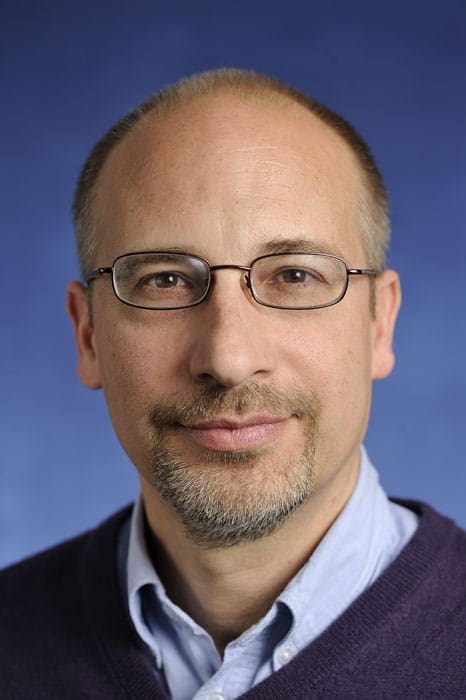
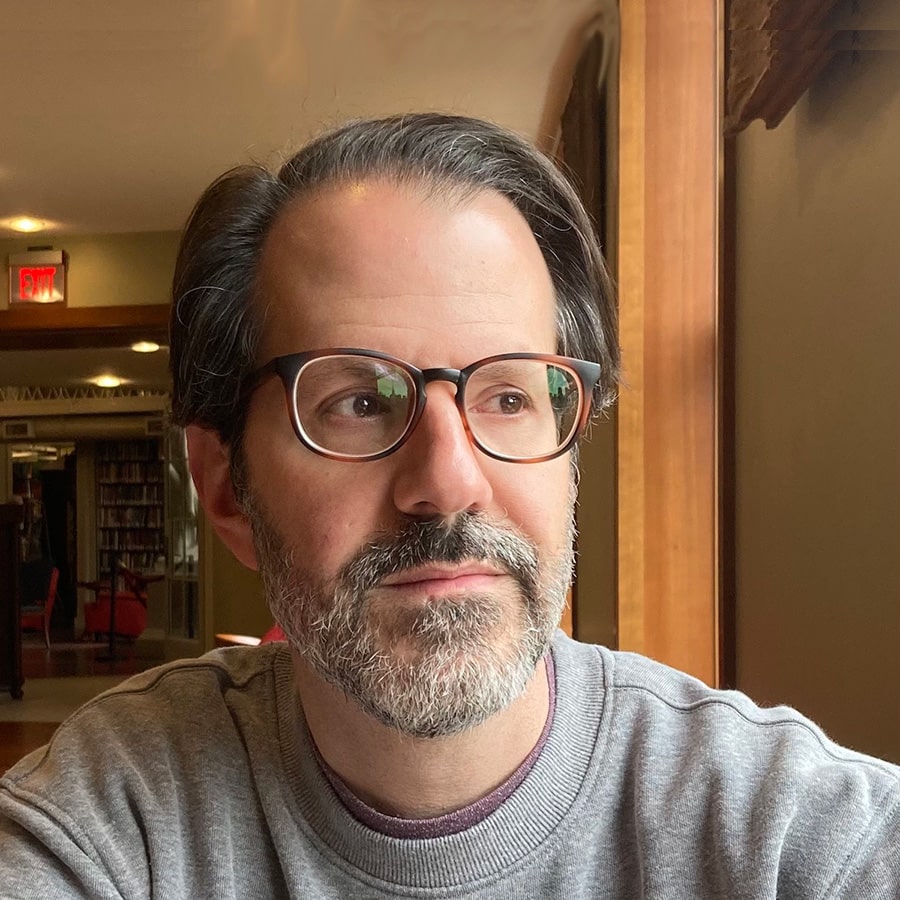
Joel Andreas is a Professor of Sociology at Johns Hopkins University since 2003, serving as Program Director of the East Asian Studies Program. His research focuses on political contention, social inequality, and social change in contemporary China. He holds a PhD in Sociology from UCLA and teaches social theory, political sociology, and courses on Chinese society. He has held visiting positions at universities including the University of Sydney, Hong Kong University, and Ningxia University. His work examines labor movements, rural land policies, and class dynamics in China. Recent research includes analyses of staff-worker congresses, rural land dispossession, and the persistence of militarism in U.S. policy. He critiques market reforms and explores the legacy of the Cultural Revolution. Andreas has contributed to debates on China’s transition to capitalism and the decline of socialist systems. His publications span topics from urbanization to state coercion in rural development. He maintains an active role in academic exchanges and policy-relevant research on China’s socio-political landscape.
James A. Robinson is a University Professor at the University of Chicago with joint appointments in the Harris School of Public Policy and Department of Political Science. An economist and political scientist, he conducts influential research on political and economic development, examining how political power, institutions, and prosperity interact through both quantitative economic modeling and qualitative fieldwork methodologies. Robinson's research focuses on institutional analysis and political economy, with deep regional expertise in sub-Saharan Africa and Latin America. He has conducted extensive fieldwork across Bolivia, Colombia, Haiti, Democratic Republic of Congo, Nigeria, Sierra Leone, South Africa, and Zimbabwe, investigating how historical institutions shape contemporary economic outcomes. His interdisciplinary approach integrates economic theory with anthropological and historical case studies to explain patterns of economic divergence and political stability. Recent publications (2023-2025) reveal persistent themes in institutional persistence, state-society dynamics, and the cultural foundations of development. His work increasingly examines the interaction of economic and political inequality, the role of non-institutional factors in leadership strategies, and the historical roots of peripheral development trajectories across diverse global contexts. Scientific recognition includes: 2024 Sveriges Riksbank Prize in Economic Sciences in Memory of Alfred Nobel Fellow, Institute of African Studies at the University of Nigeria, Nsukka Robinson co-authored three seminal books with Daron Acemoglu: Economic Origins of Dictatorship and Democracy (theoretical foundations of regime stability), Why Nations Fail (translated into 41 languages, arguing inclusive institutions drive prosperity), and The Narrow Corridor (analyzing state-society struggles for liberty). He maintained a 28-year summer school at Colombia's University of the Andes (1994-2022) and continues active research collaborations across Africa and Latin America.
Eric Van Young is a distinguished Professor of History at the University of California, San Diego (UCSD), specializing in colonial and 19th-century Latin American history, particularly Mexico. He has held significant roles, including Chair of the Department of History (2000-2004) and Interim Dean of the Division of Arts and Humanities (2007-2008). His research focuses on rural history, peasant movements, cultural history, and biographical studies of key figures like Lucas Alaman. He earned his B.A. from the University of Chicago (1967), M.A. and Ph.D. from UC Berkeley (1968, 1978). Education: B.A. (University of Chicago), M.A. & Ph.D. (UC Berkeley) Roles: Professor of History, Department Chair, Interim Dean His research explores Mexico’s colonial and early national periods, emphasizing rural economic structures, popular rebellions, and the intersections of culture and politics. Current projects include a biography of Lucas Alaman and a synthetic history of Mexico (1750-1850). He has authored numerous books, including Writing Mexican History (2012) and The Other Rebellion (2001), alongside over 100 articles. His work bridges economic and cultural historiography, offering critical insights into regional dynamics and the construction of national identity. Van Young’s scholarly contributions include editorial roles for journals and book series, as well as extensive peer review for academic publishers. His interdisciplinary approach addresses themes like messianic movements, state formation, and the legacy of colonial institutions in modern Mexico.
Matthew Potolsky is Professor of English at the University of Utah, specializing in nineteenth-century literature and literary theory. His career spans from 1998 Lecturer at Harvard University to current University Professorship. He earned a BA in Comparative Literature and Philosophy (1990), followed by MA and PhD in Comparative Literature (1992, 1997) from UC Irvine. Chair of English Department (2013-2016) University Professor (2014-2016) Research focuses on Decadence , Mimesis , Finance-Aesthetics intersections , and Government Secrecy . His work traces connections between financialization and decadent aesthetics, revealing how economic cycles influence artistic production. Key themes include: Decadent anti-realist literary movements Finance capital's cultural impact Decadent counterpublic formations Victorian aesthetic education debates Sublime aesthetics in national security Cosmopolitanism in literary communities Recent publications analyze: Decadent style as financialization rhetoric Reintroduction of verisimilitude theory Decadent responses to financial crises Mimetic labor in artistic production Decadent cosmopolitan counterpublics Historical parallels between financialization and literary decadence
Ramsey McGlazer is an Associate Professor specializing in twentieth-century European and Latin American literature, film, and critical theory. His research engages with poetry, politics-aesthetics intersections, critical carceral studies, and feminist/queer/psychoanalytic frameworks. He holds a Ph.D. in Comparative Literature and Critical Theory from UC Berkeley (2015) and previously taught at the University of St Andrews and Brown University’s Pembroke Center. McGlazer’s work interrogates modernist critiques of progress, radical psychiatry movements, and the interplay between aesthetic practices and institutional critique. His acclaimed monograph Old Schools: Modernism, Education, and the Critique of Progress (2020) won the American Association for Italian Studies First Book Prize. Current projects include The Clinic and its Double , exploring mid-century radical psychiatry and avant-garde art. He serves as Senior Editor of Critical Times and Coeditor of Italian Culture , and has translated key works like Rita Segato’s The War Against Women . McGlazer’s writing appears in venues such as Los Angeles Review of Books and n+1 . Research interests span Surrealist provocations, Brazilian artist Lygia Clark’s propositions, and transnational feminist solidarities. His scholarship bridges literary analysis with critical engagements in carceral studies, postcolonial theory, and decolonial thought.
Emilio Sauri is a Professor in the Department of English at the University of Massachusetts Boston. His expertise spans American literature, Latin American literature, critical theory, and photography, with a focus on literature’s relationship to the global economy from the 19th to 21st centuries. PhD, University of Illinois at Chicago BA, Northwestern University Sauri's research examines literature and visual art in the context of globalization, capitalism, and cultural theory. He is currently working on a monograph titled *Imperial Decay: Literature, Autonomy and the End of Modernization in the Americas* (under contract with Northwestern University Press). His prior editorial work includes co-editing *Literature and the Global Contemporary* (Palgrave, 2017) and *Literary Materialisms* (Palgrave, 2013), alongside a special issue of *nonsite* on Latin American literature and theory. His recent publications explore intersections of literature with global capitalism, materialism, and postmodernism, often analyzing Latin American and U.S. texts. Notable topics include the labor of the novel, economic value in contemporary Mexican fiction, and critiques of modernization in Bolaño’s works. Fulbright Fellow, University of São Paulo, Brazil, 2018 Sauri has served on the Executive Committee of the Faculty Staff Union (2018–2020) and co-founded the Literary Theory Reading Group. He has taught courses such as *Post-1945 American Literature*, *Literature and the Political Imagination*, and graduate seminars on literary theory and critical methods.
Hernan Galperin is a Professor of Communication and Director of Doctoral Studies at the USC Annenberg School for Communication and Journalism. His expertise lies in Internet policy, digital inequality, and the intersection of technology adoption with social stratification. He holds affiliations with institutions like the Annenberg Research Network on International Communication (ARNIC) and the USC Annenberg Innovation Lab. Galperin has authored four books and published in leading journals such as Telecommunications Policy and New Media & Society. His research, funded by organizations like the Pew Charitable Trust and the Inter-American Development Bank, focuses on broadband accessibility, digital inclusion, and policy impacts. Notable awards include membership in the World Economic Forum’s Global Future Council and top paper awards from the International Communication Association (2020, 2022). Education background: While not explicitly detailed in the provided text, his academic roles and publications imply advanced training in communication studies, public policy, or related fields. His work integrates quantitative methods with policy analysis to address global challenges in technology access. Research highlights include studies on broadband’s role in poverty reduction (Ecuador), geographic discrimination in the gig economy, and the gender digital divide in Latin America. He has contributed policy briefs on the Affordable Connectivity Program and digital inclusion in public housing, demonstrating real-world policy impact. His affiliations with global institutions reflect a focus on international collaboration in addressing digital divides. Grants and awards: His funding sources include the Pew Charitable Trust, IDRC-Canada, and the Internet Society. Awards highlight his contributions to cyberpolicy and global media governance. His work often bridges academic research with actionable policy recommendations, particularly in underserved regions. Labs and teams: He directs ARNIC and collaborates with the USC Annenberg Innovation Lab and USC Price Center for Social Innovation, fostering interdisciplinary approaches to communication and technology challenges.
Prof. Paula-Irene Villa Braslavsky holds the Chair of Sociology/Gender Studies at Ludwig Maximilian University of Munich (LMU), Faculty of Social Sciences. She is on sabbatical during Summer Semester 2025 but continues research supervision and colloquia. Her research focuses on intersections of racism, sexism, and neoliberalism, with notable works like The Future of Difference and Top Girls . She co-edits the journal Gender Salon and leads projects on gender studies, queer theory, and postfeminism. Her academic contributions span monographs, anthologies, and journal articles addressing global social movements, anti-genderism, and body politics. Key themes include critical analysis of contemporary gender regimes, decolonial theory, and the sociocultural implications of neoliberalism. Her work frequently bridges theory and activism, emphasizing intersectional approaches to systemic oppression. Publications include edited volumes on #MeToo, fat studies, and the sociological analysis of bodies, reflecting her commitment to interdisciplinary research. She maintains an active academic presence through her website LMU Gender Studies and Academia.edu .
Katherine V. Gough is Professor of Human Geography at Lund University, Sweden, with a 30-year research focus on housing/home, work/entrepreneurship, youth/elderly geographies, mobility, urbanisation, and climate change across Africa, Latin America, and Asia-Pacific. She collaborates with Loughborough University's Clear Climate team on extreme heat mitigation in Ghana and leads the 'Trocha de Paz' project for Colombia's 'Total Peace' agenda. Research Themes Extreme Heat in Ghana Peacebuilding in Colombia Rural-Urban Dynamics Her multidisciplinary approach bridges academia, policy, and communities through projects like VEWEC, REFIT, and Paz Alto Cauca. Current work emphasizes: Climate-resilient housing design Post-conflict governance Informal sector innovation Scientific Engagement: British Academy funded VEWEC and REFIT projects Principal Investigator for Trocha de Paz (Colombia) Her collaborative research strengthens stakeholder networks in: West African urban livelihoods Colombian territorial peacebuilding Tropical climate adaptation
Dr. Juan Manuel Berbel Pineda is a full Professor at the Department of Business Organization and Marketing at Universidad Pablo de Olavide, Spain. His academic work focuses on tourism economics, sustainable tourism practices, and international business strategies, particularly within the hotel industry and textile sector. Key research areas: Tourism Economics, Sustainable Tourism, International Business Strategy Affiliated with IMEGS (Innovation and Marketing for a Sustainable Global Environment) research group Doctoral Programs: Innovation, Entrepreneurship and Family Business His research explores tourism competitiveness and internationalization patterns through empirical studies on hotel chains in Latin America, fair trade impacts in emerging economies, and post-COVID-19 rural tourism development. Analysis of 15 recent publications reveals strong emphasis on structural equation modeling, cross-cultural comparisons, and market segmentation strategies. Current academic activity includes international collaborations with institutions like Massey University, Varna University of Management, and University of Mauritius. His 2020 work on Ecuadorian chia seed exports demonstrates methodology for EU market selection using 7-dimensional indicators, while his sustainable tourism studies provide frameworks for pandemic-era tourism revival through non-overcrowding strategies.
London School of Economics and Political Science (LSE)United Kingdom
Abby Innes is an Associate Professor of Political Economy at the European Institute, London School of Economics , where she has been a faculty member since 1997. Her academic career includes a Visiting Fellowship at MIT (1995–1997) and a Jean Monet Fellowship at the European University Institute (2001–2002) . She has received multiple teaching awards , including the LSE Teaching Prize and European Institute Departmental Teaching Prize, and currently serves as the Teaching Chair of her institute. Research Interests : Dr. Innes specializes in the political economy of Central Europe , neoliberalism , and materialist utopias . Her work explores state capture , systemic transitions , and comparative capitalism , with a focus on the UK’s neoliberal transformation. Recent research addresses the political economy of the green transition and neoliberal institutional failures . British Academy Mid-Career Fellowship (2017-2018) LSE Teaching Prize (2002) LSE/ASRC Excellence in Education Award (2020) European Institute Departmental Teaching Prize (2011, 2013, 2015) Nominee for LSE Student-Led Teaching Excellence Awards (2014, 2020) Publications : Her 2023 book Late Soviet Britain: Why Materialist Utopias Fail argues that UK neoliberalism parallels Soviet economic dogma, leading to institutional rigidity , democratic erosion , and governance crises . She has published in journals such as The Review of International Political Economy and Comparative Politics , alongside frequent contributions to LSE Blogs and The London Review of Books .
Joel Suarez serves as Assistant Professor of History and Social Studies within Harvard University's Faculty of Arts and Sciences, holding dual appointments in the Department of History and the Committee on Degrees in Social Studies. His research examines critical intersections of labor, freedom, and social transformation in modern American history. His scholarly work centers on two major book projects: The Labor of Liberty: Work and the Problem of Freedom in American History , which analyzes evolving conceptual relationships between work and freedom amid abolition, industrialization, and deindustrialization; and a global labor history of the Volcker Shock investigating how debt crises reconstituted working-class families across Latin America, Europe, Africa, and the United States. His methodological approaches span intellectual history, political economy, and transnational frameworks with emphasis on class, race, and gender dynamics. Professor Suarez teaches foundational courses in labor history, intellectual history, and social theory. His educational background includes a PhD in History from Princeton University, followed by teaching positions at the CUNY School of Labor and Urban Studies prior to his current Harvard appointment. His research themes consistently engage Economic & Financial History, Global & Transnational Historiography, Labor History, and Social History within the twentieth-century United States context.
Emilio A. Parrado is the Dorothy Swaine Thomas Professor of Sociology at the University of Pennsylvania's School of Arts & Sciences and Director of the Population Studies Center. His research focuses on migration dynamics, particularly Hispanic populations in the U.S., international migration patterns, and social/demographic changes in Latin America. He combines quantitative and qualitative methods, including original survey and ethnographic data. Education: Ph.D. (Sociology, University of Chicago, 1997), M.A. (Sociology, University of Chicago, 1994), B.A. (Sociology, University of Buenos Aires, 1988). Key research areas include: Migrant health risks and transnational mobility (e.g., HIV/STI patterns at the U.S.-Mexico border) Gendered impacts of migration on labor markets and family structures Demographic transitions and social inequality in Latin America, including post-pandemic labor market shifts in Argentina Recent work emphasizes deportation effects on mental health, regional migration trends to Buenos Aires, and the intersection of immigration policy with fertility and urban development. His Migrante Project focuses on Mexico-U.S. border health observatories. Awards: None explicitly listed. Active in grants related to migrant health and labor studies. Labs/Teams: Leads the Population Studies Center and collaborates with the Latin American and Latino Studies Program at UPenn.
Marcela Echeverri Muñoz is an Associate Professor in the Department of History at Yale University, affiliated with the Faculty of Arts and Sciences. Her scholarship bridges history, anthropology, and political theory, with a focus on Latin America, the Atlantic World, and the Spanish Empire. She is recognized for her interdisciplinary approach to understanding political subjectivities, state formation, and social transformation during the Age of Revolutions. PhD in Latin American and Caribbean History, New York University, 2008 MA in History of the Hispanic World, Fundación MAPFRE-Tavera and CSIC, Madrid, 2006 MA in Social and Political Theory, The New School for Social Research, 2001 BA in Anthropology, Universidad de los Andes, Bogotá, 1997 Her research centers on the interplay of race, gender, law, and political theory in colonial and 19th-century Latin America. She investigates how enslaved and Indigenous peoples navigated imperial and republican transitions, particularly through royalist affiliations. Her work challenges peripheral narratives of Spanish America in Atlantic slavery studies, positioning the region as a central site of abolitionist and constitutional experimentation. The trends in her recent publications reveal a sustained focus on slavery, abolition, and political transformation in the Spanish American mainland. She analyzes how anti-slavery movements were intertwined with republicanism, citizenship, and state formation, especially in Gran Colombia. Her scholarship spans legal history, Atlantic processes, and transimperial dynamics, often highlighting marginalized voices in revolutionary contexts. She frequently contributes to major reference works and edited volumes on Atlantic revolutions and Latin American independence. Her scientific awards and fellowships reflect her standing in the field: James Alexander Robertson Prize Michael Jiménez Prize Bolton-Johnson Prize Honorable Mention Yale Heyman Prize for Outstanding Scholarly Publication Alexander von Humboldt Research Fellowship MacMillan Research Fellow, Yale Mellon Residential Fellow, CUNY NEH Summer Institute Participant, Johns Hopkins Fellowships from John Carter Brown Library, CSIC, Fundación Mapfre, and Instituto Colombiano de Antropología e Historia Echeverri has secured significant research grants from Harvard’s Atlantic History Seminar, CUNY Research Foundation, and Yale. She has co-edited special issues on Gran Colombian history and Spanish American abolition, and led key academic initiatives including the Race and Slavery in the Atlantic World Working Group and the Early Modern Empires Workshop at Yale. Though student advising is not explicitly detailed, her role as a senior scholar implies mentorship of graduate students. She is affiliated with several research networks and has been a visiting scholar at institutions such as Freie Universität Berlin. Her ongoing book project on Gran Colombian slavery underscores her commitment to redefining the hemispheric significance of Latin American abolition. She remains an active contributor to both scholarly and pedagogical conversations in Atlantic and Latin American history.
Sergio Moreno Gil is a Professor in the Department of Economics and Business Management at Universidad de Las Palmas de Gran Canaria (ULPGC), Spain. He is affiliated with the GIR TIDES research group (Economy, Environment, Sustainability and Tourism) and the Institute of Tourism and Sustainable Economic Development. His academic work focuses on tourism economics, marketing, and sustainability within the Social and Legal Sciences branch. Dr. Moreno Gil's research interests span across multiple dimensions of contemporary tourism. His primary focus areas include sustainable tourism development, destination marketing, sharing economy platforms in tourism, and consumer behavior analysis. He has made significant contributions to understanding tourism in the Canary Islands, particularly through his work with the Canary Islands Tourism Observatory. His research integrates traditional tourism studies with emerging fields like neurotourism and biometric analysis of tourist experiences. His publication record shows a clear trend toward addressing contemporary challenges in tourism. Recent works focus on sustainability in mass tourism destinations, the impact of sharing economy platforms, gastronomic tourism marketing, and collaborative tourism networks. His research demonstrates a strong methodological diversity, employing bibliometric analysis, social network analysis, and empirical studies of tourist behavior. Dr. Moreno Gil has been actively involved in the Canary Islands Tourism Observatory, contributing to annual reports on tourism sustainability in the region. His collaborative work spans across the Ibero-American region, with numerous co-authorships reflecting international research networks in tourism studies.