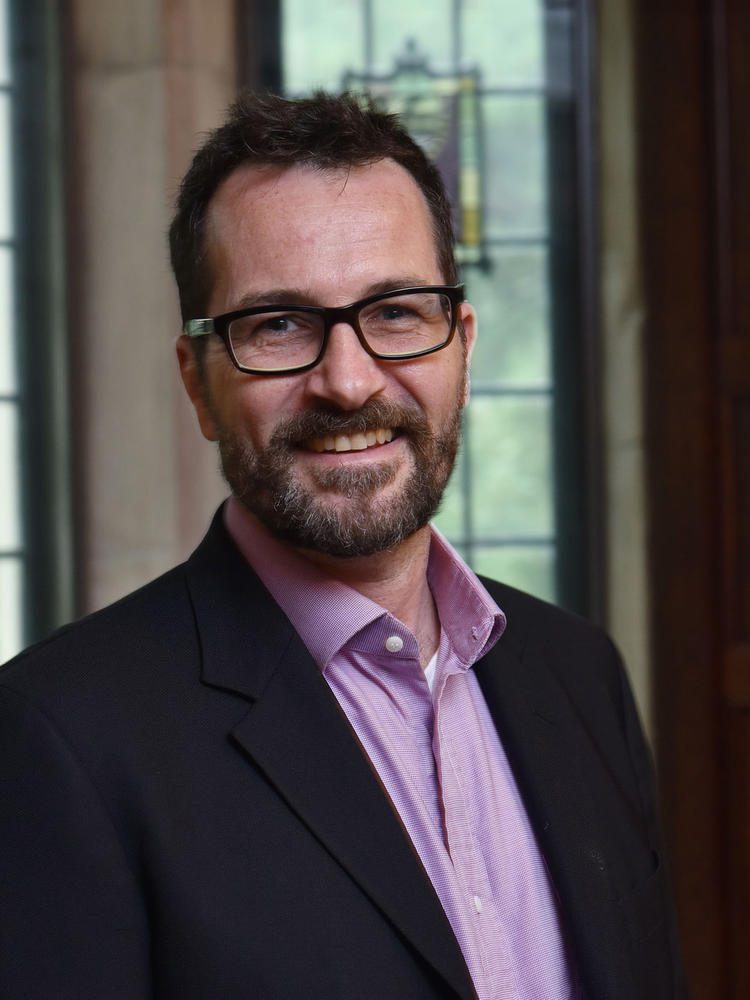
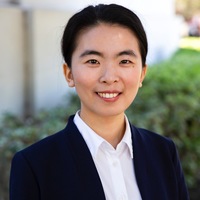
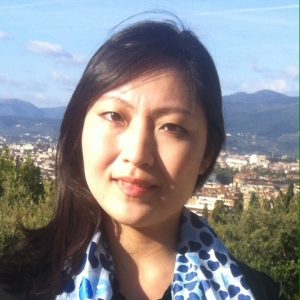
Sophie Volpp is a Professor in the Department of East Asian Languages and Cultures and Comparative Literature at the University of California, Berkeley. Her research focuses on Chinese literature from the 16th to 19th centuries, with particular emphasis on theatricality, material culture, and literary objects. She is the author of *Worldly Stage: Theatricality in Seventeenth-Century China* (2011) and *The Substance of Fiction: Literary Objects in China, 1550-1775* (2022). Her current projects include a book on the National Peiping Library’s preservation efforts during the Sino-Japanese War and an analysis of referents in *The Story of the Stone*. Her scholarly work bridges literary analysis and cultural history, examining themes such as gender, power, and spectacle in late-imperial China. She has translated works by pre-modern women poets and dramatists, contributing to gender-centric scholarship in East Asian studies. Her publications span journal articles and edited volumes, addressing topics like Qing-era theatrical design, material circulation in classical novels, and cross-cultural influences in literary production. Her research has been published in venues such as *Harvard Journal of Asiatic Studies* and *Journal of Asian Studies*.
David Der-Wei Wang serves as Edward C. Henderson Professor of Chinese Literature and Comparative Literature at Harvard University, holding dual appointments in the Department of East Asian Languages and Civilizations. He directs the CCK Foundation Inter-University Center for Sinological Studies and holds prestigious Academician positions at both Academia Sinica and the American Academy of Arts and Sciences. His distinguished career includes prior faculty roles at National Taiwan University (1982-1986) and Columbia University (1990-2004), with continuous Harvard affiliation since 1986. His academic credentials include: B.A. in Foreign Languages and Literature, National Taiwan University M.A. in Comparative Literature, University of Wisconsin-Madison (1978) Ph.D. in Comparative Literature, University of Wisconsin-Madison (1982) Wang's research pioneers interdisciplinary approaches to Modern and Contemporary Chinese/Sinophone Literature, Late Qing fiction, and colonial Taiwanese studies. His work critically examines historical trauma , cultural identity formation , and transnational literary networks , particularly through the lens of political upheaval and diasporic experiences. Special attention is given to mid-20th century Chinese intellectuals navigating ideological crises, with methodologies blending comparative literary theory and historical analysis. His eight major publications (1997-2020) reveal consistent thematic evolution toward global frameworks for Chinese literary studies. Early works like Fin-de-Siècle Splendor established foundations in Late Qing modernities, while later volumes including A New Literary History of Modern China and Why Fiction Matters expand into transnational Sinophone networks and contemporary sociopolitical relevance. The corpus demonstrates increasing emphasis on diasporic perspectives and decolonizing methodologies across Chinese literary historiography. Wang's scholarly recognition includes: Academician, Academia Sinica Academician, American Academy of Arts and Sciences Changjiang Scholar Award (2008) Humanitas Visiting Professorship at CRASSH, Cambridge (2013-14) As Director of the CCK Foundation Inter-University Center for Sinological Studies, Wang coordinates international research initiatives connecting North American and Taiwanese institutions. This leadership role facilitates collaborative projects in digital humanities and comparative Sinology, supporting emerging scholars through cross-institutional fellowships and academic exchanges focused on reimagining Chinese studies through global perspectives.
Paize Keulemans is an Associate Professor of Chinese Literature at Princeton University's Department of East Asian Studies. His research focuses on the interplay between oral and written literary traditions in Chinese literature, particularly exploring acoustic dimensions in 19th-century martial arts fiction and the role of gossip and rumor in 17th-century texts. He holds a Ph.D. from the University of Chicago (2004) and a B.A. from Leiden University (Netherlands). His work bridges literary analysis with cultural studies, examining topics like Dutch-Chinese interactions since the 17th century and the adaptation of classical texts like The Three Kingdoms into modern media such as video games. Education: Ph.D. in East Asian Languages and Literatures, University of Chicago B.A. in Chinese Language and Literature, Leiden University Research Interests: Acoustic imagination in printed novels Rumor dynamics in late-Ming literature Cultural exchanges between the Netherlands and China Modern adaptations of classical Chinese narratives Publications highlight his exploration of Ming-Qing transition narratives through Dutch tragic plays and the sonic dimensions of martial arts fiction. Current projects include analyzing video game adaptations of classical texts and the role of 'idleness' in literary production.
Mengxiao Wang is an Assistant Professor in the Department of East Asian Languages and Cultures at the University of Southern California's Dornsife College of Letters, Arts and Sciences. Her academic journey includes a Ph.D. in East Asian Languages and Literatures from Yale University, an M.A. in Classical Chinese Literature and Philology from Beijing Normal University, and a B.A. in Chinese Language and Literature from the same institution. She completed postdoctoral training as a Sheng Yen Postdoctoral Fellow in Chinese Buddhism at the University of California, Berkeley (2019-2021). B.A., Chinese Language and Literature, Beijing Normal University M.A., Classical Chinese Literature and Philology, Beijing Normal University Ph.D., East Asian Languages and Literatures, Yale University Postdoctoral Training: Sheng Yen Postdoctoral Fellow in Chinese Buddhism, University of California, Berkeley (2019-2021) Wang specializes in traditional Chinese literature and culture with a primary focus on the interplay between literary production and religious practice, particularly examining how Buddhist, Daoist, and Confucian traditions intersect with theatrical performance and literary creation in late imperial China. Her research reveals how religious practices shaped theatrical forms and how literary works served as vehicles for religious expression, with particular attention to gender dynamics within religious contexts. Her current book project, Buddhism and Theatricality in Early Modern China, investigates how monastics and the laity reshaped theater as a form of religious endeavor during the 16th and 17th centuries. Analysis of Wang's 15 most recent publications reveals a consistent scholarly trajectory exploring the intersections of Chinese literature, religious practice, and theatrical performance across multiple dynastic periods. Her work demonstrates particular expertise in Buddhist influences on Chinese drama, with recurring investigations of specific texts like the Buddhist play Guiyuanjing. She has established a distinctive research niche examining gender representations within religious theatrical contexts and the complex relationships between monastic communities and literary production. Her scholarship spans multiple disciplines including literary history, religious studies, theater studies, and gender studies, with particular strength in textual analysis of primary sources from late imperial China. Wang has taught courses including Introduction to Chinese Culture, Art and Literature; Cultural Topics in East Asian Literature; Classical Chinese I; Chinese Fiction; and specialized seminars on China. Her teaching reflects her research interests in Chinese literature, religion, and cultural history.
Thomas P. Kelly is an Assistant Professor in East Asian Languages and Civilizations at Harvard University, where he holds a position in the Faculty of Arts and Sciences. He earned his PhD from the University of Chicago (2017) and BA from the University of Oxford (2009). Previously, he served as a Junior Fellow in the Society of Fellows at the University of Michigan. As President of the Society for Ming Studies, he actively contributes to scholarly networks in early modern Chinese studies. His research focuses on Chinese literature, material culture, and pre-modern media studies, particularly exploring the interplay between writing and material objects in the Ming and Qing periods. His monograph The Inscription of Things: Writing and Materiality in Early Modern China (2023) examines how writers engaged with materiality through inscriptions on objects. Current projects include The Unfinished Book , analyzing manuscript culture during the Ming-Qing transition, and a study of performance theory via Pan Zhiheng’s essays. His work spans late imperial drama, fiction, poetry, and prose. Key research themes include the materiality of literature, rituals in performance, and the poetics of incompletion. His publications investigate topics such as mourning rituals in early Qing theater, the cultural significance of seal carvers’ biographies, and the role of objects in Ming-Qing literary imagination. He frequently critiques the relationship between textual production and social dynamics, emphasizing how material forms shape literary meaning. His articles demonstrate a focus on interdisciplinary approaches, blending literary analysis with art history, anthropology, and cultural studies. Notable works include explorations of Hong Sheng’s Palace of Lasting Life , Su Shi’s ink-making practices, and Fang Yongbin’s calligraphic materiality. His 2024 article ' The Crying Statue in Early Qing Drama ' delves into contested staging practices of theatrical mourning rituals. Though no formal grants or labs are listed, his academic leadership (e.g., Society for Ming Studies presidency) underscores his role in fostering collaborative research. His work bridges textual analysis with broader cultural histories, positioning material objects as central to understanding Chinese literary and intellectual traditions.
University of California, Los AngelesUnited States
Yinghui Wu is an Associate Professor in the Department of Asian Languages & Cultures at the University of California, Los Angeles (UCLA), specializing in early modern Chinese literature of the Ming and Qing periods. Their academic work bridges traditional Chinese literary studies with contemporary media theory, creating innovative approaches to understanding historical cultural practices. Education: Ph.D. in Chinese & Comparative Literature, Washington University in St. Louis M.A. in English Language and Literature, Peking University B.A. in English, Renmin University of China Professor Wu's research program centers on rethinking Chinese drama and performance cultures through the lens of early modern media studies. Their work challenges conventional paradigms that treat plays merely as literary texts or theatrical performances, arguing instead for understanding drama as part of a broader media ecology. Drawing on concepts like media archaeology (which examines pre-electronic media forms while critiquing technocentric views of media history) and media ecology (which considers the interconnectedness of media systems), Wu conceptualizes media expansively to include semiotic elements (language, writing, image), technical materials (manuscript, print, paper), and cultural practices (music, dance, drama). This interdisciplinary approach reveals how early modern Chinese drama functioned as 'expanding and changing processes of cultural innovation' through the refashioning and multiplying of media. Wu's publication record demonstrates a consistent focus on how drama intersects with various media forms in early modern China. The articles show progression from analyzing specific textual practices (the 2016 T'oung Pao article on eight-legged essays) to more comprehensive media theoretical frameworks (the 2025 East Asian Publishing and Society article on illustrated plays). The research reveals patterns of cross-generic experimentation and the fluid boundaries between literary forms in Ming dynasty China, with particular attention to how visual elements, textual annotations, and performance practices created complex reading and viewing experiences. Professor Wu is currently working on several significant projects including a monograph Playing with Plays: Drama and Early Modern Chinese Media Ecologies (forthcoming 2025) from Brill, and research on 'environments as media' through Pan Zhiheng's writings, broken bonds between performers and patrons in seventeenth-century China, and the information ecology of early modern China. They have also co-edited Emotions in Non-Fictional Representations of the Individual, 1600-1850: Between East and West (2021), demonstrating their commitment to cross-cultural scholarly dialogue.
Tina Lu serves as the Colonel John Trumbull Professor of East Asian Languages & Literatures at Yale University and has been Head of Pauli Murray College since 2017. She joined Yale in 2008 after a decade at the University of Pennsylvania, holding leadership roles including Department Chair (2013-2019) and Director of Graduate and Undergraduate Studies for East Asian Languages & Literatures. Her research centers on late imperial Chinese literature (c. 1550-1750), with expertise in classical Chinese texts, novels, plays, and belle-lettristic writing. She examines identity construction, transgressive themes, and social norms through works like The Story of the Stone , while pioneering initiatives such as Six Pretty Good to enhance academic discourse. Her teaching spans introductory surveys to specialized seminars on Ming-Qing literary culture. Professor Lu's publications reveal consistent scholarly engagement with philosophical and sociological dimensions of Chinese literary tradition, particularly focusing on taboo subjects and identity fluidity in classical dramas. Her work bridges historical analysis with contemporary theoretical frameworks, establishing significant contributions to understanding pre-modern Chinese cultural production. Her research has been supported by prestigious awards: ACLS Fellowship National Humanities Center Fellowship Mellon Foundation Grant As an academic leader, she has mentored generations of students while shaping departmental curriculum and administration, notably through her dual roles as department chair and Pauli Murray College Head. Her collaborative projects include co-editing the MLA volume on Approaches to Teaching The Story of the Stone , demonstrating commitment to pedagogical innovation.
Wei Shang serves as the Du Family Professor of Chinese Culture within Columbia University's Department of East Asian Languages & Cultures, maintaining his office in 404 Kent Hall. Academic background: BA, Peking University (1982) MA, Peking University (1984) PhD, Harvard University (1995) His research centers on pre-modern Chinese literary traditions, with concentrated expertise in Ming and Qing dynasty fiction and drama. He investigates cultural transformations through print culture, book history, and intellectual frameworks, producing seminal works like "Rulin Waishi" and Cultural Transformation in Late Imperial China (2003) and Writing on Landmarks: From Yellow Crane Tower to Phoenix Pavilion (2020). Recent publications reveal consistent interdisciplinary exploration connecting literary analysis with visual culture, imperial rituals, and perspective techniques, particularly examining how fictional narratives engage with court ceremonies and dynastic transitions. He has significantly contributed to scholarly discourse through editorial leadership, including co-editing Dynastic Crisis and Cultural Innovation: From the Late Ming to the Late Qing and Beyond (2005) and directing a special issue of the Journal of Chinese Literature and Culture on Literature and Visual Culture in Early Modern China (2015).
Ariel Fox serves as Associate Professor in the Department of East Asian Languages and Civilizations at the University of Chicago, with cross-appointment in Theater and Performance Studies. She currently holds the position of Director of Graduate Studies for EALC and is on academic leave during the 2024-2025 year. Her research centers on Ming-Qing literary production's entanglement with economic systems, specializing in vernacular fiction, drama, monetary history, and the conceptual framework of the economic imaginary. Current projects investigate anthropomorphic money narratives, banknote aesthetics, and movement practices in late imperial performance. This interdisciplinary work bridges literary analysis with economic anthropology to examine how theatrical forms mediated China's engagement with global commerce. Professor Fox's publications reveal consistent thematic focus on commercial representation in early modern Chinese literature, particularly examining moral dimensions of merchant figures, material transformations of currency, and community dynamics in theatrical space. Her scholarship demonstrates how literary genres processed economic change through narrative strategies that redefined social value and interpersonal relations during China's integration into global trade networks.
Yuming He is an Associate Professor of Chinese at the University of California, Davis. Her research focuses on late-imperial China (14th–19th centuries), with emphasis on dramatic performance, textual/visual culture, and book history. She previously taught at Reed College and the University of Chicago. Her award-winning book Home and the World examines Ming-dynasty woodblock printing and received the 2015 Joseph Levenson Book Prize. Education includes a Ph.D. from UC Berkeley and B.A./M.A. degrees from Peking University. Her teaching spans classical Chinese literature, drama studies, and cultural history, including courses like Traditional Chinese Fiction and Introduction to Classical Chinese . Research interests integrate material culture with intellectual history, particularly how texts and visual media shaped social narratives. Her articles explore topics like Ming-era ethnography, performative challenges in classical plays, and foundational theories of Chinese drama. Beyond publications, she has held the Chancellor's Fellow title at UC Davis (2016–2021).
Judith Zeitlin is the William R. Kenan, Jr. Professor in the Department of East Asian Languages and Civilizations and the Committee on Theater and Performance Studies (TAPS) at the University of Chicago. She holds a joint appointment with both departments and is deeply engaged in interdisciplinary scholarship that bridges literary history with performance studies, visual culture, gender studies, and medicine. Her work exemplifies the University of Chicago's commitment to rigorous interdisciplinary inquiry across traditional academic boundaries. Professor Zeitlin's research interests center on Ming-Qing literature, cultural history, and the arts, with specialties in Chinese opera and the classical tale. She often describes herself as a 'ghostologist' given her extensive work on ghosts in Chinese literature and culture. Her scholarship combines literary history with performance, music, visual and material culture, medicine, gender studies, and film. She has developed innovative approaches to Chinese cultural artifacts, examining them through multiple sensory and disciplinary lenses while maintaining close textual analysis as a foundation of her scholarship. Her publications demonstrate a consistent trajectory of exploring the intersections between literature and other art forms, particularly focusing on ghost narratives, opera, and material culture. Zeitlin's recent work has increasingly emphasized the performing and visual arts as ways to engage actively with all the senses, moving beyond text-centered analysis. Her scholarship shows a growing interest in music, especially as related to opera, which has driven much of her current research and collaborative projects. Scientific Awards and Recognition: NEH fellowship (2019-2020) supporting research on musical entertainment in early modern China Mellon grant from the Gray Center for Arts and Inquiry for collaborative opera project Co-principal investigator of interdisciplinary faculty seminar on the voice funded by the Neubauer Collegium for Art and Society Professor Zeitlin is deeply committed to involving students in her research and creative projects. She has collaborated with numerous University of Chicago MA and PhD students on exhibitions, publications, and performance projects. Her teaching includes innovative courses such as 'Ghosts and the Fantastic in Literature and Film' and experimental seminars like 'Literature of the Fantastic and Opera Adaptation' taught with composer Yao Chen. She regularly creates opportunities for students to participate in her research through exhibitions, publications, and performance projects, including co-curating the 'Performing Images: Opera in Chinese Visual Culture' exhibition at UChicago's Smart Museum of Art. Her major collaborative projects include co-curating the 'Performing Images' exhibition, co-editing 'The Voice as Something More: Essays Toward Materiality' with Martha Feldman, and collaborating with composer Yao Chen on the English-language opera 'Ghost Village' based on a Liaozhai tale. She has also co-taught interdisciplinary seminars such as 'Opera Without Borders' and 'Opera Film, China/Europe: Cases in Media Hybridity,' demonstrating her commitment to cross-cultural and cross-disciplinary dialogue.
Wai-yee Li is the 1879 Professor of Chinese Literature at Harvard University, where she has taught since 2000. Her research bridges early Chinese thought, late imperial literature, and cultural history, with special emphasis on Ming-Qing transitions. She holds office hours in Spring 2025, indicating ongoing academic engagement. Li's scholarship explores intersections of gender, material culture, and historical trauma across dynastic shifts. Primary research domains include: Cultural memory in late imperial China Gender representation in crisis narratives Material culture and literary symbolism Translation and interpretation of classical dramas Historiographical methods in premodern texts Her publications demonstrate consistent focus on how literature processes historical catastrophe and cultural identity. Recent book publications (2022-2025) examine material culture in late imperial China, Ming-Qing theatrical farces, and gender dynamics in classical friendship paradigms. Her translational work includes landmark editions of The Peach Blossom Fan and courtesan memoirs. Notable honors include: Elected Academician of Academia Sinica (2014) AAS Joseph Levenson Prize (2016) AAS Patrick D. Hanan Translation Prize (2018) Guggenheim Fellowship ACLS Fellowship NEH Grant Radcliffe Institute Fellowship Li has secured research funding from the Chiang Ching-kuo Foundation, Geiss Hsu Foundation, and American Academy in Berlin. While specific student advisees aren't listed, she regularly teaches graduate seminars on Ming-Qing literature and early Chinese historiography.
Rutgers, The State University of New JerseyUnited States
Peng Liu serves as an Assistant Teaching Professor in the Department of Asian Languages and Cultures within Rutgers University's School of Arts and Sciences. His scholarly work bridges Chinese literature, religious studies, and gender theory with focus on pre-modern Buddhist and Daoist traditions. Dr. Liu holds dual doctoral credentials: a Ph.D. in Chinese Language and Literature from Fudan University (China) examining medieval Buddhist hagiographies, and a Ph.D. in East Asian Languages and Cultures from Columbia University investigating vernacular literature and religion in late imperial China. His academic foundation includes: Ph.D., East Asian Languages and Cultures, Columbia University M.Phil., East Asian Languages and Cultures, Columbia University Ph.D., Chinese Language and Literature, Fudan University M.A., Chinese Language and Literature, Soochow University B.A., Chinese Language and Literature, Soochow University His research interrogates how religious traditions—particularly Daoist goddess cults and Buddhist practices—intersect with gender and literary representation across dynastic periods. Current projects analyze the popularization of marginalized Daoist traditions through fiction, emphasizing women's roles in religious transmission and the collective authorship dynamics in Buddhist texts. Dr. Liu's publication trajectory (2004-2023) reveals evolving scholarly priorities: early work established foundations in Buddhist hagiography and Tang poetry, while recent contributions increasingly center gender perspectives in Daoist studies and critical engagement with Qing dynasty literary conventions. His interdisciplinary approach connects religious ritual, literary form, and sociohistorical context across medieval and late imperial periods. Recognition for his scholarship includes: Open and Affordable Textbook Program Award (Rutgers University) L. Carrington Goodrich Fellowship (Columbia University) Chiang Ching-kuo Foundation Doctoral Fellowship Mellon Humanities International Travel Fellowship (Columbia University) In pedagogy, Dr. Liu teaches courses including 'East Asian Buddhism,' 'The Fantastic in Pre-Modern China,' and Chinese literature surveys, emphasizing boundary-crossing interdisciplinary learning. His editorial leadership includes a 2023-2024 special issue of Religions on East Asian supernatural traditions, alongside scholarly translations from English to Chinese. While specific research grants beyond fellowships aren't detailed, his work demonstrates sustained engagement with core questions in Chinese religious and literary history.