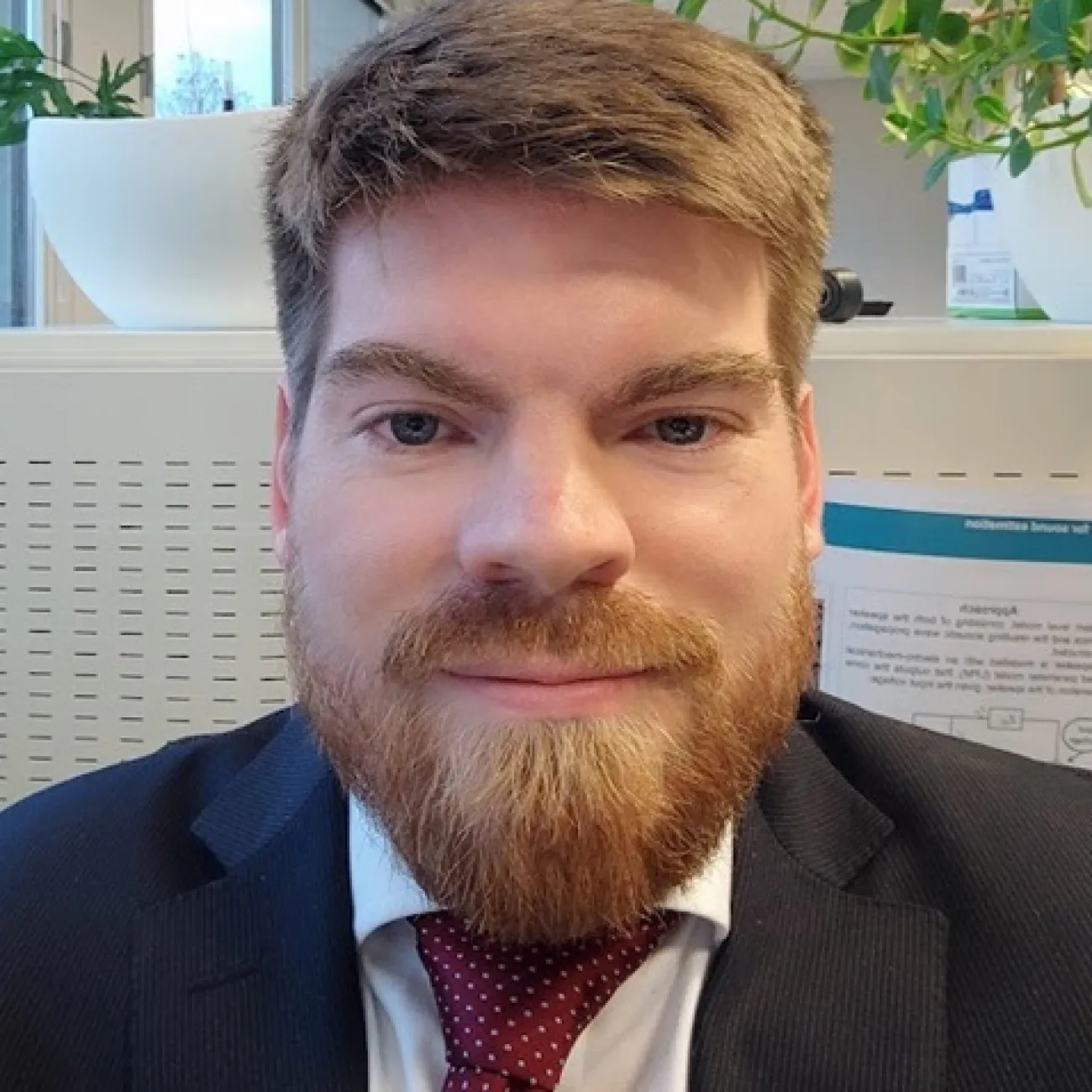
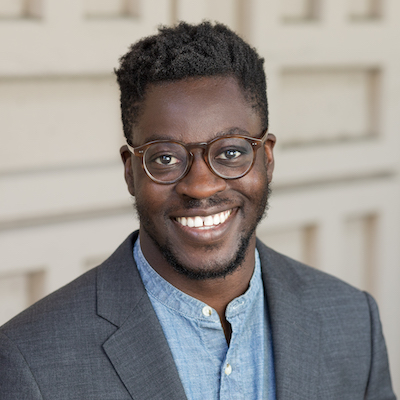
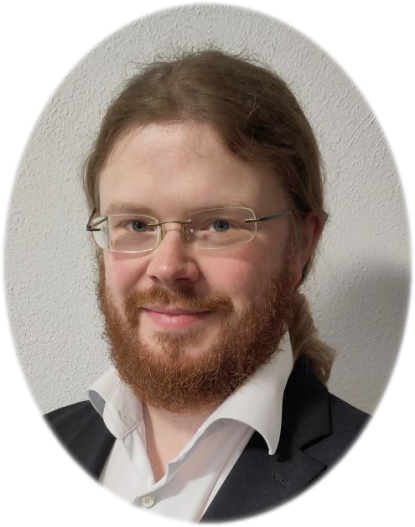
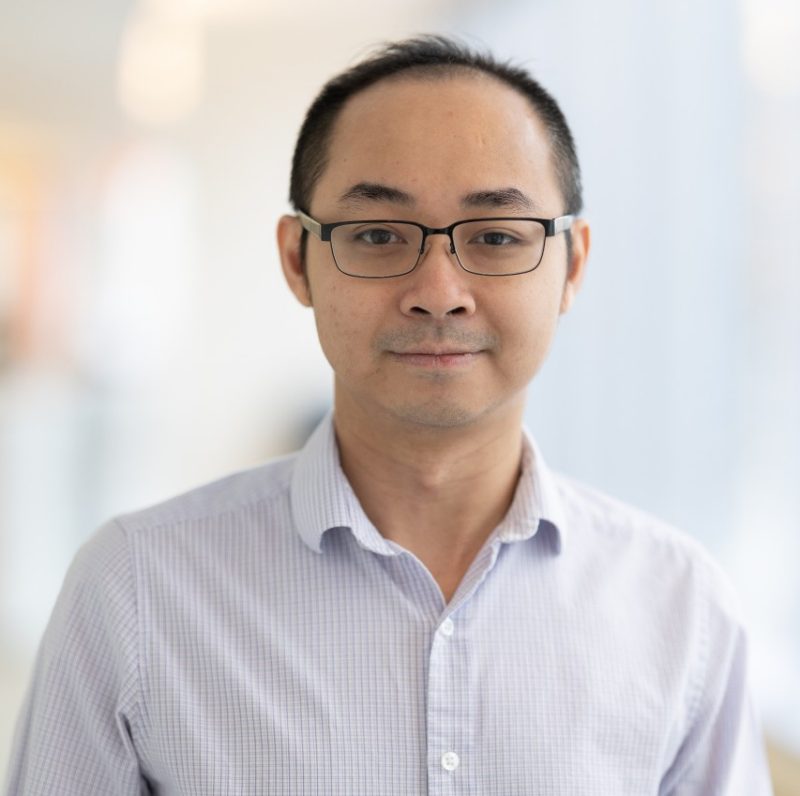
Dr. Sjoerd van Ophem is a Lecturer in Structural Dynamics at the Institute of Sound and Vibration Research (ISVR), University of Southampton. He holds a PhD in Mechanical Engineering from KU Leuven, Belgium, and previously studied at the University of Twente, Netherlands. Mechanical Engineering (BSc, MSc) Noise and Vibration (PhD, KU Leuven) His research focuses on vibro-acoustic digital twins for machine monitoring and noise reduction. Key methodologies include model order reduction, finite element simulations, and digital twin technologies applied to complex acoustic systems. Recent publications emphasize: Time-domain vibro-acoustic simulations Digital twin development Model reduction techniques Acoustic material characterization Moving sound source modeling Experimental modal analysis Scientific awards include: FWO postdoctoral fellowship (junior and senior) MSCA FP7 project ANTARES funding He supervises two PhD students and teaches: ISVR3059: Acoustical Engineering Design FEEG1201: An Introduction to Engineering Design
Gunnar Elgered is a Professor at Chalmers University of Technology, specializing in space geodesy and atmospheric research. His work is centered at the Onsala Space Observatory, where he utilizes radio telescopes and Global Navigation Satellite Systems (GNSS) for geodetic and atmospheric studies. Previously serving as department head from 2000 to May 2017, he continues active research and teaching in engineering measurements with innovative examination methods. His research focuses on: Space geodesy using GNSS and VLBI techniques Atmospheric water vapor monitoring via microwave radiometers Climate research through long-term GNSS data analysis Tropospheric delay modeling for weather forecasting improvement Development of error correction models for geodetic applications Recent publications (2023–2025) demonstrate sustained leadership in atmospheric parameter assessment using co-located instrumentation at Onsala. His work shows increasing emphasis on climate model evaluation, with key contributions to GNSS interferometric reflectometry for sea level monitoring and tropospheric error modeling. The research integrates multiple geodetic techniques to address atmospheric variability and climate change impacts. Professor Elgered actively contributes to international geodetic infrastructure through the International VLBI Service (IVS), particularly via Onsala Space Observatory's Analysis Center activities. His projects focus on enhancing geodetic observing systems for climate monitoring, including the VGOS (VLBI Global Observing System) and co-location of geodetic techniques.
Kai Kuck, PhD, ME, serves as Director of Bioengineering in the Department of Anesthesiology at the University of Utah School of Medicine since 2014. With expertise spanning multiple engineering disciplines and clinical applications, he bridges the gap between medical technology development and clinical practice in anesthesia and critical care settings. His educational background includes doctoral training at the University of Utah, an ME from Hamburg University of Applied Sciences, and executive education from Babson College. This diverse academic foundation supports his interdisciplinary approach to medical device innovation. Dr. Kuck's research focuses on three primary areas: cardiorespiratory monitoring systems, intelligent decision support tools for clinicians, and advanced ventilation technologies. His work emphasizes practical solutions that address real-world clinical challenges, particularly in the operating room and critical care environments. He has pioneered non-invasive monitoring techniques, including urine oxygen monitoring for acute kidney injury detection and novel approaches to anesthetic gas concentration sensing. Analysis of his recent publications reveals a strong emphasis on solving critical clinical problems through engineering innovation. His work spans from fundamental research on physiological monitoring to practical device development, with particular focus on kidney injury prediction, propofol dosing algorithms, and ventilator technology - especially highlighted during the COVID-19 pandemic with the Utah-Stanford Ventilator project. Dr. Kuck has co-authored numerous patents related to anesthesia monitoring and delivery systems, demonstrating his commitment to translating research into practical clinical tools. His collaborations span engineering, clinical anesthesia, and critical care medicine, reflecting the interdisciplinary nature of modern medical technology development. His leadership in developing the Utah-Stanford Ventilator (Vent4US) during the pandemic exemplifies his ability to rapidly mobilize engineering resources to address urgent clinical needs. This project, along with his work on urine oxygen monitoring and propofol dosing algorithms, demonstrates his focus on technologies that improve patient outcomes through better physiological monitoring and treatment delivery.
Subhomoy Haldar is an Assistant Professor in the Department of Physics at the Indian Institute of Technology Kanpur. His research focuses on semiconductor physics, quantum devices, and quantum sensing applications, with particular expertise in semiconductor-superconductor hybrid systems and microwave photon detection. PhD (2020) from Homi Bhabha National Institute, RRCAT MSc (2014) from Indian Institute of Technology Hyderabad BSc (2012) from University of Kalyani (Krishnagar Govt. College) Dr. Haldar's research spans cutting-edge areas in condensed matter physics and quantum technology. His work primarily investigates semiconductor-superconductor hybrid devices for quantum applications, light-matter interactions at the quantum level, and microwave photon detection. He specializes in electronic transport and optical spectroscopy under extreme conditions including ultra-low temperatures and high magnetic fields. His research has significant implications for quantum computing, quantum sensing, and next-generation electronic devices. His recent publications show a strong focus on quantum measurement techniques in circuit quantum electrodynamics frameworks. There's a clear progression from fundamental quantum device physics to practical applications in quantum information processing. His work bridges theoretical concepts with experimental implementations, often involving sophisticated nanofabrication and measurement techniques. Publication as Editor's Suggestion in Physical Review Letters by American Physical Society (2025) Outstanding Doctoral Student Award by Homi Bhabha National Institute, Mumbai (2021) Best Ph.D. Thesis Award by Indian Lasers Association (2021) Young Scientist Award by Madhya Pradesh Council of Science and Technology (2019) Dr. Haldar maintains an active research program with collaborations spanning multiple international institutions. His laboratory at IIT Kanpur focuses on developing novel quantum devices and measurement techniques, contributing significantly to India's growing quantum technology ecosystem.
Ottman A. Tertuliano serves as Assistant Professor in the Department of Mechanical Engineering and Applied Mechanics at the University of Pennsylvania's School of Engineering and Applied Science. His research establishes fundamental connections between tissue mechanics and microstructure to accelerate clinical therapies and develop advanced engineered materials systems. His work centers on how physiological loads impact tissue resilience, utilizing nano- and microscale experimental mechanics to study tissue responses. Key research thrusts include fracture mechanics of biological and synthetic structures (demonstrated in bone and 3D graphene studies) and metal additive manufacturing innovation for biocompatible applications. The lab integrates experimental mechanics with nanoscale manufacturing to create materials that guide cellular behavior for regenerative healthcare solutions. Recent publications reveal a strong focus on enhancing metal additive manufacturing through nanotextured powders, with applications spanning biomedical implants to resilient engineering systems. The work demonstrates significant progress in optimizing laser powder bed fusion processes for clinical and industrial implementation. Scientific Awards: No awards documented in provided materials Dr. Tertuliano actively advises Master's student Quan Vo and research team members Elaine, Luc, and Olivia Schuler. His Magneto lab operates a custom-built metal laser powder bed fusion (LPBF) system, recently achieving successful 3D printing of stainless steel structures after initial copper experiments. Research is supported by grants enabling investigation of tissue-material interactions and advanced manufacturing development. The Magneto research group maintains an active experimental program in metal additive manufacturing and tissue mechanics, with current projects focused on developing biocompatible materials for regenerative medicine applications and exploring fracture behavior in graphene-based structures. The lab's custom LPBF system represents a core capability for advancing both biomedical and engineering material solutions.
Benedikt Schmitz is a PostDoc researcher at the Technical University of Darmstadt, working at the Institute of Nuclear Physics (IKP) and the Theory of Electromagnetic Fields (TEMF). His research spans multiple domains of physics including superconductivity, laser-plasma interactions, and AI-supported modeling of complex physical phenomena. PhD in Physics from Technical University of Darmstadt (2023) Master's research at Helmholtz-Zentrum Berlin (2016-2018) Dr. Schmitz's research focuses on superconductivity, particularly magnetic field interactions with superconductors, and laser-plasma physics for particle acceleration. His work on radiochromic film dosimetry led to pyRES, an open-source evaluation tool. He pioneered AI applications in physics research, developing surrogate models using deep learning for neutron yield prediction and liquid target experiments. His research bridges traditional physics with modern computational approaches, demonstrating how machine learning can transition from research subject to research tool. His publication record shows a clear evolution from superconductivity research toward laser-plasma physics and AI modeling. Early works focused on SRF cavity diagnostics, while recent publications center on laser-driven neutron sources and deep learning applications. This progression reflects his doctoral work and growing expertise in computational physics. His articles demonstrate interdisciplinary approaches combining plasma physics, nuclear engineering, and machine learning to solve complex problems in particle acceleration and detection. First prize at Medtech:Hack with BIOSCAN at CERN (April 2018) Dr. Schmitz has led multiple research projects including SRF Magnetometry during his Master's work, Neutron Prediction and TNSA Liquid Leaf for his PhD, and ongoing development of pyRES. His BIOSCAN detector project resulted in a patent and demonstrates his ability to translate physics concepts into medical applications. He has developed software tools like LabTab for electronic lab journals and maintains active GitHub repositories for his research code. His projects consistently combine experimental work with computational modeling and increasingly incorporate machine learning approaches. His research is conducted within collaborative teams including the TEMF group at TU Darmstadt under Prof. Boine-Frankenheim for his doctoral work, and previously with Prof. Jens Knobloch's group at Helmholtz-Zentrum Berlin. His work spans multiple laboratories and computational environments, utilizing particle-in-cell simulations, Monte Carlo methods, and deep learning frameworks to advance understanding in his fields of interest.
Dr. Hendrik Morgenstern serves as a Postdoc and Senior Engineer at RWTH Aachen University's Chair and Institute of Construction Management, Digital Engineering and Robotics in Construction (ICoM), where he advances digital solutions for building maintenance and construction robotics. His work focuses on integrating Building Information Modeling (BIM) with diagnostic data to optimize infrastructure lifecycle management. Morgenstern earned his B.Sc. and M.Sc. in Civil Engineering with specialization in Functional and Structural Engineering from Karlsruhe Institute of Technology (KIT), complemented by studies in Sustainable Development. He completed his Dr.-Ing. doctorate at RWTH Aachen in 2023 with research on automated maintenance planning using BIM-enriched diagnostic data. His research program centers on digitized building maintenance, BIM applications for existing structures, and robotics automation in construction. Key contributions include predictive maintenance frameworks using Bayesian inference, geopolymer material development for structural repair, and point cloud integration for as-built modeling. He emphasizes resource efficiency and data-driven decision-making across all projects. Analysis of his 15 publications (2021-2025) reveals three dominant trends: (1) Convergence of BIM with non-destructive diagnostics for predictive maintenance, (2) Development of smart materials like temperature-stable geopolymers for crack injection, and (3) Integration of robotics and AI for automated facility management. His work consistently bridges civil engineering fundamentals with computer science innovations. Morgenstern actively contributes to major research initiatives including the RoboTUNN project (awarded bauma Innovation Award 2025 for tunneling robotics) and the BIM4People consortium focused on digital transformation in construction. His work demonstrates strong industry collaboration through projects with German construction firms and participation in standards development.
Michael Lemmon is a Professor in the Department of Electrical Engineering at the University of Notre Dame's College of Engineering. He has been a faculty member at Notre Dame since 1990, contributing significantly to the field of networked control systems and related applications. Education: Ph.D., Electrical Engineering, Carnegie Mellon University, 1990 M.S., Electrical Engineering, Carnegie Mellon University, 1990 B.S., Mathematics, Stanford University, 1979 Professor Lemmon's research focuses on understanding the interrelationship among communication, computation, and control in large-scale sensor-actuator networks. He is particularly known for his pioneering work on event-triggered control systems and for deploying one of the first municipal scale sensor-actuator networks for wastewater management. His current research explores deep learning applications for adaptive control of complex dynamical systems. His work spans theoretical foundations of networked control systems to practical applications in critical infrastructure including smart grids, power systems, and water management systems. Analysis of Professor Lemmon's recent publications reveals a strong focus on event-triggered and self-triggered control methodologies for networked systems. His work bridges theoretical control theory with practical applications in power systems and sensor networks. Key themes include communication efficiency in control systems, stability analysis of networked systems, and the application of these principles to real-world infrastructure challenges. Current Research Projects: "Using Data Science to Protect Tap Water Quality" (Lucy Family Institute, 2022-2023) - Using data science to identify homes at risk for unhealthy tap water and develop mitigation strategies "CPS: SMALL: Learning How to Control - A Meta-Learning Approach for the Adaptive Control of Cyber-Physical Systems" (NSF, 2023-2026) - Developing machine learning algorithms for adaptive control of IoT-enabled manufacturing systems Professor Lemmon teaches several courses including Systems Theory and Applications (EE 30122), Advanced Control (EE 60655), and Introduction to Deep Learning (EE 60572). His teaching spans both undergraduate and graduate levels, with a focus on control systems theory and emerging applications of machine learning in control engineering.
Prof. Dr. Tabea Arndt is a Professor and Director of the Superconducting Magnet Technology group at the Karlsruher Institut für Technologie (KIT), within the Department of Electrical Engineering and Information Technology (ETIT). Her research focuses on advanced superconducting technologies for energy-efficient systems, including high-temperature superconductors (HTS), fault current limiters, and innovative electric machines. She leads projects involving HTS applications in motors, generators, and hybrid energy pipelines integrating liquid hydrogen transport with superconducting cables. Her work spans fundamental material science (e.g., MgB2 films on Hastelloy substrates) to industrial-scale applications in power grids and accelerators. Prof. Arndt’s recent advancements include compact HTS motor designs cooled by liquid hydrogen, novel magnet configurations (e.g., disk-up-down-assembly), and superconducting undulators for laser-plasma accelerators. Her contributions address challenges in thermal management, magnetic field optimization, and cost-effective HTS integration into critical infrastructure. Publications highlight interdisciplinary efforts in electromagnetics, energy transmission, and sustainable mobility. Despite no explicitly listed awards, her leadership in KIT’s Technische Physik institute underscores her influence in advancing superconductivity for next-generation technologies.
Zin Lin is an Assistant Professor in the Bradley Department of Electrical and Computer Engineering at Virginia Tech, based at the Virginia Tech Research Center in Arlington. His research focuses on inverse design principles in nanophotonics, computational modeling, and scientific machine learning, with applications in quantum photonics, electromagnetics, and optical imaging. He leads the Inverse Design and Discovery Group, emphasizing large-scale optimization for physical systems and novel device discovery through physics-based AI. Education: Postdoc in Applied Mathematics at MIT (2018–2022), Ph.D. in Applied Physics from Harvard University (2018), and a B.A. in Physics and Mathematics from Wesleyan University (2012). He is a recipient of the National Science Foundation Graduate Fellowship (2014–2018). Research interests include inverse design of nanophotonic devices, topology optimization, quantum optics, and computational imaging. His group explores cutting-edge topics like metasurface engineering, terahertz wave generation, and bio-chemical sensing through physics-driven optimization frameworks. Recent work emphasizes scalable optical systems, such as end-to-end optimized metalenses and meta-optics for imaging, as well as quantum control in graphene-based metasurfaces. Key contributions span nonlinear frequency conversion, high-energy particle detection via nanophotonic scintillators, and topology-optimized multi-layered optical systems. Notable awards include the NSF Graduate Fellowship. His team actively pursues interdisciplinary projects at the intersection of wave physics, machine learning, and high-performance computing, with open positions for PhD students and postdocs.
Marina Putti is a Full Professor at the University of Genoa's Department of Experimental Physics of Matter and Applications. She holds a role on the Departmental Board (Membro della Giunta di dipartimento). Her research focuses on novel functional materials and devices for electronics and energy applications, with emphasis on superconductivity and magnetism. Key projects include the IRIS initiative for applied superconductivity infrastructure and development of low-cost iron-based coated conductors. Her teaching responsibilities include courses on General Physics, Material Physics, and Superconductivity for undergraduate and graduate programs in Engineering, Materials Science, and Physics. Recent research highlights involve spontaneous Hall effect phenomena in superconductors, proton irradiation effects on Fe(Se,Te) films, and optimization of buffer layers for coated conductors. Putti collaborates internationally on high-energy physics projects like the Future Circular Collider and SHiP experiment, demonstrating expertise in both fundamental and applied superconductivity research. Her work bridges material synthesis, characterization, and real-world applications in energy and particle physics domains.
Riccardo Bonazza is a Professor in the Department of Mechanical Engineering at the University of Wisconsin-Madison, affiliated with the College of Engineering and the Nuclear Engineering & Engineering Physics program. His research focuses on experimental investigations of impulsive fluid flows, shock-interface interactions, and shock-driven mixing phenomena with applications in inertial confinement fusion, combustion systems, and aerospace engineering. Bonazza holds a PhD (1992) and MS (1985) from Caltech, and a Laurea in Mechanical Engineering (1983 cum laude) from Università di Ancona. His experimental work uses advanced techniques like planar Mie scattering, laser-induced fluorescence (PLIF), and particle image velocimetry (PIV) in the Wisconsin Shock Tube Laboratory. Key research areas include Richtmyer-Meshkov instability dynamics, shock-accelerated vortex rings, and reactive shock flows. His studies explore both detrimental mixing effects in fusion applications and beneficial mixing enhancement in supersonic combustion systems. Recent experiments involve shock-bubble interactions, reshock phenomena, and turbulent mixing quantification. Notable awards include the 2016 Leaders in Engineering & Diversity Scholar Award and 2011 Outstanding Instructor Award. His 2023 work includes novel bovine thermodynamic models and advanced shock tube diagnostics. Bonazza teaches courses in aerodynamics, gas dynamics, rocket propulsion, and independent research supervision. Key facilities: Wisconsin Shock Tube Laboratory. Active collaborations include CFD validation, laser diagnostics development, and multi-phase flow studies.
Ullas Pedmale is an Associate Professor at Cold Spring Harbor Laboratory (CSHL), leading the Pedmale Lab. His research focuses on understanding how environmental cues, such as light and temperature, modulate plant growth and development. This work has significant implications for agriculture and climate resilience. Pedmale earned his Ph.D. in Biological Sciences from the University of Missouri (2008) and completed postdoctoral training at the Salk Institute under Joanne Chory. He is also an Adjunct Faculty Member at Stony Brook University. His research interests include plant-environment interactions, light signaling pathways, and the molecular mechanisms underlying plant adaptation. Key projects involve studying shade avoidance responses, DNA damage repair in plants, and the role of histone modifications in flowering time regulation. Pedmale’s lab utilizes advanced technologies like state-of-the-art growth chambers to simulate climate change effects on plants. Notable achievements include the NIH Outstanding Investigator Award (2017) and recognition for groundbreaking work on plant photoreceptors. His recent publications highlight discoveries in RNA methylation, ubiquitin regulation, and epigenetic mechanisms controlling plant growth. Pedmale has mentored numerous graduate students and postdoctoral researchers, fostering a collaborative environment focused on advancing plant science. Lab activities emphasize interdisciplinary approaches, combining genetics, molecular biology, and computational tools. Current projects explore how plants integrate light and temperature signals to optimize resource allocation, with potential applications in crop improvement. The lab’s innovations, such as rapid protein expression in tobacco for pandemic response, demonstrate versatility in addressing global challenges.
Lyon Brad King serves as the Richard and Elizabeth Henes Endowed Professor in the Department of Mechanical and Aerospace Engineering within Michigan Technological University's College of Engineering. He directs the Space Systems Research Group and acts as Faculty Advisor for the Aerospace Enterprise student team. Dr. King earned his PhD from the University of Michigan. His research focuses on experimental space propulsion systems that utilize electromagnetic forces to accelerate ionized plasma propellant, achieving significant fuel savings over chemical rockets through on-orbit solar power generation. His expertise spans space propulsion , plasma physics , and optical diagnostics , with specific interests in Hall-effect thrusters, ion engines, arcjets, electrostatic probe design, ion-energy analysis, time-of-flight mass spectrometry, Doppler laser cooling of trapped ions, and antimatter confinement. His work bridges fundamental plasma phenomena with practical spacecraft propulsion applications. Analysis of his publication record reveals sustained innovation in electric propulsion systems over two decades, with recent emphasis on thermal management for Hall thrusters, alternative propellants like bismuth and magnesium, advanced plasma diagnostics techniques, and novel concepts such as magnetoelectrostatic jets from ionic liquids. Dr. King actively mentors students through the Aerospace Enterprise program and leads experimental research at the Ion Space Propulsion Laboratory, where his team develops next-generation propulsion technologies for spacecraft.
John Q. Xiao is the UNIDEL Professor of Physics & Astronomy at the University of Delaware's College of Arts & Sciences. His research focuses on spintronic devices, magnetism in nanostructured materials, metamaterials, and high-frequency magnetic materials. He is affiliated with the Physics & Astronomy department and has contributed to groundbreaking work on magnetic tunnel junctions, magnon dynamics, and terahertz spintronic systems. Xiao's work integrates experimental and theoretical approaches, often involving advanced characterization techniques like thin-film deposition and time-resolved spectroscopy. Research Areas: Spintronics, Magnetism, Metamaterials, Nanostructured Composites Affiliations: UNIDEL Professor role emphasizing interdisciplinary research His studies explore phenomena such as spin-polarized transport, ultrafast demagnetization, and magnon-photon interactions. Recent projects include developing flexible magnetic composites for microwave absorption and investigating quantum effects in layered materials like Fe5GeTe2. Xiao collaborates on projects involving advanced materials for high-frequency electronics and quantum sensing applications. Xiao’s publications span topics from topological insulators to nanomaterial synthesis, with a focus on practical applications in energy-efficient devices and electromagnetic systems. His work is supported by grants addressing spin-orbit torques, magnonics, and novel 2D materials.