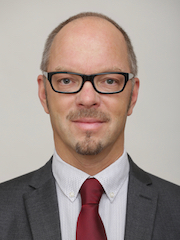
Roman Schnabel is a Professor of Experimental Physics at the University of Hamburg , affiliated with the Institute for Laser Physics under the Faculty of Mathematics, Informatics and Natural Sciences. He leads cutting-edge research in quantum optics, gravitational wave detection, and quantum technologies. Education : PhD in Physics (1999, Leibniz Universität Hannover); Physics degree (1988–1994, Leibniz Universität Hannover) Awards : QCMC 2018 Award, Gruber Cosmology Prize 2016 (LIGO team), Special Breakthrough Prize in Fundamental Physics 2016 (LIGO team), Joseph F. Keithley Award 2012 His recent work explores high-frequency gravitational wave observatories , entanglement generation , and quantum-enhanced sensing . He holds patents for gas sensors and optical surface imaging technologies. Schnabel co-founded the start-up Noisy Labs in 2023 and served as Director of Outreach & Transfer for the Cluster of Excellence 'Quantum Universe' (2019–2022).
Karl Ulrich Schreiber is an Adjunct Professor at the Department of Physics and Astronomy, University of Canterbury, New Zealand, and an apl. Professor at the Institute for Astronomical and Physical Geodesy at the Technical University of Munich (TUM). He is a scientist at the Geodetic Observatory Wettzell, jointly operated by TUM and the Bundesamt für Kartographie und Geodäsie (BKG). His work bridges fundamental physics and geodetic applications, with leadership roles in major international projects including ESA’s MAGIC/Science, QSG4EMT, and Baltic+ Theme 5, as well as DFG Research Units NEROGRAV and UPLIFT. His research focuses on Space Geodesy , Satellite and Lunar Laser Ranging , and Ring Laser Technology . He has pioneered the use of large ring laser gyroscopes for measuring Earth's rotation, polar motion, and seismic rotations. His work enables high-precision monitoring of geophysical phenomena such as Earth tides, Chandler wobble, and rotational ground motions from earthquakes. He is a key contributor to multi-technique co-location studies (VLBI, SLR, GNSS) and time transfer experiments, advancing the Global Geodetic Observing System (GGOS). His recent publications show a strong trend in developing and applying large-scale ring laser arrays (e.g., ROMY) for geophysical sensing, photon-counting laser ranging for space debris and satellite tracking, and optical timing systems for synchronization across geodetic networks. These efforts span disciplines including geodesy, seismology, quantum optics, and fundamental physics. Scientific contributions include: Development of the Wettzell Large Ring Laser (G-ring) for continuous Earth rotation monitoring. First direct measurements of Earth's diurnal polar motion and Chandler wobble using ring lasers. Pioneering work in rotational seismology, validating ring laser data against seismic arrays. Contributions to lunar laser ranging and its role in reference frame realization. Leadership in ESA and DFG projects advancing space geodesy and inertial sensing. He advises doctoral and master’s students within the DFG Research Training Group UPLIFT and collaborates with international institutions on instrumentation and data analysis. His lab at Wettzell hosts advanced laser ranging and ring laser systems, serving as a fundamental geodetic observatory. Future work includes enhancing clock ties for global geodesy, expanding multi-component rotation sensing, and advancing space-based geodetic technologies.
Prof. Jürgen Müller is a Full Professor at the Institute of Geodesy, Leibniz University Hannover, leading research in physical geodesy, satellite gravimetry, and relativistic geodesy. He holds positions as Executive Director of the Institute and contributes to global geodetic initiatives like the Global Geodetic Observing System (GGOS). His work focuses on advancing quantum technologies for Earth observation, including cold atom interferometry and optical clocks, to enhance gravity field measurements and test fundamental physics principles. Research Interests: Müller's expertise spans gravimetric Earth observation, lunar laser ranging (LLR), relativistic geodesy, and the application of quantum sensors in space missions. His team explores novel sensor concepts for future satellite gravimetry, such as hybrid accelerometers and gravity gradiometry systems, addressing challenges in climate monitoring and Earth system dynamics. Publications Overview: His recent work emphasizes quantum accelerometers for satellite missions, deployable solar panels for GRACE-like satellites, and LLR-based tests of general relativity. Key contributions include improving Earth rotation parameter estimation and exploring optical clock networks for height system unification. Grants & Collaborations: Müller collaborates on international projects like the CARIOQA quantum pathfinder mission and the GENESIS space observatory. He leads teams in simulating quantum sensor performance and analyzing LLR data for lunar and Earth dynamics studies. Labs/Teams: As head of the Institute of Geodesy, he oversees research groups working on quantum gravimetry, space geodesy, and geodetic reference systems, leveraging facilities like the 10-meter atom interferometer at Hannover.
David E. Kaplan is a Professor of Physics and Astronomy at Johns Hopkins University, where he has been a faculty member since 2002. He holds a PhD from the University of Washington (1999) and completed postdoctoral research at the University of Chicago/Argonne National Lab and SLAC. His research focuses on theoretical extensions of the Standard Model of particle physics and cosmology, with emphasis on dark matter, axions, quantum gravity, and experimental probes of fundamental physics. Notably, he created and produced Particle Fever , a documentary film awarded the DuPont Journalism Award. Key research interests include exploring new physics beyond the Standard Model, such as models addressing the strong CP problem, probing dark matter interactions via atom interferometry and spin precession, and studying cosmological implications of gravitational theories. He is a Fellow of the American Physical Society (APS), a DOE Outstanding Junior Investigator, Kavli Frontiers Fellow, and Alfred P. Sloan Fellow. His work integrates theoretical frameworks with experimental efforts, such as collaborations at SQMS (Quantum Sensing) and proposals for next-generation experiments like GALILEO (Galactic axion laser interferometer). His recent articles address topics ranging from nonlinear quantum mechanics to gravitational wave detection and cosmological constant relaxation.
Professor Tomohiro Kita is a distinguished faculty member at Tohoku University's School of Advanced Science and Engineering, specializing in silicon photonics and semiconductor laser technology. With a Doctor of Engineering in Materials from Japan Advanced Institute of Science and Technology Hokuriku, he has established himself as a leading researcher in integrated photonics and optical communication systems. His research interests span semiconductor engineering, optical engineering, photon science, silicon photonics, nonlinear optical effects, and semiconductor lasers. Professor Kita's work focuses on developing innovative photonic integrated circuits including wavelength tunable laser diodes, optical phased arrays, and high-speed optical switches. His research group has pioneered techniques for passive optical beam scanning, ultrafast thermo-optic switching, and hybrid integration of quantum dot technology with silicon photonics. Analysis of his recent publications reveals a strong emphasis on practical applications of silicon photonics for optical communications, lidar systems, and optical neural networks. His work demonstrates consistent innovation in overcoming key challenges such as thermal crosstalk in integrated devices, spectral linewidth narrowing, and expanding wavelength tuning ranges. Notably, his group has achieved record-breaking performance metrics including a 145 nm wavelength tuning range and sub-microsecond switching times. Best Paper Award 2023 for Silicon Based High Resolution Passive Optical Phased Array Consisting of Multi-Mode Waveguides Ishida Minoru Memorial Foundation Research Encouragement Award 2014 The 23rd Japan Society of Applied Physics Presentation Encouragement Award 2007 Professor Kita actively mentors students including Yamato Misugi, Kissho Iwanaga, and Yuga Tomimura, who frequently appear as first authors on his publications. He serves on multiple program committees including the IEEE International Semiconductor Laser Conference and Microoptics Conference. His research has attracted significant media attention, with coverage in Laser Focus World, Photonics Spectra, and major Japanese business publications. His laboratory focuses on developing practical photonic integrated circuits for next-generation optical communication systems and sensing applications, with strong industry collaboration particularly with Japan's National Institute of Information and Communications Technology.
Thorsten Ackemann is a Professor of Nonlinear Photonics in the Department of Physics at the University of Strathclyde, United Kingdom. He has been a faculty member since 2005 and was promoted to full Professor in 2012. His research lies at the intersection of nonlinear optics, quantum optics, and complex systems, with strong affiliations to the Institute of Photonics and Quantum Sciences (IPaQS) and SUPA (Scottish Universities Physics Alliance). His research focuses on self-organization in light-matter systems, particularly in cold atoms and semiconductor lasers. Key themes include the formation of spontaneous patterns and phase transitions in cold atomic gases, simulation of condensed matter phenomena, realization of supersolids, and the study of solitons and structured light in vertical-cavity surface-emitting lasers (VCSELs). His work often bridges fundamental physics with technological applications in photonics and quantum technologies. The recent publications highlight a strong trend in quantum-enhanced interferometry, entanglement generation, optomechanical coupling, and complex soliton dynamics. These works reflect a deep engagement with quantum simulation, nonlinear feedback systems, and collective behavior in nonequilibrium systems. Fellow of the Institute of Physics (IOP), 2012 Fellow of the Optical Society (OSA), 2013 Professor Ackemann has led multiple research projects as Principal Investigator, including EU Horizon 2020 and Leverhulme Trust grants, often in collaboration with leading institutions across Europe and the US. He has supervised several PhD students and postdoctoral researchers, though specific names are not listed in the provided text. He is active in organizing international conferences and workshops, such as the ColOpt Winter School, and serves on professional committees. He is involved in several research groups and networks, including the Photonics Group at Strathclyde, and participates in large-scale collaborative efforts like the Stanford-Scotland Photonics Innovation Collaboration. His lab focuses on experimental and theoretical investigations of nonlinear optical phenomena, particularly in cold atom systems and semiconductor lasers.
Dr. Olaf Hartwig is a Senior Scientist at the Albert Einstein Institute (AEI) in both Potsdam and Hannover. His research focuses on precision interferometry and fundamental interactions, specifically for the Laser Interferometer Space Antenna (LISA) project. He holds a PhD in Physics from the University of Hannover (2021) and has held postdoctoral positions at SYRTE - Observatoire de Paris and AEI. His work bridges instrumental modeling, data processing, and noise reduction for space-based gravitational wave detection. Education: BSc and MSc in Physics (University of Hannover), PhD in Physics (University of Hannover via AEI Potsdam) Current Roles: Split post-doctoral position between AEI Potsdam (global fit for LISA) and AEI Hannover (Performance and Operations team) Research Interests revolve around space-based gravitational wave detectors, with emphasis on: Instrumental Modeling - Refining noise models, addressing data gaps, and mitigating glitches in LISA data Data Processing - Developing simulations, performance models, and software tools like PyTDI Detector Optimization - Clock synchronization, light-travel time estimation, and onboard optical delay compensation Publication Trends (15 most recent) show a focus on LISA instrumentation, with key topics including time-delay interferometry (TDI), stochastic gravitational wave background reconstruction, instrumental noise characterization, and intersatellite ranging. His work frequently integrates GPU acceleration, Python-based toolchains, and end-to-end simulation pipelines.
Dr. Andrew Wade is a Postdoctoral Fellow at the Centre for Gravitational Astrophysics, The Australian National University (ANU). His research focuses on gravitational wave detection, quantum optics, precision metrology, and weak light interferometry. He has contributed to projects like the Laser Interferometer Space Antenna (LISA), developing critical technologies such as arm- and cavity-locking systems for gravitational wave detectors. His work emphasizes improving interferometric sensitivity through innovations like subfemtowatt laser phase tracking and thermal noise mitigation in mirror coatings. Wade has collaborated across international detector networks including LIGO, Virgo, and KAGRA, publishing over 178 peer-reviewed articles. His research spans topics from binary black hole mergers (e.g., GW150914, GW170817) to cosmic string constraints and Hubble constant measurements using gravitational wave standard sirens. Notably, his team's work on LISA's locking systems addresses challenges for future space-based gravitational wave observatories. His technical expertise includes cavity frequency stabilization for geodesy applications and optimizing laser interferometers for low-noise operation. While no specific student names are listed, he is registered to supervise research students at ANU. His publications highlight interdisciplinary strengths in both experimental and theoretical gravitational wave physics, with implications for multi-messenger astronomy and fundamental physics tests.
Mathieu Bertrand is a Researcher in the Department of Physics at ETH Zürich, part of the Institute of Quantum Electronics under Prof. Faist's group. His research focuses on mid-infrared quantum cascade lasers (QCLs), particularly on frequency combs, dual-comb interferometry, and RF properties enhancement. He has contributed to advancing technologies such as surface-emitting QCLs and low-dissipation devices. Education: He holds a graduate degree from Grenoble-INP Phelma (France/Grenoble), specializing in semiconductor physics and optoelectronics. Research interests include quantum walk combs, RF-modulated QCLs, and applications in spectroscopy. His work bridges theoretical and experimental physics, with contributions to both fundamental science and practical device development. Teaching: He has taught at ETH Zürich since 2020, including courses on Quantum Optics, Physics Practica, and IT infrastructure management. Previously, he taught electromagnetism at Polytech' Grenoble (2017–2019). Projects: Current projects include developing low-dissipation Quantum Cascade Surface Emitting Lasers (QCSELs) and advancing fiber networks for optical signal distribution. Side projects involve lab automation, interferometer design, and data processing tools. Collaborations: Works with D-ITET on fast signal detection and maintains a lab laser database. Enjoys interdisciplinary projects blending physics, engineering, and design.
Jianping Yao is a Distinguished University Professor and University Research Chair in Microwave Photonics at the School of Electrical Engineering and Computer Science , University of Ottawa, Canada. He holds a PhD in Electrical Engineering and is a licensed Professional Engineer (PEng) in Ontario. His academic affiliations include prestigious fellowships: Fellow of the Optical Society of America (FOSA) , Fellow of IEEE (FIEEE) , and Fellow of the Canadian Academy of Engineering (FCAE) . Education: PhD in Electrical Engineering (Université de Toulon, 1997) Professor Yao is a leading expert in Microwave Photonics , focusing on photonic generation and processing of microwave signals, radio over fiber, optical sensors, and biomedical applications. His work spans photonic arbitrary waveform generation, microwave photonic filters, and silicon photonic integrated circuits. He has supervised over 20 NSERC-funded projects and published extensively (510+ papers, H-index: 55). Notable contributions include photonic convolution processors, optoelectronic oscillators, and high-speed sensing systems. His research also intersects with Biophotonics , including optical coherence tomography and Fourier-transform spectroscopy, and he has developed innovative microfluidic and fiber Bragg grating technologies. He served as Director of the Ottawa-Carleton Institute for Electrical and Computer Engineering (2007-2010) and held academic roles at Nanyang Technological University, Singapore, prior to joining UOttawa. Scientific Awards: 2005 International Creative Research Award (University of Ottawa) 2007 George S. Glinski Award for Excellence in Research 2008 NSERC Discovery Accelerator Supplements Award He actively contributes to editorial and conference leadership, including roles as Associate Editor for journals and Technical Program Committee leadership for international microwave photonics conferences.
Dr. Ori Henderson-Sapir is a Grant-Funded Researcher (B) at the University of Adelaide's School of Physics, Chemistry and Earth Sciences, within the Faculty of Sciences, Engineering and Technology. His primary affiliation is with the Department of Physics, and he is part of the OzGrav node and Precision Measurement Group at the Institute for Photonics and Advanced Sensing (IPAS). Education: B.Sc. in Physics & Mathematics (Hebrew University, Jerusalem), M.Eng. in Electrical Engineering (Tel-Aviv University), and Ph.D. in Physics from the University of Adelaide. He has held roles at Ellex Medical as an Optics & Laser Engineer and as a Research Associate at Adelaide, focusing on mid-IR fibre lasers. He co-founded the startup Mirage-Photonics in 2017 to commercialize laser technology. Research interests include mid-infrared fibre lasers, dual-wavelength pumping techniques, high-power laser development, pulsed lasers, and applications in thermal lensing compensation for gravitational wave detectors (e.g., LIGO). His work spans fundamental physics, numerical modelling, and industrial applications, with a focus on scaling laser power and optimizing spectral ranges beyond 3 µm. Recent research highlights include developing ZBLAN fibre lasers for pollutant sensing, thermal compensation systems for LIGO detectors, and wavefront shaping in multimode amplifiers. His projects are funded by entities like the US Air Force and involve collaborations across academic and industry partners. Eligible to supervise Masters and PhD students in photonics, laser engineering, and related fields. His contributions bridge fundamental research and commercialization, particularly in mid-IR laser technologies.
Srinivas V. Bettadpur is a Professor in the Department of Aerospace Engineering & Engineering Mechanics at The University of Texas at Austin's Cockrell School of Engineering. He holds the FSX Professorship in Space Applications and Exploration, a courtesy appointment in the Department of Geological Sciences at the Jackson School of Geosciences, and is an affiliate of the UT Applied Research Laboratory. As Director of the Center for Space Research (2018-2023), he has led significant research in space geodesy and Earth system science. Dr. Bettadpur's research focuses on orbital mechanics, space geodesy, and Earth's gravity field. His work spans perturbations and orbit determination, modeling and interpretation of gravity fields, space mission design, and data analytics. He leads cutting-edge projects including the Quantum Pathways Institute for quantum sensing in space, the GRACE-Continuity Mission, and the development of the McDonald Geodetic Observatory. His research explores global mass flux estimation, terrestrial and lunar geodesy integration, and next-generation gravity field sensing technologies. His scientific achievements have been recognized with prestigious awards including the American Geophysical Union Charles A. Whitten Medal (2024), NASA Exceptional Public Achievement Medal (2018), and European Geosciences Union Vening-Meinesz Medal (2016). He serves as President of Commission-2 (Gravity Field) of the International Association of Geodesy (2023-2027) and has held leadership roles in numerous NASA/ESA mission teams. As an educator, Dr. Bettadpur mentors numerous PhD and MS students working on advanced topics in satellite geodesy, orbital mechanics, and Earth system science. He teaches courses including ASE 379L (LEO for EO), ASE 389P.2 (Satellite Geodesy), and occasionally ASE 389P.11 (Advanced Satellite Geodesy) and ASE 388P.2 (Celestial Mechanics). His research group develops innovative approaches to gravity field measurement and Earth system monitoring, with applications to climate science, water resource management, and precision navigation.
Adrian Keating is a Professor in the School of Mechanical Engineering at The University of Western Australia (UWA), specializing in Microelectromechanical Systems (MEMS), porous silicon, and infrared sensors. He holds roles such as Mechatronics Course Advisor and Laser Safety Officer. His career spans over 20 years, including industrial experience at Calient Networks as Fiber Optics Technology Manager, where he developed high-yield MEMS-based products. Dr. Keating earned a Bachelor of Engineering (Honors) from The University of Melbourne and a Ph.D. from Telecom Research Laboratories, focusing on photonic communication networks. His research emphasizes optical sensors, MEMS, and IoT technologies. Notable contributions include patents for fiber-collimator designs and work on MEMS-based infrared sensors. He actively supervises students and leads projects in areas like soil and grain parameter assessment via microspectrometers. Key research interests include porous silicon materials, thermal sensing, and MEMS fabrication. He has secured grants totaling millions, such as the 2004 ARC Discovery Project on MEMS/NEMS technologies. Teaching responsibilities include units like Mechatronic Systems and Engineering Dynamics. Current projects explore infrared thermal imagers, microfluidics, and IoT-enabled beehive monitoring systems. His work aligns with UN Sustainable Development Goals through innovations in agriculture and environmental monitoring. Dr. Keating collaborates internationally, with recent projects in Japan (NTT) and the U.S. (UC Santa Barbara). His lab focuses on developing low-cost, high-performance sensors and imaging systems. Patents and peer-reviewed publications reflect his expertise in optical systems, micromachining, and material science. Future research aims to advance infrared imaging and MEMS-based sensor technologies for industrial and environmental applications.
Hoon Kim is a Research Fellow in the Division of Physics, Mathematics and Astronomy at the California Institute of Technology. His research focuses on condensed matter physics , particularly exploring quantum phases, magnetic materials, and superconductivity in complex systems. He investigates phenomena such as spin dynamics, charge ordering, and topological states in materials like iridates, cuprates, and Kitaev materials. His work integrates theoretical analysis, advanced microscopy techniques, and spectroscopy to unravel fundamental electronic and magnetic behaviors. Key research interests include quantum spin liquids, frustrated magnetism, ultrafast phenomena in superconductors, and nanoscale domain imaging. Recent studies highlight gate-tunable quantum pathways in graphene and stripe charge order-driven superconductivity in IrTe2 nanoflakes. His contributions bridge experimental and computational approaches to advance understanding of quantum materials. Kim collaborates with institutions and centers such as the Institute for Quantum Information and Matter (IQIM) at Caltech, leveraging advanced facilities like the Laser Interferometer Gravitational-Wave Observatory (LIGO) and Palomar Observatory . He has published extensively on topics ranging from antiferromagnetic domain imaging to theoretical analysis of resonant inelastic x-ray scattering spectra. No scientific awards or advising roles are explicitly listed in the provided materials. His research emphasizes cutting-edge methodologies to probe electronic and magnetic properties at atomic and nanoscale dimensions.
Samuel Legge is a Research Fellow at the Department of Quantum Science & Technology, Australian National University (ANU). His research focuses on advanced quantum sensing technologies, particularly atom interferometry and cold atom systems applied to gravimetry and navigation. He leads projects involving compact quantum sensors and hybrid multisensor systems. Key roles: Principal Investigator (PI) on ANU projects including MiniGrav and quantum-assured positioning systems. Research areas: Quantum gravimeters, cold atom interferometry stabilization, supercontinuum generation in photonic crystal fibers. Collaborations: Extensive work with ANU teams on deployable sensors and fusion of classical/quantum accelerometers. His work emphasizes practical applications of quantum physics in navigation, subsurface mapping, and gravitational wave detection. Notable contributions include dual open atom interferometry designs and low-noise detection strategies for cold atoms.