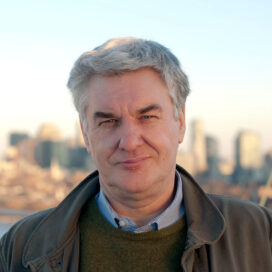
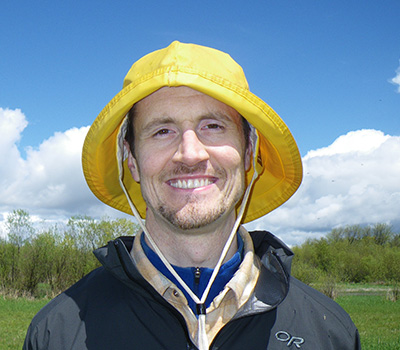
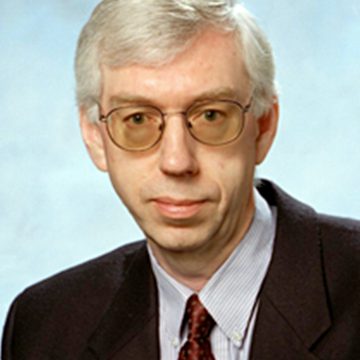
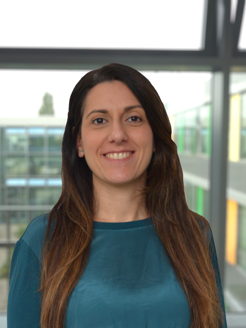
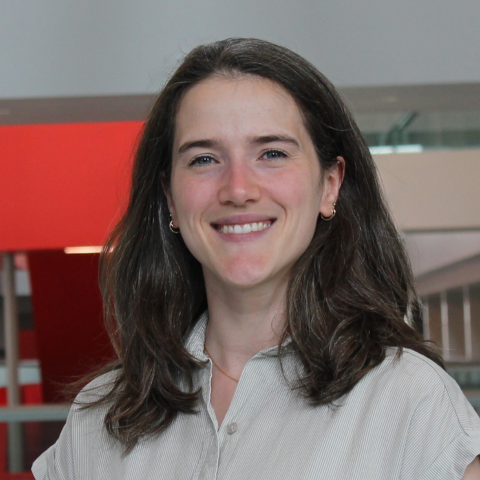
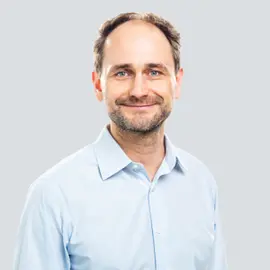
John Marshall is a Professor of Ocean and Climate Science at the Massachusetts Institute of Technology (MIT), affiliated with the Department of Earth, Atmospheric and Planetary Sciences. His research focuses on ocean dynamics, climate modeling, and the role of oceans in Earth's climate system. Key research areas: Ocean Circulation, Southern Ocean Dynamics, Eddy Processes, Climate Modeling Institutional affiliations: MIT-WHOI Joint Program, Program in Atmospheres, Oceans and Climate Marshall's work combines mathematical modeling and numerical simulations to study interactions across scales—from convection to global circulation. His group developed the MITgcm model and participates in the CliMA collaboration with Caltech and NASA JPL. Notable contributions include theories of Antarctic Circumpolar Current dynamics, thermocline theory, and meridional overturning circulation. Scientific recognition includes: A.G. Huntsman Award (2020) Bernhard Haurwitz Prize (2016) Sverdrup Gold Medal (2014) Fellowships: Royal Society (2008), American Meteorological Society (2014)
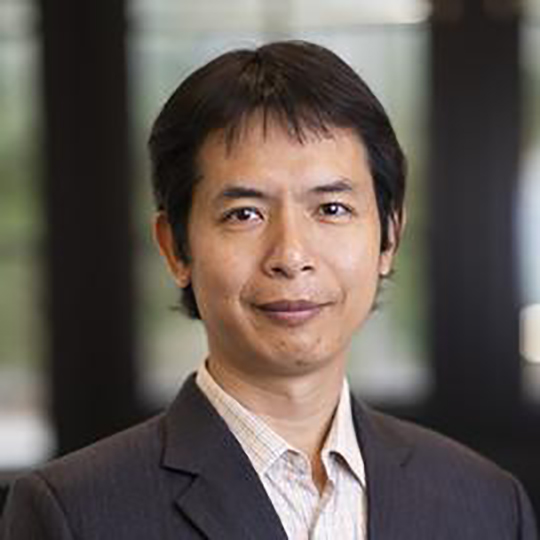
Ngoc Cuong Nguyen is a Principal Research Scientist in the Department of Aeronautics and Astronautics at MIT and a member of the MIT Center for Computational Engineering. His research focuses on computational mechanics, numerical simulation, and advanced numerical methods such as hybridizable discontinuous Galerkin (HDG) methods for multi-scale and multi-physics problems. Education: PhD in High Performance Computation for Engineered Systems (2005), National University of Singapore BEng in Aeronautical Engineering (2001), Ho Chi Minh City University of Technology Research Interests: Computational Mechanics, Molecular Mechanics, Nanophotonics Numerical Simulation & Optimization, Scientific Computing, Machine Learning Reduced Basis Methods, High-Order Methods (e.g., HDG), Uncertainty Quantification Key Projects: Development of HDG methods for fluid dynamics, structural mechanics, and electromagnetics Plasmonic nanostructure simulations using quantum hydrodynamic models Space weather modeling via GPU-accelerated HDG approaches Optimization of photonic crystals and nanostructured materials Large-eddy simulation (LES) of hypersonic flows and buffet phenomena Labs & Teams: Active contributor to the MIT Center for Computational Engineering, leading projects in numerical methods, computational fluid dynamics, and interdisciplinary applications of advanced simulation techniques.
Omer San is an Associate Professor in the Department of Mechanical, Aerospace and Biomedical Engineering at the University of Tennessee, Knoxville (2023–present). Previously, he served as Associate Professor (2021–2023) and Assistant Professor (2015–2021) at Oklahoma State University. His research focuses on scientific machine learning, digital twins, and fluid dynamics, emphasizing hybrid analysis and modeling approaches to address challenges in turbulence simulation and data assimilation. PhD in Engineering Mechanics, Virginia Tech (2012) MS in Aerospace Engineering, Old Dominion University (2007) BS in Aeronautical Engineering, Istanbul Technical University (2005) Research interests include physics-guided machine learning, data-driven reduced order modeling, and large eddy simulation closure techniques. His work bridges first-principles models and data-driven methods to enhance predictive accuracy in complex systems such as geophysical flows and turbulence. He leads the Digital Twin Lab, advancing hybrid modeling frameworks for digital twin technologies. Notable awards include the DOE ASCR Early Career Award (2018) and OSU’s Distinguished Early Career Faculty Award (2022). His research is funded by AFOSR, DOE, NSF, NASA, and industry partnerships.
Jonathan Poggie is a Professor in the School of Aeronautics and Astronautics at Purdue University's College of Engineering, where he has been a faculty member since 2015. He previously spent over two decades at the Air Force Research Laboratory. His research group conducts high-fidelity simulations in hypersonic aerodynamics, turbulence, and plasma-based flow control, supported by major grants from DoD, DoE, AFOSR, and ONR. Ph.D., Mechanical and Aerospace Engineering, Princeton University, 1995 M.S.E., Mechanical and Aerospace Engineering, Princeton University, 1991 B.S., Mechanical Engineering, University of Rhode Island, 1988 Prof. Poggie's research focuses on high-speed fluid dynamics , particularly hypersonic flows , compressible turbulence , laminar-turbulent transition , and shock-wave/boundary-layer interactions . His group also investigates plasma-based flow control using electrical discharges. His work combines computational, experimental, and theoretical approaches to address challenges in aerospace vehicle design, especially for defense and space applications. The articles reflect a strong focus on computational fluid dynamics of high-speed flows, with particular emphasis on shock unsteadiness , boundary layer transition , and plasma actuation . The research spans from fundamental fluid mechanics to applied aerospace engineering, with increasing recent interest in military conflict modeling using fluid dynamics analogies. C. T. Sun Excellence in Research Award, 2023 University Faculty Scholar, 2023-2028 Outstanding Graduate Faculty Mentor Award, 2021 Elmer F. Bruhn Teaching Award, 2019 W. A. Gustafson Teaching Award, 2018 ASME Fellow, 2007 AIAA Associate Fellow, 2004 Prof. Poggie has advised 6 PhD students and 18 MS students at Purdue as of 2025. His research has been supported by multiple large-scale grants, including three DoD Frontier Projects and a DoE INCITE Award , providing supercomputing resources for high-fidelity simulations. He collaborates with researchers at The Ohio State University, Notre Dame, and various national laboratories. His group has developed novel approaches to operational mapping for military conflict analysis, creating continuous flow models of battlefield dynamics. The team has also secured two patents in hypersonic technology, one for inlet design and another for a hypersonic test facility. His research group investigates geometric imperfections in hypersonic vehicles (steps, gaps, roughness), laminar-turbulent transition prediction, and separation unsteadiness in shock-wave interactions. They use advanced computational methods like DDES and DNS, supported by massive computing allocations. The group has produced significant work on sidewall confinement effects , wall roughness , and gap flows in hypersonic configurations.
Nathaniel Chaney is an Assistant Professor in the Department of Civil and Environmental Engineering at Duke University’s Pratt School of Engineering. He leads the Chaney Lab, a research group focused on computational hydrology and Earth system modeling. His work centers on understanding and representing land surface heterogeneity in hydrological and climate models using big data, machine learning, and high-performance computing. Ph.D. in Hydrology, Princeton University, 2015 B.A. in Atmospheric Sciences and Applied Mathematics, U.C. Berkeley Postdoctoral Research Associate, Princeton University and NOAA Geophysical Fluid Dynamics Laboratory His research interests include hydrology, Earth system science, soil science, ecology, geomorphology, numerical modeling, high performance computing, machine learning, and environmental data assimilation. He develops and applies models like HydroBlocks and POLARIS to improve the representation of land heterogeneity in Earth system models. His work bridges field-scale and macro-scale hydrology, addressing challenges in land-atmosphere interactions, drought monitoring, and climate prediction. The most recent publications highlight advancements in modeling land heterogeneity, improving soil moisture estimates, characterizing land surface temperature patterns, and enhancing Earth system models through better representation of catchment-scale processes. Key themes include spatial heterogeneity, land-atmosphere coupling, and the integration of remote sensing data with high-resolution modeling. He is actively mentoring several Ph.D. students, including Laura Torres Rojas, Tyler Waterman, Emma Xu, Jiaxuan Cai, Luiz Bacelar, Daniel Guyumus, and undergraduate Sarah Bailey. His lab fosters interdisciplinary research in hydrology, climate science, and data science. Nathaniel Chaney teaches courses such as CEE 584: Physical Hydrology, CEE 506: Environmental Spatial Data Analysis, and various independent study and advanced topics courses in civil and environmental engineering. He is currently recruiting motivated Ph.D. and postdoctoral researchers interested in his research themes.
Simon de Szoeke is a Professor in the College of Earth, Ocean, and Atmospheric Sciences at Oregon State University. His research focuses on atmosphere-ocean interaction and its influence on climate, with particular emphasis on tropical regions. He conducts observational studies and modeling work to understand air-sea interactions, cloud processes, and their representation in climate models. Dr. de Szoeke received his Ph.D. in Atmospheric Sciences from the University of Washington in spring 2004, with a dissertation on "Evolution of the cross-equatorial atmospheric boundary layer in the east Pacific: observations and models." He earned his B.A. summa cum laude in Physics with departmental honors and Mathematics from the University of Oregon Robert D. Clark Honors College in 1997. His research interests center on atmosphere-ocean interaction, stratiform clouds, and tropical meteorology . He investigates how clouds influence the Earth's radiative heating, the processes responsible for the transition from stratiform to cumuliform clouds, and the role of inversion strength in cloud maintenance. His work on the Madden-Julian oscillation (MJO) involves analyzing data from the DYNAMO international field campaign to study air-sea flux feedbacks and the role of sea surface temperature in tropical weather phenomena. Dr. de Szoeke is particularly known for his groundbreaking research on cold pools in the tropical ocean, which he describes as "footprints" of convection. His research shows that these cold, invisible phantoms play an important role in the atmospheric heat budget and can organize towering clouds at their intersection points. Contrary to previous assumptions, he found that cold pools are drier than their surroundings, challenging existing theories about their role in convection. His scientific contributions include numerous publications on air-sea interaction, tropical meteorology, and cloud processes. His research has been supported by major field campaigns including DYNAMO in the Indian Ocean and VOCALS in the southeastern Pacific, with findings published in leading journals such as Journal of Climate, Bulletin of the American Meteorological Society, and Monthly Weather Review. Dr. de Szoeke teaches courses in atmospheric sciences including The Changing Climate (AS 320), Atmospheric Thermodynamics and Cloud Physics (AS 411/511), and Large-Scale Interactions of the Atmosphere and Oceans (AS 615). He has advised several graduate students, including June Marion who graduated in summer 2014 with a thesis on turbulent heat flux estimates, as well as Michael Makiyama and Kathryn Verlinden.
Stephen B. Pope is the Sibley College Professor of Mechanical Engineering at Cornell University. His academic journey began at Imperial College London, where he earned a B.Sc. (1971), M.Sc. (1972), and Ph.D. (1976), followed by a D.Sc. from the University of London in 1986. His research focuses on turbulent flows and turbulent combustion , with pioneering work in probability density function (PDF) models for reactive flows. He has advanced statistical modeling, direct numerical simulations, and combustion chemistry methodologies, including dimension-reduction techniques for combustion chemistry. Key publication: Turbulent Flows (2000 textbook) Recent work includes studies on turbulent mixing, three-stream jets, and LES/PDF modeling of hydrogen flames Scientific accolades include: Zeldovich Gold Medal (Combustion Institute) Fluid Dynamics Prize (American Physical Society) 2012 Propellants and Combustion Award (AIAA) 2008 Excellence in Teaching Award (Cornell College of Engineering) He has held leadership roles including Chair of the APS Division of Fluid Dynamics (2006-07) and Program Co-Chair of the 31st International Combustion Symposium (2006).
Shervin Karimkashi Arani serves as an Academy Research Fellow within the Department of Energy and Mechanical Engineering at Aalto University, specializing in advanced combustion systems and sustainable energy technologies. His work bridges theoretical modeling and practical engineering applications for decarbonization. His core research interests include: Numerical simulation of ammonia/hydrogen combustion Turbulent flame dynamics and pollutant formation Conjugate heat transfer in energy systems Direct air capture process optimization Alternative fuel combustion for internal combustion engines Analysis of his 2024-2025 publications reveals a strong focus on computational methods (DNS, LES, LBM) to investigate flame-wall interactions, ignition phenomena, and NOx reduction in carbon-free fuel systems. Key trends show increasing emphasis on hydrogen-ammonia blends for zero-carbon combustion and multi-physics modeling of energy conversion processes. He actively contributes to Aalto University's Energy Conversion and Systems research group, advancing fundamental understanding of thermofluid dynamics for next-generation clean energy technologies through high-fidelity numerical frameworks.
Christina L. Archer is a Professor at the University of Delaware with dual appointments in the Department of Geography and Spatial Sciences and Mechanical Engineering Department under the College of Earth, Ocean and Environment. Holding the Unidel Howard Cosgrove Career Development Chair in Environment Education , she directs the Center for Research in Wind (CReW) and the Atmosphere and Energy Research Group (AERG) , advising PhD students and postdocs. Her 2004 PhD in Civil and Environmental Engineering from Stanford University and prior academic credentials in meteorology and engineering inform her interdisciplinary research. PhD, Civil and Environmental Engineering, Stanford University (2004) MS, Meteorology, San Jose State University (1998) MS, Civil and Environmental Engineering, Politecnico di Milano (1995) Dr. Archer's research focuses on wind energy and its atmospheric implications, including numerical modeling , climate change , and air quality . Her work spans offshore wind farm optimization, hurricane mitigation, and grid integration, with notable findings on wind turbine wake dynamics and ozone pollution trends. Recent publications highlight her leadership in large-eddy simulations and renewable energy systems , emphasizing environmental sustainability. Editorial Board, Meteorological Applications (Royal Meteorological Society) Associate Editor, Wind Energy Science (Copernicus) Co-Editor, Bulletin of the Atmospheric Science and Technology (AISAM) Her scientific awards include the prestigious Unidel Chair, recognizing her contributions to environmental research. Through projects like IMPOWR and VERTEX, she advances offshore wind integration and atmospheric modeling, with policy impacts on U.S. energy strategies. Dr. Archer's work bridges engineering , climate science , and public health , offering solutions for carbon-free energy systems.
Dr. Michael Heisel is a Lecturer and Director of Outreach in the School of Civil Engineering at The University of Sydney. He holds a PhD in Civil Engineering from the University of Minnesota (2020) with a minor in Aerospace Engineering, and previously worked as a postdoctoral fellow at UCLA. His research focuses on fluid mechanics in environmental and geophysical contexts, particularly boundary layer turbulence and its modeling applications. He teaches CIVL5670 (Reservoir, Stream and Coastal Engineering) and leads outreach initiatives to engage high school students in civil engineering. He serves as an associate editor for ARC Geophysical Research , advocating for open-access publishing. His research combines experimental methods (e.g., particle image velocimetry) and computational simulations (e.g., large-eddy modeling) to study turbulence dynamics in atmospheric and aquatic systems. Research interests include the structure of turbulent boundary layers in the atmosphere, oceans, and rivers; stochastic modeling of velocity profiles; and the impact of turbulence on environmental processes like dust transport and snow particle behavior. His work bridges fundamental fluid dynamics with practical applications in climate modeling, wind energy, and infrastructure design. Current research students are investigating atmospheric boundary layer structures, reactive particle effects on convection, and forest canopy wind dynamics. Michael has collaborated on predictive models for fluvial bedforms and hydrokinetic turbine scour, demonstrating his interdisciplinary approach to civil and environmental challenges.
Jun.-Prof. Dr.-Ing. Federica Ferraro is an Assistant Professor in the Faculty of Mechanical Engineering at TU Braunschweig, leading the Reactive Flows in Aero Engines research group. Her work focuses on combustion dynamics, sustainable aviation propulsion, and numerical simulations of reactive flows. She investigates flame-wall interactions, soot formation mechanisms, and alternative fuels like hydrogen and oxymethylene ethers. Key projects include the Cluster of Excellence SE2A (C3.5) and CRC 150 (C07), addressing synthetic fuels and flame retardancy under aviation conditions. Ferraro teaches courses in numerical simulation and high-performance computing for CFD applications. Her research integrates advanced modeling techniques such as Large Eddy Simulation (LES), flamelet manifolds, and quadrature-based methods for particle dynamics. Her contributions span experimental validation, turbulent combustion analysis, and green fuel substitution strategies for decarbonizing aviation. Research Interests : Combustion physics, aero-engine propulsion, sustainable fuels, soot dynamics, CFD modeling, and thermo-chemical systems. Her studies often bridge fundamental combustion science with industrial applications in turbine design and emission control. Projects & Collaboration : Leads the Numerical investigations of synthetic fuel flames (SE2A) and Boundary layer flames with flame retardants (CRC 150). Collaborates with institutions like the Lower Saxony Graduate School on hydrogen/ammonia energy systems. Her team develops novel numerical frameworks for predictive combustion modeling. Labs & Teams : Manages the Reactive Flows group at TU Braunschweig's Institute of Jet Propulsion and Turbomachinery, fostering interdisciplinary research in propulsion and energy technologies.
Prof. Dr.-Ing. Andrea Beck is a faculty member and Managing Director of the Institute of Aerodynamics and Gas Dynamics (IAG) at the University of Stuttgart. She leads the Numerical Methods in Fluid Mechanics working group, focusing on high-precision numerical methods for supercomputers, particularly discontinuous Galerkin (DG) methods. Her research spans fluid mechanics, aeroacoustics, plasma physics, and multiphase flows, with applications in wind energy, helicopter systems, and environmental aerodynamics. Role: Professor and Managing Director, IAG Committees: Member of the DFG Review Board, Strategy Committee for National HPC, and steering committee of High Performance Center Stuttgart. Her research emphasizes high-order methods, turbulence modeling, and data-driven approaches. She teaches courses such as 'Numerical Methods in Fluid Mechanics' and 'CFD Programming Projects', and has developed open-source software like FLEXI and HOPR for high-performance computing. Recent articles highlight advancements in entropy-stable DG methods, turbulence simulation using graph neural networks, and multiphase flow modeling. Her work integrates machine learning with CFD to enhance simulation accuracy and efficiency.
Dr. Barbara L. da Silva serves as Assistant Professor in the Department of Mechanical and Materials Engineering at Smith Engineering, Queen's University, a position she has held since 2024. Her research program integrates advanced computational techniques with experimental methodologies to investigate fundamental fluid dynamics phenomena with applications in wind engineering and energy systems. Her academic credentials include: Ph.D. in Mechanical Engineering from the University of Saskatchewan (2023) M.Sc. in Chemical Engineering from the University of Blumenau (2016) Bachelor's degree in Chemical Engineering from the University of Blumenau (2015) Dr. da Silva specializes in bluff body aerodynamics, with particular expertise in wake flows around surface-mounted prisms and cubes. Her research employs large-eddy simulation (LES) and both intrusive and non-intrusive experimental techniques to analyze complex flow structures, boundary layer interactions, and wake interference effects. Current investigations focus on three-dimensional flow dynamics, aspect ratio influences, and applications spanning wind engineering, renewable energy systems, and biomedical fluid mechanics including cerebral blood flow. Analysis of her publication record (2019-2025) reveals a consistent research trajectory centered on surface-mounted bluff body aerodynamics. Her work demonstrates progressive sophistication in examining three-dimensional flow structures, wake interference in tandem configurations, and boundary layer effects across varying aspect ratios. Notably, she has expanded her expertise into biomedical applications with recent work on turbulent blood flow in cerebral aneurysms, while maintaining core contributions to wind engineering fundamentals. No scientific awards or major honors are documented in the available information. The provided materials contain no details regarding graduate student supervision, research grants, or laboratory facilities. Her current research appears focused on extending fundamental flow understanding to practical engineering applications while exploring new domains in biological fluid dynamics.
Zhiyuan Li is a Professor in the Department of Computer Sciences at Purdue University's College of Engineering. His primary research and teaching focus on program analysis, transformation, and run-time management for high-performance computing and multicore systems, as well as reliable software for networked embedded systems. Professor Li teaches graduate-level courses including CS502: Compiling and Programming Systems and CS591RS1: Research Seminar for First-year Graduate Students. Office: LWSN 3154H Contact: li@cs.purdue.edu Phone: +1 765-494-7822 Professor Li's research spans multiple areas within computer science, with particular emphasis on compiler design, program analysis, and parallel computing. His work addresses fundamental challenges in enabling efficient execution of applications on modern parallel architectures, including multicore processors and large-scale distributed systems. He has made significant contributions to techniques for data dependence analysis, loop parallelization, array privatization, and memory optimization in compilers. His research also extends to reliable software development for embedded and sensor network systems, where resource constraints and reliability requirements present unique challenges. Professor Li's publication record demonstrates consistent contributions to top-tier conferences and journals in computer science, particularly in the areas of parallel computing, compiler optimization, and high-performance numerical methods. His work shows a progression from foundational compiler techniques to applications in scientific computing domains such as computational fluid dynamics for jet engine noise simulation. This interdisciplinary approach connects low-level program analysis with real-world engineering applications requiring petascale computing resources. Principal Investigator for NSF/PetaApps project on jet engine noise simulation Principal Investigator for Intel-sponsored research on data dependence profiling Extensive service on program committees for major conferences including ICS, PPoPP, and LCTES Professor Li has been actively involved in mentoring graduate students through research projects and course instruction. His jet engine noise simulation project specifically mentions training three Ph.D. graduate students and involving undergraduate research assistants. As coordinator for the first-year graduate research seminar, he plays a significant role in guiding new students through the transition to graduate research work in computer science. His laboratory work focuses on developing compiler techniques and runtime systems for parallel and high-performance computing. The research infrastructure includes implementations in GCC for fast data dependence profiling and support for SIMD/SSE instructions, demonstrating practical applications of theoretical compiler techniques.
Mirko Bothien is a Senior Lecturer and Head of Research/Focus Area Renewable Energy at the Institute of Energy Systems and Fluid Engineering (IEFE) within the Zurich University of Applied Sciences (ZHAW) School of Engineering. He also holds an Associate Professor position at the Department of Energy and Process Engineering at the Norwegian University of Science and Technology (NTNU) in Trondheim. Previously, he was a Rudolf Diesel Industry Fellow at the Institute for Advanced Study at TU München from 2018 to 2022. His work focuses on renewable energy systems with particular emphasis on hydrogen technologies and gas turbine applications. Dr. Bothien earned his Dr.-Ing. in Thermoacoustics and Combustion from the Institute of Fluid Mechanics and Acoustics at TU Berlin (2005-2008) and his Dipl.-Ing. in Turbo-machinery and Jet Propulsion from RWTH Aachen (2001-2005). In 2023, he completed a Certificate of Advanced Studies in Teaching and Learning in Higher Education from PH Zürich, enhancing his pedagogical expertise. Dr. Bothien's research spans thermoacoustics, combustion dynamics, gas turbine technology, hydrogen energy systems, and alternative fuels. He leads numerous projects investigating hydrogen combustion in gas turbines, ammonia-hydrogen co-firing, and advanced combustion systems for carbon-free power generation. His work addresses critical challenges in decarbonizing power systems through innovative combustion technologies that maintain high efficiency while reducing emissions. His research integrates experimental, numerical, and theoretical approaches to understand complex combustion phenomena, particularly focusing on thermoacoustic instabilities in reheat combustors and novel flame stabilization mechanisms. He teaches Thermodynamics, Heat Transfer, and Wind Power and Hydropower courses. Analysis of Dr. Bothien's recent publications reveals a strong focus on hydrogen and ammonia combustion technologies for gas turbines, with particular attention to thermoacoustic stability, flame dynamics, and emissions characteristics. His work demonstrates increasing emphasis on carbon-free energy carriers and their integration into existing power generation infrastructure. The research spans fundamental combustion science to applied engineering solutions, with a clear trajectory toward enabling hydrogen-based power systems. Dr. Bothien actively leads multiple research projects including HyPowerGT (demonstrating hydrogen-powered gas turbines), FLEX4H2 (hydrogen flexibility), AETHER (hydrogen burner development), and ADONIS (ammonia-hydrogen combustion in micro gas turbines). These projects involve collaboration with industry partners and research institutions across Europe, securing significant research funding for advancing renewable energy technologies. As Head of Research at IEFE, Dr. Bothien oversees a research team focused on renewable energy systems, with particular expertise in thermoacoustic analysis, combustion dynamics, and hydrogen technologies. The team operates advanced experimental facilities for combustion research and maintains strong industry partnerships to translate research findings into practical applications for the energy sector.