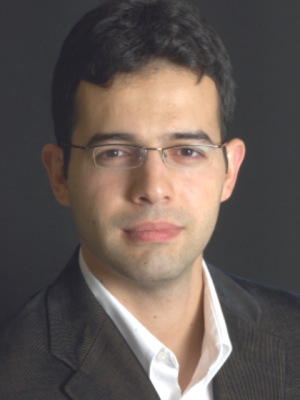
Michael McAlpine is a Professor in the Mechanical Engineering department at the University of Minnesota . He also holds affiliations with the Biomedical Engineering and Electrical and Computer Engineering departments. His research focuses on 3D printing functional materials & devices , Nanoscale inks , Biomedical devices , Bioelectronics , and Flexible Microsystems . Research Interests : 3D Printing, Biomedical Engineering, Nanotechnology, Flexible Electronics, Microfluidics Labs : ME 361/363 Contact : mcalpine@umn.edu , (612) 626-3303, ME 117 Recent Research Trends include 3D Printed Biomedical Devices , Flexible Electronics , and Bioprinting Applications . His work spans from Spinal Organoid Formation to Programmable Drug Release Capsules . Scientific Award : Circulation Research 2020 Best Manuscript Award
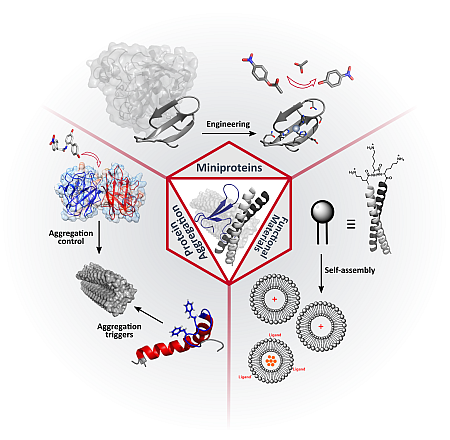
Jun.-Prof. Dr. Franziska Thomas is a Junior Professor at the Institute of Organic Chemistry, Heidelberg University, leading an active research group at the interface of organic chemistry, biochemistry, and biophysics. Her work centers on understanding protein folding mechanisms and their implications for biological function. Dr. Thomas established her independent research group at Georg-August-Universität Göttingen in June 2015 before moving to Heidelberg University in February 2020. She was offered her current tenure track position at Heidelberg on April 26, 2019. Her research program has two primary focuses: (1) designing peptide scaffolds with catalytic activity using de novo designed components that can be chemically synthesized and modified, and (2) studying protein aggregation mechanisms relevant to neurodegenerative diseases such as amyotrophic lateral sclerosis. She employs small, well-characterized self-assembling peptides to create novel materials and understand disease pathways. Analysis of her publication record reveals consistent advancement in peptide and protein engineering, with recent work emphasizing WW domains, β-sheet miniproteins, and innovative solid-phase synthesis techniques. Her research bridges fundamental protein science with applications in materials engineering and disease mechanism understanding. Her work has received significant funding including: The excellence cluster 3DMM2O for the project 'Design of Structured Adhesion Miniproteins for Tissue Engineering' The Deutsche Forschungsgemeinschaft for the research grant 'The WW-domain scaffold as a model system for the de novo design of miniaturized phosphate receptors, phosphatases and sulfatases' Dr. Thomas actively mentors a large research team including 11 PhD students and 2 Master's students, with numerous past students who have successfully completed their theses. She teaches courses including 'Chemische Biologie' and 'OC-Z6 Synthese und Retrosynthese' and participates in seminar series such as IMSEAM and 3DMM2O. The Thomas Lab maintains strong collaborative connections with multiple research groups including the Kivala, Kemerink, Blasco, Klein, Comba, and Gräter groups, reflecting an interdisciplinary approach to peptide and protein science.
Mark Hancock is a Professor and Chair of the Department of Management Science and Engineering at the University of Waterloo's Faculty of Engineering. He directs the Touchlab research group and holds cross-appointments in Systems Design Engineering and the David R. Cheriton School of Computer Science. His research focuses on designing interactive technologies that leverage human movement and perception to create novel interaction paradigms. Education: 2010: PhD in Computer Science, University of Calgary 2004: MSc in Computer Science, University of British Columbia 2002: BSc in Mathematics & Computer Science, Simon Fraser University Research Interests: Hancock's work centers on human-computer interaction, particularly technologies enabling richer physical interaction through hands, fingers, and body movements. His lab explores tabletop displays, large-screen interfaces, VR/AR systems, multi-touch interaction, 3D interfaces, and collaborative systems. Recent work examines VR applications for productivity, stress reduction through gaming, and gender-inclusive maker spaces. Publication Trends: Recent articles show strong emphasis on virtual reality applications (productivity tools, health considerations), tangible interfaces (card-based systems, physical props), and social computing (collaborative systems, community studies). Methodologies include phenomenological analysis, systematic reviews, and comparative evaluations of interaction techniques. Awards: NSERC Discovery Accelerator Supplement (2016) ACM CHI Golden Mouse Award (2016) ISS 2018 10-Year Impact Award Two ACM CHI Honorable Mentions (2019) Top Ontario Researcher recognition (2016) Teaching: Recent courses include Introduction to Computer Programming (MSCI 121), Algorithms and Data Structures (MSCI 240), Analytics and User Experience (MSCI 543), and Human-Computer Interaction (MSCI 630). Research Infrastructure: Directs the Touchlab, which develops novel interaction technologies. The lab's work bridges physical and digital interaction spaces, with applications in gaming, productivity tools, and collaborative systems.
Wendy P. Robinson is a Professor in the Department of Medical Genetics at the University of British Columbia Faculty of Medicine , and a Senior Scientist at the BC Children’s Hospital Research Institute . She holds the CIHR Sex and Gender Science Chair . Research Interests: Genetics and epigenetics of early human development, placental function in pregnancy complications (fetal growth restriction, preterm birth), DNA methylation, non-coding RNA, sex differences, and polymorphisms. Her lab employs genomic and bioinformatic tools to study placental health and its impact on newborn outcomes. Recent Publications (2025-2024) focus on X-chromosome inactivation patterns in placenta, cell-type specific DNA methylation, maternal socioeconomic effects on placental epigenetics, and modeling placental development with organoids. Key themes include sex-specific epigenetic regulation , maternal-fetal interactions , and human placental methylome . Awards: UBC Faculty of Medicine Distinguished Achievement Award (2018), with trainees receiving the James Miller Memorial Prize and Mary-Jane Carroll Trainee Award. Students & Collaborations: Supervised PhD/MSc students include Li Qing Wang, Icíar Fernández Boyano, Giulia Del Gobbo, Victor Yuan, and Magda Price. Collaborators span the Alex Beristain Lab and University of Toronto institutions. Laboratory Activities: Regular team-building events like mountain hikes, climbing outings, and kayaking trips, alongside providing open access to epigenetic tools (e.g., Bisearch, SeqDoc) for the research community.
Stephan Schlögl is a Full Professor at MCI - The Entrepreneurial School in Austria, leading research and teaching in Human-Computer Interaction (HCI), Artificial Intelligence (AI), and Information Systems. He holds editorial roles at journals like the Springer Discover Artificial Intelligence Journal and MDPI Multimodal Technologies and Interaction Journal. His work spans over two decades, with key roles including Postdoctoral Research Fellow at Télécom ParisTech (2012–2013) and PhD Researcher at Trinity College Dublin (2008–2012). Schlögl’s research focuses on HCI, AI-driven conversational systems, and assistive technologies for aging populations. Education includes a PhD in Computer Science from Trinity College Dublin, an MSc in Human-Computer Interaction from University College London, and a Mag.(FH) in Applied Informatics & Management from MCI. His teaching spans Software Engineering, Business Intelligence, and Research Methods. Research interests emphasize natural language interfaces, AI ethics, and technology’s societal impact. Notable projects include the EU-funded EMPATHIC initiative (2017–2021), developing an empathic virtual coach for elderly care, and the CRYSTAL project (2024–present) on conversational systems for emotional support. Schlögl has supervised numerous theses on AI applications, chatbots, and UX design. He co-organized major conferences like CUI (Conversational User Interfaces) and received awards for best papers in AI-HCI and CHIRA. His work bridges academia and industry, addressing challenges in AI adoption, digital well-being, and ethical technology design.
Manuela Zucknick is Professor and Director of the Oslo Centre for Biostatistics and Epidemiology at the University of Oslo's Faculty of Medicine, Department of Biostatistics. Her research integrates statistical learning with translational cancer research to advance personalized medicine through multi-omics data integration. PhD Biostatistics, Imperial College London (2008) MSc Bioinformatics, Imperial College London (2004) Diplom Statistik, University of Dortmund (2003) Her research focuses on Bayesian methods for integrating heterogeneous data sources in cancer research, particularly for drug response prediction in pharmacogenomic screens and patient prognosis. She develops structured high-dimensional regression models for 'large p, small n' problems in molecular medicine, with emphasis on incorporating prior biological knowledge into risk prediction frameworks. Her work bridges statistical methodology with clinical applications in personalized cancer therapies. Her recent publications demonstrate consistent contributions to multi-omics integration and survival modeling across diverse clinical contexts including cancer, pregnancy complications, and rheumatoid arthritis. The research shows strong methodological innovation in handling high-dimensional biological data while maintaining clinical relevance. Through the Oslo Centre for Biostatistics and Epidemiology, she leads collaborative projects spanning oncology, obstetrics, and rheumatology. Her work frequently involves designing statistical frameworks for pharmacogenomic screens and developing tools for biomarker discovery in complex disease settings.
Shankar Pandey is a Research Fellow in the Department of Internal Medicine at Yale School of Medicine, affiliated with the Schwartz Lab. His research focuses on biophysical and molecular mechanisms of DNA structures, including G-quadruplexes and i-motif, under nanoconfinement conditions. He employs advanced techniques such as single-molecule force spectroscopy, DNA origami engineering, and optical tweezers to investigate molecular interactions and mechanochemical properties. Key research interests include understanding how nanoconfinement affects DNA stability and conformation, designing mechano-pharmaceutical screening platforms, and exploring cooperative binding phenomena in molecular systems. His work bridges biophysics, nanotechnology, and molecular biology to address challenges in drug design and structural analysis. Pandey’s recent publications highlight advancements in DNA origami-based reactors, allosteric binding in G-quadruplexes, and intermolecular force measurements in host-guest systems. His contributions emphasize interdisciplinary approaches to unravel fundamental biological and chemical processes at the nanoscale. Lab affiliation: Schwartz Lab, Yale School of Medicine.
Oliver Baumann serves as Professor of Mathematics and Physics at the Department of Industrial Engineering within the Faculty of Engineering and Computer Science at Hamburg University of Applied Sciences (HAW Hamburg). His office is located in Room 0.17b at Ulmenliet 20, 21033 Hamburg, with office hours held Wednesdays 10:00–11:00 by email appointment. His academic background includes a physics diploma from CAU Kiel, a diploma thesis in applied optics at JGU Mainz, and a doctorate in astronomy from MPIA Heidelberg. Prior to his professorship, he worked as a scientific employee at Carl Zeiss AG in Oberkochen. Baumann's research spans applied and technical optics , experimental physics , and scientific image processing , with emphasis on optical measurement technology and precision mechanical-optical systems. His work bridges theoretical physics with industrial applications in aerospace, medical technology, and optical instrumentation. Key projects include radar system optimization for field mouse detection, fluorescence imaging evaluation in medical contexts, and photovoltaic-heat transport system design. His publications reveal strong focus on optical engineering (75% of works), instrumentation patents (60%), and educational methodologies (20%). Recent trends show increasing specialization in medical optics applications since 2016, alongside consistent contributions to astronomical instrumentation. Graduates' award for particularly dedicated teachers: 'Golden Duck' 2023 Graduates' award for particularly dedicated teachers: 'Golden Duck' 2019 Graduates' award for particularly dedicated teachers: 'Golden Duck' 2018 Graduates' award for particularly dedicated teachers: 'Golden Duck' 2017 Graduates' award for particularly dedicated teachers: 'Golden Duck' 2016 Baumann actively supervises graduate theses while serving as Chairman of the Examination Board for HWI bachelor's and master's programs. He holds multiple institutional roles including BAFöG representative, Deputy member of Faculty Council LS, and DAAD reviewer for Nigeria (PTDF). His professional affiliations include the European Optical Society (EOS), German Society for Applied Optics (DGaO), German Physical Society (DPG), and University Teachers' Association (hlb). His research activities center around precision mechanical-optical systems development, with emphasis on imaging technologies and measurement instrumentation. Current projects focus on optical metrology applications in aerospace and medical technology sectors.
Jonggi Hong is an Assistant Professor in the Department of Computer Science at Stevens Institute of Technology, affiliated with the Charles V. Schaefer, Jr. School of Engineering and Science. He holds a PhD from the University of Maryland (2021) and MS/BS degrees from KAIST (2014/2012). His research focuses on accessibility technologies, human-computer interaction (HCI), and AI applications, particularly addressing challenges for visually impaired users through machine learning and assistive systems. He has conducted research at Microsoft Research, Adobe Research, and the Smith-Kettlewell Eye Research Institute. His work explores user-system interactions via quantitative and qualitative methods, including studies on speech/image recognition errors, VR training for blind photography, and wearable haptic interfaces. Key projects include teachable object recognizers for non-experts and error detection in digital content. Hong serves as a Workshop Chair and Program Committee member for the ACM SIGACCESS ASSETS conference, promoting inclusive design principles in technology. Publications span venues like CHI, ASSETS, and W4A, emphasizing real-world accessibility solutions. His grants and advising activities are not explicitly listed, but he leads research on assistive machines, inclusive design, and AI-infused systems. Hong actively contributes to professional societies like ACM and maintains affiliations with labs such as the Intelligent Assistive Machines Lab.
Prof. Mehmet Fatih Yanik is a Full Professor at the Department of Information Technology and Electrical Engineering at ETH Zürich and Deputy Head of the Institute of Neuroinformatics. He leads the Yanik Lab, focusing on neurotechnology, neuroengineering, and high-throughput screening systems for drug discovery. His career includes tenured positions at MIT (2006-2014) and postdoctoral work at Stanford University. He holds a BS and MS from MIT (Electrical Engineering/Physics and Computer Science) and a PhD in Applied Physics from Stanford. Educations: BS in Electrical Engineering and Physics, MIT (1999) MS in Engineering and Computer Science, MIT (2000) PhD in Applied Physics, Stanford University (2006) Research Interests: Prof. Yanik’s work spans neurotechnology platforms for large-scale neural recording and stimulation, high-throughput in vivo screening systems for drug discovery, and advanced neuroimaging techniques. He pioneered ultra-flexible neural electrodes and non-invasive focused ultrasound neuromodulation. His lab integrates machine learning with neurotechnology to study brain circuit dynamics and anesthetic states. Awards: NIH Director’s Pioneer Award (youngest recipient) ERC Consolidator Award Bridge Discovery Award Technology Review’s 'Top 35 Innovators Under 35' Advising & Grants: His research is supported by NIH, ERC, NSF, and industry partnerships. He directs the NSC Master’s program and teaches courses like "Bioelectronics and Biosensors" . The Yanik Lab collaborates widely, advancing translational neurotechnology for clinical applications. Labs & Teams: The Yanik Lab at ETH Zürich develops cutting-edge tools for neuroscience, including neural interface technologies and AI-driven analysis pipelines for behavioral and neural data.
Dr. Yun Lyna Luo is an Associate Professor in the College of Pharmacy at Western University of Health Sciences . Her research focuses on computational biophysics, particularly using molecular dynamics simulations to study ion channel mechanisms and AI-assisted drug design. She joined the university in 2013 and has held leadership roles in editorial boards (Nature Methods, Biophysical Journal) and professional organizations (Biophysical Society, American Chemical Society). Education: PhD, Ecole Normale Supérieure (Paris VI), 2004-2007 Postdoc, Argonne National Laboratory & University of Chicago, 2008-2013 BS/MS, Zhejiang University, 1997-2004 Research Interests: Her lab develops multiscale simulation methods to study ion channel dynamics (e.g., PIEZO1, connexins) and applies these to drug discovery. Key areas include ligand-receptor interactions, membrane protein function, and mechanism-driven drug design. Recent work targets piezo channels for contraception and PRMT inhibitors for leukemia treatment. Grants & Awards: NIH R01 Grant (MPI): Pharmacological Modulation of PIEZO1 Channels (2019-2028) NSF Collaborative Research: Sensory Membrane Protein Dynamics (2024-2027) Over 40 invited talks at conferences including Gordon Research Conferences and ACS National Meetings Teaching & Service: Course instructor: Molecular Simulation, Pharmacological Basis of Therapeutics Leadership roles: College Tenure & Promotion Committee (2023-2024), Department Vice Chair (2018-2019) Laboratory: The Luo Lab operates at the interface of computational biophysics and translational medicine. Key projects include developing FAIR-compliant simulation protocols and collaborating on projects such as CatSper channel-based contraception and cancer immunotherapy strategies.
Dr. Yan Zhao is a researcher at Newcastle University , specializing in cancer biology, pharmacology, and molecular interactions related to the MDM2-p53 pathway . Their work focuses on developing small molecule inhibitors for oncology applications, particularly in lymphomas and solid tumors. Key research areas: Cancer therapy , Protein-protein interactions , DNA repair mechanisms , and Drug development . Affiliated with experts like Professor Steve Wedge and Dr. Richard Noble . Recent work highlights ASTX295 (2024), a next-generation MDM2 antagonist, and studies on dual metabolic inhibition in diffuse large B-cell lymphoma (2022). Earlier contributions include structural analysis of isoindolinones (2013-2014) and DNA-PK/ATM inhibitors for radiosensitization (2004-2006). Collaborations span preclinical models, kinase inhibition, and molecular imaging techniques. Their publications emphasize therapeutic index optimization and apoptosis induction in tumor cells.
Christopher Arnatt, Ph.D., is an Associate Professor in the Department of Chemistry at Saint Louis University, within the School of Science and Engineering. He holds a Ph.D. in Medicinal Chemistry from Virginia Commonwealth University (2013) and a B.S. in Chemistry from Hampden-Sydney College (2009). His research focuses on leveraging organic chemistry to decode cellular processes and disease mechanisms, with a particular emphasis on developing small molecule and fluorescent probes to study biological systems. Current projects target nuclear proteins, DNA modifications, and their roles in cancer and stem cell biology. His research portfolio includes groundbreaking work on G protein-coupled receptors (GPCRs), especially GPR183 and GPER, exploring their roles in neuropathic pain, estrogen signaling, and cancer progression. He has pioneered methodologies in metabolomics using advanced mass spectrometry techniques like isobaric tagging for high-throughput analysis. His lab also develops novel therapeutic agents, including photoswitchable molecules for cancer treatment and GPER modulators for estrogen-related disorders. Dr. Arnatt teaches advanced chemistry courses (CHEM 2410–5160) and maintains an active laboratory program (arnattlab.com) that emphasizes interdisciplinary approaches at the chemistry-biology interface. His work bridges synthetic organic chemistry with translational research, addressing unmet clinical needs in pain management and oncology.
Patrick Baudisch is a prominent researcher and professor in the field of Human-Computer Interaction, affiliated with the Hasso-Plattner-Institut (HPI) in Potsdam, Germany, where he leads research in interactive systems and user interface technologies. He has also held research positions at Microsoft Research , Xerox PARC , and Fraunhofer IPSI , contributing extensively to advancements in visualization and interaction techniques. Current Affiliation: Hasso-Plattner-Institut (HPI), Germany Former Affiliations: Microsoft Research, Xerox PARC, Fraunhofer IPSI Research Focus: Interactive devices, touch and tangible interfaces, scalability of displays His research centers on innovative user interface paradigms, particularly in the areas of focus-plus-context visualization , back-of-device interaction , and touch-enabled small screens . He has pioneered projects like NanoTouch , Lumino , and Phosphor , which explore novel ways to interact with digital content across different form factors. The trend in his recent work emphasizes compact, mobile interaction and context-aware displays , aiming to bridge the gap between physical and digital interfaces. His contributions span both theoretical models and practical implementations, often prototyped in real-world applications. Scientific Awards: None listed in the provided text. Advising and Grants: While specific students or grants are not mentioned, his extensive academic talks and teaching activities suggest active mentorship and research leadership. He has delivered over 50 invited talks at leading universities and industrial labs, indicating strong influence and collaboration in the HCI community. Labs and Teams: He leads a research group at the Hasso-Plattner-Institut focused on human-centered computing and interactive systems. He has also been associated with the Visual Interaction and Behavior Engineering (VIBE) group at Microsoft Research and has collaborated with teams at FXPAL , PARC , and Intel Research .