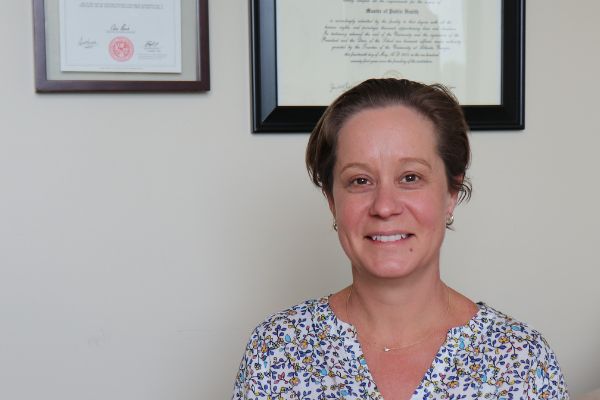
Lauren FranzView profile
Associate Professor
Dr. Lauren Franz serves as Associate Professor of Psychiatry and Behavioral Sciences and Associate Research Professor of Global Health at Duke University, with Faculty Network membership at the Duke Institute for Brain Sciences. Her clinical expertise centers on child and adolescent psychiatry, specializing in autism spectrum disorder interventions and digital health applications across diverse global contexts. Her academic credentials include: Honorary Associate Professor, Division of Child & Adolescent Psychiatry, University of Cape Town (2023-2028) Residency and Fellowship in Psychiatry and Child and Adolescent Psychiatry, Duke University School of Medicine (2007-2014) M.B.B.Ch., Stellenbosch University, South Africa (2002) Dr. Franz pioneers the integration of artificial intelligence and digital phenotyping to revolutionize autism detection and intervention. Her research spans telehealth adaptation of caregiver coaching in low-resource settings, computational analysis of behavioral markers, and neurodiversity-affirming clinical frameworks. She actively bridges technology development with implementation science to address global disparities in neurodevelopmental care. Analysis of her recent publications reveals dominant trends in machine learning-driven autism screening, cross-cultural adaptation of interventions, and comorbidity mapping between autism and ADHD. Her work consistently leverages electronic health records, mobile applications, and computer vision to identify biomarkers while prioritizing real-world applicability across socioeconomic contexts. Dr. Franz directs significant research initiatives including: Duke-NCCU Interdisciplinary Postdoctoral Training Program (2024-2029) Electrophysiological biomarkers of social engagement in autism (2024-2028) Caregiver Coaching to Improve Outcomes of Young Autistic Children in Africa (2022-2027) ACACIA hybrid effectiveness-implementation trial for autism intervention in Africa She leads the Duke Institute for Brain Sciences' global mental health initiatives, maintaining active collaborations with the University of Cape Town to develop sustainable autism care models. Her international teams integrate psychiatrists, computer scientists, and implementation specialists to create culturally responsive digital tools, with recent work focusing on bias mitigation in AI language models and telehealth delivery in South African communities.