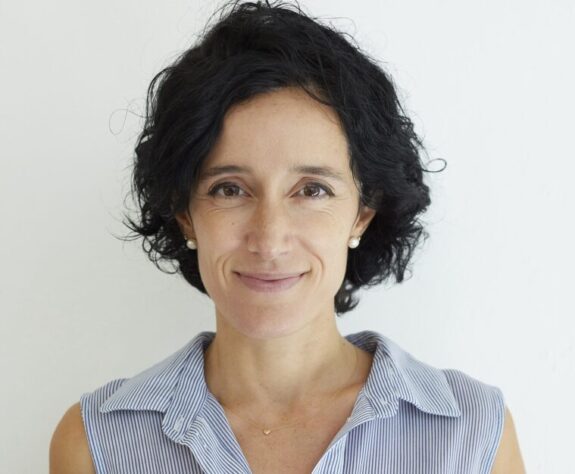
Amber Ginsburg is a Chicago-based Lecturer in Visual Arts at the University of Chicago, creating site-generated projects and social sculptures that bridge historical scenarios with present-day contexts. Her practice involves long-term collaborations with experts in botany, legal scholarship, political activism, and science fiction. Teaching at the University of Chicago since 2009 Co-founder of le Museé de le Grand Dehors (The Museum of the Great Outdoors) with Sara Black and Charlie Vinz Featured at the Thailand Biennale, 2019 Ginsburg's research explores material lineages (e.g., porcelain, tree species) and feminist strategies through large-scale sculptural works that position audiences as active participants. Her projects investigate the thinning boundary between human and nonhuman agency, using historical frameworks to imagine futures centered on human survival. Her publications reflect themes of social engagement, covering topics like war memory, ecological art, and collective action. Notable collaborations include ongoing projects with Aaron Hughes examining legal and political systems through tea rituals and performance art.
Laia Mogas-Soldevila serves as Assistant Professor of Graduate Architecture and Director of DumoLab Research at the University of Pennsylvania's Stuart Weitzman School of Design, pioneering radically sustainable material practices that bridge science, engineering, and the arts for architectural and product design innovation. Her academic credentials include: Interdisciplinary doctorate in biomaterials science, biomedical engineering, and advanced design from Tufts University School of Engineering Two master’s degrees from the Massachusetts Institute of Technology School of Architecture Licensed architect with Fine Arts minor from Polytechnic University of Catalonia and École Nationale Supérieure de Beaux-Arts Dr. Mogas-Soldevila's research reimagines matter as a fundamental design driver through biomaterials and bio-based fabrication , emphasizing environmental justice and circular economy principles. Her work partners with scientists to develop unprecedented material capabilities, spanning from molecular-scale biopolymer engineering to full-scale architectural applications that address climate challenges. Analysis of her 15 most recent publications (2020-2025) reveals dominant themes in carbon-sequestering living materials, agricultural waste valorization, and adaptive biological skins. These works consistently bridge architecture, material science, and environmental engineering, with increasing focus on participatory design and urban farming applications as seen in her 2024 Portable Bioremediation Technologies project. Her scientific recognition includes: Johnson&Johnson Foundation Woman in STEM2D Scholar Award Research funding encompasses Penn's Research Foundation Grant, Environmental Innovation Grant, Sachs Art Innovation Grant, and Global Engagement Fund, supporting her interdisciplinary exploration of sustainable material systems. Her pedagogy cultivates novel theory and applied methods for biomaterial implementation across design disciplines. As DumoLab Research Director, she leads cross-disciplinary collaborations developing material-driven computational workflows for digital fabrication, with recent projects exhibited at MoMA, Milan/London Design Weeks, and ACADIA conferences, translating laboratory innovations into tangible environmental solutions.
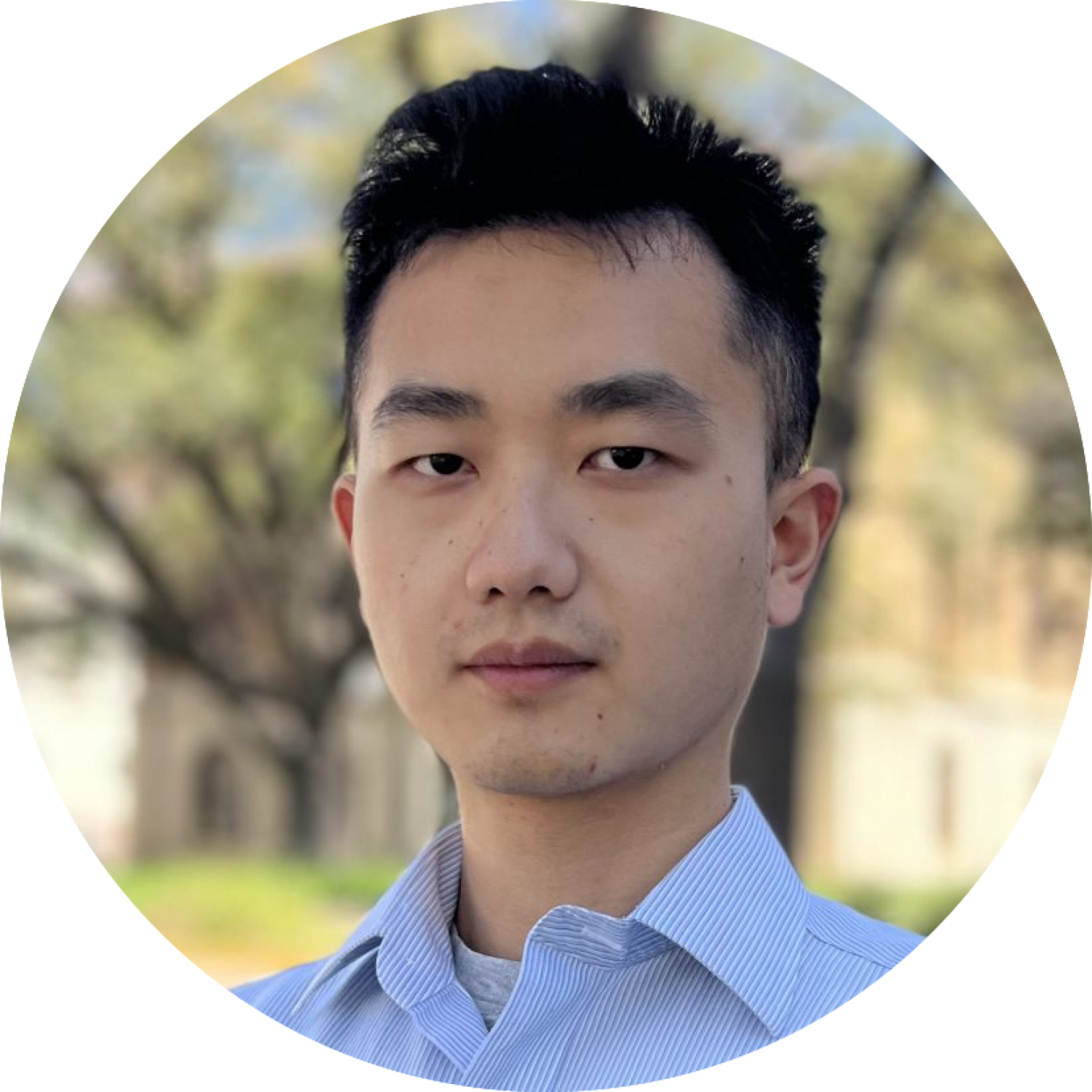
Cheng Huang is an Assistant Professor in the Department of Aerospace Engineering at the University of Kansas. His research focuses on computational fluid dynamics, aerospace propulsion, turbulent combustion modeling, and reduced-order modeling techniques. He is affiliated with the Computational AeroPropulsion Laboratory and can be contacted at chenghuang@ku.edu. Education: B.S. from Shanghai Jiaotong University M.S. and Ph.D. from Purdue University Research Interests: LES Modeling of Turbulent Reacting Flows Data-Driven and Reduced-Order Modeling of Complex Fluid Flows Combustion Instability Analysis in Aerospace Propulsion Recent Work Trends: His publications emphasize reduced-order modeling techniques for rocket combustion dynamics, rotating detonation engines, and multiscale fluid systems. Key methodologies include projection-based models, data-driven approaches, and nonlinear approximations of latent dynamics.
Rameshwar Pratap is an Associate Professor in the Department of Computer Science and Engineering at the Indian Institute of Technology Hyderabad (IIT Hyderabad). Previously, he served as an Assistant Professor at the School of Computing and Electrical Engineering, IIT Mandi for three years. Education: Ph.D. in Theoretical Computer Science, Chennai Mathematical Institute Research Interests: His research lies at the intersection of theory and practice, focusing on extremely simple yet practical approximation algorithms with provable guarantees . Key themes include: Sketching and dimensionality reduction algorithms for tensors and similarity measures Improving speed, scalability, and accuracy of existing sketching methods Applications in machine learning: node embedding in large-scale networks, itemset mining, model compression He extensively employs techniques from matrix and tensor algebra, sampling, random projection, and randomized hashing . Publications Overview: Across 2021–2025 his work has appeared in top venues such as IEEE Globecom, Theoretical Computer Science, Acta Informatica, Information Processing Letters, Algorithmica, UAI, ICALP, Machine Learning, TKDE, and ACML. Recurring themes are randomized sketching, locality-sensitive hashing, compressed matrix multiplication, variance reduction, and subspace approximation , demonstrating both theoretical depth and practical impact. Awards & Honors: Early Career Research Grant (PM-ECRG) 2025, Anusandhan National Research Foundation (ANRF) Best Paper Award, COCOON 2020 Students & Funding: First Ph.D. student: Bhisham Dev Verma (co-advised with Prof. Manoj Thakur) graduated June 2025 MS by Research student: Punit Pankaj Dubey graduated October 2022 Currently hiring 1 Junior Research Fellow for the PM-ECRG project “Improving Similarity Search in Practice” Labs & Teams: Works within the Algorithms & Theory group at IIT Hyderabad, collaborating with national and international researchers. Erdös number is 3.
Zhi Li is an Assistant Professor at the University of Colorado Boulder's College of Engineering and Applied Science, Department of Civil, Environmental and Architectural Engineering. He leads the newly established Flood Lab, focusing on flood prediction and monitoring through remote sensing and coupled hydrologic-hydraulic models. Joined CU Boulder in Fall 2025 Former Dean's Postdoc Fellow at Stanford University PhD in Civil Engineering & Environmental Science from University of Oklahoma (2022) His research spans hydrological modeling , extreme events , and AI4Science applications, particularly in deep learning and intelligent agents for flood risk assessment. Li’s work also connects floods with public health and economic systems , aiming to develop the Flood-Agriculture-Climate-Economics-Disease (FACED) framework. Key Themes: High-resolution flood modeling Climate change impacts on hydro-meteorology Remote sensing integration Flood-agriculture interdependencies Global health implications Scientific Awards: Dean's Postdoc Fellow, Stanford Doerr School of Sustainability (2023) Hoving Fellowship, University of Oklahoma (2019) Li’s recent publications emphasize improved precipitation estimation (IMERG V07), Brown Ocean Effect studies, and Fourier neural operators for rapid flood forecasting. His collaborative work with NOAA and NASA focuses on comparing ground-based and spaceborne radar systems for extreme event analysis.
Nisanth N. Nair is Professor of Chemistry at the Indian Institute of Technology Kanpur (IITK), India, holding the position since 2018. He obtained his PhD from the Universität Hannover, Germany (2004) after completing his MSc in Chemistry at IIT Madras (2001). His research group pioneers advanced computational-chemistry methods to address grand-challenge problems in energy, healthcare and materials science. Education PhD (2004), Universität Hannover, Germany MSc (2001), Chemistry, Indian Institute of Technology Madras Research Interests Professor Nair’s work is organized around five tightly linked thrusts: Method development: massively parallel QM/MM algorithms, polarizable force-fields, metadynamics and hybrid functionals for large-scale catalytic systems. Energy catalysis: computational design of Rh/Al₂O₃ and Rh/TaON catalysts for efficient water-splitting and H₂ production. Healthcare: molecular mechanisms behind antibiotic resistance in NDM-1 and Class-C β-lactamase enzymes, guiding de-novo inhibitor discovery. Aerospace materials: multi-scale modelling of thermo-oxidative degradation of high-temperature polymers in collaboration with Boeing. Heterogeneous catalysis: olefin hydrogenation on Rh/Y-zeolite and single-atom catalysis phenomena. Publications Trend His recent articles (2011–2013) highlight an integrative approach combining rigorous electronic-structure calculations with micro-kinetic modelling to unravel complex catalytic cycles, antibiotic-resistance pathways and support-effects in single-atom catalysts. Honours & Awards P. K. Kelkar Young Faculty Research Fellow, IIT Kanpur (2012–2015) Young Associate, Indian Academy of Sciences, Bangalore (2012–2015) Young Scientist Medal, Indian National Science Academy, New Delhi (2013) Contact & Resources Office: SL 302, Department of Chemistry, IIT Kanpur, Kanpur 208016, India Phone: +91 512 259 6311 Email: nnair@iitk.ac.in Web: http://home.iitk.ac.in/~nnair
Bo Hu is Professor of Biostatistics & Bioinformatics and Professor of Neurosurgery at Duke University, where he leads methodological and collaborative research at the intersection of biostatistics, bioinformatics, and clinical neurosciences. His dual appointments situate him within the Division of Biostatistics in the Department of Biostatistics & Bioinformatics and within the neurosurgical faculty. Education: Ph.D. in Biostatistics, University of Wisconsin–Madison, 2006 Research Interests: Professor Hu’s methodological work centers on advanced biostatistical and machine-learning techniques for high-dimensional biomedical data, including generative AI, synthetic data generation, and predictive analytics in medicine. Clinically, he collaborates on precision-medicine trials in oncology, neurodegeneration (Alzheimer’s disease), metabolic disease (type 2 diabetes and bariatric surgery), and treatment-resistant depression. His neuroimaging genetics portfolio explores structural brain endophenotypes in bipolar disorder and epilepsy using single-cell transcriptomic integration. Complementing his medical research, he maintains a vigorous program in remote-sensing informatics, developing deep-learning solutions for object detection, domain adaptation, and energy-infrastructure mapping from overhead imagery. Recent Grant Portfolio: Empagliflozin to Improve Right Ventricular Function in Pulmonary Arterial Hypertension – Cleveland Clinic Lerner College of Medicine (2025-2030) Gender and Asthma – Mayo Clinic Hospital-Arizona (2025-2027) Engaging Patients in Prenatal Genetic Testing Decisions – Cleveland Clinic Lerner College of Medicine (2025-2027) Laboratory & Collaborative Networks: Professor Hu leads interdisciplinary teams that bridge Duke’s Department of Biostatistics & Bioinformatics with clinical departments (Neurosurgery, Psychiatry, Medicine) and external partners such as Cleveland Clinic, Mayo Clinic, and multiple NIH consortia. These collaborations support large-scale clinical trials, multi-omics neuroimaging studies, and AI-driven remote-sensing analytics.
Michael Bronstein is a Professor at Università della Svizzera italiana (USI Lugano) in Switzerland and Imperial College London in the UK, where he holds the Chair in Machine Learning and Pattern Recognition. He serves as Head of Graph Learning Research at Twitter following the acquisition of his startup Fabula AI, and maintains a principal engineer position at Intel Perceptual Computing. His research focuses on the interplay between geometry, machine learning, and computer vision, with particular emphasis on non-Euclidean structured data. Professor Bronstein received his Ph.D. with distinction in Computer Science from the Technion in 2007. He has held visiting appointments at Stanford University, MIT, Harvard University (as a Radcliffe Fellow), and Tel Aviv University, and has been affiliated with multiple Institutes for Advanced Study including TUM-IAS where he was a Rudolf Diesel Industry Fellow (2017). He is a Fellow of IAPR, Senior Member of the IEEE, and a member of the Young Academy of Europe. His research program centers on theoretical and computational methods in spectral and metric geometry applied to computer vision, pattern recognition, and machine learning. He pioneered the field of geometric deep learning, developing novel neural network architectures that process non-Euclidean data structures like graphs and manifolds. His work spans from theoretical foundations to practical applications, with over 100 publications in top scientific journals and conferences, and has been featured in international media including CNN. Analysis of his recent publications reveals a strong trajectory in geometric deep learning with applications spanning computer vision, 3D shape analysis, social network analysis, and bioinformatics. His research consistently bridges theoretical innovation with real-world applications, developing novel neural architectures for processing complex data structures. The work demonstrates increasing interdisciplinary reach, connecting machine learning with fields from particle physics to molecular biology. Dalle Molle Prize (2018) Royal Society Wolfson Research Merit Award (2018) ERC Proof of Concept Grant (2018) Amazon AWS Machine Learning Research Award (2018) Fellow, International Association for Pattern Recognition (IAPR) Google Faculty Research Award (2017) Radcliffe fellowship, Harvard University (2017) Rudolf Diesel industrial fellowship, TU Munich (2017) ERC Consolidator Grant (2016) World Economic Forum Young Scientist (2014) Professor Bronstein has secured multiple ERC grants (Starting Grant 2012, Proof of Concept Grants 2016 and 2018, Consolidator Grant 2016) and has mentored numerous students who have contributed to over 30 granted patents. He has chaired more than a dozen conferences and workshops in his field and served as area chair at major computer vision conferences including ECCV 2016 and ICCV 2017. His research group at USI Lugano collaborates extensively with industry partners including Intel and Twitter. As a serial entrepreneur, Professor Bronstein co-founded Novafora (2005-2009) developing large-scale video analysis, Invision (2009-2012) which created low-cost 3D sensors and was acquired by Intel, and Fabula AI (2018-2019) focused on fake news detection which was acquired by Twitter. His work bridges theoretical research with commercial applications, with his technology contributing to Intel RealSense and Twitter's graph learning infrastructure.
Dr. Carlos Aguiar serves as Assistant Professor in the Industrial Design Program at the University of Illinois Urbana-Champaign's School of Art and Design, with affiliate status in Informatics at the School of Information Sciences. He directs the Design, Technology, and Society Lab, where he investigates human-artifact interactions through critical design frameworks and cyber-physical systems development. His academic foundation includes a Ph.D. in Design & Human Behavior from Cornell University (2021) with minors in Science and Technology Studies and Information Science, an M.S. in Design Computing from the University of Washington (2017), and a Bachelor's in Architecture & Urbanism from Brazil's Universidade Estácio de Sá (2012). Aguiar's research integrates Science and Technology Studies, Design Philosophy, and Critical Theory to develop technologies that foster social change while examining material culture's societal implications. His dual-focus methodology simultaneously creates tangible artifacts that enhance human-agent-material relations and analyzes how emerging technologies shape societal structures through empirical investigation and critical reflection. This approach prioritizes inclusivity in future-making processes and examines emergent behaviors in technological appropriation. His publication trajectory (2016-2024) reveals consistent advancement in human-computer interaction, particularly in assistive technologies for rehabilitation and autism support, social interaction design in public spaces, and architectural robotics for community building. Key thematic developments include the evolution from single-user wearable devices (Erglove, GripAid) to community-scale cyber-physical systems (communIT, transFORM), with recent work expanding into eco-consciousness and restorative environments through socially interactive robotics. No scientific awards were documented in the provided source materials As lab director, Aguiar cultivates interdisciplinary collaboration between design, informatics, and engineering disciplines. His grant activities focus on developing cyber-physical artifacts that transform underused public spaces into community engagement hubs while addressing societal challenges through human-centered technological innovation. The Design, Technology, and Society Lab functions as an experimental platform where theoretical frameworks from STS and critical design directly inform the creation of responsive environments, objects, and spaces that actively shape social interactions and cultural practices.
Elizabeth Blanton is a Professor of Astronomy at Boston University's College of Arts & Sciences, where she serves as Director of Undergraduate Studies. Her research primarily focuses on high-energy astrophysics and observational astronomy, with emphasis on galaxy clusters, radio galaxies, and AGN feedback mechanisms. She utilizes multi-wavelength approaches including X-ray, optical, infrared, and radio observations. Education: Ph.D., Columbia University M.Phil., Columbia University M.A., Columbia University A.B., Vassar College Professor Blanton's research centers on clusters of galaxies, particularly studying the X-ray emission from the intracluster medium using the Chandra X-ray Observatory. She investigates how central radio sources powered by supermassive black holes interact with and heat the surrounding gas, which has important implications for galaxy formation and evolution. Her work also explores using radio sources as tracers for high-redshift galaxy clusters for cosmological studies. Her publication record shows consistent research on galaxy cluster dynamics, particularly focusing on phenomena like gas sloshing, shock waves, and cavities created by AGN feedback. The research spans multiple wavelengths with heavy emphasis on X-ray observations from the Chandra Observatory, complemented by optical, infrared, and radio data. Her work has significantly contributed to understanding how energy from supermassive black holes affects the evolution of galaxy clusters. Notable Press Coverage: "Abell 2052: A Galaxy Cluster Gets Sloshed" featured in BU Research Magazine 2012, Chandra press release, NASA press release, and National Geographic image of the week "NGC 5813: An Intergalactic Weather Map" covered in Chandra and NASA press releases "Cosmic Battle Creates Milky-Way Sized Tunnel" featured in Naval Research Lab press release "NGC 1553: Black Holes in Distant Galaxy Points to Wild Youth" covered in Chandra press release Professor Blanton teaches a range of astronomy courses from introductory to graduate level, including Principles of Astronomy II, Stellar and Galactic Astrophysics, Introduction to Astrophysics, and Observational Techniques. Her Observational Techniques course provides hands-on experience with telescopes at Boston University and Lowell Observatory in Arizona. She leads research within the Interdisciplinary Cosmology Group at Boston University, which includes members from the Departments of Astronomy, Physics, and Data Sciences. Her work on galaxy clusters and AGN feedback continues to advance our understanding of the formation and evolution of large-scale structures in the universe.
Joel Lanning is an Associate Professor in the Department of Civil and Environmental Engineering at the Samueli School of Engineering, University of California, Irvine. Education: Ph.D. in Structural Engineering from UC San Diego (2014), M.S. in Structural Engineering from UC San Diego (2008), B.S. in Civil Engineering from The Ohio State University (2006) His research focuses on engineering education, seismic design of civil structures, large-scale testing methodologies, and alternative building materials. He integrates constructivist learning principles with active learning components like group problem-solving and interactive technology. Awarded the 2023 Distinguished Early-Career Faculty Award for Teaching, 2022 SSoE Early Career Innovation in Teaching Award, 2020 Dean’s Honoree for DTEI’s Celebration of Teaching, and the 2019 CEE Faculty of the Year Award, Joel has demonstrated excellence in pedagogical innovation and student engagement. He serves as Director of the MEng CEE Concentration and is a licensed Professional Engineer (Civil Engineering, California #80946). Joel actively mentors the UCI Steel Bridge Team, guiding hands-on structural design competitions.
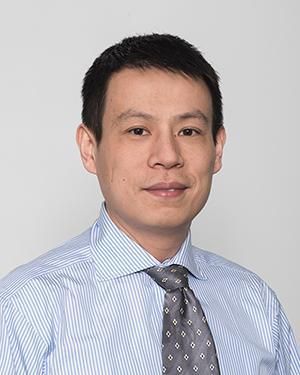
Haoming Shen is an Assistant Professor in the Department of Industrial Engineering at the University of Arkansas, College of Engineering. He received his Ph.D. in Industrial and Operations Engineering from the University of Michigan, Ann Arbor, along with master's degrees in Electrical and Computer Engineering and Mathematics from the same institution. His bachelor's degree is in Electrical Engineering from Xi'an Jiaotong University. Dr. Shen's research focuses on stochastic optimization and integer programming with applications in power grids and transportation systems. His work centers on data-driven decision-making under uncertainty, particularly using Wasserstein ambiguity sets for chance-constrained programming. His research has significant implications for optimizing critical infrastructure systems where uncertainty must be rigorously accounted for. His publications demonstrate a strong trajectory in optimization theory with applications to power systems. His work on Wasserstein ambiguity models for chance constraints has been published in top venues including Mathematical Programming and the IEEE Conference on Decision and Control. His 2022 paper on Wasserstein two-sided chance constraints with application to optimal power flow received an Honorable Mention in the INFORMS Optimization Society Best Student Paper Competition. Honorable Mention award in the 2022 INFORMS Optimization Society Best Student Paper Competition Rackham Professional Development DEI Certificate Dr. Shen actively engages in Diversity, Equity and Inclusion initiatives. While specific information about his advisees is not provided in the available materials, his research program appears to be actively developing with multiple recent publications in optimization theory and applications.
Diyi Yang serves as an Adjunct Professor within the School of Interactive Computing at the Georgia Institute of Technology, where they contribute to the Machine Learning (ML@GT) research initiative. This academic unit operates under Georgia Tech's College of Computing and focuses on human-centered computing, artificial intelligence, and interdisciplinary technological innovation. Dr. Yang's research spans critical domains including Natural Language Processing and Machine Learning, with significant contributions to Computational Social Science and Social Computing. Their work integrates algorithmic approaches to analyze linguistic patterns and social dynamics, developing systems that model human behavior through computational frameworks. This research bridges technical AI advancements with real-world societal applications, particularly in understanding online interactions and community structures. No scientific awards or honors were specified in the available information. The provided text contains no mention of prizes, fellowships, or medals received by Dr. Yang. While Dr. Yang holds an advisory capacity as an Adjunct Professor, specific details about graduate students supervised or research grants managed are absent from the source material. Their role appears focused on research collaboration rather than formal student mentorship based on the available data. Dr. Yang is actively affiliated with Georgia Tech's Machine Learning (ML@GT) research group, a cross-disciplinary consortium connecting over 100 faculty members across engineering, computing, and social sciences. This affiliation facilitates collaborative projects in algorithm development, ethical AI implementation, and large-scale data analysis for social phenomena.
Danijel Skočaj is Full Professor at the University of Ljubljana, Faculty of Computer and Information Science , and serves as Head of the Visual Cognitive Systems Laboratory . He is an internationally recognized researcher in computer vision, machine learning, and cognitive robotics , with a strong focus on deep-learning solutions for real-world visual perception tasks and their ethical implications. Education: While specific degrees are not listed in the text, Professor Skočaj’s 2002 “Best PhD paper award” confirms he holds a PhD in the relevant field. Research Interests: His work spans Computer Vision & Pattern Recognition Deep Learning & Neural Networks Cognitive Robotics & Autonomous Navigation Visual Anomaly & Surface-Defect Detection AI Ethics & Societal Impact of AI These interests manifest in both theoretical advances and practical systems deployed in industry and public infrastructure. Publication Trends: Recent papers (2020-2024) emphasize deep-learning architectures for defect detection, robotic grasping, autonomous navigation, traffic-sign recognition, and 3-D anomaly detection , demonstrating a clear trajectory toward robust, real-time, and data-efficient visual intelligence. Awards & Honors: Prometheus of Science Award 2021 (Slovenian Science Foundation) Golden Plaque, University of Ljubljana 2020 ARRS National Award for Exceptional Scientific Achievement 2011 & 2022 Multiple Best-Paper awards at ERK conferences (2013, 2017, 2019) Top-downloaded paper recognition, Journal of Intelligent Manufacturing 2020 Grants & Projects: He currently leads or co-leads five major 2025-2028 national and EU projects (RTFM, SMASH, COMET, RoDEO, MUXAD) totaling several million Euros, focusing on advanced computer vision, machine learning for science & humanities, autonomous systems, and explainable AI. Past leadership includes EU FP7 CogX, GOSTOP, ViLLarD, and many ARRS programmes. Laboratory & Team: The Visual Cognitive Systems Laboratory hosts a dynamic group of doctoral and master’s students working on cutting-edge perception systems. The lab’s open-source low-cost robotic platform and datasets are widely adopted for education and research.
Dr. Stuart Marshall serves as Associate Dean of Academic Development in the Faculty of Science and Engineering at Victoria University of Wellington - Te Herenga Waka, where he also holds the academic rank of Senior Lecturer. Previously, he served as Head of School for the School of Engineering and Computer Science from 2015-2021 after joining the institution as a Lecturer in 2003. His academic journey includes completing his BSc, MSc, and PhD in Computer Science at Victoria University of Wellington, with his doctoral research focusing on software reuse. Marshall's research interests center on information and data visualization, particularly exploring how visualization can function as collaborative tools in team environments rather than single-user applications. He also investigates explainable AI and mobile user interface design with emphasis on promoting healthy device usage patterns. His work bridges theoretical computer science with practical applications in education and environmental analysis. Analysis of his publication record reveals a consistent focus on visualization techniques, with recent work shifting toward immersive analytics and virtual reality applications for complex data analysis, particularly in ecosystem services. Earlier publications concentrated on mobile learning applications grounded in transactional distance theory, software visualization for large codebases, and graph layout algorithms. Marshall has supervised six PhD students and eight Masters students to completion, with current doctoral supervision spanning immersive environments for reading assistance, medical diagnosis interfaces, and cardiac procedure simulation. His grant portfolio includes multiple ACM ISS 2022 projects with industry partners including Sensor Holdings Limited, Niantic, Autodesk, and Northeastern University, along with an Australian Research Council grant for digital games preservation. Teaching responsibilities encompass foundational programming, safety-critical systems, human-computer interaction, and data visualization across undergraduate and graduate courses. He teaches subjects including SWEN326 (Safety-Critical Systems), CGRA151 (Introduction to Computer Graphics and Games), and DATA301 (Data Science in Practice), with teaching assignments scheduled through 2026.