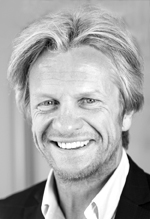
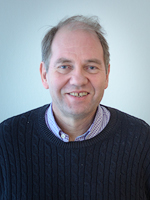
Hans Bihs is a Professor in the Department of Civil and Environmental Engineering, Faculty of Engineering. His research focuses on computational fluid dynamics (CFD), wave hydrodynamics, and wave-structure interaction using the open-source framework REEF3D. Key Research Areas: CFD simulations, wave modeling, floating body dynamics, ocean wave energy, aquaculture hydrodynamics, sediment transport, and high-performance computing. Projects: ERC Consolidator Grant PARTRES (2023-2028), EEA Grants Portugal SurfWave (2023), NFR KPN IPIRIS (2021-2025), EEA Baltic SolidShore (2021-2024), NTNU's MAPLE (2022-2025), and DigiCoast (2021-2024). Email: hans.bihs@ntnu.no His recent publications (2025-2020) analyze fluid-structure interaction, ship-induced waves, floating offshore wind turbines, submerged vegetation, and coastal structures using advanced CFD techniques. Topics include wave hydrodynamics, turbulence, and numerical modeling for marine and aquaculture systems.
Olav Bolland is the Dean of the Faculty of Engineering at the Norwegian University of Science and Technology (NTNU) and holds the academic rank of Professor of Thermal Power Engineering. His research focuses on carbon capture and storage (CCS), thermal power systems, and CO2 emission management in power generation. He leads the ECCSEL initiative, an international laboratory infrastructure for CCS research and innovation. Bolland teaches courses such as TEP4185 (Gas Process Technology) and FLYT2202 (Aerodynamics). His research emphasizes techno-economic assessments of CO2 capture technologies, including chemical looping reforming, gas switching reforming (GSR), and pressure swing adsorption (PSA). He has published extensively on topics like pre- and post-combustion CO2 capture, power plant optimization, and hydrogen production integration. His work bridges academic research with practical applications in energy systems, aiming to advance sustainable energy solutions. Notable contributions include a textbook on CO2 emission management and collaborative efforts in international CCS infrastructure development. His projects often involve large-scale plant analysis and validation using real-world data from facilities like the CO2 Technology Center Mongstad.
Eirik Valseth is an Associate Professor of Scientific Computing at the Norwegian University of Life Sciences (NMBU), Department of Data Science. He holds concurrent roles as a research associate at the Oden Institute, University of Texas at Austin, and an affiliated researcher at Simula Research Laboratory (Department of Numerical Analysis and Scientific Computing). His expertise lies in advanced finite element methods for PDEs with applications in flood modeling and hydropower systems. Current Affiliation: NMBU (Norwegian University of Life Sciences) Secondary Affiliations: Oden Institute (UT Austin), Simula Research Laboratory Research interests span numerical methods for challenging PDE systems, including: Stabilized finite element formulations Hurricane storm surge and riverine flood modeling Hydropower infrastructure analysis Computational mechanics and applied mathematics His recent publications (2024–2025) emphasize flood risk assessment (compound flooding, dam breaks, dredging impacts), advanced numerical methods (isogeometric analysis, stochastic finite elements, graph-grammar algorithms), and environmental applications (pollution transport, pathogen distribution, mosquito population dynamics after hurricanes). Key trends include cross-disciplinary integration of physics-aware machine learning and robust hydrodynamic simulation tools. Valseth's work extends to software development (e.g., WAVEx for spectral wave models, SWEMniCS for coastal circulation) and large-scale modeling frameworks like the ADCIRC unstructured mesh model for US coasts. Collaborative projects involve institutions such as University of Texas at Austin, Simula, and NOAA.
Tor Skeie is a Professor at the University of Oslo's Department of Informatics, specializing in networks and distributed systems. His research focuses on high-performance networking, InfiniBand technologies, and adaptive routing systems. Current investigations include automated parameter tuning for reservoir simulations, adaptive routing in InfiniBand hardware, and modeling WiFi quality attenuation. His work develops efficient solutions for virtualized HPC environments and cloud computing infrastructures. Recent publications demonstrate innovations in network modeling, adaptive routing algorithms, and performance analysis of distributed systems. Research collaborations span European projects on high-performance networking infrastructures. Leads the Networks and Distributed Systems (ND) research group investigating fault-tolerant routing, network virtualization, and congestion control mechanisms.
Aida Akbarzadeh is a Senior Researcher at the Norwegian University of Science and Technology (NTNU) , specifically within the Department of Information Security and Communication Technology under the Faculty of Information Technology and Electrical Engineering . Her work focuses on cybersecurity, critical infrastructure protection, and cyber-physical systems (CPS). Research Areas: Threat modeling, digital twins for security, dependency-based risk analysis, advanced persistent threats (APT), IT/OT integration, and industrial control system vulnerabilities. Publications: Recent work includes studies on automating threat modeling, digital twin applications, APT attacks on power grids, and protocol-specific vulnerabilities (PTP, IEC 61850, IEC 60870-5-104). Collaborations: Active in interdisciplinary research with colleagues like Laszlo Erdodi, Siv Houmb, Sokratis Katsikas, and Tore Soltvedt. Labs & Groups: Member of the Critical Infrastructure Security and Resilience Group (CISaR) . Contact: aida.akbarzadeh@ntnu.no
Hans Ekkehard Plesser is a Professor at the Department of Data Science, Norwegian University of Life Sciences (NMBU). His work focuses on computational neuroscience, large-scale neural network simulations, and advancing reproducibility in computational research. He is a key contributor to the NEST simulator, a widely used open-source tool for modeling spiking neural networks. His research spans theoretical and applied aspects of neuroscience, including neuron-astrocyte interactions, connectivity patterns in neural networks, and high-performance computing strategies for brain-scale simulations. He emphasizes reproducible computational practices through initiatives like the ReScience project, promoting transparency and validation in scientific software. His publications highlight advancements in simulation methodologies, algorithm optimization, and the integration of supercomputing resources for neuroscience. He has contributed to foundational work on spiking neuron dynamics, firing-rate models, and the theoretical underpinnings of neural network behavior.
Dag Johansen is a Professor in the Department of Informatics at UiT The Arctic University of Norway, Tromso campus. His work spans multiple research areas at the intersection of computer science, sports science, medicine, health technology, and nutrition science. He leads the interdisciplinary "Corpore Sano" research center and is actively involved in several research groups including the Cyber Security Group (CSG) and Crime Control and Security Law. Professor Johansen's research focuses on developing fundamental software solutions for secure and error-free data processing in heterogeneous distributed systems, ranging from lightweight "Internet of Things" devices and mobile phones to large-scale cloud solutions. His work particularly emphasizes applications in sports technology, edge computing, and compliance technology. His research interests include distributed systems, cybersecurity, sports technology, edge computing, data privacy, AI for sports analytics, multimedia forensics, and compliance technology. His recent publication trends show a strong focus on AI applications for sports video analysis, particularly in soccer and ice hockey, where his team has developed AI-based cropping systems for social media representations. He also has significant work in data privacy and GDPR compliance, especially regarding the "third country problem," as well as applications of AI in sustainable fishing practices. His 2024-2025 publications demonstrate continued work in self-healing microservices, lightweight encryption for video feeds, and virtual reality training environments. Professor Johansen is actively involved in mentoring students and research collaborators, as evidenced by his extensive publication record with numerous co-authors including doctoral students and postdoctoral researchers. His work has received funding through various research projects focused on data analytics, privacy technology, cybersecurity, and sports technology applications. He leads the interdisciplinary "Corpore Sano" center, which brings together researchers from computer science, sports science, medicine, health technology, and nutrition science. His work also involves collaboration with the "Njord" project focused on sustainable fishing through AI applications, and he's involved in developing the "Áika" distributed edge system for AI inference.
Dag Svanæs is a Professor of Human-Computer Interaction (HCI) at NTNU’s Department of Computer and Information Science. His research focuses on embodied interaction, emphasizing the physical, bodily, and social dimensions of human-computer interaction. He developed a usability laboratory for simulating multi-user, multi-device scenarios, particularly in healthcare contexts. His theoretical framework draws heavily from Maurice Merleau-Ponty’s phenomenology, exploring how perception and action shape interaction. Education: PhD in HCI from NTNU (2000). His research areas include interaction design, user-centered methods, and healthcare IT systems design. Key projects include the UNITY-Things IoT framework and exergame development for balance training in seniors. Research Highlights: Svanæs pioneered participatory design methodologies in healthcare IT, emphasizing end-user involvement through role-play and prototyping. His work on pandemic policy critiques and lockdown strategies demonstrates interdisciplinary collaboration between HCI and public health. Publications: Over 50 peer-reviewed articles in venues like Computer Supported Cooperative Work , Frontiers in Computer Science , and IEEE Transactions . Recent work addresses exergame design, pandemic response systems, and embodied interaction theory. Grants & Labs: Built NTNU’s Health Informatics Usability and Design Lab. Collaborates with academic and healthcare institutions on projects like the NSEP (Norwegian Center for Electronic Patient Records).
Miguel Costas Piñó serves as Associate Professor in the Department of Structural Engineering at the Norwegian University of Science and Technology (NTNU), where he has been faculty since 2017 and was promoted to Associate Professor in 2021. His research bridges computational mechanics with practical engineering applications in structural safety and material behavior. Education PhD in Civil Engineering, University of A Coruña (2016), thesis: "Crashworthiness analysis and design optimization of hybrid impact energy absorbers" (awarded Cum Laude, International Distinctions, and Extraordinary Doctorate Award) Master of Science in Civil Engineering, University of A Coruña (2011), specialization in Structural Engineering Research Focus Dr. Costas's work centers on computational and experimental solid mechanics , with particular expertise in metal plasticity , aluminium structures , and crashworthiness under extreme loading conditions. His laboratory investigates ballistic penetration phenomena and structural optimization for energy-absorbing systems, utilizing advanced finite element methods and physical testing protocols. Current projects integrate machine learning with traditional mechanics to model complex failure modes in multi-material systems. Publication Trends His 2020-2025 publications reveal three dominant trajectories: (1) ballistic resistance of additively manufactured metals for defense applications, (2) crash safety of electric vehicle battery systems, and (3) advanced modeling of mechanical joints. These works consistently combine experimental validation with computational innovation, particularly in neural network applications for large-scale structural simulations. Awards Cum Laude Doctorate International Distinctions (PhD) Extraordinary Doctorate Award Professional Activities Dr. Costas actively collaborates with industry partners on structural safety projects and serves as principal investigator for multiple NTNU research initiatives. His teaching includes graduate courses in materials mechanics, and he maintains dual professional engagement as a classical pianist with Norway's collaborative music community. Current work focuses on AI-driven crash simulation frameworks and next-generation armor materials.
Mostafa Bakhoday Paskyabi is an Associate Professor at the Geophysical Institute , University of Bergen. His research focuses on offshore wind energy , environmental impacts of turbines , wind-wave-turbulence interaction , and climate change effects on wind parks . He employs Large Eddy Simulation (LES) and data assimilation for digital twin development. Teaching: Course responsible for ENERGI322 and ENERGI101; lecturer for ENERGI321 and ENERGI360. Supervision: Advises PhD candidates like Maria Krutova, Xu Ning, and Øystein Husevåg Døskeland, alongside master’s students including Fahim Masud Ahmed and Tord Nylan Malmei. His research explores physical oceanography (ocean mixing, Lagrangian particle tracking), air-sea interaction , and reduced-order modeling for offshore energy systems. Recent work examines swell wave impacts on turbulence and LiDAR-based data assimilation for transient event forecasting. Projects include LESWIND , WindSys , HIPERWIND , and Wind3D , addressing offshore wind design, ecosystem impacts, and climate operability. Collaborations span institutions like NTNU, NORCE, and IMR.
Per Vidar Barth Lilje is a Professor at the University of Oslo , affiliated with the Institute of Theoretical Astrophysics . His research focuses on Cosmology , Large-Scale Structures , and Cosmic Microwave Background (CMB) , with leadership in the Norwegian participation in the Euclid space mission. Academic Background: M.Sc., University of Oslo, 1985 Ph.D., University of Cambridge, 1988 Postdoctoral research at Canadian Institute for Theoretical Astrophysics (1988–1989) NORDITA Fellow (1989–1992) Research Interests: Dr. Lilje investigates the universe's large-scale structure, cosmic background radiation, and space-based observational techniques. His work spans modified gravity theories, galaxy evolution, and Euclid mission data analysis, including intracluster light and high-redshift galaxy detection. Recent Publications: His 2025 articles with the Euclid Collaboration explore photometric pipelines, galaxy morphology, and relativistic distortions in clustering analysis, reflecting his role in advancing cosmological simulations and observational frameworks. Leadership & Collaborations: As former Head of the Institute of Theoretical Astrophysics (2005–2012, 2017–2024), he contributes to ESA Science Programme Committee and journals. He is a member of the Nordic Optical Telescope project and collaborates on Euclid ’s structure formation studies.
Erin Bachynski-Polić is a Professor in the Department of Marine Technology at the Norwegian University of Science and Technology (NTNU). Her research focuses on offshore renewable energy systems, particularly the design and analysis of fixed and floating support structures for wind turbines, hydroelasticity, and optimization of marine systems. She leads several major projects including WAS-XL, Green Energy at Sea, and WINDMOOR, addressing challenges in mooring systems, extreme loading, and floating wind farm layouts. Education includes a Ph.D. from NTNU (2014), an M.S. and B.S.E. from the University of Michigan (2010 and 2009), specializing in Naval Architecture and Marine Engineering with a mathematics minor. Her teaching spans marine dynamics, ocean structure design, and offshore wind courses. Research interests emphasize advancing hydrodynamic and structural models for floating turbines, wake steering techniques, and environmental load analysis. Notable contributions include validation of Morison force formulations, mooring optimization, and storm impact studies. Projects like SFI BLUES and FLOAWER aim to develop next-generation floating support structures for large-scale offshore wind energy.
Frode Kristian Hansen is a Professor in the Department of Astronomy and Astrophysics at the University of Oslo . His research focuses on cosmology , particularly the cosmic microwave background (CMB) , structure formation, and space-based observations from missions like Planck and Euclid . Recent research highlights include investigating the CMB Cold Spot and proposing explanations for CMB anomalies through foreground galaxy interactions. He contributes to Planck data analysis , focusing on component separation , inflation constraints , and cosmological parameter estimation . His publications span CMB polarization , gravitational lensing , non-Gaussianity , and dark energy studies , often in collaboration with large international teams. He emphasizes statistical methods and foreground modeling in cosmological data interpretation.
Tor Ole Bigton Odden is an Associate Professor at the Center for Computing in Science Education (CCSE) , University of Oslo, specializing in physics education research. His work bridges physics, computation, and educational theory to enhance student learning. Current roles: Research, teaching, and mentorship at CCSE Research focus: Computational literacy, epistemic agency, and AI in science education Education PhD in Physics Education, University of Wisconsin-Madison MSc in Physics, University of Wisconsin-Madison BSc in Physics, St. Olaf College Research Interests Tor Ole develops computational tools to empower students in physics learning. His research explores: Programming and creative ownership in physics Machine learning for large-scale qualitative analysis Epistemic agency and sensemaking Training teaching assistants Article Trends His publications emphasize computational essays, AI applications, and sensemaking frameworks. Key subfields include computational literacy, NLP in educational analysis, and simulation-based learning. Labs & Projects He contributes to the IMPEL project (Interactive Engagement in Physics) and collaborates with the Section for Physics Didactics at the University of Oslo.
Marianne Fyhn is a Professor at the University of Oslo's Section of Physiology and Cell Biology within the Faculty of Mathematics and Natural Sciences. She leads the Centre for Integrative Neuroplasticity (CINPLA), a strategic research initiative integrating experimental biology with computational physics/mathematics to study brain information processing and plasticity. PhD in Neuroscience (NTNU, 2000-2005) MSc in Physiology (University of Tromsø, 1997-1999) Bachelor in Arctic Biology (University Courses in Svalbard, 1995-1996) BSc in Biology (University of Bergen/Oslo, 1992-1995) Her research focuses on neural plasticity mechanisms in cortical structures, using large-scale neuronal recordings and transcranial two-photon microscopy to study synaptic and population code changes during sensory learning. Key findings include discovering grid cells in mice and demonstrating how experience modifies cortical circuits for long-term memory. Recent publications analyze perineuronal nets' role in memory stabilization, grid cell conformal mapping, and topological population coding in visual cortex. These works reveal intersections between neural circuit dynamics , computational modeling , and neurodegenerative processes . 2008: European Brain and Behaviour Society Award 2007: Eppendorf-Science Prize in Neurobiology 2006: Donald B. Lindsley Prize & I.K. Lykke Award Fyhn serves as course manager for advanced courses including MBV1020 - Physiology and MBV4340 - Advanced Neurobiology . Her lab develops educational tools like Neuronify for neural circuit simulation and open-source platforms for electrophysiological data analysis.