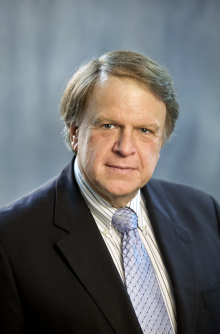
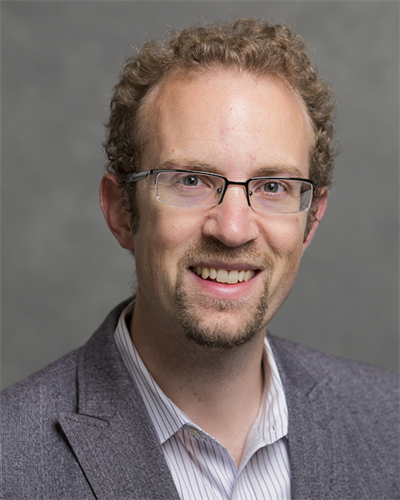
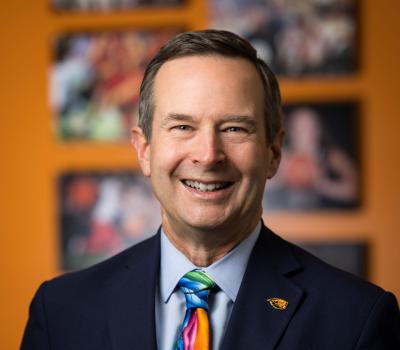
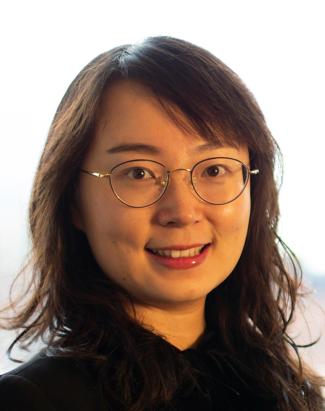
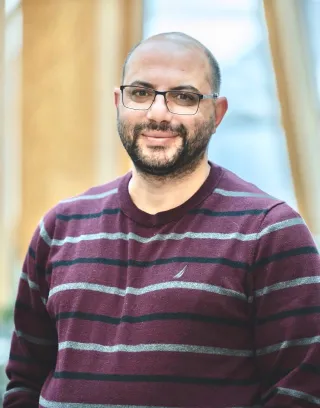
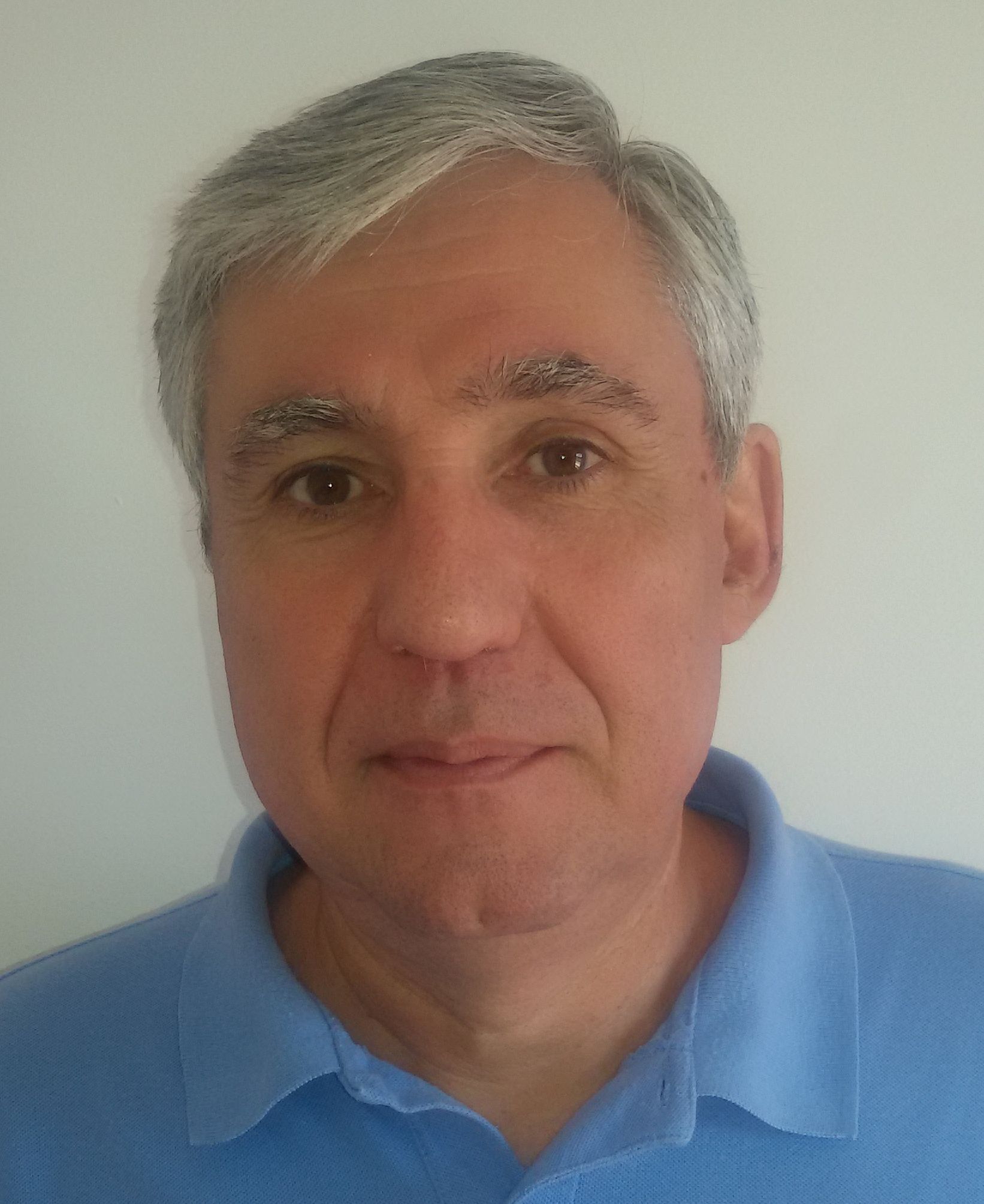
Professor Toh Kim Chuan is the Leo Tan Professor in Science and serves as Research Director (Technical) at the Institute of Operations Research and Analytics (IORA) within the National University of Singapore (NUS). His primary affiliation is with the Department of Mathematics in the Faculty of Science. His research focuses on matrix optimization problems, large-scale semidefinite programming, fast algorithms for statistical and machine learning tasks, and iterative methods for solving large linear systems in optimization contexts. His recent work emphasizes contributions to nonsmooth nonconvex optimization, distributionally robust optimization, and scalable algorithms for sparse and low-rank optimization problems. Notable methodologies include Bregman proximal algorithms, adaptive sieving techniques, and inexact augmented Lagrangian methods. Professor Toh is also actively involved in developing computational tools like CDOpt for Riemannian optimization and frameworks for low-bit communication in distributed model training. While no specific awards are listed, his extensive publication record (over 150 papers from 2020-2025) demonstrates significant contributions to optimization theory and applications. His research bridges theoretical foundations with practical implementations, addressing challenges in large-scale systems, machine learning, and operations research.
John S. Baras is a Distinguished University Professor at the University of Maryland, College Park, holding joint appointments in the Department of Electrical and Computer Engineering and the Institute for Systems Research (ISR). He also serves as the Lockheed Martin Chair in Systems Engineering and directs the Maryland Hybrid Networks Center (HyNet). His roles include Founding Director of ISR (1985–1991) and Director of HyNet since 1992. Baras earned his B.S. from the National Technical University of Athens and his M.S. and Ph.D. in Applied Mathematics from Harvard University. His research focuses on wireless networks, control systems, robotics, and cyber-physical systems. He is a Fellow of multiple prestigious organizations, including IEEE, SIAM, and AAAS, and has received numerous awards for his contributions to science and engineering. His research interests span networked control systems, autonomous systems, and stochastic systems. Notable contributions include foundational work on satellite and hybrid communication networks, model-based systems engineering, and robotic motion planning. He has advised 42 Ph.D. and 70 M.S. students. Baras has authored over 450 papers and three patents, with recent work addressing risk-sensitive reinforcement learning, network slicing, and autonomous vehicle coordination. His labs and teams, including HyNet, focus on industry-academic collaboration in next-generation communication and control systems.
Deena Francis is an Assistant Professor at the Department of Engineering Technology and Didactics within the Energy Technology and Computer Science school at the Technical University of Denmark (DTU). Her research focuses on digital twins, machine learning applications in smart manufacturing and precision livestock farming, and sensor technology for chemical detection. She leads and participates in high-impact projects such as SEAL (Seabed Environmental Analyzer for Methane Leakage) and Machine Learning for Beehives Monitoring , addressing environmental and agricultural sustainability challenges. Key research areas include reinforcement learning for digital twin systems, dimensionality reduction techniques, and data-driven decision support in agriculture. Her work bridges theoretical advancements in kernel methods and explicit feature maps with practical applications in manufacturing optimization and environmental sensing. Francis has collaborated internationally and contributed to over 15 peer-reviewed publications, with a focus on smart systems and sensor-based solutions. Education: Not explicitly stated in the text. Labs/Teams: Involved in the InnoTech TaskForce , focusing on green transition technologies and data-driven innovation. Her advisory role includes supervising PhD student S. Gopalakrishnan on metal-organic framework arrays for liquid-phase sensing. Francis’s projects often emphasize interdisciplinary collaboration, combining engineering, computer science, and environmental science to address global challenges.
Professor Anatoly Zhigljavsky serves as Chair in Statistics and Honorary Professor at Cardiff University's School of Mathematics. He holds multiple administrative positions including membership in the Senior Management Committee, School Research Committee, School Management Board, School Learning and Teaching Committee, Board of Studies, and Subject panel. University: Cardiff University School: School of Mathematics Position: Chair in Statistics, Honorary Professor Professor Zhigljavsky earned his MSc from the University of St.Petersburg, Russia in 1976, followed by his PhD in 1981 and Habilitation in 1987, all from the same institution. His academic credentials reflect a strong foundation in mathematical statistics and theoretical probability. His research spans several interconnected domains in statistics and optimization. He is particularly renowned for his contributions to Time Series Analysis, where he has advanced Singular Spectrum Analysis (SSA) into a powerful technique for time series analysis, forecasting, and change-point detection. His work in Statistical Modelling in Market Research has resulted in numerous industry collaborations, while his research in Stochastic Global Optimization has provided theoretical insights into random search algorithms, especially in high-dimensional spaces. His investigations into Probabilistic Methods in Search and Number Theory have yielded novel approaches to discrete search problems including group testing with lies. Professor Zhigljavsky has also pioneered Dynamical system approaches for studying convergence of search algorithms, bridging continuous and discrete optimization methodologies. Analysis of Professor Zhigljavsky's recent publications (2021-2025) reveals an evolving research trajectory with increasing focus on high-dimensional statistical challenges, quantization theory, and the intersection of optimization with time series analysis. His work consistently demonstrates mathematical rigor combined with practical relevance, addressing computational challenges in large-scale data analysis. His collaborations span multiple institutions with researchers including Luc Pronzato, Jack Noonan, and Anatoly Pepelyshev. Scientific recognition includes: Constantin Caratheodory Prize in France (2019) Professor Zhigljavsky has secured substantial external funding including projects with Procter and Gamble on statistical modelling in Market Research (totaling approximately £200,000), projects with AcNielsen/BASES on consumer behaviour modeling (£40,000), and projects with GlaxoSmithKline on biopharmaceutical studies (£15,000) and environmental science (£10,000). His research has consistently demonstrated practical applications across multiple industries. As an active member of Cardiff University's Statistics research group, Centre for Optimisation and Its Applications, and Statistical Modelling Unit, Professor Zhigljavsky continues to influence both theoretical developments and practical applications in statistics and optimization.
Ramtin Madani is an Associate Professor of Electrical Engineering at The University of Texas at Arlington. His research focuses on optimization, control systems, and power systems engineering, with applications to energy grids, robotics, and space networks. He holds a PhD in Electrical Engineering from Columbia University (2015) and has received notable awards including the 2016 Award for Recruitment of Rising STARs and the 2016 Best Publication Award in Energy (INFORMS). Madani's work emphasizes scalable computational methods for nonlinear optimization, with a focus on robust control of DC microgrids, hurricane-impact resilient power grids, and multi-agent motion planning. His research integrates convex relaxation techniques, machine learning, and numerical algorithms to address large-scale engineering challenges. He has secured significant federal funding through grants from NSF, ONR, and ARPA-E, totaling over $3.2 million since 2018. Key Research Areas: DC/AC Microgrids, Robust Control, Convex Optimization, Swarm Robotics, Space Network Scheduling Grants: "Massively Scalable Computational Methods for Power System Scheduling" (NSF, $324,977) "High-fidelity Optimization for Next-generation Shipboard Power Systems" (ONR, $725,000) Madani teaches advanced courses such as Convex Optimization for Engineers and supervises doctoral research in electrical engineering. His recent publications address topics like hurricane-impact mitigation in power grids and parabolic relaxation for quadratic programming.
Leonidas Fegaras is an Associate Professor in the Computer Science and Engineering Department at the University of Texas at Arlington's College of Engineering, where he has been employed since 1996, initially as Assistant Professor until 2002 when he was promoted to Associate Professor. His academic journey began with a BEE in Engineering from the National Technical University (1902), followed by an MS in Electrical & Computer Engineering from the University of Massachusetts Amherst (1903), and culminated with a PhD in Computer Science from the same institution in 1992. His educational background includes: PhD in Computer Science, University of Massachusetts Amherst, 1992 MS in Electrical & Computer Engineering, University of Massachusetts Amherst, 1903 BEE in Engineering, National Technical University, 1902 Fegaras's research spans multiple domains within computer science, with a strong emphasis on database systems and big data analytics. His work focuses on developing innovative frameworks for processing large-scale data, particularly in XML, array-based computations, and graph analytics. He has pioneered approaches for query optimization in distributed environments, stream processing, and translation of high-level programming constructs to efficient distributed execution. More recently, his research has expanded into healthcare applications, applying data analytics techniques to clinical data for improved patient outcomes and healthcare decision-making. His interdisciplinary work bridges computer science with healthcare, criminal justice, and environmental science domains. Analysis of his recent publications reveals a clear evolution in his research focus from traditional database systems and XML processing toward modern big data analytics frameworks. His work now heavily emphasizes distributed computing models, particularly leveraging Spark and SQL-based distributed processing. A significant portion of his recent work applies these techniques to healthcare analytics, demonstrating his ability to translate theoretical database concepts into practical applications that address real-world problems in medicine and social sciences. His research shows consistent innovation in query processing techniques across evolving data paradigms. Fegaras has been actively involved in mentoring the next generation of computer scientists, serving as dissertation committee chair for numerous PhD students and supervising many master's theses. His research has been supported by substantial funding from federal agencies including the National Science Foundation and the U.S. Department of Education, with projects totaling over $2 million. Notable grants include the GAANN Doctoral Fellowships in Computer Science and Engineering and several NSF-funded projects focused on big data analytics and database systems. As an educator, Fegaras teaches advanced courses in compilers, web data management, and cloud computing & big data. He has held significant administrative roles including Chairperson of the CSE Graduate Studies Committee since 2009 and membership on the University Graduate Curriculum Committee. His service extends to professional program committees and conference organization, demonstrating his active engagement with the broader computer science research community.
Mark Hempstead is a Professor in the Department of Electrical and Computer Engineering and Computer Science at Tufts University's School of Engineering. He leads the Tufts Computer Architecture Lab (TCAL) and has made significant contributions to computer architecture, systems research, and interdisciplinary applications of engineering tools to human subject research. Dr. Hempstead received his BS in Computer Engineering from Tufts University (Summa Cum Laude), and his MS and Ph.D. in Engineering from Harvard University, where he worked with Professors David Brooks and Gu-Yeon Wei. Prior to joining Tufts University in 2015, he was an Assistant Professor at Drexel University. His research focuses on increasing energy efficiency across circuits, architecture, and systems boundaries. Current research areas include: Computer architecture and systems Power-aware computing and embedded systems Mobile computing and machine learning systems Workload characterization and quantum computing Learning sciences and computer systems for human subjects research His group has published in several research communities including high-performance computer architecture, workload characterization, design automation, mobile systems, embedded systems, quantum computing, and Internet-of-Things. Recent publications show a strong trend toward machine learning systems, quantum computing architecture, and thermal management in modern processors, with applications spanning from embedded systems to high-performance computing platforms. Dr. Hempstead has received numerous scientific awards and honors: NSF CAREER award (2014) Allen Rothwarf Award for Teaching Excellence from Drexel University (2014) Excellence in Research Award from Drexel College of Engineering (2014) Winner of industry-sponsored SRC student design contest (2006) Best Paper Nominee in HPCA 2012 He has secured significant research funding including NSF Engineering Resource Center for Engineering Tools for Innovation and Research in Education (EnTIRE), multiple NSF grants including a CAREER award, DARPA funding, and industry collaborations with Google, Honeywell, and Facebook. His current research grants focus on hardware/software error detection, STEM education understanding, next-generation memory systems, and PCB assurance using thermal side-channel analysis. Dr. Hempstead leads the Tufts Computer Architecture Lab (TCAL), which investigates methods to increase energy efficiency across circuits, architecture, and systems. The lab has explored applications ranging from embedded systems and IoT to chip multiprocessors and high-performance computing. Current projects include systems support for machine learning, non-volatile memory design, thermal hotspot management, security implications of thermal side channels, automatic hardware accelerator generation, privacy-aware databases, and quantum computer architecture for ion-trap systems.
Scott Ashford is Kearney Dean of Engineering and Professor of Civil Engineering at Oregon State University. He holds BS from Oregon State and MS/PhD from UC Berkeley. As Dean, he leads the 7th largest engineering college in the U.S., serving nearly 12,000 students across multiple campuses. Research expertise includes: Liquefaction mitigation using blast densification Seismic performance of slopes and foundations Coastal cliff erosion dynamics Infrastructure resilience to natural hazards Field research spans earthquake impacts in New Zealand, Japan, Chile, and California. Innovations include novel assessment methods for cliff erosion using LIDAR and seismic retrofitting techniques for transportation infrastructure. Awards recognize contributions to geotechnical engineering, diversity promotion, and professional education. Service includes leadership in regional seismic risk mitigation initiatives.
Yu Du is Interim Discipline Director and Associate Professor of Business Analytics at CU Denver Business School. She holds a Ph.D. in Operations Research from Rutgers University, M.S. in Quantitative Finance from Rutgers, and B.S. in Economics from Central South University. Her research develops optimization algorithms for large-scale problems in machine learning, quantum computing, and combinatorial optimization. She has published extensively on QUBO models, quantum-inspired optimization, and statistical learning methods. Outstanding Research Award (2022) Faculty Research Productivity Award (2022) CIBER Faculty Grant (2021) Excellence Fellowship, Rutgers University (2012)
Pedro Vilanova-Guerra is a Teaching Assistant Professor in the Department of Mathematical Sciences at the Charles V. Schaefer, Jr. School of Engineering and Science, Stevens Institute of Technology. Located in North Building 222, he can be reached at (201) 216-3771 or pguerra@stevens.edu. His research focuses on mathematical modeling of complex systems including neural networks and biochemical oscillators, employing techniques from stochastic processes and kinetic theory. His recent publications investigate population dynamics in neural networks and synchronization phenomena in stochastic biochemical systems. Professional affiliations include membership in the AMS Mathematical Reviews. His teaching portfolio spans probability, statistics, optimization, and numerical methods courses.
Mahmoud Daneshmand is an Industry Professor at the School of Business and holds a joint appointment in the Department of Computer Science at Stevens Institute of Technology. He has over 40 years of experience in academia and industry, serving as a Distinguished Member of Technical Staff at Bell Labs and AT&T Shannon Labs. His research focuses on Big Data Analytics, Machine Learning, IoT, and Data Mining, with over 300 publications and three books to his name. He co-founded the Business Intelligence & Analytics MS program at Stevens and leads initiatives in IEEE, including steering committees for IoT and Big Data journals. Education: PhD (1976) in Statistics from UC Berkeley; MA (1973) in Statistics from UC Berkeley. Research Interests: Big Data, AI, IoT, Data Mining, Risk Management, and Network Reliability. Dr. Daneshmand has received numerous awards, including IEEE Distinguished Lecturer, AT&T Recognition Awards, and IEEE Standards Committee honors. He chairs international conferences, edits journal special issues, and advises on industry standards. His work spans academia-industry collaboration, innovation in data-driven technologies, and leadership in IEEE initiatives. Grants & Patents: Holds two patents (2009-2010) and led over 60 large-scale Bell Labs projects. PI of the American Bureau of Shipping Grant. Service: Editorial roles in IEEE journals, NJBDA board member, and academic coordinator for Stevens' programs.
Dr. Mohammad El Smaily is an Associate Professor in the Department of Mathematics and Statistics at the University of Northern British Columbia (UNBC), part of the Faculty of Science and Engineering. He holds a PhD in Mathematics from Aix-Marseille Université (2008). Before joining UNBC, he held postdoctoral positions at the University of British Columbia (PIMS postdoc), Carnegie Mellon University, and the University of Toronto (NSERC postdoc). His research focuses on Partial Differential Equations (PDEs) , dynamical systems , and their applications in population dynamics , mathematical biology , and ecology . Key areas include reaction-diffusion models, integro-difference equations, and the analysis of traveling waves in heterogeneous environments. Recent work explores mixed local/nonlocal operators , nonlinear advection-diffusion systems , and free boundary problems in ecological contexts. His publications span topics like front propagation in shear flows, Wolbachia infection models, and spectral analysis of nonlocal operators. Dr. El Smaily currently advises students in MSc and PhD Mathematics programs at UNBC. His research has been supported by collaborations with institutions globally, including the University of New Brunswick and INRAE (France). Publications (selected): Over 20 peer-reviewed articles, including work on KPP equations, integro-difference systems, and predator-prey dynamics with free boundaries. Full list available on Google Scholar .
Panagiotis Stamatopoulos is an Assistant Professor at the Department of Informatics and Telecommunications, National and Kapodistrian University of Athens, where he has been employed since 1993. He holds a PhD in Computer Science (1988) and a Diploma in Physics (1982) from the University of Athens. His research spans artificial intelligence, constraint programming, natural language processing, machine learning, and optimization. Specific interests include: Hybrid approaches combining constraint programming with operations research Natural language understanding for database access Parallel processing and distributed constraint solving Multi-agent systems and web intelligence applications His publications show consistent focus on constraint satisfaction algorithms, text summarization techniques, educational timetabling systems, and AI applications in diverse domains like sports analytics and robotics. Recent works demonstrate increased attention to NLP evaluation metrics and multimodal learning. He has supervised numerous diploma theses and led projects funded by the European Union (EDS, APPLAUSE, PARACHUTE, PARROT), University of Athens, and Olympic Airways. Stamatopoulos teaches undergraduate courses in Introduction to Programming and Logic Programming, plus postgraduate courses in Advanced Artificial Intelligence. He previously taught Artificial Intelligence, System Programming, and Expert Systems.
Prof. Dr. Ivo Blohm is an Associate Professor of Information Management with a focus on Business Analytics at the Hasso Plattner Institute of Management and Digitization (HPI-St. Gallen), University of St. Gallen. His work bridges academic research and practical applications in digital transformation, with expertise spanning AI-driven decision support systems, crowdsourcing governance, and agile work practices. He holds a leadership role in advancing data science methodologies and their integration into organizational frameworks. His research interests emphasize leveraging AI and data analytics to enhance business processes, particularly through generative AI architectures, decision-making interfaces, and platform-driven innovation. Notable contributions include frameworks for conversational AI implementation, governance mechanisms for crowdfunding platforms, and strategies for internal crowd work empowerment. He has collaborated with organizations like Lufthansa to design leadership development programs for data-driven transformation. Blohm's publications (2014-2025) explore topics such as AI accountability in workplaces, hybrid human-AI creativity systems, and the socio-technical dynamics of digital work. His work often addresses ethical dimensions of emerging technologies and their implications for organizational structures. Despite his prolific output, no scientific awards are explicitly listed in the provided materials. His advising and grant activities are not detailed here, though his research collaborations indicate engagement with industry partners. He is actively involved in designing frameworks for data products (e.g., data mesh) and refining agile practices in large-scale organizations. No specific lab affiliations are mentioned, though his work often involves cross-disciplinary teams focusing on digital innovation challenges.
Shimpei Futatani is a researcher at the Universitat Politècnica de Catalunya (UPC) within the Advanced Nuclear Technologies Research Group (ANT). He holds a doctoral degree and specializes in plasma physics, magnetohydrodynamics (MHD), and nuclear fusion research, with a focus on edge-localized modes (ELMs), turbulence suppression, and plasma confinement in tokamaks. His work integrates nonlinear MHD simulations, experimental validation, and code development (e.g., JOREK) to advance fusion energy technologies. Research interests include plasma edge dynamics, ELM control mechanisms, and ITER-relevant scenarios. He collaborates on projects like the JT-60SA tokamak and contributes to experiments on JET and ASDEX Upgrade. His studies address MHD stability, particle transport, and the role of energetic ions in fusion plasmas. Key projects include the development of hybrid kinetic-MHD models and pellet-triggered ELM simulations. He actively participates in the EUROfusion program, focusing on plasma control and turbulence mitigation strategies for future fusion reactors.