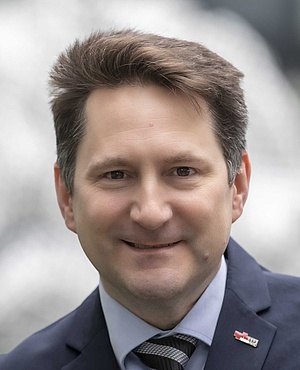
Peter Auer is a Professor affiliated with the Institute of Machine Learning and Neural Computation . His research spans Computer Science , focusing on Machine Learning , Pattern Recognition , and Artificial Intelligence . Key contributions include work on boosting algorithms, feature extraction, and visual information systems. Projects : Learning for Adaptable Visual Assistants (LAVA) (2002-2005) Research Trends : Publications emphasize object recognition , feature vectors , and hierarchical document repositories , with applications in computer vision and information retrieval.
Dr. Filipa Sousa serves as Assistant Professor in the Department of Functional and Evolutionary Ecology at the University of Vienna's Faculty of Life Sciences, leading the Filipa Sousa Lab within the Archaea Biology and Ecogenomics Unit. Her research program integrates genomic, phylogenetic, and experimental approaches to investigate microbial evolution with emphasis on archaeal physiology, metabolic innovation, and bioenergetic transitions across Earth's history. The lab operates from room 3.042 at Djerassiplatz 1 in Vienna. Her primary research interests focus on the evolution of microbial metabolic strategies, particularly energy conservation mechanisms in Archaea. She investigates how carbon and energy metabolic systems evolved through protein complex modularity, gene fusions, and large-scale comparative genomics. Current work emphasizes automatic metabolic classification from genomic data, pan-metabolic profiling of Archaea, and reconstructing evolutionary pathways for sulfur and electron transport systems. Her group combines phylogenomics with experimental validation to bridge geological records and microbial physiology. Analysis of her recent publications reveals dominant trends in archaeal metabolism evolution, particularly dissimilatory sulfur reduction pathways and respiratory complex assembly. Her work increasingly integrates metagenomic data with phylogenetic modeling to reconstruct ancestral metabolic states, while developing computational tools for metabolic classification. Key themes include electron bifurcation mechanisms, horizontal gene transfer in metabolic innovation, and geochemical constraints on early bioenergetic systems. Major scientific recognition includes: ERC Starting Grant (2019-2025) for "Evolution of Physiology: The link between Earth and Life" WWTF Vienna Research Group Grant (2016-2025) for "Pan-metabolic profiling of Archaea: The Ecology of Genomics" Dr. Sousa actively supervises five graduate students across PhD and Master's programs while leading a 12-member research team. Her Vienna Doctoral School project "Microbial biotransformations in biogeochemical cycles" examines metal-based energy conservation in environmental microbes. She maintains significant collaborations with William F. Martin (Heinrich-Heine-Universität Düsseldorf) and Christa Schleper (University of Vienna), with funding supporting experimental work, computational analyses, and field studies in extreme environments. The Filipa Sousa Lab comprises Anwar Hiralal (PhD), Jordi Zamarreno Beas (PhD), Val Karavaeva (M.Sc.), Anastasiia Padalko (M.Sc.), Constantin Leitgeb (B.Sc.), and Marta Medic (B.Sc.). The team operates within the Archaea Biology and Ecogenomics Unit under Christa Schleper's departmental leadership, utilizing advanced genomic and bioinformatic infrastructure. Current projects integrate metagenomic data from diverse environments with phylogenetic modeling to reconstruct metabolic evolution, with particular focus on uncultivated archaeal lineages and their ecological roles.
Assoc. Prof. Viktoria Pammer-Schindler is an Associate Professor in Human-Computer Interaction (HCI) and Educational Technology (EdTech) at Graz University of Technology. She is Deputy Head of the Institute of Human-Centred Computing and a research area head at the Know-Center. Her work focuses on interactive AI for productivity, learning, and socio-technical systems design. She teaches courses such as 'Designing Interactive Systems' and 'Conversational Systems,' and has received recognition for teaching excellence. Her research spans language-based interaction, workplace learning, and ethical AI, with over 50 peer-reviewed publications. She actively serves in roles like Special Issue Editor for IEEE Transactions on Technologies for Learning and President of the International Alliance to Advance Learning in the Digital Era. Affiliations: Graz University of Technology (Institute of Human-Centred Computing), Know-Center Research Areas: HCI, EdTech, AI ethics, conversational agents, workplace learning analytics, and socio-technical systems Her awards include the 2023 Outstanding Paper Award at Bled eConference and multiple teaching nominations. She advises over 20 graduate students and leads projects funded by national and EU grants. Current research explores generative AI in creativity, voice-based interaction, and ethics in professional learning technologies. She has supervised impactful theses on topics like GenAI for creative collaboration and AI-enabled environments for well-being. Her work bridges theory and practice through field studies in call centers, apprenticeships, and SMEs, emphasizing user-centered design principles.
Wolfgang Maass is a Professor at the Institute of Machine Learning and Neural Computation at Technische Universität Graz . His research focuses on computational neuroscience, neuromorphic engineering, and machine learning, with an emphasis on understanding how biological neural networks process information and inspire artificial systems. He has contributed extensively to the development of spiking neural networks, synaptic plasticity models, and neuromorphic hardware. Education: Dipl.-Ing. (Diploma in Engineering), Dr.rer.nat. (PhD in Natural Sciences) Affiliations: Institute of Machine Learning and Neural Computation, TU Graz Key research interests include: Neural network models for cognitive functions Biologically plausible learning algorithms Neuromorphic computing and hardware implementations Computational principles of cortical microcircuits Recent work highlights the integration of biological principles into artificial intelligence, including studies on synaptic plasticity (BTSP), spiking neural networks for image recognition, and energy-efficient neuromorphic systems. His research bridges theoretical neuroscience and applied machine learning, with a focus on systems that emulate brain-like functionality. He has presented at major conferences such as the International Convention on the Mathematics of Neuroscience and AI and has authored over 200 publications. His work has been recognized for its interdisciplinary impact, advancing both neuroscience and AI fields.
Johannes Schönböck is a Professor at the University of Applied Sciences Hagenberg, affiliated with the Research Center Hagenberg. He leads the Assistive Technology Lab and contributes to the Center of Excellence for Smart Production. His research focuses on Model-Driven Engineering, AI-driven systems, operational technology monitoring, and volunteer management platforms. He has coordinated projects like the COMET-funded AI-driven knowledge database for plastics production and the KIRAS-supported CIvolunteer initiative targeting critical infrastructure resilience. Key projects include: KI-gestützte Wissensdatenbank (2024-2027): AI integration for industrial knowledge digitization CIvolunteer (2023-2025): Volunteer-powered critical infrastructure systems HYCOS (2022-2026): Hybrid collaboration spaces for automated analysis Research interests span collaborative systems, smart production, and data-driven approaches. Recent work emphasizes goal-oriented volunteering platforms and semantic frameworks for OT monitoring. His publications address pattern mining in control systems and digital shadow techniques for industrial cybersecurity. He has served as Principal Investigator (PI) or Co-Investigator (CoI) in 9 funded projects since 2014, collaborating with institutions like FWF and COIN. His work bridges theoretical models with practical implementations in smart factories and emergency response systems.
Christoph H. Lampert is a Professor at the Institute of Science and Technology Austria (ISTA), leading the Machine Learning and Computer Vision Group. His research focuses on creating robust, fair, and verifiable machine learning systems with strong theoretical foundations. Academic Rank: Professor (ISTA) Research Focus: Machine Learning, Computer Vision, Robustness, Fairness, Formal Verification Editorial Roles: Action Editor (JMLR), Former Editor (IJCV), Associate Editor-in-Chief (TPAMI) His recent publications explore robust deep learning architectures, formal verification of neural networks, and fairness in multi-source learning environments. Research keywords span neural network design, algorithmic accountability, and structured data modeling. Scientific achievements include: DARPA Disruptive Ideas award (2023) ISTA Alumni Award (2023) He has mentored numerous PhD students including: Bernd Prach (2022 thesis: Robust image classification with 1-Lipschitz networks) Egor Zverev, Nikita Kalinin, Hossein (Qualifying Exam passed 2023-2025) Alex Peste (2023 thesis: Robustness and Fairness in Machine Learning) Mary Phuong (2021 thesis: Underspecification in Deep Learning) Amelie Royer (2020 thesis: Computer Vision applications) Alexander Kolesnikov (2018 thesis: Weakly-Supervised Segmentation) Alex Zimin (2018 thesis: Dependent data learning)
Alexander Schindler is an External Lecturer at the Department of Information Systems Engineering at Technische Universität Wien. His research focuses on audio signal processing, music information retrieval, and deep learning applications in multimodal analysis. He coordinates the approacH project (2010–2013) funded by the European Commission, exploring audio-visual search engines. His academic background includes a Dipl.-Ing. in Technical Engineering and a Dr.techn. from TU Wien. Key research areas include acoustic scene classification, deepfake detection, and music video analysis. He has supervised students on topics like bird song identification and machine outage prediction. Notable publications span from unsupervised cross-modal learning (2020) to multi-modal MIR frameworks (2019). He holds a Bakk.techn. and advanced technical qualifications. Recent work includes advancements in deepfake audio detection (2025) and audio-visual surveillance systems (2024). His projects bridge theoretical research with practical applications in forensic analysis and industrial predictive maintenance. He contributes to international conferences like ACM SAC and DCASE, focusing on neural network architectures for audio analysis.
Markus Schütz is a Researcher at the Department of Computer Graphics, Faculty of Informatics, TU Wien. He holds a Dipl.-Ing. Dr.techn. and BSc. His work focuses on real-time rendering of massive point clouds, GPU acceleration, and interactive visualization. Key projects include 'Bringing Point Clouds to WebGPU' and 'Instant Visualization and Interaction for Large Point Clouds'. He has developed the Potree library for web-based point cloud visualization. Education: Bachelor of Science (BSc) Diplom-Ingenieur (Dipl.-Ing.) Doctor of Technical Sciences (Dr.techn.) from TU Wien Research Interests: His research emphasizes real-time rendering techniques for large-scale point clouds, GPU optimization, and efficient data processing. He explores areas such as level-of-detail generation, compute shader utilization, and web-based visualization tools like Potree. Recent work includes software rasterization of 2 billion points and simultaneous LOD generation for point clouds. Awards: Best Paper Award at EGPGV2024 High-Performance Graphics 2022 Best Paper Award Second Place in SIGGRAPH Poster Student Research Competition (2018) AGEO AWARD 2017 Projects & Grants: Bringing Point Clouds to WebGPU (2024–2025, netidee Foundation) Instant Visualization and Interaction for Large Point Clouds (2023–2026, WWTF) IVILPC (Interactive Visualization of Large Point Clouds) project Labs & Teams: Active in TU Wien's Computer Graphics Group, collaborating on GPU-accelerated rendering and real-time visualization systems.
Manuel Wimmer is a Lecturer in Business Informatics at TU Wien's Faculty of Informatics, specializing in model-driven engineering methodologies. His research develops foundations for model transformation, metamodeling, and interdisciplinary engineering. Research interests include model-driven software engineering, cyber-physical systems, web engineering, and industrial automation, with applications in smart production systems. Current work focuses on bridging IT/OT domains through standardized modeling approaches. Recent publications address quantum-edge cloud architectures, AI-enhanced modeling, and industrial security challenges. Article trends demonstrate strong focus on modeling language engineering, interoperability solutions, and quality assurance in complex systems. Leads the Christian Doppler Laboratory for Model-Integrated Smart Production and coordinates EU projects on low-code engineering platforms. Supervises doctoral research in model-driven technologies and software quality.
Iana Podkosova is a PostDoc Researcher at the Technical University of Vienna, affiliated with the Mixed Reality Lab. Her work focuses on Virtual Reality (VR), Augmented Reality (AR), and Mixed Reality (MR) systems, with an emphasis on multi-user collaboration, embodiment, and real-world applications in construction and industrial design. She contributes to projects like BIMFlexi-VR, which integrates Building Information Modeling (BIM) with VR for early-stage industrial building design, and VRNetzer, a platform for interactive network analysis in VR. Her research interests include collaborative VR systems, hand tracking technologies, user interaction design, and the application of MR in education and industry. She has led or contributed to numerous research projects, including GeoSemanticCrow, Circular Twin, and BIMCheck, addressing challenges in spatial awareness, navigation, and real-time optimization in immersive environments. Podkosova's work often bridges technical innovation with human-centric design. Notable contributions include studies on mutual collision avoidance in multi-user VR, hybrid sound models for immersive audio games, and methods for large-scale VR system localization using point cloud registration. Her research has been published in top-tier conferences and journals, including Frontiers in Virtual Reality and IEEE proceedings. She has also been involved in educational initiatives, such as developing VR courses using consumer hardware like the HTC Vive and Leap Motion. Her interdisciplinary approach addresses both technical and social aspects of immersive technologies, aiming to enhance collaboration and decision-making in professional settings.
Tobias Schreck is a Professor at the Institute of Visual Computing (formerly Computer Graphics and Knowledge Visualization) at Graz University of Technology, affiliated with the Faculty for Computer Science and Biomedical Engineering. His research focuses on Visual Data Analysis, 3D Object Retrieval, and Immersive Analytics, with applications in engineering and industrial contexts. He holds a Dr.rer.nat. from the University of Konstanz and has held academic positions including Assistant Professor at the University of Konstanz and Head of the Visual Search and Analysis Group at TU Darmstadt. Education: Dr.rer.nat., University of Konstanz (2006) M.Sc. in Information Engineering, University of Konstanz (2002) Dipl.-Volkswirt (M.Sc. Economics), University of Konstanz (1999) His research interests include visual analytics for high-dimensional and spatial-temporal data, digital libraries, and collaborative analysis tools. He leads funded projects like HEREDITARY (EU Horizon Europe) and VR4CPPS (FFG), and has served as a program chair for IEEE VAST and EuroVis. His work emphasizes user interaction, eye-tracking integration, and immersive visualization techniques. He supervises a research team including postdocs, PhD students, and student assistants, and collaborates on projects like CrossSAVE-CH and the Joint PhD Programme with Nanyang Technological University. His contributions span publications in IEEE Transactions, EuroVis, and ACM conferences, addressing challenges in data exploration, anomaly detection, and visualization design.
Andreas Buttinger-Kreuzhuber is affiliated with the Department of Engineering Hydrology at TU Wien. His research focuses on advanced hydrodynamic modeling, GPU-accelerated flood simulations, and integrating geospatial data for flood risk assessment. He contributed to projects like HORA 3.0, a national flood risk mapping initiative, and developed frameworks for high-resolution simulations of urban and rural flash floods. His work bridges computational science and environmental engineering, emphasizing real-world applications in disaster management and urban planning. Education: Dipl.-Ing. (FH) in Civil Engineering, Dr.techn. (PhD) in Technical Sciences, and BSc in a related field. Notable research themes include shallow-water schemes optimization, interactive visualization tools for flood management, and nanopore fluid dynamics. His interdisciplinary approach combines hydraulic modeling with geomatics and computational fluid dynamics. Collaborations include work with Prof. Günter Blöschl and the Network Lab at TU Wien. Recent efforts focus on accelerating hydrodynamic simulations using GPU technology and improving regional-scale flood modeling accuracy.
Mathew Gillings is Assistant Professor at the Institute for Language and Discourse in Business at WU Vienna University of Economics and Business. He earned his PhD in Linguistics from Lancaster University and previously served as an Associate Lecturer there. Current teaching: Qualitative and Quantitative Research Methods & Data Analysis; Applied Research Projects; Critical Perspectives on Management Communication Professional memberships: International Pragmatics Association (IPrA), International Association for Media and Communication Research (IAMCR), Research Committee for Association for Business Communication (ABC) Research Interests include: Corpus linguistics with focus on deception detection and digital discourse analysis Critical discourse analysis of climate change, business, political, and media narratives Sociopragmatics of (im)politeness across cultural and regional boundaries Methodological innovation through integration of corpus techniques with qualitative and quantitative approaches Interdisciplinary applications in humanities, social sciences, and business contexts Scientific Contributions demonstrate expertise in combining corpus methods with discourse analysis, LLMs, and forensic linguistics. His 2024 monograph Corpus Linguistic Approaches to Deception Detection established foundational work in this field. Advising & Collaboration includes mentoring through WU's in-house faculty training, academic proofreading services, and cross-sector consultancy in UK and DACH region. He actively collaborates with international scholars like Gerlinde Mautner and Jonathan Culpeper.