Jedidiah Crandall is an Associate Professor at Arizona State University's School of Computing and Augmented Intelligence, with an affiliation to the Biodesign Center for Biocomputing, Security and Society. His research focuses on Internet censorship, network security, and privacy-preserving technologies. Crandall collaborates with journalists and activists to expose surveillance mechanisms, particularly in politically sensitive regions like Russia and China. His work includes analyzing VPN vulnerabilities , decentralized censorship systems , and cross-border data flows . He teaches advanced courses in computer network security and advises graduate students on thesis/dissertation research. Research trends in his publications emphasize measuring state-level information control , attack vectors in modern networks , and secure communication technologies . Notable work includes TSPU: Russia's censorship infrastructure and Hidden Links: Analyzing Secret Families of VPN Apps . Crandall's teaching spans courses like Advanced Computer Network Security and Applied Cryptography , reflecting his commitment to preparing the next generation of security professionals. His Censored Planet project tracks global Internet censorship patterns through large-scale measurements.
Professor Mohamed Naim is a distinguished academic at Cardiff Business School, Cardiff University, where he holds the position of Professor in Logistics and Operations Management. He has served in several leadership roles, including former Head of the Logistics and Operations Management Section and former Deputy Dean at the Business School. He was also the founding director of the Centre for Advanced Manufacturing Systems at Cardiff (CAMSAC). He is actively engaged in high-impact research and industrial collaboration, currently leading a Knowledge Transfer Partnership (KTP) with Tower Cold Chain Solutions Ltd. and contributing to major research programs such as ASTUTE, ASTUTE2020, and AFAIR. His research interests center on the development of business systems engineering approaches to resilient supply chains, with a focus on sustainability, circularity, and flexibility in lean and agile systems. He has made significant contributions to supply chain dynamics, particularly in engineer-to-order (ETO) sectors such as construction and shipbuilding. His recent work explores digital transformation in logistics, including 5G-enabled smart ports, building information modelling (BIM), and AI-driven decision-making. The analysis of his recent publications reveals a strong trend toward interdisciplinary research, integrating operations management with healthcare (trauma systems), digital technologies, and sustainable industrial practices. His work frequently employs system dynamics, simulation, and empirical case studies to address complex supply chain challenges. Scientific Awards: Institution of Electrical Engineers' Manufacturing Division Premium (1996) Royal Academy of Engineering Global Research Award (2003) Professor Naim is actively involved in research supervision and has contributed to two Research Excellence Framework (REF2021) impact cases on innovative procurement and financially sustainable supply chains. He is a founding member of the Logistics Systems Dynamics Group (LSDG) and has led and co-directed multiple large-scale research initiatives. His work is characterized by strong industry engagement, particularly through Knowledge Transfer Partnerships and collaborations with public sector bodies like the Welsh European Funding Office (WEFO). Research Centers and Teams: Logistics and Operations Management Section, Cardiff Business School Centre for Advanced Manufacturing Systems at Cardiff (CAMSAC) Logistics Systems Dynamics Group (LSDG) ASTUTE / ASTUTE2020 / ASTUTE East programmes AFAIR project (Expert Advisor)
Professor Clinton Fookes is a faculty member at the Queensland University of Technology (QUT) within the School of Electrical Engineering & Robotics . His research focuses on leveraging computer vision and artificial intelligence to develop automated systems that understand, anticipate, and interact with human behaviors, with applications in medical diagnostics, autonomous vehicles, defense, and industrial efficiency . Research areas include AI adaptability, multimodal biosignal analysis, and human-machine interaction Collaborates with CSIRO Data61, Defence Science and Technology Group, Orica, Airbus, and Sentient Vision Systems Develops systems for human action detection, infrastructure monitoring, and stress response prediction His work addresses critical challenges in AI deployment, such as environmental adaptability and reducing diagnostic errors in medical and autonomous systems. Recent publications highlight trends in self-supervised learning, zero-shot knowledge transfer, multimodal integration , and 3D reconstruction for healthcare , while exploring ethical AI use in sectors like mining and defense . Professor Fookes emphasizes interdisciplinary collaboration, bridging engineering, medicine, and social sciences to advance AI systems capable of real-world impact. His research agenda includes improving AI memory capabilities and explainability for safer, more reliable automation.
Professor Zoheir Sabeur is Professor of Data Science and Artificial Intelligence at Bournemouth University (2019–present) and Head of the Processes and Behaviour Understanding (PRO_BU) Research Group. He concurrently serves as Visiting Professor of Data Science at Colorado School of Mines (2017–present) and held the position of Science Director at the IT Innovation Centre, University of Southampton (2009–2019). Over three decades he has led more than 30 large-scale projects as Principal Investigator, securing over £12 million of funding from the European Commission, UKRI, DSTL, NERC, EPSRC and industry. Education PhD in Theoretical Physics, University of Glasgow (1990) MSc in Theoretical Physics, University of Glasgow (1986) BSc First-Class Honours in Physics and Applied Mathematics, Université d'Oran (1984) Advanced Leadership Programme, Ashridge Business School (2011) Research Interests Professor Sabeur’s research focuses on the fundamental theory and application of data science and artificial intelligence to understand complex human, natural and industrial processes and behaviours. His work spans multi-modal sensing, big-data analytics and machine-learning algorithms that extract actionable knowledge from large heterogeneous datasets. Application domains include: Healthcare: AI-driven diagnostics and prognostics for chronic diseases such as COPD, asthma and cancers through omics and phenotypic data integration. Environmental & Climate: Earth-observation analytics for wildlife migration and climate-change impact assessment using satellite data and global grid systems. Maritime & Cyber-Physical Security: Real-time risk assessment for shipping in extreme environments, smart-city safety and critical-infrastructure protection using computer vision and sensor fusion. Recent research has produced novel AI classifiers that analyse lung-auscultation audio signals to grade COPD severity, as well as digital-twin frameworks for detecting malicious behaviour in urban spaces. Scientific Awards & Recognition Fellow of the British Computer Society (FBCS) Fellow of the Institute of Marine Engineering, Science & Technology (FIMarEST) Chartered Engineer (CEng) and Chartered Physicist (CPhys) Multiple ORS Awards (1987, 1988, 1989) Grants & Doctoral Supervision Professor Sabeur has secured and led more than 40 funded projects since 1996, including recent grants such as INSIGHT (NIHR, 2024) and S4AllCities (H2020, 2020). He currently supervises three ongoing PhD students at Bournemouth University and has successfully graduated three others, covering topics from computational hydrodynamics to AI-based respiratory-disease analytics. He welcomes enquiries from prospective postgraduate researchers interested in data science, AI and interdisciplinary applications under schemes such as UKRI and Horizon Europe.
Dr Mark J. Hill is a Lecturer in Cultural Computation at King's College London's Department of Digital Humanities within the Faculty of Arts & Humanities. He holds a DPhil from the University of Oxford, an M.Sc. in Political Theory from the London School of Economics, and a B.A. in Political Science from Concordia University. His interdisciplinary work bridges digital humanities, computational social science, and intellectual history. Research Focus: Social network analysis, public discourse analysis via large datasets, quantitative text analysis, and critical evaluation of digital methods. Current Projects: Investigating discourse patterns across historical and contemporary contexts, including Early Modern Nonconformist networks and digital discourse around football fandom. He collaborates with institutions like the University of Helsinki and engages with public sectors on digital research projects. Teaching includes digital research methods and critical thinking in the digital age. His affiliations include the Computational Humanities Research Group and the Centre for Digital Culture at King's College London.
Dr. Vijayakanthan Kunasegaram serves as a Research Fellow at The University of Western Australia's School of Engineering within the Department of Civil, Environmental and Mining Engineering. His expertise centers on experimental geotechnics with emphasis on soil-structure interaction systems. Academic qualifications include: PhD from Tokyo Institute of Technology (Tokyo Tech) MEng from Tokyo Institute of Technology (Tokyo Tech) BSc.Eng from University of Peradeniya (UOP) Research spans Geotechnical and Civil Engineering with specialized focus on physical modeling of soil behavior. Core investigation areas include retaining walls, pile foundations, lateral resistance mechanisms, failure modes under dynamic loads, and embedment effects in challenging ground conditions like soft rock and tailings. Experimental methodologies feature scaled model testing to analyze structural response under static, cyclic, and sequential loading scenarios. Recent publications (2021-2025) demonstrate concentrated experimental work on cantilever retaining walls and large-diameter pile systems in soft rock environments. Key trends include failure mode analysis under lateral loading, deflection characteristics of high-stiffness structures, and mechanical behavior of steel tubular piles subjected to cyclic forces. The research consistently employs physical modeling to address geotechnical design challenges in mining and infrastructure contexts. No major scientific awards were documented in the source material. Information regarding student supervision and research grants was not provided in available documentation. Research activities utilize advanced physical modeling facilities, likely within UWA's geotechnical laboratories, with collaborations involving Dr. Shafi, Dr. Takemura, Dr. Reid, Dr. Fourie, and Dr. Vulpe on experimental studies of soil-structure systems.
Humphrey Southall is Professor of Historical Geography at the University of Portsmouth, affiliated with the Faculty of Science & Health and the School of the Environment and Life Sciences. He has been a key figure in advancing digital historical geography through large-scale projects such as A Vision of Britain through Time and the Great Britain Historical GIS . University: University of Portsmouth Faculty: Faculty of Science & Health Department: School of the Environment and Life Sciences Academic Rank: Professor Education: Bachelor's Degree, University of Cambridge (1976) Special Student, Harvard University (1976–1977) PhD, University of Cambridge (awarded 1984) Humphrey Southall's research centers on historical geography, with a focus on geospatial data modeling, gazetteers, and historical GIS. His work explores the long-term impacts of locality on health inequalities, the North-South divide in Britain, and the political roles of travellers. He has pioneered methods for disambiguating historical place names and constructing digital gazetteers from old maps and census data. His interdisciplinary approach bridges geography, history, and data science, contributing to digital humanities and sustainable development goals related to health and inequality. His recent publications reveal a strong trend toward integrating historical data with modern GIS and ontologies. Themes include electoral analysis (e.g., Reform UK), climate-land use interactions, and the digitization of historical statistics. His work emphasizes data accessibility, public engagement, and the application of historical insights to contemporary policy challenges. Scientific Awards and Recognition: No specific awards listed in the provided text. Humphrey Southall has secured major research grants from the ESRC, AHRC, JISC, and the European Commission. He leads the DDME: Data Discovery Made Easy project, applying machine learning to social science databases. He has supervised PhD students and actively collaborates with researchers across disciplines. His public engagement includes media commentary on homelessness, air pollution, and elections via The Conversation and national press. Labs and Research Teams: Lead Principal Investigator, A Vision of Britain through Time (VoB) Lead, Great Britain Historical GIS (GBHGIS) Team Member, PastPlace and AOU Resources as a Pelagios GIF Resource Collaborator with Patrick Aucott, Chris Thomas, and others on biodiversity and health projects
Dengfeng Sun is a Professor and Associate Head of the Gambaro Graduate Program in the School of Aeronautics and Astronautics at Purdue University. His research focuses on distributed control systems, autonomy, resilient networks, and air traffic management. Sun holds a B.Eng. from Tsinghua University, an M.S. from The Ohio State University, and a Ph.D. from UC Berkeley. His work spans advanced air mobility, UAV trajectory planning, and stochastic optimization for large-scale systems. Key contributions include resilient UAV traffic control, distributed state estimation algorithms, and fault detection methods for navigation systems. Sun's research has been published in top journals like IEEE Transactions on Intelligent Transportation Systems and Transportation Research Part E. Education: B.Eng., Tsinghua University (2000) M.S., Ohio State University (2002) Ph.D., UC Berkeley (2008) He advises on cutting-edge projects integrating robotics, autonomous systems, and cloud-based traffic modeling. His lab develops solutions for urban air mobility, emergency medical UAV networks, and next-generation air traffic control systems. Notable collaborations include work with NASA and industry partners on continuous descent approach procedures and metroplex routing paradigms. Sun's work bridges theoretical control systems with practical applications in aviation and infrastructure optimization.
Sophie Othman is a Lecturer at the University of Franche-Comté, affiliated with the Centre de Linguistique Appliquée (CLA) and the DEFLET department. She is actively engaged in research and teaching in language didactics, digital education, and innovative pedagogical practices. Her work spans multiple roles in research coordination, program leadership, and international academic collaboration. Research Interests: Her primary research areas include digital technology in language teaching and learning, design of online and distance learning environments, digital engineering in education, pedagogical innovation, comodal and hybrid training models, MOOCs, e-portfolios, and teacher training in ICT. She explores how digital tools transform language education, especially in multilingual and multicultural contexts. The recent scholarly output shows a consistent focus on post-pandemic educational transformation, AI integration in learning systems, and the design of flexible pedagogical scenarios. Her publications appear in journals such as ALSIC and in international conference proceedings, reflecting a strong engagement with digital pedagogy and language education innovation. Leadership and Service: Vice-President, Scientific and Pedagogical Commission, CLA – University of Franche-Comté (2021–present) Co-Responsible, TIPED Research Program, ELLIADD (2017–present) Scientific Coordinator, Innov'FLE Thematic Thursdays (2022–present) Former Coordinator, Master 2 FLE 'Political and Digital Environments' and FLE Track at CTU Besançon (2018–2020) Scientific Committee Member for international conferences (e.g., ADCUEFE, CEDIL, UBEST, EIAH) Expert reviewer for language didactics journals and collective works International trainer for the French Ministry and OIF in over 15 countries Projects and Grants: #ApproprIA: AI Appropriation in Education (2025–...) UNPEAA: Digital Use by Allophone Adults (2024–...) Innov'FLE: Innovation in FLE Teaching (2022–...) HUMANE: Digital Humanities for Education (2019–2022) ANR-IDEFI Innovalangues (2013–2016) Advising and Grants: While no formal students are listed, she has supervised research teams and mentored junior researchers through collaborative projects and editorial roles. She has secured national and international funding, notably through the ANR-IDEFI program, and contributes to large-scale educational initiatives supported by governmental and Francophone institutions. Labs and Teams: She is affiliated with the ELLIADD research laboratory (University of Franche-Comté) and was previously associated with LIDILEM (Université Grenoble Alpes). She leads and participates in interdisciplinary research groups focused on digital language education, teacher training, and innovation in didactics.
Daehyeok Kim is an Assistant Professor in the Department of Computer Science at The University of Texas at Austin, where he co-leads the UT Networked Systems Research Group and participates in the Wireless Networking and Communications Group and 6G@UT. He serves as co-PI for the LDOS NSF Expeditions in Computing project, a major initiative rethinking operating systems through AI. His educational background includes a Ph.D. in Computer Science from Carnegie Mellon University under advisors Vyas Sekar and Srinivasan Seshan, where his dissertation introduced abstractions for elastic in-network computing. He also earned B.S. and M.S. degrees in Computer Science and Engineering from POSTECH, South Korea, followed by research scientist work at KAIST prior to his Ph.D. Kim's research centers on hardware-software co-design for cloud and edge data centers, targeting speed, efficiency, and resilience. Key projects include resource management for programmable infrastructure, robust cellular network design, end-to-end network transport frameworks, and learning-directed operating systems. His work bridges computer networks, operating systems, distributed systems, and 5G/6G technologies, with emphasis on virtualized radio access networks (vRAN) and edge computing challenges. Analysis of his recent publications reveals a dominant focus on enhancing 5G/6G infrastructure reliability—particularly in virtualized RANs—through innovations in failover mechanisms, integrity protection, and latency-sensitive resource allocation. His research consistently addresses critical industry pain points like sub-second availability requirements, fronthaul security vulnerabilities, and end-to-end service-level objective (SLO) guarantees for mobile-edge applications. Notable scientific awards include: NSF CAREER Award (2025) for advancing cloud hardware efficiency Microsoft Research PhD Fellowship (2019) Bronze Award at Samsung HumanTech Paper Awards (2018) Qualcomm Innovation Awards (2016) His grant portfolio features leadership in the $10M+ LDOS NSF Expeditions project and the NSF CAREER award, both driving transformative work in AI-integrated operating systems and resilient network infrastructure. These projects demonstrate strong industry-academia collaboration with Microsoft Research, wireless vendors, and cloud providers. Kim co-leads the UT Networked Systems Research Group, which operates within the Wireless Networking and Communications Group and 6G@UT consortium. These labs maintain a 5G/6G testbed for Open RAN validation and focus on solving real-world problems in cellular infrastructure, edge computing, and network security through close partnerships with industry leaders.
Adjunct Professor Martin Locke is affiliated with the Business School at the University of Sydney, specializing in transport policy and urban planning through the Institute of Transport and Logistics Studies. His work focuses on infrastructure development, toll systems, and public policy related to urban mobility. Education details are not explicitly provided in the text. His research interests include transportation economics, infrastructure governance, and the intersection of public policy with large-scale transport projects. He has frequently commented on high-profile projects such as WestConnex, Sydney Metro West Line, and toll road reforms in the Sydney metropolitan area. Professor Locke’s media engagements span major outlets like The Sydney Morning Herald, Guardian Australia, ABC Radio, and Channel Seven, emphasizing his role as a critical voice in evaluating transport infrastructure’s societal impact. He has consistently highlighted issues such as incompatible metro systems, toll standardization, and the financial implications of large-scale projects.
Fabio Pierella is an Associate Professor at the Technical University of Denmark (DTU), affiliated with the Department of Wind and Energy Systems Flows, specializing in Wind Turbine Design Division. His research focuses on offshore wind energy systems, fluid dynamics, and structural engineering. He has contributed to projects like OC6 Phase IV and the DeRisk database, validating numerical models for floating offshore wind structures and extreme wave loads. Key research interests include computational fluid dynamics (CFD), hydrodynamic load modeling, and the design of large-scale floating wind turbines. His work spans numerical simulations, experimental validation, and database development for extreme sea states. Pierella has presented at international conferences on topics like wave-structure interaction and turbine control systems. He received the Best Poster Presentation Award (2024) and contributed to datasets such as the DeRisk Database, which provides critical wave data for offshore wind turbine design. His research emphasizes practical applications, including monopile structural integrity under extreme loads and control strategies for floating platforms. Pierella's activities include conference presentations on ultra-large floating turbines (EMULF2 project) and the impact of wave shape on 15MW turbine loads. His interdisciplinary approach integrates computational models with experimental results to address challenges in offshore renewable energy systems.
Benjamin Faber is an Associate Professor of Economics at the University of California, Berkeley, affiliated with the Department of Economics within the College of Letters and Science. His research focuses on international and development economics, exploring topics such as rural-urban migration, spatial inequality, e-commerce impacts, and responsible sourcing policies. He has held positions since 2013, including teaching graduate and undergraduate courses in development economics and international trade. Faber has organized numerous seminars including the Berkeley International Econ Seminar and Trade Work in Progress Seminar, fostering academic collaboration. His work appears in top journals like the Quarterly Journal of Economics and Review of Economic Studies, addressing welfare measurement, firm heterogeneity, and spatial economic dynamics. Notable contributions include analyzing China's highway system effects and Mexico's tourism impacts. His research often bridges theory with empirical evidence, emphasizing policy-relevant outcomes in developing economies. Education details are not explicitly listed in the provided materials, but his academic trajectory is evident through his prolific publication record and teaching roles since 2013. Faber's affiliations include the National Bureau of Economic Research (NBER) and Center for Economic Policy Research (CEPR), with his work frequently featured in policy platforms like VoxDev.org and the World Trade Report. His research questions address critical contemporary issues such as the distributional impacts of globalization and the role of digital technologies in reducing rural-urban divides. Advising and grants information is not specified, but his extensive collaborations with global institutions and co-authors from universities like MIT, Yale, and Peking University highlight his network-driven research approach. Faber's work is methodologically rigorous, combining large-scale data analysis with theoretical frameworks to inform policy decisions on migration, trade, and development interventions.
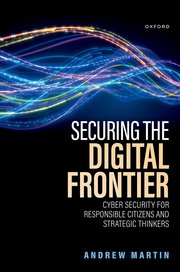
Professor Andrew Martin is a leading academic in Systems Security at the Department of Computer Science, University of Oxford, and a Governing Body Fellow at Kellogg College. His research focuses on trusted computing, cybersecurity, and secure distributed systems, with applications in cloud computing, IoT, and smart grids. He has been instrumental in advancing secure architectures using hardware-based trust mechanisms such as Intel SGX and Trusted Platform Modules. Research Interests: His work spans Systems Security , Trusted Computing , Confidential Computing , Secure Multi-Party Computation , and Privacy in Distributed Systems . He investigates how hardware-enforced security can mitigate risks in large-scale environments, particularly where privacy and trust are paramount. Publication Trends: His recent publications reveal a strong focus on Trusted Execution Environments (TEEs), remote attestation, and secure cloud architectures. He critically examines the feasibility of using hardware enclaves for both defensive and offensive security, emphasizing architectural soundness and real-world applicability. Scientific Awards: No specific awards mentioned in the provided text. Advising and Grants: Professor Martin has supervised numerous PhD and Master’s students in cybersecurity and systems research. His projects include CRANE , Trustworthy Logging , webinos , TCLOUDS , and Secure Networking by Design (SNbD) . He has secured funding for research in trusted computing and secure distributed systems, contributing to both theoretical foundations and practical implementations. Labs and Teams: He leads a research group focused on systems security and trusted computing, collaborating with industry and academic partners on large-scale security challenges. His team works on developing secure middleware, analyzing vulnerabilities in consumer devices, and designing privacy-preserving protocols for smart infrastructure.
Dr. Panagiotis Andriotis is a Lecturer in Computer Science at the School of Computer Science, University of Birmingham, within the College of Engineering and Physical Sciences. He is also a GIAC Certified Forensic Examiner (GCFE, GASF) and a Senior Fellow of the Higher Education Academy (SFHEA). His interdisciplinary research spans Cyber Security, Human Factors, and Mobile and Ubiquitous Computing. He teaches courses in Computer Science, Cyber Security, and Digital Forensics. His educational background includes a PhD in Computer Science from the University of Bristol (2016), an MSc with Distinction in Computer Science from the same institution (2011), and a BSc in Mathematics from the National and Kapodistrian University of Athens (2004). Dr. Andriotis’s research interests focus on user-centered security, particularly in mobile environments. He investigates how users interact with Android’s permission systems, develops novel authentication mechanisms like Bu-Dash, and explores adversarial machine learning in cybersecurity. His work bridges technical and human aspects, aiming to improve both system robustness and user experience. His recent publications reflect a strong trend in adversarial machine learning, mobile malware detection, usable privacy, and the societal implications of AI in education. He has contributed to high-impact journals such as IEEE Transactions on Cybernetics, ACM Transactions on Privacy and Security, and Elsevier’s Journal of Information Security and Applications. Best Paper Award at HCI International 2020 Impact Award, UWE Bristol Student Union GIAC Certified Forensic Examiner (GCFE) GIAC Advanced Smartphone Forensics (GASF) SANS Lethal Forensicator Coin Dr. Andriotis has advised PhD students, including Andrew McCarthy, and has been involved in funded research projects such as those related to fuzzing, software security, and critical infrastructure protection in collaboration with Airbus. He has served as an External Examiner at Cardiff Metropolitan University and is currently on the editorial boards of Digital Threats: Research and Practice (ACM) and the Journal of Responsible Technology (Elsevier). He has held visiting roles at the National Institute of Informatics in Tokyo, including as a JSPS Fellow and Toshiba Fellow. He leads research in digital forensics and security, with a lab focus on mobile ecosystems, behavioral modeling, and AI-driven threat detection. His team explores both technical and human dimensions of cybersecurity, contributing to tools and frameworks that enhance mobile security and user awareness.