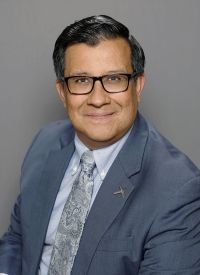
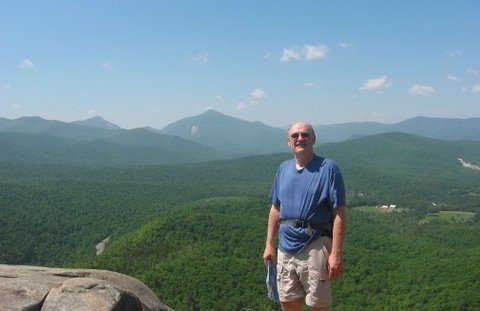
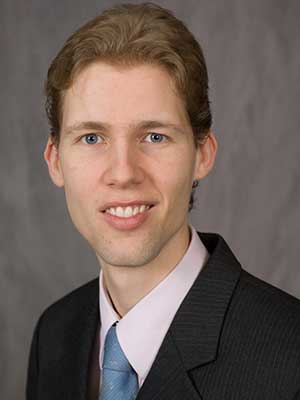
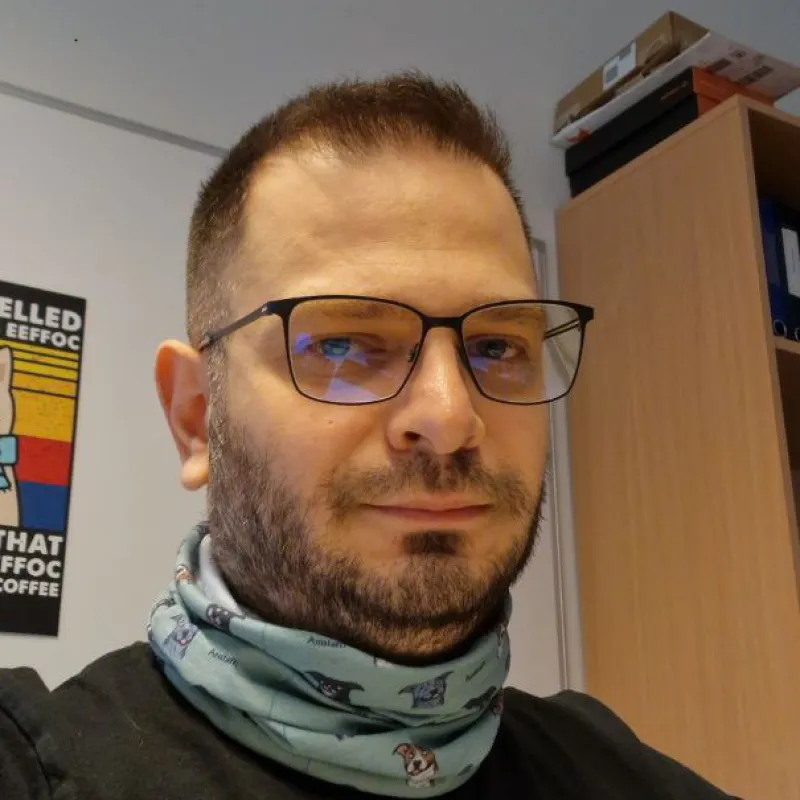
Prof. Dr. Matthias Weidlich is a faculty member at Humboldt University of Berlin within the Institute of Computer Science under the Faculty of Mathematics and Natural Sciences . His research focuses on Process Mining , Complex Event Processing , and Data Privacy with applications in Business Process Management and Scientific Workflows . Research Interests: Business Process Management and Process Mining Complex Event Processing and Stream Data Analysis Data Privacy and Security in Process Systems Scientific Workflow Systems and User Behavior Heterogeneous Network Embeddings Algorithm Design and Optimization Recent Publications (2023-2025) demonstrate expertise in: Efficient stream processing techniques Privacy-preserving process mining frameworks Scientific workflow analysis tools Graph neural network applications Multi-modal data integration Adaptive querying systems Contact: Office: Unter den Linden 6, 10099 Berlin Phone: 030 2093-41277 Email: matthias.weidlich@hu-berlin.de Web: hu.berlin/data
Benjamin C. Flores is a Professor of Electrical and Computer Engineering at the University of Texas at El Paso (UTEP) , where he has built an internationally recognized career spanning advanced radar signal processing and large-scale STEM education initiatives. He directs the UT System Louis Stokes Alliance for Minority Participation (LSAMP) and the Bridge to the Doctorate Program , managing more than $40 million in funded projects aimed at increasing access and success for Hispanic and other under-represented students in STEM disciplines. Education: While specific degrees are not listed in the provided text, Dr. Flores’s faculty appointment and extensive technical expertise in radar and chaotic systems imply advanced training in electrical engineering. Research Interests: Radar & Signal Processing: high-resolution radar, inverse synthetic aperture radar (ISAR), range-Doppler processing, micro-Doppler analysis, bistatic radar, chaotic wideband signal design, neural-network-based classification of radar jamming signals. Antenna Engineering: fractal antennas, 3-D printed antenna prototyping, anechoic chamber measurements. STEM Education & Diversity: evidence-based retention strategies for non-traditional and Hispanic students, peer-led team learning, graduate mentoring, systemic change models for faculty diversity. Publication Trends: Dr. Flores’s recent articles (2021-2025) reveal two dominant thrusts—(1) cutting-edge radar/chaotic signal processing and joint radar-communication systems, and (2) rigorous, data-driven studies on broadening participation in STEM, with emphasis on mentoring, social networks, and program evaluation at Hispanic-Serving Institutions. Scientific Awards & Honors: Texas STAR Award – Texas Higher Education Coordinating Board (2005) ABET President’s Diversity Award (2006) Presidential Award for Excellence in Science, Mathematics, and Engineering Mentorship (2010) Grants & Leadership Roles: Principal Investigator & Project Director, Model Institutions for Excellence Initiative (1999-2007) Principal Investigator, UTEP PUENTES Program (US Dept. of Education, 2010-2015) Principal Investigator & Director, UT System LSAMP & Bridge to the Doctorate Program (since 2005) Laboratory & Facilities: Dr. Flores’s research group utilizes UTEP’s anechoic chamber and rapid-prototyping laboratories for antenna design and characterization, while also housing real-time radar test-beds and analog-computer platforms for chaotic oscillator experiments.
Marco Serafini is an Assistant Professor in the Department of Computer Science at the University of Massachusetts Amherst, affiliated with the College of Information and Computer Sciences (CICS). He leads the DREAM Lab (Data systems Research for Exploration, Analytics, and Modeling) and is part of the Center for Data Science. Prior to UMass, Serafini worked as a Senior Scientist at the Qatar Computing Research Institute (QCRI) and held a postdoctoral fellowship at Yahoo! Research in Barcelona. He earned his PhD in Computer Science from TU Darmstadt (Germany), where his thesis was recognized through nominations for best thesis awards across German, Swiss, and Austrian computer science societies. His research focuses on the intersection of database systems, distributed systems, and data science, emphasizing scalable architectures for big data analytics and machine learning. Key areas include computation pushdown in cloud DBMSs, graph neural network training systems, and efficient graph pattern matching. His work addresses challenges in tail latency mitigation, resource optimization, and transparent scaling of ML models. Serafini has contributed to influential systems like Arabesque (for distributed graph mining), E-Store (elastic partitioning), and Aion (event-time stream processing). He has been awarded an NSF CNS Core grant to advance scalable GNN training. His publications span top venues such as ACM SIGOPS, VLDB, and ICDE, reflecting his expertise in both theoretical foundations and practical system implementations. Professional recognition includes thesis nominations from major computer science societies and sustained contributions to open-source projects in distributed computing. Serafini advises students through the DREAM Lab, focusing on preparing the next generation of data systems researchers.
C. Lanier Benkard is the Gregor G Peterson Professor of Economics at the Graduate School of Business, Stanford University. He is a prominent researcher in industrial organization, game theory, and econometrics, focusing on dynamic models of market competition and structural estimation. Research Interests: His work spans Dynamic games and equilibrium modeling Hedonic pricing and demand estimation Econometric tools for imperfect competition Computational methods for large-scale industries Publication Trends: His research emphasizes oblivious equilibrium approximations, strategic interactions in concentrated industries, and empirical analysis of markets with heterogeneous consumers. He frequently collaborates with scholars like Gabriel Weintraub and Patrick Bajari. Tools & Extensions: He has developed computational resources, including C++ and Matlab code, to analyze oblivious equilibrium. Current work includes extensions to Markov Perfect Industry Dynamics and aggregate shock modeling.
Carl Tropper is Professor Emeritus of Computer Science at McGill University, specializing in parallel discrete-event simulation. His research develops synchronization algorithms for large-scale systems including VLSI circuits, gravitational N-body simulations, and neuronal reaction-diffusion models. Education: BSc, McGill University PhD, Polytechnic Institute of New York Professional Experience: Former positions at Boeing, MITRE, and Caltech's Jet Propulsion Laboratory
Garvesh Raskutti is an Associate Professor in the Department of Statistics at the University of Wisconsin–Madison, affiliated with the School of Computer, Data & Information Sciences. He holds joint affiliations with the Departments of Computer Science, Electrical and Computer Engineering, and the Wisconsin Institute of Discovery Optimization Group. His research focuses on statistical machine learning, optimization, graphical/network modeling, and information theory, with applications to systems biology and neuroscience. Education: MEng from the University of Melbourne (2008), PhD from UC Berkeley (2012, advised by Martin Wainwright and Bin Yu), and postdoctoral work at SAMSI. Teaching awards include Honored Instructor (2014, 2017) and Madison Teaching and Learning Excellence Fellow (2015). He advises multiple PhD and undergraduate students, including Yuan Li, Hyebin Song, and Lili Zheng. His grants include NGA HM0476-17-1-2003 (Co-PI), ARO W911NF-17-1-0357 (Co-PI), and NSF-DMS 1407028 (Sole PI). Research interests span large-scale statistical inference, computational-statistical trade-offs, and applications in systems biology and neuroscience. His work bridges optimization (e.g., gradient descent, convex regularization), high-dimensional regression, and network analysis. Recent trends in publications emphasize methods for non-convex optimization, sparse models, and network structure learning. Awards include teaching recognition and grants in statistical methodology. Advising spans theoretical and applied projects, with former students like Gunwoong Park (now at University of Korea). Collaborations include interdisciplinary teams in machine learning and signal processing.
Dr. Lijun Chang is an Associate Professor in the School of Computer Science at the University of Sydney. He holds an ARC Future Fellowship (2019–2022) and an ARC DECRA Fellowship (2015–2017). Previously, he was at the University of New South Wales. His research focuses on graph analytics, mining, algorithms, and network science. He teaches courses like INFO5011 (Competitive Programming), COMP5313 (Large Scale Networks), and COMP9120 (Database Management Systems), and coaches the USYD Programming Competition Teams. Education: B.Eng. in Computer Science & Technology from Renmin University of China; PhD from the Chinese University of Hong Kong. Research highlights include scalable graph processing systems (e.g., ScaleG), densest subgraph detection, and graph similarity search. He leads projects funded by ARC grants such as 'Advanced Search of Cohesive Subgraphs in Big Graphs' (2018) and 'Directionality-Aware Cohesive Subgraph Search' (2022). His work emphasizes efficient algorithms for large-scale networks and graph databases. Awards : ARC Future Fellow, ARC DECRA Fellow Students : Yu KONG, Rashmika MATHTHAKA GAMAGE, Mouyi XU Labs/Teams : Focuses on graph algorithms and systems research, contributing to open-source tools and large-scale network analysis.
Ton Dieker is an Associate Professor in the Department of Industrial Engineering and Operations Research at Columbia University's School of Engineering and Applied Science. He is a DSI Member and affiliated with the Center for Financial and Business Analytics. His research focuses on stochastic models, simulation techniques, and high-dimensional stochastic analysis. Dieker holds a Master’s in Operations Research from Vrije Universiteit Amsterdam (2002) and a PhD in Mathematics from the University of Amsterdam (2006). Dieker’s research explores stochastic processes, queueing theory, and rare-event simulation. He has contributed to methodologies like QPLEX for stochastic systems and advanced techniques in sequential analysis and exact simulation. His work bridges theoretical foundations with computational applications, addressing challenges in large-scale networks and high-dimensional problems. Education: PhD in Mathematics, University of Amsterdam, 2006 Master’s in Operations Research, Vrije Universiteit Amsterdam, 2002 Dieker’s articles emphasize computational modeling, stochastic calculus, and optimization, reflecting his focus on bridging theory and practice. His work often addresses efficiency in simulation, exactness in algorithms, and scalability in complex systems. Awards: Goldstine Fellowship (IBM Research) NSF CAREER Award Erlang Prize (INFORMS) Fouts Family Early Career Professorship (Georgia Tech) He serves on editorial boards for Operations Research and Mathematics of Operations Research . His research also addresses capacity management in stochastic networks and applications in cloud computing and commodity sourcing.
Shahriar Afkhami is a Researcher in the Department of Mechanical Engineering at LUT School of Energy Systems, LUT University. His research focuses on advanced materials science, additive manufacturing processes, and mechanical properties of high-strength steels and dissimilar joints. He specializes in fatigue analysis, welding technologies, and the optimization of structural components for industrial applications. His work integrates experimental methods with computational modeling to address challenges in material behavior under extreme conditions. Key research areas include: Welding of ultra-high strength steels and dissimilar materials Mechanical performance of additively manufactured components Fatigue life assessment of welded joints and cut edges Thermomechanical behavior of heat-affected zones Material characterization of laser powder bed fusion (LPBF) steels Publications highlight trends in additive manufacturing for industrial applications, particularly in optimizing 3D-printed metal structures and analyzing their mechanical integrity. His work on notch-load interactions and fatigue strength has advanced methodologies for predicting component failure under complex loading conditions. Notable contributions include the VERKOTA project exploring 3D printing networks for enhanced industrial adoption. No scientific awards are listed in the provided information. Afkhami's research has been supported by collaborative projects such as the VERKOTA initiative, though specific grants are not detailed here. He maintains an active presence on professional networks including LinkedIn and Google Scholar.
Prof Apostolos Antonacopoulos is a Professor of Pattern Recognition at the University of Salford, leading the PRImA research Lab (Pattern Recognition and Image Analysis). He holds a PhD from UMIST (1995) and has held academic roles at the University of Liverpool and Salford. His expertise spans Document Analysis, Computer Vision, and AI applications in Cultural Heritage. Education: PhD in Computer Science, University of Manchester Institute of Science and Technology (UMIST), UK (1995) Research Interests: Digitisation of historical documents and large-scale data Image Analysis and Pattern Recognition AI-driven solutions for cultural heritage preservation Performance evaluation frameworks for OCR systems Recent Projects: Leading a £750K ONS-funded project (2020–2025) digitising UK census reports Europeana Newspapers (€4M EU project, 2012–2015) for European Digital Library SUCCEED (€1.8M EU project, 2013–2015) for digitisation competencies Awards and Roles: IAPR/ICDAR Young Investigator Award (2005) Former President of International Association for Pattern Recognition (IAPR) Editorial roles in IJDAR and IEEE Transactions on Multimedia Labs/Teams: Director of PRImA Lab, collaborating with institutions like British Library and Wellcome Library. Active in industry partnerships for digitisation solutions.
Fabrício Benevenuto is an Associate Professor in the Computer Science Department at Federal University of Minas Gerais (UFMG), where he conducts interdisciplinary research at the intersection of social media analysis, data science, and computational journalism. His work spans complex networks, machine learning, and natural language processing with strong societal impact. His research focuses on social media dynamics, particularly in Brazilian contexts, with major contributions to hate speech detection, fake news analysis, and political discourse monitoring. He leads large-scale projects against misinformation, including development of systems like WhatsApp Monitor, Media Bias Monitor, and Purple Feed. His work combines technical innovation with real-world applications for election transparency and public discourse integrity. Benevenuto's recent publications demonstrate strong trends in multilingual NLP for social media analysis, with emphasis on Brazilian Portuguese contexts. His team produces both theoretical contributions and practical systems addressing hate speech, misinformation, and media bias. Notable methodological approaches include combining network analysis with linguistic features, developing culturally-aware detection systems, and creating large annotated datasets for understudied languages. CAPES award for best Brazilian computer science thesis (2010) Humboldt Foundation scholarship recipient (2017-2018) Member of TikTok Safety Advisory Council WWW'20 Best Paper Nominee & CNIL-INRIA Privacy Protection Prize winner Multiple best paper awards at CEAS, WBC, and ICWSM conferences Test-of-Time Award at ICWSM'20 Benevenuto actively mentors PhD and MSc students, with numerous advisees securing academic positions at Brazilian universities and research roles at institutions like Max Planck Institute. His projects often receive funding supporting interdisciplinary collaborations across computer science and social sciences. Current work includes large-scale analysis of Telegram political groups, real-time election monitoring systems, and developing culturally-aware NLP tools for Portuguese. He leads research teams working on social media analysis systems with societal impact, particularly focused on Brazilian digital ecosystems. Projects involve cross-institutional collaborations with researchers from MPI-SWS, Max Planck Institute, and various Brazilian universities, emphasizing practical applications for public discourse integrity.
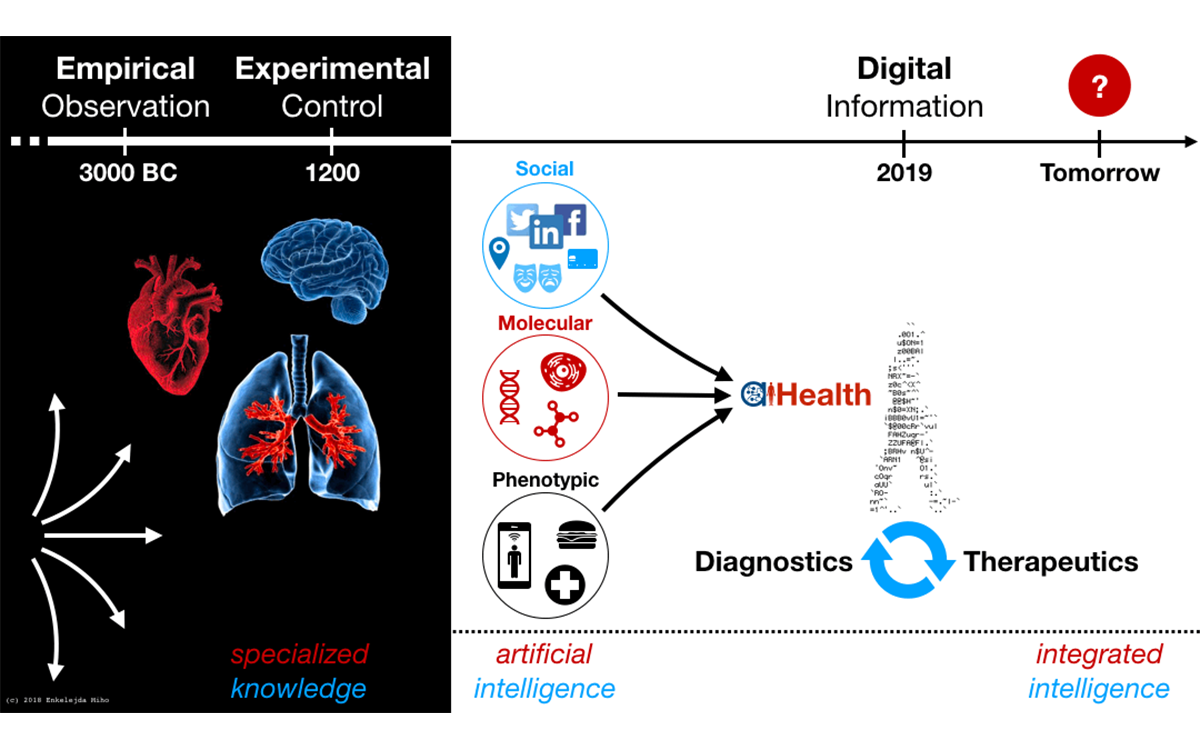
Prof. Enkelejda Miho is a Professor of Digital Life Sciences at the School of Life Sciences, FHNW, leading the aiHealthLab. Her work bridges computer science/AI with life sciences, focusing on drug discovery, personalized medicine, and immunology. She holds roles as Team Leader at aiHealthLab and Group Leader at the Swiss Bioinformatics Institute. Research Interests : She applies machine learning to analyze immune repertoires, antibody engineering, and autoimmunity diagnostics. Her lab develops computational tools like the RWD-Cockpit for real-world data analysis and synthetic antibody-antigen models (Absolut!) to advance biotherapeutics. Her work on dengue immunity and monoclonal gammopathies highlights translational applications. Key Projects : The aiHealthLab focuses on AI-driven diagnostics and therapeutics. Her contributions include AI frameworks for antibody specificity prediction, age-related immune repertoire changes, and large-scale network analysis of antibody repertoires. Labs/Teams : Leads aiHealthLab and collaborates with the Swiss Bioinformatics Institute, integrating computational and experimental immunology.
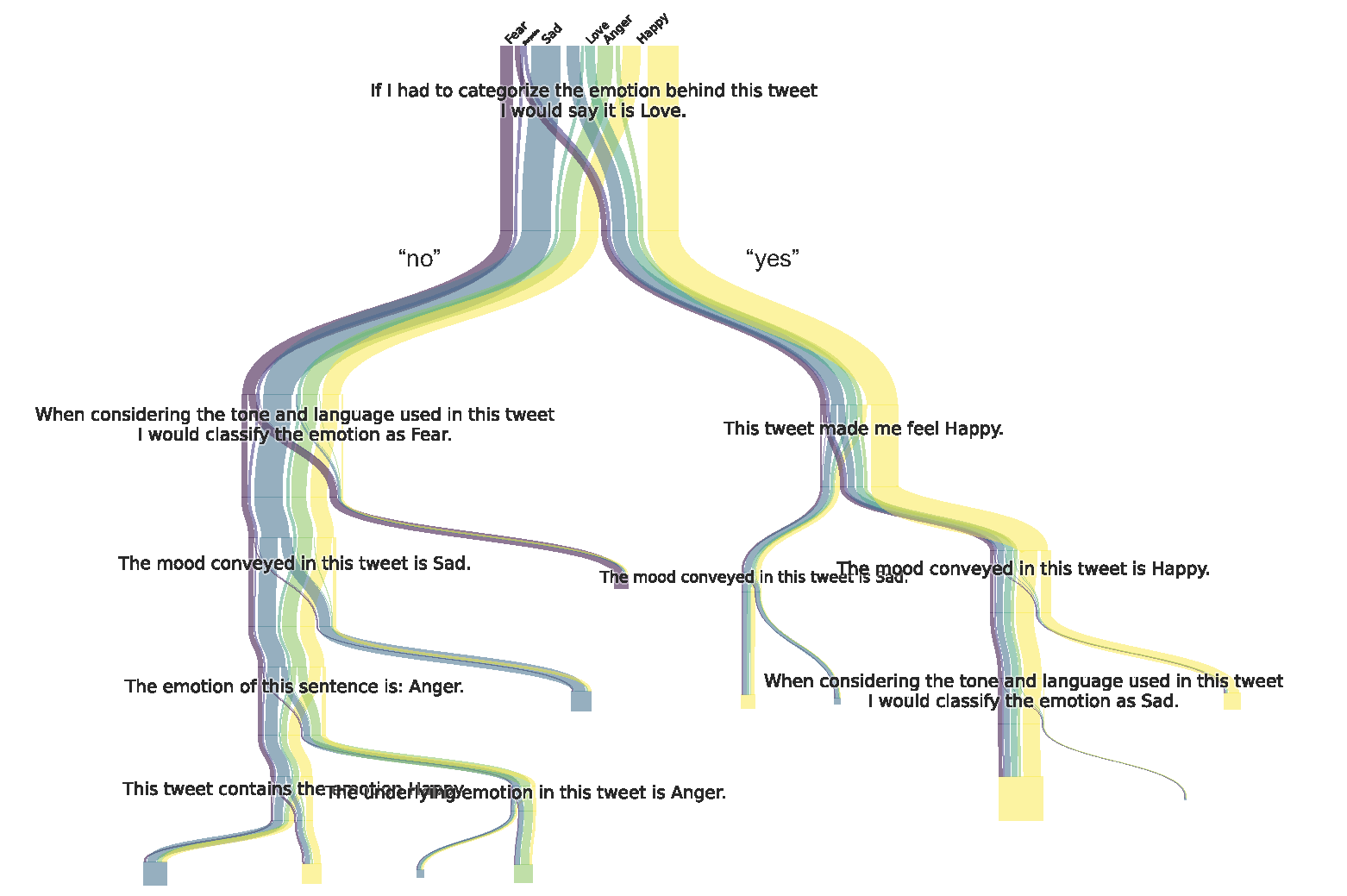
Yuntian Deng is an Assistant Professor at the University of Waterloo and a Visiting Professor at NVIDIA. He holds affiliations with Harvard SEAS as an Associate and the Vector Institute as a Faculty Affiliate. He completed his PhD in Computer Science at Harvard under Professors Alexander Rush and Stuart Shieber, followed by a postdoc under Yejin Choi. His research focuses on Natural Language Processing and Machine Learning, with notable contributions in chatbot interaction analysis (WildChat), implicit reasoning models, and markup-to-image generation. He has developed influential tools like OpenNMT and WildVis, and his work has been featured in outlets like the Washington Post and used by OpenAI and Anthropic. Education: PhD in CS (Harvard), Postdoctoral Research (University of Washington). Key achievements include the ACM Gordon Bell Prize for GenSLMs, Best Demo Runner-up at ACL 2017, and Best Paper at DAC 2020. His research emphasizes scalable datasets, efficient reasoning techniques, and real-world applications of AI models. Research interests span NLP, machine learning algorithms, and their applications in areas like dialogue systems, generative models, and ethical AI evaluation. Notable projects include WildChat (1M ChatGPT interactions), implicit chain-of-thought reasoning, and neural steganography for text-based information hiding. His articles explore topics ranging from knowledge distillation to diffusion models, with a focus on bridging theoretical advancements and practical implementations. He actively collaborates with industry partners like NVIDIA and maintains open-source tools to advance AI research accessibility.
Dr. John Lehrter is a Professor of Marine Sciences and Associate Director of the Stokes School of Marine & Environmental Sciences at the University of South Alabama, as well as a Senior Marine Scientist at the Dauphin Island Sea Lab. He holds a Ph.D. in Marine Sciences from the University of Alabama (2003). His research focuses on coastal biogeochemistry, ecosystem modeling, and satellite ocean color remote sensing, with an emphasis on understanding eutrophication, hypoxia, and multiple stressor impacts on coastal ecosystems. Dr. Lehrter has advised numerous graduate and undergraduate students and leads a lab engaged in field studies, numerical modeling, and satellite data analysis. His work addresses societal challenges in coastal management and climate change adaptation. Research Interests: Multiple Stressor Impacts to Coastal Ecosystems, Marine Biogeochemistry, Ecosystem Modeling, Satellite Remote Sensing, and Hypoxia Dynamics. His lab develops tools to quantify nutrient pollution effects and predict ecosystem responses to management actions. Advising and Grants: Dr. Lehrter oversees a dynamic lab with graduate students, postdocs, and technicians. Current projects include modeling nutrient dynamics, satellite data applications for water quality, and experimental studies on multiple stressors (e.g., temperature, pH) impacting marine organisms. His lab collaborates with agencies like the EPA and NOAA, contributing to coastal policy and restoration efforts. Labs/Teams: Dauphin Island Sea Lab (DISL) and the University of South Alabama’s Stokes School of Marine & Environmental Sciences. The lab recently established a state-of-the-art facility for multiple stressor experiments on marine species.
Olga Vitek is a Professor at Northeastern University's Khoury College of Computer Sciences, with affiliated faculty status in the Department of Chemistry and Chemical Biology. Her research bridges statistical science and machine learning with mass spectrometry-based proteomics and systems biology, focusing on developing open-source software tools like MSstats and Cardinal for quantitative proteomic analyses and imaging. Education: PhD in Statistics (Purdue University), Postdoc at the Ruedi Aebersold Lab (Institute for Systems Biology) Leadership: Director of the Barnett Institute for Chemical and Biological Analysis Her work emphasizes: Statistical experimental design Signal detection in complex mass spectrometry data Causal inference in biomolecular networks Reproducible computational infrastructure Recent publications highlight advancements in quantitative proteomics , mass spectrometry imaging , and causal modeling , with applications spanning cancer research, immunology, and clinical diagnostics. Notable trends include deep learning integration for image analysis and open-source tool development for scalable, transparent workflows. Scientific accolades: Elected Fellow of the American Statistical Association 2021 Gilbert S. Omenn Computational Proteomics Award NSF CAREER award Chan-Zuckerberg Essential Open-source Software award Senior Member, International Society for Computational Biology