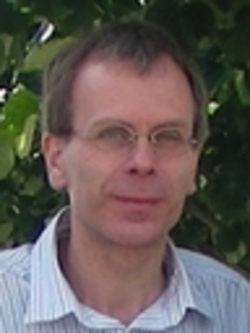
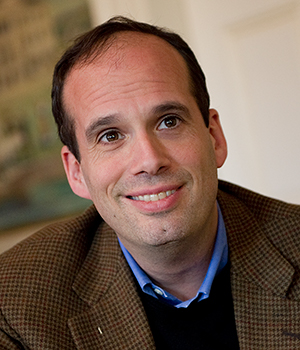
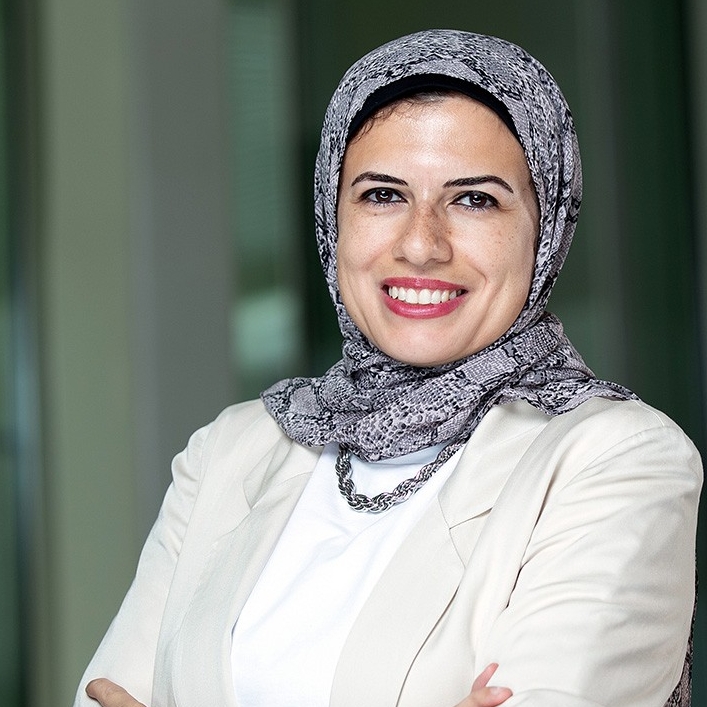
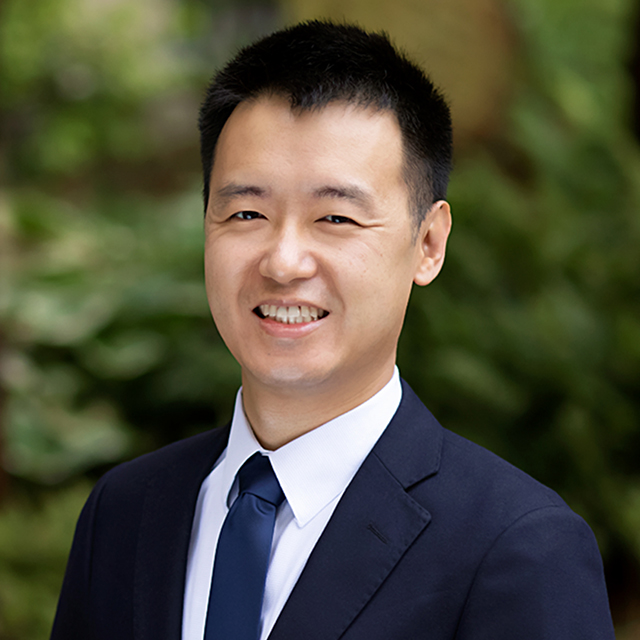
Dr. Ian Wassell is a University Senior Lecturer at the University of Cambridge's Department of Computer Science and Technology. He holds a PhD from the University of Southampton (1990) and BSc/BEng degrees from the University of Loughborough (1983). His research focuses on wireless communications, sensor networks, and electromagnetic propagation modeling. He has authored over 200 publications since 1999 and supervised 23 PhD and 6 MPhil students. Currently, he leads wireless communications research in the Digital Technology Group and is a Fellow of Churchill College. His research interests include broadband fixed wireless access (FWA), cooperative networks, MIMO systems, compressive sensing, and AI-driven radio propagation models. He teaches Digital Electronics and Hardware Practical Classes at the undergraduate level. Key contributions include developing data-driven propagation models, deep learning applications in wireless networks, and optimizing heterogeneous radio access networks. Dr. Wassell's work integrates theoretical advancements with practical systems, addressing challenges in high-speed rail communications, indoor/outdoor detection, and 6G IoT opportunities. His research bridges signal processing, machine learning, and wireless network design, emphasizing real-world deployment in infrastructure like tunnels and vehicles.
Dr. Harish Tayyar Madabushi is a Lecturer in the Department of Computer Science at the University of Bath, affiliated with the Bath Institute for the Augmented Human and the Artificial Intelligence and Machine Learning group. His research focuses on Large Language Models (LLMs), their mechanisms, and applications in bias mitigation, speech-to-text systems, and construction grammar integration. He previously held an Honorary Research Fellow position at the University of Birmingham (2021–2024). Madabushi's work bridges computational linguistics and AI ethics, addressing challenges like regional dialect adaptation in public services and healthcare applications. He leads the Wyser project, funded by Innovate UK, aiming to reduce bias in Automatic Speech Recognition (ASR) systems. His research has been featured in foundational discussions at the UK AI Safety Summit and contributes to UN SDGs related to innovation and sustainable development. He supervises doctoral students in areas such as neuro-symbolic AI and explainable NLP, offering projects funded by ART-AI. His publications span conferences like ACL, COLING, and LREC-COLING, with over 45 peer-reviewed outputs. He actively collaborates internationally, addressing multilingual, code-switched, and specialized lexical learning challenges in LLMs.
Hassan Asghar is a Senior Lecturer in Computer Science at Macquarie University's School of Computing and a Research Scientist at CSIRO since 2014. His research focuses on privacy, cryptography, and information security, including quantifying privacy risks, developing secure cryptographic protocols, and analyzing authentication systems. He has contributed to areas such as differential privacy, secure multiparty computation, and malware analysis. His work integrates mathematics (number theory, probability, and combinatorics) with computer science disciplines like machine learning and algorithms. Notable projects include Privacy Preserving Data Sensing Algorithms (2018–2019) and the Macquarie University Cyber Security Hub (2016–2023). He has authored over 40 research outputs, including studies on adversarial attacks in AI, malware obfuscation, and privacy-preserving data release. Awards: ACM AsiaCCS 2019 Best Paper Award; 2023 Faculty of Science and Engineering Inter-School Collaboration Award. Key Research Themes: Privacy quantification, cryptographic protocol design, biometric authentication, and adversarial machine learning. Collaborations: Extensive international collaborations in cybersecurity and privacy research. Asghar’s contributions span technical publications, policy submissions (e.g., NSW Cybersecurity Inquiry), and practical tools like ConvoCache for chatbot efficiency. He leads the Future Communications Research Centre at Macquarie and actively engages in interdisciplinary cybersecurity initiatives.
Simon Colton is a Professor of Computational Creativity, Games, and Artificial Intelligence at Queen Mary University of London, affiliated with the School of Electronic Engineering and Computer Science. His research focuses on AI-driven creativity in domains like music, game design, and visual arts, emphasizing generative techniques and philosophical aspects of creative systems. He leads projects in automated composition, procedural content generation, and interdisciplinary AI applications. Education: Extensive background in AI and computational creativity, with a focus on generative systems. Research Interests: Computational Creativity, Generative AI, Music Generation, Game Design Automation, and Neuro-Symbolic Systems. His work explores how AI can autonomously create artistic content, including music, games, and visual art, with notable contributions to frameworks like ANGELINA for game design and The Painting Fool for automated art. Recent projects include AI-driven music composition and tools for creative support (e.g., Gamika, Danesh). Key grants include the £3M EPSRC-funded IGGI2 Centre for Doctoral Training, focusing on Intelligent Games and Game Intelligence. His lab, the Centre for Multimodal AI, advances research in cross-modal AI creativity.
Dr. Nyamsuren Enkhbold is a Lecturer in Computer Science (Software Engineering) at the School of Computer Science and Information Technology, University College Cork. He holds a PhD from the University of Groningen (Cognitive Modeling), an MSc from KAIST (Computer Science), and a BSc from Huree University (Computer Science). His research focuses on intelligent software development at the intersection of AI, Cognitive Science, and GIS, with notable contributions to geo-analytical question-answering systems and EU-funded projects like RAGE (serious games) and QuAnGIS (GIS workflow automation). Current interests include GenAI applications via fine-tuning and prompt engineering. He teaches CS3062 - Computing in Society CS6403 - Case Studies in Computing Entrepreneurship and previously contributed to courses at Utrecht University and KAIST. His work has been supported by a School of Computer Science Starter Fund (10k). Research highlights include developing reusable AI components for serious games and advancing GIS systems that automatically generate workflows from user queries. His publications span cognitive modeling, spatial semantics, and NLP-driven geo-analytical tools.
Kenneth David Mandl, MD is the Donald A. B. Lindberg Professor of Pediatrics at Boston Children’s Hospital and Professor of Biomedical Informatics at Harvard Medical School. He is Director of the Computational Health Informatics Program (CHIP) at Boston Children’s Hospital, a leading center for research in health data science and informatics. Institution: Boston Children’s Hospital School: Harvard Medical School, Faculty of Medicine Department: Department of Biomedical Informatics Academic Rank: Professor Dr. Mandl earned his MD from Harvard Medical School and an MPH from the Harvard School of Public Health, with clinical training in pediatrics and pediatric emergency medicine at Boston Children’s Hospital. He also completed fellowships in Clinical Effectiveness and Medical Informatics. His research focuses on leveraging artificial intelligence, electronic health records, and data interoperability standards (e.g., FHIR) to advance clinical care, public health surveillance, and learning health systems. Key interests include automated phenotyping, patient data access, ethical AI in medicine, and digital health innovation. He has led transformative initiatives such as the SMART Platforms and the Accessible Research Commons for Health (ARCH). The recent publications highlight a strong trend toward AI-driven clinical informatics, with work spanning explainable machine learning, generative AI for clinical notes, federated learning systems (e.g., Cumulus), and biosurveillance using NLP. His research bridges technical innovation with real-world implementation and policy, particularly in pediatric and population health contexts. Dr. Mandl has received several prestigious awards, including: Investing in Information Award (2004) Presidential Early Career Award for Scientists and Engineers (PECASE) (2005) Clifford Barger Award for Excellence in Mentoring (2008) Donald Lindberg Award for Innovation in Informatics (2014) As a principal investigator on multiple NIH-funded grants, including U01TR002623 and R01GM104303, he leads large-scale collaborative research efforts involving national consortia such as 4CE and SMART Cumulus Network. His work emphasizes open science, data sharing, and patient-centered innovation. While no current advisees are listed, his prior mentoring has been recognized institutionally. Dr. Mandl is actively engaged in advancing the field through leadership in research infrastructure, policy development for AI in healthcare, and the creation of scalable, interoperable digital health ecosystems.
Sarah Nadi is an Associate Professor of Computer Science at New York University Abu Dhabi (NYUAD), where she also serves as the Associate Program Head for Undergraduate Studies in Computer Science. She holds an adjunct position at the University of Alberta and co-directs the SANAD lab, which focuses on building tools to enhance software developer productivity through empirical and data-driven methods. Education: BSc, The American University in Cairo MMath, University of Waterloo PhD, University of Waterloo Her research lies at the intersection of software engineering and empirical methods, with a strong emphasis on mining software repositories (MSR) to understand and improve software development practices. Key research themes include API misuse detection, library selection and migration, code recommender systems, and the role of large language models in software engineering. She investigates how developers use APIs, especially in data-centric Python libraries and cryptography, and builds tools like MuDetect and CogniCrypt to prevent misuse. Her work on library migration includes creating benchmarks such as PyMigBench and analyzing real-world migration patterns in Python. Her recent publications show a growing focus on AI in software engineering, with empirical evaluations of tools like GitHub Copilot and LLMs for test generation. She has also contributed significantly to understanding software variability in systems like Linux and Android, and to software integration challenges such as merge conflicts and refactoring-aware merging. Her work often combines static analysis, data mining, and user studies to build practical, evidence-based tools. Notable recognitions include a Best Paper Award at CASCON 2009 for her work on CMDB-based root cause analysis. She has published extensively in top-tier venues including FSE, ICSE, TSE, ASE, and MSR. Her research is supported by active grants, and she is currently recruiting fully funded PhD students for Fall 2025. Best Paper Award, CASCON 2009 Sarah Nadi mentors students through capstone projects and research supervision. She teaches core courses such as Software Engineering (CS-UH 2012), Special Topics in Computer Science (CS-UH 3260), and the Capstone Project in Computer Science (CS-UH 4001). She leads the SANAD lab, which develops tools for API analysis, library comparison, and developer support using empirical and machine learning techniques. Her lab’s projects include LibComp, MUBench, MuDetect, and CogniCrypt, and she emphasizes open science through publicly available datasets and tools.
Jin Ge, MD, MBA is an Assistant Professor in the Department of Medicine at the University of California, San Francisco (UCSF) School of Medicine. He serves as a gastroenterologist and transplant hepatologist in the Liver Transplant Program, with affiliations at the UCSF Bakar Computational Health Sciences Institute and the UCSF-UC Berkeley Joint Program in Computational Precision Health. After earning a bachelor's degree in engineering at Princeton University (2008), he obtained combined MD and MBA degrees from the University of Pennsylvania (2015) before completing residency in internal medicine and fellowships in gastroenterology and transplant hepatology at UCSF (2018-2022). His work focuses on applying clinical informatics, artificial intelligence, and data science to enhance outcomes for patients with advanced liver disease through innovative technologies and decision support systems. Liver disease management Transplant hepatology Clinical decision support systems Large language models Health equity in organ allocation Electronic health record analytics His research output spans 15+ peer-reviewed publications covering topics from AI-guided liver transplantation allocation to NLP-driven cirrhosis prognosis , with multiple first-author studies in Hepatology and Liver Transplantation . Recent work includes developing a liver disease-specific chat interface using retrieval-augmented generation and implementing clinical decision support systems through human-centered design. APASL 2023 Best Oral Presentation AASLD 2021 Anna S. Lok Award UCSF 2019 Clinical Fellow Award University of Pennsylvania 2015 Palmer Scholar 20+ professional recognitions across academia As a practicing clinical researcher, he directs the Division of Gastroenterology's Clinical AI initiatives and maintains active involvement with the National COVID Cohort Collaborative (N3C) Consortium. His clinical practice addresses complex hepatology cases requiring multidisciplinary management strategies.
Jessica B. Rubin, MD, MPH, is Assistant Professor of Medicine at the University of California, San Francisco (UCSF) School of Medicine, where she holds dual clinical appointments in the Divisions of Gastroenterology and Transplant Hepatology. She directs an NIH-funded research program at the intersection of hepatology, pain management, and health-services science, with the overarching goal of improving quality of life and outcomes for patients living with liver disease. Education & Training: B.S., Biomedical Engineering, Yale University (2009) M.D., Weill Cornell Medical College (2014) M.P.H., Health Care Management, Icahn School of Medicine at Mount Sinai (2012) Residency: Internal Medicine, UCSF (2017) Fellowships: Gastroenterology (2020) & Transplant Hepatology (2021), UCSF Research Focus: Dr. Rubin’s scholarly work centers on three synergistic themes: (1) developing safe, effective analgesic strategies for patients with chronic liver disease and cirrhosis; (2) identifying and mitigating gender-based disparities across the liver-transplant continuum; and (3) leveraging large administrative and clinical datasets to inform evidence-based pain and opioid-stewardship policies. Her portfolio encompasses retrospective cohort analyses, prospective quality-improvement initiatives, and predictive-modeling projects that integrate electronic health-record data with patient-reported outcomes. Across 50+ peer-reviewed publications since 2007—including 10 in 2024 alone—her work consistently explores how systemic factors (race, sex, insurance status, social determinants) intersect with clinical variables (cirrhosis severity, transplant candidacy, pain phenotypes) to influence morbidity, mortality, and healthcare utilization. Recent influential articles illuminate racial differences in primary sclerosing cholangitis, cannabis-related effects on transplant outcomes, and the complex interplay among pain, mental health, and quality-of-life metrics in pre- and post-transplant populations. Honors & Awards: American Association for the Study of Liver Diseases (AASLD) Anna S. Lok Advanced/Transplant Hepatology Award (2020) American Society of Transplantation Women’s Health Community of Practice Travel Award (2019) UCSF Department of Medicine Outstanding Resident Research Award (2017) European Association for the Study of the Liver Young Investigator Award (2016) Leonard P. Tow Humanism in Medicine Award & Gold Humanism Honor Society (2014) Alpha Omega Alpha (2013) Multiple Weill Cornell and Yale academic prizes and honors Professional Memberships & Service: Dr. Rubin is an active member of the American Association for the Study of Liver Diseases, American Gastroenterological Association, American College of Gastroenterology, American Society of Transplantation, and Northern California Society for Clinical Gastroenterology. She serves as ad-hoc reviewer for leading journals and participates in national consensus panels on pain management in liver disease.
Elizabeth Polgreen is a Lecturer (~Assistant Professor) in the School of Informatics at the University of Edinburgh, where she conducts research in programming languages and formal methods, particularly program synthesis and verification. She is affiliated with the Laboratory for Foundations of Computer Science and contributes to the Programming Languages and Software Engineering research area. Her research focuses on formal program synthesis, leveraging techniques such as symbolic reasoning, genetic algorithms, and large language models to improve the scalability and automation of software verification. She explores applications in code modernization, tensor program lifting, and explainable AI. Her work bridges programming languages, AI, and formal methods to build trustworthy systems. Her recent publications (2020–2025) span top venues including PLDI, CGO, AAAI, CAV, OOPSLA, and NeurIPS, showing a strong trend in neuro-symbolic synthesis, grammar inference, and verification of AI and low-resource code. She has secured competitive funding, including a Royal Academy of Engineering fellowship and an Amazon Research Award. Scientific awards include: Royal Academy of Engineering Research Fellowship Amazon Research Award Best Paper Award at GPCE Distinguished Paper Award from CGO She advises multiple PhD students, including Yixuan Li, Alexander Brauckmann, and José Wesley de Souza Magalhães, often in collaboration with Professor Mike O'Boyle. Her research is supported by grants from the Royal Academy of Engineering and Amazon. She has delivered keynotes, tutorials, and a TEDx talk, contributing actively to outreach and education in formal methods. She leads a research group within the Laboratory for Foundations of Computer Science, focusing on trustworthy systems through synthesis and verification. Her team includes PhD students and collaborators working on cutting-edge topics in program analysis, AI for code, and compiler design.
Carlo Fischione is a Full Professor at KTH Royal Institute of Technology in the School of Electrical Engineering and Computer Science, Division of Network and Systems Engineering, Stockholm, Sweden. He is a Fellow of IEEE, KTH Digital Futures, and the Italian Academy DASP, and a Distinguished Lecturer of the IEEE Communications Society. He holds a PhD and Laurea (Summa cum Laude) in Engineering from the University of L’Aquila, Italy, and has held research positions at MIT, Harvard, and UC Berkeley. PhD in Electrical and Information Engineering, University of L’Aquila (2005) Laurea in Electronic Engineering, Summa cum Laude, University of L’Aquila (2001) His research focuses on applied optimization, wireless Internet of Things, and machine learning , with particular emphasis on federated learning, over-the-air computation, and spectrum sharing in 5G/6G networks. He leads a vibrant research group and has supervised numerous PhD and postdoctoral researchers, many of whom now hold faculty or senior research positions globally. His recent publications reflect a strong trend toward machine learning in distributed and resource-constrained networked environments , especially focusing on communication efficiency, privacy, and scalability. Key themes include federated learning over fading channels, over-the-air computation, and AI-aided wireless channel prediction. IEEE Fellow IEEE Distinguished Lecturer, Communications Society IEEE Communication Society S. O. Rice Award (2018) Best Paper Award, IEEE Transactions on Industrial Informatics (2007) Starting Grant, Swedish Research Council (2008) Prof. Fischione has advised numerous students who have gone on to prominent academic and industry roles. He has secured significant research funding from the Swedish Research Council, SSF, KAW Foundation, Vinnova, and EU Horizon programs, leading projects such as MALEN, SAICOM, TAIRCOMP, and WIDCOMP. He is also the founding General Chair of IEEE ICMLCN and a co-founder of ELK.Audio, demonstrating strong industry and innovation engagement. He leads multiple research initiatives and labs focused on networked machine learning, including groups working on federated learning, wireless AI, and edge intelligence. His team actively contributes to advancing the theoretical and practical foundations of machine learning over networks.
Foutse Khomh is a Professor of Software Engineering at Polytechnique Montréal where he leads the SWAT Lab on software development, deployment, maintenance and evolution of AI intensive and cloud based software systems. He holds prestigious positions as a Canada Research Chair Tier 1 on Trustworthy Intelligent Software Systems, a Canada CIFAR AI Chair on Trustworthy Machine Learning Software Systems at Mila - Quebec Artificial Intelligence Institute, and a FRQ-IVADO Research Chair on Software Quality Assurance for Machine Learning Applications. Dr. Khomh received his Ph.D. in Computer Science from the University of Montreal under the supervision of Yann-Gaël Guéhéneuc, with the Award of Excellence. He also holds a Master's degree in Software Engineering from the National Advanced School of Engineering (Cameroon) and a Master's degree (D.E.A) in Mathematics from the University of Yaounde I (Cameroon). Professor Khomh's research focuses on ensuring the reliability, fairness, and ethical alignment of machine learning-powered systems throughout their entire lifecycle. His work specifically addresses concepts of equity, fairness, diversity, identity, and social inclusion to enhance user confidence in AI applications. He is developing techniques and tools to ensure that AI applications comply with proposed regulations, particularly in sectors such as healthcare, transportation, security, and customer service. His groundbreaking research on software maintenance and evolution, particularly on the impact of developers' design decisions on software quality, has been cited more than 3,600 times according to Google Scholar. His extensive publication record shows a strong focus on trustworthy AI systems, with recent work concentrating on deep learning testing, quality assurance for machine learning systems, privacy protection in software logs, and the challenges of developing and maintaining reliable AI-powered applications. His research bridges software engineering principles with artificial intelligence to create more dependable and trustworthy systems. 2025 IEEE CS TCSE New Directions Award Arthur B. McDonald Fellowship Canada Research Chair Tier 1 on Trustworthy Intelligent Software Systems CS-Can/Info-Can Outstanding Young Computer Science Researcher Prize for 2019 Multiple IEEE TCSE Most Influential Paper (MIP) Awards Multiple Best Paper Awards at international conferences Canada CIFAR AI Chair Professor Khomh has supervised or co-supervised seven PhD students, eleven MSc students, and ten undergraduate students. Three of his PhD students were nominated for the Best PhD Thesis Award of Polytechnique Montréal, with one winning the prize for Best Computer Science and Software Engineering PhD Thesis. His research has drawn exceptional support, with over $2.5 million in research funding from diverse sources including NSERC Discovery, NSERC Discovery Supplement Award, FRQ-IVADO Research Chairs, and Mitacs. He leads the R3AI project, which received a $124.5M grant from the Canada First Research Excellence Fund to develop robust, reasoning, and responsible AI. As the leader of the SWAT Lab, Professor Khomh directs research on software development, deployment, maintenance and evolution of AI-intensive and cloud-based software systems. He serves on the program committees and editorial boards of several top international conferences and journals in software engineering, including the Editorial Board of IEEE Software. He has held leadership positions as General co-chair of FSE 2026 and SANER 2025, and has served as program co-chair for numerous conferences including SSBSE 2024, ICPC 2019, and ICSME 2018.
Ion Androutsopoulos is a Professor in the Department of Informatics at Athens University of Economics and Business (AUEB), where he leads the AUEB NLP Group. With over 180 publications spanning three decades, he is a prominent figure in Natural Language Processing research, particularly known for his work bridging NLP with legal informatics, Greek language processing, and biomedical applications. His research interests focus on several interconnected areas of Natural Language Processing: Legal Informatics : developing NLP systems for legal document analysis, legal judgment prediction, and legal reasoning, with recent work including GreekBarBench and Archimedes-AUEB systems Greek Language Technology : creating specialized tools for Modern Greek processing, including GR-NLP-TOOLKIT and Greeklish transliteration systems Biomedical Text Mining : working on diagnostic captioning and medical image analysis through participation in ImageCLEFmedical challenges Financial NLP : developing systems like EDGAR-CRAWLER for financial document analysis and XBRL tagging His recent publications (2023-2025) show an increasing focus on Greek-specific NLP resources and practical applications of large language models in legal reasoning. His work often combines theoretical NLP advances with practical implementations, particularly through his leadership of the AUEB NLP Group which regularly participates in international evaluation campaigns. Professor Androutsopoulos has supervised numerous PhD students who have become active researchers in their own right, including John Pavlopoulos, Prodromos Malakasiotis, and Ilias Chalkidis. His collaborative network spans multiple institutions and disciplines, reflecting the interdisciplinary nature of modern NLP research.
Kamila Misiejuk is a Postdoctoral Researcher at the Center of Advanced Technology for Assisted Learning and Predictive Analytics (CATALPA) within FernUniversität Hagen since October 2024. She previously served as a Senior Researcher and PhD Fellow at the Centre for the Science of Learning and Technology (SLATE) , University of Bergen (2017-2024), where she developed expertise in learning analytics and network modeling. Her research focuses on Interdisciplinary applications of Epistemic Network Analysis (ENA) and Transition Network Analysis (TNA) Designing data-driven educational tools for assessment and feedback Evaluating generative AI in academic writing and peer assessment Studying ethical implications of learning analytics dashboards Key trends in her 15 most recent publications (2024-2025) include Systematic reviews of generative AI and dashboard effectiveness Development of network analysis frameworks for collaborative learning Investigations into human-AI interaction dynamics and idiographic analytics Methodological tutorials in educational data visualization and R programming She contributes to professional networks as: Board Member , International Society for Quantitative Ethnography (ISQET, since 2021) Committee Chair , ISQET Resources Committee (2021-2023) Member , Society for Learning Analytics Research (SoLAR, since 2018)
Isabel Cecília Correia da Silva Praça Gomes Pereira is a Coordinator Professor at the School of Engineering of the Polytechnic Institute of Porto (ISEP), where she serves as Director of the Master on Informatics Engineering and Advisor of ISEP Presidency for R&D. She is also a Senior Researcher at GECAD (Research Group on Intelligent Engineering and Computing for Advanced Innovation and Development), a research unit ranked as Excellent by the Portuguese Science & Technology Foundation. Dr. Praça holds a PhD in Electrical and Computer Engineering - Industrial Informatics from the University of Trás-os-Montes e Alto Douro, and completed her post-doctoral studies in Artificial Intelligence - Multi-Agent Systems with support from the Portuguese National Science Foundation (SFRH/BPD/30111/2006). Her academic journey includes progressive appointments from Assistant to Adjunct Professor and finally to Coordinator Professor at ISEP. Her research focuses on Artificial Intelligence applied to cybersecurity and security of AI , with significant contributions to applying AI in various domains including cybersecurity (projects like AIDA, SAFE, VESTA), industry (SeCoIIA, Cyberfactory), and energy systems (SPET, MAS-Society). She leads a research team at GECAD working on these topics and has strong connections with over 100 companies and technology transfer centers across more than 30 countries. Analysis of her recent publications reveals a strong trend toward AI security, with particular emphasis on adversarial attacks against AI systems, secure implementation of AI in critical domains, and privacy-preserving AI techniques. Her work spans both theoretical foundations and practical applications across multiple sectors including energy, healthcare, and network security, demonstrating her ability to bridge academic research with real-world applications. Dr. Praça has been recognized as an expert by several prestigious organizations including the European Union Agency for Cybersecurity (ENISA), where she contributes to working groups on Security of AI and the European Cybersecurity Skills Framework. She also serves as an expert for NATO's Defence Innovation Accelerator for the North Atlantic (DIANA) and represents ISEP in the European Cybersecurity Organization (ECSO). As an educator, she teaches Machine Learning and Multi-agent Systems in the MSc in AI program, and Security of Communications and Infrastructures in the Cybersecurity branch of the MSc in Informatics. She currently supervises 4 PhD students in AI security and privacy and has guided 45 Master's theses, demonstrating her commitment to developing the next generation of researchers and practitioners in her field. Her research is supported by numerous international and national grants, including multiple Horizon Europe and Horizon 2020 projects where she serves as Principal Investigator or Co-PI. She has participated in over 35 R&D projects totaling significant funding, with a strong track record of translating research into practical applications through industry partnerships.