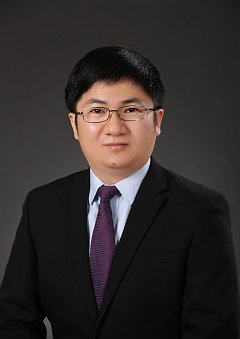
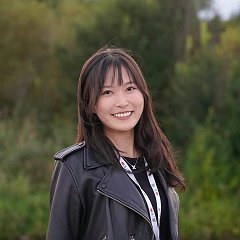
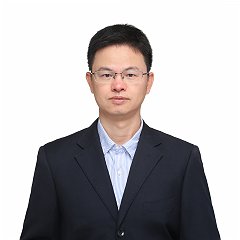
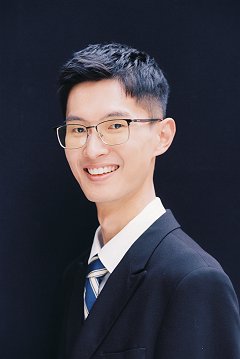
Ding Li is an Assistant Professor in the School of Computer Science at Peking University. He holds a Ph.D. in Computer Science from the University of Southern California (USC) and a B.S. from Peking University. His research focuses on program analysis, energy optimization for mobile applications, and security, with publications in top conferences including ICSE, FSE, and ASE. His research interests span: Program Analysis : Techniques to optimize mobile application energy consumption. System Security : Identifying vulnerabilities in Android apps and WebAssembly binaries. Cloud/Edge Computing : Enhancing serverless computing efficiency and federated learning security. Dr. Li's recent work explores the integration of large language models into pointer analysis and automated optimization of resource inefficiencies. His publications demonstrate a consistent focus on practical system optimizations and security enhancements across mobile, cloud, and machine learning domains. Awards: Viterbi Undergraduate Research Mentoring Award (2014)
Yun Lin is an Associate Professor and Deputy Head of the Department of Computer Science and Technology at Shanghai Jiao Tong University's School of Computer Science. Prior to joining SJTU, Lin served as a Research Assistant Professor at the National University of Singapore working with Prof. Dong Jin Song. Lin leads the CoPhi ("Code Philia") research group, which focuses on the intersection of Software Engineering, AI, and Security. Lin's research spans three major areas: Automatic Programming (including code editing, software testing, and debugging), Explainable AI (focusing on representation interpretation and training data attribution), and Web Misinformation (particularly phishing and scam detection). The research has resulted in numerous tools including CoEdPilot for code editing recommendation, DeepDebugger for interactive debugging of deep classifiers, and Phishpedia for phishing webpage detection. Lin's recent publications demonstrate a strong trend toward integrating AI techniques, particularly large language models and vision language models, with traditional software engineering and security tasks. The work shows increasing sophistication in understanding project context, handling interactive nature of programming tasks, and addressing security challenges in the age of generative AI. Key themes include consistency-based approaches for anomaly detection, agent-based frameworks for complex tasks, and hybrid models that combine symbolic reasoning with neural approaches. ACM Distinguished Paper Award in ICSE'18 for "Towards Optimal Concolic Testing" Distinguished Reviewer Award in FSE'25 2nd prize Research Prototype Award in ChinaSoft'24 Lin advises a large team of PhD, Master's, and undergraduate students, with several publications co-authored with students appearing in top venues. Current research is supported by collaborations with National University of Singapore, particularly with Prof. Dong Jin Song, and includes projects on code editing, GUI testing, and phishing detection. The CoPhi group maintains active development of multiple research tools and datasets. The CoPhi research group under Lin's leadership focuses on building practical tools that bridge the gap between theoretical advances and real-world programming and security challenges. The group's work spans from fundamental program analysis techniques to applied security solutions, with an increasing emphasis on leveraging AI capabilities while maintaining explainability and reliability.
Yiling Lou is an incoming Assistant Professor at the Siebel School of Computing and Data Science, University of Illinois Urbana-Champaign (starting Spring 2026), currently serving as a Pre-tenure Associate Professor at Fudan University. Previously a Postdoctoral Fellow at Purdue University under Prof. Lin Tan, Dr. Lou holds a Ph.D. and B.S. in Computer Science from Peking University supervised by Prof. Lu Zhang and Prof. Dan Hao. Research interests span Software Engineering synergized with Artificial Intelligence and Programming Languages , specifically focusing on LLM4Code, Agent&SE, Vulnerability Detection, and Software Testing/Debugging. Current projects include AgentIssue-Bench for agent system maintenance and INFERROI for enhancing static analysis with LLMs. Research trends show increasing integration of LLMs with traditional SE techniques, particularly in code generation (ClassEval, CodeGen4Libs), debugging (interactive runtime comparison), and vulnerability detection. Recent work emphasizes practical applications in agent systems and resource leak detection. ACM SIGSOFT Distinguished Paper Award (ESEC/FSE 2023) IEEE TCSE Distinguished Paper Award (ICSME 2021) Advises a large research group including 7 Ph.D. and 8 MS students at Fudan University, actively recruiting for UIUC starting Fall 2026. Leads the LLM4Code workshop series and serves on numerous program committees including ICSE, ASE, and FSE. Currently organizing research on Code Agents, Code LLMs, and AI&Security with strong industry relevance. Coordinates the Siebel School research group at UIUC focusing on the intersection of AI and Software Engineering, with particular emphasis on developing robust agent systems for code maintenance and security applications.
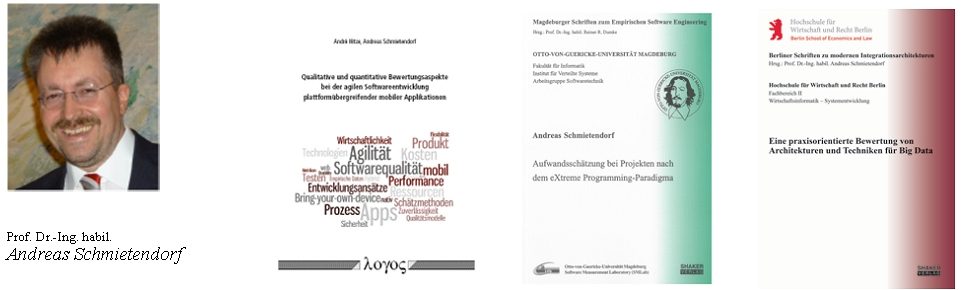
Prof. Dr. Andreas Schmietendorf is a Professor of Business Informatics – System Development at the Berlin School of Economics and Law (HWR Berlin) and holds a private lectureship in Software Engineering at the Otto von Guericke University Magdeburg. He leads the Business Informatics – System Development research group and is actively involved in the HWR doctoral college and Competence Center Digitization. His research focuses on the intersection of software engineering, business informatics, and artificial intelligence, with particular emphasis on: AI-driven changes in software engineering practices Trustworthy AI implementations in domain-specific contexts Web API security and management Digital transformation through low-code development approaches Requirements engineering for trustworthy digital services Prof. Schmietendorf's recent work has centered on the TAHAI (TrustAdHocAI) research project, which investigates trustworthy ad-hoc AI solutions across multiple domains including railway infrastructure, mediation research, and forestry. His research group regularly publishes on software engineering, AI applications, and digital transformation, with a strong focus on practical industry collaborations. The group has produced numerous workshops (ESAPI, KI4SE), conference proceedings, and practical implementations that bridge academic research and industry needs. He has successfully supervised multiple PhD students to completion and maintains an active doctoral supervision portfolio. His research group collaborates extensively with industry partners, particularly Deutsche Bahn, and regularly organizes events that foster academic-industry dialogue. Prof. Schmietendorf is also active in teaching, offering courses on Service Engineering at the University of Magdeburg and various business informatics topics at HWR Berlin. His teaching emphasizes practical applications of software engineering principles and the integration of emerging AI technologies through hands-on exercises and industry-relevant case studies.
Yang Liu is a Full Professor and University Leadership Forum Chair at the School of Computer Science and Engineering, Nanyang Technological University (NTU) in Singapore. He serves as Programme Director for HP-NTU Digital Manufacturing Corp Lab, Deputy Director of the National Satellite of Excellence of Singapore, and Cluster Director in Cybersecurity at Energy Research Institute @NTU. His research spans Cybersecurity , Software Engineering , and Artificial Intelligence . He leads research in malware modeling and detection, vulnerability analysis using machine learning and program analysis, formal verification of security systems, program specification learning, performance analysis, Android system security, and AI security, robustness, fairness, and explainability. His notable work includes the Process Analysis Toolkit (PAT) for model checking and the Deep-Series tools for deep learning testing. Professor Liu has published extensively in top-tier conferences including ASE, ICSE, FSE, ISSTA, and S&P. His research demonstrates strong trends toward integrating AI/ML techniques with traditional software engineering and security approaches, particularly focusing on large language models for code analysis, vulnerability detection, and program repair. Recent publications show a growing emphasis on blockchain security, smart contract analysis, and addressing security challenges in AI systems. NRF Investigatorship (Class 2020) ACM's Distinguished Speaker Nanyang Research Award (Young Investigator) Microsoft Asia Research Fellowship 20 Year ICFEM Most Influential System Award for PAT Multiple ACM SIGSOFT Distinguished Paper Awards Professor Liu actively advises students and has seen notable student achievements, including Singapore Data Science Consortium research award winners and AISG PhD Fellowship recipients. His research is supported by numerous grants including a $900,000 NTU-NAP grant for Formal Verification on Cloud and a $471,000 grant for Vulnerability Detection in Binary Code. He leads the HP-NTU Digital Manufacturing Corp Lab and contributes to RollsRoyce@NTU Corporate Lab research on complex business systems simulation.
Eray Tüzün is an Associate Professor of Computer Engineering at Bilkent University in Turkey, where he leads the Bilkent University Software Engineering and Data Analytics Research Group (BILSEN). With over 20 years of experience in software design and development spanning both academia and industry, he bridges theoretical research with practical software engineering applications. His educational background includes bachelor's and master's degrees in Computer Science and a PhD in Information Systems. Before joining Bilkent University, he accumulated substantial industry experience including 9 years at HAVELSAN (serving as Productization Lead, Academy Manager, Product Owner, and Software Engineer), plus roles at Microsoft as a Software Design Engineer in the Online Services group, Senior Software Engineer at Howard Hughes Medical Institute, and Research Engineer at CWRU Genomics Center. His professional certifications include Certified Product Manager, MCSD: Application Lifecycle Management, Professional Scrum Master (PSM), and Professional Scrum Product Owner (PSPO). Tüzün's research focuses on several interconnected areas including Software Product Line Engineering , Empirical Software Engineering , Gamification , Software Engineering Education , DevOps & Agile Software Development , and Bioinformatics . His empirical approach involves mining software repositories to analyze development practices, identify patterns, and propose improvements. Recent work increasingly examines the intersection of AI and software engineering, particularly how large language models can enhance code review and comment quality. His research output shows clear trends toward analyzing code quality metrics, identifying 'smells' in development processes, and applying data analytics to software engineering practices. Key themes include bus factor estimation for measuring knowledge concentration in software projects, empirical studies of code review processes, continuous integration practices, and issue tracking systems in open source projects. Tüzün is a senior member of IEEE and an active member of ACM SIGSOFT and IEEE Computer Society. He represents Bilkent University in the International Software Engineering Research Network (ISERN), connecting his research with the global software engineering community. His service to the field includes program committee roles at major conferences such as ASE, ICSE, ESEC/FSE, and ESEM, with leadership positions including PC Co-Chair for ICSSP 2020 and Industry Track Co-Chair for EASE 2023. As head of the BILSEN research group, he mentors graduate students and collaborates on projects that bridge theoretical research with practical applications. His research has been consistently published in top-tier software engineering venues over the past decade, demonstrating both continuity in core research areas and adaptation to emerging trends like AI-assisted software development.
Ali Mesbah is a Professor in the Department of Electrical and Computer Engineering at the University of British Columbia (UBC), where he leads the SALT lab. His research focuses on software engineering with emphasis on AI-driven software analysis, software testing, and software evolution. Previously, he was a Visiting Research Scientist at Google during 2017-2018. Dr. Mesbah received his BSc/MSc (2003) and PhD (2009) degree cum laude in Computer Science from the Delft University of Technology (TUDelft). After completing a postdoctoral fellowship with the Software Engineering Research Group at TUDelft and a Visiting Researcher position at Fujitsu Laboratories of America, he joined UBC in 2011. His research interests span software engineering with particular focus on AI-driven software analysis, software testing, software evolution, program comprehension, fault localization and repair. His work has significant applications in web application testing, JavaScript analysis, and automated program repair. He has pioneered techniques for testing modern web applications, analyzing JavaScript code, and leveraging AI for software maintenance tasks. His recent publications demonstrate a clear evolution toward integrating large language models with traditional program analysis techniques, focusing on test generation, bug repair, and understanding multi-hunk patches. His work bridges theoretical software engineering concepts with practical applications, particularly in web technologies and AI-assisted development. Amazon Research Award (2023) Killam Accelerator Research Fellowship (KARF) (2020) Killam Faculty Research Prize (2019) NSERC Discovery Accelerator (DAS) award (2016) ACM Distinguished Paper Awards at ICSE (2009, 2014) IEEE Distinguished Paper Award at ICST (2018) Best Paper Award at ESEM (2015) Best Paper Award at ICWE (2013) Dr. Mesbah has advised numerous PhD and MASc students, many of whom have gone on to positions at leading technology companies including Google, Amazon, Apple, Microsoft, and SAP. His research has been supported by various grants including the Amazon Research Award and NSERC funding. He leads the SALT lab at UBC, which focuses on software analysis, testing, and learning, with current research directions including AI-driven software engineering, web application testing, and program repair. The lab maintains active collaborations with industry partners and academic institutions worldwide.
Shing-Chi Cheung is a Professor of Computer Science and Engineering at the Hong Kong University of Science and Technology (HKUST), School of Engineering. He founded the CASTLE research group and co-founded the International Workshop on Automation of Software Testing (AST) in 2006. His leadership includes serving as General Chair of FSE 2014 and chairing multiple APSEC conferences. His research focuses on software quality enhancement through program analysis, testing, debugging, and AI techniques, targeting Android apps, open-source software, deep learning systems, smart contracts, and spreadsheets. Current projects include metamorphic testing frameworks, binary analysis tools, and vulnerability detection systems for emerging technologies. His publication portfolio demonstrates consistent contributions to software engineering since 2016, with recent work emphasizing AI-integrated testing methodologies, smart contract security, and deep learning system reliability. Key trends show increasing focus on cross-language analysis, data visualization quality, and compiler-level verification for modern software stacks. Distinguished Member of the ACM Fellow of the British Computer Society Editorial board member: Science of Computer Programming (SCP), Journal of Computer Science and Technology (JCST) Former editorial board member: IEEE Transactions on Software Engineering (2006-2009), Information and Software Technology (2012-2015) Four patents in China and the United States Cheung actively mentors through the CASTLE research group and serves on program committees for major conferences including ICSE, ESEC/FSE, and ISSTA. His work bridges academic research with practical applications through industry collaborations and tool development. He has contributed to numerous workshops and symposia as steering committee member and program chair.
Chang-ai Sun is a full professor at the School of Computer and Communication Engineering, University of Science and Technology Beijing (USTB). He currently serves as Vice Dean of the Institute for Multidisciplinary Innovation (IMI), Head of the Department of Computer Science, and Director of the Software Engineering Institute at USTB. He received his bachelor's degree in computer science from the University of Science and Technology Beijing and his PhD in computer science from Beihang University, China. Prof. Sun's primary research focuses on software engineering with particular emphasis on software testing, program analysis, and service-oriented computing. Recently, he has been devoted to developing novel theories, techniques, and supporting tools for intelligent software development and maintenance. His work spans theoretical foundations to practical applications in software quality assurance, with increasing focus on AI-driven approaches to traditional software engineering challenges. His publication record shows consistent contributions to metamorphic testing, program repair, and the application of AI techniques to software engineering problems. Recent work explores the intersection of large language models and software testing methodologies, demonstrating both theoretical innovation and practical implementation. Prof. Sun has received significant recognition for his contributions: 11 national Software Prototype/Service Innovation Awards Senior Member of IEEE Distinguished Member of China Computer Federation (CCF) As principal investigator and major investigator, he has completed over 40 research projects funded by the European Union, Australia, China, and Hong Kong. His extensive grant portfolio demonstrates strong international collaboration and significant impact in the software engineering community. He actively mentors students and junior researchers through his leadership roles. Prof. Sun leads the Software Engineering Institute at USTB, where his team focuses on advancing research in software testing, program analysis, and intelligent software development tools. His leadership extends to departmental administration as Head of the Department of Computer Science, shaping curriculum and research directions for one of China's leading technical universities.
Xin Xia is a Qiushi Distinguished Professor at the College of Computer Science and Technology, Zhejiang University. Previously, he served as the Chief Expert and Director of the Software Engineering Application Technology Lab at Huawei Technologies, China from 2021 to 2025. His academic career spans software engineering research with a focus on AI applications in the field. Ph.D. from Zhejiang University (2014) Supervised by Prof. Xiaohu Yang and Prof. Jianling Sun Visiting student at Singapore Management University (2012-2014) under Prof. David Lo Xin Xia's research primarily focuses on applying data science techniques to software engineering problems. His work spans AI for Software Engineering, Mining Software Repositories, Empirical Software Engineering, and Large Language Models for code understanding and generation. He employs data mining, information retrieval, natural language processing, search-based algorithms, and program analysis to transform software engineering data into automated tools and insights. His recent publications show a strong trend toward leveraging Large Language Models for various software engineering tasks, including code generation, vulnerability detection, and test generation. He has been exploring how to make these models more effective, reliable, and practical for real-world software development scenarios, with a particular focus on Java and Python ecosystems. ACM SIGSOFT Early Career Researcher Award (2022) ACM Distinguished Member 16 best or distinguished paper awards, including nine ACM SIGSOFT Distinguished Paper Awards Recipient of the IEEE Transactions on Software Engineering 2021 Best Paper Award Runner-Up Xin Xia has advised numerous students who have gone on to publish in top software engineering venues. His research has been supported by grants from both academic institutions and industry partners, particularly during his time at Huawei. He actively collaborates with researchers worldwide, especially with David Lo at Singapore Management University. At Zhejiang University, Professor Xia leads research in the intersection of AI and Software Engineering. His work has practical applications in improving developer productivity through automated tools that analyze software repositories and provide actionable insights.
Dr. Preetha Chatterjee is an Assistant Professor in the Department of Computer Science at Drexel University's College of Engineering, where she leads the SOftware Engineering and Analytics Research (SOAR) Lab. Her academic career spans software engineering research, teaching, and service, with a focus on improving developer productivity through advanced analytics and tools. Dr. Chatterjee earned her M.S. and Ph.D. in Computer Science from the University of Delaware, advised by Dr. Lori Pollock, following 5+ years of industry experience as a Software Engineer. Her educational background bridges practical industry experience with rigorous academic training. Her research focuses on Software Engineering with emphasis on developing tools, knowledge sources, and strategies to support software maintenance and improve developer productivity. She incorporates evidence from mining software repositories, conducting empirical studies, and adapting state-of-the-art techniques from Natural Language Processing and Machine Learning. Her current research directions include LLM-assisted software development and maintenance, developer collaboration in distributed software teams, and knowledge extraction from large-scale software artifacts. She has made significant contributions to emotion mining in developer communications, toxicity detection in open source projects, and trust dynamics in GitHub pull requests. Dr. Chatterjee's publications demonstrate a clear progression from foundational work on mining developer chat communications and code snippets toward more sophisticated applications of machine learning and large language models in software engineering contexts. Her recent work increasingly focuses on the intersection of software engineering with social aspects like emotions, trust, and toxicity in developer interactions. Distinguished Reviewer Award at FSE 2023 Drexel CCI Research Excellence Award (awarded to her lab member Ramtin Ehsani) Drexel CS Leadership Award (awarded to her lab member Amirali Sajadi) Dr. Chatterjee has advised numerous students at various levels, including Ph.D., M.S., and undergraduate researchers. Her SOAR Lab currently includes Ph.D. students Ramtin Ehsani and Amirali Sajadi, who have received significant recognition for their work. She has served on multiple program committees for major software engineering conferences including ICSE, FSE, ASE, and MSR, and has held leadership roles such as Tutorials Co-chair for MSR 2025 and Journal-first Co-Chair for ICPC 2024. She co-leads the Drexel Programming Systems Seminar and has been an editorial board member for the Journal of Systems and Software. The SOAR Lab focuses on innovative research at the intersection of software engineering, machine learning, and natural language processing. The lab has produced influential datasets like DISCO (Discord Chat Conversations for Software Engineering Research) and comprehensive annotated datasets of GitHub issue threads. Current projects include improving LLM-assisted bug resolution, security assessment of LLM-generated code, emotion mining from software engineering communication, and information extraction from developer chat conversations.
Chao Zhang is a Tenured Associate Professor at Tsinghua University, specializing in software security, system security, data security, and AI security. He leads the VUL337 research group and serves as the coach of the Blue-Lotus CTF team. His educational background includes a Ph.D. in Computer Science from Peking University (2008-2013), a B.S. in Mathematical Science from Peking University (2004-2008), and a postdoctoral position at UC Berkeley (2013-2016). Dr. Zhang's research focuses on Software Security , System Security , Data and AI Security , Program Analysis , and Vulnerability Discovery . His work spans binary code analysis, fuzzing techniques, blockchain security, and AI security. His recent publications demonstrate a strong emphasis on developing novel frameworks for vulnerability detection, binary code analysis, and securing AI systems against adversarial attacks. His publication trends show a consistent focus on practical security solutions with increasing attention to AI security challenges. Over the past decade, he has published extensively in top security conferences including IEEE S&P, USENIX Security, CCS, NDSS, and ISSTA, with a significant acceleration in publications since 2020. Tencent CSS TSec Professional Prize (2nd place, 2019) Tencent CSS TSec Breakthrough Prize (1st place, 2018) DARPA Cyber Grand Challenge CFE, 2nd in exploiting (2016) DARPA Cyber Grand Challenge CQE, 1st in defense (2015) Microsoft BlueHat Prize Contest's Special Recognition Award (2012) 5th place in Defcon CTF 2017 2nd place in Defcon CTF 2016 5th place in Defcon CTF 2015 Dr. Zhang leads the VUL337 research group at Tsinghua University, which focuses on vulnerability discovery and security analysis. He also serves as the coach of the Blue-Lotus CTF team and is a member of the V group of LiST. His research has received significant attention in the security community, with numerous publications in top-tier security venues and practical contributions to vulnerability discovery and mitigation techniques.
Yintong Huo is an Assistant Professor at the School of Computing & Information Systems, Singapore Management University (SMU), where he leads research in intelligent software engineering. He received his PhD from The Chinese University of Hong Kong (CUHK) in 2024 under Prof. Michael R. Lyu and holds a Bachelor's degree from the University of Electronic Science and Technology of China. His research focuses on empowering AI models (particularly LLMs) for software development, testing, and operations, with two flagship projects: LogPAI (open-source AI platform for automated log analysis) and WebPAI (multimodal intelligence for automatic webpage development). His work spans log analysis, code intelligence, UI generation from prototypes, and configuration diagnostics. Huo's publication record shows strong trends in leveraging multimodal LLMs for practical software engineering challenges, with recent work on interactive webpage generation (Interaction2Code), configuration logging (ConfLogger), and log parsing (LILAC). His research bridges theoretical AI advancements with real-world system reliability needs. ICSE Distinguished Reviewer Award (2025) ISSRE Distinguished Reviewer Award (2024) IEEE Open Software Services Award (2022) ACM SIGSOFT CAPS Travel Grants National Scholarship (2019) Huo actively supervises PhD students (including Shi Ying Chang and Dan Huang) and research engineers. His lab has secured funding for multiple projects including WebPAI and LogPAI. He serves on program committees for major conferences (ASE, ICSE, FSE) and reviews for top journals. Current projects include dynamic webpage generation and configuration diagnostics, with ongoing work on small language models for logging systems. Huo leads the LogPAI and WebPAI research groups, developing open-source tools for automated log analysis and multimodal UI code generation. The LogPAI project has garnered over 3,000 GitHub stars and 70,000 downloads. His team collaborates with industry partners on AIOps challenges and is expanding into configuration diagnostics through the ConfLogger project.
Hui Liu is a Professor in the School of Computer Science and Technology at Beijing Institute of Technology, where he leads research in AI-based software development with a focus on LLM applications. His work spans software refactoring, quality improvement, and maintenance, funded by the National Natural Science Foundation of China and the National Key Research and Development Program of China. PhD from Peking University (2008) Former graduate student at Software Engineering Institute, Peking University Distinguished member of China Computer Federation Secretary-General of CCF Technical Committee on Software Engineering Professor Liu's research centers on LLM-based program generation, evaluation and testing of large language models, software refactoring techniques, and automatic construction of software engineering datasets. His work bridges artificial intelligence and software engineering, with particular emphasis on improving code quality through empirical studies and machine learning techniques. Current projects include code contamination detection, context-aware naming recommendations, and refactoring validation using LLMs. His research has evolved from traditional code smell detection to cutting-edge applications of large language models in software development. Liu's publication record shows a strong trend toward LLM applications in software engineering, with recent work focusing on code review generation, commit message generation, and refactoring validation using large language models. His research combines empirical methods with machine learning approaches, often analyzing large code corpora from open-source projects. The work spans both theoretical foundations and practical tool development, with several contributions merged into Eclipse as part of the open-source community. ACM Distinguished Paper Award (ESEC/FSE 2023) ACM Distinguished Paper Award (ICSE 2022) RE'2021 Best Research Paper Award IET Software Premium Award (2018) New Century Excellent Talents in University (2013) Beijing Higher Education Young Elite Teacher (2013) Professor Liu actively mentors PhD and Master's students, with recent graduates including Waseem Akram (awarded Outstanding Graduate) and several students publishing at top venues. His research is supported by major Chinese funding agencies, and he serves on program committees for leading software engineering conferences including ASE, ICSE, and FSE. He maintains strong industry connections through contributions to Eclipse and studies of open-source ecosystems like Rust. Liu leads a research group focused on AI for software engineering, with active projects on code generation, refactoring, and quality improvement. The group collaborates extensively with international researchers and contributes directly to open-source tools, particularly in the Eclipse ecosystem where multiple refactoring improvements have been merged.
Shangwen Wang is an Assistant Professor in the School of Computer Science at National University of Defense Technology (NUDT) in Changsha, China. He earned his Bachelor's degree in June 2017, Master's degree in December 2019, and Ph.D. in December 2023, all from NUDT. During his graduate studies, he was supervised by Professor Xiaoguang Mao. From May 2022 to July 2023, he was a visiting student at Southern University of Science and Technology under Professor Yepang Liu. His educational background includes: Ph.D. in Software Engineering, NUDT (2020.3-2023.12), supervised by Prof. Xiaoguang Mao Visiting Scholar, SUSTech (2022.5-2023.7), supervised by Prof. Yepang Liu M.A. in Software Engineering, NUDT (2017.9-2019.12), supervised by Prof. Xiaoguang Mao B.A. in Software Engineering, NUDT (2013.9-2017.6) Wang's research focuses on program repair, program comprehension, mining software repositories, software maintenance and evolution, software testing, and AI for Software Engineering. His work bridges traditional software engineering techniques with modern AI approaches, particularly leveraging large language models for various software engineering tasks. He has made significant contributions to automated program repair, fault localization, vulnerability detection, and code generation. His research demonstrates a strong emphasis on empirical validation and practical applicability to real-world software development challenges. His recent publications show a clear trend toward integrating large language models with traditional software engineering tasks. The 15 most recent articles reveal a focus on applying LLMs to program repair, fault localization, vulnerability detection, and code generation, while maintaining strong empirical foundations. His work spans both theoretical advancements and practical tool development, with applications in software security, testing, and maintenance. His notable achievements include: CCF Outstanding Doctoral Dissertation (CCF优博) 2024 Outstanding Doctoral Graduates, NUDT, 2023 Multiple distinguished paper awards including ACM SIGSOFT Distinguished Paper Award (ISSTA'24) and IEEE TCSE Distinguished Paper Awards (ICSME'22, SANER'22) Prestigious scholarships from NUDT throughout his academic career As an active member of the software engineering community, Wang serves on numerous program committees for top conferences including ICSE, ASE, ESEC/FSE, and ISSTA. He has also contributed to teaching as a teaching assistant for courses such as Compiler, Python Programming, Discrete Mathematics, and C++ Programming. His research group appears to be actively mentoring students, as evidenced by his role as corresponding author on multiple student-led publications. Wang maintains an active research presence with collaborations across multiple institutions in China. His work demonstrates a clear trajectory from traditional program analysis techniques toward integrating cutting-edge AI approaches, particularly large language models, into software engineering practices.