Paul Grundmann is an active academic researcher contributing to interdisciplinary fields at the intersection of natural language processing (NLP), healthcare informatics, and financial technology. His work focuses on evaluating and improving large language models' capabilities in specialized domains like clinical text analysis and accounting tasks. Research trends in his publications reveal a focus on: Addressing data drift challenges in clinical outcome prediction Developing attention network architectures for diagnosis prediction Exploring cross-lingual knowledge transfer in clinical phenotyping Assessing financial literacy of LLMs through domain-specific languages His collaborations span multiple institutions, with key partnerships involving Wolfgang Nejdl, Alexander Loeser, and Tom Oberhauser. While no formal institutional affiliation is specified in the provided texts, his research output demonstrates sustained engagement with cutting-edge technical problems in both healthcare and finance applications.
Alexander Loeser is a researcher active in natural language processing (NLP) and its applications in clinical and financial domains. He has contributed to diverse areas including clinical outcome prediction, transformer-based reinforcement learning environments, domain knowledge integration, and information extraction from text. His recent work focuses on evaluating large language models' financial literacy via domain-specific languages and addressing data drift in clinical NLP tasks. Key Research Areas: Clinical decision support systems and outcome prediction Domain knowledge injection into transformer models Biased news article detection Interactive NLP systems for entity linking Methodological Focus: Reinforcement learning and attention mechanisms Multi-task and self-supervised learning Active sampling for annotation efficiency Topic segmentation and classification Loeser has collaborated extensively with researchers like Wolfgang Nejdl, Betty van Aken, Felix Gers, and Paul Grundmann, with publications spanning from 2012 to 2025. His work emphasizes interpretability, generalization, and practical deployment of NLP models in real-world domains.
Rocco Oliveto is a Professor in the Department of Computer Science at the University of Salerno, Italy, with a distinguished research career spanning over two decades in empirical software engineering. His work bridges theoretical software engineering principles with practical applications, with recent expansion into healthcare informatics and machine learning applications. His research interests focus on code quality assessment, software maintenance practices, developer behavior analysis, and empirical studies of software engineering phenomena. He has made significant contributions to understanding code smells, bug prediction, API compatibility issues, and more recently, container technologies and smart contract analysis. His recent work demonstrates a strategic expansion into healthcare applications, leveraging software engineering techniques for medical diagnostics and rehabilitation systems. Oliveto's publication pattern shows consistent productivity with multiple high-impact publications each year across top venues including IEEE Transactions on Software Engineering, ACM Transactions on Software Engineering and Methodology, and Empirical Software Engineering journal. His recent articles (2023-2025) reveal a growing interest in applying software engineering techniques to healthcare domains while maintaining strong contributions to core software engineering topics. The research demonstrates sophisticated methodological approaches combining empirical studies with machine learning techniques. His collaborative network includes prominent researchers such as Simone Scalabrino, Gabriele Bavota, and Andrea De Lucia, with whom he has co-authored numerous high-impact publications. This collaboration spans both traditional software engineering topics and emerging interdisciplinary applications in healthcare.
Barbara Jane Ericson is a Professor in the School of Information at the University of Michigan, Ann Arbor. She is a prominent figure in computing education, known for co-developing the Media Computation (MediaComp) approach to introductory computer science, which uses digital media (e.g., images, sounds) to engage students. She has authored multiple textbooks and led initiatives like Georgia Computes! to expand access to computing education. Her research focuses on broadening participation in computing, active learning strategies, and the impact of AI tools like Large Language Models (LLMs) in education. Ericson has held leadership roles, including directing the Institute for Computing Education at Georgia Tech and spearheading efforts to establish computer science curricula and teacher training programs in Georgia. Her work emphasizes equity, particularly supporting Black girls in AP Computer Science and addressing socioeconomic disparities in LLM perceptions. She has received prestigious awards such as the ACM Karl V. Karlstrom Outstanding Educator Award (2010) and is an ACM Distinguished Member (2020). Recent work includes developing assessments like the Critical Reflection and Agency in Computing Scale and exploring personalized learning tools such as adaptive Parsons puzzles. Her contributions span K-12 education, university-level pedagogy, and partnerships between academia and state education systems.
Can Calisir is a Doctoral Researcher affiliated with the Machine Learning Group at the Technical University of Berlin. He holds a Master’s degree in Computational Engineering Science (2024) and a Bachelor’s degree in Mechanical Engineering (2021). Education M.Sc. Computational Engineering Science (2024), Technical University of Berlin B.Sc. Mechanical Engineering (2021), Karlsruhe Institute of Technology His research focuses on the application of AI in manufacturing, foundation models, anomaly detection, and multimodal machine learning. Specific interests include Large Language Models, Generative Models, and Time Series Analysis for code generation tasks.
Eric Horvitz is a distinguished researcher at Microsoft Research in Redmond, WA, with an extensive publication record spanning over three decades in artificial intelligence and related fields. His work demonstrates deep engagement with both theoretical foundations and practical applications of AI technologies. Horvitz's research interests encompass a broad spectrum of AI domains, with particular emphasis on human-AI collaboration , medical informatics , uncertainty reasoning , and ethical considerations in AI development . His scholarly contributions reveal a consistent focus on creating AI systems that augment human capabilities rather than replace them, with numerous publications exploring the complementary relationship between humans and AI systems. Analysis of his recent publication trends (2023-2025) shows a significant shift toward investigating large language models in practical contexts, particularly in healthcare applications and collaborative work environments. His work often bridges multiple disciplines, combining insights from computer science, cognitive psychology, and domain-specific knowledge to create more effective AI-human partnerships. ACM - AAAI Allen Newell Award (2015) Horvitz has established a robust collaborative network, frequently working with researchers across Microsoft Research and external institutions. His medical AI publications suggest substantial involvement in healthcare-focused research initiatives, likely supported by significant grants from both private and public sources. His work on human-AI teaming indicates leadership in developing frameworks for effective collaboration between humans and AI systems across various domains. His research appears to be conducted within Microsoft Research's broader AI initiatives, with particular emphasis on practical applications that address real-world challenges while carefully considering ethical implications, human factors, and societal impacts of emerging AI technologies.
Dietrich Klakow is a prominent researcher at Saarland University in Saarbrücken, Germany, with an extensive publication record spanning from 1997 to 2025. His work primarily focuses on natural language processing, speech recognition, and machine learning with significant contributions to multilingual models and African language processing. His research interests span a wide range of topics within computational linguistics and artificial intelligence. Klakow has made substantial contributions to Natural Language Processing , particularly in multilingual contexts and low-resource languages. His work on African language technologies has been particularly impactful, developing resources and models for languages that are often neglected in mainstream NLP research. He has also conducted significant research in speech recognition , transformer models , and computational linguistics , with a focus on practical applications and theoretical foundations. Klakow's recent publications demonstrate a strong focus on large language models, their capabilities, limitations, and applications across diverse linguistic contexts. His work spans both theoretical investigations of model architectures and practical applications addressing real-world challenges in language technology. His collaborative work spans numerous international partnerships, particularly with researchers working on African language technologies and multilingual NLP systems.
Yancheng He is an Assistant Professor at the School of Computer Science and Technology, University of Science and Technology of China. His research focuses on Natural Language Processing, Large Language Models, and Multimodal Learning, with emphasis on factuality evaluation, instruction tuning, and collaborative filtering. He has co-authored numerous high-impact publications in venues like ACL, NAACL, and EMNLP, including benchmarks like Chinese SimpleQA and Chinese SafetyQA. His recent work explores error detection in long chain-of-thought reasoning, 2D-DPO for preference optimization, and cross-domain recommendation systems. He collaborates extensively with researchers including Jiaheng Liu, Shilong Li, and Wenbo Su. No specific awards or student advising details are mentioned in the provided data.
Anish Das Sarma is a researcher affiliated with Google, USA , specializing in uncertain data management, MapReduce algorithms, and knowledge graph systems. He earned a PhD from Stanford University in 2010 under the supervision of Jennifer Widom and Alon Halevy, with a dissertation on "Managing Uncertain Data." His career spans collaborations with leading institutions, focusing on scalable data integration, social choice theory, and machine learning applications in scholarly knowledge organization. PhD in Computer Science, Stanford University (2010) Key collaborations: Stanford, Google Research, NFDI4DataScience His research interests intersect uncertain data modeling , MapReduce optimization , and large language model applications for scientific synthesis. Recent work includes FAIR data frameworks, ontology learning, and clinical entity linking. Article trends highlight his evolution from foundational database systems (2004-2015) to modern applications of LLMs in scholarly communication (2023-2024). Key areas: scalable algorithms, research data management, and ethical AI.
Hironori Washizaki is a Professor in the Department of Computer Science and Engineering at Waseda University, Japan. He is a leading researcher in software engineering with a focus on software design patterns, machine learning systems, cybersecurity, and software quality. His primary research interests include: Software Engineering Machine Learning Systems Engineering Software Design Patterns AI and ML Security Requirements Engineering for AI Systems Natural Language Processing for Software Engineering Software Quality and Reliability Empirical Software Engineering His recent publications (2023–2025) reveal a strong trend toward integrating AI and machine learning into software engineering practices. Key themes include prompt engineering patterns in software development, automated log anomaly detection, vulnerability analysis using NLP techniques, modeling frameworks for ML systems, and gender studies in software engineering. His work combines theoretical modeling with empirical validation and practical application. Notable scientific contributions and activities include: Guest editorial for IEEE Transactions on Emerging Topics in Computing on software aging and rejuvenation Organizing and contributing to workshops on SQuaRE, gender in software engineering, and ML systems engineering Leadership roles in IEEE Computer Society Extensive collaboration with researchers at Waseda and internationally He advises students and leads research on topics such as automated program repair, data-driven personas, bug fixing time analysis, and educational tools for programming. His work often involves interdisciplinary collaboration across software engineering, AI, and cybersecurity domains. He is involved in several research labs and teams focused on software engineering innovation, including groups working on: Software patterns and architecture AI/ML engineering Security and privacy in cloud and IoT Empirical studies in software development Educational technology and programming pedagogy
Nadeen Fathallah is a researcher at the University of Stuttgart, affiliated with the Analytic Computing group at KI. Her work spans AI applications for accessibility, computer vision, and knowledge engineering. Research Focus: Web accessibility, ontology learning, and LLM-based solutions for Deaf/Hard of Hearing communities Projects: Key contributor to the IKILeUS project (Integrated AI in Teaching) at the University of Stuttgart Teaching: Has served as teaching assistant and assistant lecturer at German International University, German University in Cairo, and The Knowledge Hub Her research explores: Automated detection/correction of web accessibility violations (e.g., AccessGuru platform) Improving video captions using large language models Accessibility tools for tabular data (EchoTables) Ontology learning pipelines (NeOn-GPT, LLMs4Life) Recent work shows a focus on combining LLMs with domain-specific challenges across multiple fields, particularly emphasizing inclusive design principles. Contact details: Office at Universitätsstraße 32, Stuttgart, Germany (Room: 2.312b). Available via +49 711 685 88130.
Prof. Dr.-Ing. habil. Dr. hc Sahin Albayrak is a distinguished academic and entrepreneur at the Technical University of Berlin , where he founded and directs the Distributed Artificial Intelligence Laboratory (DAI Laboratory) . He leads the Agent Technologies in Business Applications and Telecommunications research group and serves as founding member of Deutsche Telekom Laboratories (2004) and European Center for ICT (EICT) (2005). As initiator of Connected Living e.V. (2009) and managing director of German-Turkish Advanced Research Center for ICT (2012), he bridges international collaborations. He also founded IOLITE GmbH (2014) and other startups. Research Focus: Agent technology, autonomous driving, smart cities, cyber security, machine learning, and AI applications in energy systems Awards: Federal Cross of Merit (2014), multiple Best Paper Awards Leadership: Director of DAI Laboratory, head of research group at TU Berlin His 20+ recent publications (2022-2025) demonstrate expertise in agent-based architectures , smart mobility solutions , context-aware computing , and AI-driven security systems . Notable trends include integrating large language models into database interfaces, optimizing multi-agent coordination for logistics, and advancing explainable AI through feature attribution frameworks. Scientific Contributions: Recipient of Germany's Bundesverdienstkreuz for German-Turkish cooperation Best Paper Award at Smart Grid Architectures conference
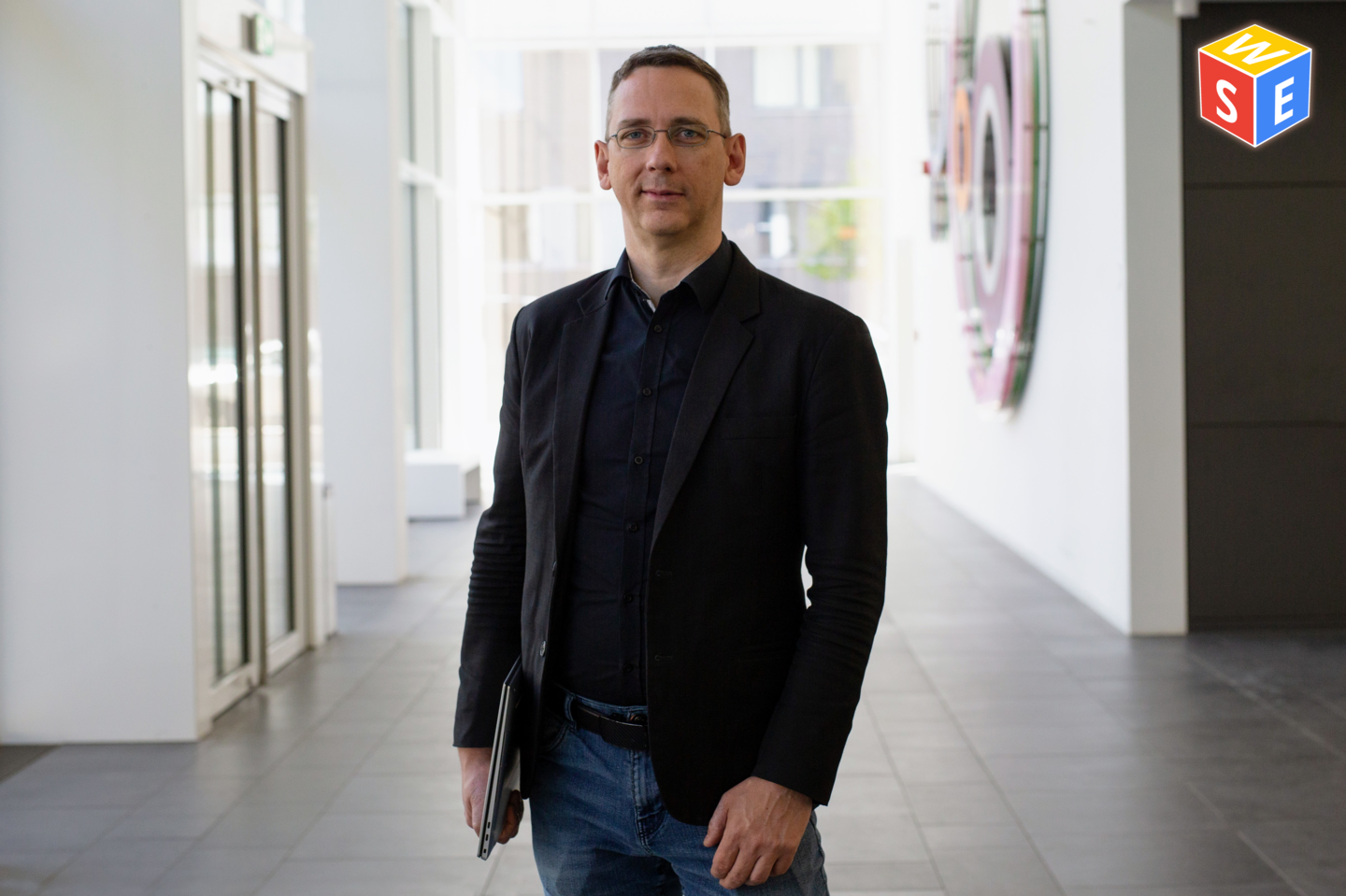
Andreas Both is a Professor at the Faculty of Computer Science and Media at Leipzig University of Applied Sciences (HTWK Leipzig), where he leads the Web & Software Engineering (WSE) research group. His work spans multiple domains of computer science with a strong focus on bridging theoretical foundations with practical applications in software engineering, web technologies, and artificial intelligence. His research interests primarily revolve around Software Engineering (particularly test automation with AI and source code analysis), Web Engineering , Applied Artificial Intelligence (including Machine Learning, Deep Learning, and Large Language Models), Question Answering & Chatbots , and Data-driven Applications . He has developed innovative approaches in knowledge graph question answering systems, multilingual NLP applications, and privacy-preserving data sharing technologies using the Solid protocol framework. The analysis of his recent publications reveals a strong trajectory toward leveraging Large Language Models for knowledge graph applications, with particular emphasis on multilingual capabilities, explainability, and quality improvement in question answering systems. His work increasingly integrates privacy considerations with advanced AI techniques, particularly through Solid protocol implementations for data sovereignty. Best Paper Award at ICWE 2024 for AuthApp - a GDPR-compliant access granting system Outstanding Paper Award at ICWI 2024 for LLM-generated explanations in question answering systems Multiple first-place awards at the TEXT2SPARQL Challenge 2025 Best Paper Awards at ICWE 2025 and IEEE ISI 2025 CHI 2015 Honorable Mentions for search interface research Professor Both actively mentors students through the Google Summer of Code program and serves on the leadership board of the Architecture (ARC) working group of the German Computer Science Society (Gesellschaft für Informatik). His teaching portfolio includes Software Engineering, Question Answering & Chatbots, Software Projects, Project Management Practicum, Web Engineering, and Software Engineering & AI courses. His office hours are Thursdays from 11:15-12:15, requiring advance email appointment with topic specification.
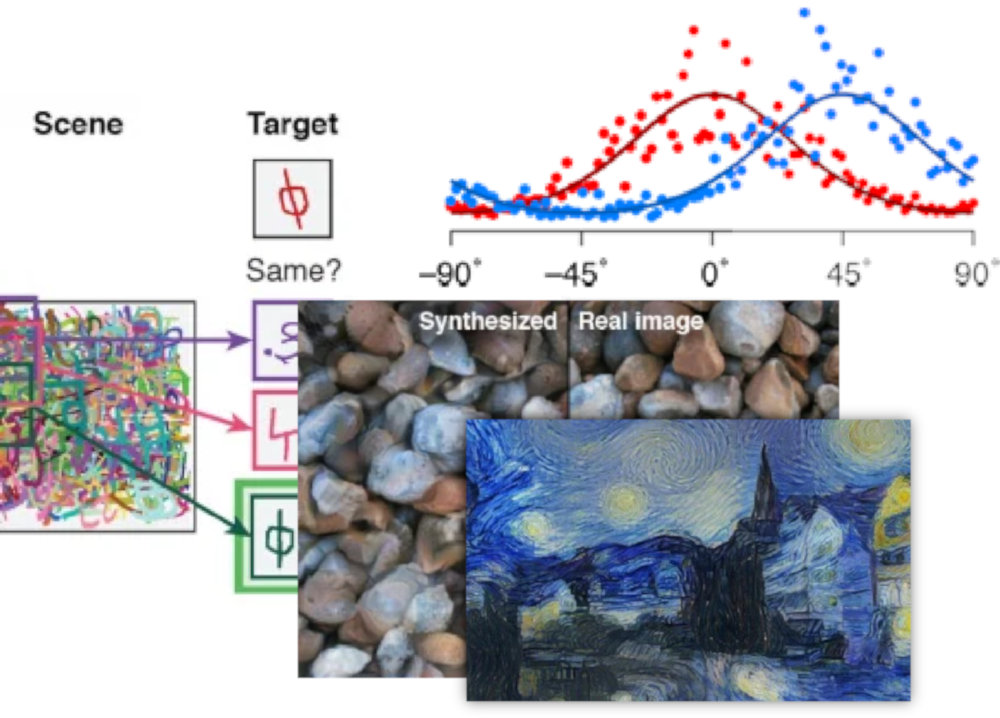
Prof. Dr. Alexander Ecker is Professor of Data Science at the Institute of Computer Science, University of Göttingen, and concurrently holds the prestigious Max Planck Fellow position at the Max Planck Institute for Dynamics and Self-Organization. Since 2020 he also serves on the Executive Board of the Campus Institute Data Science in Göttingen. He leads the Neural Data Science research group, comprising 14 PhD students and 2 postdoctoral researchers, focusing on the interface of machine learning and computational neuroscience. His educational background includes a Dr. rer. nat. in Neuroscience (2014) from the Graduate School of Neural and Behavioral Sciences/IMPRS, University of Tübingen, followed by post-doctoral and group-leader positions at the University of Tübingen and the Max Planck Institute for Biological Cybernetics. Research Interests Machine Learning & Deep Learning: developing novel algorithms for representation learning and generative modeling. Computational Neuroscience: large-scale data-driven modeling of visual cortical circuits. Visual Perception: bridging biological vision and computer vision via biologically inspired architectures. His work has produced a steady stream of influential publications (2019-2025) in leading journals such as Nature Communications , Nature , Nature Methods , PLOS Computational Biology , ICLR , NeurIPS , and CVPR . The publications trend toward integrating high-resolution neural recordings with state-of-the-art machine-learning models to uncover principles of sensory processing, neuron-type classification, and behavior. Scientific Awards & Honors Max Planck Fellow, Max Planck Institute for Dynamics and Self-Organization (ongoing) Executive Board Member, Campus Institute Data Science, Göttingen (since 2020) Teaching, Advising & Grants Regularly teaches advanced courses: “Deep Learning for Image Synthesis”, “Current Topics in Deep Learning”, and “Graph Machine Learning”. Supervises 14 current PhD students and 2 postdocs within the Neural Data Science Group. Offers numerous Bachelor’s and Master’s thesis projects, with topics ranging from neuronal morphology clustering to primate vocalization analysis. Leads or co-leads large collaborative consortia with labs in Göttingen, Tübingen, Baylor College of Medicine, and other institutions across the US and Germany. Labs & Teams The Neural Data Science Group operates at the Institute of Computer Science, University of Göttingen, and is tightly integrated with the Max Planck Institute for Dynamics and Self-Organization. The group maintains active collaborations with over a dozen partner laboratories, including groups led by Fabian Sinz, Andreas Tolias, Thomas Euler, Tim Gollisch, and Viola Priesemann, fostering an interdisciplinary environment that spans computer science, physics, biology, and psychology.
Rolf Drechsler is a Full Professor and Head of the Group of Computer Architecture at the University of Bremen's Institute of Computer Science since 2001, and Director of the Cyber-Physical Systems Group at DFKI Bremen since 2011. He holds an adjunct professorship at the Indian Statistical Institute and has been affiliated with Duke University. Education: Diploma (1992) and Dr. phil. nat. (1995) in Computer Science from Goethe University Frankfurt Academic Leadership: Dean of Mathematics and Computer Science Faculty (2018-2025), Vice Rector for Research (2008-2013) His research focuses on formal verification , RISC-V architectures , and quantum/in-memory computing . Recent work explores LLM integration in hardware testing and polynomial-based verification techniques. Publications from 2024-2025 span IEEE Transactions , DATE , and DAC , emphasizing automated verification , quantum circuit mapping , and LLM-driven testbench generation . Scientific Awards IEEE/ACM Best Paper Awards (2013, 2018) Berninghausen-Preis for Innovative Teaching (2018) IEEE Fellow (2015) Founder Award for Solvertec (2013) He has served on program committees for DAC, ICCAD, DATE, and founded graduate schools in Embedded Systems and System Design under Germany's Excellence Initiative.