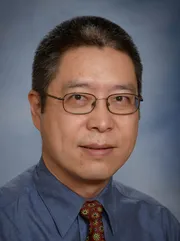
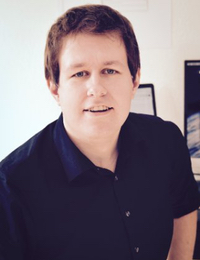
Jan-Willem van de Meent is an Associate Professor at the University of Amsterdam , where he co-directs the AMLab with Max Welling. He holds an Assistant Professor position (on leave) at Northeastern University , continuing to advise students and collaborate remotely. His research focuses on combining probabilistic programming and deep learning to develop models that generalize from limited data. Key areas include inductive biases through physical simulators, causal structures , and symmetries , with applications in robotics , NLP , healthcare , and physical sciences . Recent work includes Variational Flow Matching for graph generation Equivariant neural models for physical systems Entropy coding of complex data structures Goal-contrastive reinforcement learning for robotics Awards NSF CAREER award (2021) Students & Postdocs Robin Walters (Postdoctoral Fellow) Ondrej Biza (Ph.D. Candidate) Babak Esmaeili (Ph.D. Candidate) Sam Stites (Ph.D. Candidate) Hao Wu (Ph.D. Candidate) Xiongyi Zhang (Ph.D. Candidate) Heiko Zimmermann (Ph.D. Candidate) Jered McInerney (Ph.D. Candidate) Eli Sennesh (Ph.D. Candidate)
Farinaz Koushanfar is a Professor at the University of California, San Diego (UCSD), with a former affiliation at the University of California, Berkeley. Her research focuses on advancing security, machine learning, and hardware design through interdisciplinary approaches. Key areas include adversarial defense mechanisms, cryptographic systems, federated learning, and zero-knowledge proofs. She has collaborated extensively with institutions and researchers globally, contributing to over 360 publications. Her work emphasizes practical security solutions, such as watermarking for intellectual property protection and methods to counteract adversarial attacks in neural networks. Recent trends in her publications highlight innovations in cache compression, robust watermarking for large language models, and securing wireless communication systems against modality-agnostic attacks. Collaborations with industry and academia underscore her commitment to real-world applications of theoretical advancements. Awards and grants are not explicitly listed here, but her prolific publication record and leadership in high-impact projects indicate significant recognition in her field. Advising and mentoring students and junior researchers are central to her academic contributions, though specific student names are not detailed in the provided text. Her lab’s work often intersects with emerging technologies like blockchain, edge computing, and privacy-preserving machine learning.
Barbara Ericson is a Professor in the Computer Science and Engineering department at the University of Michigan, Ann Arbor. Her research focuses on computer science education, programming pedagogy, and broadening participation in computing. She has developed innovative educational tools including interactive ebooks and Parsons problems for teaching programming concepts. Dr. Ericson's research interests span multiple areas of computer science education including adaptive learning systems, CS teacher professional development, and broadening participation in computing, particularly for underrepresented groups. She has pioneered work on Parsons problems as learning tools and has extensively researched how to make computer science education more accessible and effective. Her recent work has focused on AI literacy and the integration of large language models in programming education. Her publication record shows a clear trend toward integrating AI technologies into computer science education while maintaining a strong focus on equity and accessibility. The majority of her recent articles address how to effectively use AI tools like large language models in programming education, develop AI literacy among students, and create more inclusive computing classrooms. Her work bridges educational theory with practical classroom applications. Dr. Ericson has received recognition for her work in broadening participation in computing, particularly through initiatives like Sisters Rise Up and Project Rise Up 4 CS which support underrepresented students in Advanced Placement Computer Science courses. She has been instrumental in developing the Runestone Interactive platform for free, open-source computer science ebooks and has conducted extensive research on how teachers and students use these resources. Her work on adaptive Parsons problems has influenced programming pedagogy across multiple institutions.
Shriram Krishnamurthi is a Professor in the Computer Science Department at Brown University, Providence, RI. With a prolific research career spanning over three decades (from 1994 to present), he has made significant contributions across programming languages, formal methods, and computer science education. His work bridges theoretical foundations with practical educational applications, particularly in making complex concepts accessible to students. Dr. Krishnamurthi's research interests encompass programming languages, formal methods, type systems, and computer science education. His work often focuses on the intersection of these areas, particularly how to make formal methods and advanced programming concepts accessible to students through innovative language design and educational tools. He has developed several educational frameworks that have been adopted in both university and K-12 settings, demonstrating his commitment to improving computer science education at all levels. His recent publications reveal a strong focus on making formal methods more approachable through grounded language design, addressing student misconceptions in programming through innovative assessment techniques, and developing practical tools like Forge for teaching formal methods. His work on Rust's type system, privacy-aware static analysis, and document calculus demonstrates the breadth of his research interests while maintaining a consistent thread of improving programming language understanding and usability. As a dedicated educator and researcher, Krishnamurthi has mentored numerous PhD students who have become prominent researchers in their own right, including Ben Greenman, Tim Nelson, Kuang-Chen Lu, and Will Crichton. His collaborative approach is evident in his extensive publication record featuring collaborations with both established researchers and emerging scholars.
**Jiang Hu** is a Full Professor of Electrical and Computer Engineering at Texas A&M University, holding a Hans Fischer Senior Fellowship at the Technical University of Munich (TUM-IAS). He earned his B.S. in Optical Engineering from Zhejiang University (1990), M.S. in Physics from the University of Minnesota (1997), and Ph.D. in Electrical Engineering (2001). Before joining Texas A&M in 2002, he worked at IBM Microelectronics. His research focuses on Electronic Design Automation (EDA), VLSI physical design, and hardware security, with notable contributions to machine learning-driven CAD tools and approximate computing architectures. **Education**: B.S., Optical Engineering, Zhejiang University (1990) M.S., Physics, University of Minnesota (1997) Ph.D., Electrical Engineering, University of Minnesota (2001) **Research Interests**: Jiang Hu's work bridges EDA and computer architecture, emphasizing optimization of large-scale computing systems. His projects include automated power modeling frameworks (e.g., APOLLO), neural network-driven placement algorithms, and security-enhanced dataflow architectures. He also explores plasmonic materials and perovskite solar cells through interdisciplinary collaborations. **Awards**: IEEE Fellow (2012) Alexander von Humboldt Research Fellowship (2011) Multiple best-paper awards at IEEE/ACM conferences (2003–2021) **Grants & Leadership**: He served as Technical Program Chair for ACM International Symposium on Physical Design (2011–2012) and co-chaired the ACM/IEEE Workshop on Machine Learning for CAD (2023). His research has led to 10 patents and supervision of 24 Ph.D. students. **Labs & Teams**: His group collaborates with TUM-IAS on projects like *A New and Scalable Methodology for Fast Machine Learning Accelerator Design*, advancing EDA tools for next-generation hardware systems.
Prof. Carsten Lanquillon is a Research Professor at Heilbronn University, specializing in Language Technologies and Cognitive Assistance Systems within the Department of Business Informatics. He leads the Center for Industrial AI (iAI), a Carl Zeiss Foundation-funded initiative addressing AI implementation challenges for medium-sized enterprises. His expertise spans Business Intelligence, Data Science, Machine Learning, and Conversational AI with a focus on applying AI in industrial production processes. Key research areas include cognitive assistance systems, anomaly detection, and ethical AI frameworks. His work bridges academia and industry through collaborative projects like the iAI Center, which promotes sustainable AI adoption in regional manufacturing. Research emphasizes practical solutions for AI integration, including secure large language model adaptation, generative AI applications, and hybrid intelligence systems combining human and machine capabilities. Recent efforts explore explainable AI, digital twin integration, and user transparency in industrial contexts. Lanquillon's contributions include process models for data science projects and frameworks for knowledge-grounded NLP systems. He actively publishes on topics ranging from energy-efficient deep learning to interactive quality analysis tools in automotive industries. His research often combines technical innovation with user-centric design principles to ensure practical applicability.
Prof. Albrecht Schmidt holds the Chair of Human-Centered Ubiquitous Media at Ludwig Maximilian University of Munich (LMU), part of the Faculty of Mathematics, Informatics and Statistics. His academic career spans roles at leading institutions including the University of Stuttgart, University of Duisburg-Essen, and Bonn University. He specializes in human-computer interaction, focusing on enhancing human capabilities through digital technologies. His research bridges cognitive science, AI, and ubiquitous computing, with notable projects on AR/VR interfaces, robot interaction, and smart home privacy solutions. Education: PhD in Computer Science (Lancaster University, 2003), Diplom in Informatik (University of Ulm, 1999). Recognized as a Leopoldina member (2020) and ACM SIGCHI Academy member (2018). Research interests include AI-driven human augmentation, privacy-aware smart systems, and ethical implications of generative AI. Key projects include ERC-funded AMPLIFY (2016) exploring perception enhancement, DFG's SFB-TRR161 on visual computing, and EU's HumaneAI on human-centric AI. Publications span over 600 works in top venues like CHI, UbiComp, and IEEE Pervasive Computing. Current initiatives focus on LLM integration in HCI, tangible privacy controls, and AI bias mitigation in data annotation.
Goran Glavaš is a Professor at the University of Würzburg, holding the Chair for Natural Language Processing (Informatik XII) within the Faculty of Mathematics & Computer Science, and a member of the Center for Artificial Intelligence and Data Science (CAIDAS). His research focuses on computational semantics, multilingual/low-resource representation learning, and NLP applications in social sciences/humanities. He previously held roles as Assistant Professor at the University of Mannheim and Interim Associate Professor at LMU Munich. Glavaš earned his doctorate in 2014 from the University of Zagreb under Jan Šnajder. Research Interests: Glavaš explores fair and sustainable NLP, multilingual system development, and cross-lingual adaptation. His work emphasizes resource-poor language support, ethical AI practices, and bridging NLP with humanities/social sciences. Recent studies include multilingual hallucination detection, geographic LLM adaptation, and news recommendation systems. Recent Trends in Publications: His 2024 work spans multilingual models (e.g., NLLB-LLM2Vec), cross-lingual news recommendation (MANNeR), and code analysis (IRCoder, which won ACL’s Outstanding Paper Award). Earlier 2023 contributions include multilingual dialogue systems (Multi2WOZ) and simplified neural encoders for news recommendation. Awards: 2024 ACL Outstanding Paper (IRCoder), 2024 EACL Outstanding Paper (Kardeş-NLU) Advising & Labs: Leads the WüNLP research group at CAIDAS. His lab focuses on democratizing NLP through open-source tools and cross-disciplinary collaborations. No current advisee list is provided, but past roles suggest active mentorship in multilingual NLP domains.
Prof. Dr. Jacob Simon is a Neurologist and Neurophysiologist at the Technical University of Munich (TUM) , where he holds the Professorship for Translational Neurotechnology since 2019. His research focuses on the neuronal basis of cognitive functions like perception, memory, and language, bridging experimental neuroscience with clinical applications. MD from Yale University (2006) Postdoc at Tübingen's Center for Integrative Neuroscience Board-certified Neurologist Prof. Jacob's lab investigates how populations of neurons in cognitive brain centers (prefrontal cortex, parietal cortex, basal ganglia) interact to produce intelligent behavior. Using techniques like large-scale extracellular recordings , optogenetics , and invasive human neurotechnology , his team explores neuromodulation, particularly dopamine's role in cognitive circuits. Their translational approach connects findings from mice to human neurosurgical patients , aiming to improve treatments for cognitive disorders. Recent publications highlight breakthroughs in understanding striatal dopamine signals (2024), primate prefrontal cortex geometry (2023), and human microelectrode array recordings (2023). The lab has received multiple ERC grants (2017, 2024) and contributes to TUM's Innovation Network NEUROTECH (2021-2026). Scientific Recognition: ERC Consolidator Grant (2024) Early Excellence Academy Fellow (2023) ERC Starting Grant (2017) Charité Clinical Scientist Award (2014) Prof. Jacob actively teaches in TUM's Neuroengineering and Medical Life Sciences programs while leading a vibrant team of neuroscientists, engineers, and clinicians. His work appears in top journals like Nature Neuroscience , Science Advances , and Neuron , with a focus on understanding cognition's cellular basis for clinical applications.
Dr. Wei Yan is an Associate Professor in the Department of Computer & Information Science & Engineering at the University of Florida's Herbert Wertheim College of Engineering. With an extensive publication record spanning computer science education, augmented reality applications, and culturally responsive computing, Dr. Yan has established a significant research presence with numerous publications in top-tier conferences and journals from 2023-2025. Dr. Yan's research interests focus on culturally responsive computing education, particularly with Indigenous communities including the Navajo Nation. Their work bridges the gap between technical computing concepts and culturally relevant pedagogy, with a special emphasis on spatial reasoning and mathematics education through augmented reality technologies. The research program has produced innovative AR classroom applications that help students understand complex spatial transformations and matrix algebra through interactive 3D visualizations. Through collaborations with researchers like Ashish Amresh, Paige Prescott, Maya Israel, and Heather Burte, Dr. Yan has developed several educational technology interventions that address inclusion in computer science education. Their publications reveal a strong commitment to broadening participation in computing, particularly among underrepresented groups, with a focus on teacher professional development and curriculum design that respects cultural contexts. Dr. Yan's technical expertise spans both educational technology development and core computer science topics, as evidenced by publications ranging from spatial reasoning in AR classrooms to advanced topics in integer coding and neural image compression. This interdisciplinary approach allows for the development of sophisticated educational tools grounded in solid computer science principles. Current research directions include AI-enhanced educational applications, culturally responsive computing curriculum development, and the integration of conversational AI with augmented reality for improved learning experiences. The work has significant implications for how computing education can be made more accessible and relevant to diverse student populations.
René Widera is a researcher at the Helmholtz-Zentrum Dresden-Rossendorf (HZDR), specifically within the Laser Particle Acceleration department of the Institute of Radiation Physics. His work focuses on advancing high-performance computing (HPC) techniques for plasma simulations, particularly leveraging GPU architectures and exascale computing frameworks. He contributes to the development and optimization of the PIConGPU code, a leading particle-in-cell (PIC) simulation tool. His research integrates machine learning for real-time data analysis, parallel algorithms for HPC scalability, and cross-platform visualization strategies. Areas of expertise include laser plasma acceleration, high-energy-density physics, and the design of efficient numerical methods for large-scale simulations. He explores hardware-agnostic solutions for computational challenges, including memory access optimizations and DAG-based parallelism. Collaborations involve international HPC initiatives and open-source software projects like openPMD and alpaka . Key projects include the TWEAC initiative to overcome limitations in laser-wakefield acceleration and the development of in-situ visualization pipelines for real-time simulation insights. He also evaluates modern GPU architectures (e.g., AMD, ARM-based systems) for scientific workloads. His contributions bridge theoretical plasma physics with practical computational advancements, aiming to enable next-generation high-intensity laser experiments.
Dr. Dominik Sobania is a researcher at the Department of Business Informatics at Johannes Gutenberg University Mainz. His work focuses on the intersection of artificial intelligence and software development, particularly in the areas of Large Language Models (LLM), Genetic Programming (GP), and Genetic Improvement (GI). He explores how evolutionary computation can enhance program synthesis and improve software systems. His research interests include applying genetic algorithms to solve complex programming challenges, integrating LLMs with traditional GP techniques, and optimizing selection methods for better performance in symbolic regression and program analysis. Notable projects include ImageBreeder (combining diffusion models with evolutionary methods) and ComfyGI (automated image workflow improvement). Dr. Sobania's publications emphasize efficient algorithm design, such as down-sampled lexicase selection for GP, and critical assessments of LLM-generated software patches. He actively contributes to advancing AI-driven software development through empirical studies and comparative analyses of machine learning techniques. No scientific awards or formal advising records are mentioned in the provided texts.
Prof. Dr. Didier Stricker is a distinguished Professor of Computer Science at Rhineland-Palatinate University of Technology Kaiserslautern-Landau (RPTU) and serves as Scientific Director and Head of the Augmented Reality Research Department at the German Research Center for Artificial Intelligence (DFKI) in Kaiserslautern. He leads the Augmented Vision Group, which comprises approximately 30 researchers working across various domains of computer vision and augmented reality. His work bridges academic research with industrial applications through collaborations with major companies including Sony, Google, and John Deere. His educational background includes electrical engineering studies at the Polytechnic Institute of Grenoble and the Technical University of Karlsruhe. He earned his doctorate from the Technical University of Darmstadt in 2002 with a dissertation on "Computer Vision-Based Calibration and Tracking Methods for Augmented Reality Applications." Prof. Stricker's research spans virtual and augmented reality, computer vision, human-computer interaction, cognitive interfaces, and on-body sensor networks. His work focuses on developing practical applications that enhance human capabilities through advanced visual computing technologies. He has pioneered approaches in video and sensor analytics, particularly in creating cognitive interfaces that respond intelligently to user needs and environmental contexts. His recent publications reveal a strong emphasis on 3D scene understanding, real-time processing for augmented reality applications, and the integration of large language models with spatial reasoning capabilities. There's a clear trend toward more sophisticated multimodal approaches that combine vision, language, and spatial understanding to create more natural and intuitive human-computer interactions. Among his notable achievements: Innovation Prize of the German Society of Computer Science (2006) Organized the first IEEE & ACM International Symposium on Mixed and Augmented Reality (ISMAR) in 2002 Member of the ISMAR steering committee from 2000-2007 Multiple best paper and demonstration awards at major conferences Several registered patents in tracking and augmented reality technologies Prof. Stricker has supervised numerous PhD and Master's students through his leadership of the Augmented Vision Group. His research is supported by significant funding from both European and national research organizations, as well as through industrial partnerships. He serves as an expert reviewer for various research funding bodies and contributes to the academic community through editorial roles for journals and conferences in VR/AR and computer vision. The Augmented Vision Group under his direction maintains strong connections with industry partners and participates in numerous collaborative research projects including LUMINOUS, SHARESPACE, I-Nergy, BIONIC, and VIDETE. These projects span applications in language-augmented XR systems, social experiences in hybrid spaces, AI for energy systems, personalized body sensor networks, and 4D scene analysis.
Aidin Azamnouri is affiliated with the Chair of Software Engineering at the Technical University of Munich (TUM), located at Bildungscampus 2 in Heilbronn. His research focuses on ML-Enabled Systems, collaboration challenges in ML engineering teams, human factors in software engineering and AI, and AI education. Current research includes automated documentation generation for ML systems using large language models. A thesis in progress explores this topic under his advisement. Research Interests: He investigates how interdisciplinary teams collaborate on machine learning projects, student perceptions of self-study with open-source AI resources, and testing methodologies for software systems. His work bridges software engineering practices with modern AI development challenges. Publications highlight trends in collaborative engineering challenges, educational practices in AI/ML contexts, and testing innovations like parameterization for automated test suites. His 2025 works emphasize team dynamics and student learning in AI environments, while earlier research addressed test suite reliability and mobile game robustness. Advising: Currently mentoring a thesis on automated documentation generation for ML systems. No grants are explicitly listed, though his involvement in projects like InnoVET PLUS MEKI (from the project menu) suggests collaborative team engagements. He is part of the Software Engineering research group led by Prof. Stefan Wagner.
Jens-Michalis Papaioannou is a prominent Researcher in clinical natural language processing (NLP) and medical informatics, with extensive publications in top-tier venues like ACL, LREC, and EMNLP. His work focuses on improving clinical decision support systems through advanced machine learning techniques. 2024 : Revisiting clinical outcome prediction for MIMIC-IV with biomedical transformers 2023 : Developing MEDBERT.de for German medical NLP and MedAlpaca conversational AI 2022 : Introducing ProtoPatient for interpretable diagnosis prediction 2021 : Creating self-supervised knowledge integration frameworks for admission note analysis His research spans seven major themes : Clinical outcome prediction from admission notes Cross-lingual knowledge transfer in medical NLP Prototypical network applications Data drift analysis in longitudinal datasets Knowledge integration techniques Model optimization for healthcare LLM interpretability frameworks He has collaborated with Wolfgang Nejdl, Alexander Löser, and Betty van Aken on 13+ publications , with over 445 citations. Notable contributions include: Novel patient similarity modeling approaches ICD code hierarchy integration methods Multilingual clinical model strategies Adversarial robustness analysis Medical conversational AI frameworks