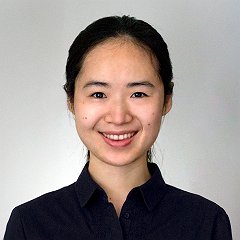
Angela-Maria Chira is a postdoctoral researcher at the Max Planck Institute for Evolutionary Anthropology, specializing in the Department of Linguistic and Cultural Evolution . She is a core member of the Comparative Oceanic Linguistics (CoOL) team , focusing on cross-cultural and linguistic evolution across Oceania. Her interdisciplinary work bridges macroevolutionary biology and cultural evolution , using computational methods to model large-scale patterns. Education: PhD in Evolutionary Biology, University of Sheffield (2018) MBiolSci in Zoology, University of Sheffield (2014) Her research leverages graph algorithms to quantify travel costs in prehistoric societies and applies evolutionary principles to understand cultural and linguistic diversification. She has developed models to test Jared Diamond’s geographic hypotheses and investigate the role of alcohol in societal complexity. Angela-Maria’s publications span journals like Science Advances , Scientific Reports , and Nature , reflecting her expertise in both biological and cultural evolution. Her work on avian trait competition and linguistic disparity highlights her methodological diversity in phylogenetic analysis and ecological modeling . She collaborates with interdisciplinary teams and has presented at conferences including the Cultural Evolution Society and International Conference on Historical Linguistics . Her hobbies include birdwatching and attending cultural events, aligning with her academic interests in nature and human practices.
Serdar Bozdag is an Associate Professor in the Department of Computer Science and Engineering at the University of North Texas, with a joint appointment in Mathematics. He serves as Director of the Center for Computational Life Sciences, focusing on interdisciplinary research at the intersection of computational methods and biological systems. His research expertise spans machine learning applications in bioinformatics, multi-omics data integration, and network biology. Key areas include developing algorithms for disease biomarker discovery, integrating genomic, transcriptomic, and clinical data through graph neural networks, and creating computational tools for precision medicine. Notable contributions include frameworks like CanMod2 for co-regulatory module inference and CTDPathSim for pathway-based similarity analysis. Bozdag’s work bridges computer science and life sciences, addressing challenges in Alzheimer’s disease diagnosis, cancer systems biology, and plant-microbe interactions. He has pioneered methods for analyzing dynamic biological networks and temporal data patterns, with applications in drug response modeling and electronic health record analysis. His lab develops open-source software tools widely used in computational biology research. Current projects emphasize AI-driven approaches for multi-modal healthcare data fusion, predictive modeling of disease progression, and scalable solutions for big biological data. His research has implications for improving diagnostic accuracy, personalized treatment strategies, and understanding complex biological systems.
Dr. Valentin Danchev is an Assistant Professor in Business Analytics at Queen Mary University of London's School of Business and Management. He holds a DPhil in Development Studies from the University of Oxford and has held postdoctoral positions at Stanford University School of Medicine and the University of Chicago. His research focuses on computational social science, network analysis, reproducible research practices, and data governance in AI/health domains. He is affiliated with the Centre for Globalisation Research (CGR). Education: DPhil in Development Studies (University of Oxford), postdoctoral training at Stanford University School of Medicine and the University of Chicago. Research Interests: Reproducible data science workflows, transparency in AI/health research, migration network analysis, and meta-research on scientific ecosystems. Publications span topics like data governance frameworks, clinical trial transparency, and migration patterns. He authored the open textbook Reproducible Data Science with Python (2022) and is a Fellow of the Software Sustainability Institute. Teaching includes courses on machine learning, network analysis, and responsible data practices. He advises PhD students on topics like causal inference, digital health interventions, and science policy.
Craig A. Glastonbury is a Researcher and Research Group Leader at Human Technopole (since 2022), leading the Glastonbury Group. He holds a PhD in computational biology from King’s College London (2013-2017) and previously served as a machine learning researcher at BenevolentAI (2019-2022) and Postdoctoral Fellow at the University of Oxford (2017-2019). His work focuses on integrating machine learning with genetic and imaging data to uncover disease mechanisms, particularly in histopathology and cardiovascular phenotypes. He currently advises BenevolentAI and serves as a guest associate editor for AHA Circulation. Research interests include computational biology, histopathology imaging, GWAS, and single-cell RNA-seq. The Glastonbury Group develops methods to extract phenotypic traits from imaging modalities like whole slide imaging (WSI) and links these to genetic data to study disease pathways. Current projects involve analyzing large-scale biobank data to identify genetic contributions to complex diseases such as inflammatory bowel disease and oncology. Group members include PhD students Francesco Cisternino, Giuditta Clerici, Emma Esther Didelon, and Emanuel Soda, along with postdoctoral researchers and bioinformaticians. The team actively recruits for positions in machine learning, phenotyping, and genetic discovery. Craig’s work emphasizes scalable pipelines for GWAS and unsupervised phenotype discovery, with applications in cardiovascular and metabolic research. Contact: craig.glastonbury@fht.org
Michael Mozer is a Research Professor at the University of Colorado Boulder, affiliated with the Institute of Cognitive Science and the Department of Computer Science. His research bridges human cognition and machine learning, focusing on improving human learning through AI tools and designing cognitively informed AI architectures. He leads the Mozer Lab and collaborates with Google Brain. Key projects include the 'Adaptive House' (self-learning home systems), smart digital textbooks for optimized learning, and the Colorado Optimized Language Tutor. Mozer's research interests span cognitively informed AI, human optimization, cognitive modeling, and intelligent environments. He has contributed to neural networks, reinforcement learning, and the integration of human psychological insights into ML systems. His work on adversarial image manipulations and object-centric learning highlights his exploration of human-machine perception synergies. Teaching focuses on machine learning, neural networks, and computational modeling. He has developed courses like 'Neural Networks and Deep Learning' and mentored numerous students in interdisciplinary projects. Mozer’s affiliations include the Institute for Cognitive Science, the Neuroscience Program, and the Temporal Dynamics of Learning Center.
Murali Emani is a researcher affiliated with Argonne National Laboratory, IL, USA. His work focuses on High-Performance Computing (HPC), machine learning, and artificial intelligence acceleration. Emani holds a PhD in Computer Science from the University of Edinburgh (2015). He specializes in optimizing large-scale systems, including performance evaluation of AI accelerators, transformer models, and neural architecture search. His research bridges HPC infrastructure with AI applications, addressing challenges in resource allocation, inference efficiency, and cross-architecture benchmarking. Key contributions include frameworks for GPU memory optimization (XUnified) and holistic performance evaluation of large language models across diverse hardware (e.g., BaKlaVa, Centimani). He collaborates extensively with institutions like the University of Chicago, NVIDIA, and MLCommons on initiatives such as DeepSpeed4Science and GenSLMs for genome-scale language models. His work frequently appears in top venues like IPDPS, SC, and Euro-Par. Emani’s research emphasizes practical system-level innovations, with applications spanning bioinformatics (SARS-CoV-2 evolutionary analysis), protein design, and exascale computing. He advocates for FAIR principles in HPC data management and contributes to open benchmarks like MLPerf HPC.
Professor Ira Assent is affiliated with the Department of Computer Science at Aarhus University. Their research focuses on machine learning, data mining, and visualization, with applications in climate science, medical informatics, and computer vision. Professor Assent leads projects such as Light-IoT (analytics on compressed IoT data), WallViz (interactive visualization for massive datasets), and eData (anomaly detection in e-science). Their work emphasizes scalable algorithms, explainable AI, and interdisciplinary applications. Recent publications address rainfall prediction using deep learning, entity summarization via knowledge graphs, and efficient clustering techniques. Projects like RainAI demonstrate contributions to weather modeling and satellite data analysis. Collaborative efforts span academic and industrial domains, with a strong emphasis on practical, user-centric solutions. Selected research contributions include advancements in density-based clustering (e.g., AnyDBC, DISCO), parallel algorithms optimized for GPUs (HUNIPU), and visualization frameworks (AVID). Their work bridges theoretical computer science with real-world challenges, such as improving decision-making through interactive visualizations and enhancing medical information retrieval systems. Ongoing projects aim to address computational efficiency in large-scale data analytics while maintaining interpretability. Key areas of innovation include explainable AI (e.g., InteDisUX), climate modeling (DROPP), and hardware-accelerated algorithms (GPU-FAST-PROCLUS). These efforts reflect a commitment to advancing both foundational methods and applied technologies that impact diverse fields from environmental science to healthcare.
Brent Hecht is an Associate Professor of Computer Science and Communication Studies at Northwestern University and Director of Applied Science at Microsoft. His research focuses on human-centered AI, spatial computing, and algorithmic fairness. He holds a PhD in Computer Science from Northwestern and has dual BS degrees in Computer Science and Geography. His work bridges HCI, social computing, and geography, addressing algorithmic bias and ethical AI. He has led studies on remote work impacts, data labor, and AI ethics, publishing at top venues like CHI, CSCW, and SIGKDD. His lab, People, Space, and Algorithms Research Group, explores sustainable AI ecosystems. He received the NSF CAREER Award and multiple best paper awards. He advises students in computer science and technology/social behavior programs. Hecht collaborates with Microsoft Research, Xerox PARC, and Google Research. His work has been featured in major media outlets. His current roles include co-leading Microsoft's future-of-work initiatives and promoting equitable data practices in AI.
Dr Brian Ballsun-Stanton is a Solutions Architect (Digital Humanities) at Macquarie University's Faculty of Arts. He specializes in AI integration in higher education, leading initiatives such as the university's 'Guidance Note: Using Generative AI in Research' and winning the 2024 Faculty of Arts Educational Leadership Award. His work spans AI policy, pedagogy, and interdisciplinary applications across languages, security studies, and law. With over 15 years' experience as a data scientist, he has pioneered open-source tools like FAIMS Mobile for field research and led AUD$3.5M+ in grants focused on big data analysis of violent extremism and archaeological projects. Education: PhD in Philosophy of Data (not explicitly stated, inferred from biography). Research Interests: Generative AI ethics, digital humanities, social network analysis, and the intersection of technology with humanities scholarship. He focuses on AI-enhanced learning, critical evaluation of large language models, and FAIR data principles in epigraphy and archaeology. Articles Trends: Recent work emphasizes AI policy frameworks, generative AI applications in education, and computational methods in archaeology. Earlier publications explore far-right online ecosystems and social media analysis. Awards: 2018 DataApp Prize (environmental data transparency), 2024 Educational Leadership Award. Grants/Projects: Led projects on violent extremism (AUD$3.5M+), FAIMS Mobile development, and Roman Dalmatia military communities. Technical Director of FAIMS Project since 2013. Labs/Teams: Technical lead for the FAIMS Project, collaborating internationally on archaeological digital tools and open-source field data systems.
Yuan Yuan is an Assistant Professor of Business Analytics at the University of California, Davis Graduate School of Management. He is currently on leave at OPENAI as a researcher in AI safety. Previously, he served as an assistant professor at Purdue University in the Management Information Systems area. Yuan holds a Ph.D. from the Institute for Data, Systems, and Society (IDSS) at the Massachusetts Institute of Technology and earned dual Bachelor's degrees with honors in Computer Science and Economics from Tsinghua University. Ph.D., Social & Engineering Systems, MIT Bachelor, Computer Science & Economics, Tsinghua University As a computational social scientist, Yuan Yuan specializes in social and organizational networks, leveraging big data and advanced computational methodologies including machine learning and causal inference to study network formation, dynamics, social contagion, and prosocial behavior. His research extends to experimentation, where he develops computational techniques to address challenges in online field experiments (A/B testing), particularly concerning network interference, budget constraints, and long-term experiments. More recently, he has been exploring the capabilities of Large Language Models in advancing social science studies. His interdisciplinary research spans engineering, social science, and business domains, with applications in organizational behavior, public health, and technology management. Yuan's research portfolio demonstrates a consistent focus on computational approaches to understanding network phenomena. His most recent publications show a growing interest in applying AI and machine learning techniques to traditional social science questions, particularly examining how Large Language Models can be used to study social behavior and network formation. His work bridges theoretical network science with practical applications in organizational settings, with strong industry connections to technology companies. His publications span top-tier venues including PNAS, Nature Communications, Management Science, and leading computer science conferences like WWW and EC. Yuan actively collaborates with industry partners, working closely with companies like Microsoft and Meta to explore topics in networks and A/B testing. His research often emerges from these industry collaborations, ensuring practical relevance alongside academic rigor. He has served as a visiting researcher at Microsoft Office of Applied Research (part-time since summer 2022) and was previously a research intern at Facebook Core Data Science (now Meta Central Applied Science) in summer 2020. Yuan contributes to the academic community through service as a Technical Program Committee member for the MIT Conference on Digital Experimentation (2019-2021), reviewer for prestigious journals and conferences including Management Science, MIS Quarterly, and WWW, and organizer of academic workshops such as SICSS Beijing 2021 and the WINE Experimentation Workshop 2021. He has been invited to present his work at leading institutions worldwide including MIT, Stanford, Harvard, Oxford, and Tsinghua University.
Zhiqiang Zheng is a Professor of Management at the Naveen Jindal School of Management, University of Texas at Dallas. He holds a Ph.D. in Operations and Information Management from the University of Pennsylvania (2003), an M.A. from the same university (2001), an M.S. in Industrial Management Engineering from Shanghai Jiaotong University (1996), and a B.S. in Management Information Systems from Harbin Institute of Technology (1993). His research focuses on business analytics, including data mining, healthcare analytics, social media analysis, and financial analytics. He also explores IT innovation diffusion and quantitative methods across operations, marketing, and finance. Key research interests include DEA-based outlier detection, hospital capacity optimization, social network analysis, and high-frequency trading. His work spans theoretical and applied domains, such as blockchain-enabled data sharing in supply chains and the impact of telehealth on healthcare utilization. He has held editorial roles for journals like the International Journal of Electronic Commerce and MIS Quarterly, and his teaching experience includes courses on data mining, business intelligence, and systems analysis. Recent publications highlight trends in blockchain applications (e.g., token incentives for developers), NFT market dynamics (resale royalties, speculation), and AI-driven disaster relief. His research also addresses digital capability divides and market efficiency in emerging technologies. Zheng has advised on projects like movie blog data for box office prediction and inferring competitive measures from aggregated data.
Bin ZHU is an Assistant Professor of Computer Science at Singapore Management University's School of Computing and Information Systems. Previously worked as a Postdoctoral Researcher at University of Bristol under EPSRC Visual AI Program Grant with Prof. Dima Damen. PhD in Computer Science (2021) - City University of Hong Kong MSc and BSc from Zhejiang University and Southeast University Research focuses on Human Centered Multimedia Computing with key areas: Cross-modal retrieval and Multi-modal Large Language Models Egocentric Video Understanding and Generative AI AI for Healthcare and Wellness Informatics Digital Transformation through Multimedia Systems Active in publishing at top venues (ICCV, CVPR, AAAI, ACM MM) with specialization in Visual Instruction Fine-Tuning and Adapter Modules. Recent work includes HD-EPIC dataset development and Dual-LoRA framework for efficient multimodal adaptation. Contact: binzhu@smu.edu.sg | bin.zhu@smu.edu.sg
Lizhong Chen is a Professor in the School of Electrical Engineering and Computer Science at Oregon State University and a core AI faculty member in the Collaborative Robotics and Intelligent Systems (CoRIS) Institute. He leads the STAR Lab which focuses on computing systems and AI applications with emphasis on computing efficiency across various computing platforms from embedded devices to supercomputers. Ph.D., Computer Engineering, University of Southern California, 2014 M.S., Electrical Engineering, University of Southern California, 2011 B.S., Electrical Engineering, Zhejiang University, 2009 Chen's research focuses on efficient computer systems (GPUs, accelerators, HPCs, IoT devices) and their applications in machine learning and natural language processing, especially large language models. His work spans machine learning accelerators, GPU architecture, AI-assisted design for computer architecture, and energy-efficient computing systems. He has made significant contributions to NoC (Network-on-Chip) power-gating research and developed the Agate simulator for simulating NoC power-gating. His recent publications (2023-2025) show a strong focus on large language models, particularly for simultaneous translation tasks, Kolmogorov-Arnold networks, and efficient model architectures. His work bridges computer architecture design with AI applications, creating synergies between hardware efficiency and machine learning performance. Scientific Awards: NSF CRII Award (2016) NSF CAREER Award (2018) Best Paper Nomination at IEEE NAS (2018) Best Paper Runner-up Award at HPCA (2020) Chu Kochen Award from Zhejiang University IEEE HPCA Hall of Fame (2020) Chen has served as an Associate Editor of IEEE Transactions on Computers and as program committee member for top computer system and machine learning conferences. He is the founder and organizer of the Annual International Workshop on AIDArc (AI-assisted Design for Architecture). His research is supported by multiple grants from NSF, NIH, Department of Energy, and the Northwest-AI-Hub supported by the CHIPS and Science Act. He teaches courses in computer architecture, high-performance computing, and specialized topics in AI accelerators and GPU architecture. As director of the STAR Lab, Chen leads research on computing efficiency across the spectrum from embedded and mobile devices to supercomputers and data centers. The lab's recent focuses include machine learning accelerators, GPU architecture, applications of AI in architecture designs, and improving the computing efficiency of machine learning and natural language processing models.
Rutger van Haasteren is a Group Leader in the Observational Relativity and Cosmology division at the Albert Einstein Institute (AEI) in Hannover, Germany. His research focuses on data analysis methods for pulsar timing arrays (PTAs) and gravitational-wave detection. He previously held positions at Caltech/Jet Propulsion Lab and the Albert Einstein Institute, and worked in industry at Microsoft as a Senior Data Scientist. His research interests lie at the intersection of astrophysics and advanced statistical methods. He specializes in Bayesian modeling , sampling methods , and Gaussian processes applied to PTA data. His work contributes to foundational methodologies used in major collaborations such as NANOGrav. He also has significant experience in machine learning , including large language models, classification, and reinforcement learning from his time in industry. The available publications reflect a strong trend in developing inference methods for gravitational-wave astronomy, particularly using pulsar timing data. The focus is on robust statistical frameworks and computational techniques for detecting low-frequency gravitational waves. NSF Einstein Fellowship Rutger van Haasteren has been involved in mentoring and collaborative research, particularly within the NANOGrav collaboration during his fellowship. While no formal students are listed, his role as a Group Leader at AEI suggests active supervision and team leadership. He has not received public grant mentions in the text, but his Einstein Fellowship indicates competitive external funding. He leads a research group at the Albert Einstein Institute focused on advancing data analysis techniques for pulsar timing arrays, working closely with Bruce Allen. The team aims to improve sensitivity and reliability in gravitational-wave detection using innovative statistical and computational approaches.
Jiasi Shen is an Assistant Professor in the Department of Computer Science and Engineering at The Hong Kong University of Science and Technology. She leads the HKUST Automated Reasoning and Transformation of Software research group. PhD and Master's from Massachusetts Institute of Technology Bachelor's from Peking University Her research focuses on automating software development through program analysis , program transformation , and active learning . She explores how to systematically introduce safety checks, optimize performance, and enable cross-platform adaptation while maintaining core functionality. Recent work includes: Dynamic graph-based fingerprinting for cryptomining detection Benchmarking LLMs for operating system verification tasks Improving program comprehension via deimplicitization techniques She has received the Distinguished Artifact Award at SLE 2017 and serves on program committees for OOPSLA, Onward!, and SPLASH conferences. Her group supervises multiple PhD and MPhil students while developing systems like Konure (database application modeling) and KumQuat (parallel Unix command synthesis).