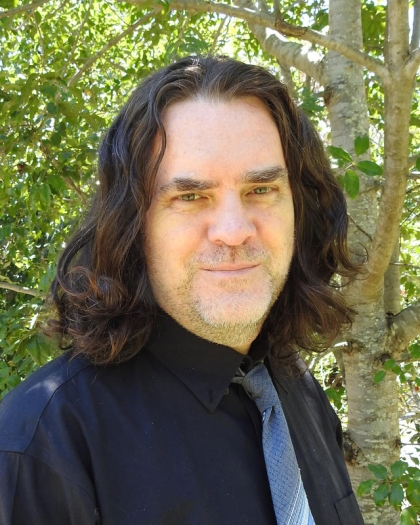
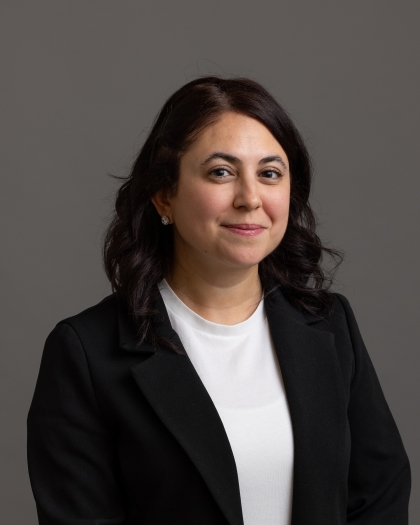
Lilja Øvrelid is a Professor at the Department of Informatics, University of Oslo, leading the Language Technology Research Group. Her research focuses on syntactic and semantic text processing using machine learning techniques such as dependency parsing, negation analysis, and sentiment analysis. She teaches courses including IN1140: Introduction to Language Technology , IN5550: Neural Methods in NLP , and INF5830: Natural Language Processing . Her academic interests span natural language processing, machine learning, and computational linguistics, with a particular emphasis on Norwegian language technology. Recent publications highlight work in sentiment analysis (including patient feedback), event extraction from Norwegian news, benchmarking language models, emotion analysis for under-resourced languages (Pashto, Farsi-Dari), and bias detection in multilingual models. She actively contributes to the development of Norwegian language resources such as NorBench, NorQuAD, and NoReC. Current projects include BigMed and SIRIUS , focusing on biomedical text mining and AI infrastructure. Collaborations with colleagues like Erik Velldal, David Samuel, and Vladislav Mikhailov are frequent in her work. Despite no explicit mention of scientific awards, her contributions to NLP and computational linguistics are substantial through publications, datasets, and tool development.
Jason Nelson is a Professor of Digital Culture in the Department of Linguistic, Literary and Aesthetic Studies at the University of Bergen, Norway. He is a creator of digital poems and fictions, builder of surrealist and politically focused art games and digital creatures. His work is exhibited widely in galleries and journals around the globe at FILE, ACM, LEA, ISEA, SIGGRAPH, ELO and numerous other venues. Nelson serves on organizational boards including the Australia Council Literature Board and the Electronic Literature Organization. Nelson's research focuses on the intersection of digital technology, creative writing, and artistic expression. He explores how AI and machine learning can be harnessed for creative purposes, developing new forms of digital literature and interactive art. His work often involves building expansive visual worlds through collaborative AI processes, creating interactive digital poetry, and developing novel approaches to digital narrative. Nelson's research spans digital humanities, electronic literature, AI-generated art, and interactive media, with particular emphasis on how these technologies transform creative processes and experiences. Over the past decade, Nelson's work has increasingly focused on the creative potential of AI technologies, especially in the areas of text-to-image generation and multimodal authorship. His projects often blend game engines with poetic expression, creating immersive experiences that challenge traditional boundaries between human and machine creativity. Recent works explore themes of multispecies futures, time perception, and the transformation of physical spaces through augmented reality. Nelson has received numerous scientific awards and fellowships including: Fulbright Fellowship at the University of Bergen Moore Fellowship at the National University of Ireland Winner of the Digital Writing Prize, Queensland Literary Awards (15,000 AUD) Winner of the Woollahra Library Digital Poetry Prize (5,000 AUD) Runner-Up Prize at the Videomedeja digital art exhibition Finalist for the Turn-on Literature Prize Finalist for the Queensland Literary Awards, Digital Writing Category Multiple finalist nominations for the New Media Writing Prize Nelson actively participates in academic advising and has secured significant research funding, including a 125,000 AUD grant from the Australia Council of the Arts, Literature Board for his project "Cube Cryptext and Nomencluster," which was recognized as the world's largest interactive art-game. His work "Nine Billion Branches" received multiple awards including the Digital Writing Prize from the Queensland Literary Awards. He has also received a 75,000 NOK grant for the "Flood Mosaic Artwork" project featured in the Floodlines Exhibition at the State Library of Queensland. Nelson is affiliated with the Center for Digital Narrative at the University of Bergen, where he collaborates with researchers like Scott Robert Rettberg and Alinta Krauth. Together they form EphemerLab, exploring new creative processes that move beyond simple "ask and generate" AI methods. Their work involves stitching together hundreds of individual image fragments and components into cohesive visual and narrative concepts, pushing the boundaries of what's possible with current AI technologies.
Rune Johan Krumsvik is a Professor of Education at the University of Bergen (UiB) and Professor II at Volda University College. He founded the Digital Learning Communities (DLC) research group (2007) and the Western Norway Graduate School of Educational Research II (WNGER II). His affiliations include editorial roles at the Nordic Journal of Digital Literacy (Editor-in-Chief) and Frontiers in Pediatrics (Associate Editor). Professor, Department of Education, UiB (2010–) Professor II, Volda University College (2003–) Honorary Research Fellow, University of Bristol His research spans artificial intelligence , doctoral education , ICT in schools , formative assessment , and classroom management in technology-dense environments. He explores connections between AI, social media, mental health, and digital competence, with recent work focusing on large language models (LLMs) in education and healthcare. Scientific publications show a focus on AI applications ( 76 peer-reviewed articles , h-index 31). Key trends include: EdTech implementation in Norwegian primary/secondary schools AI in formative/summative assessment Digital competence frameworks Classroom technology management Teacher education digital skills Mental health impacts of screen time Scientific awards: Teaching Award , UiB Faculty of Psychology (2012) Excellent Teaching Practitioner accreditation (2020) Supervision includes: Main supervisor for 12 PhD candidates (11 completed) Co-supervisor for 6 PhD candidates Supervisor for 14 master’s and 12 bachelor’s students He leads the Digital Learning Communities Artificial Intelligence Centre (DLCAIC), focusing on AI research in education/healthcare, societal impacts of AI, and digital competence development.
Vladimir Oleshchuk is a Professor at the Department of Information and Communication Technology, University of Agder. His research focuses on Blockchain technology Attribute-based access control E-health security Trust management in networks Privacy-preserving protocols Wireless sensor network security His recent publications emphasize integrating blockchain with large language models (LLMs) for Web3 security, lightweight access control for IoT, and decentralized authentication frameworks. Key contributions include Delegatable attribute-based encryption schemes Privacy-preserving mechanisms for collaborative environments Trust-aware RBAC models He collaborates with researchers like Harsha Gardiyawasam Pussewalage and Ole-Christoffer Granmo, working within the Centre for Integrated Emergency Management (CIEM) research group. Current projects address security challenges in mobile and distributed systems, including unattended wireless sensor networks and 5G infrastructure.
Andreas L Opdahl is a Professor at the Department of Information Science and Media Studies at the University of Bergen. He leads the Intelligent Information Systems (I2S) research group, focusing on AI-driven solutions for news media and public sectors, including knowledge graphs, ontologies, and large language models. His work emphasizes ethical AI integration in journalism and data quality frameworks for automated fact-checking. Research interests span AI applications in media, cybersecurity, enterprise modeling, and semantic technologies. Notable contributions include developing methodologies for hacker attack representation (HARM), integrating safety and security requirements (CHASSIS), and advancing knowledge graph platforms for newsrooms. His publications address challenges in information systems development, including interoperability, ontology evaluation, and multi-perspective problem analysis. Opdahl has contributed to foundational work on misuse cases for security threat modeling and semantic quality criteria in requirements engineering. His recent research explores emerging technologies like LLMs for news classification and the ethical dimensions of AI in journalism. He has been involved in projects such as the News Angler platform and semantic annotation frameworks using real-time data. His academic career includes roles as an author in leading conferences (e.g., IEEE, ACM) and journals, with a focus on conceptual modeling, enterprise systems, and requirements engineering. Collaborations span institutions like NTNU, the University of Amsterdam, and international research networks.
Rafael Perez Y Perez is a Professor at the Department of Linguistic, Literary and Aesthetic Studies, University of Bergen, and Universidad Autónoma Metropolitana. His work bridges computational modeling with narrative theory, focusing on systems like MEXICA and Curveship to explore creative writing processes and humanistic understanding. His research investigates the intersection of artificial intelligence and literary studies, examining how computational models can simulate emotional relationships in characters, collaboration between writers, and stylistic elements like referring expressions. He has contributed to debates distinguishing computational narrative models from large language models (LLMs). This article, published in 2023 in Revista de Comunicação e Linguagens , was funded by the Research Council of Norway (project 332643). It highlights insights into narrative dynamics, including conflict generation, surprise in storytelling, and their implications for literary analysis. Rafael is affiliated with the Center for Digital Narrative at the University of Bergen, which supports interdisciplinary research in computational storytelling.
Ryan Anthony Marinelli is a Doctoral Research Fellow at the Department of Informatics, Faculty of Mathematics and Natural Sciences, University of Oslo, specializing in digital security with a focus on AI-cybersecurity intersections. His work addresses critical vulnerabilities in emerging technologies while contributing to institutional research objectives in secure computing. Marinelli's research spans AI Security , Adversarial Machine Learning , and Responsible AI Development , examining prompt injection attacks, knowledge leakage in large language models, and cryptographic deployment challenges. His methodology integrates causal tracing , reinforcement learning , and chain-of-thought analysis to develop detection frameworks and optimization strategies for real-world security applications. Analysis of his 2023-2025 publications reveals concentrated expertise in LLM security assessment, with recurring themes of societal risk mitigation and ethical AI development. His work demonstrates technical depth in homomorphic encryption optimization and password leakage evaluation, while maintaining strong connections to practical cybersecurity implementations through IEEE conference contributions and arXiv preprints. As part of UiO's Department of Informatics research ecosystem, Marinelli collaborates across multidisciplinary teams including cybersecurity specialists and AI researchers. His affiliation with the Faculty of Mathematics and Natural Sciences positions him within Norway's leading hub for digital security innovation, though specific laboratory structures aren't detailed in the source material.
Hassan Sartaj serves as a Postdoctoral Fellow within the Department of Engineering Complex Software Systems at Simula Research Laboratory. His research bridges advanced software engineering methodologies with critical healthcare applications, focusing on medical device safety and reliability through innovative digital twin frameworks. His research profile centers on AI-driven software engineering for healthcare systems , with core expertise in digital twin creation , uncertainty-aware simulation , and LLM-enhanced testing . Key contributions include developing meta-learning approaches for medical device digital twins (MeDeT) and quantum extreme learning machines for practical software testing. His work consistently addresses real-world challenges in healthcare IoT, particularly in medicine dispensers and cancer registry systems, emphasizing safety-critical validation. Analysis of his 15 most recent publications reveals a dominant trend toward integrating foundation models with cyber-physical systems engineering . Over 70% of his 2024-2025 output explores LLMs for uncertainty identification in self-adaptive robotics, differential testing of medical rule engines, and environment simulation for digital twins. This reflects a strategic pivot toward leveraging generative AI for validating safety-critical healthcare software, with strong emphasis on practical DevOps implementation in evolving healthcare applications.
Samia Touileb is an Associate Professor in Natural Language Processing (NLP) at the University of Bergen's Department of Information Science and Media Studies. She co-leads the NLP work package at MediaFutures, a research center focused on responsible media technology. Her research emphasizes bias, fairness, and ethical implications of AI, particularly in language models and under-resourced languages. Education: PhD in NLP from the University of Bergen (2017), postdoctoral research at the University of Oslo's Language Technology Group, and prior roles in MediaFutures. Research Interests: - Bias and fairness in NLP models - Information extraction and summarization - Applications of NLP in social sciences - Scandinavian and under-resourced languages Notable Projects: - Co-developer of the NorBench benchmark for Norwegian language models - Creator of the EDEN dataset for event detection in Norwegian news - Lead in MediaFutures' NLP initiatives Publications focus on event extraction, bias measurement, and ethical AI, with contributions to conferences like NoDaLiDa and ACL.
Basel Katt is a Professor and Head of the Department of Information Security and Communication Technology at the Faculty of Information Technology and Electrical Engineering, Norwegian University of Science and Technology (NTNU), Gjøvik campus. His leadership spans cybersecurity research and education with emphasis on practical security frameworks and training infrastructure. His research portfolio includes: Security Assurance methodologies Software Security validation Cyber Range development Model-Driven Security approaches Access/Usage Control systems Privacy Protection mechanisms Security Education innovations Analysis of his 2023-2025 publications reveals accelerating integration of AI in security assurance, with growing focus on quantitative evaluation models, IoT security challenges, and cyber range automation. His work increasingly leverages kill chain models for incident response and explores LLM applications for security exercise generation. No scientific awards were documented in the source materials. Student advising relationships and grant funding details were not specified in the provided information. Katt's cyber range research demonstrates through publications like 'Hybrid IoT Cyber Range' and 'Use of cyber attack and defense agents in cyber ranges', establishing him as a contributor to advanced cybersecurity training infrastructure development.
Stephan Oepen is a Professor at the Department of Informatics, University of Oslo, specializing in Computational Linguistics and Natural Language Processing (NLP). He leads the Research Group for Language Technology and serves as Academic Chair in Artificial Intelligence for the Circle U European University Alliance. His research bridges formal linguistics with large-scale computation, focusing on semantic parsing, dependency structures, and multilingual language models. 2002–present: Researcher → Professor at UiO 2011–2017: Head of Language Technology Research Group 2019–20: Section Head for Machine Learning 2021–24: Department Head for Informatics Current projects include HPLT (High-Performance Language Technologies), Nordic Language Processing Laboratory (NLPL), and OpenEuroLLM . He co-directs the 2017 ACL Shared Task on Extrinsic Parser Evaluation and contributes to international NLP conferences like ACL, EMNLP, and CoNLL. Recent publications focus on: Uniform semantic graph representations Hybrid parsing architectures Continual training for small languages Diagnostic parser evaluation Copyright implications in LLMs Community language resource infrastructure He actively participates in editorial boards and technical coordination roles, including the LUMI Scientific Advisory Group and Horizon Europe's High-Performance Language Technologies project.
Patrick Bours is a Professor at the Department for Information Security and Communication Technology within the Faculty of Information Technology and Electrical Engineering at the Norwegian University of Science and Technology (NTNU) . He holds a PhD in Discrete Mathematics from Eindhoven University of Technology (1994) and previously worked at the Netherlands National Communication Security Agency (NLNCSA) for 10 years. Bours specializes in authentication and behavioral biometrics , with a focus on keystroke dynamics , gait recognition , and continuous authentication . His recent research includes: Early online grooming detection via chat analysis and social interaction modeling Contract cheating detection in academic settings LLM usage in cybersecurity research Holds a permanent email address at NTNU: patrick.bours@ntnu.no . No scientific awards mentioned in the text.
Arnaud Gotlieb serves as a Research Professor and Chief Research Scientist at Simula Research Laboratory in Norway, where he heads the Department Validation Intelligence for Autonomous Software Systems. His academic career spans over two decades with significant contributions to software testing and artificial intelligence integration. Gotlieb's research focuses on Validation Intelligence of Autonomous Software Systems , Software Testing , Software Validation and Verification , and the application of Constraint Programming and Machine Learning to safety-critical systems. His innovative work bridges theoretical computer science with practical industrial applications, particularly in industrial robotics and autonomous systems. His publication record shows a consistent trajectory of high-impact research with approximately 15 recent publications (2024-2025) focused on metamorphic testing, constraint acquisition, explainable AI for autonomous driving, and verification of AI systems. The research demonstrates a clear evolution from foundational constraint programming work toward contemporary challenges in trustworthy AI and autonomous systems validation. Gotlieb has developed several influential tools including ITE (Stratified Disjunctive Reasoning), TITAN / FLOWER (Test suite optimization), EUCLIDE (constraint-based platform for critical C programs), and FPSE (Floating Point Symbolic Execution), which have advanced the field of automated software testing.
Dario Garigliotti is a Research Fellow at the Department of Informatics, University of Bergen. His work focuses on information retrieval, natural language processing, and AI applications for structured/unstructured data integration. He has contributed to systems like EquinorQA for enterprise question answering and Nordlys for entity-oriented search. His research emphasizes explainability in AI, particularly with large language models (LLMs), and addresses challenges in entity retrieval, task-based search, and climate-related document analysis. His recent work explores RAG systems for SDG evidence identification and administrative text generation. He has collaborated with institutions like the University of Stavanger and Polytechnic University of Valencia, and his funding includes a Research Council of Norway grant (2022-2026).
Nicholas Montfort is a Professor at the Department of Linguistic, Literary and Aesthetic Studies at the University of Bergen. His work bridges computational methods with literary and aesthetic practices, focusing on digital narrative systems and electronic literature. Affiliation: University of Bergen Key Research Areas: Computational Narrative, Text Generation, Digital Humanities Projects: Center for Digital Narrative (NFR grant #332643) Montfort's research explores computational models for understanding narrative (MEXICA and Curveship-js), digital text technologies, and the intersection of free software practices with literary scholarship. He investigates narrative theory, creative coding, and the materiality of digital works. Recent publications analyze computational language art, teaching with LLMs, and the 70-year history of computer-generated literature. His exhibitions like Hops Ahead and Mark of Help showcase interactive digital narratives and critical technology art. Montfort advocates for Free (Libre) Software through workshops and lectures, emphasizing digital sovereignty and ethical computing practices.