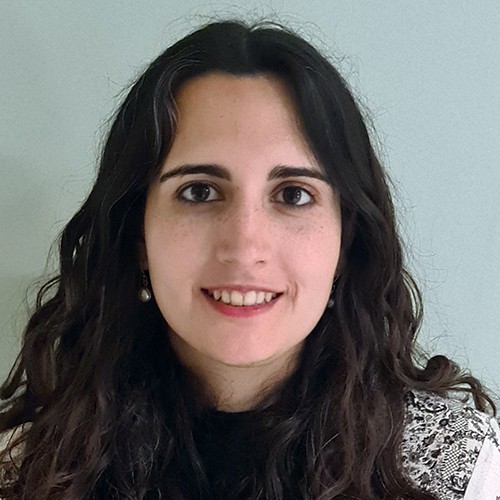
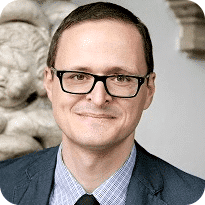
Amartya Sanyal is a Tenure Track Assistant Professor at the Department of Computer Science (DIKU), University of Copenhagen, specializing in Machine Learning. He also serves as an Adjunct Professor at the Indian Institute of Technology Kanpur (2023–2025). His research focuses on critical areas of AI safety, data privacy, and robust learning. University: University of Copenhagen Department: Department of Computer Science Academic Rank: Assistant Professor Adjunct Role: IIT Kanpur (2023–2025) His work addresses challenges like differential privacy , data poisoning attacks , machine unlearning , and robust mixture learning . Recent publications analyze privacy-preserving techniques for large language models, fairness in collective action algorithms, and certified data release mechanisms. Amartya has received the Villum Young Investigator Award (2025). His research outputs emphasize online learning , adversarial robustness , and privacy-utility tradeoffs through rigorous theoretical frameworks and practical implementations. Scientific Award: Villum Young Investigator Award His collaborations span institutions like IIT Kanpur and involve interdisciplinary projects with industry partners. Current activities include talks on privacy with correlated data and machine unlearning advancements.
Andrea Burattin is an Associate Professor at the Department of Applied Mathematics and Computer Science, Technical University of Denmark. His work bridges formal methods and practical process analysis, focusing on process mining, business process management, and hybrid modeling techniques. He actively contributes to research in healthcare process optimization, streaming data analysis, and system verification through Petri nets and CCS transformations. UN Sustainable Development Goals: Poverty eradication, environmental protection, and prosperity for all (via process optimization) Active projects: Immersive Process Mining (2024-2027), Usability and Understandability of Hybrid Process Models (2018-2021) His research explores large language model integration with process mining, proposing frameworks like Tiramisù for multi-faceted process visualization and PN2CCS for formal model translation. Recent work emphasizes real-time monitoring, conformance checking, and IoT-driven process analytics. Key trends in his publications include: 1) Streaming process mining pipelines (2022-2025); 2) LLM-plan generation frameworks (2024); 3) Formal verification techniques (Petri nets, CCS); 4) Healthcare process modeling (2019-2023); 5) Behavioral pattern analysis in process compliance. Scientific Awards Best Demo Award (2022, 2016) Best Process Mining Dissertation Award (2014) Best Workshop Paper (EDBA and PODS4H, 2023) As advisor, he supervises PhD projects on process mining and hybrid modeling. His editorial roles include Information Systems reviewer (2024-2025) and past editor for Engineering Applications of AI (2022-2023). Collaborations span Denmark, Italy, and the Netherlands.
Isabelle Augenstein is a Professor at the University of Copenhagen, Department of Computer Science (DIKU), where she heads the Copenhagen Natural Language Understanding (CopeNLU) research group and the Natural Language Processing section. She is also a co-lead of the Danish Pioneer Centre for Artificial Intelligence, Denmark's largest research center initiated by the Danish Ministry of Higher Education and Science. In October 2022, she became Denmark's youngest ever female full professor. Dr. Augenstein earned her undergraduate degree in Computational Linguistics and Psychology from Heidelberg University, followed by a Master's in Computational Linguistics. She completed her PhD in Computer Science at the University of Sheffield under the supervision of Dr. Diana Maynard and Prof. Fabio Ciravegna. In 2021, she earned a Habilitation at the University of Copenhagen in Explainable Fact-checking. Professor Augenstein's primary research focuses on fair and accountable Natural Language Processing, with particular emphasis on explainability, factuality, and bias detection. Her work spans multiple subfields including automated fact-checking, stance detection, gender bias analysis, and cultural bias in language models. She has pioneered research in explainable fact-checking, developing methods that not only predict claim veracity but also provide meaningful explanations of the decision-making process. Her research group has produced numerous influential papers on measuring model fragility, quantifying gender biases, and developing robust fact-checking systems that account for distribution shifts. Her significant contributions have been recognized with several prestigious awards: ERC Starting Grant on 'Explainable and Robust Automatic Fact Checking' DFF Sapere Aude Research Leader fellowship on 'Learning to Explain Attitudes on Social Media' Karen Spärck Jones Award from the British Computing Society and Bloomberg Hartmann Diploma Prize from the Hartmann Foundation Member of the Royal Danish Academy of Sciences and Letters since 2024 Professor Augenstein has secured significant research funding including her ERC Starting Grant supporting five years of blue-sky research. She actively mentors PhD students and postdoctoral researchers through her 'ExplainYourself' project. She served as President of SIGDAT (which organizes the EMNLP conference series), having previously held leadership roles as Vice President and Vice President-Elect. She is a co-founder of Widening NLP (WiNLP), an initiative to increase diversity in the NLP community, and maintains the BIG Directory of underrepresented groups in NLP. She leads the Copenhagen Natural Language Understanding (CopeNLU) research group, which relocated to the historic Østervold Observatory in Copenhagen's Botanical Gardens in 2023. The group focuses on developing methods for explainable and robust natural language understanding, with applications in fact-checking, bias detection, and social media analysis. Professor Augenstein also co-leads the Speech and Language collaboratory at the Pioneer Centre for Artificial Intelligence, where her team investigates how language models can better serve diverse populations while maintaining accountability and transparency.
Tuukka Ruotsalo serves as Associate Professor in the Machine Learning Section at the Department of Computer Science, University of Copenhagen. His research bridges human cognition with computational systems through brain-computer interfaces and physiological computing. As Academy Research Fellow at University of Helsinki (2019-2024), he maintained dual institutional affiliations while leading cutting-edge work in neuro-linguistic modeling and affective relevance. His research focuses on brain-computer interfaces for information retrieval , where he pioneers methods to decode cognitive states from neural signals to improve search systems. Key areas include affective relevance modeling that integrates emotional states into search algorithms, and neuro-linguistic reconstruction that translates brain activity into language. His work on fairness-relevance tradeoffs in recommender systems established Pareto frontier evaluation frameworks now widely adopted in ethical AI research. Recent publications demonstrate how physiological signals like EEG and galvanic skin response can create more adaptive human-information interaction systems. Ruotsalo's scientific recognition includes the prestigious Academy Research Fellow position. His publications in IEEE Transactions on Human-Machine Systems , Journal of the Association for Information Science and Technology , and Communications Biology reveal growing interdisciplinary impact. His advising spans cognitive neuroscience and machine learning students, with notable collaborations across the SCIENCE AI Centre. Current projects include the TreeSense initiative for remote sensing of global tree resources and development of quantum-inspired neural architectures. His lab leverages the department's powerful compute cluster for large-scale physiological data analysis.
Maria Del Rio-Chanona is an Assistant Professor in the Department of Computer Science at University College London (UCL), where she conducts interdisciplinary research at the intersection of network science, machine learning, and economic modeling. She is also a member of the External Faculty at the Complexity Science Hub since January 2025, reflecting her ongoing engagement with complex systems research. Her academic background includes a PhD in Mathematics from the University of Oxford, where she was part of the Institute for New Economic Thinking at the Oxford Martin School, and undergraduate studies in Physics at UNAM, Mexico. Her research interests center on understanding socioeconomic transformations using computational methods. She specializes in applying Large Language Models (LLMs), Agent-Based Models (ABMs), and network analysis to study the impacts of generative AI, the net-zero transition, and global crises like the COVID-19 pandemic on labor markets, economic resilience, and public discourse. Her work often involves analyzing large-scale digital trace data, including online labor platforms and social media, to uncover behavioral and structural shifts. The recent publications reveal a consistent focus on labor market dynamics in the face of technological disruption. Her work examines how generative AI reshapes demand for freelance skills, reduces public knowledge sharing on platforms like Stack Overflow, and influences mental health discourse in relation to employment decisions. She also investigates broader economic modeling, including pandemic shock propagation and employment transitions during decarbonization. Among her scientific recognitions is the Emerging Scientific Award from the Complex Systems Society in 2023. She has collaborated with international policy organizations such as the International Monetary Fund (IMF) and the International Labour Organisation (ILO), underscoring the policy relevance of her research. Maria Del Rio-Chanona has held prestigious research positions, including as a James S. McDonnell Foundation (JSMF) Postdoctoral Fellow at the Complexity Science Hub and a Visiting Fellow at the Growth Lab, Harvard Kennedy School. These roles have enabled her to lead and contribute to high-impact interdisciplinary projects. While no current advisees are listed, she actively engages with PhD opportunities and interdisciplinary research networks. She is involved in multiple research initiatives, including the development of HuBERT, an NLP algorithm for extending the Seshat Global History database, and projects studying labor transitions in net-zero scenarios. Her work on the HiST-LLM benchmark for historical knowledge in LLMs highlights her innovative integration of AI with social science.
Ilias Chalkidis is an Assistant Professor specializing in Natural Language Processing at the Department of Computer Science, University of Copenhagen. He is actively affiliated with the Natural Language Processing research section, contributing to both theoretical and applied advancements in the field. His research spans multiple high-impact domains with particular emphasis on: Legal natural language processing and multilingual legal reasoning Large language model applications in political and social contexts Fairness-explainability trade-offs in AI systems Innovative representation learning techniques for textual data Analysis of his recent publications reveals a strong focus on bridging legal informatics with cutting-edge NLP methodologies. His work on multilingual legal corpora (including the 689GB MultiLegalPile dataset) and legal decision influence prediction demonstrates practical applications for judicial systems. Simultaneously, his investigations into LLMs as voting assistants and European political spectrum analysis showcase innovative intersections between computational social science and language technology. His technical contributions to contrastive learning and hyperbolic embeddings provide foundational advances for document representation. Chalkidis actively participates in the research community through workshop organization (Natural Legal Language Processing Workshop 2023-2024) and conference presentations. His research has been published in top-tier venues including ACL, EMNLP, and ECAI, with significant citations reflecting community impact. While specific advising relationships aren't documented in the provided materials, his collaborative work patterns suggest active mentorship within the NLP research ecosystem.
Katja Hose is a Professor in the Department of Computer Science at Aalborg University's Technical Faculty of IT and Design. Her research focuses on Data, Knowledge and Web Engineering with specializations in AI for the People and Artificial Intelligence and Machine Learning. She maintains an active research profile with numerous publications and projects. Department of Computer Science Technical Faculty of IT and Design Aalborg University Research areas: Query Processing, Semantic Web, Linked Data, Knowledge Graphs Professor Hose's research interests center on knowledge representation, semantic web technologies, and AI applications. Her work spans from theoretical database systems to practical applications in healthcare, environmental assessment, and microbial data analysis. She has made significant contributions to knowledge graphs, large language models, and semantic search technologies, with particular emphasis on addressing hallucinations in AI systems and improving table search in semantic data lakes. Her recent publications demonstrate a strong trend toward integrating knowledge graphs with large language models, developing evaluation frameworks for AI hallucinations, and applying data science to diverse domains including healthcare and environmental sustainability. Her research bridges theoretical computer science with practical applications that address real-world challenges. NLP4KGC Best Paper Award (2023) ESWC 2023 Best Demo Award (2023) 2020 AMiner AI 2000 Most Influential Scholars AIME 2020 Best Paper Nomination (2020) ESWC 2019 Best Demo Award Nomination (2019) Professor Hose leads multiple significant research projects including ARISTOTLE (AI for clinical risk assessment), DarkScience (microbial data analysis), and the Poul Due Jensen Professorate in Big Data and AI. She has supervised numerous PhD students and collaborates extensively across disciplines, particularly in healthcare applications of AI and environmental assessment technologies. Her research has attracted substantial funding from sources like Villum Fonden and Danish E-infrastructure Cooperation. She is actively involved in several interdisciplinary research teams, including collaborations with microbiologists on microbial dark matter projects and with environmental scientists on digital environmental assessment systems. Her work on the ARISTOTLE project demonstrates strong connections between AI research and clinical applications, while her DarkScience project bridges computer science with microbiology.
Hjalmar Alexander Bang Carlsen is an Associate Professor at the Copenhagen Center for Social Data Science (SODAS), Faculty of Social Sciences, University of Copenhagen. He specializes in mixed digital methods and is deeply engaged in research and teaching related to digital data analysis, particularly in the context of political and civic participation on social media. He is a key contributor to the Social Data Science master's degree program. University: University of Copenhagen School: Faculty of Social Sciences Department: Copenhagen Center for Social Data Science (SODAS) Position: Associate Professor in Mixed Digital Methods Email: hc@soc.ku.dk ORCID: https://orcid.org/0000-0002-2638-0932 His research centers on mixed methods strategies for digital data, with a substantive focus on civic and political engagement via social media. Key areas include informal volunteering during crises, gender inequality in online political participation, and the use of large language models (LLMs) for qualitative interviewing. He leads three major projects: SoMeVolunteer (on crisis volunteering), public participation on Facebook, and AInterviewer (an LLM-based interviewing tool). The recent publications reflect a strong trend in digital sociology, crisis response, and methodological innovation. His work combines large-scale social media data with surveys, interviews, and textual analysis, emphasizing ethical and epistemological considerations in computational social science. Topics span from refugee solidarity and pandemic volunteering to framing contests among climate NGOs and gender disparities in digital political engagement. While no formal scientific awards are listed in the provided text, Carlsen is actively funded by the Velux Foundation and UCPH Data+, and his work is widely disseminated through media and academic outlets. He collaborates closely with researchers like Jonas Toubøl and Snorre Ralund, and his projects often involve interdisciplinary teams. He has secured seed funding for innovative methodological development, indicating strong grant-writing capacity. He is involved in public engagement, with multiple media appearances discussing Danish civic response during the pandemic and refugee crises. His research outputs include journal articles, book chapters, and a co-authored textbook on mixed methods. He also participates in workshops and public lectures, contributing to both academic and public discourse on digital society. Carlsen is affiliated with SODAS and the Social Sciences Datalab, indicating active involvement in data-intensive research infrastructure. His work on AInterviewer suggests leadership in emerging AI-driven qualitative methods, positioning him at the forefront of digital social research innovation.
Ingemar Johansson Cox serves as a Professor within the Machine Learning section at the Department of Computer Science, University of Copenhagen. His research bridges theoretical machine learning foundations with practical applications across medical data analysis, information retrieval, remote sensing, and sustainability initiatives. His research portfolio emphasizes machine learning applications in high-impact domains, particularly medical data analysis (e.g., early detection of gynecological malignancy using online search activity) and sustainability (e.g., reducing AI's carbon footprint). The Machine Learning section actively contributes to the university's SCIENCE AI Centre, focusing on both algorithmic innovation and real-world problem-solving in biological modeling and environmental monitoring. Recent publication trends reveal expanding work in quantum computing applications for biomolecular modeling, sustainable AI frameworks, and cross-cultural NLP systems. His 2024-2025 output demonstrates strong interdisciplinary collaboration, especially in medical informatics and climate-related AI research. Professor Cox operates within the Department of Computer Science's robust research ecosystem, which includes dedicated compute clusters and specialized initiatives like TreeSense for global tree resource monitoring through remote sensing and deep learning. The department's infrastructure supports large-scale machine learning projects requiring significant computational resources.
Gaël Le Mens is Professor (Catedràtic) in the Department of Economics and Business at Universitat Pompeu Fabra, with affiliations at Barcelona School of Economics and UPF-BSM. An ICREA Acadèmia Awardee (2023-2027), he researches learning processes in individuals, organizations, and machines, examining how information sampling affects judgment and belief formation. Current research explores: Social media feedback dynamics and opinion polarization Conceptual categorization using LLMs (GPT-4, Llama 3) Reinforcement learning biases Wisdom-of-crowds phenomena His work combines computational modeling with experimental methods. Publications appear in top journals including Psychological Review (4 papers), PNAS (4 papers), and Management Science. Research themes show consistent focus on decision biases arising from sampling limitations, with recent expansion into AI-assisted text analysis and political scaling applications. Honors include: ERC Consolidator Grant for selective information sampling research Multiple publications in PNAS and Psychological Review ICREA Acadèmia recognition Mentored doctoral students include Elizaveta Konovalova, Nikolas Schöll, and Thomas Woiczyk. Leads the ERC-funded project 'Implications of Selective Information Sampling' examining belief polarization mechanisms. Affiliated with the Rebel Governance Network and Strategic Organization Design Unit, with visiting positions at INSEAD, London Business School, and Stanford GSB.
Anna Rogers is an Associate Professor of Data Science at the IT-University of Copenhagen , affiliated with the NLPnorth research group. Her work focuses on Natural Language Processing (NLP) , Artificial Intelligence , and Large Language Models (LLMs) , with a particular emphasis on ethical data use, peer review innovation, and transformer model analysis. She leads projects addressing AI transparency, medical QA hallucinations, and generative AI applications. Her research explores topics including: LLM behavior and evaluation Data governance in NLP Peer review systems optimization Transformer model robustness Medical AI applications Key Projects : PlagAIrism : Tracking LLM training data origins Pioneer Centre for AI : Pre-registered replication studies TinyGPT : Efficient NLP models AIInterviewer : Large-scale qualitative data collection Publications span ACL , EMNLP , and specialized NLP workshops, addressing topics from BERT analysis to AI content farms.
Markus Strohmaier is Professor and Chair of Data Science in the Economic and Social Sciences at the University of Mannheim, with affiliations as Scientific Coordinator at GESIS – Leibniz Institute for the Social Sciences and External Faculty Member at the Complexity Science Hub Vienna. His interdisciplinary work bridges computer science, economics, and the social sciences. University of Mannheim – Chair for Data Science in the Economic and Social Sciences GESIS – Scientific Coordinator for Digital Behavioral Data Complexity Science Hub Vienna – External Faculty Former Professor at RWTH Aachen University and University of Koblenz-Landau Previous Post-Doc and Visiting Roles at Stanford University, Xerox PARC, University of Toronto, and Graz University of Technology His research focuses on computational social science , algorithmic fairness , network science , and the modeling of human behavior using machine learning and large-scale data. He develops methods to analyze textual, relational, and emerging data types to understand socioeconomic systems and digital societies. The recent articles reflect a strong trend in studying inequality in algorithmic systems , governance in decentralized organizations (DAOs) , and psychological profiling of AI . His work spans high-impact journals like Nature and Scientific Reports , emphasizing fairness, transparency, and societal impact of data-driven technologies. Notable scientific contributions include: Editor-in-Chief of EPJ Data Science (2018–2022) Founding co-chair of the Computational Social Science section of the German Informatics Society He advises students and leads research projects on algorithmic fairness, digital governance, and behavioral modeling. His team engages in both fundamental methodological development and applied studies in real-world digital platforms. He has been involved in significant grants and collaborative initiatives around digital behavioral data and computational social science infrastructure. His lab and projects include the Algorithmic Fairness initiative and the interactive visualization tool Planets of Disparity , which explores how algorithms behave on different network structures. These efforts aim to enhance public understanding and technical scrutiny of algorithmic systems.
Tomer Sagi is an Associate Professor in the Department of Computer Science at Aalborg University (AAU), Denmark. He is affiliated with The Technical Faculty of IT and Design and leads projects in the AI for the People and BLUE – Marine & Maritime Research groups. His research focuses on data integration, ontology engineering, artificial intelligence applications in healthcare and environmental science, and knowledge graph development. PhD in Information Systems from Technion-Israel Institute of Technology (2015) Former Lecturer at University of Haifa (2017–2022) Principal Investigator/Co-PI in projects like ODINI (AI-based Data Integration), MEHDIE (Middle Eastern Heritage Knowledge Graph), and DarkScience (Microbial Data Science) Research Interests: Data Integration, AI for Ocean Science, Medical Informatics, Ontology Evaluation, Multilingual Knowledge Systems, and Explainable AI. His work contributes to UN Sustainable Development Goals related to innovation and infrastructure. Key Projects (2022–2025): DarkScience: Metagenomic data analysis funded by Villum Foundation ODINI: AI-driven ocean data fusion and 3D reconstruction MEHDIE: Multilingual historical knowledge graphs for Middle Eastern heritage Awards: Received NLP4KGC Best Paper Award (2023) and AIME 2020 Best Paper Nomination. His contributions span 46+ publications, 8 datasets, and media coverage on AI applications in healthcare and environmental science. Labs/Teams: Active in AI for the People (applied AI solutions) and BLUE (marine data science). Collaborations include work on virtual twin technology for stroke management and medical data analytics.
Henning Pohl is a Tenure Track Assistant Professor in the Department of Computer Science at Aalborg University, affiliated with The Technical Faculty of IT and Design. His research focuses on Human-Centered Computing, emphasizing Virtual Reality (VR), Augmented Reality (AR), and subtle/casual interaction techniques. He explores how technology can be integrated into everyday life through wearable devices and contextual computing. Key research interests include body-based AR interfaces, mobile interaction design, and the ethical implications of AI-generated advice. Notable projects include developing tools like Hafnia Hands for VR research and investigating user perceptions of AI limitations. His work bridges HCI with practical applications in mental health support, collaborative platforms like OpenStreetMap, and playful AR environments. Recent publications highlight advancements in AR feedback during conversations, LLM denial mechanisms, and fear-inducing game design. His articles reflect a commitment to understanding human-technology relationships across psychological, social, and technical dimensions. Labs/Teams: Human-Centered Computing group at Aalborg University Advising: No formal student advisees listed in available texts.
Davide Mottin is an Associate Professor at the Department of Computer Science, Aarhus University. His primary research focuses on graph theory, machine learning, and data mining, with significant contributions to knowledge graphs, algorithm design, and interdisciplinary applications in drug discovery and material science. He holds a leadership role in large international conferences such as CIKM 2024 as a Program Chair. His research explores scalable graph algorithms (e.g., subgraph matching, alignment), robust knowledge graph cleaning, and leveraging large language models for scientific tasks. Mottin has pioneered work on spectral methods for graph analysis (e.g., NetLSD, VERSE embeddings) and developed frameworks for interactive data exploration (e.g., X2Q, MetaExp systems). Key contributions include FUGAL for graph alignment and Ucode for community detection Active in reproducibility efforts, as seen in retraction notices and algorithmic redesigns Focus on practical applications in drug discovery via evolution-based models (EvolMPNN) He has authored over 60 peer-reviewed publications and holds grants supporting interdisciplinary research at the intersection of computer science and life sciences. Mottin is affiliated with the university's AI and data science initiatives, contributing to both theoretical advancements and real-world system implementations.