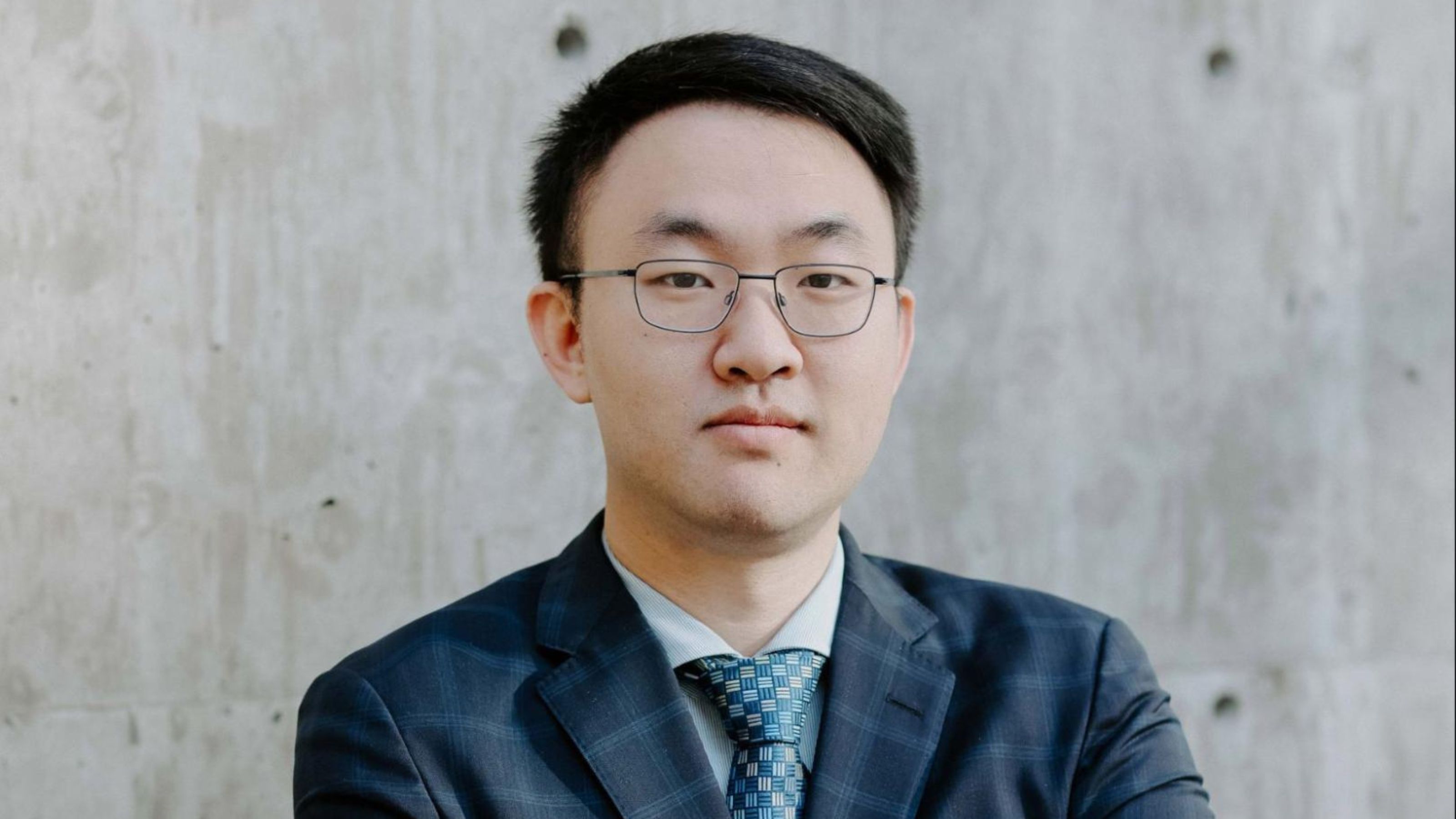
Peter Richtarik is a Professor at the King Abdullah University of Science and Technology (KAUST), specializing in Machine Learning, Optimization, and Federated Learning. He actively teaches courses such as Stochastic Gradient Descent Methods and mentors PhD and MS students like Konstantin Burlachenko, Kai Yi, and Lukang Sun. His research spans distributed optimization, parameter-efficient fine-tuning, and theoretical frameworks for non-convex and non-smooth problems. Recent work includes 2025 contributions to Bernoulli-LoRA (theoretical PEFT) and Gluon (LMO-based optimizers). He co-developed Thanos (block-wise pruning) and BurTorch (CPU-optimized training framework). His publications focus on communication efficiency ( ATA , LoCoDL ), differential privacy ( DP-RBCD ), and stochastic proximal methods. Richtarik received the Charles Broyden Prize for his work on quasi-Newton methods. He frequently presents at workshops like MLSS in Senegal and FLOW seminars.
Qipei Mei is an Assistant Professor in the Department of Civil and Environmental Engineering at the University of Alberta's Faculty of Engineering. With an MSc in Computer Science and a PhD in Structural Engineering, he bridges civil engineering with artificial intelligence to enhance infrastructure productivity and sustainability. His research spans AI-driven design automation, robotics for construction safety, and IoT-based condition assessment. PhD, Structural Engineering - University of Alberta (2020) MSc, Computer Science - Georgia Institute of Technology (2018) MSc, Structural Engineering - University of Alberta (2014) B.E., Civil Engineering - Huazhong University of Science and Technology (2011) Mei's work focuses on three key areas: leveraging data-driven methods for design automation, applying sensing/robotics to construction operations, and using digital twins for infrastructure assessment. His team explores generative AI for housing design, robotic construction in remote communities, and smart monitoring systems. Recent publications highlight advancements in: lateral capacity prediction for monopile foundations, transformer-based architectural layout analysis, large language models for building code compliance, vision-language models for safety hazard detection, and sensor networks for bridge monitoring. These works demonstrate interdisciplinary integration of AI, structural engineering, and IoT. Mei actively collaborates with diverse researchers and welcomes graduate students to his Smart Infrastructure Technologies (SITE) Research Group, part of the Infrastructure and Human Tech Lab (IHT-Lab). He teaches advanced topics in structural and civil engineering while pursuing industry-funded projects through NSERC, CFI, and Alberta Innovates.
Adlen Ksentini is a Professor at EURECOM, a leading graduate school and research center in Sophia Antipolis, France, specializing in digital science and communication systems. His extensive research focuses on next-generation mobile networks (5G/6G), network management, and the integration of artificial intelligence with telecommunications infrastructure. Dr. Ksentini actively contributes to major EU research initiatives including 6G-BRICKS and AC3, serving as a key researcher and project leader in the development of future network architectures. Dr. Ksentini's research interests center around network slicing, intent-based networking, edge computing, and the application of machine learning to network management problems. His work bridges theoretical advancements with practical implementations in 5G/6G systems, with particular emphasis on zero-touch network management, energy efficiency optimization, quality of service assurance, and the integration of large language models with network operations. His research has significantly contributed to the development of O-RAN (Open Radio Access Network) frameworks and the evolution of network automation. His recent publication trends reveal a strategic shift toward AI-native network architectures, with increasing focus on integrating large language models (LLMs) with network management systems. His work demonstrates a clear progression from traditional network management approaches to more autonomous, AI-powered systems capable of intent-based configuration, self-optimization, and predictive maintenance. The publications show strong emphasis on practical implementations within the 6G research ecosystem, addressing critical challenges in network slicing, resource allocation, and energy efficiency. As a research supervisor, Dr. Ksentini mentors several PhD students including Abdelkader Mekrache, Karim Boutiba, Bouziane Brik, and Houda Hafi, who frequently appear as co-authors on his publications. His research is primarily funded through major EU research projects such as 6G-BRICKS (Building Reusable Testbed Infrastructures for Cloud-to-Device Breakthrough Technologies) and AC3 (which focuses on Cloud Edge Continuum). Dr. Ksentini is actively involved with the 6G-BRICKS project consortium and the AC3 project team, where he contributes to developing next-generation network architectures that integrate communication, computing, and sensing capabilities. His work within these projects focuses on creating reusable testbed infrastructures and addressing security and trust management challenges in the cloud-edge continuum.
Kurt Keutzer is a Professor in the Department of Electrical Engineering and Computer Science at the University of California, Berkeley, and a key member of the Berkeley AI Research Lab (BAIR). He holds a Ph.D. in Computer Science from Indiana University (1984) and was previously Chief Technical Officer at Synopsys, Inc. His research focuses on systems issues in deep learning, particularly for computer vision, speech recognition, NLP, and finance. He has published over 250 refereed articles and six books, and is a highly cited author in hardware and design automation. Keutzer has received multiple IEEE Fellowships, DAC awards, and best paper accolades at conferences like Embedded Vision Workshop and ICPP. Educations: 1984, PhD, Computer Science, Indiana University Kurt Keutzer's research interests span Artificial Intelligence , Computer Architecture , and Scientific Computing , with a focus on computational efficiency in AI systems. His work explores hardware-aware neural architecture search, domain adaptation, and quantization techniques to optimize models from edge to cloud. Recent publications highlight advancements in vision transformers , LLM inference efficiency , and autonomous driving . He also contributes to multimodal AI and self-supervised learning frameworks. Scientific Awards: Institute of Electrical & Electronics Engineers (IEEE) Fellow (1996) DAC's Most Influential Paper Award (2023) Top Ten Cited Author and Paper at DAC Best Paper Awards at Embedded Vision Workshop and ICPP Kurt Keutzer has advised numerous Ph.D. and Master’s students, including Forrest Iandola (co-founder of DeepScale), Sheng Shen, and Michael Murphy. His research teams have pioneered hardware-efficient deep learning solutions like SqueezeNet and FireCaffe. Current projects include optimizing large language models (LLMs) for edge deployment and advancing 3D reconstruction for autonomous vehicles. He is also involved in diffusion models , sparse attention mechanisms , and multi-agent coordination for complex tasks.
Sonia Vanier is a Professor in the Department of Computer Science at École Polytechnique, where she holds multiple leadership positions: Head of the 'Trusted and Responsible AI' Chair (X/Crédit Agricole), Head of the 'Optimization and AI for Mobility' Chair (X/SNCF), Head of 3A, and Scientific Manager of Industrial Relations for both the Department and the Computer Science Laboratory (LIX). She coordinates the GdT OR (Network Optimization) working group and leads the REST (Energy, Services and Transport Networks) research axis of the CNRS GDROD, while serving on its scientific council. Her research develops decision support tools for complex industrial problems through hybrid approaches combining Artificial Intelligence and Operations Research , with focus areas including Network Optimization, ethical AI systems, sustainable computing, and trustworthy AI frameworks. Her work bridges theoretical foundations with applications in telecommunications, transportation, and cybersecurity. Publications demonstrate strong emphasis on optimization techniques (branch-and-price, cutting planes) applied to wireless networks, AI safety, and security challenges. Recent works explore LLM memorization, signomial programming, and multi-commodity flow problems, showing consistent integration of OR with machine learning for industrial-scale problems. Awards: Research Award and Innovation Award, Telecom Valley Association ALOES Orange Innovation Project She leads major industrial-academic partnerships through the Crédit Agricole and SNCF chairs, managing research grants focused on responsible AI deployment and mobility optimization. As Scientific Manager of Industrial Relations, she oversees industry collaborations for LIX laboratory. Affiliated with the Computer Science Laboratory (LIX), she directs the 3A research group and contributes to national initiatives through CNRS GDROD, coordinating research in network optimization and sustainable systems.
Rianne Conijn is an assistant professor in the Human-Technology Interaction group at Eindhoven University of Technology (TU/e), Netherlands. Her research bridges data-driven methodologies (machine learning, statistical modeling) with human-centered design to enhance learning analytics, explainable AI, and writing process analysis. She holds a joint PhD (cum laude) from Antwerp University and Tilburg University, and an MSc (cum laude) in Human-Technology Interaction from TU/e. Academic Background: MSc (2015, TU/e, cum laude), PhD (2020, Antwerp University & Tilburg University, cum laude). Research Focus: Learning analytics, keystroke logging, explainable AI for education, data dashboards, and self-regulated learning dynamics. Teaching: Courses in Advanced Research Methods, Human-AI Interaction, Behavioral Research Methods, and AI ethics in education. Her recent publications explore parallel language planning in writing, longitudinal self-regulated learning strategies, and generalizability of academic performance prediction models. She leads an NWO Veni project on Human-Centered AI in education, emphasizing tailored explanations for student-AI collaboration. Scientific awards include cum laude distinctions for her MSc and PhD, and the NWO Veni grant. Collaborative work spans institutions in the Netherlands, Norway, and the U.S., with applications in intelligent tutoring systems and ethical AI deployment in exams. Key trends across her work: integration of machine learning with educational theory, leveraging keystroke data for cognitive process insights, and prioritizing actionable, explainable AI systems for student support. Publications span journals like the Journal of Experimental Psychology: General , Computers and Education , and IEEE Transactions on Learning Technologies . Scientific Awards: NWO Veni grant for Human-Centered AI in education Cum laude for MSc and PhD Grants & Collaborations: National Science Foundation grants (2016868, 2302644) for biometric feedback in writing UK Research and Innovation grant (ES/W011832/1) for real-time AI scaffolding TU/e Boost! Program grant for self-regulated learning analysis Labs & Teams: EAISI Foundational (Eindhoven AI Systems Institute) Human Technology Interaction group at TU/e Collaboration with Norwegian Reading National Center (University of Stavanger) Project teams for Waterproof ITS and ProWrite grants
Michael Oberst is an Assistant Professor of Computer Science at Johns Hopkins University's Whiting School of Engineering, affiliated with the Malone Center for Engineering in Healthcare and the Data Science and AI Institute. His research focuses on developing reliable machine learning systems for healthcare decision-making, emphasizing causal inference and robust performance across diverse clinical settings. Key research themes include: Ensuring ML system reliability comparable to FDA-approved medical tools Causal reasoning in observational healthcare data Robustness to dataset shifts across hospitals Algorithmic fairness under unobserved confounding Medical adaptation of large language models Recent publications (2025-2024) demonstrate trends in prediction-powered inference, clinical validation frameworks, and robustness evaluation methods. His work appears in top ML venues (NeurIPS, ICML, UAI, EMNLP) and translational medicine journals. Michael holds a BS in Statistics from Harvard University and a PhD in Computer Science from MIT, with postdoctoral training at Carnegie Mellon University's Machine Learning Department. His group actively seeks PhD students and postdocs for developing trustworthy AI solutions in healthcare.
Maria Virvou serves as Professor and Chair of the Department of Informatics at the University of Piraeus, where she also directs the Graduate Program in Informatics and leads the Research Laboratory 'Software Technology'. She holds significant institutional leadership roles including membership in the University Senate and has chaired the Department of Informatics for multiple terms. As Editor-in-Chief of Springer book series 'Learning and Analytics in Intelligent Systems' and 'Artificial Intelligence-Enhanced Software and Systems Engineering', she maintains substantial academic influence across international scholarly platforms. Dr. Virvou earned her PhD in Computer Science and Artificial Intelligence from the University of Sussex with a scholarship from the State Scholarships Foundation, a Master of Science in Computer Science from University College London, and her undergraduate degree from the Department of Mathematics at the National and Kapodistrian University of Athens. Her educational background in both mathematics and computer science has provided a strong foundation for her interdisciplinary research approach. Professor Virvou's research spans Software Technology, Artificial Intelligence, Educational Software and Games, User Modeling, and Human-Computer Interaction. She has pioneered work in personalized interactive software systems, applying fuzzy logic and machine learning techniques to create adaptive educational environments. Her recent work demonstrates a strategic expansion into AI applications for healthcare, with significant contributions to medical diagnostics using large language models and multimodal AI systems. She has also made notable advances in smart tourism applications through personalization techniques. With over 400 publications to her name, Professor Virvou's scholarly output shows a clear progression from foundational work in user modeling toward increasingly sophisticated AI applications across multiple domains. Her publication trends reveal a strategic focus on explainable AI, multimodal systems, and practical implementations that bridge theoretical advances with real-world applications, particularly in healthcare and education sectors. Ranked #1 worldwide in 'User Modelling' publications (147,450 total publications) according to Scopus Ranked #1 worldwide in 'Educational Software' publications according to both Scopus and Microsoft Academic Search Recognized among the top 2% of most influential Artificial Intelligence scientists worldwide by Stanford University General Co-Chair at the 14th IISA Conference 2023 Invited Keynote Speaker at the 35th IEEE International Conference on Software Engineering Education and Training (CSEE&T 2023) As Director of the Research Laboratory 'Software Technology', Professor Virvou has built a robust research team focused on AI applications across multiple domains. She co-founded and co-chairs the IEEE Intelligent Information Systems and Applications international conference series, creating a significant platform for scholarly exchange. Her leadership extends to editorial roles with major academic publishers and active participation in international research collaborations that have secured substantial funding for innovative projects in AI and software engineering.
Pascal Hitzler is a University Distinguished Professor and holds the endowed Lloyd T. Smith Creativity in Engineering Chair at Kansas State University's Department of Computer Science, Carl R. Ice College of Engineering. He directs the Center for Artificial Intelligence and Data Science (CAIDS) and the Institute for Digital Agriculture and Advanced Analytics (ID3A). Previously, he held roles at Wright State University, Karlsruhe Institute of Technology, and TU Dresden. His research focuses on neuro-symbolic AI, semantic web technologies, knowledge graphs, and ontology engineering. Education: PhD in Mathematics (2001, University College Cork), Diplom in Mathematics (1998, University of Tübingen). Academic achievements include over 400 publications, founding editor roles for journals like Neurosymbolic Artificial Intelligence , and leadership in organizations like the Neural-Symbolic Learning and Reasoning Association. Research interests include AI explainability, knowledge representation, and interdisciplinary applications of semantic technologies. He leads the DaSe Lab for Data Semantics, advancing projects like the KnowWhereGraph and Enslaved.org Hub Knowledge Graph. His work bridges symbolic AI with neural networks, emphasizing practical applications in agriculture, environmental science, and historical data preservation. Grants and collaborations span academic, industrial, and international partners. He has advised numerous students and researchers, contributing to both theoretical advancements and real-world semantic systems deployments.
Tushar Sharma is an Assistant Professor at the Faculty of Computer Science, Dalhousie University, Canada. His research focuses on software code quality , refactoring , sustainable AI , and machine learning for software engineering (ML4SE) . He holds a PhD in Software Engineering from Athens University of Economics and Business (2019) and an MS in Computer Science from IIT-Madras (India). Current affiliations: Dalhousie University, SMART Lab, IEEE Senior Member Past experience: Siemens Research (2019-2021), Siemens Corporate Technology (2008-2015) Research interests span code quality assessment, technical debt management, and sustainable AI. He founded Designite , a widely used software design quality assessment tool, and contributed to the book Refactoring for Software Design Smells . Recent work examines energy-efficient language models for code, reproducibility issues in configuration scripts, and human-guided code smell detection. Publication trends reveal expertise in code smell detection, refactoring techniques, and green AI. His articles address topics like commit message generation, model quantization, and empirical studies on code quality. Collaborative efforts include tools like DesigniteJava 2.0 and frameworks for attention mechanisms in code language models. Scientific recognition: Dean's Research Excellence Award (2025), Best Artifact Award (SCAM 2023) Grants: Mitacs Accelerate grants ($225K, $15K, $30K), NSERC Discovery Grant ($154M CFREF climate action project), DRA computing resources ($51K) He actively contributes to academic service as PC Co-chair (ICSE 2024), editorial board member (JSS), and organizer of workshops on technical debt. His media coverage highlights environmental impacts of AI and software quality challenges.
Philipp Koehn is a Professor in the Department of Computer Science at Johns Hopkins University, with additional affiliation at the University of Edinburgh. His primary research focuses on statistical and neural machine translation, specifically developing methods to leverage large-scale digital information for cross-lingual communication. He leads the Machine Translation Research Group and maintains key resources like the Moses toolkit and Europarl corpus. His research interests span: Core machine translation techniques (statistical/neural approaches) Low-resource and unsupervised translation methods Cross-lingual representation learning Speech-to-speech translation systems Large-scale parallel data mining and alignment Evaluation methodologies for generated text Koehn's recent publications demonstrate strong focus on improving translation efficiency (dynamic compression, streaming models), robustness (noise handling, error correction), and accessibility (low-resource languages, radio speech processing). Key trends include multilingual generalization, document-level coherence, and human-centered evaluation. Significant scientific recognition includes: ACL Fellow (2024) IAMT Award of Honor (2015) European Inventor Award Finalist (2013) He currently advises PhD students Rachel Wicks, Elina Baral, Bismarck Odoom, and Weiting Tan. His Machine Translation Group develops widely-used open-source tools and organizes major conferences including WMT and MT Marathon.
Sendhil Mullainathan is the Peter de Florez Professor at the Massachusetts Institute of Technology (MIT), holding dual appointments in the Department of EECS (Electrical Engineering and Computer Science) and the Department of Economics. He is affiliated with the AI+D initiative and is part of the leadership and faculty in Computer Science and Electrical Engineering. His research focuses on behavioral economics, machine learning, and the intersection of artificial intelligence with social sciences. He explores how cognitive biases and algorithmic models influence decision-making, particularly in contexts like economic behavior and AI limitations. Recent work includes studies on generative AI's lack of coherent world understanding and the sociological implications of large language models (LLMs). His research underscores the importance of human-AI interaction frameworks and ethical considerations in AI deployment. Advising and grants information is not explicitly detailed in the provided text. Mullainathan collaborates across disciplines, bridging computational methods with economic theory.
Zhijing Jin is an Assistant Professor at the University of Toronto and a postdoc at the Max Planck Institute for Intelligent Systems, working with Bernhard Schölkopf. She is also a faculty member at the Vector Institute and an ELLIS advisor. Her research focuses on Causal Reasoning with LLMs , Moral Reasoning in LLMs , and AI Safety , with contributions to AI for Science and NLP for Social Good. She leads the Jinesis AI Lab , which explores causal LLMs, multi-agent systems, and ethical AI applications. Education: PhD in Computer Science from Max Planck Institute (Germany) and ETH Zurich (Switzerland) Bachelor’s degree from University of Hong Kong, with visiting semesters at MIT and National Taiwan University Research Interests: Her work bridges causal inference and NLP, addressing robustness, interpretability, and ethical alignment of LLMs. Key projects include Corr2Cause (causal reasoning), GovSim / MoralSim (multi-agent LLMs), and frameworks like NLP4SG for social impact. She advocates for causal mechanisms to tackle AI safety and societal challenges. Recent Articles: Recent work explores political bias in LLMs, ethical dilemmas in multi-agent systems, and causal foundations for trustworthy AI. These studies emphasize real-world applications, such as healthcare NLP and policy analysis. Awards & Recognition: 3 Rising Star Awards 2 Best Paper Awards at NeurIPS 2024 Workshops Fellowships from Open Philanthropy and Future of Life Institute Grants & Mentorship: Funded by NSERC, Schmidt Sciences, and the Cooperative AI Foundation. She mentors ~20 students globally, including PhD candidates in multi-agent LLMs, causal LLMs, and AI safety. The Jinesis Lab offers remote mentorship across institutions like UofT, ETH Zurich, and University of Michigan. Labs & Collaborations: Active collaborations include MPI-IS, Vector Institute, and ETH Zurich’s AI Center. Her lab emphasizes open science, with tools like MoralLens and RouterAttack released publicly.
Juho Leinonen is an Academy Research Fellow at Aalto University's Department of Computer Science, Finland, specializing in AI-enhanced computing education. His work focuses on leveraging large language models (LLMs) to transform programming instruction through personalized learning analytics and educational technology. Education Background: PhD in Computer Science, University of Helsinki (2019) Docent (Adjunct Professor) in Computer Science, University of Helsinki Postdoctoral research at The University of Auckland, Aalto University, and University of Helsinki Research Focus: Leinonen's work centers on three interconnected pillars: (1) developing fine-grained learning analytics to decode student programming behavior; (2) applying LLMs to create adaptive educational tools for diverse learners; and (3) implementing learnersourcing strategies for scalable resource generation. His research particularly addresses challenges in multilingual programming education and responsible AI integration, with emphasis on non-native English speakers and novice programmers. Publication Trends: Recent publications (2024-2025) reveal a concentrated exploration of generative AI in computing education, with 85% focused on LLM applications. Key themes include synthetic data generation for educational research, multilingual prompting systems, and ethical frameworks for AI feedback. His work demonstrates both practical implementations (e.g., autocompletion quizzes) and critical analyses of AI limitations in educational contexts. Awards & Recognition: ACE2024 Best Paper Award for LLM-generated worked examples study UKICER 2023 Best Paper Award for achievement goals research ACE 2023 Best Practitioner Paper ICER 2022 Best Paper Award for programming exercise generation SIGCSE TS 2022 Best Paper in Computing Education Research ACE 2021 Best Paper Award for contextualized problem descriptions Research Leadership: As principal investigator of the Academy of Finland-funded project 'Advanced Student Modeling and Tailored LLMs for Personalized Learning', Leinonen supervises PhD students and postdocs while leading international collaborations with institutions including The University of Auckland and University of Helsinki. His grant portfolio focuses on ethical AI deployment in education and cross-cultural computing pedagogy. Collaborative Networks: He maintains active partnerships with leading computing education researchers like Paul Denny (Auckland), Arto Hellas (Aalto), and Andrew Luxton-Reilly (Auckland), evidenced by 90% co-authored publications. His work appears consistently in top venues including ACM SIGCSE, ICER, and ACE conferences.
Bradley Reaves serves as an Associate Professor in the Department of Computer Science at North Carolina State University and is a core member of the Wolfpack Security and Privacy Research (WSPR) Lab and the Secure Computing Institute. His work focuses on real-world security and privacy challenges across cellular networks, mobile platforms, and software systems. Education: Ph.D. in Computer Engineering, University of Florida (2017) M.S. in Computer Science, Georgia Institute of Technology (2015) Research Interests: Dr. Reaves pioneers interdisciplinary security solutions combining signal processing, machine learning, and cryptography to combat robocalls, mobile fraud, and software vulnerabilities. His work spans telephone network security (e.g., call authentication systems), mobile money security in developing economies, and software secret leakage in repositories. He emphasizes practical impact through industry collaboration and deployable tools. Publication Trends: Recent work (2023-2024) shows concentrated focus on telecom security (call traceback, SMS phishing), software vulnerability management (LLM-assisted patching, secret leakage), and network policy systems . His research consistently bridges theoretical innovation with real-world data collection, including analysis of 1.5 million robocalls and mobile money transaction fraud. Awards: Best Paper at ACM WiSec (2013) Advising and Collaborations: Dr. Reaves mentors Ph.D., Master's, and undergraduate researchers through structured pathways: Ph.D. applicants must demonstrate specific interest in his publications; Master's students typically engage via courses like CSC 574; undergraduates require CSC 230 completion and 10+ weekly hours. Industry partnerships include data sharing under confidential agreements, student hiring pipelines, and commissioned research for telecom fraud analysis. Labs and Teams: He leads the Wolfpack Security and Privacy Research (WSPR) Lab, which operates within NC State's Secure Computing Institute. The lab specializes in large-scale security measurement studies and develops tools like SNORCall for robocall analysis and SecretBench for secret leakage detection.