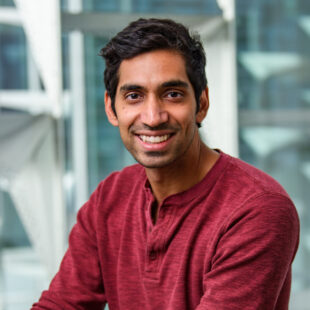
Nikhil Anand is a Senior Research Scientist at the Kempner Institute for Artificial and Natural Intelligence at Harvard University. He previously worked as a Research Scientist at Amazon focusing on NLP, and as a postdoctoral fellow in theoretical physics at McGill University. He completed his PhD in Physics at Johns Hopkins University in 2018. Harvard University (2024–present): Senior Research Scientist, Kempner Institute Amazon (prior to 2024): Research Scientist in NLP and LLM infrastructure McGill University (2018–2021): Simons Foundation Postdoctoral Fellow in theoretical physics Johns Hopkins University (2018): PhD in Physics UC Berkeley (2013): Bachelor’s in Physics His research bridges AI systems and quantum physics , focusing on: Understanding mechanisms of large foundation models Improving model efficiency and capability in API/tool usage Operational deployment of production language models Nonperturbative methods in quantum field theories Scientific awards include the Simons Foundation Postdoctoral Fellowship . He maintains active contributions to open-source Jekyll templates for academic websites and collaborates with PIs, scholars, and engineers at the Kempner Institute.
Kenrick D Cato serves as Professor of Informatics at the University of Pennsylvania School of Nursing and Nurse Scientist for Pediatric Data and Analytics at Children's Hospital of Philadelphia. His research integrates data science with clinical practice to enhance healthcare delivery through informatics-driven solutions, focusing particularly on reducing documentation burden and improving patient safety systems. Dr. Cato's work centers on clinical informatics with emphases in natural language processing, machine learning applications for healthcare, and health equity. Key research areas include detection of stigmatizing language in clinical documentation (especially in obstetrics/pediatrics), development of early warning systems like CONCERN for patient deterioration, mitigation of algorithmic bias, and optimization of electronic health record workflows. His scholarship consistently addresses the intersection of technology, clinical practice, and social determinants of health. Analysis of his 2025 publications reveals dominant trends in applying computational methods to real-world healthcare challenges. He pioneers techniques for bias detection in clinical NLP, evaluates equity in AI decision support systems, and investigates documentation burden impacts across diverse populations. His work with the National COVID Cohort Collaborative demonstrates expertise in large-scale data analysis for public health crises. Dr. Cato's scholarly contributions are recognized through prestigious fellowships: Fellow of the American Academy of Nursing (FAAN) Fellow of the American College of Medical Informatics (FACMI) As Nurse Scientist at CHOP, he leads pediatric data analytics initiatives translating research into clinical tools. His leadership extends to AMIA's diversity, equity, and inclusion efforts, and he actively shapes policy through publications addressing documentation burden and AI ethics. While specific grant details aren't provided, his extensive 2025 publication output indicates robust research funding across multi-site collaborations. Embedded within CHOP's pediatric analytics team, Dr. Cato collaborates with clinicians and data scientists to develop implementable informatics solutions for child health, with current projects focusing on real-time surveillance systems and pediatric risk prediction models.
Dan Fu is an Assistant Professor at the University of California, San Diego (UCSD) in the Computer Science and Engineering Department and a Distinguished Research Scientist at Together AI. He leads the SandyResearch Lab and is affiliated with the MLSys group, focusing on making machine learning models faster and more efficient through hardware-aware algorithms and subquadratic architectures. Research interests include: Efficient ML architectures (Chipmunk, Hyena, Monarch Mixer) Hardware-aware systems algorithms (ThunderKittens, FlashAttention) Long-sequence modeling and GPU optimization His recent work spans training-free Transformer acceleration (Chipmunk), convolutional language models (Hyena), and hardware-aware attention optimizations (FlashAttention). Projects are deployed in production at Together AI and integrated with frameworks like PyTorch. Scientific awards include: NDSEG Fellowship (2025) Best Paper at ICML Hardware Aware Workshop (2022) Best Student Paper Runner Up at UAI (2022) Best Poster at ENLSP Workshop (NeurIPS 2023) He contributes to open-source projects (Safari repository, FlyingSquid) and teaches courses on machine learning systems (Stanford CS 324/528, Harvard CS 61/152).
Recep Firat Cekinel is a Turkish NLP researcher who recently obtained his Ph.D. in Computer Engineering from Middle East Technical University (METU). He spent 13 months as a visiting predoctoral researcher at the University of Tübingen and is currently a researcher on the EU-funded EXA4MIND project, where he develops NLP pipelines that convert natural language into database queries using large language models. His research focuses on responsible, scalable AI systems and bridges foundational NLP work with real-world applications. Education: Ph.D. in Computer Engineering, Middle East Technical University (METU), Türkiye Visiting Predoctoral Researcher, University of Tübingen, Germany (13 months) Research Interests: Dr. Cekinel’s work spans natural language processing , multimodal fact-checking , explainable AI , and large language models . He is particularly interested in building responsible and scalable AI systems that integrate foundational research with practical deployments, such as natural-language interfaces for high-performance computing environments. Recent Publication Trends: His 2025 publications reveal a concentrated effort on multilingual and multimodal fact-checking , satire-style debiasing , and NL-to-database-query generation . Earlier work explores graph-based event extraction , Turkish irony detection , and cultural-heritage text mining , demonstrating a trajectory from low-resource Turkish NLP toward globally applicable, responsible-AI systems. Contact & Code: Email: rfcekinel@ceng.metu.edu.tr Office: METU Computer Eng. Dept. A-206, 06800 Ankara, Turkey Phone: +90-(312)-210-5593 GitHub: firatcekinel Google Scholar: profile available
Eric Gon-Chee Poon serves as Professor of Medicine and Professor of Biostatistics and Bioinformatics at Duke University School of Medicine, while concurrently holding the executive position of Chief Health Information Officer for Duke Medicine. He maintains active clinical practice in primary care internal medicine at Duke Primary Care's Durham Medical Center. His educational foundation includes an M.D. from Harvard Medical School (1998), M.P.H. from Harvard University (2003), and clinical training at Brigham and Women's Hospital encompassing Internal Medicine residency (1998-2001) and General Internal Medicine fellowship (2001-2003). Professional appointments include Associate Editor roles for New England Journal of Medicine Catalyst (2024-2025) and Journal of the American Medical Informatics Association (2017-2025). Dr. Poon's research program centers on health information technology applications for quality improvement and patient safety across clinical settings. Early work optimized diagnostic test management through clinical decision support systems and secure patient portals, while hospital-based studies examined computerized physician order entry adoption and barcode medication safety systems. Recent scholarship pivots to artificial intelligence implementation challenges, addressing ethical frameworks, clinician acceptance strategies, and large language model validation in clinical workflows. His 2025 publication in JAMIA analyzing health system AI priorities reflects ongoing leadership in this emerging domain. Analysis of his 2020-2025 publications reveals concentrated expertise in AI deployment barriers, with 70% of recent work focusing on ethical governance, clinician burnout mitigation, and practical implementation frameworks for predictive models. Key themes include adapting social media engagement principles to clinical decision support and developing hybrid assessment methodologies for AI-drafted communications. Scientific Awards: No awards explicitly listed in source materials Dr. Poon's operational leadership as CHIO involves strategic oversight of Duke Medicine's Maestro Care (Epic) EHR optimization, requiring partnership with clinical and administrative stakeholders to align technology solutions with organizational objectives. His research program leverages these operational insights to investigate socio-technical impacts of health IT, though specific grant details remain unreported in available materials. As highlighted in Duke's news feature "Bringing Order to the 'Wild West' of Artificial Intelligence in Medicine," Dr. Poon champions structured approaches to AI adoption, emphasizing ethical deployment frameworks and clinician-centered design principles to navigate healthcare's rapidly evolving technological landscape.
Rohan Khera, MD, MS, is an Assistant Professor at Yale University with appointments in the Yale School of Public Health (Biostatistics), Cardiovascular Medicine , and Biomedical Informatics & Data Science . As Clinical Director of the Center for Health Informatics and Analytics at Yale CORE and Director of the Cardiovascular Data Science (CarDS) Lab, he leads multidisciplinary teams developing AI-driven solutions for cardiovascular care. His work spans electronic health records, wearable devices, and imaging analytics. MD, All-India Institute of Medical Sciences (2011) MS, UT Southwestern Medical Center (2019) Clinical Scholar, UT Southwestern (2019) Residency, University of Iowa (2016) Cardiology Fellowship, UT Southwestern (2020) Research focuses on precision medicine through machine learning and digital phenotyping . Key areas include: AI-ECG and AI-Echo diagnostic toolkits Automated quality measurement in cardiovascular care Phenomapping for clinical trial personalization Electronic health record modernization Global health equity applications His 15 most recent publications highlight advancements in: Deep learning for structural heart disease Safety pharmacovigilance of diabetes medications Health disparities in cardiovascular outcomes Large language models for clinical data structuring Risk prediction via wearable ECG devices Radiomic subphenotyping in echocardiography Scientific honors include: 2023 Blavatnik Award 2023 ASCI Young Physician-Scientist Award 2021 Jeremiah Stamler Award Fellow, American College of Cardiology National Heart, Lung, and Blood Institute grant As lab director, he mentors teams working on: Automated diagnostic reporting systems Real-world data validation Cardiovascular digital twin models Multinational AI tool deployment Evidence-based clinical decision support
Prof. Dr. Claus Fühner is a Professor of Computer Engineering at the Faculty of Computer Science of Ostfalia University of Applied Sciences. His research interests include: Systems and Software Engineering for embedded systems Implementation of embedded systems from microcontrollers to cloud Functional safety Wireless communication (Bluetooth Low Energy, LoRaWAN) AI, neural networks, and LLMs in technical systems Railway automation Recent research projects (2016-2023) show a focus on practical applications in IoT and embedded systems, with an increasing emphasis on AI and LLMs. Key projects include SmartFreightWagon for railway freight digitalization (2023) and autonomous vehicle research using deep learning (2020). Prof. Fühner regularly supervises student theses and is open to industry collaboration. He can be contacted via email at c.fuehner@ostfalia.de.
Kangwook Lee serves as an Associate Professor in the Electrical and Computer Engineering Department with a courtesy appointment in Computer Sciences at the University of Wisconsin-Madison, where he also holds a Discovery Fellowship. He concurrently leads deep learning research initiatives at KRAFTON, bridging academic and industry innovation in artificial intelligence. His academic foundation includes a PhD in Electrical Engineering and Computer Sciences from UC Berkeley (2016), preceded by research assistant and postdoctoral positions at KAIST's Information and Electronics Research Institute. Hailing from Seoul, South Korea, Lee maintains active research operations through his laboratory in Madison's Discovery Building. Lee's research program centers on Large Language Models and LLM agents, with rigorous theoretical and empirical investigations into their operational mechanisms and improvement pathways. His work spans in-context learning dynamics, agent-based social simulations, multi-domain reward modeling, and efficient inference techniques, emphasizing both fundamental understanding and practical enhancement of AI capabilities. Recent publications reveal a concentrated effort on overcoming length generalization barriers, enabling compositional reasoning with rare concepts, and developing robust feature selection frameworks. His 2025 publications demonstrate significant advancements across LLM architecture, evaluation methodologies, and application domains. Key trends include the emergence of task vector representations in in-context learning, development of superposition techniques for multi-task processing, and innovative approaches to speculative decoding for multimodal systems. These works collectively advance the field toward more efficient, generalizable, and interpretable language models. Lee's research excellence is recognized through prestigious accolades: NSF CAREER Award (premier early-career grant) IEEE Joint Communications Society/Information Theory Society Paper Award Amazon Research Award KSEA Young Investigator Grant Award As principal investigator of the Lee Lab, he directs a dynamic research group focused on cutting-edge AI challenges. His work integrates theoretical analysis with empirical validation to address fundamental limitations in modern language models, while industry collaborations through KRAFTON ensure real-world impact. Current projects emphasize agent-based social dynamics modeling, efficient inference architectures, and robustness frameworks for diverse deployment scenarios.
Robert Clarisó is a Lecturer at Universitat Oberta de Catalunya (UOC) in the IT, Multimedia and Telecommunication Department. He has a strong background in Computer Science with a BSc (2000) and PhD (2005) from UPC-Barcelona Tech. His academic career includes positions as a part-time associate professor at UPC-Barcelona Tech and at Universitat Autònoma de Barcelona. Dr. Clarisó's educational background includes: BSc in Computer Science from UPC-Barcelona Tech (2000), graduated as the top of his class with a Special mention in the Spanish National University Degree Awards PhD in Computer Science from UPC-Barcelona Tech (2005), thesis titled "Abstract Interpretation Techniques for the Verification of Timed Systems" under Dr. Jordi Cortadella Fortuny His research primarily focuses on Formal Methods and Software Engineering, with recent expansion into AI-related topics. Dr. Clarisó has made significant contributions to Model-Driven Engineering, particularly in the area of Object Constraint Language (OCL). His recent work has shifted toward examining bias and fairness in Large Language Models and exploring the application of Generative AI in software engineering education, reflecting a strategic pivot to address contemporary challenges in AI ethics and deployment. Dr. Clarisó has held several leadership positions including Coordinator of the Research Group on Software Engineering at UOC (2008-2015), Academic Director of the Official Master in Computing Engineering (2011-2019), and Academic Director of the Bachelor's Degree in Techniques for Software Development (2020-2023). He currently leads the university's working group on "AI in education" and is a principal investigator of the SOM Research Lab. His notable recognition includes a Special mention in the Spanish National University Degree Awards. Dr. Clarisó has served on program committees for major conferences including MODELS and ASE across multiple years, demonstrating his standing in the academic community. As an educator, Dr. Clarisó has taught courses on automata theory, compilers, algorithms and data structures, graph theory, and software development. He has coordinated undergraduate theses and led postgraduate programs, showing his commitment to academic mentorship and program development. Dr. Clarisó is actively involved in research teams, currently leading the SOM Research Lab which focuses on software engineering research. His recent work has centered on the intersection of formal methods, model-driven engineering, and AI technologies, particularly examining ethical implications and educational applications.
Xiang Gao is a Pre-tenure Associate Professor in the School of Software at Beihang University, China. His research focuses on applying program analysis, test generation, and formal methods to improve software quality through automated bug fixing and program synthesis. He has established significant collaborations with Fujitsu Laboratories of America, Microsoft Research, and other leading institutions in the software engineering field, demonstrating strong industry-academia connections. Dr. Gao received his Bachelor's degree in Computer Science (Elite Class) from Shandong University in 2016, followed by a Ph.D. from the School of Computing at the National University of Singapore, where he also served as a Postdoctoral Fellow until December 2021. His educational background spans both Chinese and Singaporean academic institutions, providing him with a global perspective on software engineering research. His primary research interests span multiple cutting-edge areas of software engineering: Program Analysis techniques for detecting and fixing software bugs with formal methods Software Security vulnerabilities with focus on automated repair methods Automated Program Repair systems that generate high-quality patches without overfitting Program Synthesis for creating transformation rules from examples Software Engineering for Artificial Intelligence (SE4AI) to improve AI model reliability and security Mobile Software Engineering with particular attention to UI testing and automation Deep Learning Security including model protection and obfuscation techniques Dr. Gao's recent publication trajectory shows a strategic evolution toward integrating large language models with traditional software engineering approaches, particularly in test generation and program repair. His work on DNN modularization (NeMo, CNNSpliter, SeaM) represents an innovative approach to enhancing model reusability and security in resource-constrained mobile environments, addressing critical challenges in deploying AI on edge devices. His scientific contributions have been recognized with multiple prestigious awards: ACM SIGSOFT Distinguished Paper Award for "ProveNFix: Temporal Property guided Program Repair" at FSE'24 IEEE TCSE Distinguished Paper Award for "Investigating and Detecting Silent Bugs in PyTorch Programs" at SANER'24 ACM SIGSOFT Distinguished Paper Award for "Modularizing while Training: A New Paradigm for Modularizing DNN Models" at ICSE'24 Distinguished Artifact Award for "Automated Patch Backporting in Linux (Experience Paper)" at ISSTA'21 Dr. Gao actively mentors students at various levels, seeking "self-motivated Ph.D, master, undergraduate students and interns with strong programming skills" for his research projects. He serves on numerous program committees for top software engineering conferences including ICSE, ASE, ISSTA, and FSE, demonstrating his growing influence in the academic community. His research has been supported through collaborations with industry partners including Microsoft Research and Fujitsu Laboratories of America, translating theoretical advances into practical applications. His laboratory focuses on several key research projects including Automated Software Vulnerability Repair (with techniques like Fix2Fit, VulnFix, and ExtractFix that address the overfitting problem in program repair), Program Synthesis for Program Transformation (including Semi-supervised synthesis and FixMorph for automated patch backporting in Linux), and Software Engineering for Artificial Intelligence (with projects like CNNSpliter, SeaM, and Sensei that apply software engineering principles to improve AI model usability and robustness). These projects represent cutting-edge work at the intersection of traditional software engineering and modern AI techniques, addressing critical challenges in software reliability and security.
Dr. Ikechukwu Nkisi-Orji is a Research Fellow at Robert Gordon University's School of Computing, Engineering & Technology, where he conducts research at the intersection of artificial intelligence, semantic technologies, and case-based reasoning. He is affiliated with the university's Artificial Intelligence & Reasoning Research Group and has extensive collaboration experience with the British Geological Survey and Oil and Gas Innovation Centre. His research focuses on intelligent information retrieval systems, ontology engineering and alignment, semantic web technologies, natural language processing, and case-based reasoning applications to real-world problems. Dr. Nkisi-Orji has made significant contributions through the development of the CloodCBR platform, a cloud-based CBR framework that received an honorable mention at ICCBR 2020, and the iSee platform for personalized explainable AI experiences. His recent publication trends (2023-2025) show a strong focus on integrating case-based reasoning with modern AI techniques, particularly large language models and retrieval-augmented generation systems. His work increasingly addresses explainable AI challenges, legal question answering systems, and methods for improving the reliability of AI outputs in specialized domains. Honourable mention at ICCBR 2020 for CloodCBR platform Dr. Nkisi-Orji has active supervision availability for PhD students in Semantic Information Retrieval, Natural Language Processing, and Ontology design/alignment/application. His research is supported by collaborations with industry partners including the Oil and Gas Innovation Centre, where he has worked on extracting business intelligence from text and applying case-based reasoning to asset inventory management. As the key architect of the CloodCBR platform and contributor to the iSee XAI platform, Dr. Nkisi-Orji leads research efforts focused on making AI systems more transparent, reliable, and applicable to industrial-scale problems through the integration of traditional AI methods with contemporary approaches.
Jasjeet Sekhon is the Eugene Meyer Professor of Statistics & Data Science and Political Science at Yale University with an additional appointment in Biomedical Informatics & Data Science. He concurrently serves as Chief Scientist and Head of AI/ML at Bridgewater Associates, integrating industry expertise into academic research. His educational background includes a Ph.D. from Cornell University and an undergraduate degree from the University of British Columbia in Canada. Prior academic positions include Robson Professor of Political Science and Statistics at UC Berkeley and associate professor at Harvard University. Professor Sekhon's research focuses on causal inference, machine learning, and experimental design with applications across political science, economics, epidemiology, and biomedical fields. Current work emphasizes developing interpretable AI systems for causal relationship discovery, addressing AI risks in social decision-making, and deploying robust AI solutions in healthcare settings. Recent publications reveal a dominant trend toward applying large language models and machine learning in medical domains (particularly gastroenterology) and social sciences, with strong emphasis on AI safety, evaluation frameworks, group robustness, and human-AI collaboration in clinical environments. His scientific contributions have been recognized with multiple awards: 2019 Warren Miller Prize for "Worth Weighting?" 2009 Robert H. Durr Award for "When Natural Experiments Are Neither Natural Nor Experiments" 2012 Warren Miller Prize for "Elections and the Regression-Discontinuity Design" Gosnell Prize for "Genetic Matching for Estimating Causal Effects" 2012 Society for Political Methodology Software Award for rgenoud package Professor Sekhon leads the Yale University Software Causal Toolbox initiative and directs AI research at Bridgewater Associates through AIA Labs, developing critical infrastructure for causal inference and AI deployment in high-stakes decision environments.
Shing-Chi Cheung is a Professor of Computer Science and Engineering at the Hong Kong University of Science and Technology (HKUST), School of Engineering. He founded the CASTLE research group and co-founded the International Workshop on Automation of Software Testing (AST) in 2006. His leadership includes serving as General Chair of FSE 2014 and chairing multiple APSEC conferences. His research focuses on software quality enhancement through program analysis, testing, debugging, and AI techniques, targeting Android apps, open-source software, deep learning systems, smart contracts, and spreadsheets. Current projects include metamorphic testing frameworks, binary analysis tools, and vulnerability detection systems for emerging technologies. His publication portfolio demonstrates consistent contributions to software engineering since 2016, with recent work emphasizing AI-integrated testing methodologies, smart contract security, and deep learning system reliability. Key trends show increasing focus on cross-language analysis, data visualization quality, and compiler-level verification for modern software stacks. Distinguished Member of the ACM Fellow of the British Computer Society Editorial board member: Science of Computer Programming (SCP), Journal of Computer Science and Technology (JCST) Former editorial board member: IEEE Transactions on Software Engineering (2006-2009), Information and Software Technology (2012-2015) Four patents in China and the United States Cheung actively mentors through the CASTLE research group and serves on program committees for major conferences including ICSE, ESEC/FSE, and ISSTA. His work bridges academic research with practical applications through industry collaborations and tool development. He has contributed to numerous workshops and symposia as steering committee member and program chair.
Shangwen Wang is an Assistant Professor in the School of Computer Science at National University of Defense Technology (NUDT) in Changsha, China. He earned his Bachelor's degree in June 2017, Master's degree in December 2019, and Ph.D. in December 2023, all from NUDT. During his graduate studies, he was supervised by Professor Xiaoguang Mao. From May 2022 to July 2023, he was a visiting student at Southern University of Science and Technology under Professor Yepang Liu. His educational background includes: Ph.D. in Software Engineering, NUDT (2020.3-2023.12), supervised by Prof. Xiaoguang Mao Visiting Scholar, SUSTech (2022.5-2023.7), supervised by Prof. Yepang Liu M.A. in Software Engineering, NUDT (2017.9-2019.12), supervised by Prof. Xiaoguang Mao B.A. in Software Engineering, NUDT (2013.9-2017.6) Wang's research focuses on program repair, program comprehension, mining software repositories, software maintenance and evolution, software testing, and AI for Software Engineering. His work bridges traditional software engineering techniques with modern AI approaches, particularly leveraging large language models for various software engineering tasks. He has made significant contributions to automated program repair, fault localization, vulnerability detection, and code generation. His research demonstrates a strong emphasis on empirical validation and practical applicability to real-world software development challenges. His recent publications show a clear trend toward integrating large language models with traditional software engineering tasks. The 15 most recent articles reveal a focus on applying LLMs to program repair, fault localization, vulnerability detection, and code generation, while maintaining strong empirical foundations. His work spans both theoretical advancements and practical tool development, with applications in software security, testing, and maintenance. His notable achievements include: CCF Outstanding Doctoral Dissertation (CCF优博) 2024 Outstanding Doctoral Graduates, NUDT, 2023 Multiple distinguished paper awards including ACM SIGSOFT Distinguished Paper Award (ISSTA'24) and IEEE TCSE Distinguished Paper Awards (ICSME'22, SANER'22) Prestigious scholarships from NUDT throughout his academic career As an active member of the software engineering community, Wang serves on numerous program committees for top conferences including ICSE, ASE, ESEC/FSE, and ISSTA. He has also contributed to teaching as a teaching assistant for courses such as Compiler, Python Programming, Discrete Mathematics, and C++ Programming. His research group appears to be actively mentoring students, as evidenced by his role as corresponding author on multiple student-led publications. Wang maintains an active research presence with collaborations across multiple institutions in China. His work demonstrates a clear trajectory from traditional program analysis techniques toward integrating cutting-edge AI approaches, particularly large language models, into software engineering practices.
Luciano Baresi is a Full Professor at the Polytechnic University of Milan (Politecnico di Milano), Italy, affiliated with the Department of Electronics, Information and Bioengineering. He earned his laurea (MSc) and PhD in Computer Science from the same institution and has held visiting positions at the University of Oregon (USA), Tongji University (China), and the University of Paderborn (Germany). His research spans software engineering, with current focuses on self-adaptive systems, edge computing, and AI/ML-based software. His work integrates formal methods with practical applications, emphasizing autonomous systems, cloud-edge continuum, and federated learning. Recent publications highlight AI-driven advancements in software testing, resource optimization, and educational tools. Key research themes include: AI/ML for autonomous driving testing and data augmentation Serverless computing at the edge Federated learning system architectures Containerization and cloud resource management Awarded for impactful contributions: RE 2020 Most Influential Paper ICSOC 2020 Best Paper SEAMS 2022 Best Paper He advises 14+ PhD students and leads projects like Ketonet (health app), WHO's Essential Items Estimator, and dynaSpark. As Editor-in-Chief of Proceedings of the ACM on Software Engineering and senior editor for multiple journals, he shapes academic discourse in adaptive systems and software engineering.