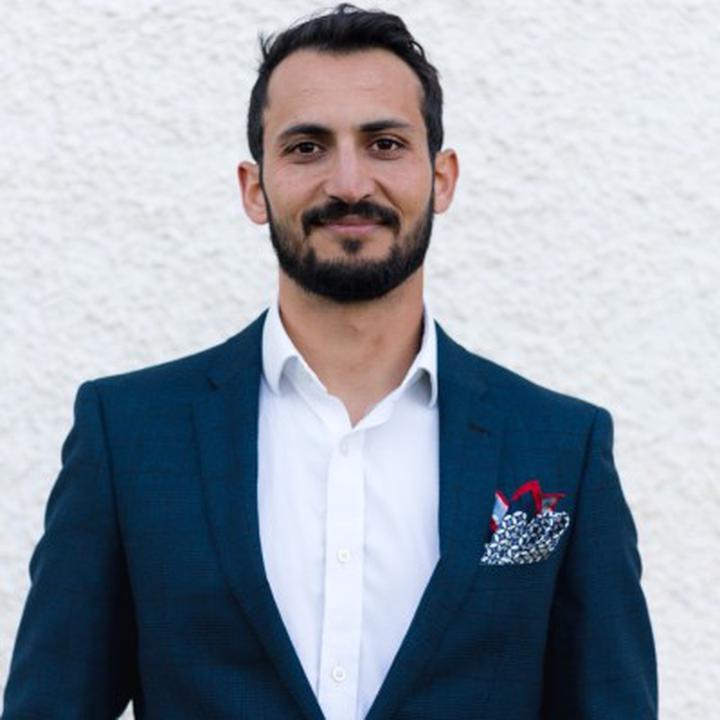
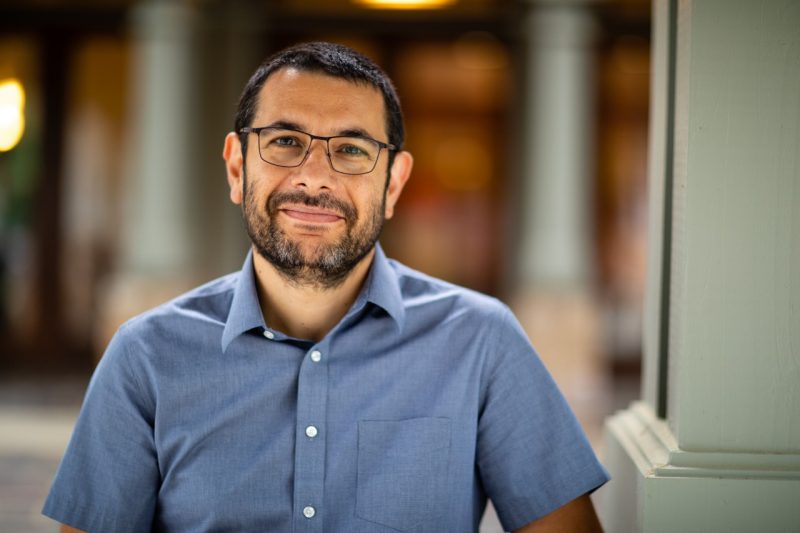
Chun-Liang Li is a Research Scientist at Apple MLR and an Affiliate Assistant Professor at the Allen School of Computer Science, University of Washington. He holds a Ph.D. in Machine Learning from Carnegie Mellon University (2014-2019) and a B.S./M.S. in Computer Science and Information Engineering from National Taiwan University (2008-2013). His research spans machine learning, computer vision, and natural language processing, with emphasis on representation learning, efficient model training, and multimodal understanding. Key focus areas include large language model optimization, contrastive learning techniques, document understanding systems, and domain adaptation methods. Recent publications demonstrate strong focus on LLM efficiency (dataset decomposition, distillation techniques), document AI (table reasoning, form extraction), and multimodal alignment (image-text retrieval, prefix conditioning). His work consistently appears in premier venues including NeurIPS, CVPR, ACL, and ICLR. Awards and Honors: IBM Ph.D. Fellowship (2018) Best student paper runner-up, IJCAI (2017) First Place in both tracks of KDD Cup (2011, 2013) He actively mentors students and collaborators, inviting contact for internship opportunities. Current industry-academic position bridges cutting-edge research with practical applications in machine learning systems.
Libby Hemphill is an Associate Professor at the University of Michigan's School of Information, with additional roles as Research Associate Professor at the Institute for Social Research and faculty appointments in the Digital Studies Institute. She directs the Resource Center for Minority Data and the Social Media Archive at ICPSR. Primary Affiliation: School of Information, University of Michigan Additional Roles: Research Associate Professor (Institute for Social Research), Director of Resource Center for Minority Data and Social Media Archive (ICPSR) Research Focus: Hemphill investigates human-AI collaboration in content moderation, data curation practices, and generative AI applications in social science. Her work addresses systemic challenges in social media toxicity, ethical data reuse, and AI governance. Publication Trends: Recent research spans AI-driven toxicity detection (2024-2025), data curation ethics (2022), and generative AI's societal impacts (2024). She employs computational methods for large-scale experiments and develops frameworks for responsible AI deployment. Labs & Initiatives: Leads the Social Media Archive, a critical resource for social media research, and directs the Resource Center for Minority Data at ICPSR, advancing equitable data practices.
Fazl Barez is a Senior Research Fellow at the University of Oxford leading research on Technical AI Safety and Governance. He is also affiliated with Cambridge's CSER, NTU's Digital Trust Centre, Edinburgh's Informatics, and is a member of ELLIS. Previously, he was a researcher at Amazon and Huawei, and Co-director and Head of Research at Apart Research. He currently serves as an advisor to Martian and has worked with Anthropic's Alignment team (2024-2025). University of Oxford: Senior Research Fellow Cambridge CSER: Affiliate NTU Digital Trust Centre: Affiliate Edinburgh Informatics: Affiliate ELLIS: Member Anthropic: Alignment Team Collaborator (2024-2025) Martian: Advisor Dr. Barez's research focuses on ensuring AI systems remain safe, interpretable, and beneficial as they grow in capability. His work spans four interconnected areas: Interpretability (developing methods to reveal how AI models process information internally), Safety and Alignment (creating tools to detect and address deceptive behaviors), Technical Governance (translating technical insights into governance frameworks), and Societal Impact (examining broader implications of AI on society). His research is funded by OpenAI, Anthropic, Schmidt Sciences, Future of Life Institute, and NVIDIA. The trends in Dr. Barez's publications show a consistent focus on making AI systems more transparent and safer. His recent work explores mechanistic interpretability techniques like sparse autoencoders, investigates how language models relearn removed concepts, examines machine unlearning for safety applications, and develops frameworks for value alignment measurement. His publications appear in top venues including NeurIPS, ICML, ICLR, ACL, and EMNLP, reflecting his significant contributions to both theoretical and practical aspects of AI safety. Future of Humanity Institute PhD Affiliate (2022-2024) EPSRC PhD Student Scholarship (2019-2023) MSc Scholarship (2017-2018) BA (Hons) Sports Performance Scholarship (2013-2017) Dr. Barez has mentored numerous students who have gone on to prominent positions at organizations like Microsoft Research, DeepMind, and Martian. His research is generously funded by major AI organizations including OpenAI, Anthropic, Schmidt Sciences, Future of Life Institute, and NVIDIA. He has served as an Area Chair for ACL 2025 and on program committees for major conferences including ECAI 2024. His work has practical impact, with algorithms like N2G adopted by OpenAI to evaluate sparse autoencoders for interpretability. Dr. Barez leads research at the intersection of technical AI safety and governance. His work connects with multiple research groups including the UK AI Security Institute, Alan Turing Institute, and various university centers. He has co-organized workshops such as the first Mechanistic Interpretability workshop at ICML 2024 and actively collaborates with researchers across the AI safety ecosystem. His research bridges the gap between theoretical safety research and practical implementation in real-world AI systems.
Elizabeth M. Daly is a Research Scientist at IBM Research Laboratory, Dublin, and an Adjunct Assistant Professor at Trinity College Dublin's School of Computer Science and Statistics. Her work focuses on interactive AI , human-centered design , and fairness in algorithmic systems . She contributes to AI governance and LLM safeguarding through projects like AutoFair and Granite Guardian. Ph.D. in Computer Science (2007), Trinity College Dublin Thesis: Social Network Analysis for Routing in Disconnected Delay-Tolerant MANETs Her research interests span: Interactive AI : Facilitating AI-human negotiation for common objectives Trustworthy AI : Addressing fairness, accountability, and transparency in industrial applications Explainable AI : Developing tools like AIMEE for model exploration and editing She serves on the program committees of top conferences (RecSys, IUI, WWW, UMAP, ICWSM) and the Royal Irish Academy’s committee on Engineering and Computer Science. Notable scientific award: ACM Distinguished Member . Projects: AutoFair : Human-compatible automation of fairness in AI AIMEE : AI model explorer and editor tool Usage Governance Advisor : Translating AI intent into governance frameworks She leads the Interactive AI Group at IBM Research Europe - Ireland.
Earl Barr is a Professor of Software Engineering at the Department of Computer Science, University College London. His research focuses on software engineering, data management and data science, and neural software engineering approaches. Research Interests: Dr. Barr's work bridges traditional software engineering with modern machine learning techniques. He explores automated program repair, code summarization, log anomaly detection, and the application of neural models to software development workflows. His studies often address both practical challenges in industry and theoretical aspects of code analysis. Article Trends: His recent publications emphasize the integration of large language models (LLMs) into software engineering tasks, including fact selection for program repair, semantic prompt augmentation, and grid-based code representation. Other recurring themes include empirical studies of development practices, fuzzing techniques for program analysis, and the use of surprisal theory in issue tracking systems. Scientific Awards: ACM Sigsoft Distinguished Paper Award (2013) Best Paper Award - IEEE Conference on E-Commerce Technology (2005) I3P Fellowship (2009-10) Professional Activities: Dr. Barr has served as a visiting assistant professor at the University of California Davis (2013) and as a reviewer for top software engineering conferences and journals including ICSE, ISSTA, FSE, SAS, TOSEM, TSE, and the DARPA MURI Program. He also contributed to commercialization efforts through a patented approach leveraging statistical analysis from large software corpora for engineering tools.
A.E. Zaidman is a Professor in the Software Technology department at Delft University of Technology's Faculty of Electrical Engineering, Mathematics and Computer Science. His research focuses on software testing, code quality, and developer tooling, with recent emphasis on socio-technical factors, environmental impacts of testing, and GitHub Actions workflows. Key Research Areas Test amplification (developer interactions with automated testing) Code smell detection and its impact on software quality Empirical studies in open-source software testing AI/ML applications in test generation and analysis Scientific Awards Best Artifact Award (2022) Best Emerging Results Paper Award (2018) Best ERA paper award (2015) Best tool demo paper award (2017) ICPC 2009 Best Paper Award Recent Publications 2025: Systematic mapping of qualitative software testing methods 2025: Industrial language engineering case studies using Spoofax 2024: Environmental impact analysis of Java testing 2024: GitHub Actions workflow smell investigations
Dimitrios Nikolopoulos is the John W. Hancock Professor of Engineering at Virginia Tech's College of Engineering, within the Department of Computer Science. His research focuses on high-performance computing, systems runtime systems, memory management, and edge computing. He holds a Chartered Engineer (CEng) certification. Education: M.Eng., University of Patras, Greece (1996) M.Sc., University of Patras, Greece (1997) Ph.D., University of Patras, Greece (2000) Research Interests: His work spans transprecision computing, parallel programming paradigms, efficient inference frameworks for large language models (LLMs), and energy-efficient server ecosystems. Recent efforts emphasize optimizing edge computing systems, GPU resource sharing, and adaptive memory management in cloud-edge environments. Recent Trends in Publications: Recent studies highlight advancements in edge-serving frameworks (e.g., SLED), multi-agent systems for HPC code optimization (MARCO), and novel approaches to GPU and memory resource utilization in constrained settings. Themes include reducing latency, improving scalability, and integrating AI-driven techniques into HPC workflows. Grants & Advising: Details on current grants and advisees are not explicitly listed in the provided materials. Labs/Teams: His research is conducted through collaborative groups within Virginia Tech's Department of Computer Science, focusing on systems, parallel computing, and AI/ML infrastructure.
Seth Lazar is a Professor of Philosophy at the Australian National University (ANU), holding roles as an Australian Research Council (ARC) Future Fellow and a Distinguished Research Fellow at the University of Oxford Institute for Ethics in AI. He leads the Machine Intelligence and Normative Theory (MINT) Lab, focusing on the ethical implications of AI and computing. His research spans AI governance, political philosophy, and the ethics of war, with a strong emphasis on normative frameworks for emerging technologies. Education: D.Phil. (Doctorate in Philosophy) M.Phil. BA (Honors) Research Interests: Lazar’s work bridges philosophy and technology, examining how AI structures social relations (the 'Algorithmic City') and governs digital interactions. He explores algorithmic power dynamics, communicative justice in the public sphere, and the ethical challenges posed by AI agents. His recent projects, funded by the ARC, Templeton World Charity Foundation, and others, address topics like AI safety, democratic values, and the moral responsibilities of AI systems. Key Contributions: Authored Connected by Code: How AI Structures and Governs the Ways We Relate (Oxford UP, 2023). Delivered the 2023 Tanner Lecture on AI and Human Values at Stanford University. Edited special issues on AI ethics for journals like Canadian Journal of Philosophy and Philosophical Studies . Awards & Grants: ARC Future Fellowship Templeton World Charity Foundation grants Schmidt Futures funding Insurance Australia Group collaborations Future Directions: Lazar advocates for 'agent advocates' to empower users over platform-controlled AI systems. His work on anticipatory AI ethics and normative theory seeks to ensure AI aligns with democratic and moral values, addressing risks like cyber threats and algorithmic bias.
Smaranda Muresan is an Associate Professor in the Department of Computer Science at Barnard College, with affiliations at Columbia University. Her research focuses on artificial intelligence, natural language processing, and computational linguistics, emphasizing ethical AI applications, educational technology, and stylistic analysis. Academic Affiliation: Associate Professor at Barnard College Email: smuresan@barnard.edu Her work spans multiple subfields including fact-checking systems, argument mining, sentiment analysis, and figurative language processing. She explores abstract reasoning in LLMs through novel benchmarks like the New York Times Connections game and investigates AI's role in creativity, education, and social good initiatives. Recent publications highlight her contributions to global segmenting algorithms, explainable authorship attribution, and multimodal figurative language analysis. While no explicit student advisees are listed, her research intersects with interdisciplinary teams at Barnard and Columbia. She actively participates in academic workshops and conferences such as the ACL Annual Meeting and FigLang, shaping standards for computational analysis of nuanced language phenomena.
Dr. Krishan Rana is a Research Fellow at the QUT Centre for Robotics, specializing in robot learning at the intersection of AI and robotics. His work focuses on enabling robots to intelligently plan and interact with the world, particularly through projects like From Chat to Chores: The Future of LLM-Powered Service Robots and Robot Learning for Everyday Tasks with Large Language Models . He explores reinforcement learning, visuomotor control, and sim-to-real policy deployment. His research interests include robot navigation, policy learning, and embodied AI, with applications in service robotics and medical imaging. He leads projects involving semantic maps, affordance-centric task frames, and multi-modal perception. His work bridges theoretical advancements with practical deployments in dynamic environments. Recent contributions include developing datasets like LHManip for cluttered manipulation tasks and Robohop for visual navigation. He collaborates on open-source robotics tools through initiatives like Open X-Embodiment. His research emphasizes scalability, sample efficiency, and integration of large language models into robotic systems.
Massimiliano Di Penta is an Ordinary Professor in the Department of Engineering (DING) at the University of Sannio . His research focuses on Software Engineering , Code Obfuscation , Software Security , and Empirical Software Engineering , with a strong emphasis on Open-Source Systems and Machine Learning in Software Development .
Elissaios Sarmas is a researcher in the field of AI and machine learning applications for energy systems and smart cities. He has collaborated extensively with researchers like Vangelis Marinakis, Haris Ch. Doukas, and Ioannis Papias across institutions. Research Interests: AI in Energy Sector Smart Grid Analytics Data-Driven Decision Making Demand Response Programs Energy Poverty Mitigation Climate Change Adaptation Publication Trends: His recent work focuses on ensemble AI models for energy measurement, clustering methodologies for electricity loads, and large language models in energy digital twins, covering 2023-2025. Articles span journals like IEEE Access , Applied Soft Computing , and Information Sciences .
Dr. Anas Abdelrazeq serves as Chief Engineer at the Chair of Intelligence in Quality Sensing , RWTH Aachen University. His work focuses on AI integration in manufacturing, machine vision technologies, and quality management innovation. Current research spans generative AI , reinforcement learning , and data quality optimization Key projects include AI-driven product development and MetaVision industrial metaverse studies Recent publications address: Smart measurement strategies through machine learning Generative AI for non-destructive testing Curiosity-driven AI for job shop scheduling Machine vision applications in SMEs He contributes to the Cluster of Excellence Internet of Production and leads initiatives in 3D metrology and AI in Manufacturing as part of RWTH AI Week. The chair actively engages in developing digital process platforms for future construction sites and industrial applications.
Thorsten Holz is a Professor and Head of the Chair for System Security at Ruhr-University Bochum's Faculty of Computer Science. His research team focuses on critical areas of cybersecurity including binary analysis, automated vulnerability discovery (fuzzing), embedded systems security, and privacy compliance (GDPR). Research Focus: His work spans: Binary analysis & reverse engineering techniques Software security with emphasis on fuzzing and automated vulnerability assessment Security of embedded/IoT systems Privacy mechanisms and GDPR implementation Network and internet security protocols Publication Trends: Recent works (2024-2025) demonstrate strong emphasis on: Advanced fuzzing methodologies for software/hardware systems Security of satellite and aerospace systems Detection of AI-generated media (deepfakes) and LLM vulnerabilities Trusted execution environments (TEEs) and memory corruption defenses Social media/platform security abuses He leads a research group developing cutting-edge tools for vulnerability discovery and security validation, with significant real-world impact in both academic and industry domains.
Daoyuan Wu is an Assistant Professor at the School of Data Science, Lingnan University, Hong Kong, one of eight UGC-funded universities in the region. Previously, he held positions as a Research Assistant Professor at HKUST CSE, Senior Research Fellow at Nanyang Technological University, Senior Researcher at Huawei HKRC, and Research Assistant Professor in the Department of Information Engineering at The Chinese University of Hong Kong (CUHK), where he also served as an Adjunct Assistant Professor from 2022-2023. His research focuses on the intersection of Large Language Models and security, with specialization in LLM for Security and Security of AI/Blockchain/Code/Mobile . His work spans multiple domains including AI/LLM4Sec (using LLMs for vulnerability detection), AI/LLM-Sec (securing LLMs themselves), Blockchain and Web3 Security, and Mobile and Software Security. He leads the AIS2Lab which is actively researching LLM applications in cybersecurity contexts. His recent publications demonstrate a strong trend toward applying LLMs to security problems across multiple domains, with significant contributions to smart contract security through tools like PropertyGPT (which received a Distinguished Paper Award at NDSS 2025), GPTScan, and ACFix. His work combines program analysis with LLM capabilities to address complex security challenges that traditional methods struggle with. Distinguished Paper Award at NDSS 2025 for PropertyGPT: LLM-driven Formal Verification of Smart Contracts through Retrieval-Augmented Property Generation Dr. Wu actively advises PhD and research students, with several former students now working at top institutions and companies including Huawei, OKX, and academia. He's currently hiring PhD students for Fall 2026 with scholarship support of approximately HK$19,000 per month. His lab receives funding from multiple internal and external grants supporting PhD students, RAs, and PostDocs. He leads the AIS2Lab which focuses on AI/LLM applications in security contexts across multiple domains including blockchain, mobile security, and software security. The lab maintains active collaborations with researchers at top institutions globally and has developed multiple influential tools and frameworks for security analysis.