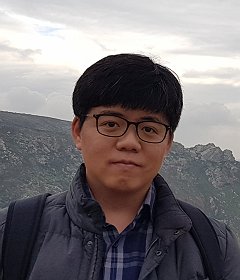
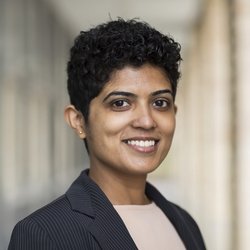
Hanjun Kim is a researcher at Yonsei University, focusing on compiler design, machine learning optimization, and hardware-aware programming techniques. His work bridges theoretical research with practical implementations in embedded systems and security domains. Research Interests Compiler-driven optimization for PIM (Processing-in-Memory) architectures Homomorphic encryption compiler design Parallel computing for DNN/LLM inference Network function program analysis Recent research trends include: application of compiler techniques to optimize resource utilization in heterogeneous computing environments, particularly for AI workloads and secure computation. His publications demonstrate expertise in tackling performance bottlenecks through architectural and compiler co-design. Conference Service 2025 SPLASH OOPSLA Review Committee 2025 LCTES Program Committee 2024 CGO Program Committee 2023 LCTES Program Committee 2022 CGO Organization Committee 2020 LCTES Program Committee
Ambuj Varshney is a researcher specializing in low-power wireless communication, visible light networking, and embedded systems. His work explores tunnel diodes for non-contact sensing, backscatter technologies, and edge-based language models. Key contributions include AudioCast for audio-broadcast connectivity, TunnelSense for tunnel diode sensing, and PiXelGen for mixed-reality cameras. Core Research Areas: Wireless Sensor Networks, Backscatter, Tunnel Diodes, IoT, Embedded Systems Recent Trends: Integration of large language models (LLMs) in edge devices, visible light communication, low-power AR networking
Philipp Müller is a Researcher at the German Research Center for Artificial Intelligence (DFKI) in the Cognitive Assistive Systems department. His work focuses on interdisciplinary research at the intersection of computational linguistics, clinical psychology, and multimodal interaction. Institution: German Research Center for Artificial Intelligence (DFKI) Department: Cognitive Assistive Systems His research explores the application of large language models for psychological conflict recognition, multi-modal context modeling in motivational interviews, and EEG-based visual attention analysis in realistic environments. Publications span conferences like CLPsych, LREC-COLING, and ICMI. Recent collaborative work includes: 2025: AutoPsyC - Psychological assessment using LLMs 2024: M3TCM - Multimodal dialogue systems 2024: EEG fixation classification - Cognitive neuroscience applications
Giovanna Di Marzo Serugendo is a researcher affiliated with the University of Geneva (Faculty of Social Sciences, Centre for Informatics) and the Institute of Information Service Science (ISS) . Her work spans semantic technologies, agent-based modeling, and sustainable systems. Research interests focus on Semantic knowledge graphs for regulatory compliance Ontology-driven resource management Self-organizing systems inspired by biological models AI applications in smart grids and urban mobility Digital agriculture platforms for smallholder farmers Recent publications highlight trends in ontology automation using LLMs, agent-based simulations for urban planning, and KG-enhanced compliance frameworks . She leads projects integrating digital twins with smart energy systems and develops bio-inspired coordination paradigms. Supervised works include 17 research projects in these domains. Current technical reports and conference papers explore cybersecurity-safety interdependencies in autonomous vehicles and decentralized event source detection in sensor networks.
Paolo Papotti is an Associate Professor in the Data Science department at EURECOM, France, since 2017. He previously worked as a scientist at QCRI (Qatar) and as an Assistant Professor at Arizona State University (USA). His research focuses on scalable data management, NLP, and enabling Large Language Models (LLMs) to process structured data effectively. Contact: papotti@eurecom.fr | Website
Xiaofei Xie is an Assistant Professor at the School of Computing and Information Systems (SCIS), Singapore Management University (SMU). He received his PhD from Tianjin University in 2018 and was a postdoctoral researcher at Nanyang Technological University (2018-2021) before joining SMU in 2022. His research focuses on software engineering, AI systems, and cybersecurity. Dr. Xie's primary research areas include program analysis, software testing, vulnerability detection, and quality assurance of AI systems. His work spans: Testing methodologies for autonomous systems and games AI security including backdoor detection and model robustness Automated program repair and code generation Formal methods and semantic code analysis His recent publications demonstrate strong emphasis on AI/ML system testing, cybersecurity applications, and program analysis techniques. Research trends show increasing focus on LLM-based program repair, autonomous system validation, and federated learning security. Major Awards: ACM SIGSOFT Distinguished Paper Awards (ASE'23, ISSTA'22, ASE'19, FSE'16) CCF Outstanding Doctoral Dissertation Award (2019) 3rd place in AI Singapore's Trusted Media Challenge (2022) Wallenberg-NTU Presidential Postdoctoral Fellowship (2019) APSEC Best Paper Award (2020) He currently advises 7 PhD/Master's students including CHENG Mingfei, KONG Jiaolong, and YU Jiongchi. Dr. Xie leads research in software reliability and AI security at SMU's SCIS.
Thien Nguyen is an Associate Professor in the Department of Computer Science at the University of Oregon, within the College of Arts and Sciences. His research focuses on natural language processing, information extraction, and deep learning, with an emphasis on multilingual and large-scale language models. Ph.D., Computer Science, New York University M.S., Computer Science, New York University B.S., Computer Science, Hanoi University of Science and Technology His research explores how computers can understand human language to perform cognitive tasks, particularly by distilling structured information from massive multilingual text. He is a pioneer in applying deep learning to information extraction and has developed influential models and datasets such as CulturaX , Vistral , and Okapi . His lab designs learning algorithms for NLP tasks including event detection, machine translation, and chatbots. The recent work centers on large language models, cross-lingual transfer, and continual learning. His 15 most recent publications reflect a strong trend in multilingual NLP , large language models , event and relation extraction , and active and continual learning . These works span dataset creation, model development, and evaluation frameworks, often leveraging transformer architectures and reinforcement learning. The research is highly interdisciplinary, combining data mining, machine learning, and linguistic analysis. NSF CAREER Award (2023) Best Demo Paper Award, EACL 2021 Outstanding Demo Paper Award, EACL 2021 IBM Ph.D. Fellowship (2016) Dean's Dissertation Fellowship, NYU Harold Grad Prize, NYU Dr. Nguyen advises multiple Ph.D. and M.S. students and has secured significant research funding from the NSF, IARPA, and Adobe Research. His lab, UO-NLP, is actively developing tools like Trankit and FourIE . He teaches courses in data structures, machine learning, and NLP, and serves on the program and senior committees of top-tier conferences such as ACL, EMNLP, and NeurIPS. He is deeply involved in advancing multilingual NLP and democratizing access to language technologies across diverse languages.
Professor Ying Liu is a Professor and Chair in Intelligent Manufacturing at the School of Engineering, Cardiff University, UK, a position he has held since August 2021. He leads the High-value Manufacturing research group within the Department of Mechanical Engineering. Prior to this, he served as an Assistant Professor at the National University of Singapore (2010–2013) and the Hong Kong Polytechnic University (2006–2010). PhD, Innovation in Manufacturing Systems and Technology (IMST), Singapore-MIT Alliance (SMA), National University of Singapore (2006) MSc, Singapore-MIT Alliance (SMA), Nanyang Technological University (NTU) MEng & BEng, Mechanical Engineering, Chongqing University, China His research spans engineering informatics, digital and intelligent manufacturing, AI and machine learning in engineering design, and advanced ICT in manufacturing. He has published over 160 scholarly articles and contributed to major journals and conferences in the field. His recent work focuses on knowledge graphs, digital twins, human-robot collaboration, and energy modeling in smart manufacturing, often integrating large language models and advanced deep learning techniques. The most recent publications highlight a strong trend toward integrating AI, particularly large language models and knowledge graphs, into smart manufacturing systems. Themes include predictive maintenance, battery state estimation, human fatigue modeling, and sustainable manufacturing. His work increasingly emphasizes human-centric approaches aligned with Industry 5.0 principles. Best Paper Award 2022, CCF Transactions on Pervasive Computing and Interaction ESI Highly Cited Paper and Hot Paper, Research and Application of Machine Learning for Additive Manufacturing 2020 Reviewer of the Year, ASME Journal of Computing and Information Science in Engineering (JCISE) Professor Liu actively supervises postgraduate students and has advised several successful PhD candidates, including Dr. Chong Chen and Mr. Zhouyang Ding. His research is funded by major agencies such as EPSRC (UK), GRF (Hong Kong), MOE (Singapore), A*STAR, and NSF (China), as well as industrial partners. He serves as Associate Editor for ASME JCISE, IEEE T-ASE, and several other journals, and was recently appointed Senior Editor of the Journal of Engineering Design. He also leads special issues and topical collections on AI in engineering. He leads the High-value Manufacturing research group at Cardiff University, focusing on digital transformation in manufacturing. His team works on projects involving digital twins, knowledge graphs, and AI-driven design innovation, often in collaboration with international institutions.
Sandra Geisler is a Junior Professor for Data Stream Management and Analysis at the Department of Computer Science, RWTH Aachen University, a position she has held since September 2021. She is also the leader of the Digital Health Spaces group at the Fraunhofer Institute for Applied Information Technology (FIT) in St. Augustin, reflecting her dual expertise in academic research and applied digital health solutions. Bachelor/Master: Diploma in Computer Science, RWTH Aachen University (2008) PhD: Doctoral degree in Computer Science, RWTH Aachen University (2016) Her research focuses on data stream systems, real-time analytics, data quality, and their applications in digital health and industrial processes. She has made significant contributions to ontology-based data quality management, edge computing for stream processing, and FAIR data principles. Recent work explores the integration of large language models into data management workflows and the development of privacy-preserving platforms for industrial data exchange. Her recent publications demonstrate a strong trend in distributed and edge-based stream processing, interdisciplinary applications in healthcare and supply chains, and the use of AI for data discoverability and quality. Topics include in-network computing, simulation of edge queries, self-tonometry for glaucoma, and cross-company data sharing with privacy awareness. She has served as Associate Editor for the Data & Knowledge Engineering Journal (Elsevier), Public Relation Chair for QDB Workshop (VLDB 2016), and Workshop Chair for IMMoA and HIMoA workshops. She has also edited a special issue on Information Management in Mobile Applications in the Pervasive and Mobile Computing Journal. Geisler has supervised multiple theses on topics including LLM-based ontology integration, edge anomaly detection, and data ecosystem modeling. She has been actively involved in research grants and projects related to industrial data processing, digital health, and sustainable production. She teaches courses such as Data Stream Management and Analysis and Data Ecosystems Lab. She leads the Digital Health Spaces research group at Fraunhofer FIT, focusing on innovative solutions for health data management and patient-centric digital tools. Her work bridges computer science, healthcare, and industrial applications, promoting secure, efficient, and intelligent data ecosystems.
Dr Yaji Sripada is a Senior Lecturer in the School of Natural and Computing Sciences at the University of Aberdeen. His research integrates artificial intelligence, machine learning, natural language generation (NLG), and information visualization to enhance human-machine communication, particularly in automating data science workflows and ensuring model transparency. His research interests are centered on Natural Language Generation , Explainable AI , Human-Computer Interaction , and Fairness, Accountability, and Transparency in AI . He has pioneered work in generating textual summaries from complex data, especially in healthcare and environmental monitoring. His research bridges technical AI development with real-world applications in public transport, neonatal care, and digital governance. His recent publications (2023–2025) reflect a strong trend towards AI ethics , regulatory policy , and the integration of large language models (LLMs) in public infrastructure and automated verification. He also holds multiple patents in NLG and data processing technologies, underscoring his translational research impact. Dr Sripada is a co-founder of Arria NLG, a leading company in data-to-text technology, and has advised numerous researchers and students in AI and NLG. His collaborative work spans disciplines including computer science, environmental science, transportation, and law. He has contributed to policy discussions on AI regulation and copyright, demonstrating engagement with societal implications of AI. His work on bias amplification in generative AI highlights his commitment to responsible innovation. His research has been applied in diverse domains, including neonatal intensive care (e.g., BT-Nurse system), rural transport systems (e.g., TravelBot), and environmental data communication (e.g., river level reporting). He continues to lead innovative projects at the intersection of AI, data science, and human-centered design.
Jennifer D'Souza is a Research Fellow in the Open Research Knowledge Graph (ORKG) project at the Data Science and Digital Libraries research group within the Technische Informationsbibliothek (TIB) . Her current work focuses on natural language machine learning, including knowledge graph construction, ontology alignment, and AI-assisted scientific discovery. Prior to TIB, she held postdoctoral positions at the University of California, Davis (focusing on software engineering and NLP applications) and completed her PhD at the University of Texas at Dallas, specializing in relation mining. She has also contributed to industrial software solutions in concept generation. Education : PhD in Computer Science, University of Texas at Dallas Postdoctoral Researcher, University of California, Davis Research Interests : Information Extraction and Question Answering Scientometrics and Knowledge Organization Natural Language Processing (NLP) for Ontology Learning Large Language Models (LLMs) in Scientific Workflows Awards & Grants : Not explicitly listed, but her contributions to projects like ORKG and participation in hackathons highlight collaborative achievements in AI-driven research. Labs/Teams : Active member of the Data Science and Digital Libraries group at TIB, contributing to projects such as ORKG and the Large Language Models for Ontology Learning Challenge .
Hwajung Hong is an Associate Professor in the School of Interactive Computing at Georgia Institute of Technology's College of Computing. With a prolific publication record spanning from 2009 to 2025, Dr. Hong has established herself as a leading researcher at the intersection of Human-Computer Interaction, accessibility, and mental health applications. Her work frequently appears in top-tier venues including CHI, CSCW, and DIS, with growing emphasis on AI/LLM applications in recent years. Dr. Hong's research focuses on designing technology for vulnerable populations, particularly individuals with autism spectrum disorder, mental health challenges, and neurodiverse communities. Her early work centered on social computing applications for autism support, evolving toward more comprehensive systems addressing mental wellness, stress management, and relationship dynamics. Recent publications demonstrate a strategic pivot toward leveraging large language models for healthcare interventions, communication support, and bias mitigation. Analysis of her 15 most recent publications reveals a strong trajectory toward AI-mediated interventions across multiple domains - from mental health support for Korean investigative officers to communication tools for minimally verbal autistic children. Her work consistently emphasizes user-centered design, cultural sensitivity, and practical implementation in real-world contexts rather than purely theoretical approaches. Dr. Hong has mentored numerous graduate students who have become productive researchers in their own right, with Kwangyoung Lee, Dasom Choi, and Hyunseung Lim appearing as frequent collaborators on recent publications. Her research program demonstrates remarkable continuity in addressing human-centered challenges while adapting methodologies to incorporate emerging technologies.
Bongwon Suh is a Professor in the Department of Computer Science at the Korea Advanced Institute of Science and Technology (KAIST), College of Computing. With a prolific publication record spanning over two decades, Suh has established himself as a leading researcher in Human-Computer Interaction, Social Computing, and Artificial Intelligence applications. His research interests focus on Human-Computer Interaction, Social Computing, Artificial Intelligence, Large Language Models, Information Visualization, Recommender Systems, Multi-Agent Systems, and Accessibility Technologies. Suh's work often explores the intersection of social dynamics and technological systems, examining how AI and interactive systems can enhance human experiences in diverse contexts including education, entertainment, communication, and accessibility. Recent publications (2023-2025) demonstrate a strong focus on Large Language Model applications, with significant contributions in social simulation for education, conversational AI systems, multi-agent coordination, and accessibility technologies. His work frequently appears in top-tier venues including CHI, CSCW, UIST, and SIGIR, reflecting the high impact of his research. Suh has collaborated extensively with researchers across KAIST and internationally, with frequent co-authors including Changhoon Oh, Kyusik Kim, Hyungwoo Song, and Jeongwoo Ryu. His research program consistently bridges theoretical insights with practical applications, particularly in developing systems that enhance human social experiences through technology.
Marie Candito is a Lecturer at the School of Linguistics, Paris Cité University. She serves as Deputy Director of the Laboratoire de Linguistique Formelle (LLF, CNRS) since January 2025 and Head of the M2 Computational Linguistics program at Paris Cité University. Her research focuses on natural language processing, computational linguistics, and linguistic abilities of large language models. Current Projects : Co-PI of ANR SELEXINI (2021-2025) and scientific coordinator for LLF in ANR PANTAGRUEL (2023-2025) Past Projects : PI of ANR ASFALDA-French FrameNet (2013-2016), scientific coordinator for ANR PARSEME-FR (2015-2019), and member of ANR SEQUOIA (2010-2013) Her work involves measuring and mitigating biases in language models, inducing semantic lexicons from corpora, and studying human vs. LLM word associations. She supervises PhD students including Maria Andueza Rodriguez, Anna Mosolova, and David Kletz.
Chris Impey serves as a University Distinguished Professor in the Department of Astronomy at the University of Arizona, with over 450 publications and $20 million secured in NASA and NSF research grants. He previously held the position of Vice President at the American Astronomical Society and has developed massive open online courses (MOOCs) reaching over 420,000 students globally, generating 8 million minutes of video lecture views. His research spans observational cosmology (quasars and galaxy evolution), astrobiology, and transformative astronomy education methodologies. Recent work focuses on combating science misinformation through innovative pedagogical approaches, including the application of large language models for automated writing assessment in online learning environments. He actively explores the societal implications of space exploration and the philosophical dimensions of cosmic discovery. Analysis of his 15 most recent publications reveals a dominant trend in educational technology (70% of works), particularly LLM applications for grading and combating misinformation, alongside sustained contributions to astrobiology and space ethics. Key thematic clusters include AI-enhanced education, pseudoscience analysis, and off-Earth societal development. Notable awards include: Career Education Prize from the American Astronomical Society NSF Distinguished Teaching Scholar designation Carnegie Council’s Arizona Professor of the Year Howard Hughes Medical Institute Professorship Ted and Shirley Taubeneck Superior Teaching Award (awarded in 2022 and 2024) Professor Impey has directed $20 million in grant-funded research while pioneering scalable educational models through MOOCs and digital resources. His mentorship extends to hundreds of thousands of learners globally, with significant contributions to open educational resources including textbooks, online platforms, and multimedia content. Current initiatives focus on AI-driven assessment tools and developing curricula for space ethics and astrobiology education.