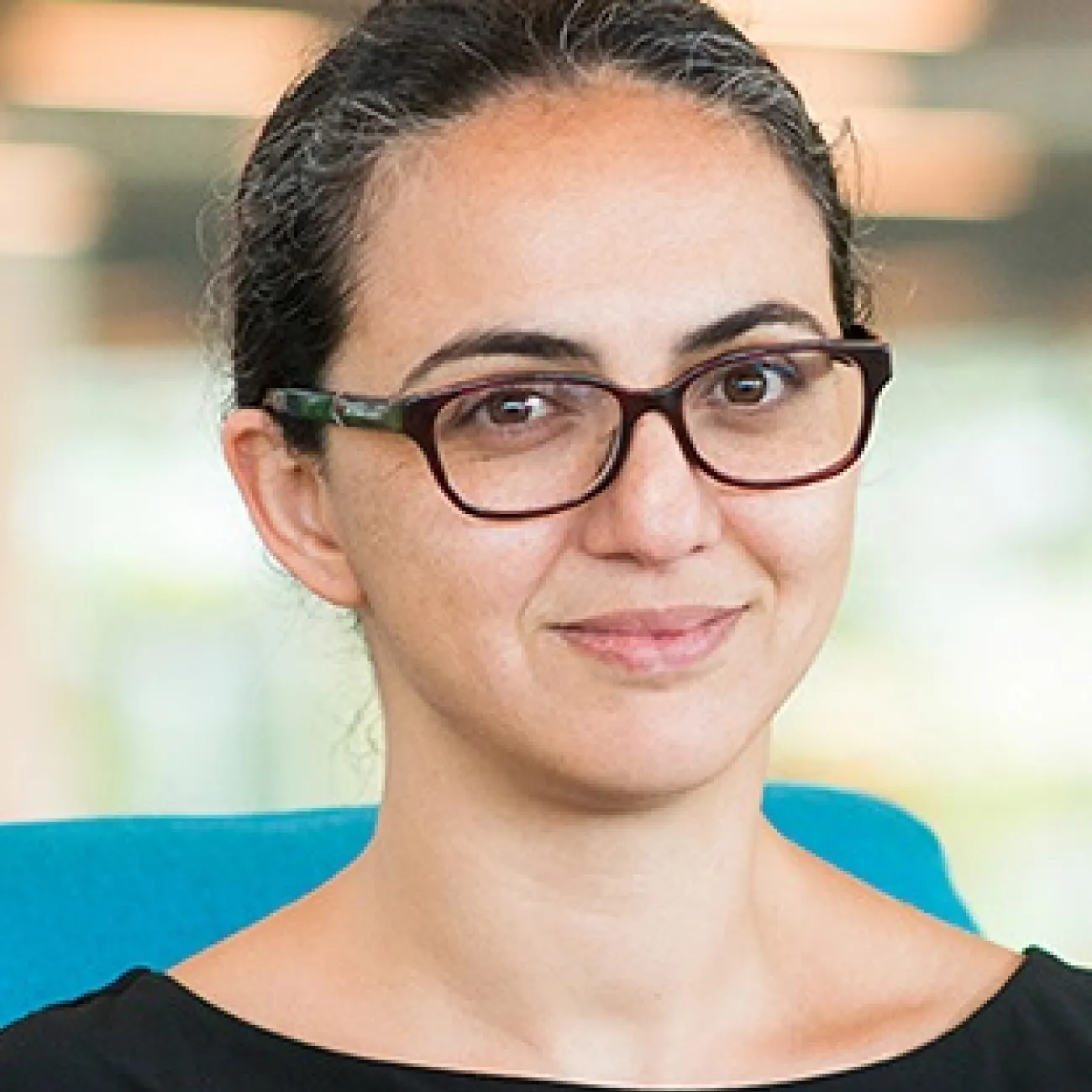
Prof. Selin Damla Ahipasaoglu is a Professor in Operational Research at the University of Southampton's School of Mathematical Sciences . She serves on the management team of the UKRI CDT SustAI (Artificial Intelligence for Sustainability) as Senior Tutor and Co-Lead for the Transportation and Logistics Theme . Her work bridges mathematical optimization with practical applications in sustainability, finance, and transportation systems. Research Interests : Convex Optimization Robust Optimization Discrete Choice Theory Experimental Design Machine Learning Current Research : Focused on robust optimization and its applications in discrete choice modeling, portfolio optimization, and transportation systems. She explores theoretical frameworks alongside real-world implementations, particularly through interdisciplinary projects like the UKRI CDT SustAI. Teaching : In the 2025/2026 academic year, she teaches MATH3017: Mathematical Programming and MATH2013: Operational Research II . She supervises PhD students in Mathematical Sciences, including Kexin Lai, Samuel Jericho Ward, and others.
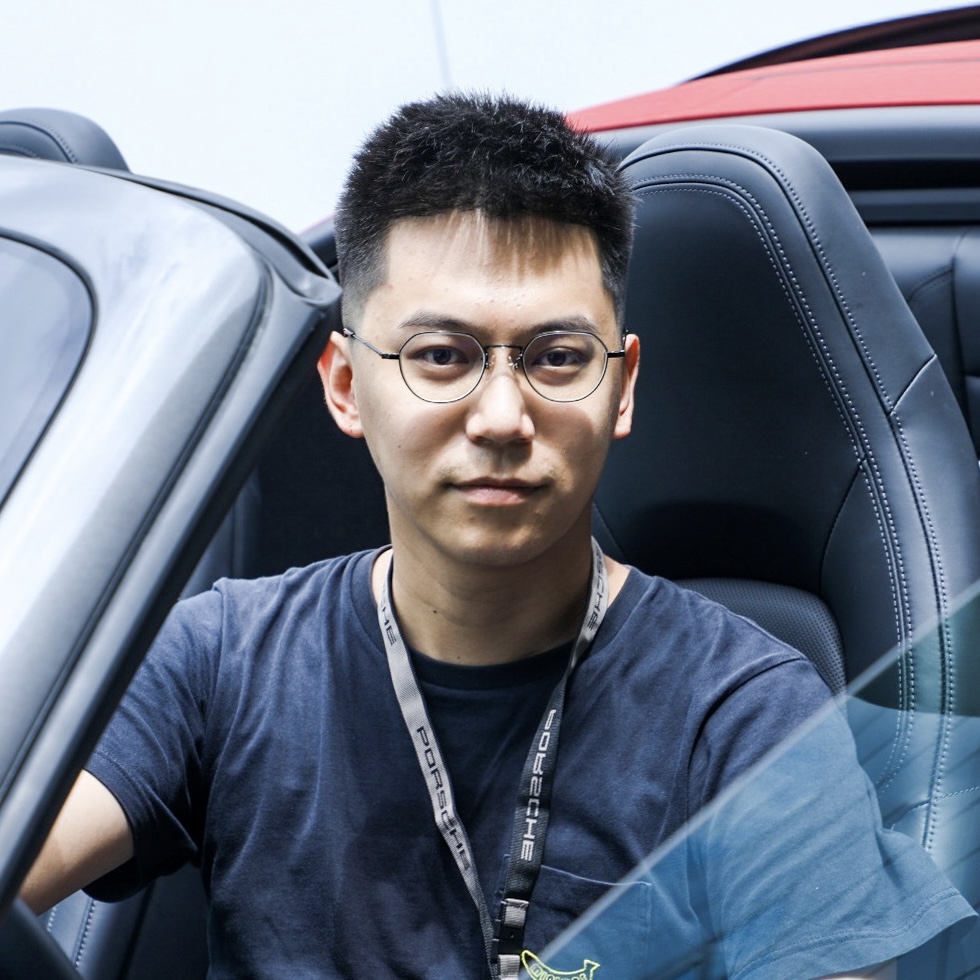
Hao Ding is a Lecturer at Queen Mary University of London and Senior Graduate Teaching Assistant at University of Warwick. He is pursuing a PhD in Finance and Econometrics at Warwick Business School since 2020. PhD in Finance and Econometrics (2020–present), University of Warwick MSc Risk Management and Financial Engineering (Distinction), Imperial College London (2018–2019) BSc Mathematics with Business Management (First Class Honours), University of Birmingham (2016–2018) BSc Economics, Huazhong University of Science and Technology (2014–2016)
Mark Beitel is a Research Scientist at the Child Study Center and Assistant Clinical Professor of Psychiatry at Yale University, with a secondary appointment as Lecturer in Ethnicity, Race, and Migration. He holds a PhD in Clinical Psychology from Fordham University. His primary focus is on psychotherapy process and outcome, particularly with Native American patients and those with co-occurring chronic pain and opioid dependence. He co-directs the Program for American Indian Health and directs the Native American Psychotherapy Research Project, addressing gaps in mental health research among Indigenous populations. Recent work includes large-scale studies on Native American college students’ counseling outcomes and qualitative investigations into homelessness and opioid treatment experiences. He has taught courses on Native American mental health and served as a part-time Visiting Professor at Aaniiih Nakoda College. His research integrates quantitative and qualitative methods to explore therapist techniques, working alliance dynamics, and session quality in culturally specific contexts. Over 75 peer-reviewed publications highlight his contributions to addiction counseling, pain management, and culturally responsive mental health practices. Collaborations with tribal and urban clinics emphasize real-world applicability, while ongoing projects examine terminology preferences in substance use treatment and VR interventions for pain management. Education: PhD in Clinical Psychology, Fordham University (2003) MA in Psychology, New School for Social Research (1996) AB in Psychology, University of Michigan (1994) Key Research Themes: Psychotherapy process/outcome measurement Native American behavioral health equity Chronic pain and opioid use disorder treatment Health disparities in addiction counseling Labs/Initiatives: Native American Psychotherapy Research Project Program for American Indian Health
Pei-Chi Lo serves as Assistant Professor in the Department of Information Management at National Sun Yat-sen University (NSYSU), Taiwan, where she leads research at the intersection of information retrieval, computational linguistics, and user profiling. Her work leverages knowledge graphs and large language models to advance contextual understanding systems and social media analysis. Education: PhD in Computer Science, Singapore Management University (supervised by Prof. Ee-Peng Lim) Research Focus: Dr. Lo pioneers knowledge-based information retrieval systems including contextual path generation and knowledge graph reasoning. Her computational linguistics work spans task-specific language models, Singlish (English Creole) processing, and LLM-based knowledge extraction. User profiling research examines behavior-based modeling, adaptive crowdsourcing, and social media personality analysis through community-specific language features. Publication Trends: Her 14 publications (2017-2025) reveal evolving expertise from foundational knowledge graph embeddings to contemporary LLM integration. Recent work (2023-2025) emphasizes causal reasoning with LLMs, judicial document analysis, and temporal knowledge discovery, while maintaining core strengths in contextual retrieval and low-resource language processing. Academic Leadership: Dr. Lo advises 8 Master's students across 2024-2025 cohorts and supervises undergraduate research teams. She has secured multiple competitive grants including NSTC projects on LLM-based causal reasoning (2025-2027) and temporal knowledge discovery (2024-2026), plus institutional funding for sustainable e-commerce and elderly care technology initiatives. Laboratory: Her NSYSU research lab actively recruits students for projects spanning judicial reasoning analysis, personalized travel planning systems, and Singlish processing tools, maintaining strong industry and community engagement through practical NLP applications.
Kostas Stathis is a Professor of Artificial Intelligence at the Department of Computer Science, Royal Holloway, University of London. He serves as Vice-Dean for Research and Knowledge Exchange in the School of Engineering, Physical, and Mathematical Sciences, and is the Interim Director of the Centre for AI and Skills. His research focuses on autonomous systems, cognitive agent models, game-theoretic strategies, and multi-agent environments, with applications in e-markets, regulation, and legal reasoning. Education details are not explicitly provided in the text. His research interests include knowledge representation, strategic interaction models, and programmable agent societies. He leads the DICE Lab, exploring AI-driven solutions for complex systems. Recent projects include iRealHAT-PEGA (human-agent teaming via eye gaze analysis) and collaborations on AI in regulatory decision-making for healthcare professions. He has supervised 9 research students and contributed to over 132 publications, including work on reinforcement learning in negotiation and LLM-enhanced legal reasoning frameworks. His work aligns with UN Sustainable Development Goals, particularly those addressing innovation and industry (Goal 9) and reducing inequalities through technological access (Goal 10).
Petar Radanliev is a part-time academic and project supervisor at the Department of Computer Science, University of Oxford. He is actively involved in teaching and research, focusing on AI security, cybersecurity, and emerging technologies such as quantum computing and blockchain. His work bridges academic rigor with practical industry applications, and he supervises professional masters students. His research interests center on the security and ethical implications of artificial intelligence. Key areas include AI attack surfaces, agentic AI, quantum AI, malware analysis, and responsible AI practices. He explores vulnerabilities in machine learning systems and develops frameworks for secure and resilient AI deployment. His recent publications and courses reflect a strong trend toward interdisciplinary integration of AI with blockchain and quantum computing, emphasizing real-world threats, ethical considerations, and future-proofing digital systems. These works highlight a consistent focus on proactive defense, red teaming, and the societal impact of emerging technologies. Fulbright Fellowship Prince of Wales Innovation Scholarship Petar Radanliev has supervised numerous professional masters students and contributes to academic discourse through extensive publications, books, and public lectures. He is affiliated with major research platforms including ORCID, Google Scholar, and the Alan Turing Institute. His teaching includes advanced courses on AI security, quantum AI, and red teaming, often delivered through recorded events and online platforms. He is associated with research themes in Security, Artificial Intelligence, and Machine Learning at Oxford, and has contributed to projects such as SOCIAM. His work emphasizes practical, actionable insights for professionals and academics navigating the evolving landscape of AI and cybersecurity.
Dr. Abolfazl Zaraki is a Senior Lecturer in AI and Robotics at the University of Hertfordshire's Department of Computer Science, part of the School of Physics, Engineering & Computer Science. He leads the Robotics Research Group and previously held roles at Cardiff University's School of Engineering and the IROHMS Research Centre. His academic journey includes a Master's in Mechatronics from University Technology Malaysia (2010) and a PhD in Automatic Robotic and Bioengineering from the University of Pisa (2014). He has held Research Fellow positions in Italy and the UK until 2019. Dr. Zaraki's research focuses on AI-driven autonomous systems, social robotics, and assistive technologies. Key projects include the EASEL, BabyRobot, and JAMES EU initiatives, alongside the Innovate UK-funded InSight project. His work emphasizes Human-Robot Interaction (HRI), trusted autonomy, and applications in healthcare and industrial contexts. Notable contributions include the development of the Kaspar humanoid robot for autism therapy and advancements in reinforcement learning for robotic control. His recent publications (2021–2025) explore agentic AI, memory-driven systems, and personalized LLMs for HRI, alongside technical advancements in robotic control, communication systems, and bio-inspired robotics. His research bridges theoretical AI innovation with practical applications in healthcare, education, and industrial automation. Zaraki has collaborated internationally across institutions and industry partners, contributing to 35+ research outputs. His work aligns with global trends in ethical AI, explainable systems, and human-centric robotics design.
Dr. Sherif Haggag serves as the Director of Teaching Operations and Course Advisor in the Department of Computer Science at the School of Computer and Mathematical Sciences, Faculty of Sciences, Engineering and Technology, University of Adelaide. His research focuses on human-centered aspects of software engineering and cybersecurity, with particular emphasis on: Human-centered software engineering and Adaptive User Interfaces Human factors and social engineering in Cybersecurity Persistence of the privacy Paradox and Cybersecurity behavior Digital health and smart software systems Domain-specific Visual Languages and Model-driven Engineering Smart home technologies and Digital Enhanced Living Agile methods (Scrum, SAFe, Kanban, Lean, large-scale agile) Human ergonomics using Sensor and depth cameras BCI applications Socio-technical aspects of Cybersecurity Dr. Haggag's work centers on addressing how software engineering can better account for diverse human characteristics including personality, gender, ethnicity, cultural backgrounds, emotional reactions, age, motivation, values, hidden biases, and physical & mental challenges. He also investigates social aspects related to collaboration, teamwork, leadership, and management. Dr. Haggag is eligible to supervise Master's and PhD students, though he notes he has limited capacity for supervision. He encourages prospective students to contact him to discuss availability and mentions that he enjoys 'thinking out of the box' through team brainstorming approaches.
Gao Min is a Professor and Doctoral Supervisor at the School of Big Data and Software, Chongqing University. He is a member of IEEE, CCF, and CAAI, and has held visiting scholar positions at Arizona State University and Reading University. His research focuses on personalized recommendation systems, anomaly detection, and social media mining, with strong emphasis on security aspects such as shilling attacks and fake news detection. His research interests include: Personalized Recommendation Systems Anomaly and Attack Detection in Recommender Systems Social Media Mining and Fake News Detection Graph-based and Contrastive Learning for Recommendations Domain Adaptation and Meta-Learning Time Series and Behavioral Forecasting The recent articles highlight a consistent trend in adversarial and robust learning for recommender systems and misinformation detection. His team leverages contrastive learning, graph neural networks, and meta-learning to enhance model robustness against poisoning and shilling attacks. There is a growing focus on simulating user behaviors, modeling fine-grained discrepancies, and applying domain adaptation techniques, particularly in detecting fake news and securing recommendation platforms. His scientific awards are primarily reflected through the recognition of his students, including multiple recipients of the National Graduate Scholarship, Huawei Scholarship, and Chongqing Outstanding Master’s Thesis Award. National Graduate Scholarship (awarded to students: Tian Renli, Yu Junliang, Song Yuqi, Zhao Zehua, Zhang Junwei, Wang Jia, Peng Lin, Ma Hao) Huawei Scholarship (awarded to students: Tan Kan, Wang Jia, Huang Yinqiu) Chongqing Outstanding Master's Thesis Award (awarded to students: Yu Junliang, Zhao Zehua, Zhang Junwei) Aerospace Scholarship (awarded to student: Zhang Junwei) Gao Min has secured significant research funding as principal investigator, including two National Natural Science Foundation projects, a sub-project of the National Key R&D Project, two Chongqing Natural Science Foundation projects, and one China Postdoctoral Fund project. He has also contributed as a main researcher in major national programs such as the 973 Program, National Key R&D Program, and National Science and Technology Support Program. He advises a vibrant research group that values autonomy, academic freedom, and practical research, with students regularly publishing in top venues and securing top-tier industry and academic positions. His team has developed key research platforms including QRec (Recommendation Algorithm Experiment Platform), Yue (Music Recommendation), ARLib (Data Pollution Attack Platform), and SDLib (Shill Attack Detection Platform). He serves as a reviewer for major journals and is a PC member of top conferences including CIKM, IJCAI, and AAAI.
Roberto Minelli is a Scientific Collaborator and Academic Coordinator at the Software Institute, Faculty of Computer Science, Università della Svizzera italiana (USI), where he also completed his Bachelor, Master, and PhD in Informatics. His work bridges research, education, and technology outreach, with a strong focus on software engineering, visualization, and developer interaction analysis. His research centers on leveraging interaction data from development environments to enhance software comprehension and evolution. Key areas include software visualization , mining software repositories , reverse engineering , and program comprehension . He has pioneered work in visual metaphors such as Software Cities and explored immersive environments like virtual reality for code visualization. The recent publications reflect a consistent trend in visual analytics for software engineering, with increasing emphasis on social and collaborative aspects of development (e.g., Discord, GitHub issues), large-scale system comprehension, and the integration of diverse data sources into unified visual models. His work combines empirical studies, tool development, and human-centered evaluation. Best Paper Award, IWESEP 2016 Most Influential Paper Award, ICPC 2015 Distinguished Reviewer Award, ICPC 2020 Minelli actively mentors students, co-supervising numerous Bachelor and Master theses in software visualization and analytics. He has secured multiple research and development mandates, including projects like Self-Driving Cars on Interactive Dynamic Tracks (SNF Agora) and Sphere Two: Swiss Pavilion @ Expo 2025 . He plays a central role in organizing key events such as VISSOFT, SIESTA, and #FormulaUSI, and contributes to curriculum development and outreach programs targeting secondary education. He is involved in several labs and teams, primarily the REVEAL research group (led by Prof. Michele Lanza) and the Software Institute at USI. His leadership in initiatives like CodeLounge and #FormulaUSI underscores his commitment to experiential learning and public engagement in computing.
Ruhul Amin is an Assistant Professor at Fordham University's Department of Computer and Information Science, where he explores the intersection of Artificial Intelligence , Data Science , and Public Health . His work spans multiple domains including Bioinformatics , Natural Language Processing , and Computational Social Science . PhD in Computer Science (Stony Brook University, 2019) MS in Computer Science (Stony Brook University, 2015) BSc in Computer Science (Shahjalal University, 2007) His research focuses on developing deep learning algorithms for genome annotation, anomaly detection in high-cardinality spaces, and assistive technologies for visually impaired users. Notably, he designed the Mongol Dip bilingual screen reading software and the Pipilika Bengali text search engine. Recent publications (2025-2024) demonstrate his expanding interests in large language model alignment , sentiment analysis across languages, and distributed reinforcement learning for cybersecurity applications. His work frequently appears at IEEE conferences and in journals like PLOS One. Scientific Recognition BASIS National ICT Award (Bangladesh) Best Poster Awards at IEEE R10 HTC and CEWIT conferences Bangladesh Prime Minister’s Award (2012) mBillionth South Asia Award (2010) He maintains active collaborations with research teams at University of Toronto , University of British Columbia , and Stony Brook University . Contact: moamin@cs.stonybrook.edu
Alberto Sanfeliu Cortés is a Full Professor of Computational Sciences and Artificial Intelligence at the Universitat Politècnica de Catalunya (UPC), where he has been a faculty member since 1981. He is affiliated with the Institut de Robòtica i Informàtica Industrial (IRI), a joint center of UPC and CSIC, and serves as the Scientific Director of the Unit of Excellence Maria Maeztu at IRI. He leads the Mobile Robotics research line and coordinates the Artificial Vision and Intelligent Systems Group (VIS). He previously served as director of IRI and the UPC Department of Automatic Control. Research interests: His work spans Artificial Intelligence, Robotics, Computer Vision, Pattern Recognition, SLAM, Human-Robot Interaction, Autonomous Systems, and Networked Robotics . He focuses on both theoretical and applied aspects, including urban robotics, autonomous navigation, and the integration of large language models in robotic systems. His research is deeply interdisciplinary, bridging engineering, AI, and societal applications. The recent publications highlight a strong trend toward human-centered robotics , particularly in urban environments, last-mile delivery, and cybernetic avatars. There is growing emphasis on large language models for explainability and personalization, collaborative robotics , and context-aware navigation using vision transformers. His work increasingly addresses societal integration of robots in smart cities and sustainable systems. Scientific Awards: Technology Prize from Generalitat de Catalunya Fellow of the International Association for Pattern Recognition (IAPR) Advising and Grants: He has supervised multiple PhD students, with current advisees working on topics like human intention learning and LLM-enhanced interaction. He has led 45 R&D projects, including 16 EU-funded ones, and was coordinator of the URUS project. Current projects include TORNADO (foundation models for robots handling deformable objects) and SOCIAL PIA (cybernetic avatars). He has also collaborated with Volkswagen Research on autonomous driving initiatives. Labs and Teams: He leads the Artificial Vision and Intelligent Systems (VIS) group and the Mobile Robotics research line at IRI, a premier robotics institute in Spain. His team is actively involved in EU and national projects, focusing on real-world deployment of intelligent robotic systems.
Dan Casas is a Senior Applied Scientist at Amazon in Seattle and an Associate Professor (Profesor Titular) on leave from King Juan Carlos University in Spain. His research spans the intersection of Computer Graphics, Computer Vision, and Machine Learning with a focus on 3D reconstruction, modeling, and animation of virtual humans and clothing. He has authored over 40 high-impact publications in top venues including SIGGRAPH, CVPR, and NeurIPS, and holds 3 international patents. Dr. Casas received his M.Sc. degree (2009) from Universitat Autònoma de Barcelona (Spain), including a research visit at Carnegie Mellon University. He earned his Ph.D. in Computer Graphics (2014) from the University of Surrey (UK), supervised by Prof. Adrian Hilton. He completed postdoctoral research at the University of Southern California's Institute for Creative Technology (2014-2015) and the Max Planck Institute in Saarbrücken (2015-2016). His research interests center on creating realistic virtual humans and digital clothing through advanced techniques in computer vision and machine learning. Casas has pioneered methods for 3D reconstruction of humans and garments from video input, physics-based simulation of soft-tissue deformations, and data-driven approaches to character animation. His work bridges the gap between theoretical computer graphics and practical applications in virtual reality, digital fashion, and immersive communication. Analysis of his recent publications reveals a consistent focus on human digitization, with increasing emphasis on machine learning approaches. His work has evolved from traditional computer graphics techniques toward neural representations and diffusion models, particularly in the areas of 3D garment simulation and human avatar creation. The trend shows growing integration of physics-based modeling with data-driven approaches to achieve both realism and computational efficiency. Marie Skłodowska-Curie Individual Fellowship (2015) FBBVA Leonardo Fellowship (2021) Medal from the Royal Academy of Engineering of Spain for Young Researcher Award (2023) i3 certification (outstanding researcher) from Spanish Ministry of Universities (2022) Winner of 2021 IEEE Retail Digital Transformation Grand Challenge Multiple Outstanding Reviewer Awards at top conferences (CVPR, BMVC, 3DV) Dan Casas has successfully advised multiple PhD students including Suzanne Sorli, Cristian Romero, Raquel Vidaurre, and Igor Santesteban (now at Meta Reality Labs), with several ongoing students including Melania Prieto-Martin, Gonzalo Gómez-Nogales, and Andrés Casado-Elvira. He has secured significant research funding as Principal Investigator, totaling over €1.2 million from Spanish Ministry of Science projects, EU H2020 programs, and industry fellowships including the FBBVA Leonardo Fellowship. His leadership extends to conference organization as Area Chair for ICCV 2023 and General Chair for ACM i3D 2020. Dr. Casas leads research in digital human modeling with applications in virtual reality, fashion technology, and immersive communication. His team develops advanced techniques for creating personalized 3D avatars from minimal input (like smartphone videos), addressing challenges in geometry, appearance, and physical simulation of virtual humans and their clothing.
Morris Siu-Yung Jong is a Professor at The Chinese University of Hong Kong's Faculty of Education, Department of Educational Administration and Policy. With over 100 publications from 2006 to 2025, he has established himself as a leading researcher in educational technology, particularly focusing on innovative applications of virtual reality, artificial intelligence, and game-based learning in formal education settings. His work bridges theoretical frameworks with practical classroom implementations, making significant contributions to how technology enhances teaching and learning experiences. Professor Jong's research interests span multiple cutting-edge domains in educational technology. He has pioneered work in spherical video-based virtual reality (SVVR) applications for education, developing frameworks for immersive learning experiences that transform traditional classroom instruction. His research on AI in education, particularly examining ChatGPT's impact on student engagement and language learning, positions him at the forefront of understanding how emerging technologies reshape educational practices. Additionally, his extensive work on game-based learning, flipped classroom methodologies, and STEM education integration demonstrates a comprehensive approach to technology-enhanced learning across multiple educational contexts and age groups. Analysis of Professor Jong's recent publications reveals a clear progression from foundational work in game-based learning to more sophisticated applications of immersive technologies. His research increasingly focuses on AI integration in educational settings, with a significant portion of his 2023-2025 publications examining ChatGPT's educational applications. The methodological approaches in his work have evolved from basic implementation studies to more sophisticated designs incorporating hierarchical linear modeling, longitudinal analyses, and systematic reviews, demonstrating growing methodological rigor and impact across the educational technology field. Professor Jong has made substantial contributions to educational research through his extensive publication record in top-tier journals including Computers & Education, British Journal of Educational Technology, and Educational Technology & Society. His work has significantly influenced how educators implement virtual reality, AI, and game-based approaches in classrooms worldwide. His research on teacher concerns, implementation challenges, and pedagogical frameworks provides crucial insights for successful technology integration in formal educational settings. Through his supervision of numerous research projects and collaborations with scholars worldwide, Professor Jong has fostered a robust research ecosystem focused on advancing educational technology. His work on design-based research approaches has provided valuable methodological frameworks for studying technology implementation in authentic educational contexts. His recent focus on AI in education positions him as a key contributor to understanding how emerging technologies can be effectively integrated into teaching and learning processes. Professor Jong's research laboratory focuses on immersive learning environments, with particular emphasis on spherical video-based virtual reality applications. His team has developed several innovative frameworks for implementing VR in educational settings, addressing both technical and pedagogical challenges. Current projects appear to focus on AI integration with immersive technologies, exploring how generative AI can enhance virtual learning experiences and support student engagement across various subject areas.
Ellen Vitercik is an Assistant Professor at Stanford University with joint appointments in the Management Science and Engineering and Computer Science departments. She holds a PhD from Carnegie Mellon University, advised by Nina Balcan and Tuomas Sandholm, and was a Miller Fellow at UC Berkeley under Michael Jordan and Jennifer Chayes. Her research focuses on machine learning, algorithm design, discrete optimization, and the intersection of economics and computation. She explores how machine learning can enhance discrete optimization and algorithmic reasoning, with applications to fairness, efficiency, and decision-making systems. Her work has garnered prestigious awards including the Schmidt Sciences AI2050 Early Career Fellowship and the NSF CAREER Award. Her doctoral thesis received multiple accolades, including the SIGecom Doctoral Dissertation Award and the CMU School of Computer Science Distinguished Dissertation Award. Notable research contributions include developing neural algorithmic reasoning frameworks, evaluating LLMs' structural reasoning abilities, and advancing techniques for optimization formulation equivalence checking. Her academic contributions span algorithm design, learning-augmented optimization, and mechanism design. She has pioneered methods for offline tuning in online decision-making systems and explored data-driven approaches for algorithm selection and configuration. Her research often bridges theoretical foundations with practical applications, addressing challenges in marketing, resource allocation, and social network dynamics. Ellen's interdisciplinary work integrates computer science, economics, and operations research, with a focus on creating scalable, fair, and efficient systems. Her current projects include investigating cold-start algorithm configuration using LLMs, optimizing decision-making under uncertainty, and designing robust systems resilient to data limitations.