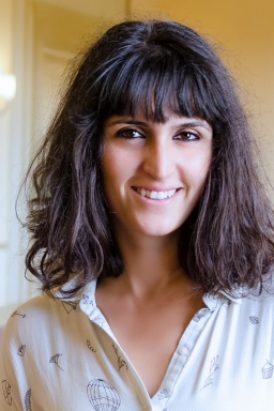
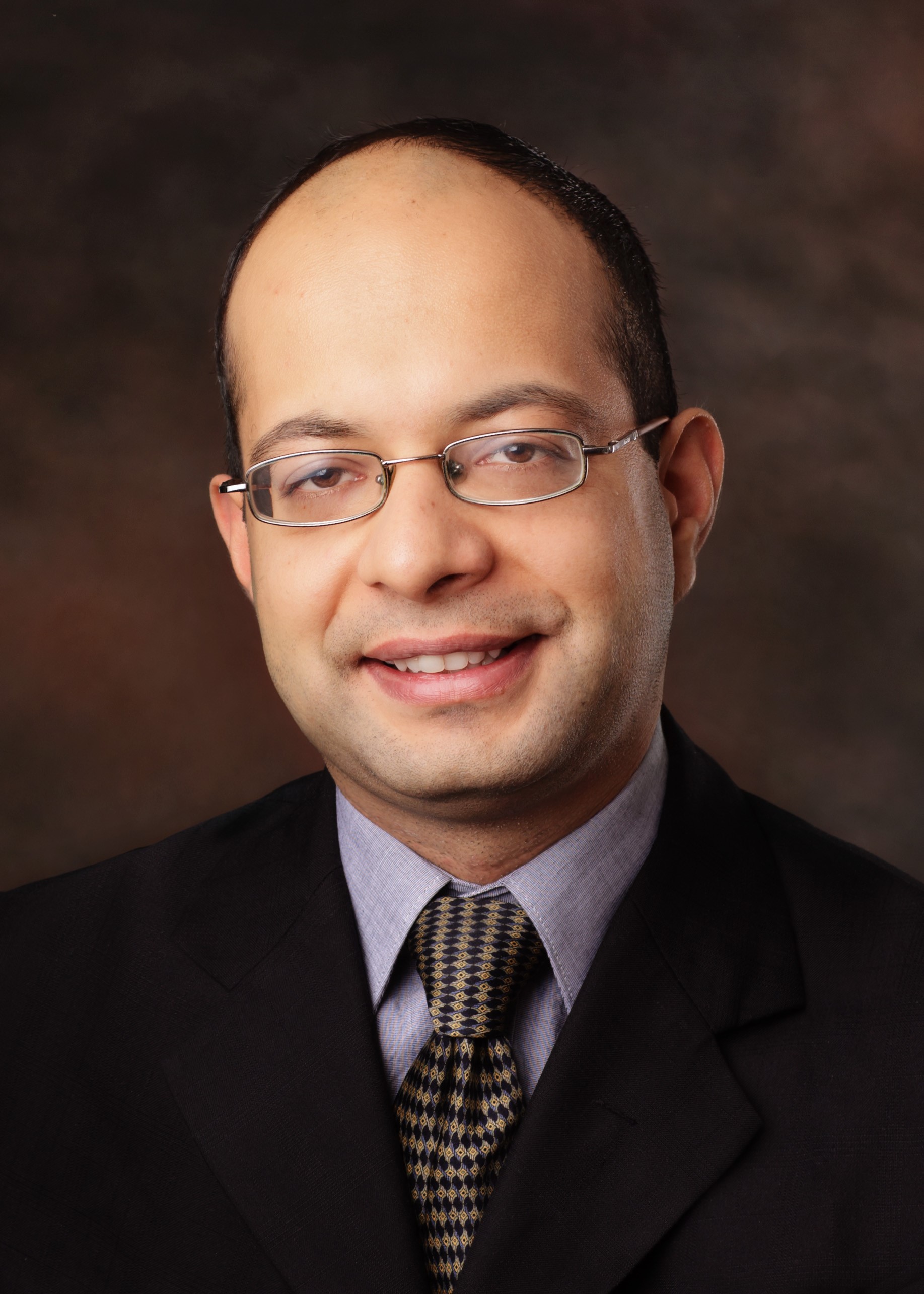
Judy Hoffman is an Associate Professor in the College of Computing at Georgia Institute of Technology, with a joint appointment in the School of Interactive Computing and affiliation to the Machine Learning Center . She received tenure in April 2025 after joining Georgia Tech as an Assistant Professor. Her research focuses on enabling AI systems that are reliable, fair, and resource-efficient. PhD in Electrical Engineering and Computer Science (2016, UC Berkeley) Postdoctoral Fellowships at Stanford (2017) and UC Berkeley (2018) Former Research Scientist at Facebook AI Research Her work intersects computer vision and machine learning , with specialization in domain adaptation , adversarial robustness , and algorithmic fairness . She has published over 40 peer-reviewed articles, including the award-winning DeCAF (ICML 2024 Test of Time Award) and co-founded Women in Computer Vision (2015), which has sponsored ~40 women annually to premier conferences. ICML Test of Time Award (2024) NSF CAREER Award (2022) PAMI Distinguished Young Researcher (2023) Samsung AI Researcher of the Year (2021) Dr. Hoffman has served as Program Chair for CVPR 2023, Associate Editor for T-PAMI (2021-2023), and co-organizer of workshops at major AI conferences. She has delivered over 70 invited talks and contributes to open-source projects like cycada_release (567 stars) and lsda (47 stars).
Tim G. J. Rudner is an Assistant Professor in the Department of Statistical Sciences at the University of Toronto, a Faculty Member at the Vector Institute, and a Title A Fellow at Trinity College, University of Cambridge. He was previously an Assistant Professor and Faculty Fellow at New York University. University: University of Toronto School: Faculty of Arts and Science Department: Department of Statistical Sciences Affiliation: Vector Institute, Trinity College (Cambridge) He holds a PhD in Computer Science and an MSc in Statistics from the University of Oxford, where he was advised by Yee Whye Teh and Yarin Gal, and a BS in Applied Mathematics and Economics from Yale University. PhD: Computer Science, University of Oxford MSc: Statistics, University of Oxford BS: Applied Mathematics and Economics, Yale University His research focuses on building robust, transparent, and trustworthy machine learning systems, particularly for high-stakes applications. He develops probabilistic models that improve generalization under distribution shifts, provide reliable uncertainty estimates, and enable fair and interpretable predictions. His work spans generative models, large language models, healthcare, and biomedical discovery. The recent publications highlight a strong trend toward function-space modeling, Bayesian regularization, and AI safety. Tim's work emphasizes principled uncertainty quantification, robustness to subpopulation and semantic shifts, and the development of frameworks for AI governance and specification. His research bridges theoretical advances with real-world applications, especially in safety-critical domains like medicine and defense. Tim has received numerous accolades including being named a Rhodes Scholar, Qualcomm Innovation Fellow, and 2024 Rising Star in Generative AI. He was awarded a $700,000 Foundational Research Grant and a $30,000 Apple Seed Grant for improving LLM trustworthiness. Rhodes Scholar Qualcomm Innovation Fellow AISTATS Notable Paper Award (2024) Outstanding Paper Award, ICLR GenAI4DM Workshop (2024) Apple Seed Grant ($30,000) Foundational Research Grant ($700,000) NeurIPS Spotlight Talk 2024 Rising Star in Generative AI He actively mentors students, particularly first-generation and low-income scholars, and has contributed to major policy frameworks including the OECD AI Classification Framework and a series of CSET issue briefs on AI safety. His work demonstrates a strong commitment to responsible AI development, combining technical rigor with societal impact. Tim leads research efforts at the intersection of machine learning theory and practical deployment, with ongoing projects in generative modeling, reliable LLMs, and AI governance. His lab produces high-impact work regularly published at top-tier conferences such as NeurIPS, ICML, and AISTATS.
Maksym Andriushchenko is an incoming faculty member at the ELLIS Institute Tübingen and Max Planck Institute for Intelligent Systems , where he will lead the AI Safety and Alignment group as a principal investigator. Currently, he is a Doctoral Assistant at the Theory of Machine Learning Laboratory (TML) within the Department of Computer Science (IINFCOM) at Swiss Federal Institute of Technology in Lausanne (EPFL) . His work focuses on AI safety, adversarial robustness, and alignment of large language models (LLMs) with societal values.
Ceren Budak is an Associate Professor at the University of Michigan School of Information and holds a joint appointment as Associate Professor of Electrical Engineering and Computer Science in the College of Engineering. Her work bridges computer science, statistics, and social sciences through computational social science approaches. Her educational background includes a PhD in Computer Science from the University of California, Santa Barbara (2012) and a Bachelors degree in Computer Science from Bilkent University in Turkey (2007). Prior to joining the University of Michigan faculty, she was a Postdoctoral Researcher at Microsoft Research New York. Professor Budak's research centers on computational social science, with particular emphasis on analyzing large-scale datasets to address questions with social, political, and policy implications. Her work spans several interconnected domains: News Media Production & Consumption (examining bias in news outlets and reader preferences), Social Movements & Media (using social media data to study collective action), Social Networks (understanding information diffusion processes), and Measuring and Promoting the Quality of Online Discussions (developing tools to improve online conversations). She teaches SI 608 (Networks) and SI 618 (Data Manipulation and Analysis) at the School of Information. Her publication record demonstrates consistent contributions to understanding how online information ecosystems operate, with recent work focusing on AI-human collaboration, misinformation dynamics, social movement framing, and the application of computational methods to political communication. Her research shows a clear trajectory from foundational work on social network diffusion to increasingly sophisticated analyses of contemporary information challenges. Among her service activities, she has served as Registration chair for COSN (ACM Conference on Online Social Networks) 2015 and as Program Committee Member for numerous prestigious conferences including WWW, ICWSM, WebSci, AAAI, and others. She has also been involved in organizing the MSR NYC Data Science Seminar Series and instructing the Microsoft Research Data Science Summer School.
Amartya Sanyal is a Tenure Track Assistant Professor at the Department of Computer Science (DIKU), University of Copenhagen, specializing in Machine Learning. He also serves as an Adjunct Professor at the Indian Institute of Technology Kanpur (2023–2025). His research focuses on critical areas of AI safety, data privacy, and robust learning. University: University of Copenhagen Department: Department of Computer Science Academic Rank: Assistant Professor Adjunct Role: IIT Kanpur (2023–2025) His work addresses challenges like differential privacy , data poisoning attacks , machine unlearning , and robust mixture learning . Recent publications analyze privacy-preserving techniques for large language models, fairness in collective action algorithms, and certified data release mechanisms. Amartya has received the Villum Young Investigator Award (2025). His research outputs emphasize online learning , adversarial robustness , and privacy-utility tradeoffs through rigorous theoretical frameworks and practical implementations. Scientific Award: Villum Young Investigator Award His collaborations span institutions like IIT Kanpur and involve interdisciplinary projects with industry partners. Current activities include talks on privacy with correlated data and machine unlearning advancements.
Lyle Ungar is a Professor at the Department of Computer and Information Science at the University of Pennsylvania . He is affiliated with multiple graduate groups, including Genomics and Computational Biology in the School of Medicine , Operations, Information and Decisions in the Wharton School , and Psychology in the School of Arts and Sciences . His research focuses on explainable machine learning , deep learning , and natural language processing for psychology and medical research , analyzing social media and sensor data to understand well-being, empathy, and stress. His work spans bioinformatics , applied economics , and group decision-making . Recent publications examine LLM-based tutoring , cross-cultural translation , and AI in palliative care , showing trends in reinforcement learning , mobile health , and health data analytics . He has contributed to Google Scholar , PubMed , and DBLP with over 15 papers since 2023. Scientific Awards : 2019 Alan I. Leshner Leadership Institute Public Engagement Fellow His students include Vitoria Aquino Guardieiro , Yihao Li , and co-advised researchers like Shreya Havaldar with Eric Wong. He leads projects at interdisciplinary centers such as the Annenberg Public Policy Center , Center for Cognitive Neuroscience , and Institute for Translational Medicine .
Robert Wilson is an Associate Professor in the School of Psychology at Georgia Institute of Technology. His research focuses on computational cognitive neuroscience, reinforcement learning, decision making, and their applications in psychiatry and aging. Wilson leads a lab integrating computational modeling with behavioral experiments, neuroimaging, and neurostimulation to explore the algorithms underlying human cognition. He holds a Ph.D. in Bioengineering from the University of Pennsylvania (2009). Education: Ph.D. in Bioengineering, University of Pennsylvania, 2009 Research Interests: Wilson’s work spans computational models of decision making, reinforcement learning dynamics, and the neural mechanisms of explore-exploit trade-offs. His lab investigates phishing detection cognition, navigation strategies, and perceptual decision making, with recent studies on aging-related cognitive decline and psychiatric disorders. Publications: His recent work includes studies on computational models of exploration strategies, phishing susceptibility (PEST task), and aging effects on decision-making. Articles often bridge neuroscience and AI, such as applying reinforcement learning to large language models. Awards & Grants: While no formal awards are listed, his research has been supported by grants exploring computational psychiatry and neuroimaging. Labs & Teams: Wilson directs a multidisciplinary lab at Georgia Tech, collaborating with experts in AI, neuroscience, and clinical psychology to advance computational theories of the mind-brain relationship.
Professor Martin Schrimpf is a Tenure Track Assistant Professor at EPFL, holding dual appointments in the School of Life Sciences (SV) and the School of Computer and Communication Sciences (IC). His research bridges computational neuroscience, deep learning, and cognitive science to model human natural intelligence in vision and language. He leads the NeuroAI Lab, focusing on aligning artificial neural networks with brain mechanisms and human behavior. Education: PhD in Brain and Cognitive Sciences from MIT (2017–2022), MSc in Software Engineering from TUM/LMU/UNA (2014–2017), and BSc in Information Systems from TUM (2011–2014). His work has been recognized with awards including the Neuro-Irv Open Science Prize, McGovern Fellowship, and Takeda AI+Health Fellowship. He co-founded Integreat, a social impact startup recognized with Google.org’s Impact Challenge and TUM’s Social Impact Award. Research interests include neuroAI, brain-like models, and clinical translation (e.g., visual prosthetics). He has published in top venues like Neuron, Nature Human Behavior, NeurIPS, and ICLR. Current projects involve developing topographic language models (TopoLM) and investigating causal language network interactions using LLMs. Teaching: Courses include Neuroscience Foundations for Engineers and Brain-like Computation and Intelligence . Supervised over 26 students, including PhD candidates Badr Alkhamissi, Ben Lönnqvist, and Yingtian Tang. Active in grants from SNSF, NeuroX, and EPFL’s AI Center. Labs/Teams: NeuroAI Lab at EPFL Neuro-X Institute. Future directions include advancing brain-inspired models for clinical applications and expanding interdisciplinary collaborations between neuroscience and AI.
Sebastian Raisch is a Full Professor of Strategic Management at the Geneva School of Economics and Management (GSEM), University of Geneva, where he also serves as Director of the Executive MBA program. He is affiliated with the Institute of Management and holds a Ph.D. from the University of Geneva. His academic work is deeply rooted in understanding how organizations balance stability and change, particularly in the face of digital transformation. Research Interests: His primary areas of expertise include strategic management, organizational ambidexterity, organizational paradox, artificial intelligence in organizations, and digital transformation. His research investigates the dynamics of corporate growth and decline, strategic renewal, and the integration of human and artificial intelligence in organizational decision-making. He is especially interested in how firms navigate tensions between competing demands such as exploration and exploitation, automation and augmentation, and stability and innovation. Publications and Trends: His recent publications (2023–2025) show a strong shift toward the role of artificial intelligence in management, with a focus on hybrid human-AI systems, ethical AI, and the strategic implications of AI adoption. Earlier works center on ambidexterity, paradox theory, and corporate turnaround, establishing him as a leading scholar in these domains. Scientific Awards: Strategic Management Society’s Best PhD Paper Award Emerald Publishing Group’s Citation of Excellence Award Journal of Management’s Scholarly Impact Award Editorial and Professional Service: Sebastian Raisch serves as Associate Editor at the Academy of Management Review and sits on the editorial boards of the Academy of Management Journal and the Strategic Management Journal . He has advised numerous doctoral students and supervised research projects on organizational innovation and digital strategy, though specific names are not listed in the provided materials. He has not received explicit mention of research grants, but his extensive publication record suggests active research funding. Labs and Research Teams: While no formal lab is mentioned, Raisch leads or contributes to research initiatives within the Institute of Management at GSEM, particularly in strategic management and digital innovation. He collaborates with scholars across Europe and the U.S., including notable co-authors like J. Schad, S. Krakowski, and M. Tushman.
Nihar B. Shah is an Associate Professor at Carnegie Mellon University with joint appointments in the Machine Learning and Computer Science departments within the School of Computer Science. His research focuses on developing theoretically grounded algorithms for evaluating scientific work, with applications in peer review, fairness, and human-AI collaboration. His work has impacted over 100,000 research papers and grant evaluations. Education: Ph.D. in EECS, UC Berkeley M.E. in Telecommunications, Indian Institute of Science B.Tech. in Electronics, NIT Karnataka Research Interests: Shah's group investigates the science of evaluation through machine learning, optimization, and large-scale experiments. Key areas include peer review systems, algorithmic fairness, LLM applications in science, and human-AI collaboration frameworks. Research addresses fundamental questions about research validity, funding allocation, and equitable assessment. Publication Trends: Recent work focuses on improving peer review through randomized controlled trials, security against collusion, LLM-based review systems, and bias mitigation. Publications consistently appear in premier venues (NeurIPS, PLOS ONE, AAAI) with growing emphasis on real-world deployments. Awards & Honors: Young Alumnus Medal (IISc 2024) NSF CAREER Award (2020-2025) Google Research Scholar Award (2021) Multiple best paper awards (HCOMP, ICLR) Research Group & Funding: Leads a focused research team with NSF, Google, and JP Morgan support. Alumni hold positions in academia and industry. Current projects involve large-scale evaluations of scientific work and algorithmic fairness.
David Duvenaud is an Associate Professor at the University of Toronto , holding a Canada Research Chair in Generative Models and a Schwartz Reisman Chair in Technology and Society . He is cross-appointed to the Department of Computer Science and Department of Statistical Sciences . A Sloan Research Fellow and founding member of the Vector Institute , his work bridges deep probabilistic models , AI safety , and scientific computing . PhD in Machine Learning (University of Cambridge, 2014) Postdoc in Hyperparameter Optimization (Harvard University, 2016) Co-founded Invenia (energy forecasting company) His research spans foundational Neural Ordinary Differential Equations (NeurIPS 2018 Best Paper) and Automatic Chemical Design (ACS Central Science 2018) to recent work on AGI governance (2025) and AI safety (2024). Key contributions include stochastic variational inference , implicit differentiation frameworks , and antisymmetrization layers for quantum Monte Carlo. Recent publications (2024-2025) focus on systemic existential risks from AI , many-shot jailbreaking attacks , and epistemic uncertainty quantification . His group trains energy-based models with scalable MCMC samplers and develops invertible neural architectures (e.g., Residual Flows NeurIPS 2019). He also explores human-AI alignment through LLM Processes (NeurIPS 2024) and Sycophancy in Language Models (ICLR 2024). Canada Research Chair (2025) NSERC Grant (2025) Sloan Research Fellow (2021) Schwartz Reisman Chair (2021) Best Paper Award (NeurIPS 2018) Distinguished Paper Award (ICFP 2021) His students include James Requeima , Jesse Bettencourt , and Raymond Douglas . He teaches courses on Statistical Methods for Machine Learning and Differentiable Inference . Current work (2025) investigates systemic human disempowerment through incremental AI capabilities and sabotage risk mitigation via hyperparameter-aware evaluations.
Sumeet Kumar Gupta is an Associate Professor in the Department of Electrical and Computer Engineering at Purdue University. His academic career spans from his current role to a prior Assistant Professorship at Pennsylvania State University (2014-2017) and an engineering position at Qualcomm Inc. (2012-2014). He holds a PhD in Electrical and Computer Engineering from Purdue University (2012), an M.S. from the same institution (2008), and a B.Tech in Electrical Engineering from IIT Delhi (2006). B.Tech, Electrical Engineering, IIT Delhi (2006) M.S., Electrical and Computer Engineering, Purdue University (2008) PhD, Electrical and Computer Engineering, Purdue University (2012) Dr. Gupta's research focuses on neuromorphic computing, low power variation-aware VLSI design in emerging nanotechnologies, device-circuit co-design, and nano-scale device modeling/simulations. His work addresses challenges in ferroelectric materials, crossbar arrays for deep neural networks, and energy-efficient AI hardware. Recent publications (2025-2024) highlight trends in: Ferroelectric HfO2/HZO thin films Compute-in-memory architectures Variability/stochasticity analysis Machine learning for device optimization Interconnect resistance/temperature effects AI hardware fault tolerance Scientific Awards & Recognitions: DARPA Young Faculty Award (2016) Early Career Professorship, Penn State (2014) 6th TSMC Outstanding Student Research Bronze Award (2012) Magoon Award (Purdue) Outstanding Teaching Assistant Award (Purdue, 2007) Intel PhD Fellowship (2009) His professional journey includes academic appointments at Purdue University (2020-present, Associate Professor) and Pennsylvania State University (2014-2017, Assistant Professor) after industry experience at Qualcomm Inc. (2012-2014). He maintains IEEE and EDS membership while publishing over 100 refereed works.
Dr Haitao Shi is a Researcher affiliated with the School of Social and Political Science at the University of Edinburgh. His research focuses on criminal justice systems, drug policing in China, and the intersection of technology with crime. He employs advanced research methods including quantitative tools (R, Python, SPSS), qualitative software (Nvivo, MAXQDA), and data visualization techniques (Gephi, QGIS). His current projects include studying Chinese students' experiences at the University of Edinburgh and analyzing rhizomatic networks in online drug trade funded by the Polish Ministry of Science. Haitao's work emphasizes cross-cultural comparisons, particularly in drug trade dynamics across Finnish, Polish, and English-speaking contexts. He explores topics like police professionalization in China, guanxi networks, and quota-driven policing strategies. His methodologies span cloud computing (Azure, AWS), database systems (MySQL), and version control (Git), reflecting a technologically adept approach to criminology research. Notable research themes include the role of marketing in darknet drug trade, generational conflicts in police culture, and community-based drug rehabilitation policies. He collaborates with international teams and utilizes platforms like Microsoft Azure for large-scale data analysis.
Grant Ho is an Assistant Professor in the Computer Science Department at the University of Chicago. His research focuses on computer security, particularly at the intersection of data and security. Prior roles include a CSE Postdoctoral Fellowship at UC San Diego, a Visiting Researcher position at Corelight Labs, and a PhD in Computer Science from UC Berkeley (advised by Vern Paxson and David Wagner). He holds a B.S. in Computer Science from Stanford University. **Research Interests**: Enterprise security, AI/ML applications in security, large-scale threat analysis, and data-driven cybersecurity practices. His work spans detecting attacks (e.g., phishing, ransomware), improving security measures, and evaluating the efficacy of security policies. **Awards**: 2023 IEEE Euro S&P Best Paper Award, 2019 and 2017 USENIX Security Distinguished Papers, 2017 Internet Defense Prize, NSF and Facebook Fellowships, and the 2015 IEEE S&P Distinguished Practical Paper Award. **Advising & Teaching**: Current advisees include Aniket Anand (PhD), Christiana Marchese (PhD), and Robert Liu (B.S.). Taught courses include Introduction to Computer Security (CMSC 23200) and seminars on AI/ML and NLP in cybersecurity. Collaborates with industry partners like Barracuda Networks and Dropbox. **Labs & Teams**: Leads a research group focused on enterprise security challenges, emphasizing practical impact and interdisciplinary approaches.
Steve Mussmann serves as an Assistant Professor in the School of Computer Science at the Georgia Institute of Technology, where he joined in Fall 2024. His research centers on data-centric machine learning, with emphasis on active labeling, data selection, and adaptive experimental design methodologies. He maintains active collaborations through Georgia Tech's Foundations of AI (FoAI) and ML@GT research groups. Mussmann earned his PhD in Computer Science from Stanford University in 2021 under Percy Liang's supervision, following a BS in Math, Statistics, and Computer Science from Purdue University in 2015. His professional trajectory includes a machine learning researcher role at Coactive AI and an IFDS postdoctoral fellowship at the University of Washington's Paul Allen School of Computer Science and Engineering. His research program investigates theoretical and practical aspects of data efficiency in machine learning systems, particularly focusing on active learning frameworks, statistical properties of data algorithms under concept drift, and task specification via prompts or demonstrations. Current projects address challenges in label-efficient training of large language models and multimodal dataset development. Analysis of his 15 most recent publications reveals a consistent focus on advancing data-centric methodologies, with increasing emphasis on large-scale applications like multimodal datasets and language model fine-tuning. His work bridges theoretical guarantees in experimental design with practical frameworks like LabelBench for benchmarking label efficiency. Mussmann has received recognition through the IFDS postdoctoral fellowship. His contributions to the field include foundational work on active learning theory and data selection algorithms. IFDS postdoctoral fellow He currently advises five graduate students including PhD candidates Kangping Hu (CS) and Hangyu Zhou (ML), alongside MS students Kabir Kang and Kalp Vyas, and undergraduate Saloni Bedi. Former advisee Wei-Liang (Edison) Liao completed BS research under his supervision. His teaching portfolio includes graduate courses CS 7545 (Machine Learning Theory) and CS 8803-DML (Data-centric Machine Learning). Mussmann operates within Georgia Tech's Foundations of AI initiative and ML@GT collective, which provide infrastructure for large-scale data-centric research. His lab develops open-source tools like LabelBench for reproducible evaluation of data selection techniques, with ongoing projects exploring video data exploration systems and adaptive finetuning frameworks for foundation models.