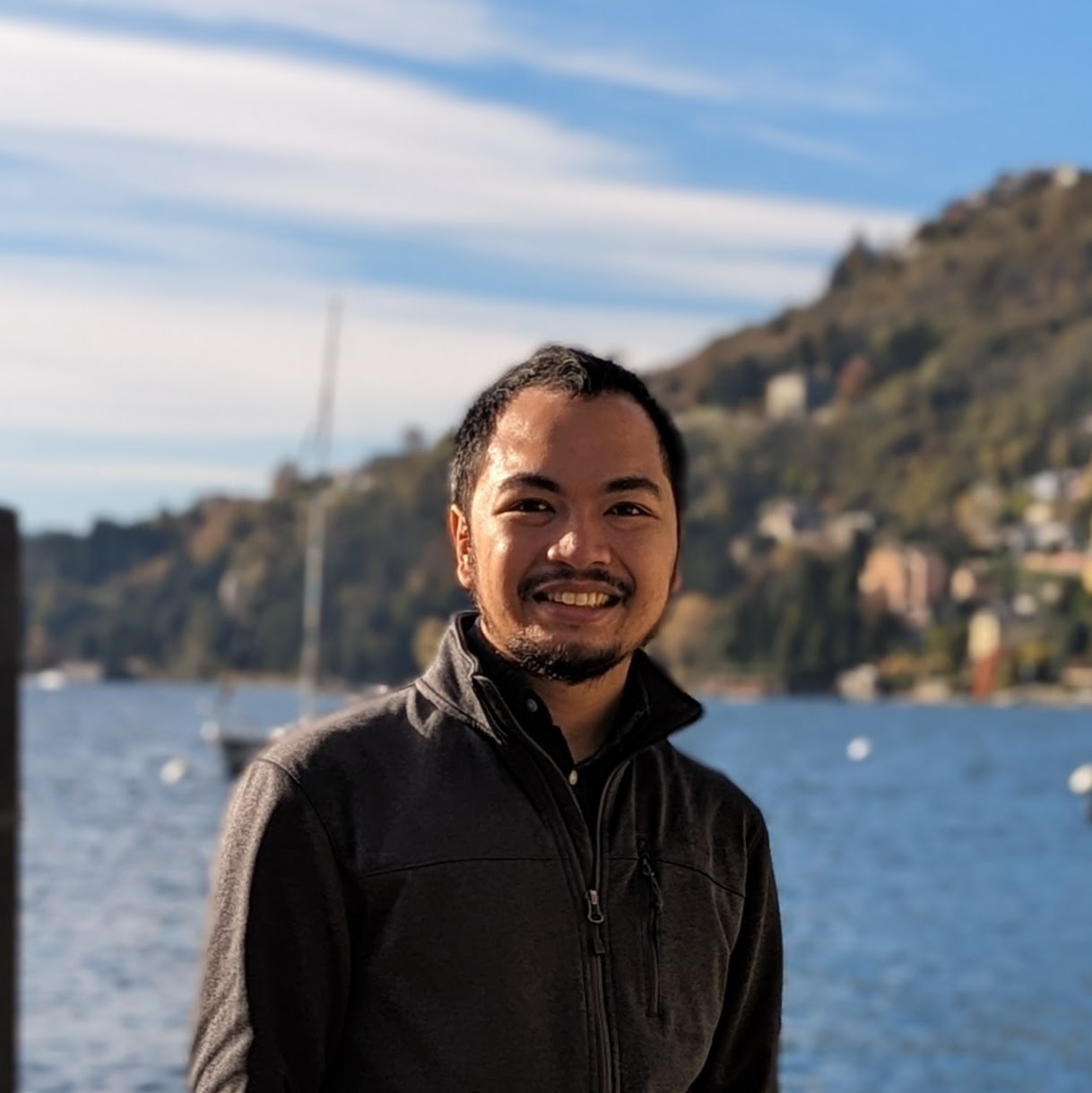
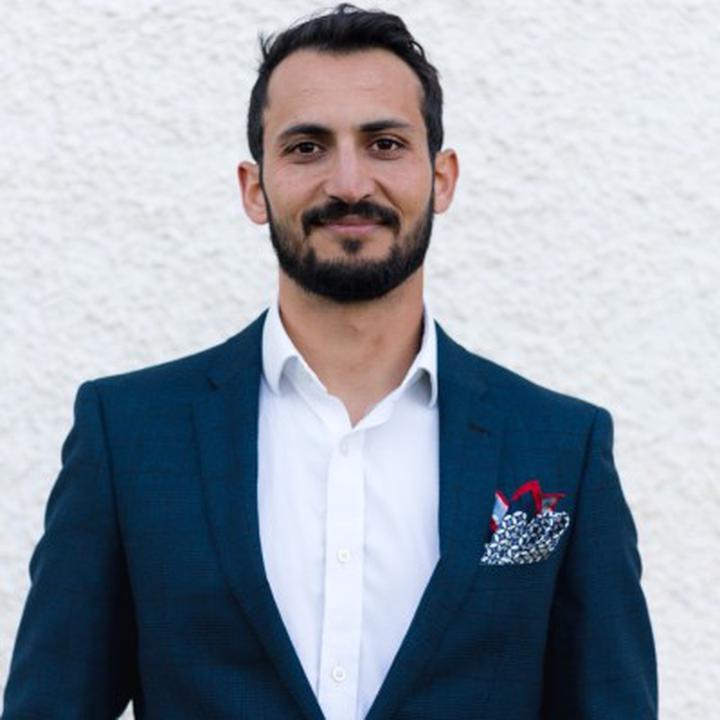
Dr. Damian Nale Dailisan is a Lecturer in the Department of Humanities, Social and Political Sciences at ETH Zürich, affiliated with the Computational Social Science group. He holds a Ph.D. in Physics from the University of the Philippines, specializing in traffic modeling and machine learning applications. His research focuses on multi-agent systems, particularly in transportation and urban systems. He has held postdoctoral roles and contributed to projects like the ACCeSs@AIM lab. His work bridges computational methods with real-world challenges, including traffic control optimization, AI-driven decision-making, and smart city infrastructure. Notable projects include FAIRLANE for priority lane management and studies on democratizing traffic control systems. Dailisan’s publications span journals like Transportation Research Part C and IEEE Access, addressing topics such as reinforcement learning in traffic signals and ethical AI frameworks. He has presented at workshops like 'Back to the Future' at ETH Zurich and collaborates with interdisciplinary teams to enhance urban mobility solutions. His technical expertise includes Python, network analysis, and agent-based modeling, with contributions to open-source tools for earthquake networks and social systems analysis.
Andreas Hein is an Assistant Professor of IT Management at the University of St. Gallen's Institute of Information Systems and Digital Business (IWI-HSG). His research focuses on digital services, AI literacy, conversational agents, and ethical design in education and business contexts. He holds a PhD (summa cum laude) from the University of Kassel and has led projects funded by SNSF and Innosuisse. Hein is an AIS Distinguished Member Cum Laude and has received numerous awards for research and academic service, including the AIS Best Conference Paper Award (2024) and Best Paper Awards at DESRIST (2023) and HICSS (2020). His work bridges design science and interdisciplinary collaboration, addressing topics like privacy nudges, gamification in learning, and lawful technology development. Hein actively contributes to academic communities, serving as associate editor for ECIS, ICIS, and AOM divisions, and has organized conferences like the Wirtschaftsinformatik-Nachwuchs-Treffen 2023. His teaching spans undergraduate to graduate levels, emphasizing data-driven service innovation and research practices. Hein's research has been published in top journals (ISR, JAIS, EJIS) and frequently recognized for innovation and impact. Education: PhD in Business Information Systems (Kassel University, 2018), Master of Arts in Communication Management, Diplom in Economic Sciences (Kassel University). Key Achievements: Over €2.2m in third-party funding, 60+ co-authors, and impactful contributions to digital education and AI ethics. His work on privacy nudges and conversational agents has been featured in leading conferences and journals.
Anna Rogers is a tenured Associate Professor at the IT University of Copenhagen , where she leads research in the Data Science Section . Her work bridges NLP , large language models (LLMs) , and sociotechnical impacts of AI , with a focus on interpretability, robustness, and ethical frameworks. She serves as co-editor-in-chief of ACL Rolling Review and is a Villum Young Investigator and ELLIS fellow . Education: PhD in Computational Linguistics (University of Tokyo), Postdocs in Machine Learning for NLP (University of Massachusetts, Lowell) and Social Data Science (University of Copenhagen) Her research explores how LLMs can be designed for transparency and fairness, with recent grants like the Villum Synergy and Inge Lehmann supporting interdisciplinary collaborations. She organizes workshops (e.g., Dagstuhl seminar 24052) and co-leads projects like CAISA (National Centre for Artificial Intelligence in Society). Key themes include: Interpretability in NLP Robustness against synthetic content Data governance and ethical use Peer review systems and academic publishing Her lab has hosted researchers such as Max Müller-Eberstein (funded by DFF) and is actively recruiting for projects on generalization benchmarks and data attribution. She emphasizes collaboration across academia, industry, and policy, shaping Denmark's data science future through roles like the Danish Data Science Academy committee. Recent articles highlight trends in corpus analysis , temporal annotation , and LLM governance .
Gerhard Schwabe is a Professor in the Department of Informatics at the University of Zurich, Faculty of Business, Economics and Informatics. His research spans collaborative technologies, information management, E-government, blockchain applications, and digital health. He leads the Information Management Research Group and contributes to the university's Digital Society Initiative (DSI). Research Focus: Human-AI collaboration, blockchain systems, crisis informatics, persuasive technologies Key Projects: RefuGPT (refugee support chatbots), Scripted Medicine (health worker assistance), PROMISE (AI prompt orchestration) Technical Expertise: Design Science Research, conversational agents, data-driven governance His recent publications emphasize AI integration in collaborative workflows, blockchain applications for data markets, and digital solutions for crisis management. He explores how generative AI impacts freelance development practices and transforms advisory services through automated systems. Contact: schwabe@ifi.uzh.ch
Ehud Reiter is a Professor of Natural Language Generation at the University of Aberdeen's School of Natural and Computing Sciences, Department of Computing Science. With over three decades of research experience, he is recognized as one of the world's leading experts in Natural Language Generation (NLG), particularly in data-to-text systems, evaluation methodologies, and healthcare applications. Reiter's research primarily focuses on creating systems that generate accurate, useful, and understandable natural language from structured data. His work spans multiple domains including healthcare (medical note generation, patient-facing systems), sports reporting, and explainable AI. A significant portion of his recent research addresses the critical challenge of evaluating NLG systems, with particular emphasis on human evaluation methodologies, reproducibility of results, and factual accuracy in generated text. His work on Bayesian Networks and causal graph discovery represents his ongoing interest in knowledge representation and reasoning behind natural language explanations. His research has evolved from foundational work on reference generation and document planning to current projects addressing large language models, reproducibility crises in NLP evaluation, and human-AI collaboration frameworks. The SPHERE evaluation card framework he co-developed represents a systematic approach to evaluating human-AI interaction systems across five key dimensions. Reiter has been instrumental in organizing multiple shared tasks focused on reproducibility in NLG evaluations, demonstrating his commitment to improving research methodology in the field. His work on consultation checklists for medical note evaluation has introduced standardized protocols that increase objectivity in clinical text assessment. Through projects like BabyTalk (generating neonatal intensive care unit summaries) and DrivingBeacon (providing driving behavior feedback), Reiter has demonstrated the practical applications of NLG technology in critical domains. His research consistently bridges theoretical advances with real-world implementation challenges.
Sahar Abdelnabi is an AI Security Researcher at Microsoft and will join the ELLIS Institute Tübingen as a Faculty/Principal Investigator. She is co-affiliated with the Max-Planck Institute for Intelligent Systems and Tübingen AI Center , leading the COMPASS Research Group focused on safe, aligned, and steerable AI agents with emphasis on security, human-AI interaction, and cooperative systems. Her research spans three pillars: (1) Probing AI failures through biases, emergent risks, and misuse scenarios; (2) Developing defenses like white-box control methods and reasoning enhancements; and (3) Leveraging AI for societal good through scientific discovery. Key contributions include coining indirect prompt injection vulnerabilities (2023), pioneering generative AI watermarking (2020), and receiving the ACL2025 Best Paper Award for work on LLM sampling heuristics. PhD in Computer Science (2019-2024) from CISPA Helmholtz Center , advised by Prof. Dr. Mario Fritz MSc in Computer Science from Saarland University Research Highlights Her work bridges AI security and safety with sociopolitical implications, focusing on prompt injection , cooperative multi-agent systems , and contextual integrity . She has been recognized by policymakers and industry leaders, including NIST , OWASP , and Microsoft's AI Bug Bounty Program . Scientific Awards Best Paper Award at ACL2025 Best Paper Award at AISec'23 Workshop Spotlight Paper at NeurIPS Datasets and Benchmarks 2024 Academic Leadership She actively contributes to the AI and security communities through: Program Committee: IEEE S&P (2026) , SaTML (2024-2026), USENIX Security (2025) Organized IEEE SaTML'25 LLMail-Inject Challenge Reviewed for top conferences: ICLR , NeurIPS , CVPR
Fabio Crestani is a Full Professor of Informatics at the Università della Svizzera italiana (USI) since 2007, serving as Pro-rector for Internationalisation since March 2024. He previously held roles at the University of Strathclyde (UK) and conducted sabbaticals at institutions like UC Berkeley and Xerox PARC. His expertise spans Information Retrieval, Text Mining, and Digital Libraries, with over 250 publications and editorial leadership roles, including Editor-in-Chief of Information Processing and Management (2008–2015). Education: PhD and MSc in Computing Science, University of Glasgow (UK) Degree in Statistics, University of Padova (Italy) Research Interests: Advanced information access systems Conversational search and user interaction models Machine learning for text analysis Early risk prediction (e.g., mental health via social media) Grants & Collaborations: Funded by Swiss National Science Foundation, Hasler Stiftung, and EU projects. Collaborations with institutions in UK, Italy, Spain, USA, and Malaysia. Labs & Teams: Lead the Information Retrieval Group at USI, which focuses on distributed IR, personalization, and mobile information access. The group includes 10+ researchers and has produced influential work in top-tier venues like SIGIR and ACL.
Michal Kosinski is an Associate Professor of Organizational Behavior at Stanford University's Graduate School of Business, specializing in computational social science, artificial intelligence, and psychometrics. He holds a Ph.D. in psychology from the University of Cambridge, where he pioneered methods for predicting psychological traits from digital footprints. His research examines how digital behaviors reveal personality, political views, and cognitive traits, with applications in AI ethics and privacy protection. Current work focuses on theory of mind emergence in large language models, facial recognition biases, and psychographic profiling. Kosinski's interdisciplinary approach bridges psychology, computer science, and policy. Publications show consistent focus on AI's societal impacts: 38% examine ethical implications of predictive algorithms, 25% analyze personality computing techniques, and 20% investigate political/ideological bias in AI systems. Recent work demonstrates growing emphasis on LLM cognition and multimodal AI evaluation. Major Scientific Awards: ARP Early Career Award (2025) SPSP Distinguished Fellowship (2024) William Stern Honorary Award (2024) EAPP Early Achievement Award (2023) APS Rising Star Award (2015) Top 1% Highly Cited Researcher Kosinski advises government agencies (FTC, DoJ, EU Parliament) and technology companies on AI ethics and policy. His research directly informed privacy regulations including the $5 billion FTC fine against Facebook. He leads Stanford's Computational Psychology Lab, focusing on human-AI interaction and digital behavior modeling.
Mohammad Aliannejadi is an Assistant Professor at the Information Retrieval Lab (IRLab) within the Informatics Institute at the University of Amsterdam. His research focuses on conversational search systems, information retrieval, and recommender systems, with an increasing emphasis on Large Language Model applications in IR. He obtained his PhD from the Faculty of Informatics at Università della Svizzera italiana (USI) in Lugano, Switzerland, and completed his MSc at Tehran Polytechnic in Iran. His research interests span conversational search systems, clarification question generation, mobile search, cross-market recommendation, and point-of-interest recommendation. Dr. Aliannejadi has made significant contributions to understanding how users formulate information needs in conversational settings and how systems can effectively respond through clarification mechanisms. His work bridges theoretical IR concepts with practical implementations, particularly in mobile contexts where information needs often evolve rapidly. His recent publications show a clear trend toward leveraging Large Language Models for conversational search evaluation, query understanding, and performance prediction. The 15 most recent articles demonstrate his leadership in adapting traditional IR techniques to the LLM era, with particular focus on efficient and effective conversational search systems that can handle complex user information needs through natural dialogue. Dr. Aliannejadi is deeply embedded in the IR community through extensive service activities. He has served as Program Co-Chair for ICTIR 2023, Tutorial Co-chair for ECIR 2024, and Lab Co-Chair for CLEF 2023. He regularly organizes workshops such as XMRec, SCAI, and MICROS, and has been a SIGIR Student Liaison. His service extends to program committees for major conferences including SIGIR, ACL, WSDM, and ECIR, and as a reviewer for journals like TOIS and TKDE. His leadership extends to organizing significant academic events including the 15th European Summer School in Information Retrieval (ESSIR 2024) and serving on the Program Committee for the Bachelor Program in AI at UvA. His lab, IRLab (formerly ILPS), focuses on developing innovative approaches to information access through conversational interfaces and advanced retrieval techniques.
Prof. Dr. Tobias Kowatsch is an Associate Professor at the Institute for Implementation Science in Health Care, Faculty of Medicine, University of Zurich. He serves as Scientific Director of the Centre for Digital Health Interventions (CDHI) and Director of the School of Medicine at the University of St. Gallen (HSG). His research focuses on digital health interventions at the intersection of information systems, computer science, and behavioral medicine. PhD in Management (University of St. Gallen, 2016) Master in Business Informatics (2012) Master in Media and Informatics (2007) Diploma in Informatics (2005) Kowatsch develops digital health solutions such as MobileCoach (open-source platform for health interventions) and Pathmate Technologies (digital therapeutics like manoa for hypertension). His work integrates machine learning, conversational agents, and wearable technology to address non-communicable diseases and mental health challenges. His recent research trends emphasize personalized health interventions , conversational AI , and biopsychosocial monitoring using wearables. Key areas include dementia prevention , menstrual health , and cancer patient support . ISRII Poster Award (2023) Gold & Silver Awards, World Media Festivals (2023) Fitrockr & Garmin Health EMEA Research Grant (2023) Kowatsch leads the CSS Health Lab and collaborates with institutions like ETH Zurich and the Singapore-ETH Centre. His initiatives include the Precision Digital Therapeutics Summer School and industry partnerships with companies like Pathmate Technologies .
Roberto Minelli is a Scientific Collaborator and Academic Coordinator at the Software Institute, Faculty of Computer Science, Università della Svizzera italiana (USI), where he also completed his Bachelor, Master, and PhD in Informatics. His work bridges research, education, and technology outreach, with a strong focus on software engineering, visualization, and developer interaction analysis. His research centers on leveraging interaction data from development environments to enhance software comprehension and evolution. Key areas include software visualization , mining software repositories , reverse engineering , and program comprehension . He has pioneered work in visual metaphors such as Software Cities and explored immersive environments like virtual reality for code visualization. The recent publications reflect a consistent trend in visual analytics for software engineering, with increasing emphasis on social and collaborative aspects of development (e.g., Discord, GitHub issues), large-scale system comprehension, and the integration of diverse data sources into unified visual models. His work combines empirical studies, tool development, and human-centered evaluation. Best Paper Award, IWESEP 2016 Most Influential Paper Award, ICPC 2015 Distinguished Reviewer Award, ICPC 2020 Minelli actively mentors students, co-supervising numerous Bachelor and Master theses in software visualization and analytics. He has secured multiple research and development mandates, including projects like Self-Driving Cars on Interactive Dynamic Tracks (SNF Agora) and Sphere Two: Swiss Pavilion @ Expo 2025 . He plays a central role in organizing key events such as VISSOFT, SIESTA, and #FormulaUSI, and contributes to curriculum development and outreach programs targeting secondary education. He is involved in several labs and teams, primarily the REVEAL research group (led by Prof. Michele Lanza) and the Software Institute at USI. His leadership in initiatives like CodeLounge and #FormulaUSI underscores his commitment to experiential learning and public engagement in computing.
Francesco Stella is a current researcher at École polytechnique fédérale de Lausanne (EPFL), affiliated with CREATE-LAB. His work focuses on soft robotics, physical intelligence, and bioinspired design methodologies. Primary Affiliation: CREATE-LAB, EPFL Research Focus: Soft robotics, motor synergies, passive dynamics Collaborators: Josie Hughes, Cosimo Della Santina Stella's research explores robotic systems that leverage physical properties for intelligent behaviors. Key contributions include the PAWS passive automaton, Helix soft manipulator, and iterative learning control algorithms. His work integrates computational design with material science to address challenges in durability and control precision. His recent publications highlight advancements in IMU-based pose reconstruction, stiffness modulation, and durability metrics for architectured materials. The articles span interdisciplinary topics combining robotics, control theory, and biomechanics. Stella's collaborations with leading researchers and participation in Horizon Europe projects demonstrate his integration into cutting-edge robotics research networks.
Juan Carlos Farah serves as both a Scientific Collaborator and Lecturer at the Fribourg School of Engineering and Architecture, part of the University of Applied Sciences and Arts of Western Switzerland (HES-SO). His academic appointments indicate an active role in both research and teaching within the institution's engineering and technology programs. Dr. Farah holds a PhD in Robotics, Control, and Intelligent Systems from the École Polytechnique Fédérale de Lausanne (EPFL), a Master of Science in Computing from Imperial College London, and a Bachelor of Arts in Economics from Harvard University. This interdisciplinary background spans computer science, engineering, and economics, providing a strong foundation for his current research endeavors. His research focuses on the intersection of human-computer interaction, social neuroscience, and information theory, with particular emphasis on how artificial intelligence with anthropomorphic traits affects human behavior and learning. Farah has made significant contributions to educational technology, especially in the development and evaluation of conversational agents for learning environments. His work examines how chatbots and large language models can be effectively integrated into educational contexts to support students while maintaining pedagogical integrity. An analysis of his recent publications reveals a strong trajectory in human-AI interaction within educational settings, with increasing focus on large language models since their emergence. His research spans multiple dimensions of educational technology including code review systems, computational thinking development, and the psychological impacts of technology on learners. The interdisciplinary nature of his work connects computer science, cognitive science, and educational theory. While no specific scientific awards are mentioned in the provided documentation, Dr. Farah's research has been published in reputable journals and presented at significant international conferences in educational technology and human-computer interaction. His research methodology combines both qualitative and quantitative approaches, often conducting controlled experiments with student populations to evaluate the effectiveness of educational technologies. Farah frequently collaborates with colleagues from multiple institutions, suggesting strong interdisciplinary research networks. His work appears to focus on practical applications of technology in real educational settings rather than purely theoretical investigations. Dr. Farah's research program appears centered around developing frameworks and tools for educational technology, with particular attention to how conversational agents can be designed to support specific learning objectives. His TRACE model for educational chatbot design and work on code review notebooks represent structured approaches to integrating AI technologies into pedagogical practices while addressing the unique challenges of educational contexts.
Albert Gatt is a researcher at the University of Malta , with extensive contributions to Natural Language Generation (NLG) , Vision-and-Language (V&L) models , and evaluation practices in NLP . His work spans multimodal reasoning, data pruning efficiency, and reproducibility challenges in human evaluations. Key collaborations include studies on temporal grounding in image sequences (TempVS benchmark) and automated legal violation detection in cookie banners. Research highlights include bridging linguistic theory with computational models (e.g., VALSE benchmark for multimodal grounding) and improving generation quality through contrastive learning frameworks. Scientific awards are not explicitly mentioned in the provided texts. His work emphasizes rigor in automatic metric validation and cross-modal interpretability , particularly in multimodal model attention mechanisms and logical formula minimization for text generation.
Fazl Barez is a Senior Research Fellow at the University of Oxford leading research on Technical AI Safety and Governance. He is also affiliated with Cambridge's CSER, NTU's Digital Trust Centre, Edinburgh's Informatics, and is a member of ELLIS. Previously, he was a researcher at Amazon and Huawei, and Co-director and Head of Research at Apart Research. He currently serves as an advisor to Martian and has worked with Anthropic's Alignment team (2024-2025). University of Oxford: Senior Research Fellow Cambridge CSER: Affiliate NTU Digital Trust Centre: Affiliate Edinburgh Informatics: Affiliate ELLIS: Member Anthropic: Alignment Team Collaborator (2024-2025) Martian: Advisor Dr. Barez's research focuses on ensuring AI systems remain safe, interpretable, and beneficial as they grow in capability. His work spans four interconnected areas: Interpretability (developing methods to reveal how AI models process information internally), Safety and Alignment (creating tools to detect and address deceptive behaviors), Technical Governance (translating technical insights into governance frameworks), and Societal Impact (examining broader implications of AI on society). His research is funded by OpenAI, Anthropic, Schmidt Sciences, Future of Life Institute, and NVIDIA. The trends in Dr. Barez's publications show a consistent focus on making AI systems more transparent and safer. His recent work explores mechanistic interpretability techniques like sparse autoencoders, investigates how language models relearn removed concepts, examines machine unlearning for safety applications, and develops frameworks for value alignment measurement. His publications appear in top venues including NeurIPS, ICML, ICLR, ACL, and EMNLP, reflecting his significant contributions to both theoretical and practical aspects of AI safety. Future of Humanity Institute PhD Affiliate (2022-2024) EPSRC PhD Student Scholarship (2019-2023) MSc Scholarship (2017-2018) BA (Hons) Sports Performance Scholarship (2013-2017) Dr. Barez has mentored numerous students who have gone on to prominent positions at organizations like Microsoft Research, DeepMind, and Martian. His research is generously funded by major AI organizations including OpenAI, Anthropic, Schmidt Sciences, Future of Life Institute, and NVIDIA. He has served as an Area Chair for ACL 2025 and on program committees for major conferences including ECAI 2024. His work has practical impact, with algorithms like N2G adopted by OpenAI to evaluate sparse autoencoders for interpretability. Dr. Barez leads research at the intersection of technical AI safety and governance. His work connects with multiple research groups including the UK AI Security Institute, Alan Turing Institute, and various university centers. He has co-organized workshops such as the first Mechanistic Interpretability workshop at ICML 2024 and actively collaborates with researchers across the AI safety ecosystem. His research bridges the gap between theoretical safety research and practical implementation in real-world AI systems.